
Convened by @WorldResources & @BezosEarthFund to develop breakthroughs in geospatial monitoring of the world's land and nature-based carbon.
Joined September 2021
- Tweets 2,138
- Following 1,129
- Followers 2,498
- Likes 3,787
365 Photos and videos

Pinned Tweet

29 Oct 2025
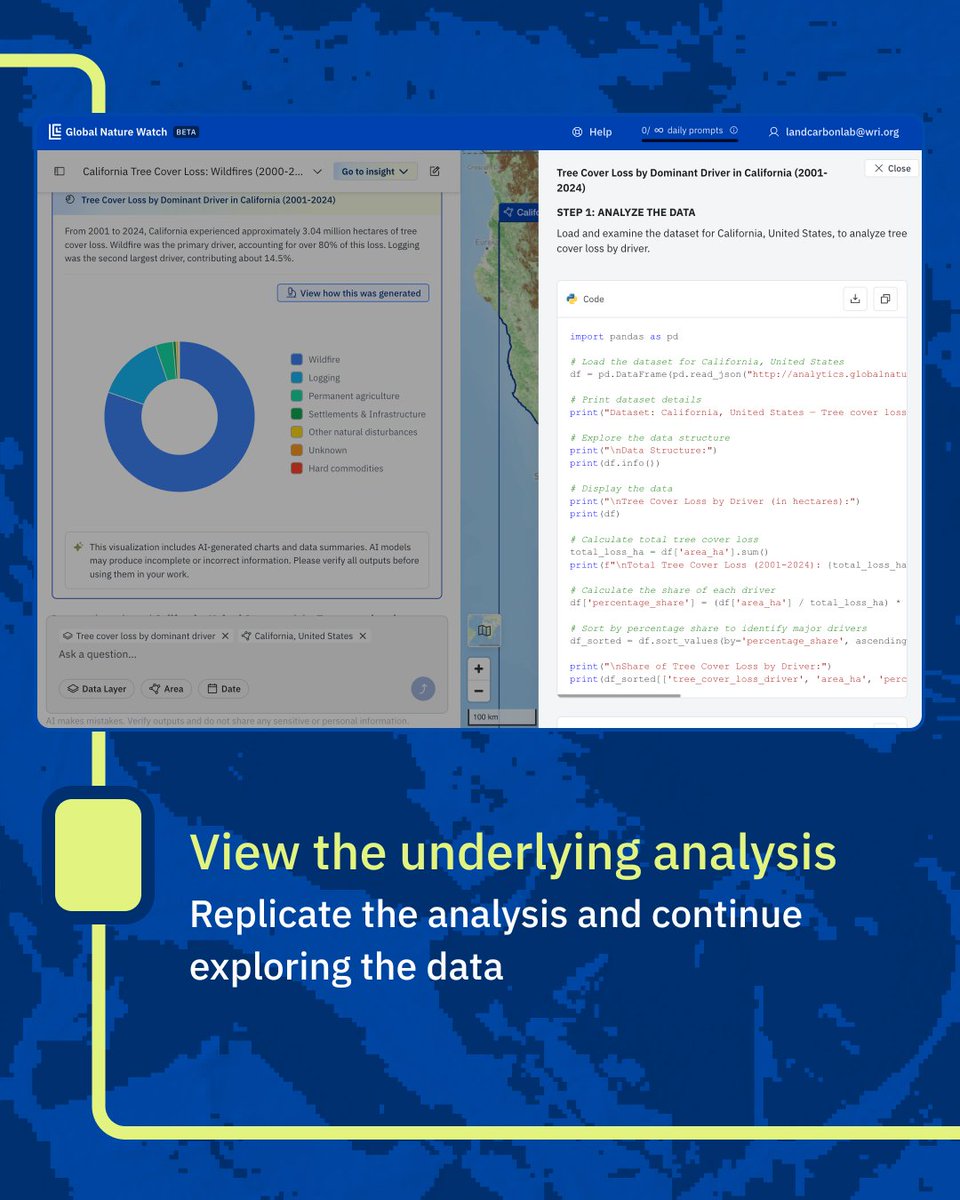
Behind Global Nature Watch is one of the most comprehensive collections of open land and ecosystem data ever assembled.
🌍 Join the waitlist today to be among the first to experience Global Nature Watch: bit.ly/4oS2mA3
#GlobalNatureWatch
7
437
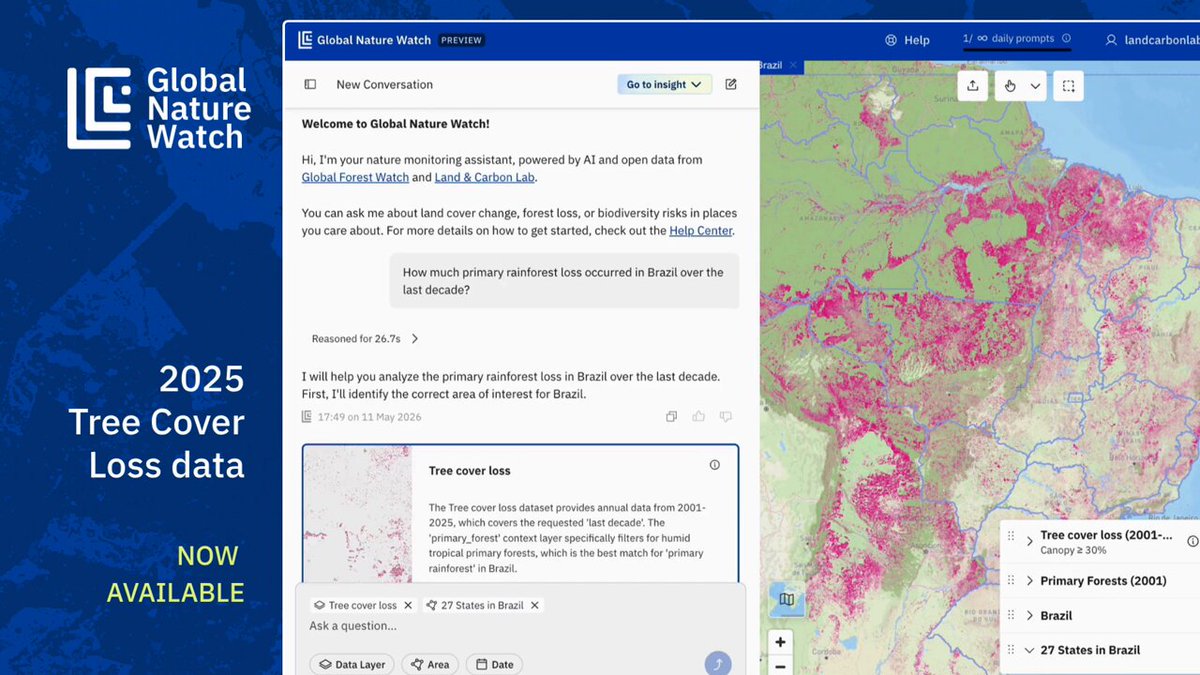
🌳 New 2025 Tree Cover Loss data from @UofMaryland GLAD Lab reveals encouraging progress & growing climate risks: Tropical primary rainforest loss ⬇️by 36% in 2025, while wildfire-driven forest loss continues to intensify.
Explore on Global Nature Watch: bit.ly/4uJ01dq
1
6
25
7,553
➡️ Read the latest analysis in the Global Forest Review: bit.ly/3RF2hUI
100
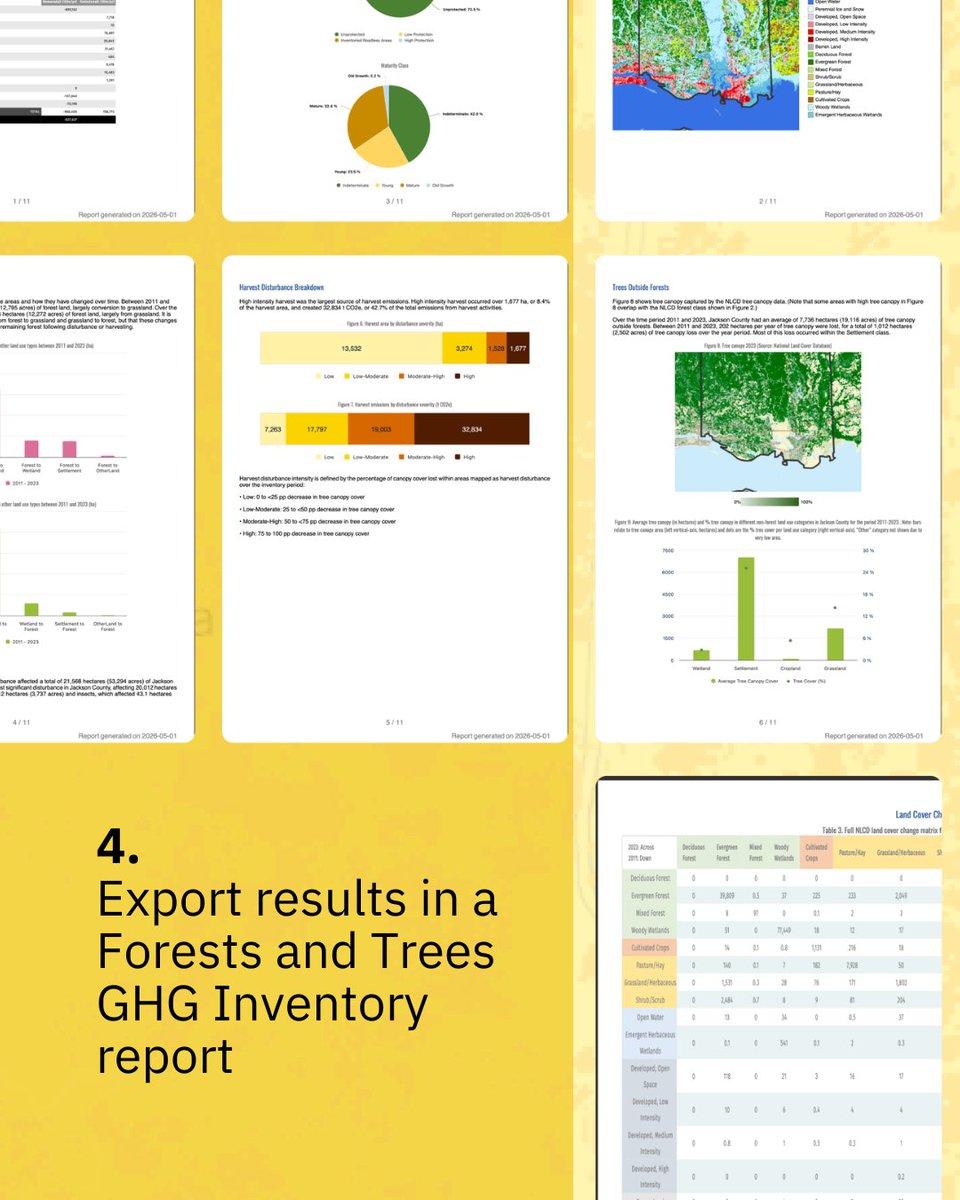
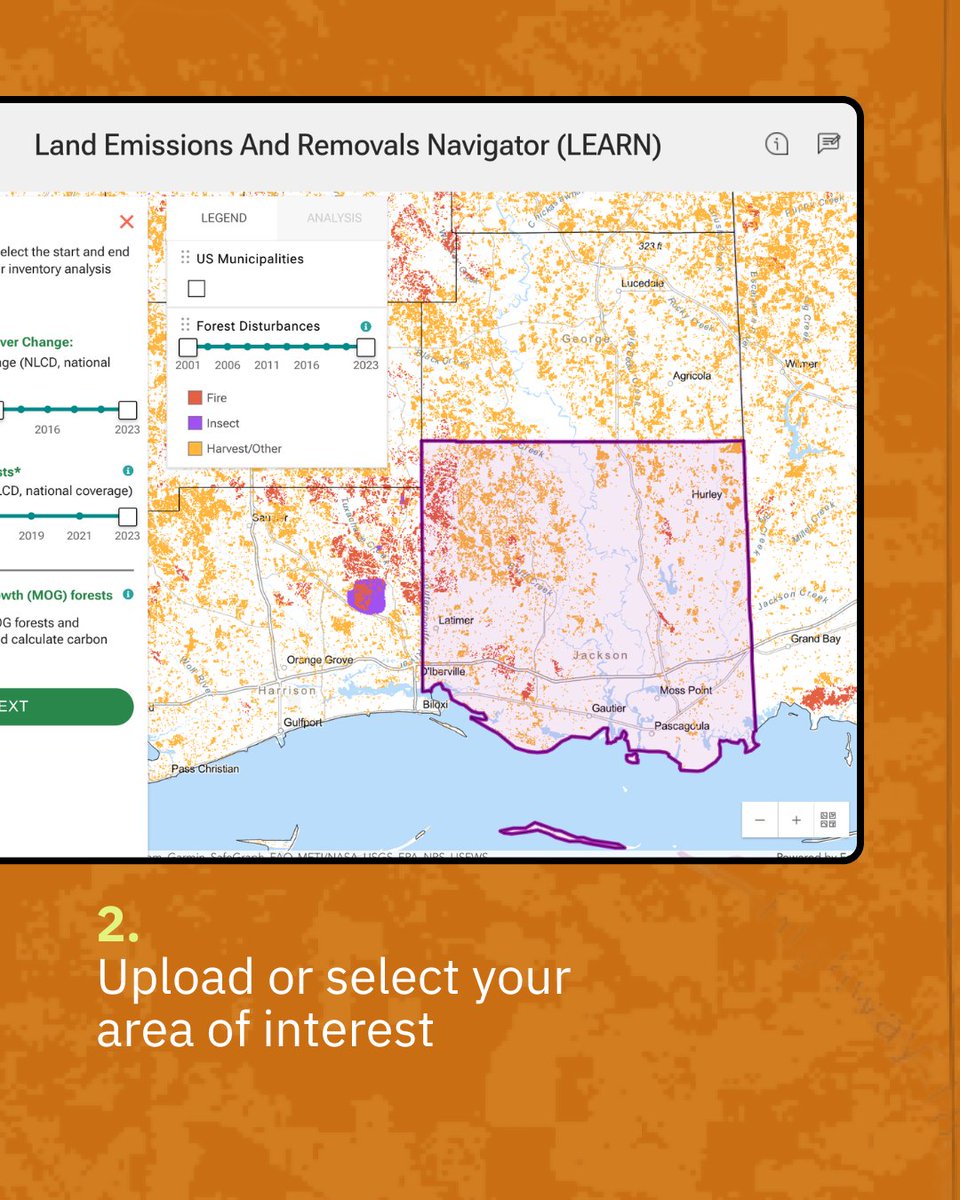
🌳New update to the LEARN Tool!
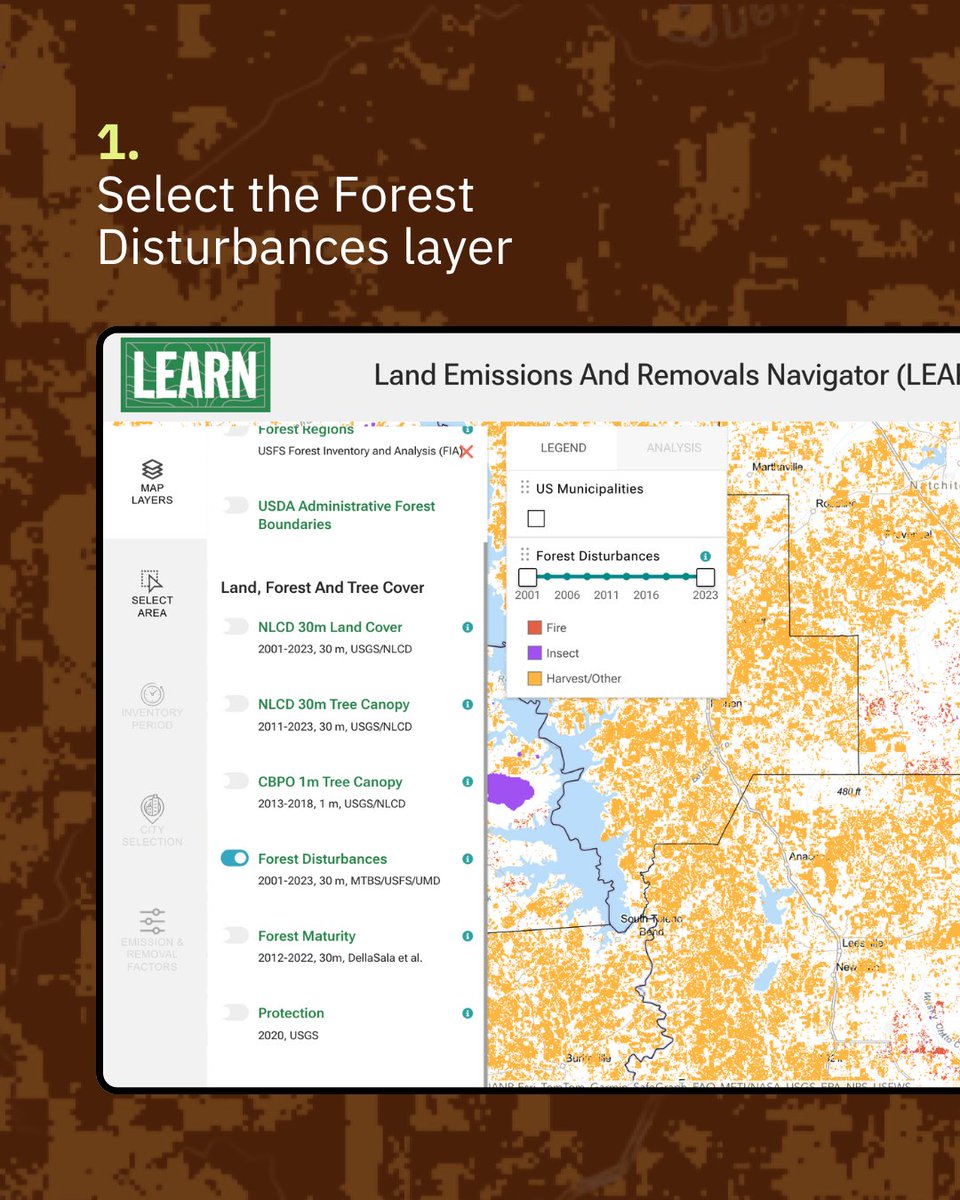
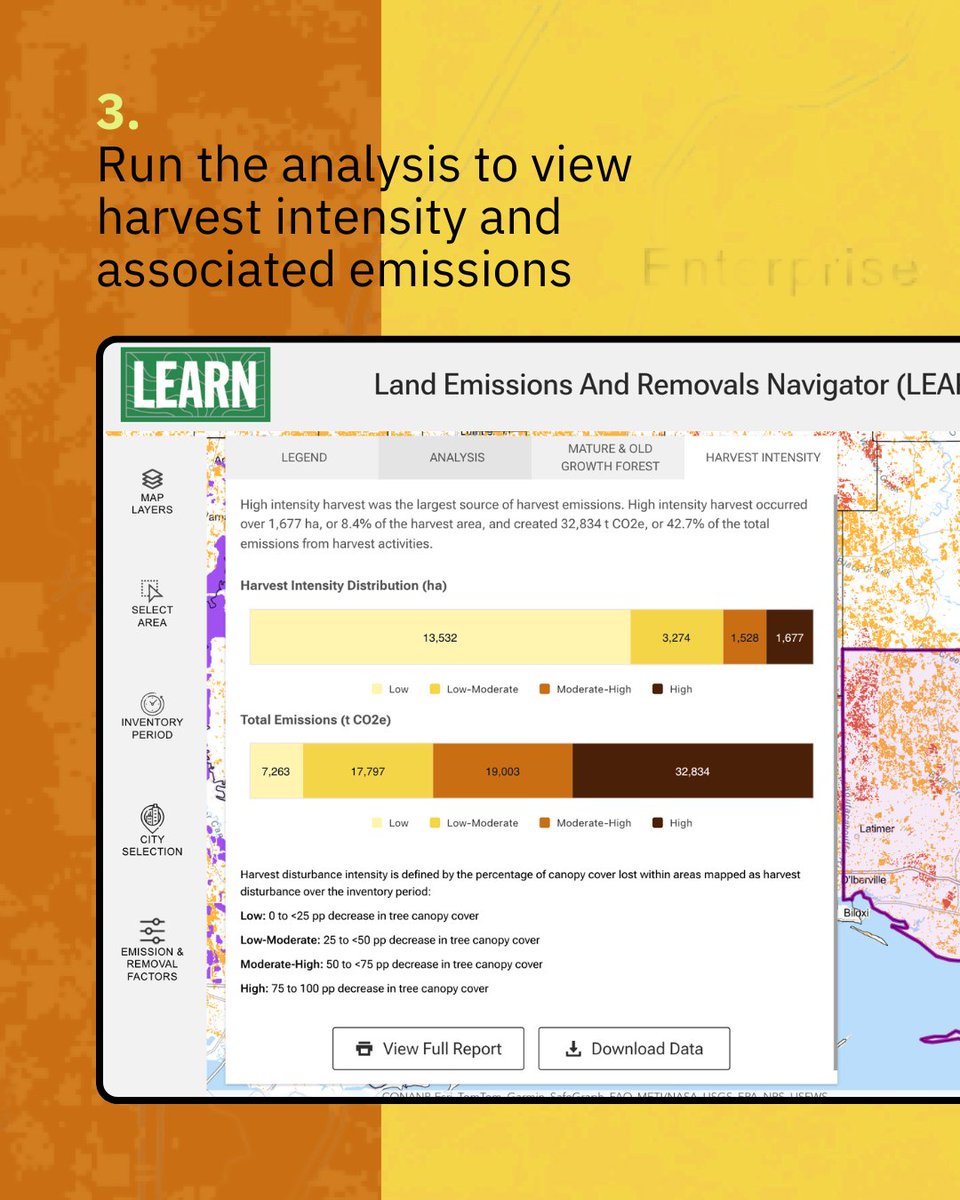
We’ve enhanced how our Landscape Emissions and Removals Navigator (LEARN) captures the climate impacts of forest thinning and logging, giving U.S. communities a more nuanced picture of emissions on the ground.
➡️ icleiusa.org/LEARN/
1
2
2
164
By better distinguishing between low- and high-intensity harvests using tree canopy cover change, the tool can now apply emissions factors that better reflect disturbance severity.
38
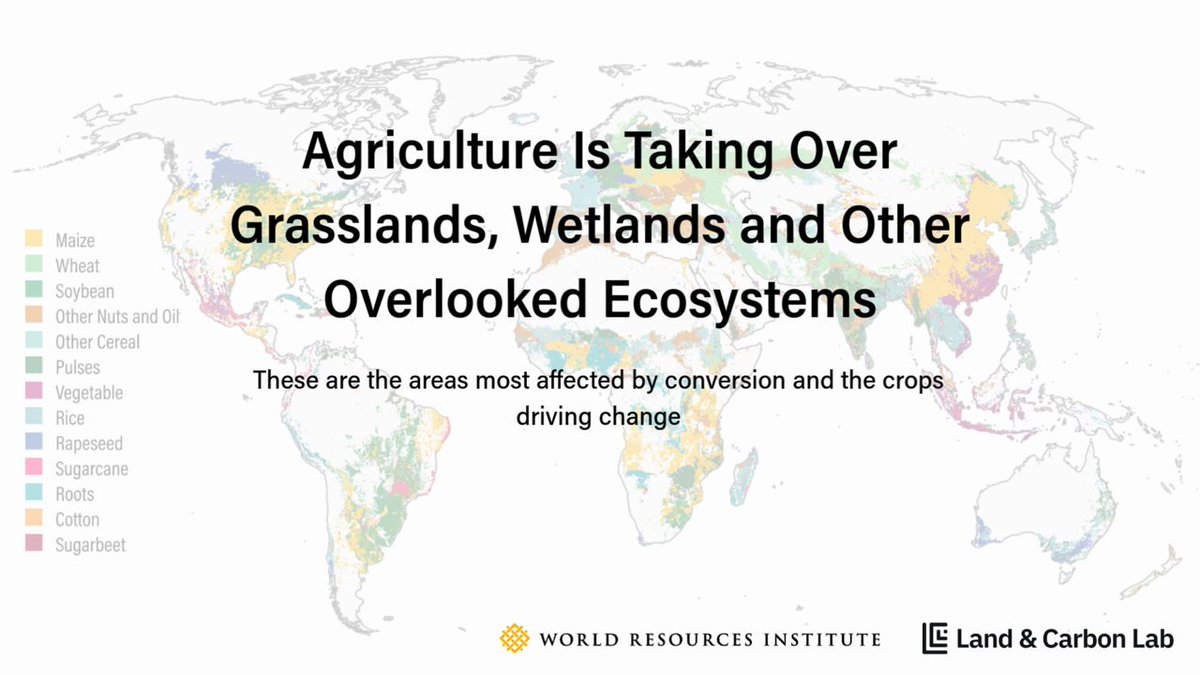
Agriculture is expanding faster into grasslands, savannas & wetlands than forests—but these ecosystems are often being overlooked by companies.
@WorldResources and @AcctFramework experts explain what this means for companies, via @Reuters : gfw.global/vVCEpV
5
10
610
New research from Land & Carbon Lab, @WorldResources, Rainforest Alliance and the Senckenberg Biodiversity and Climate Research Centre shows that grasslands, savannas & wetlands are being converted to crops and pasture at nearly 4x the rate of forests.
➡️ bit.ly/3Oul57R
6
12
632
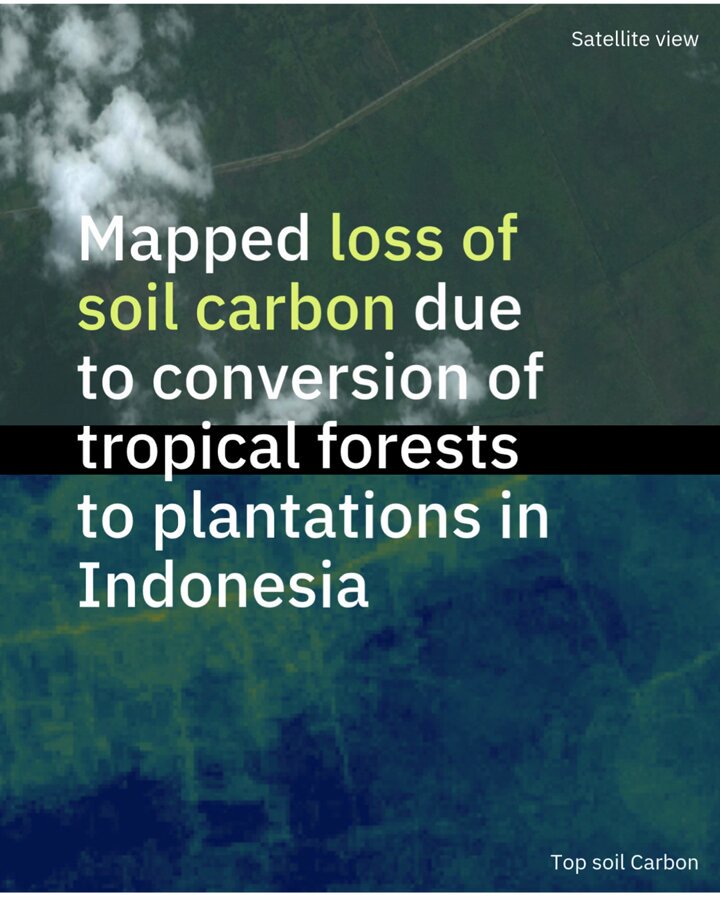
Since 2000, the world’s topsoils have lost an estimated 11 billion tonnes of carbon. Much of that loss is linked to land use changes such as deforestation. New soil carbon dynamics maps are helping show these changes.
Learn more: bit.ly/4bjty6K
1
13
27
1,159
🌱 Soil is one of the planet’s largest carbon reservoirs but understanding how soil carbon is changing over time has remained a major challenge.
New soil carbon dynamics maps are helping change that.
Read: bit.ly/4bjty6K
Explore the maps: bit.ly/4rACycl
17
46
1,881
Better insight into how trees are growing, powered by the most accurate global tree height data yet, can help unlock new sources of restoration finance.
Learn more: bit.ly/4bwntTp
Read the pre-print: go.wri.org/CgWEi5
@BezosEarthFund @WorldResources @AIatMeta
17
37
1,584
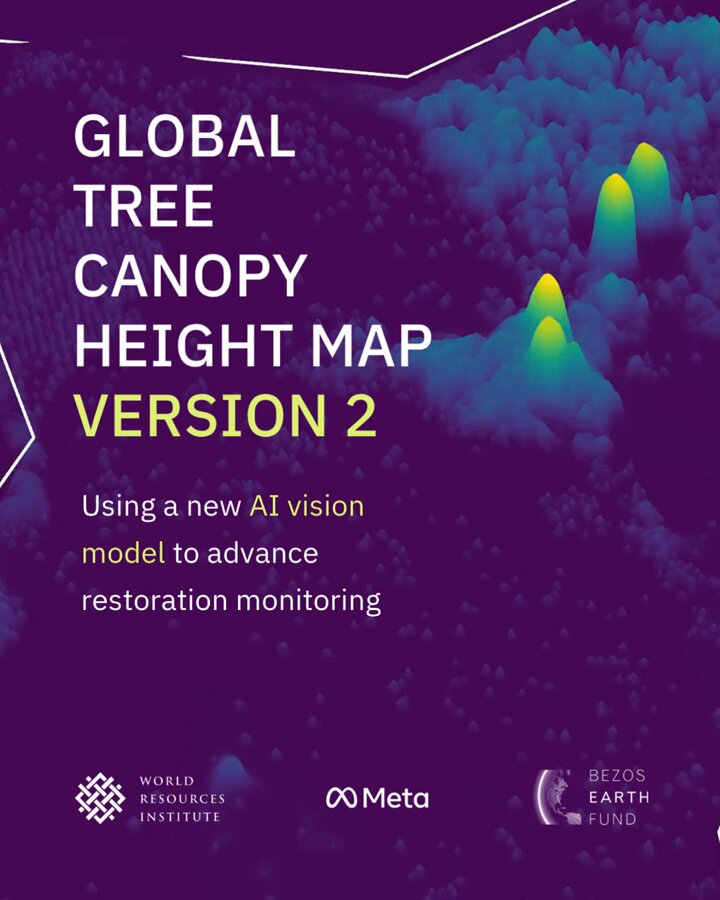
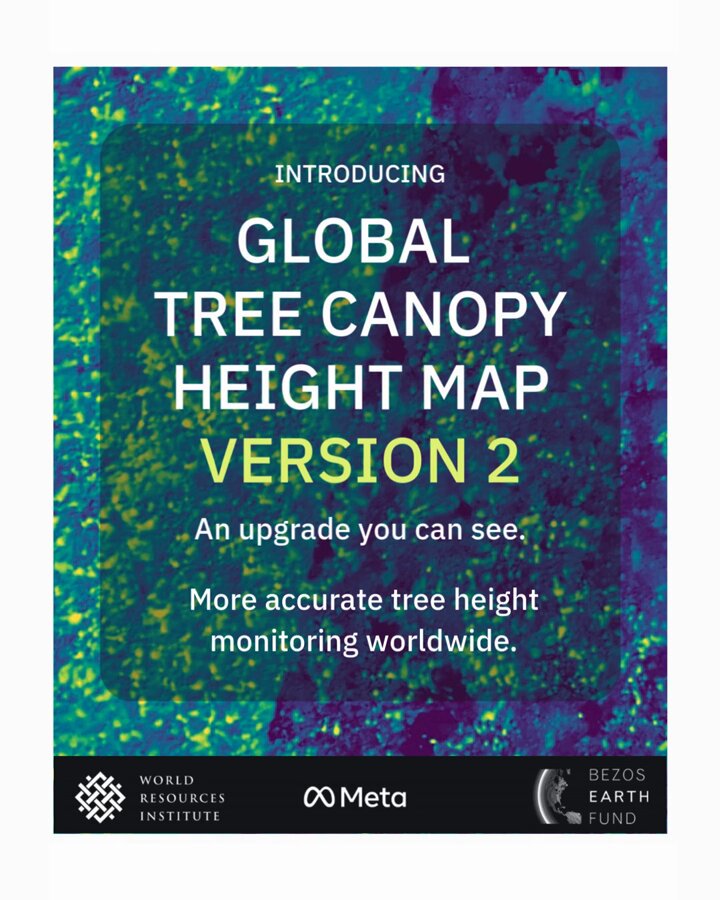
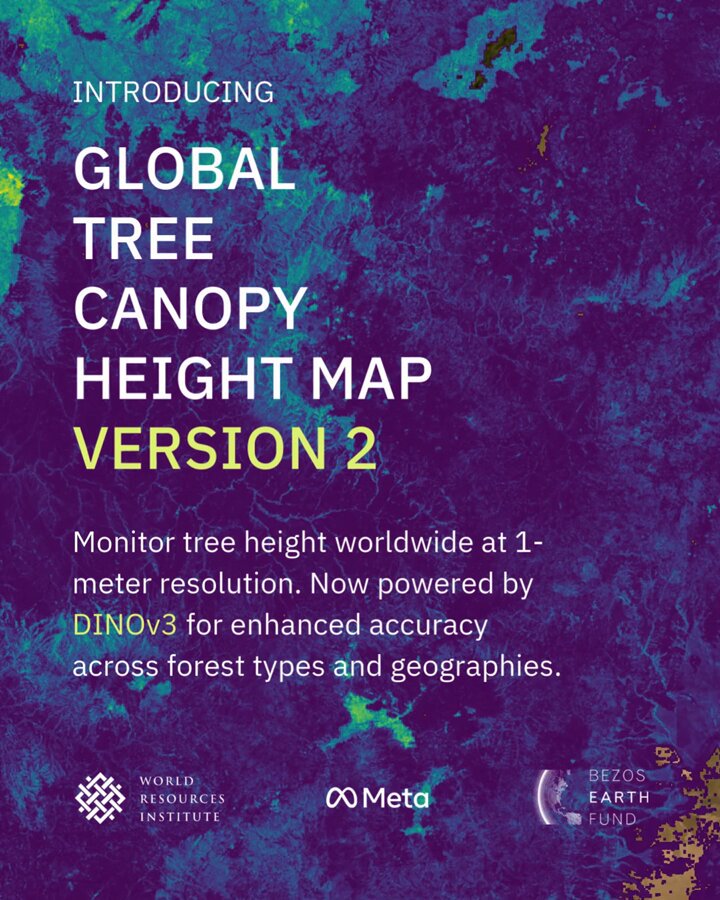
🚀 Our updated Global Tree Canopy Height map integrates @Meta’s open-source DINOv3 AI model, improving canopy height mapping across forest types & geographies.
Learn more: bit.ly/4b7qNE0
Read the pre-print: go.wri.org/CgWEi5
2
10
35
1,249
Explore Version 2 of Global Tree Canopy Height, the 1-meter resolution global map that can detect individual trees, now upgraded for significantly better performance in tall and complex forests.
Learn more: bit.ly/4b7qNE0
Read the pre-print: go.wri.org/CgWEi5
2
36
128
6,512
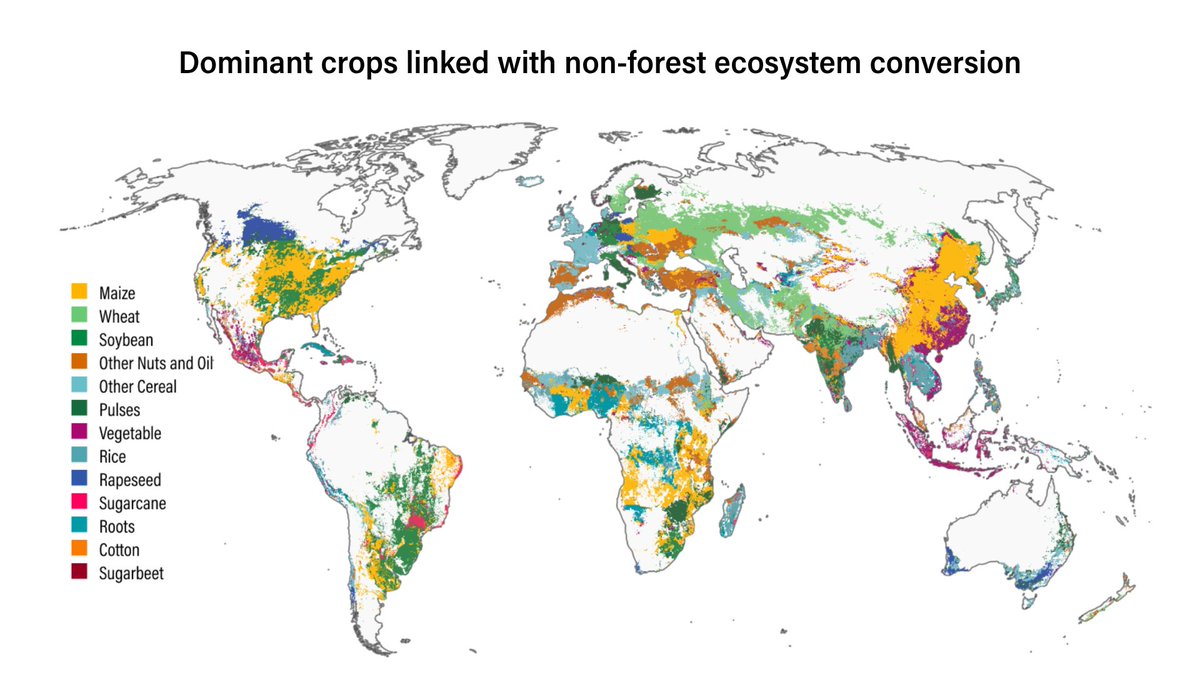
🌍 Which crops are driving ecosystem conversion beyond forests?
Our new global analysis shows that crop expansion accounts for about 1/2 of non-forest ecosystem conversion across grasslands, wetlands and savannas.
Learn more: bit.ly/3Oul57R
2
3
180
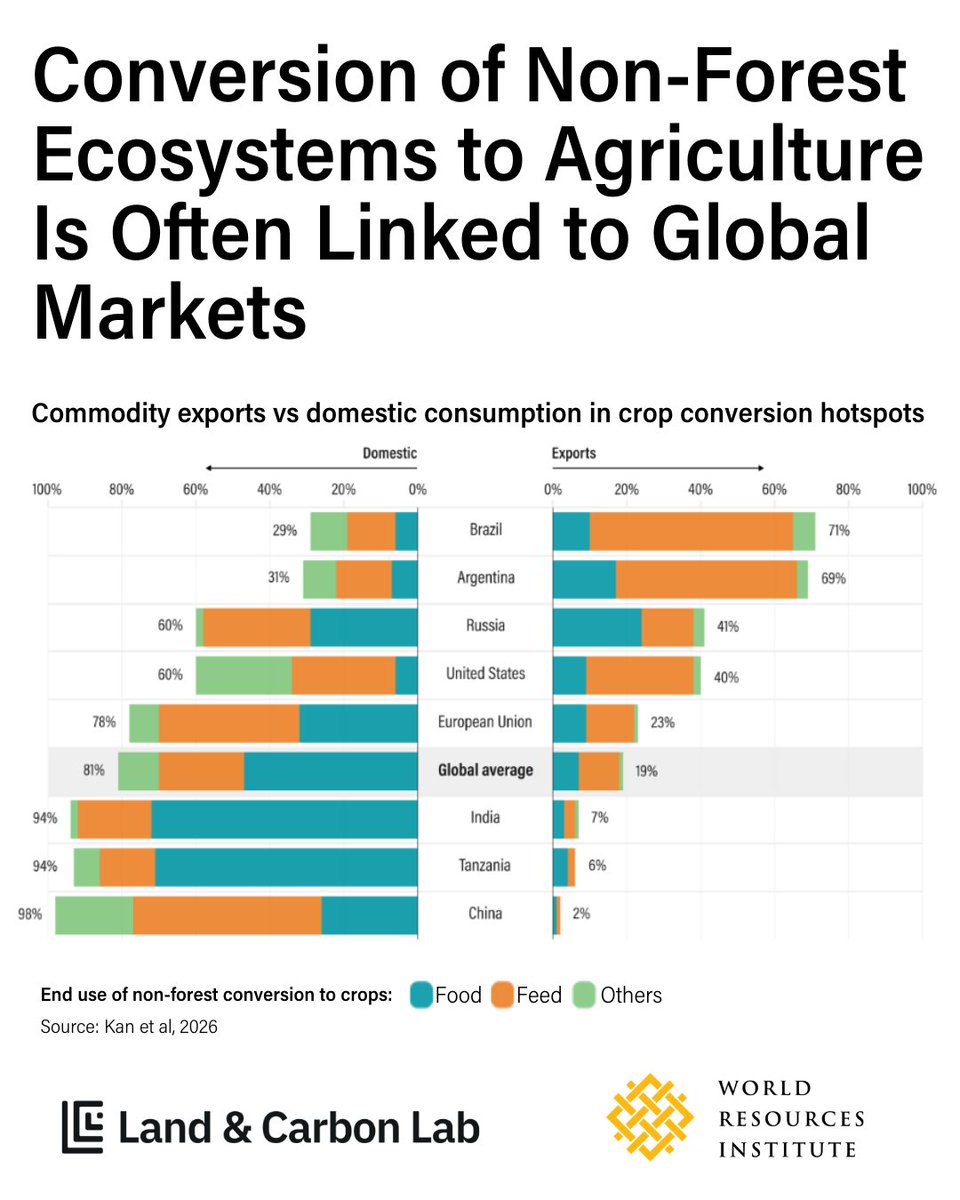
Global demand for agricultural commodities is taking an ever-bigger toll not just on forests but on the world’s other ecosystems, including grasslands, wetlands and savannas.
📖 Read more about what this means for sustainable supply chains:
bit.ly/4bjT1Ng
2
162
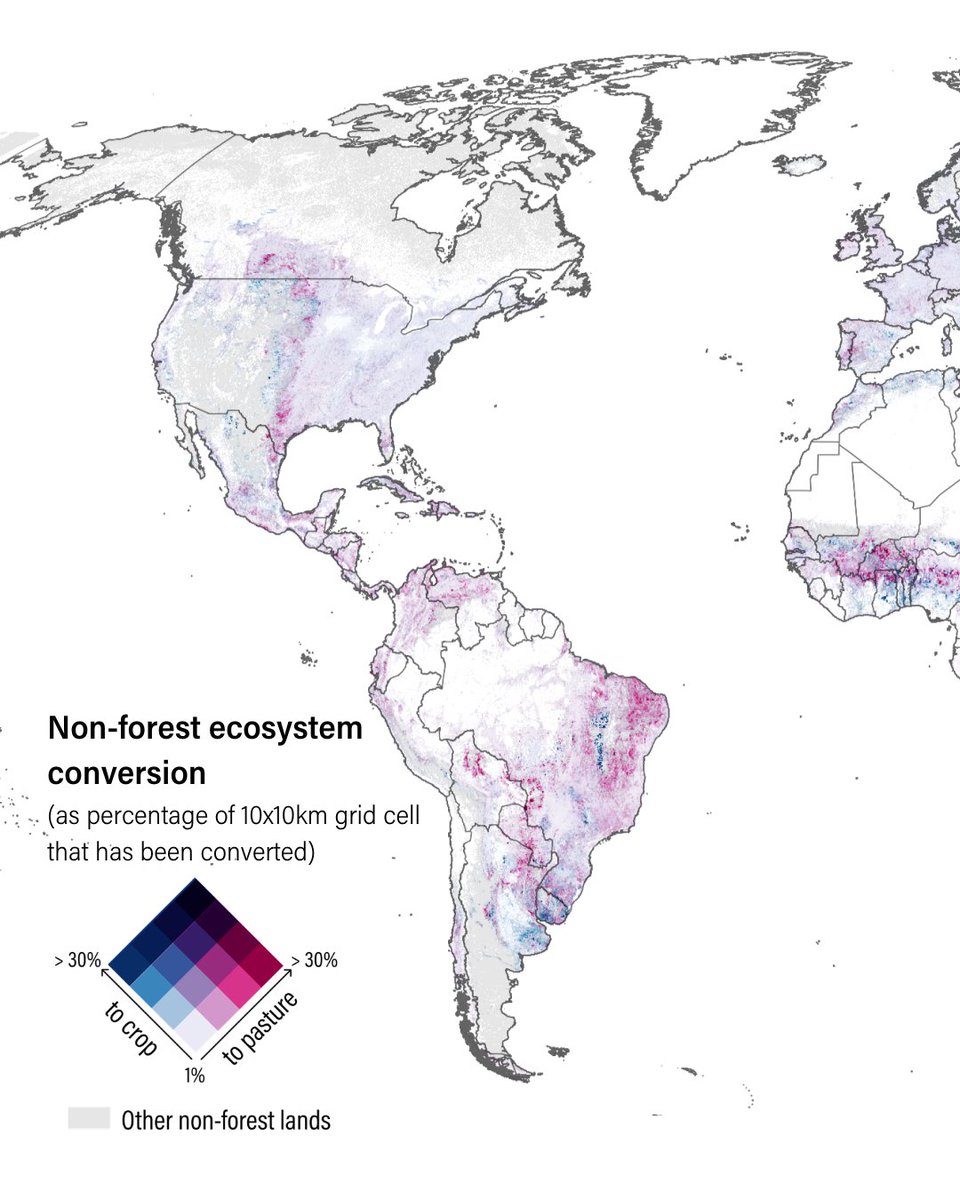
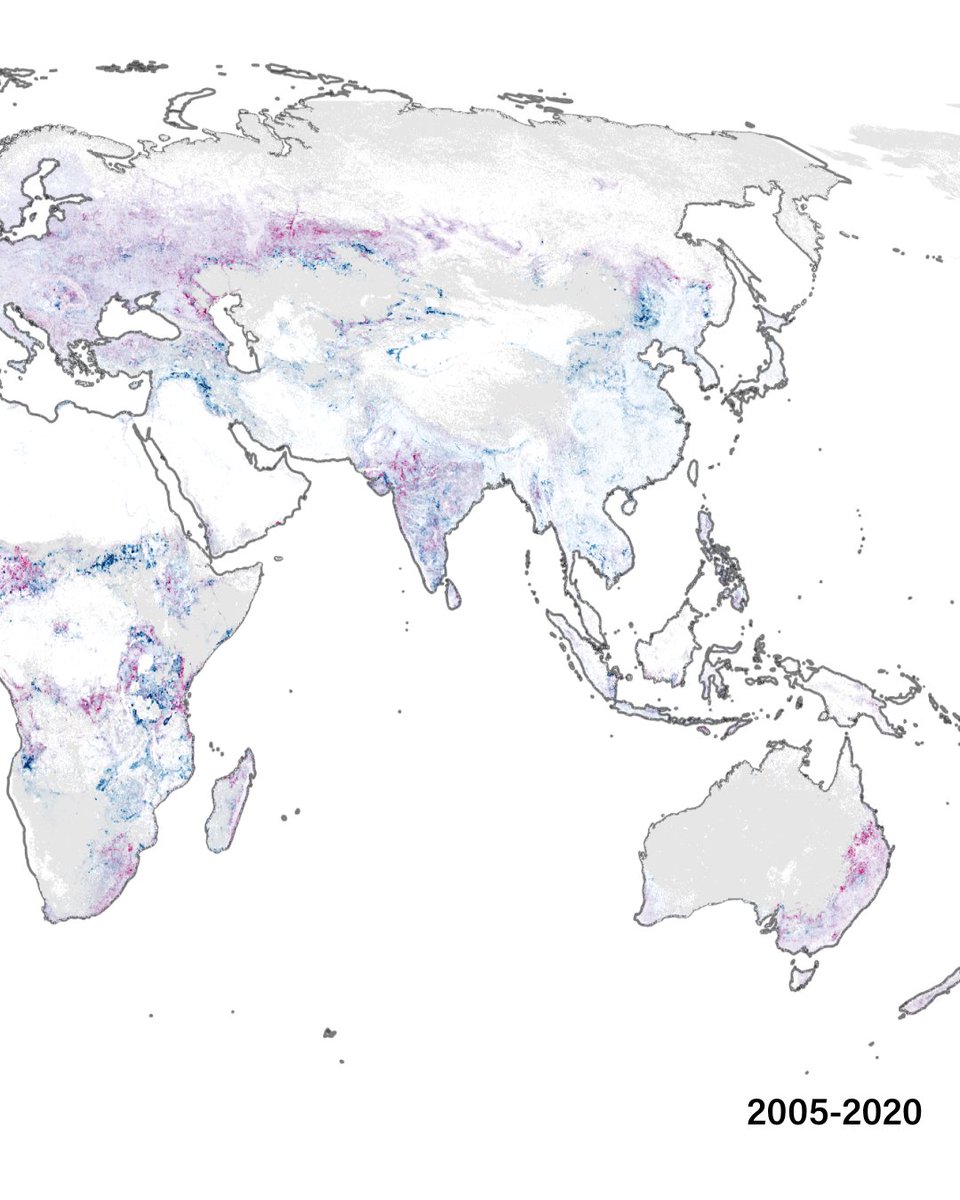
🌾 Agriculture isn’t only replacing forests.
Between 2005–2020, non-forest ecosystems were converted to annual crops and pasture at roughly four times the rate of forests, totaling an area nearly as large as Indonesia.
👉Read more: bit.ly/3Oul57R
3
181
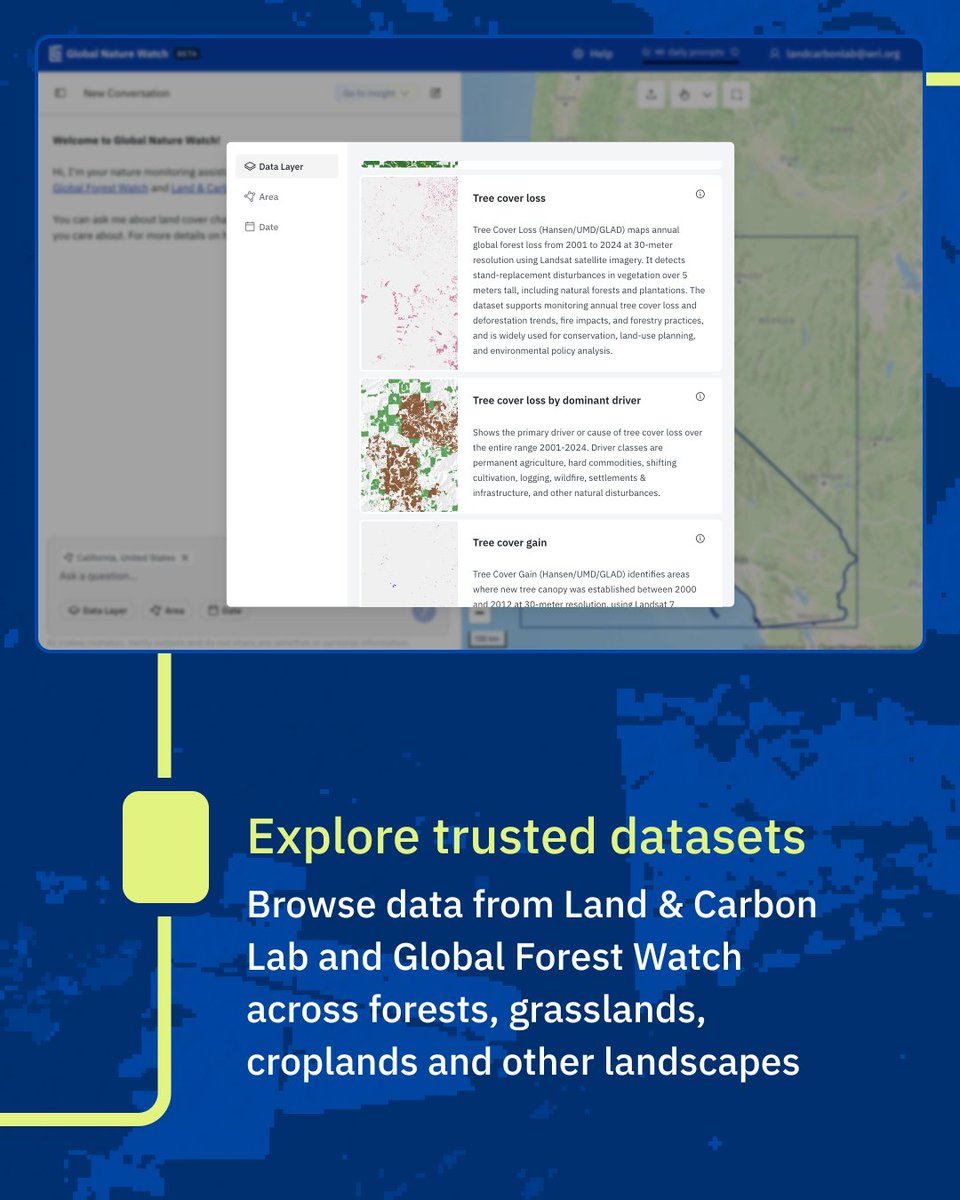
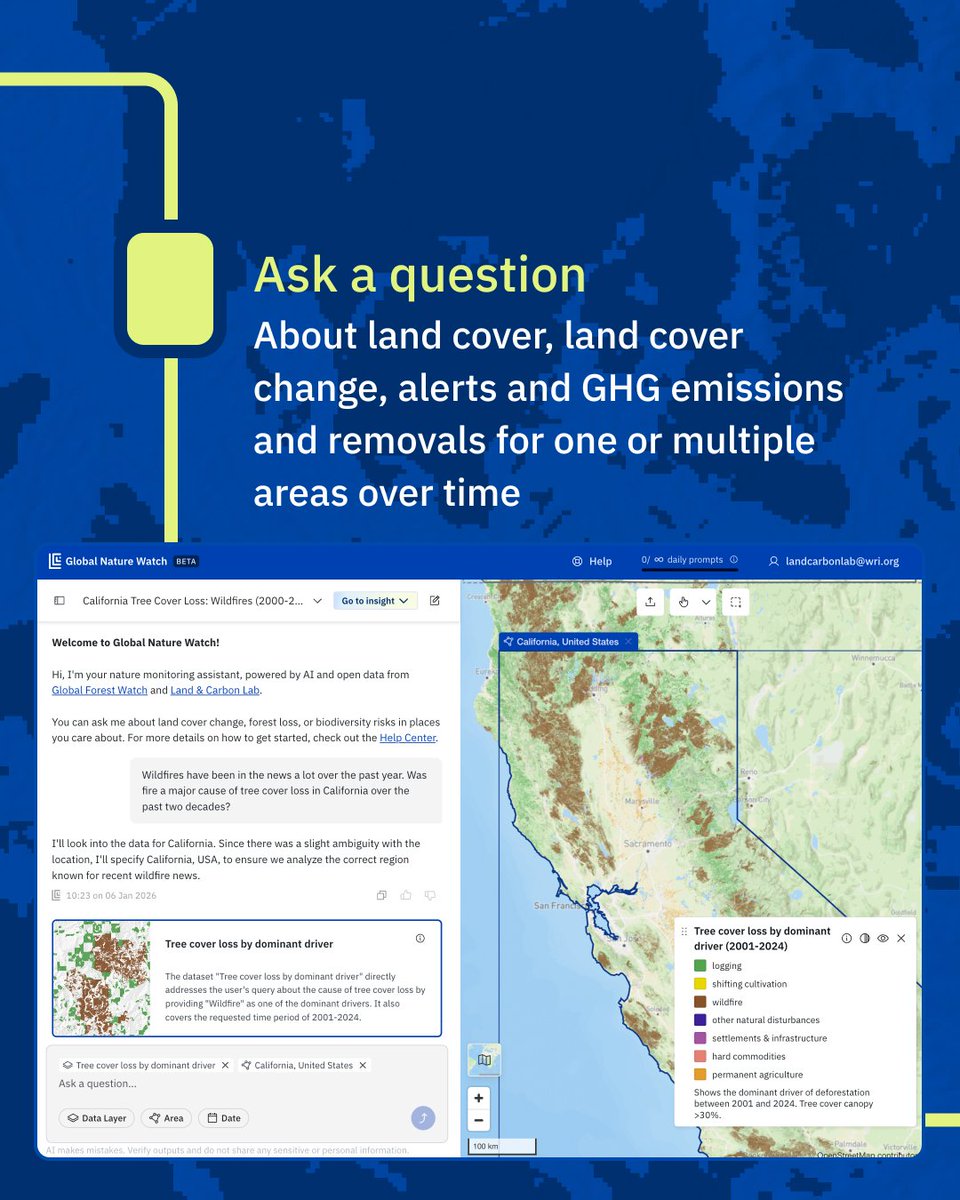
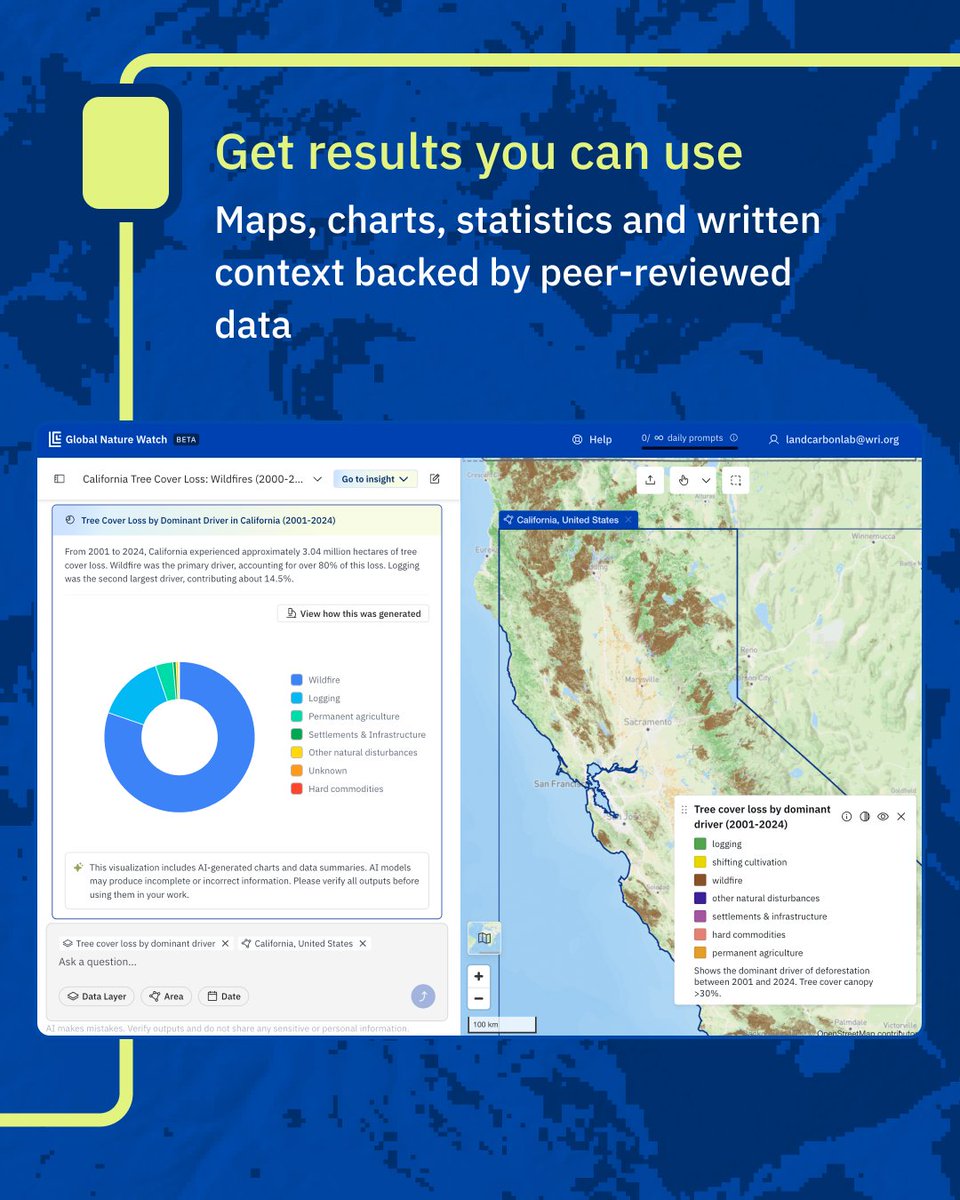
From a plain language question to insights on the world’s changing landscapes in minutes, supported by maps, statistics and context.
Access to Global Nature Watch is now completely open. Sign up today for immediate access ➡️ bit.ly/4oS2mA3
1
118
Start with an area of interest, explore peer-reviewed data sets and ask a question (in over 100 languages). Global Nature Watch then returns maps, charts, statistics and written context backed by peer-reviewed data from Land & Carbon Lab and @globalforests.

70
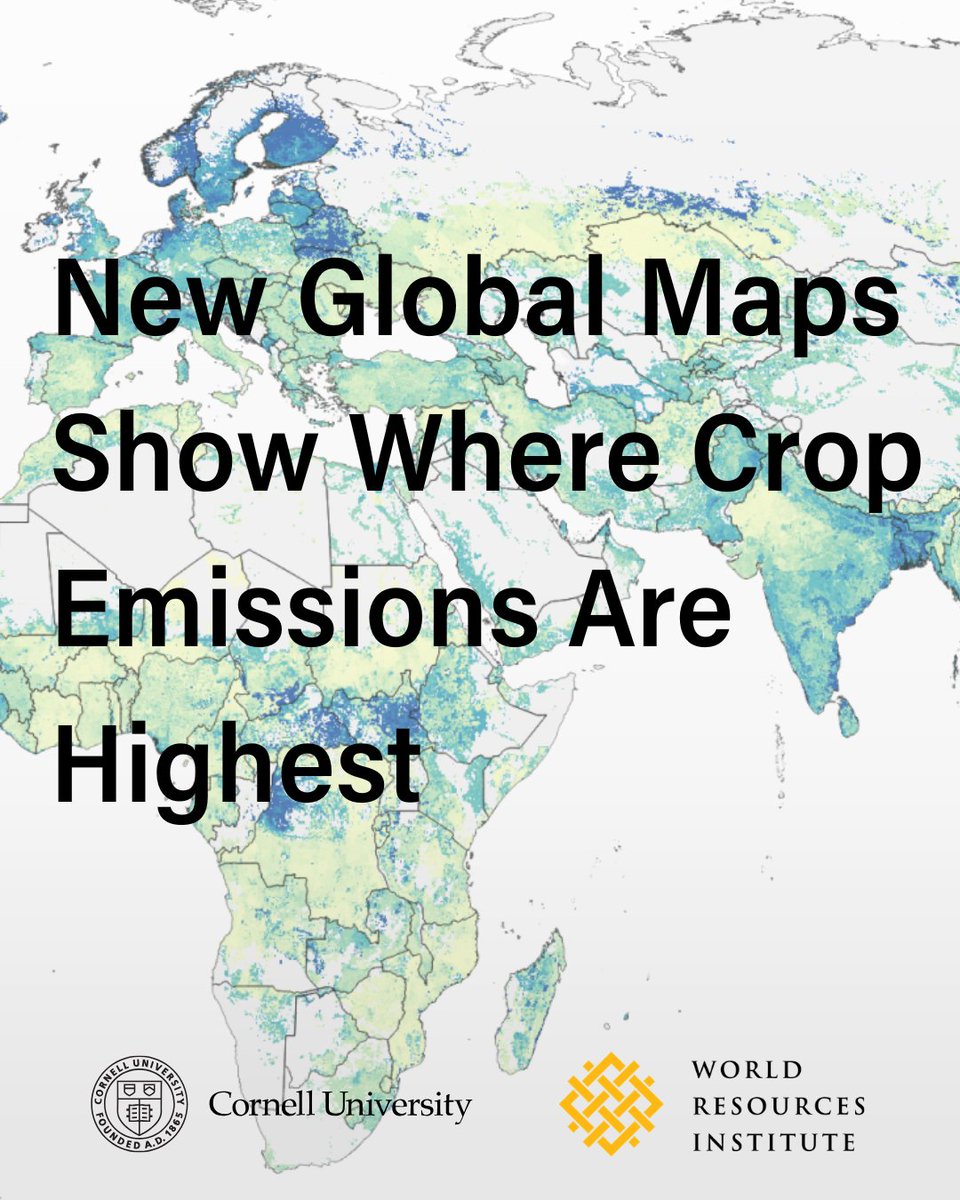
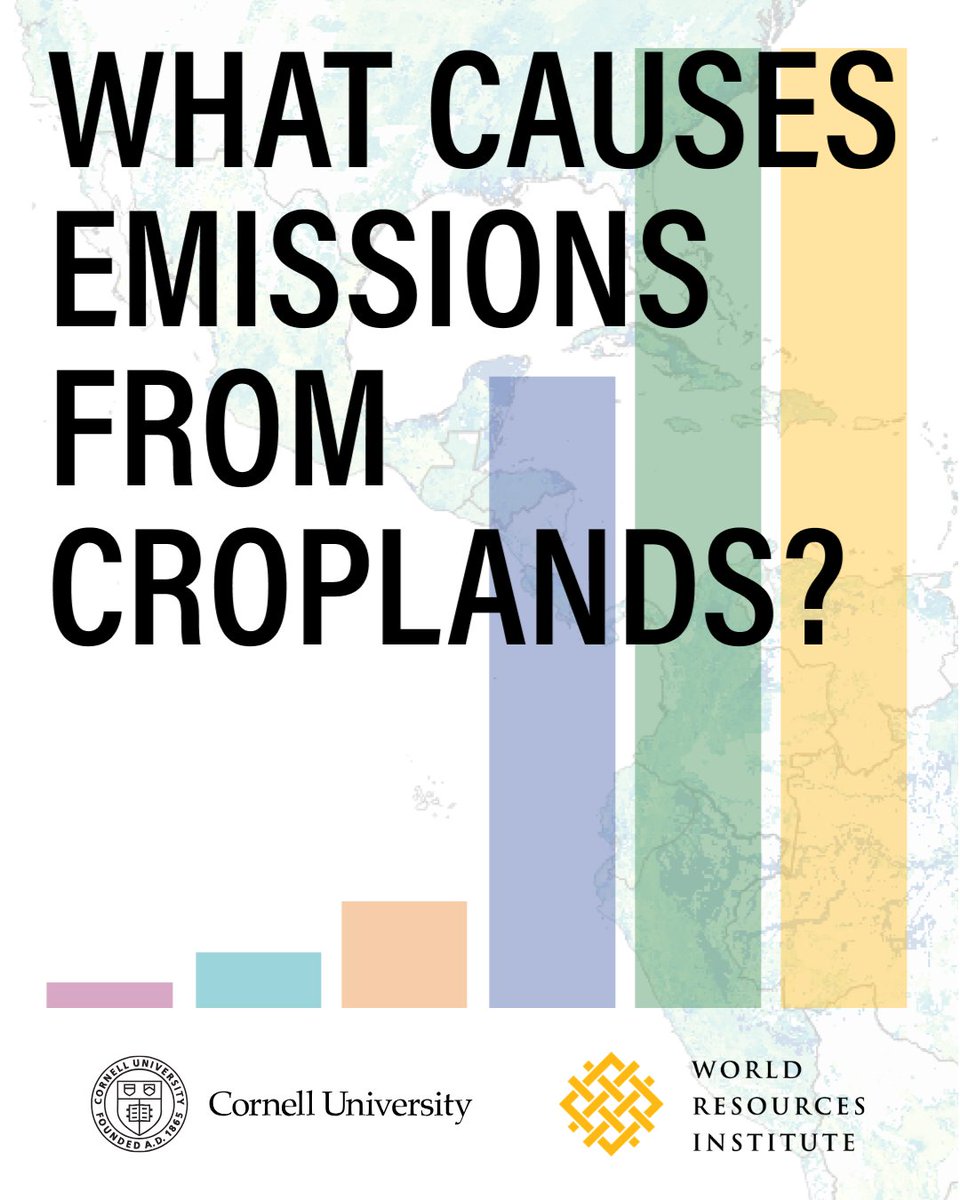
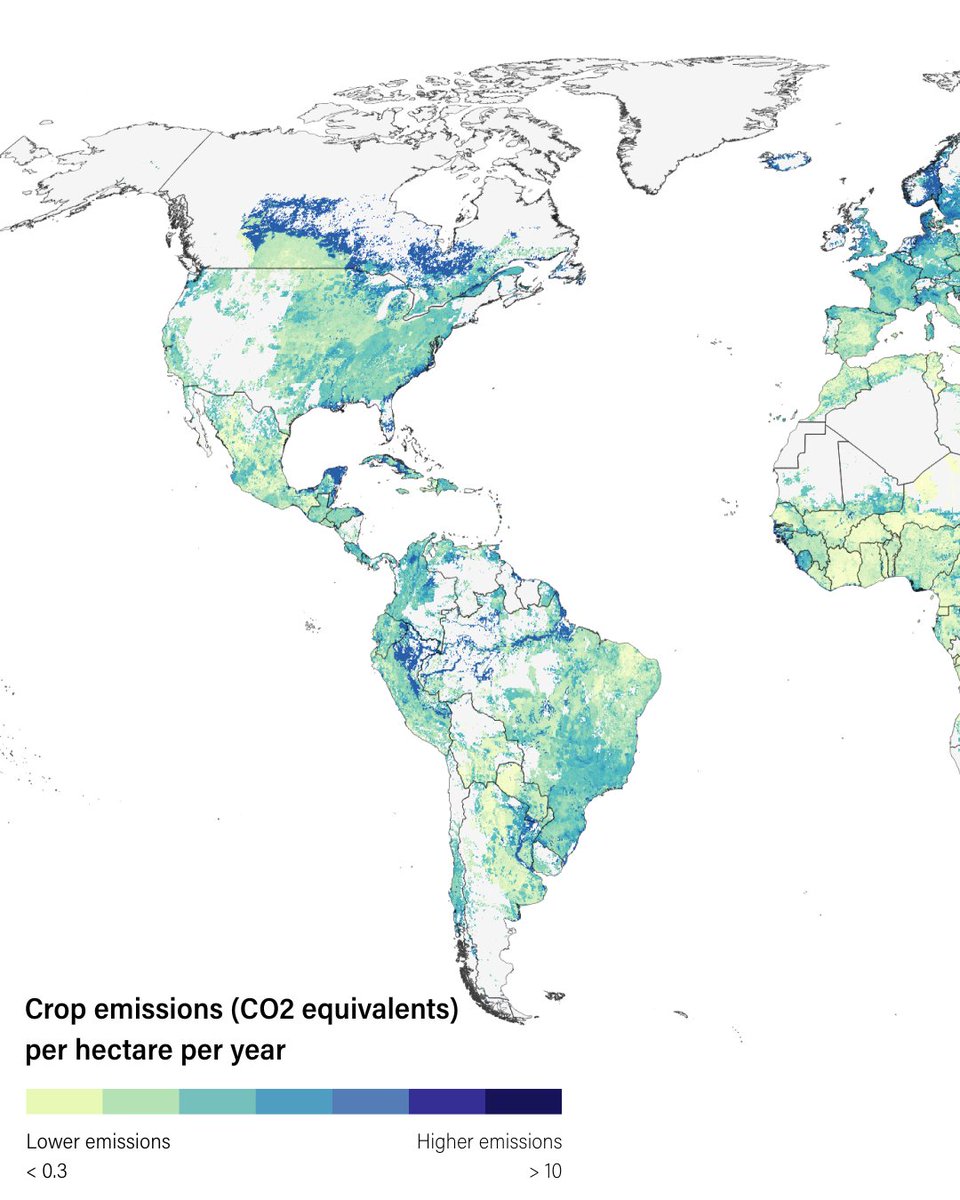
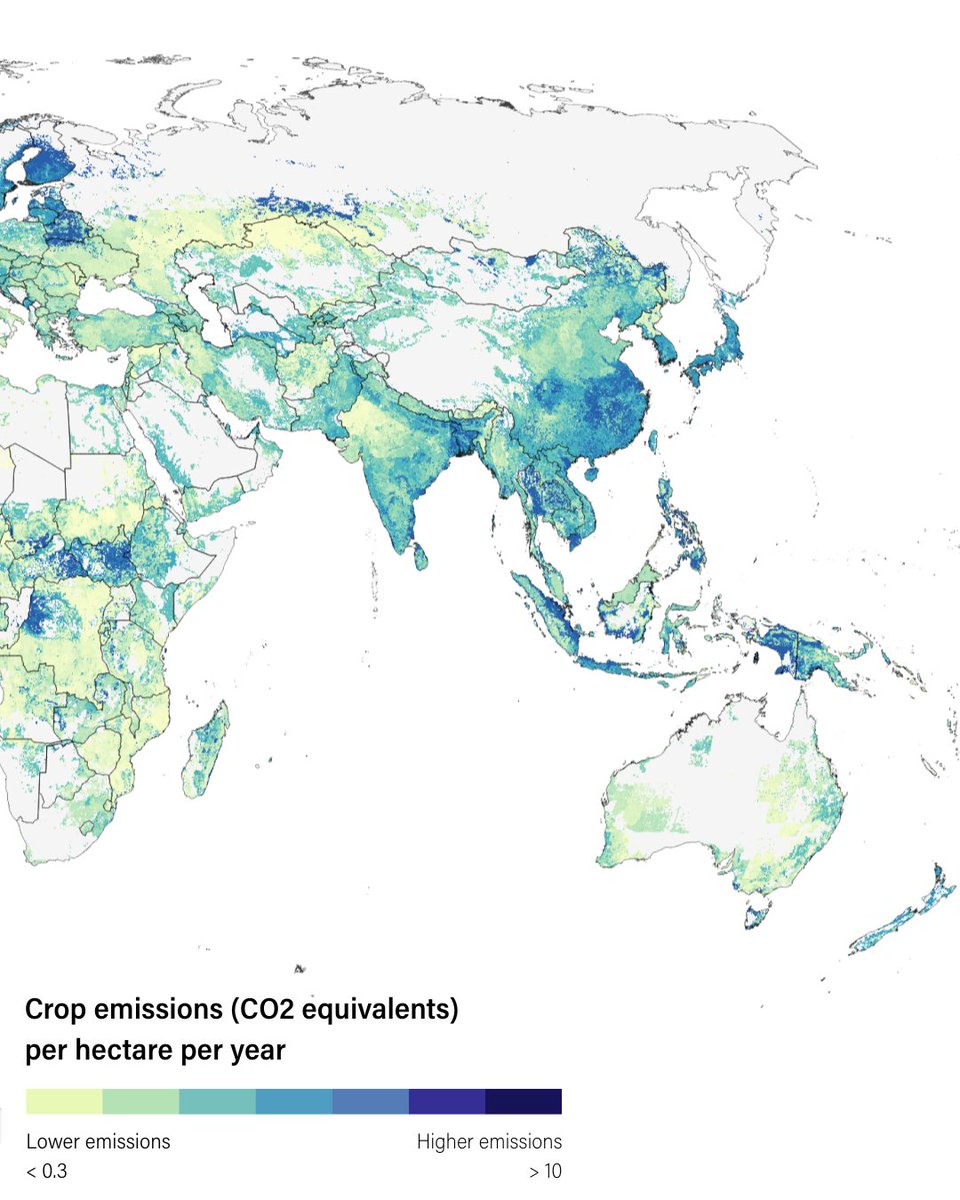
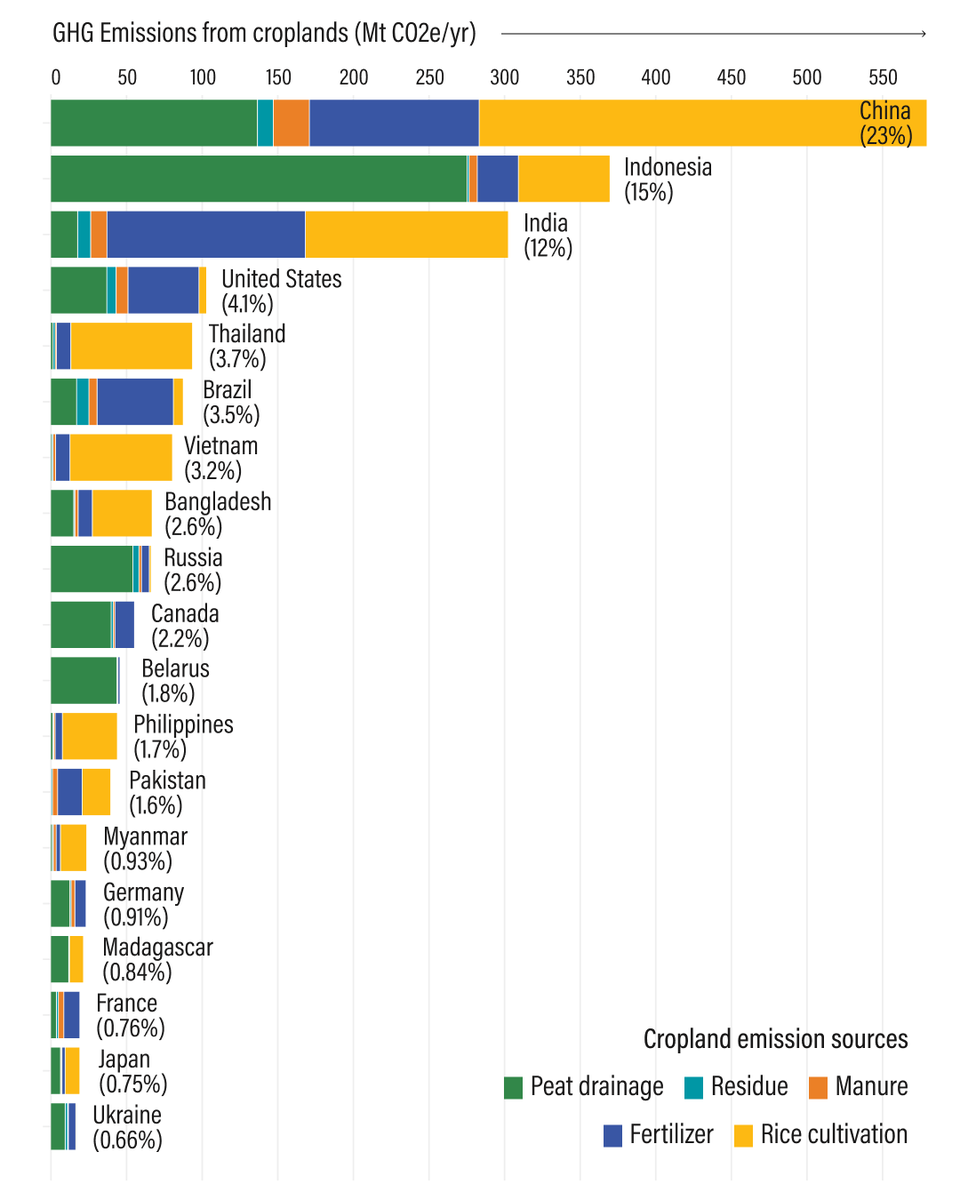
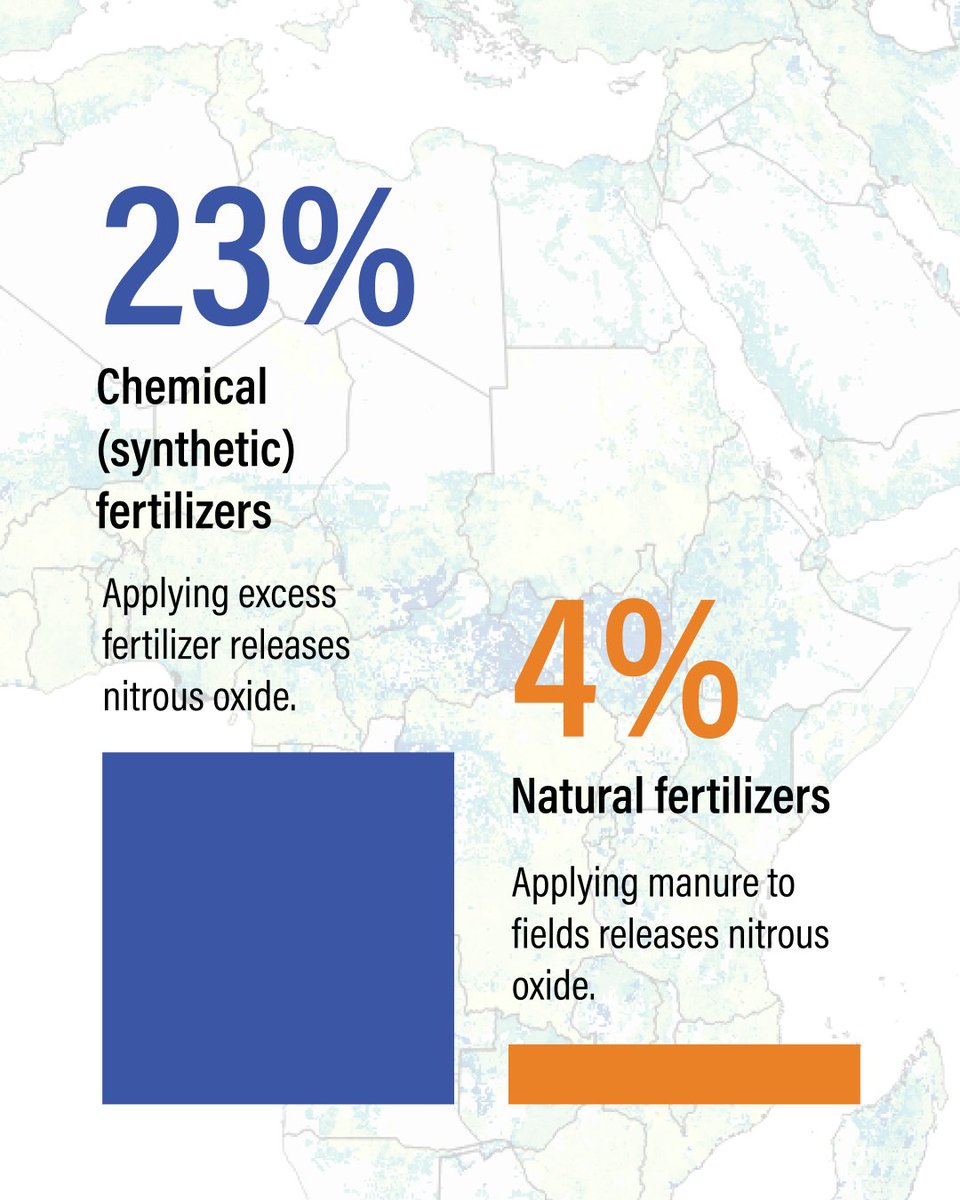
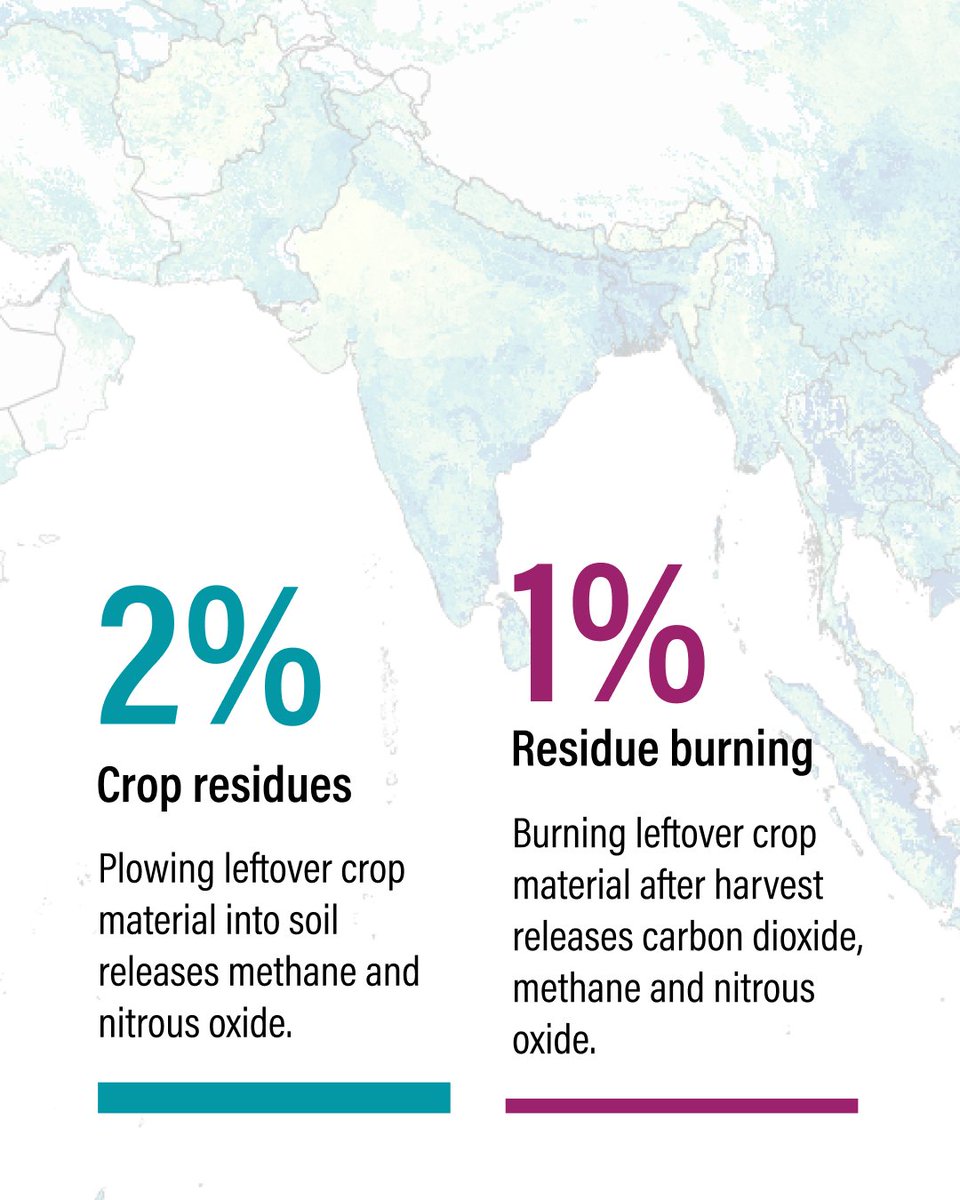
New maps developed by @Cornell in collaboration with Land & Carbon Lab highlight where emissions from crop farming are greatest and how they vary across countries and regions. 🚜🌾
So where are those emissions coming from most?
➡️ bit.ly/3OdBMnV
1
4
139
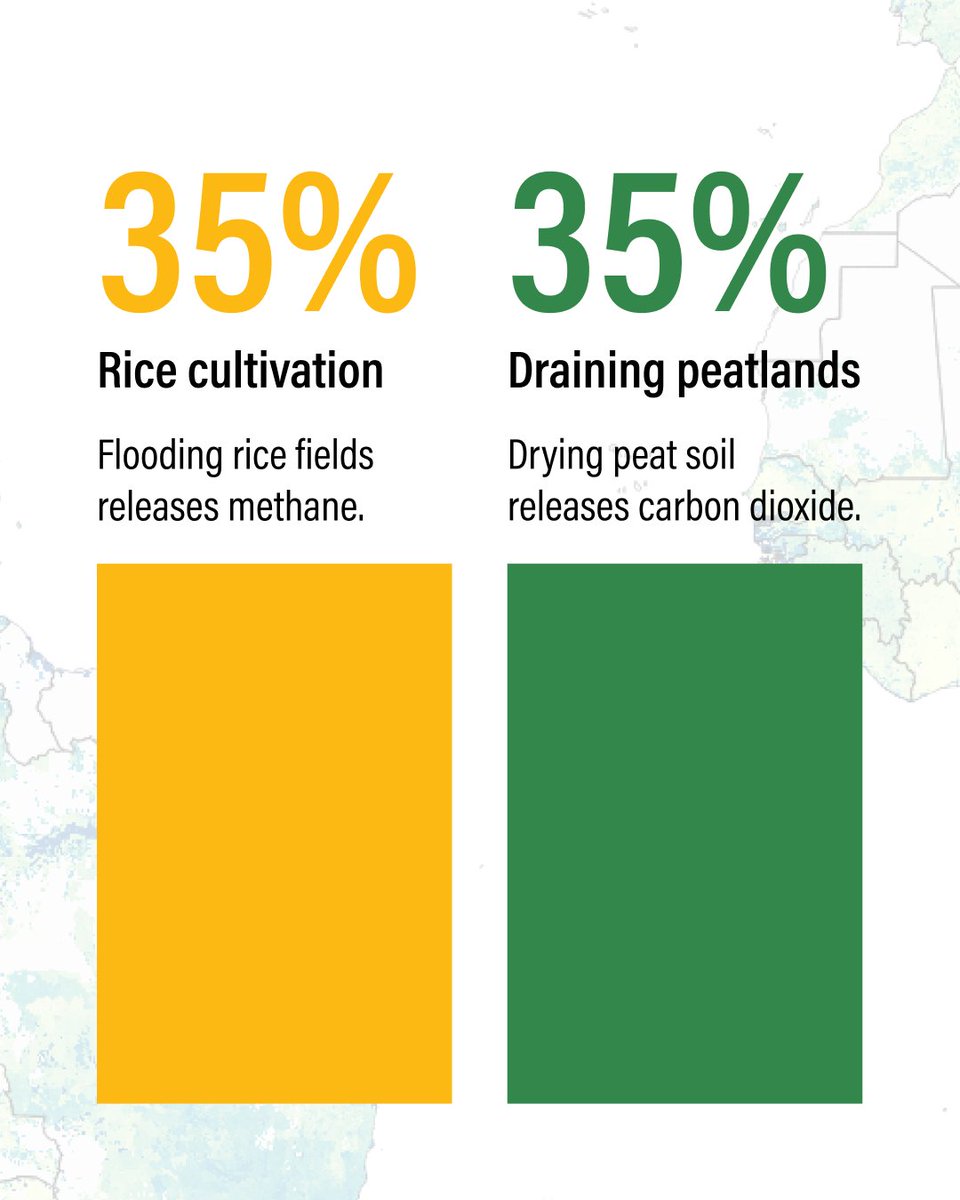
What’s the climate cost of growing crops?
New global maps developed by @Cornell in collaboration w/ Land & Carbon Lab reveal that croplands emitted nearly 5% of GHG emissions in 2020, w/ crop farming accounting for 2.5 gigatons of CO₂e.
➡️ Learn more: bit.ly/3OdBMnV
1
2
127
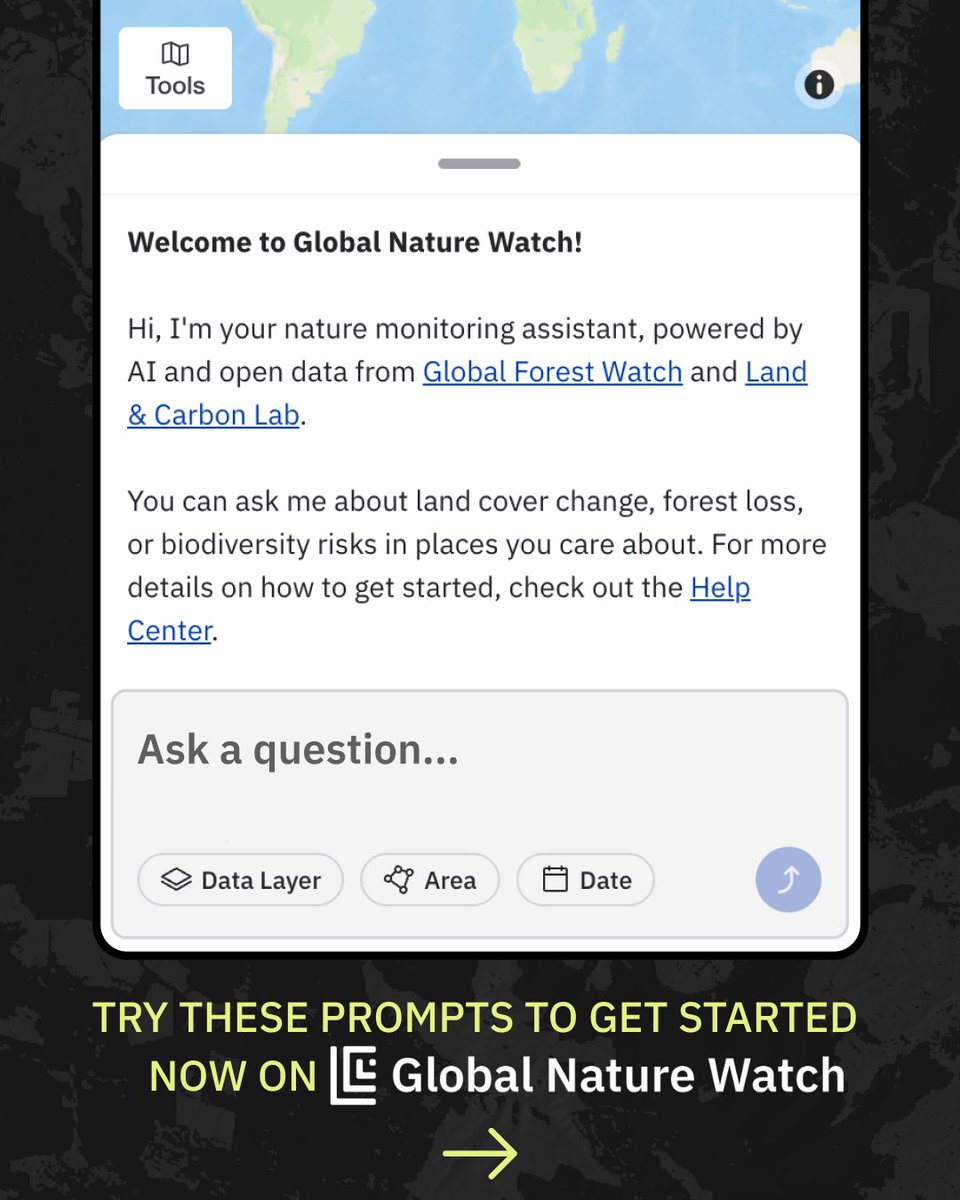
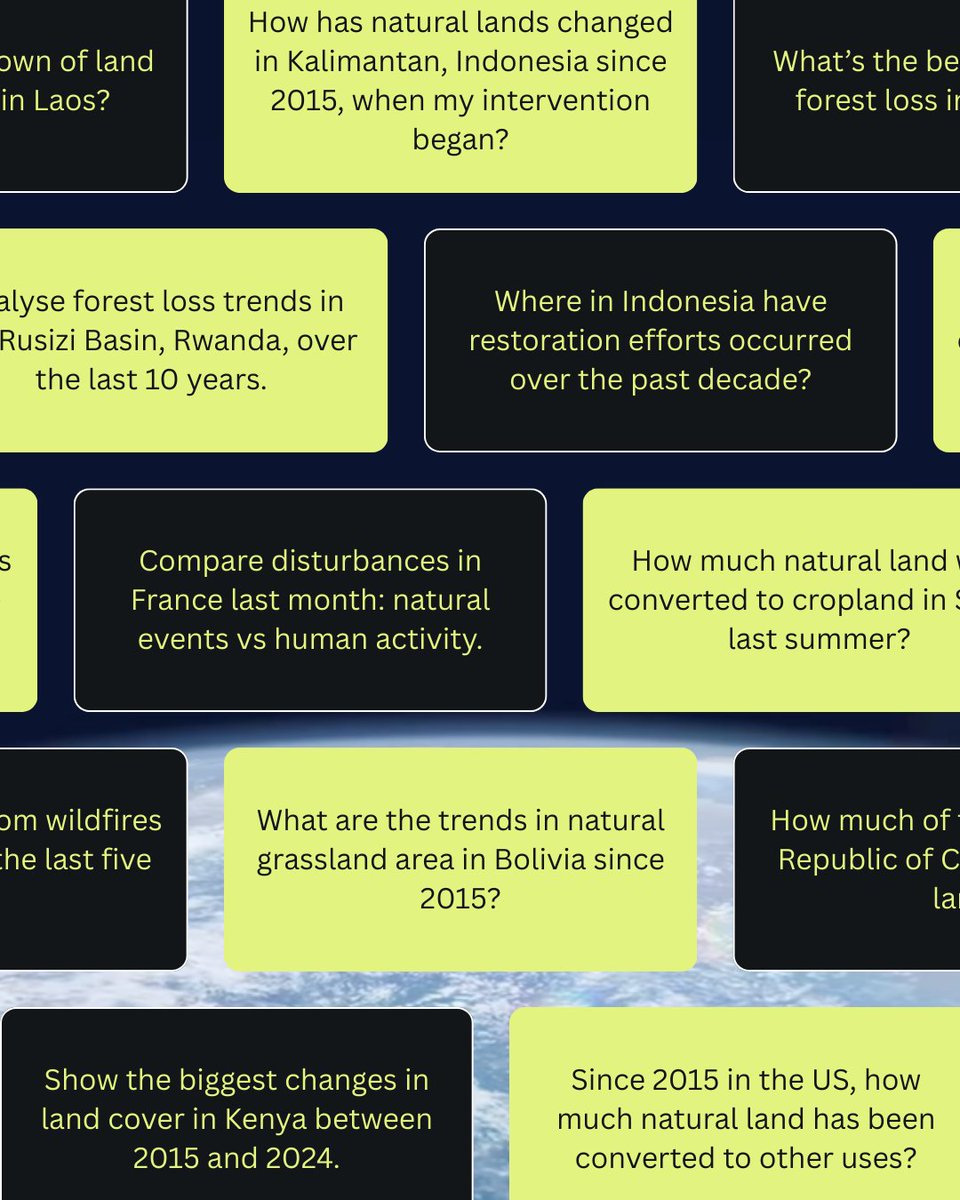
🌍 Access to Global Nature Watch is now completely open. Sign up for immediate access!
Explore Global Nature Watch right away by asking real questions about the places and ecosystems you care about.
➡️ Try a prompt and explore now: bit.ly/4oS2mA3

3
98
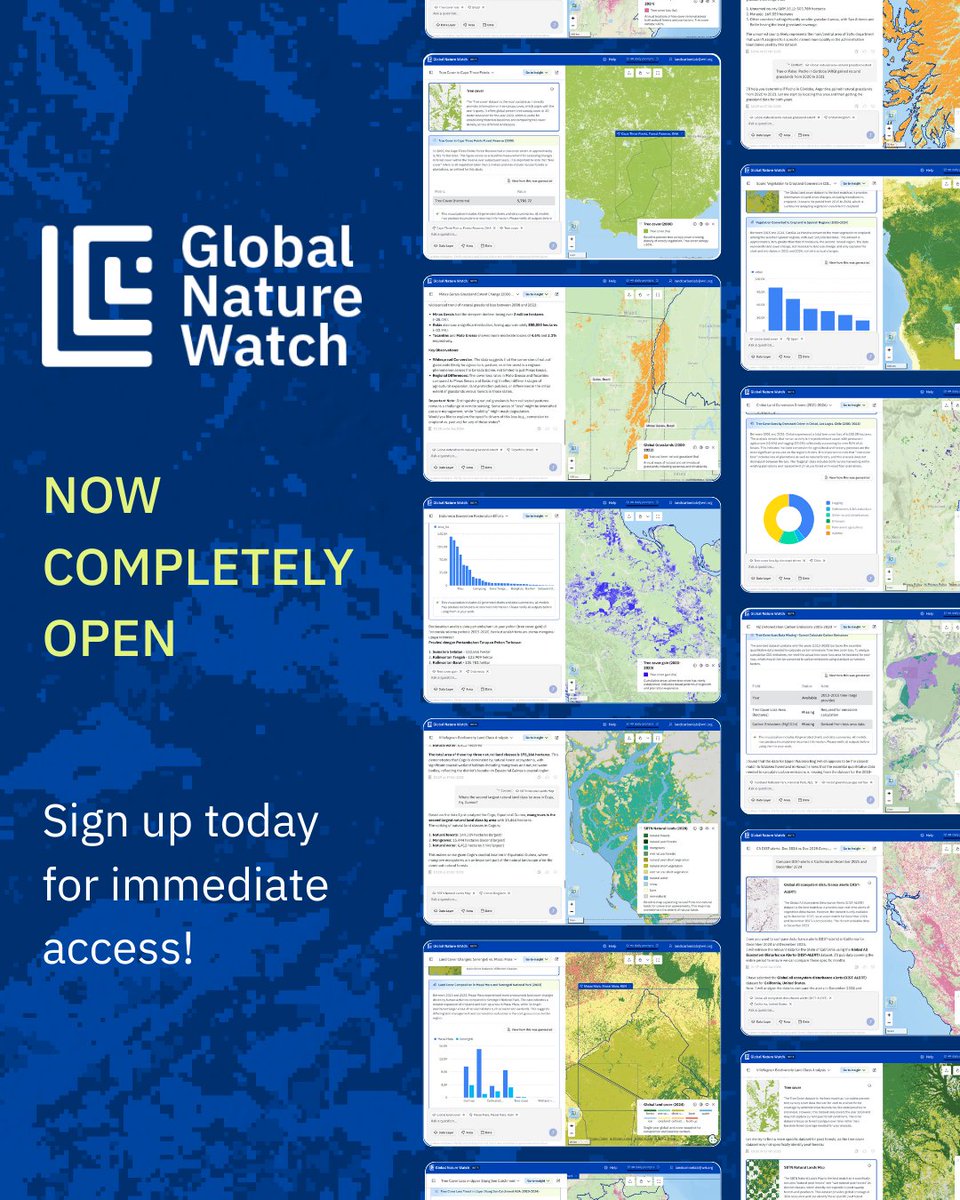
🚀 Access to Global Nature Watch is now completely open. Sign up today for immediate access: bit.ly/4oS2mA3
Global Nature Watch is an experimental, open, AI-powered system that combines research from Land & Carbon Lab & @globalforests in a simple, chat-style interface.
8
12
690