
Language Awareness (ISI, SCOPUS, Q1) publishes research of language learning and use; Edited by @masatoshi_sato
Joined January 2021
- Tweets 254
- Following 428
- Followers 1,587
- Likes 62
144 Photos and videos
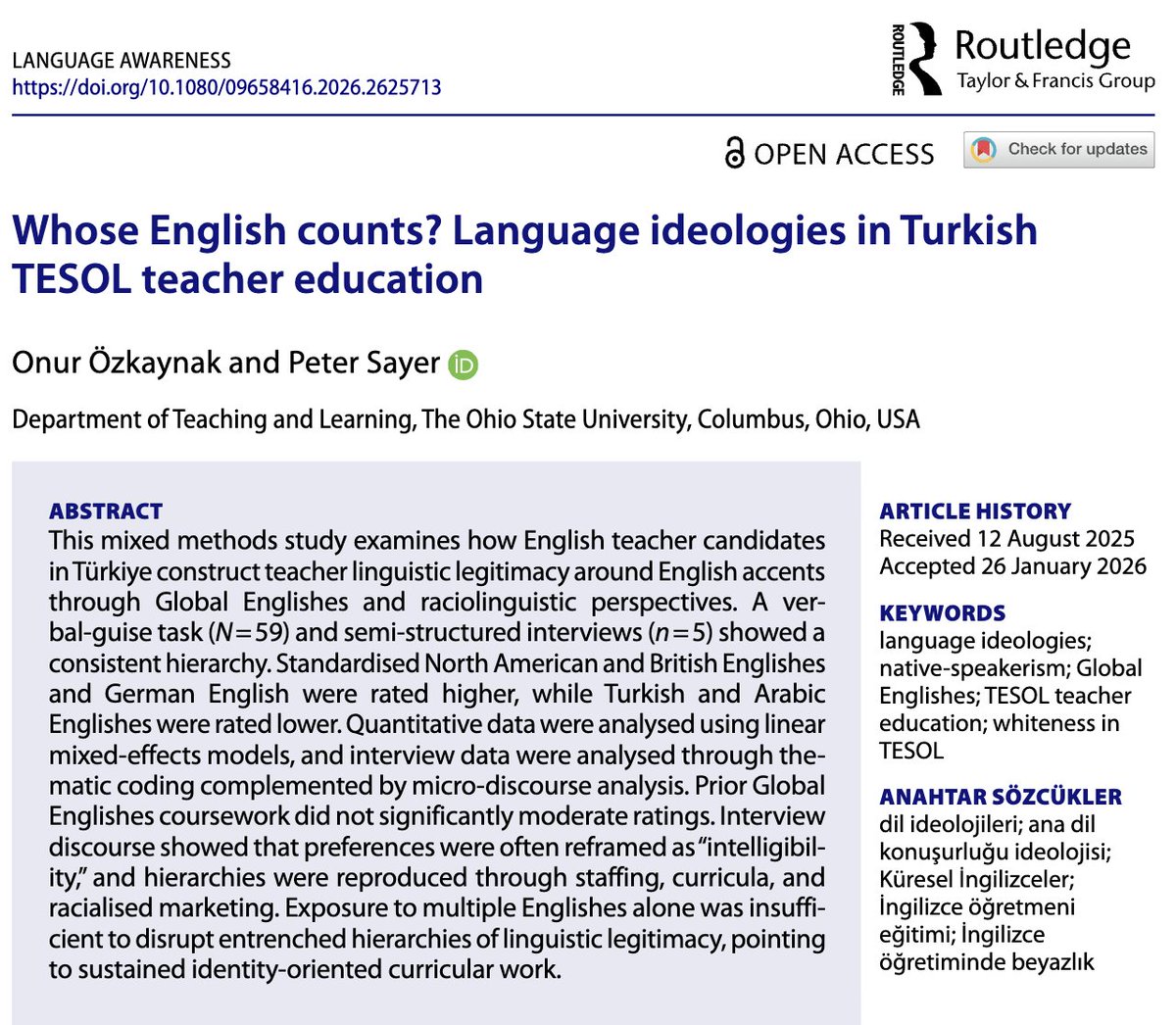
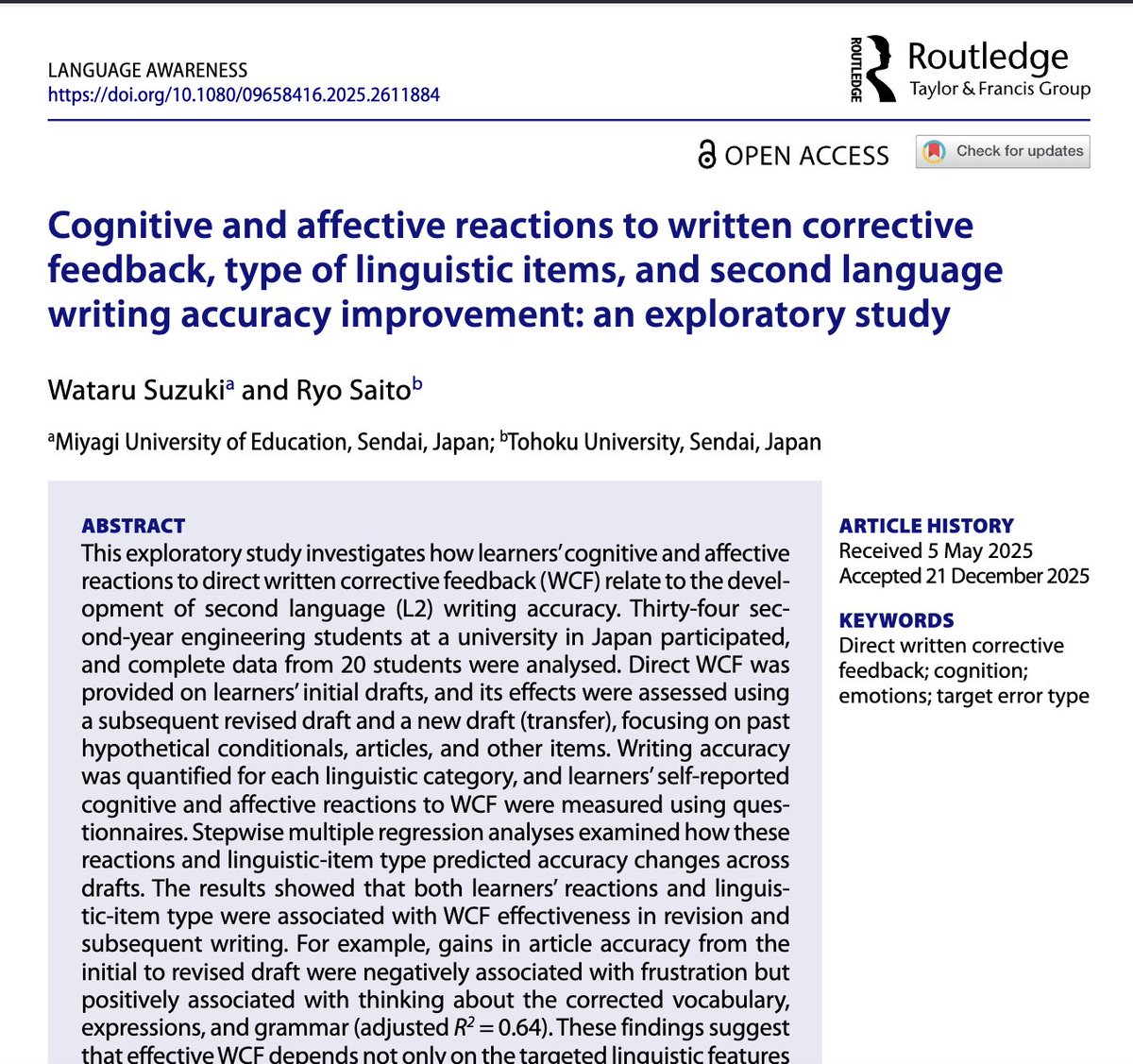
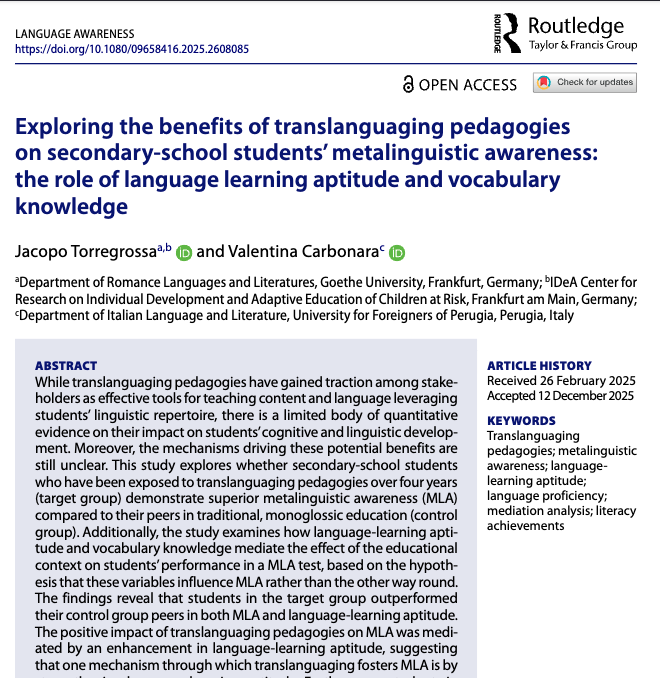
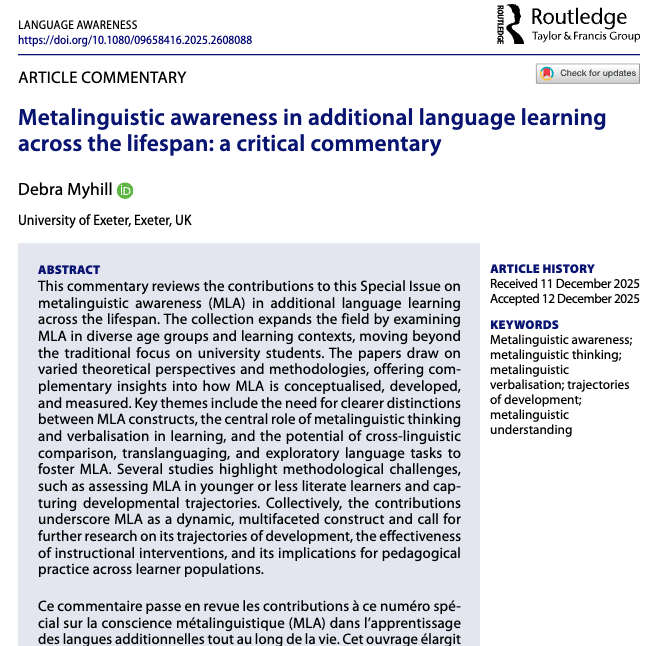

📢 #Conference Announcement
The 18th International Conference of the Association for Language Awareness (#ALA) will take place June 22–25, 2026, in #Monterey, #California!
This year’s theme is Heritages, Languages, Ecologies.
Check for more details 🔗 sites.google.com/csumb.edu/a…
2
3
681
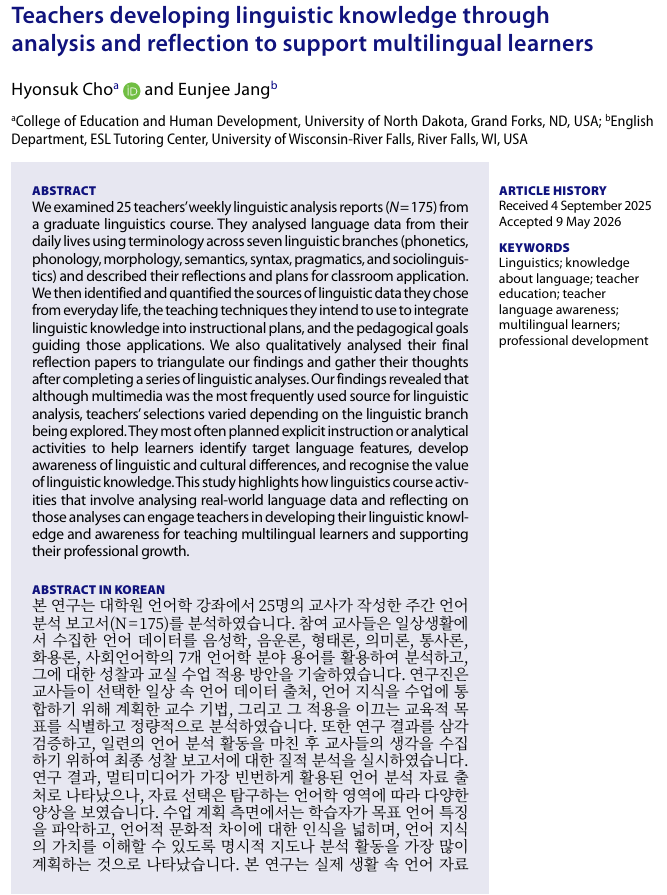
How can we foster teachers' linguistic knowledge in everyday life? A study with Korean teacher-students found that linguistic analyses of everyday language and guided reflection may deepen linguistic knowledge and support classroom application and professional growth. Abs.=Korean
2
3
6
455
🔗Read the full article: doi.org/10.1080/09658416.202…
1
117
🚨 New Issue Alert!
Language Awareness, Vol. 35, Issue 2 (June 2026) is now live on Taylor & Francis Online!
Featuring research on L2 emotions, WTC, young language learners, translation, bilingual and heritage speakers, listening strategies, and more.
1
5
7
826
🔗 Read the full issue: tandfonline.com/toc/rmla20/3…
2
5
567
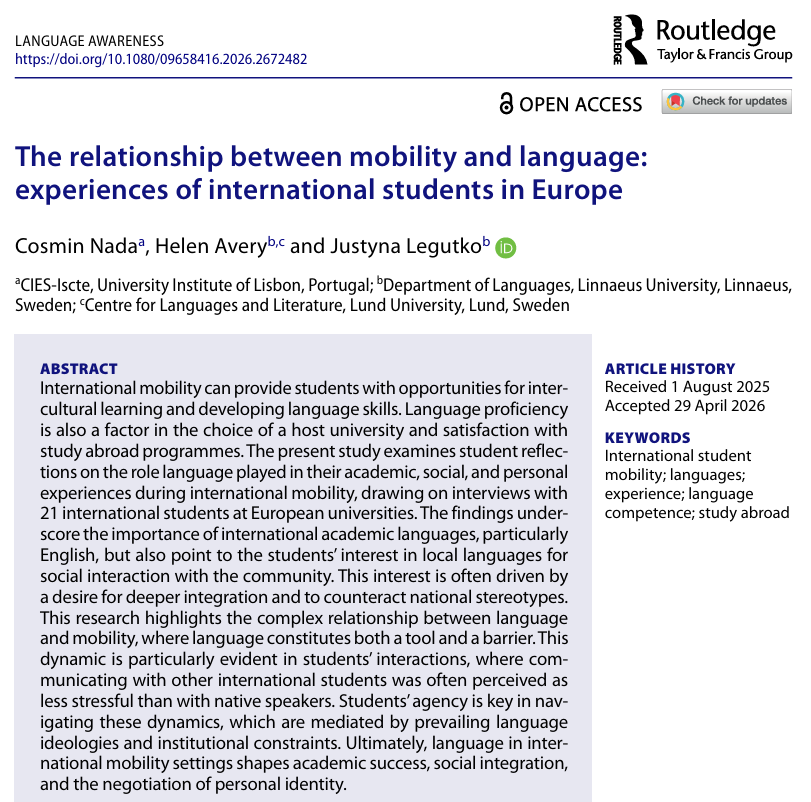
How do international students reflect on the role of language in academic and social participation? Interviews with 21 students at European universities revealed how language can support and hinder adaptation, shaped by language ideologies and local constraints. Abs.=Portuguese
1
5
10
790
🔗Read the full article: doi.org/10.1080/09658416.202…
2
1
113
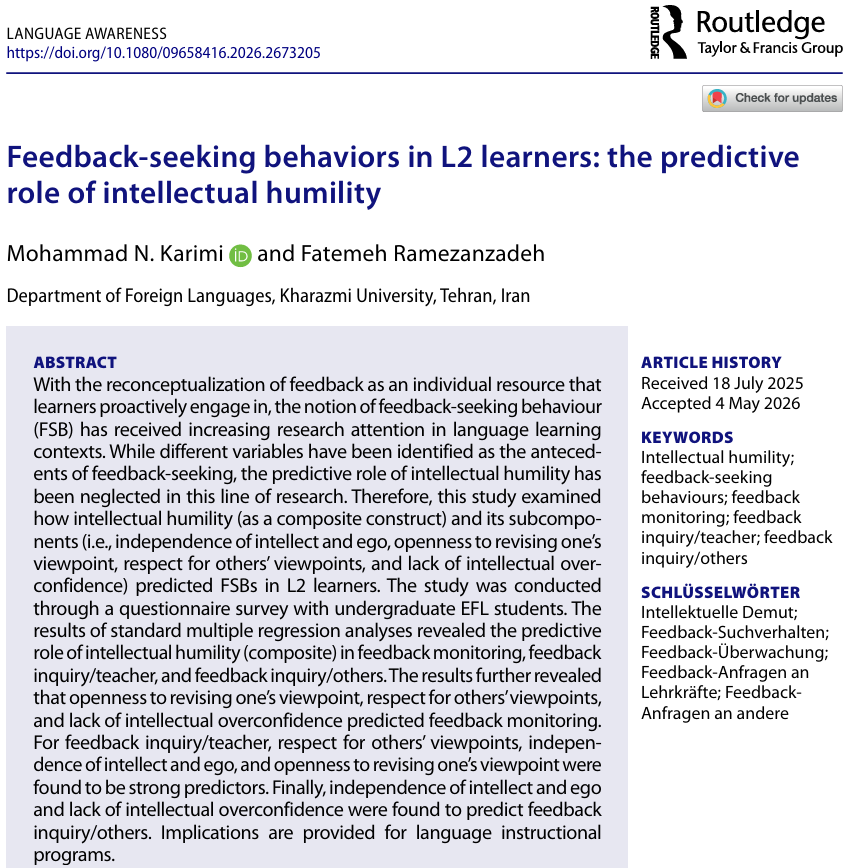
How is learners’ intellectual humility associated with feedback-seeking behaviour? A survey study showed Iranian EFL learners who were more open to changing viewpoints, respectful of others’ ideas, and less overconfident were more likely to actively seek feedback. Abs.=German
1
4
10
677
🔗Read the full article: doi.org/10.1080/09658416.202…
1
89
🚨 New Issue Alert!
Language Awareness, Vol. 35, Issue 1 (February 2026) is now live! Featuring research on EMI, AI writing, metacognition, Global Englishes, corrective feedback, translanguaging, decolonial language awareness & more.
🔗 Read the full issue. Link in comment.
1
8
8
1,092
🔗 Read the full issue: tandfonline.com/toc/rmla20/3…
#LanguageAwareness
3
7
672
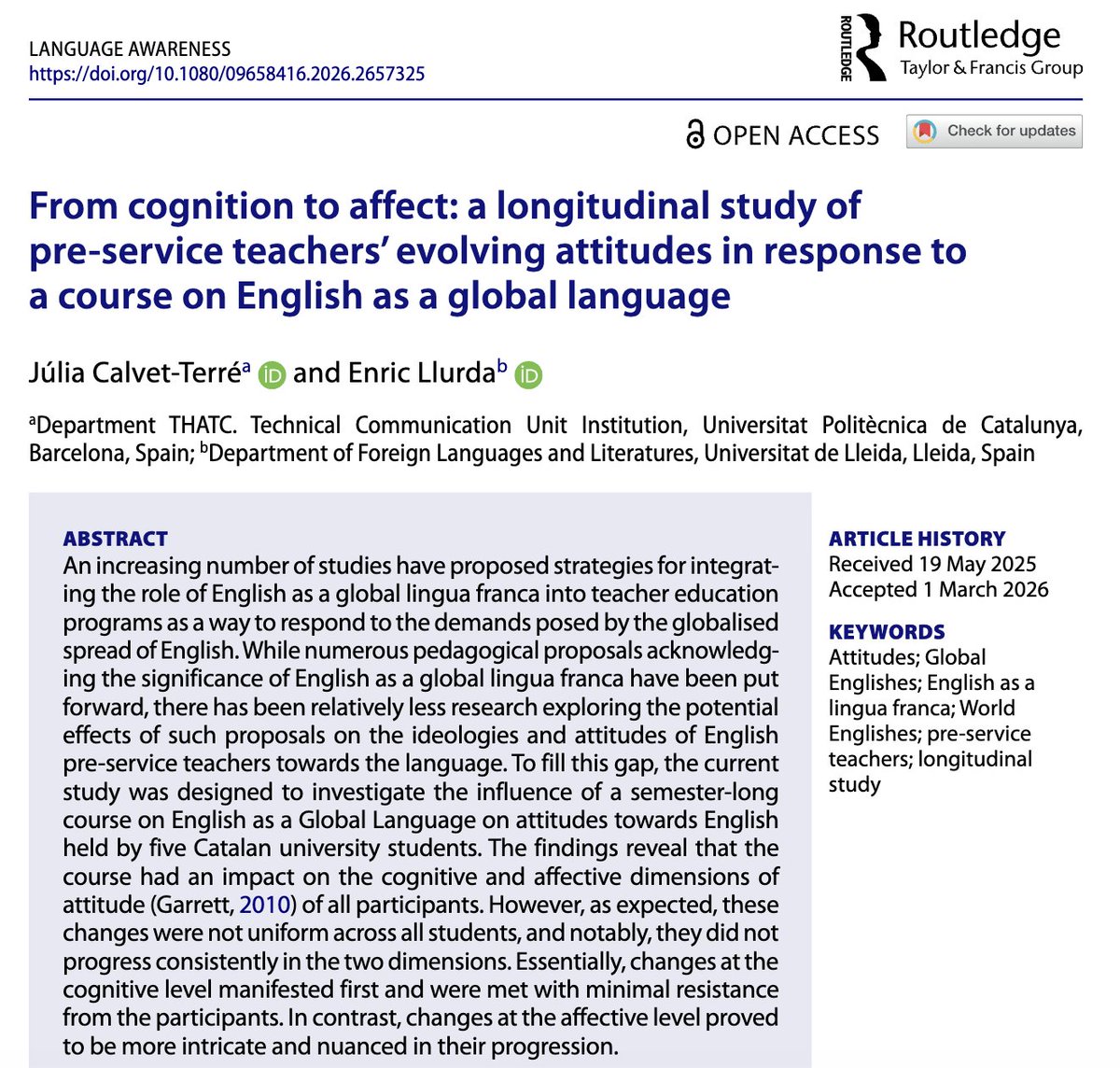
Teaching Global English can change minds, but can it change FEELINGS? This study shows pre-service teachers adapted cognitively to global English perspectives, while affective shifts were slower and more complex. Abs.=Catalan
1
9
22
4,616
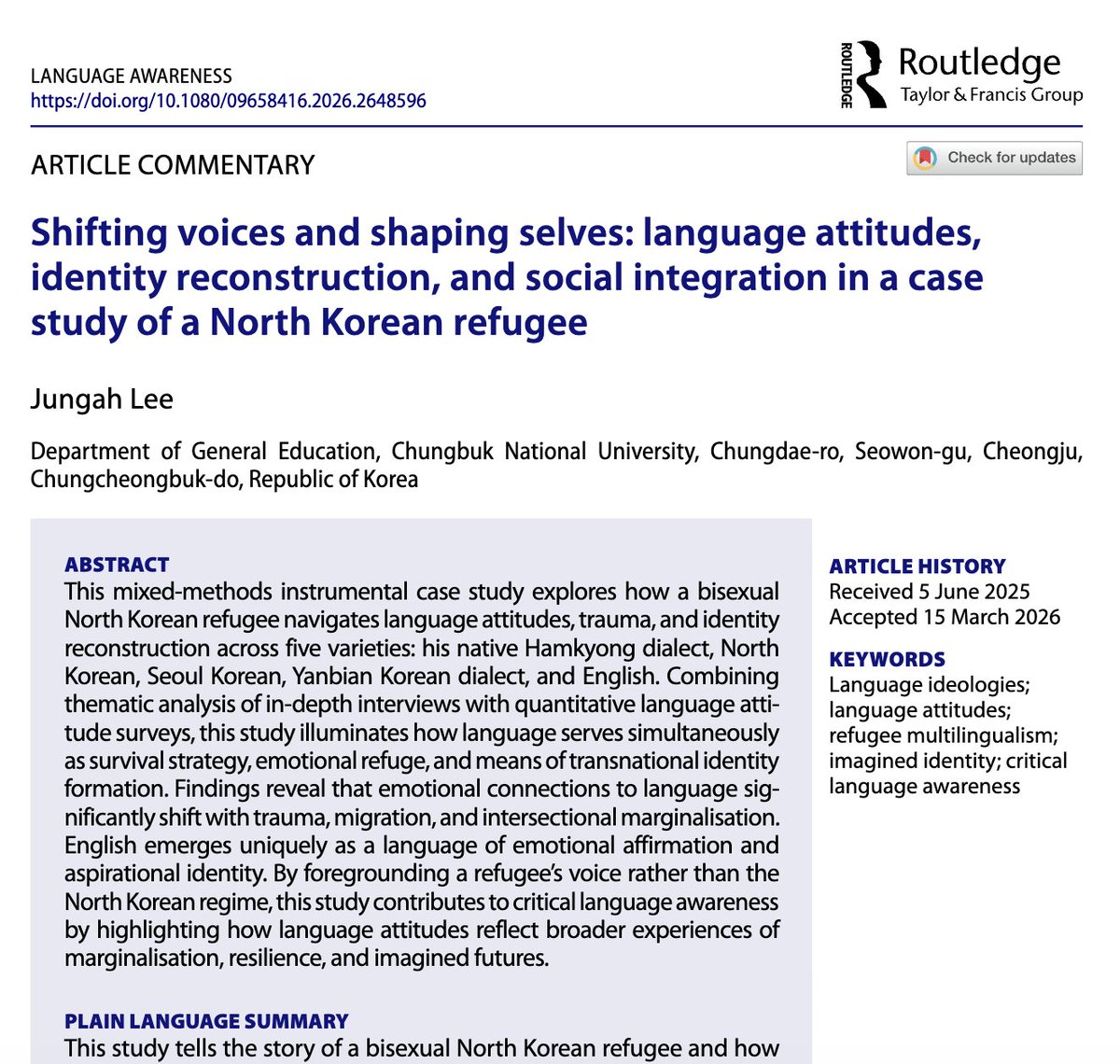
How does language shape identity after displacement? A case study of a bisexual North Korean refugee shows how different languages become tools for survival, refuge, and rebuilding identity, with English emerging as a space for affirmation and future selves. Abs.=English
4
8
588
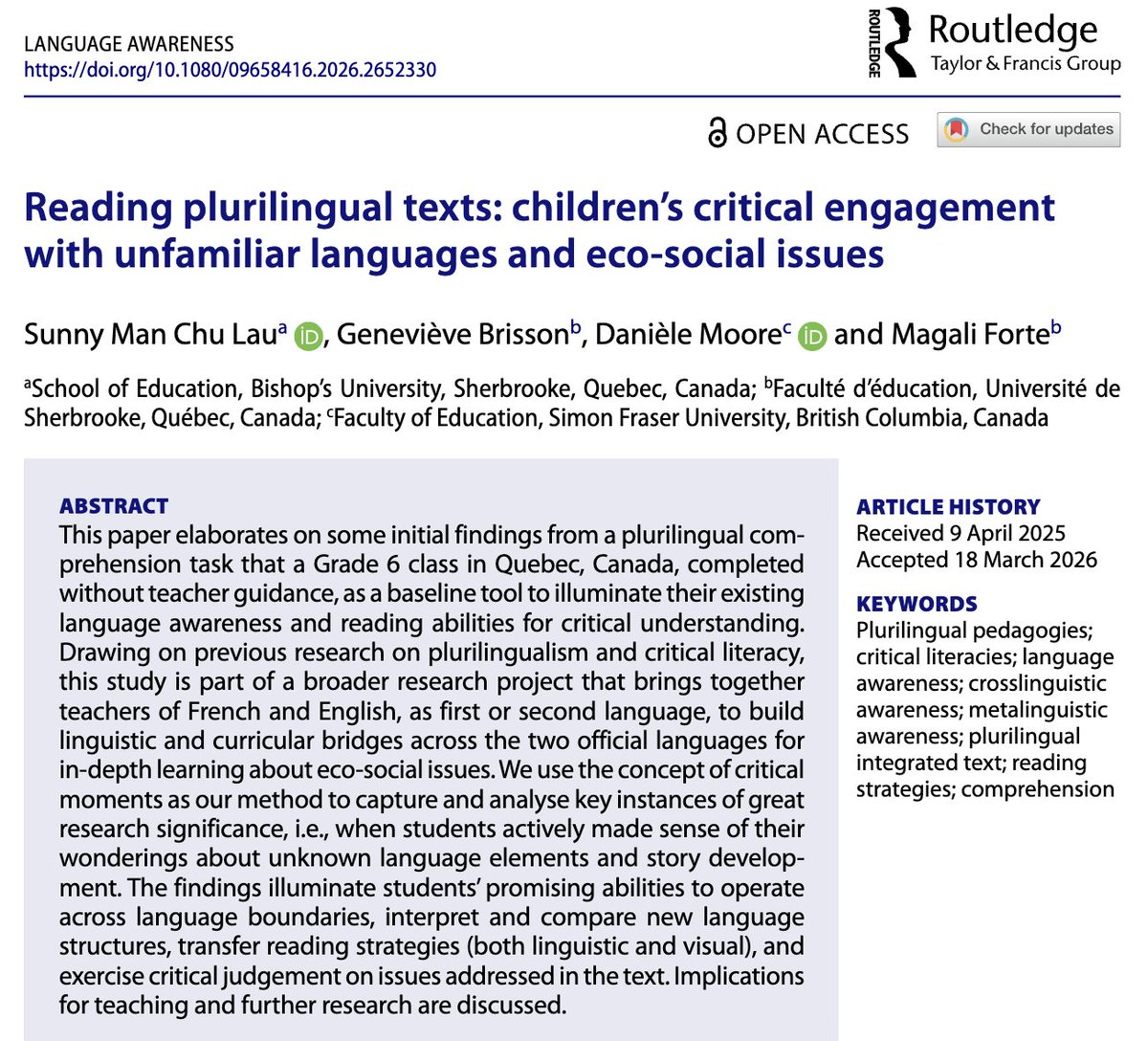
What happens when students read across languages, with NO teacher support 😲?
Grade 6 learners in Quebec showed SURPRISING ABILITY to make meaning, transfer strategies, and think critically, highlighting the UNTAPPED potential of plurilingual reading. Abs.=English
6
4
542
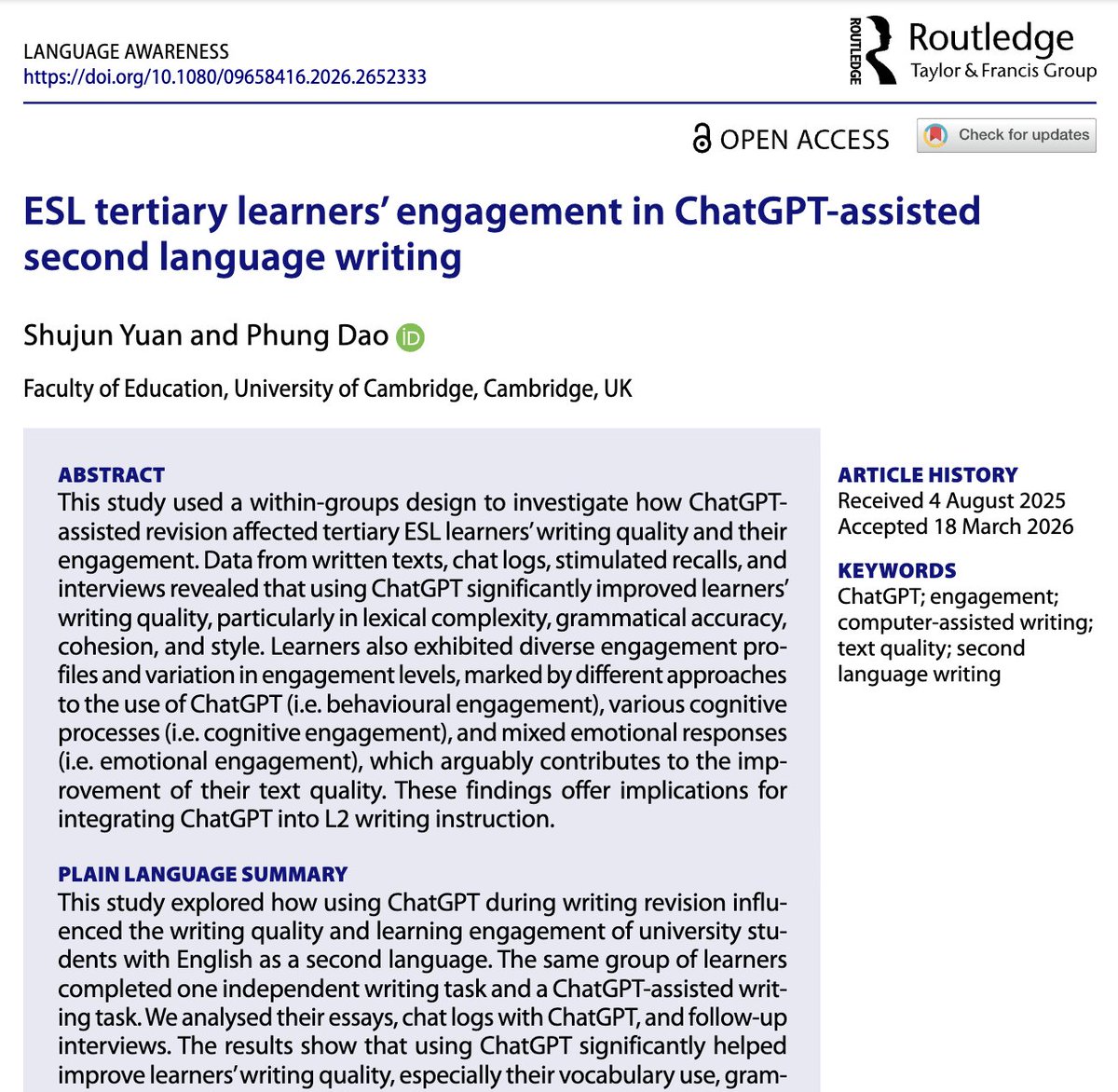
Does #ChatGPT really improve ESL writing? Clear gains in vocabulary, grammar, cohesion, and style. BUT learners engaged with it in VERY DIFFERENT ways, suggesting outcomes depend on how the tool is actually used. Abs=English
17
28
25,941
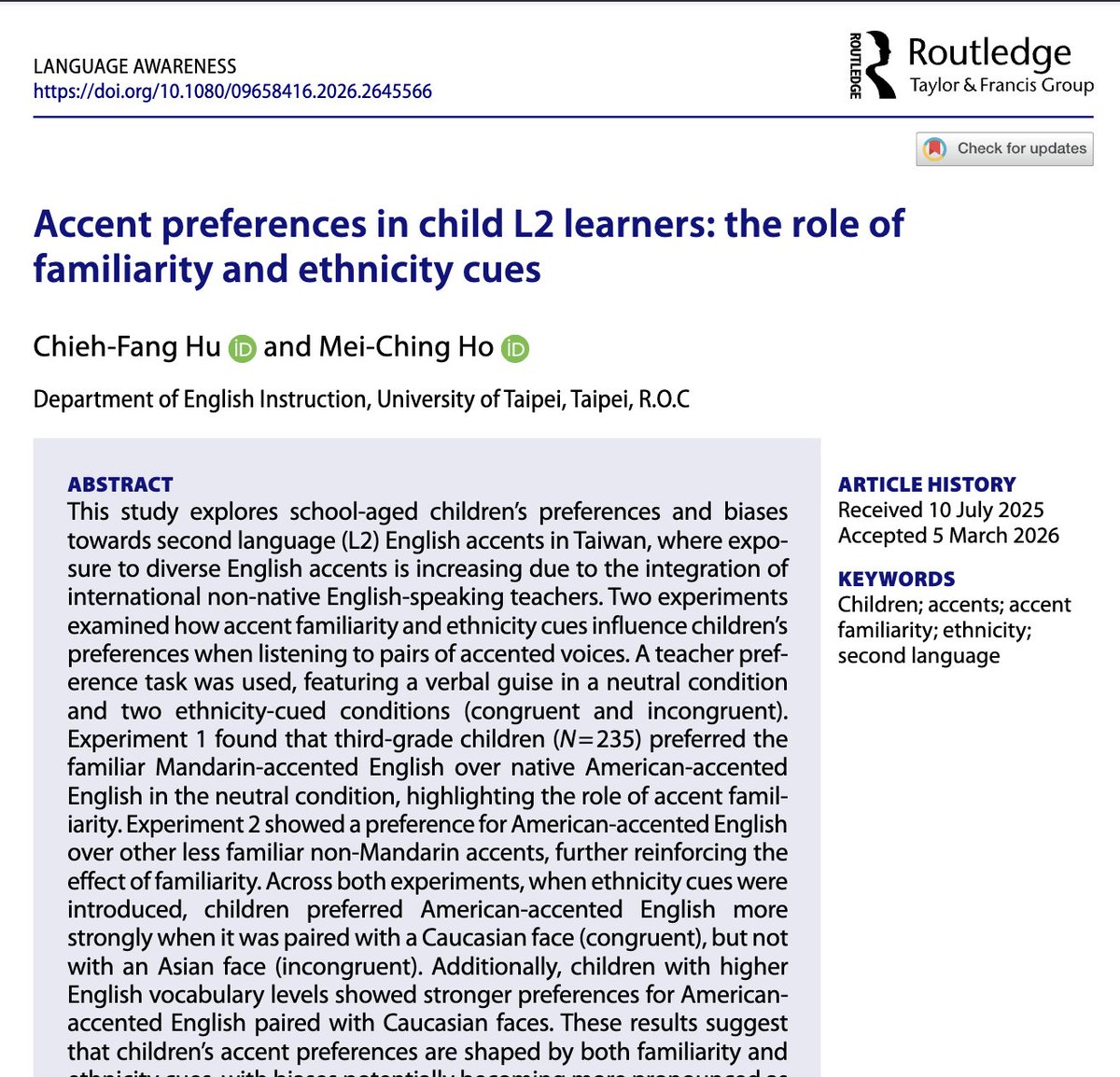
What shapes children’s accent preferences? In Taiwan, familiarity and ethnicity cues both matter—kids preferred familiar accents, but favoured American-accented English more when paired with a Caucasian face, pointing to emerging bias. Abs.=Chinese
6
13
994
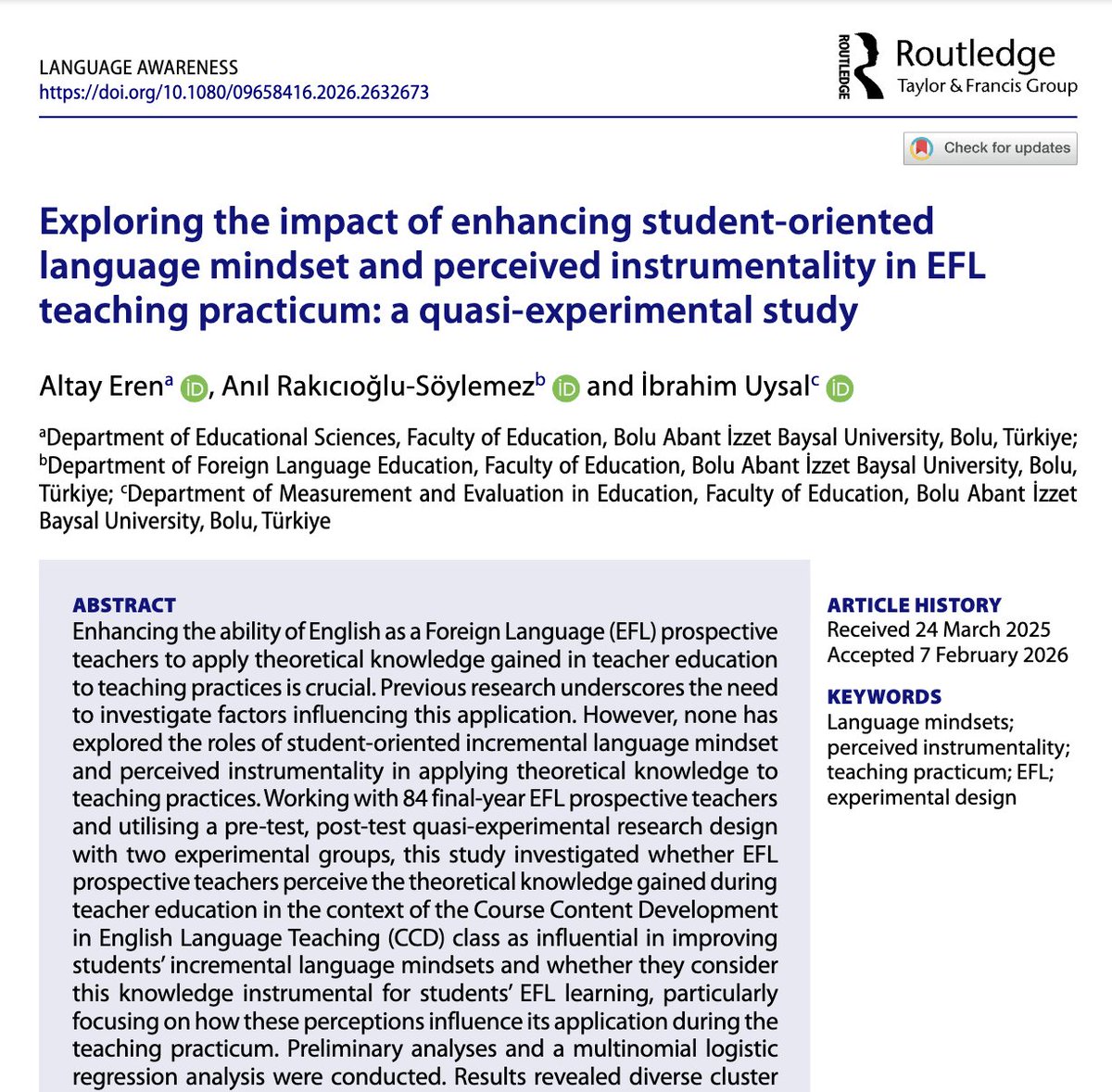
Does perceived usefulness drive theory–practice transfer? This study shows future EFL teachers are more likely to apply course knowledge in their practicum when they see it as useful for students’ language learning. Abs=Turkish.
1
9
14
997
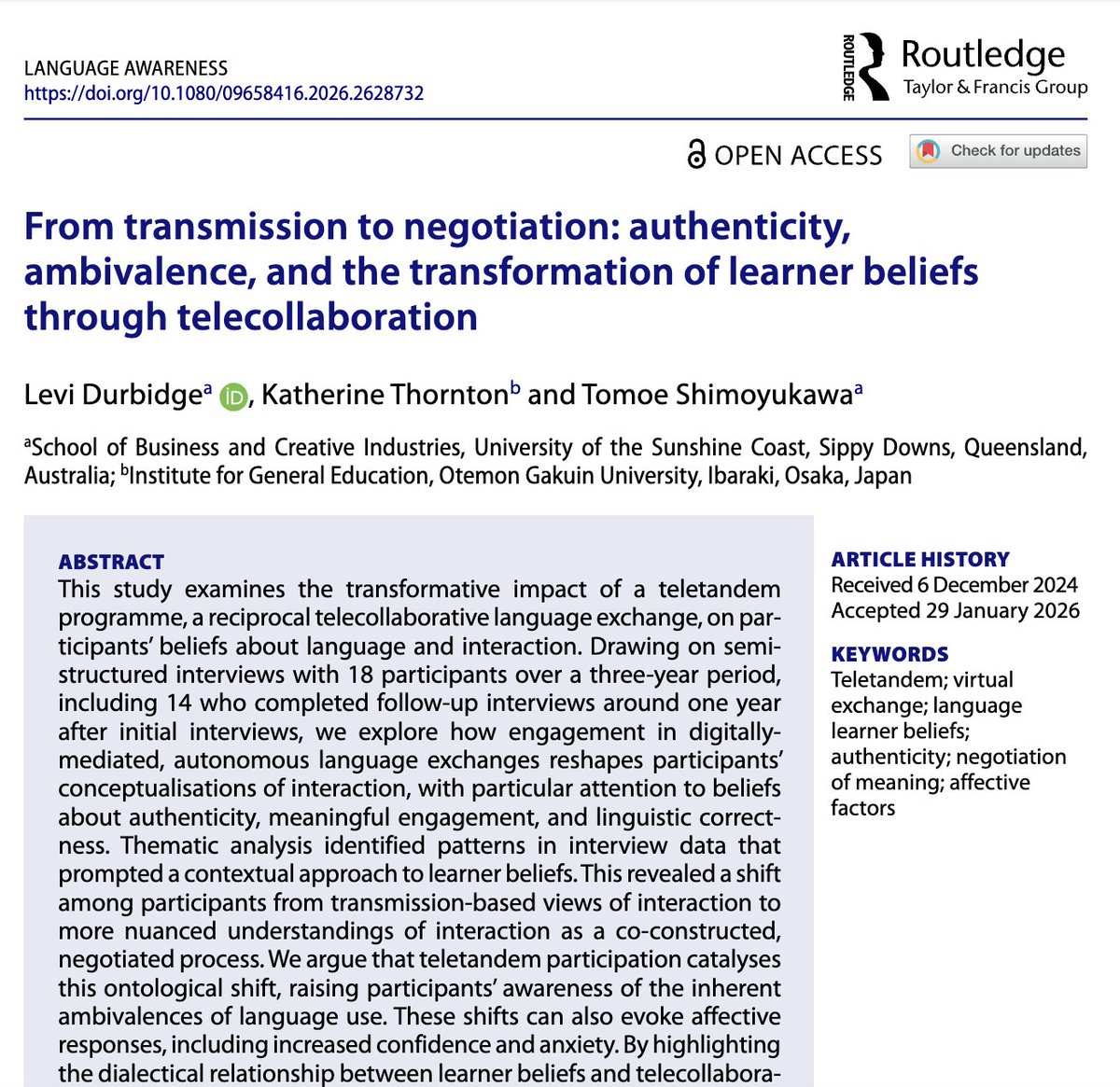
How does teletandem reshape beliefs about language and interaction? Longitudinal data showed a shift from transmission-based views to seeing interaction as co-constructed and negotiated, transforming learners’ beliefs, confidence, and understanding of authenticity. Abs.=Japanese
7
10
781
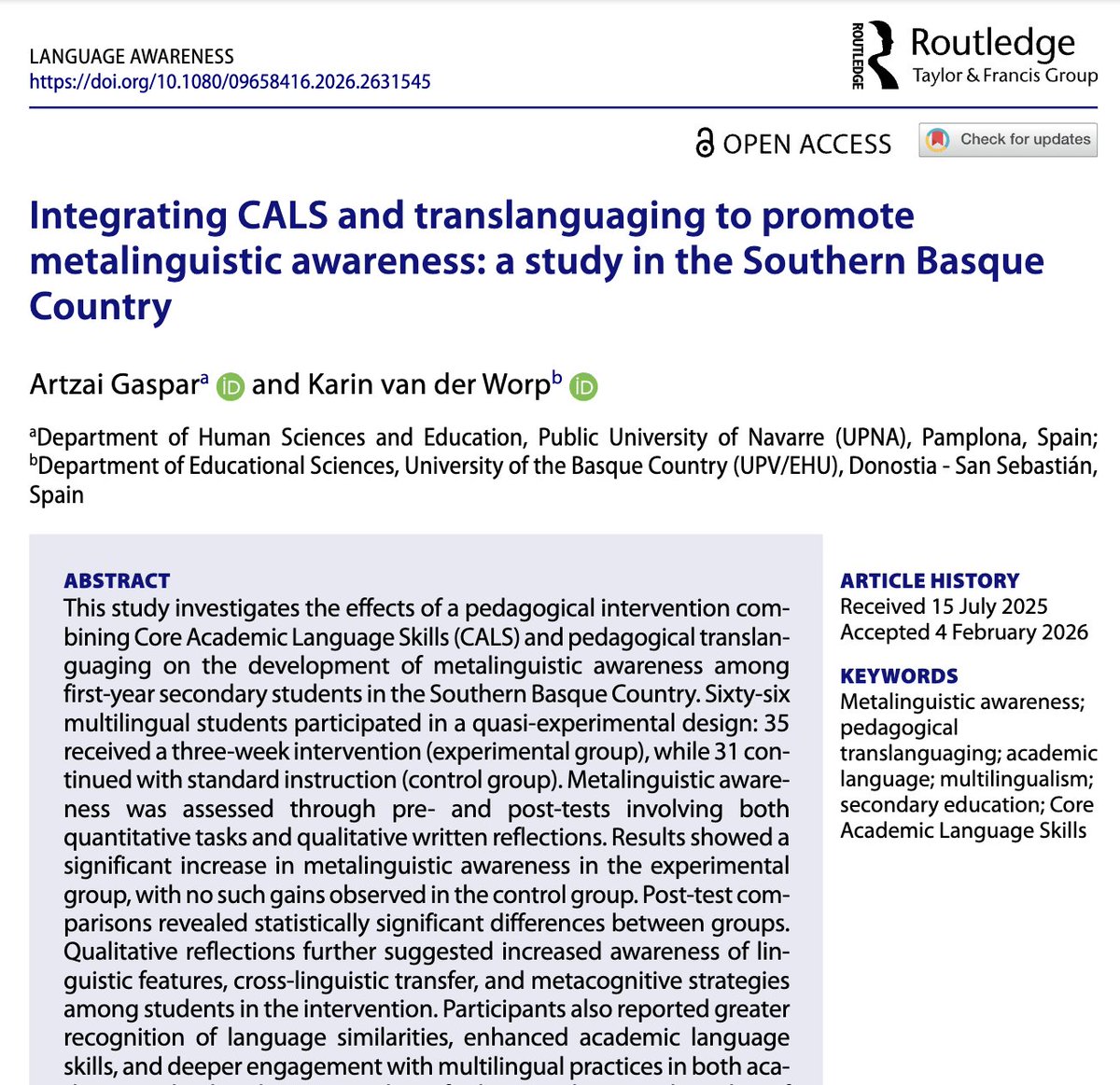
Can Core Academic Language Skills and translanguaging boost metalinguistic awareness? In the Basque Country, a short intervention led multilingual students to outperform a control group, supporting integrated academic language and translanguaging practices. Abs.=Basque
4
8
893
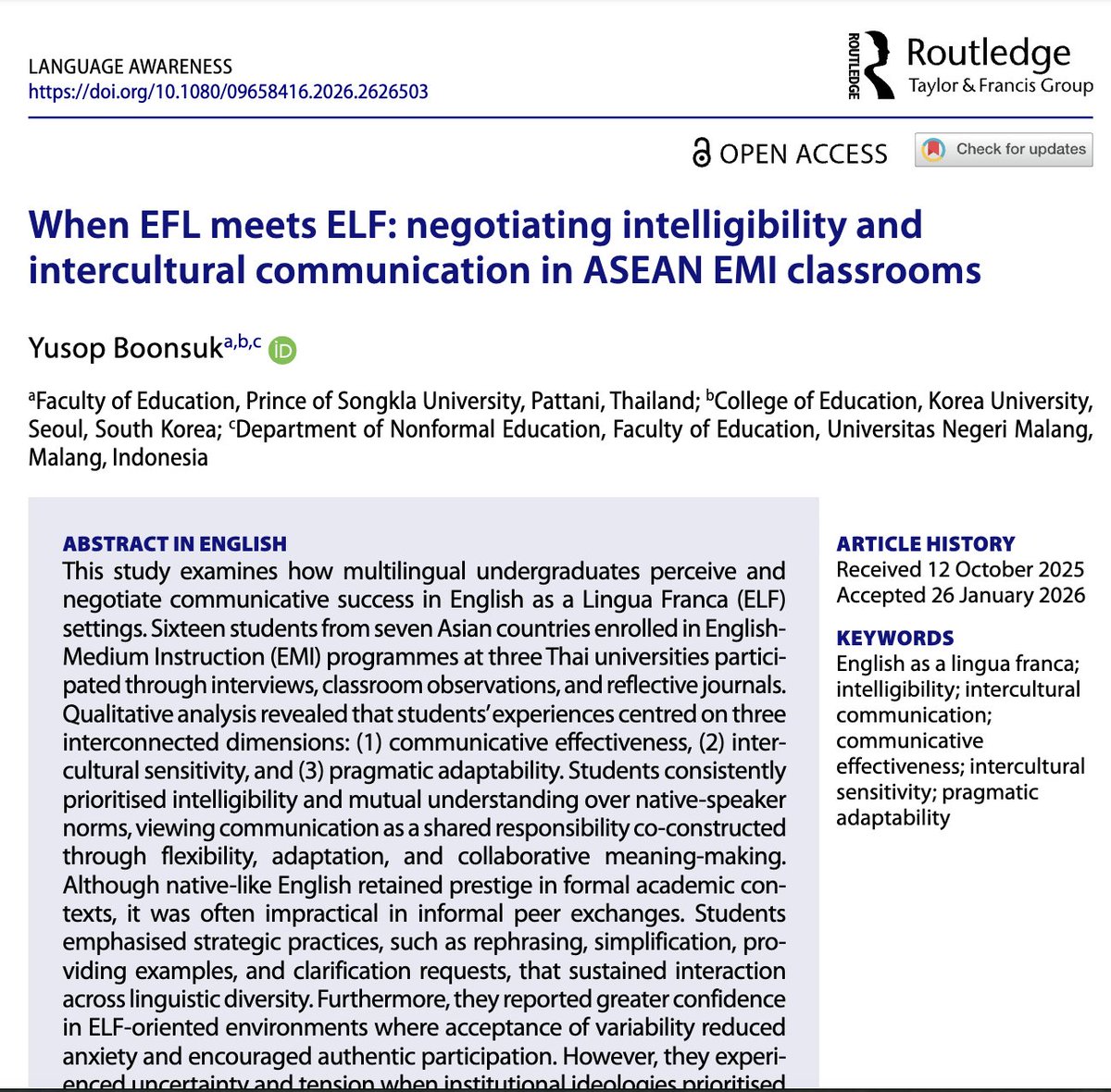
What counts as “successful” communication in EMI universities? Multilingual students in Thailand prioritised intelligibility, adaptability, and shared meaning-making over native-speaker norms, calling for pedagogy that values flexibility and intercultural sensitivity. Abs.=Thai
4
13
816