
Chief IoT Officer @PureWalletPlus Policy and CID Advisor!
Joined January 2023
- Tweets 10,874
- Following 2,303
- Followers 5,440
- Likes 25,168
929 Photos and videos






Jun 13
Zach this is facts! 23 crypto financial service providers licenses revoked in Toronto based on illicit AML (Binance blocked first chronologically in the beginning than permanentl) activities via the following: Somali Organized Crime (earlier then Minnesota), Hells Angels, Camorra, La Costa Nostra, Triads, and Indian Organized Crime! The funny thing is they all just go to other provinces to kyc (like Vancouver) to circumvent the Toronto containment effort, food for thought. icij.org/investigations/coin…

I had to start declining all victims from Canada.
Its government agencies may be more negligent than either India or Nigeria.
EX 1: Canada LE ignored a prior report about a threat actor operating phishing scams who now ransoms companies for millions.
EX 2: Canada LE did not visit an Iranian OTC brick and mortar in Vancouver for interviews after it was used to launder high 5 figs from a home invasion robbery.
1
7
378
Larry@purewallet retweeted

Jun 13
Beyond the insane measures taken with security,
@PureWalletPlus is introducing a Real European IBAN, meaning you could receive salaries and remittances directly into your self custody wallet.
Pure Wallet is truly preparing for the future, excited to see what comes next! 👀🚀
Jun 13

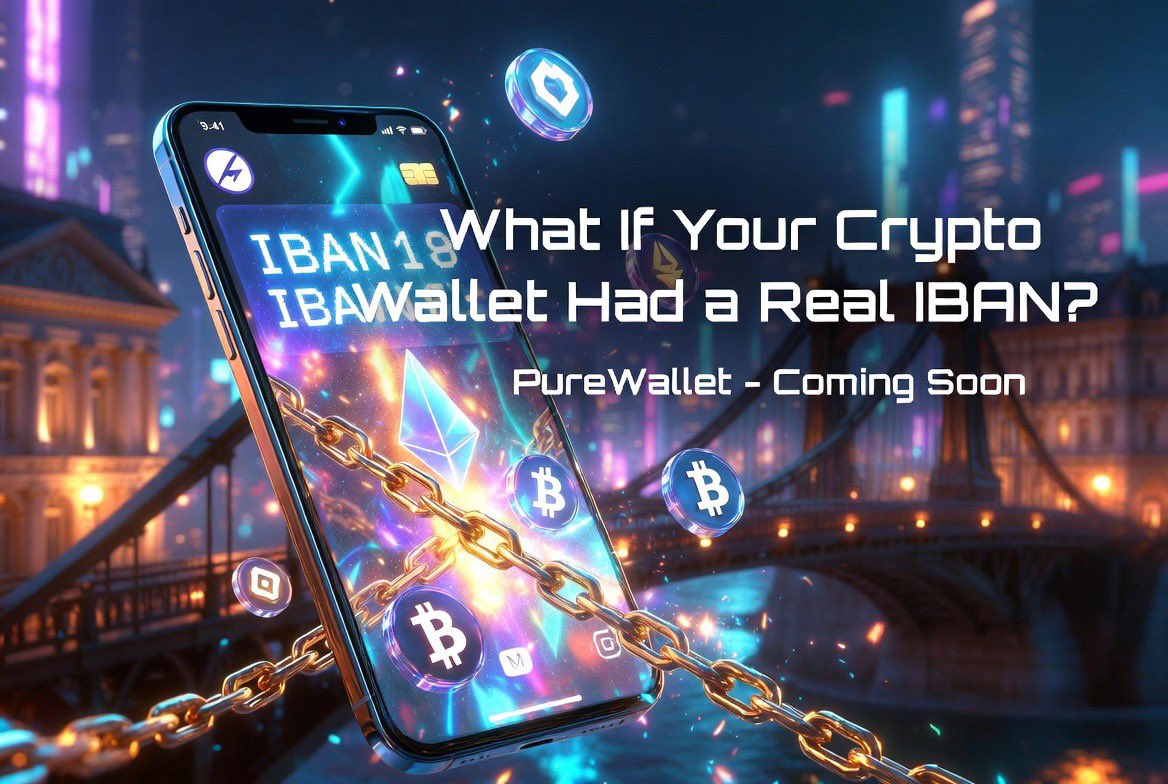
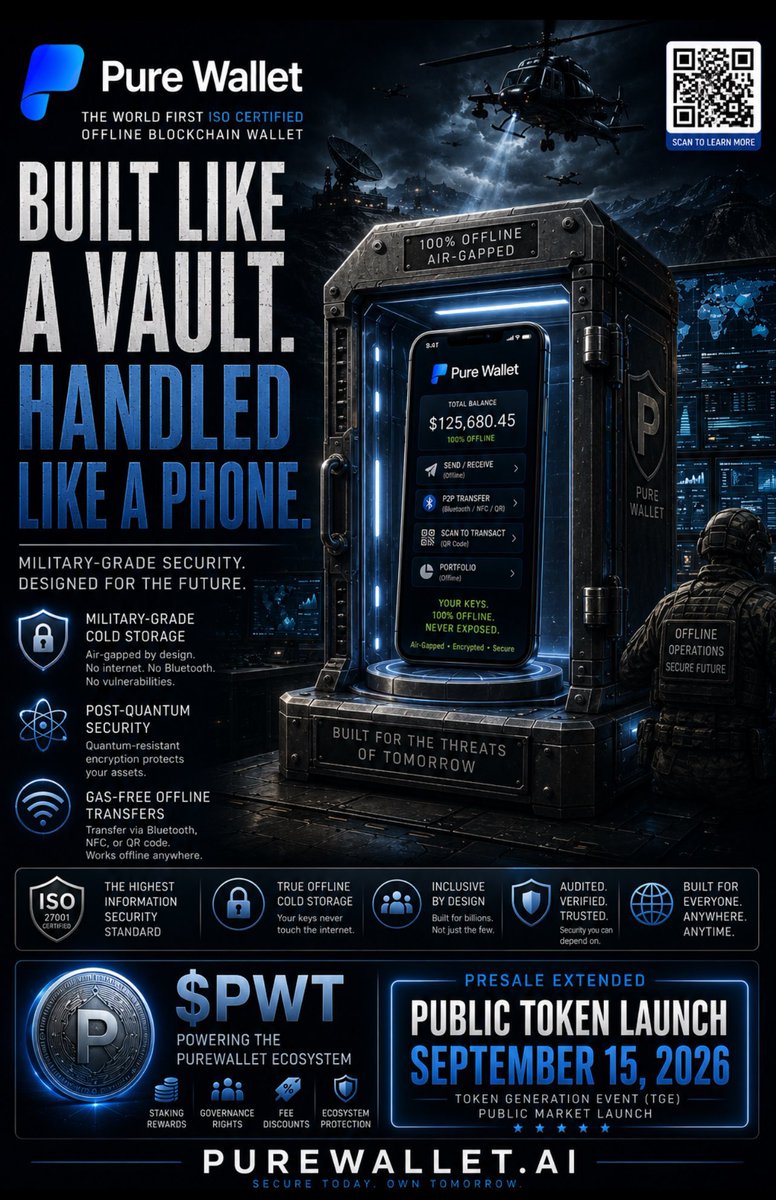
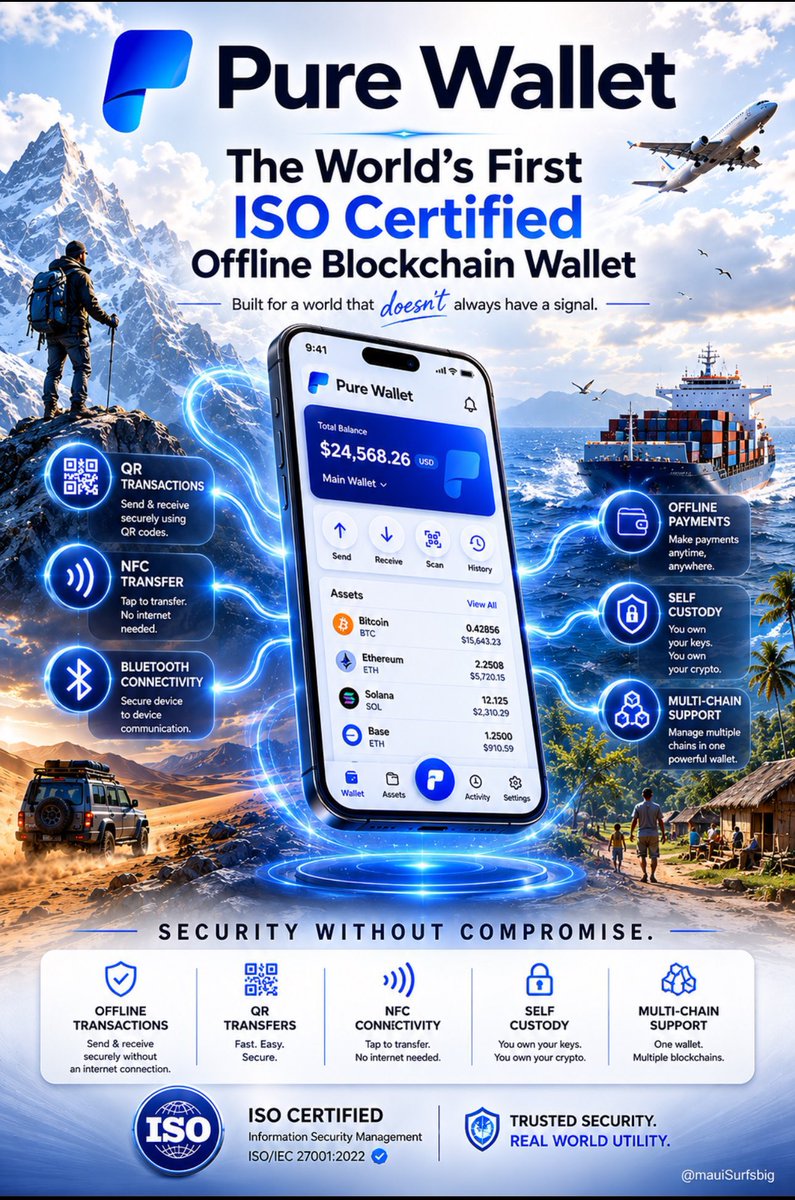
🚀 What If Your Crypto Wallet Came with a Real European IBAN — Coming Soon? PureWallet Is Making It Happen 🔥
What if you could receive salaries, invoices, remittances, or business payments directly into your self-custodial mobile cold wallet using a free European IBAN?
What if SEPA transfers flowed seamlessly into crypto (60 chains, offline Bitcoin, PureChain), with instant conversions and zero gas fees powered by our Offline Token technology?
What if this became your all-in-one universal financial passport — enabling everyday banking, global P2P, and next-level agentic payments, all while you stay in full control?
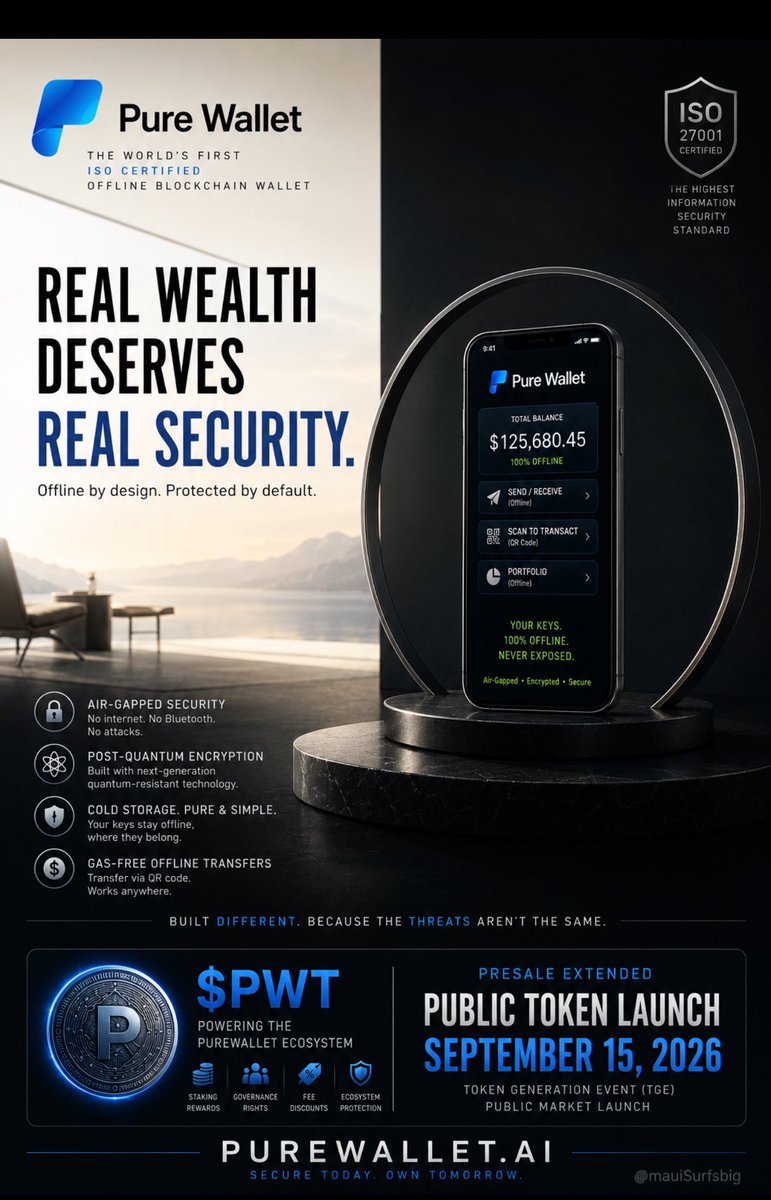
PureWallet is actively working on this game-changing integration to make it reality in the near future. ISO 27001-certified security meets real-world fiat rails, bridging traditional finance and Web3 for remittances, Africa-Asia corridors, the unbanked, and everyone ready for true financial freedom.
The walls between fiat and crypto are coming down. One powerful wallet to rule them all.
The future is loading — are you in?
👉 Get ready at purewallet.ai
PWT Presale Genesis Drop heating up for September 2026 TGE!
#PureWallet #PWT #CryptoIBAN #ComingSoon #SEPA #OfflineCrypto #AgenticPayments #Web3Banking #FinancialFreedom #PureChain
3
7
293
Larry@purewallet retweeted

Jun 12
🚨 The Next Billion-Dollar Crypto Project Could Be Hiding Here.
Most people won't find the biggest winners until they're already up 100x.
While the timeline is distracted by drama, smart investors are searching for the next project with real utility, real builders, and real potential.
I break it all down in today's YouTube video. 👇
youtu.be/gHxReCB-6Nc
5
15
24
2,916
Jun 13
🚀 What If Your Crypto Wallet Came with a Real European IBAN — Coming Soon? PureWallet Is Making It Happen 🔥
What if you could receive salaries, invoices, remittances, or business payments directly into your self-custodial mobile cold wallet using a free European IBAN?
What if SEPA transfers flowed seamlessly into crypto (60 chains, offline Bitcoin, PureChain), with instant conversions and zero gas fees powered by our Offline Token technology?
What if this became your all-in-one universal financial passport — enabling everyday banking, global P2P, and next-level agentic payments, all while you stay in full control?
PureWallet is actively working on this game-changing integration to make it reality in the near future. ISO 27001-certified security meets real-world fiat rails, bridging traditional finance and Web3 for remittances, Africa-Asia corridors, the unbanked, and everyone ready for true financial freedom.
The walls between fiat and crypto are coming down. One powerful wallet to rule them all.
The future is loading — are you in?
👉 Get ready at purewallet.ai
PWT Presale Genesis Drop heating up for September 2026 TGE!
#PureWallet #PWT #CryptoIBAN #ComingSoon #SEPA #OfflineCrypto #AgenticPayments #Web3Banking #FinancialFreedom #PureChain
7
13
19
716
Jun 12
Facts 🇰🇷

I think other countries should be worried about South Korea. This game could easily have ended 5–1
Unfortunately for them, the Czech Republic former Manchester United goalkeeper Matej Kovář was unbelievable. He single-handedly kept them in the game
The counter attacking football, the movement, and some of the passes South Korea were playing should not be taken lightly
These guys are good. Really good. They might just be the dark horses of the World Cup… who knows? 👀

2
222
Jun 12

Ethereum May Add Built In Private Transfers
Ethereum $ETH privacy proposal EIP 8182 has been formally proposed for inclusion in the upcoming Hegotá hard fork.
The proposal would introduce optional native privacy transfers directly at the Ethereum protocol layer.
It now enters the review process for approval by Ethereum core developers.
1
5
285
Larry@purewallet retweeted

Jun 12
🛕Did you know?
South Korea is the only Asian national team to qualify for 11 consecutive FIFA World Cups (1986–2026), making them Asia's most consistent World Cup participant.
#SouthKorea #FIFAWorldCup #sports
2
41
9,422
Jun 12
🚨 PureWallet Sends Heartfelt Support to the Korean Team & Czech Team 🇰🇷⚽🇨🇿
What a thrilling World Cup moment in Guadalajara as our Korean squad faces Czechia in this Group A clash!
As a proud Korean/American-based company, PureWallet is fully behind Son Heung-min and the Taegeuk Warriors — your passion, skill, and national pride inspire us all! 💪❤️
In the spirit of the World Cup, we celebrate both teams for their dedication, respect, and the beautiful game they bring to the world stage. Matches like this build bridges, foster friendship, and unite fans across nations.
Win, lose, or draw — Korea, you make us incredibly proud! Let’s keep the positive energy flowing!
#KoreaVsCzechia #WorldCup2026 #PureWallet #KOR #Sportsmanship #OneLoveFootball purewallet.ai
PureWallet: Bridging worlds through innovation and unity. 🌍💳
4
11
25
603
Jun 12
If you go to L.A. you will see the synergy 🇰🇷 & 🇲🇽 from everything from food and comradery beautiful to see in action ❤️🤝

🚨TRENDING: Mexican fans were throwing a Korean fan up in the air during the World Cup…
How can you not love the beautiful game ❤️
5
428
Jun 11
Solution on @PureWalletPlus purewallet.ai

REMINDER! Stop storing wealth on cryptocurrency exchanges that can freeze it.
>> Hold your own keys.
>> Use a wallet that doesn't need permission from anyone to let you move your own funds.
>> Be free. Be sovereign.
3
7
257
Larry@purewallet retweeted
Jun 11
@PureWalletPlus keeps It’s safe and simple.
Confidently store your crypto and stay ahead of the game with quantum resistant protection.
Always DYOR & stay SAFU
Jun 11
Things that make you hmmm…..always keeping them honest @zachxbt
1
3
6
443
Jun 11
Well broke down and delivered! @Jxmmymetax
Jun 11

@PureWalletPlus keeps It’s safe and simple.
Confidently store your crypto and stay ahead of the game with quantum resistant protection.
Always DYOR & stay SAFU
1
11
266
Jun 11
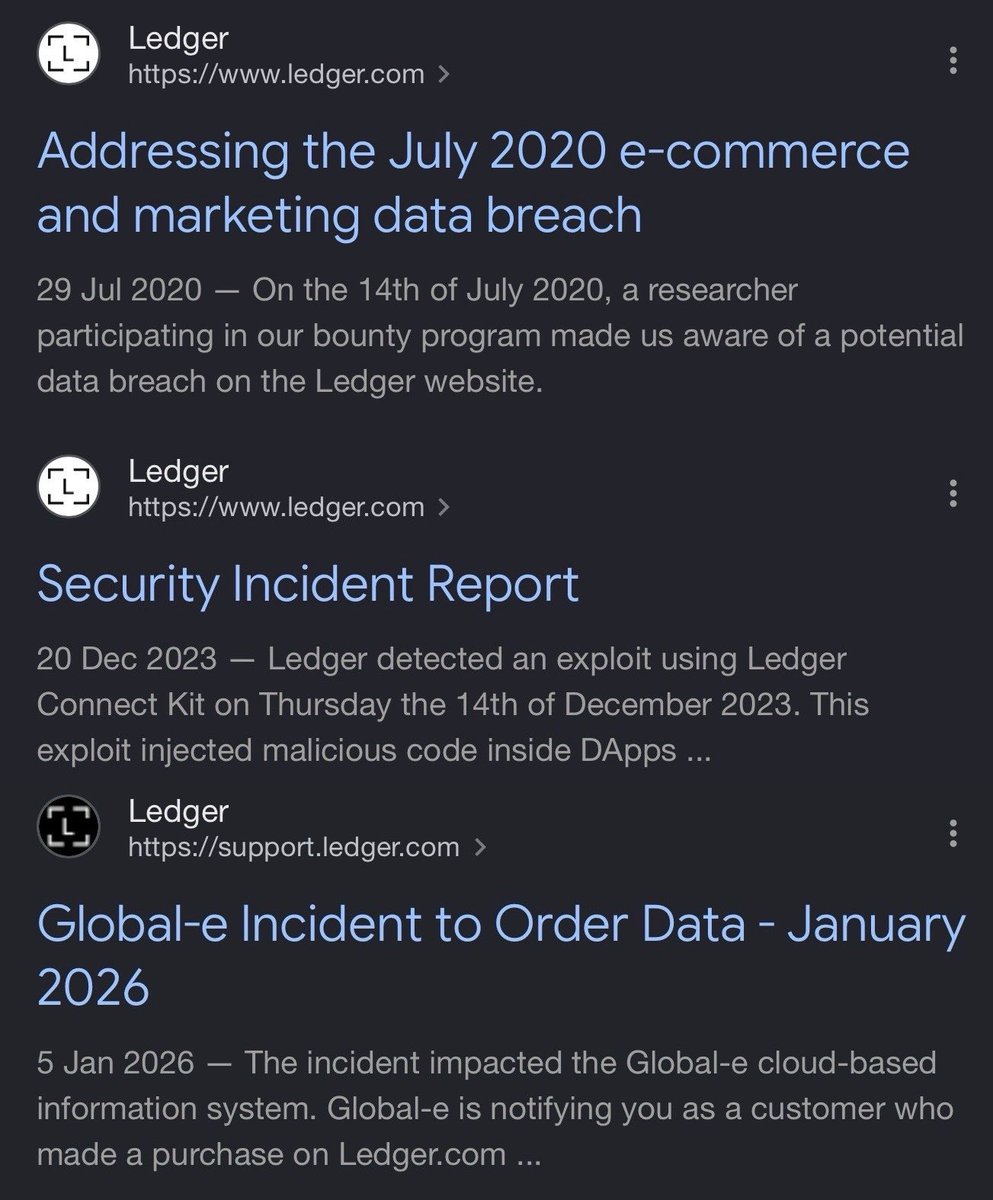
Things that make you hmmm…..always keeping them honest @zachxbt
“Free from compromise”
Think your team forgot to mention these three incidents:
-Dec 2020: Ledger e-commerce & marketing data breach
-Dec 2023: Ledger Connect Kit frontend hijack
-Jan 2026: Ledger Global-e order data breach
1
7
577
Jun 11
Told you all last week this would happen in adjustment to overall APAC trends and strategy (i.e. Hong Kong 0/0 and South Koreas proposed 0/0)
Jun 11

BREAKING: Japan is set to pass new crypto laws that regulate digital assets like stocks.
The plan is to lower crypto taxes, set clearer trading rules, and open the door to new products like crypto ETFs.
Global adoption is happening fast.

1
2
9
361
Jun 11
🚀 Blockchain is no longer just virtual — it’s owning REAL assets.
PureWallet just dropped this 🔥PureStack
From stunning waterfront residences (Luxia) to cutting-edge health innovation (Lacellic), creator economies (Brivyy), pet wellness (Pure Pet Twin), and more — all connected seamlessly on Pure Chain.
Real World Assets (RWA) aren’t the future. They’re here.
Your portfolio. Your participation. Your ownership.
PureWallet: Your Future, Unlocked.
🔗 Watch the full vision 👇
[Video attached]
Who’s ready to bridge digital power with real-world value? Drop a 🔥 if you’re in!
#PureWallet #PureRWA #RealWorldAssets #Luxia #Lacellic #Brivyy #PurePetTwin #Crypto #Blockchain #PWT #Web3 #FutureUnlocked
@LarryPureLabs | @PureWalletPlus purewallet.ai
8
14
27
879
Larry@purewallet retweeted

Jun 11
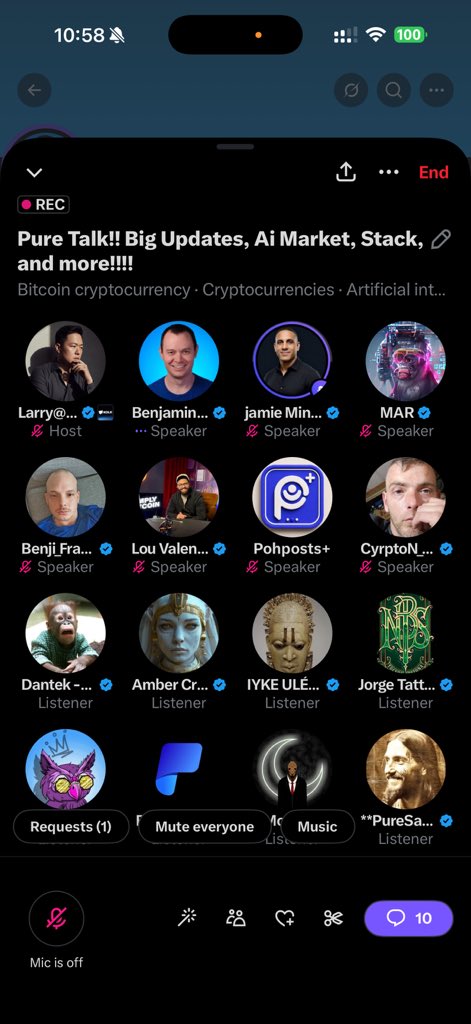
Repost and share the space so your favorite speakers join the space
Thanks @AlexDamsker and @LarryPureLabs for joining to add value to tonight’s discussion


3
12
931
Jun 11
Agentic Payments Series – Part 1: Why Three Different Rails Are Emerging
By @LarryPureLabs
AI agents are breaking all the old assumptions of traditional payments: humans always in the loop, fees only make sense for bigger amounts, merchants expect human buyers, and easy dispute resolution.
Here’s a clear side-by-side comparison of the three main engineering paths that have emerged:
Crypto Native Path
• Main problem solved: Tiny amounts can’t afford fees
• Key examples: x402, Skyfire KYA, Cloudflare PPC, PureWallet @PureWalletPlus
• How money moves: Wallet → On-chain (irreversible)
• Best for: Micro-payments ($0.001 – $0.30) like API calls, data queries, crawlers
Credit Card Track Revamp
• Main problem solved: People in the loop easy disputes
• Key examples: Mastercard Agent Pay, Visa TAP
• How money moves: Traditional card rails (unchanged)
• Best for: Retail & travel ($10 – $1000 ) where chargeback protection matters
Protocol Layer
• Main problem solved: People in the loop (needs strong proof)
• Key examples: Google AP2, OpenAI ACP
• How money moves: Only creates cryptographic proof
• Best for: Universal credential layer on top of any rail
Core Insight: These three paths serve different markets with almost no overlap.
• Crypto Native makes sub-cent payments economical (e.g. compliance API calls settled in USDC on Base). PureWallet stands out here with its zero-gas offline capabilities — ISO 27001-certified mobile cold storage that enables gas-free P2P transfers via Bluetooth/NFC/QR without needing hardware, perfect for true agentic offline scenarios.
• Card Track wins where trust, refunds, and 60 years of case law matter.
• Protocol Layer standardizes agent authorization proofs across any payment rail.
Why Companies Bet Across x402, ACP, MPP & AP2
They’re positioning across all three non-overlapping markets while staying neutral as the developer-friendly middle layer.
Shared Challenge: Prompt Injection Attacks
When agents spend real money, prompt injection turns dangerous. All paths need layered defenses:
• Before: Spending caps & whitelists (crypto strongest)
• During: Cryptographic mandates/signatures (protocol layer)
• After: Chargebacks (card rails strongest)
Compliance Status (June 2026)
• Card rails: Most stable — existing rules extend naturally.
• Crypto: Heaviest work (freezes, KYC, on-chain compliance tools).
• Protocol: Still evolving.
What to Watch in the Coming Months
1. HTTP standards (x402 heading toward official RFC).
2. Agent identity formats (multiple will coexist).
3. Cross-rail ledgers (big opportunity — who tracks total agent spending?).
Real-World Example: One Trip, Three Rails
Your agent prepares a trip to Singapore:
• Card rail: Books flight via Mastercard Agent Pay (with full chargeback protection).
• Crypto rail: Pays cents for real-time data via x402 (or uses PureWallet for fully offline/gas-free agent actions).
• Agent-to-Agent: Pays a sub-agent via Skyfire for hotel search.
Three rails working in parallel, no conflict.
Key Takeaway:
Don’t ask “Who will win?” Ask: Which rail fits my use case?
• Need easy refunds? → Card track
• Need cheap micro-payments true offline? → Crypto native (PureWallet shines here)
• Need strong authorization? → Protocol layer
Agents now hold wallets, sign independently, and face real attacks. The age of agentic payments is just beginning.
What do you think — which rail interests you most for your projects? Drop your thoughts below!
#AgenticPayments #FinTech #Crypto #AI #Payments
Larry | @LarryPureLabs | PureWallet
13
15
32
1,321
35
18
81
76,199
Jun 10
@benjamincowen thank you for coming through today! 🤝your insight is valuable and always appreciated
5
248