Joined January 2022
- Tweets 708
- Following 109
- Followers 415
- Likes 370
95 Photos and videos


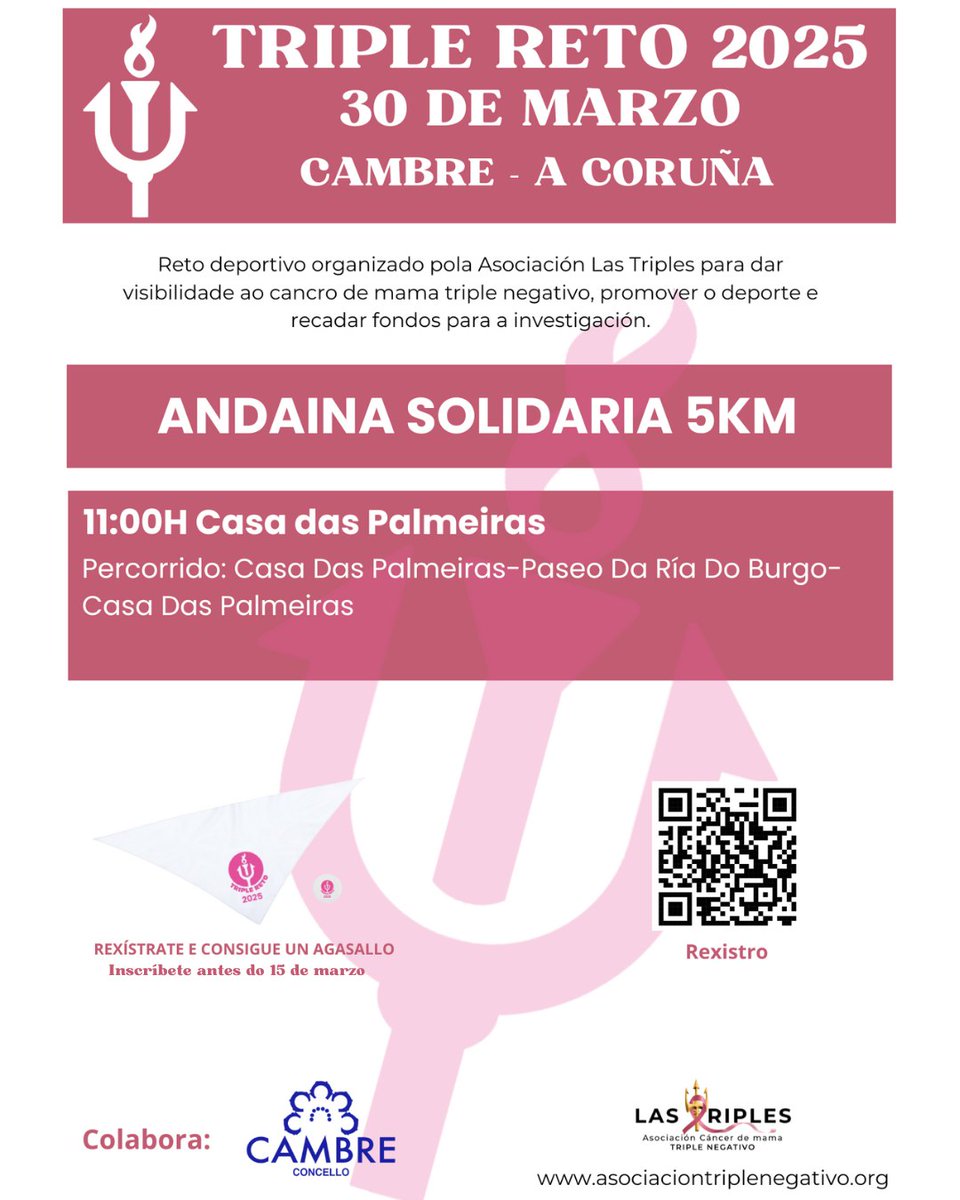
Pinned Tweet
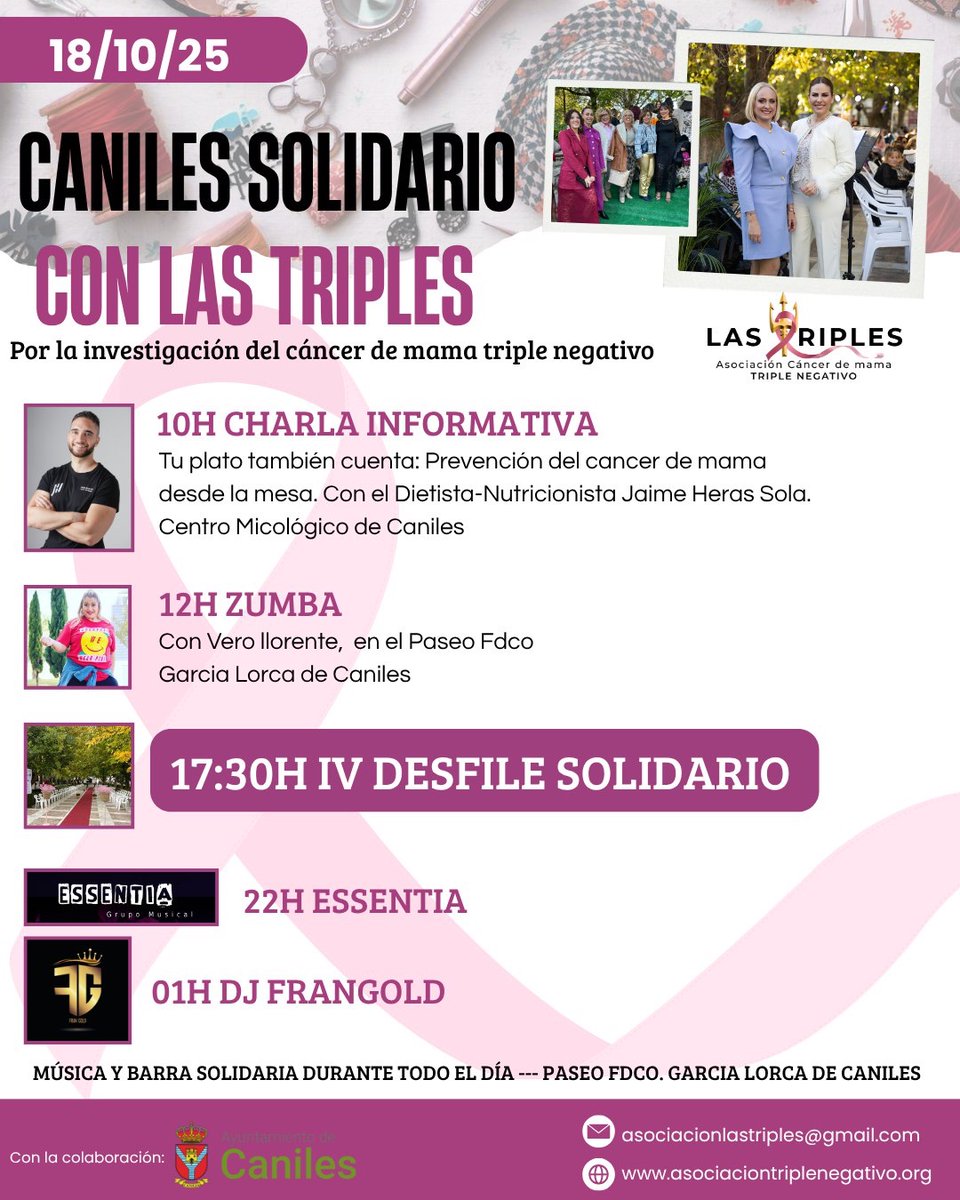
Aquí están todos los triples retos que te puedes apuntar. Colabora con nosotras para recaudar fondos para la investigación del triple negativo :
asociaciontriplenegativo.org…
1
2
92
Asociacion Las triples retweeted

🏃♀️ #GuadalixdelaSierra acoge el 22 de marzo el Triple Reto 2026 de la asociación de #cáncerdemama @LasTriples. Hablamos con dos de las organizadoras, Ángeles Moya y Laura Cañadillas de Torres
madridnorte24horas.com/artic…
1
70

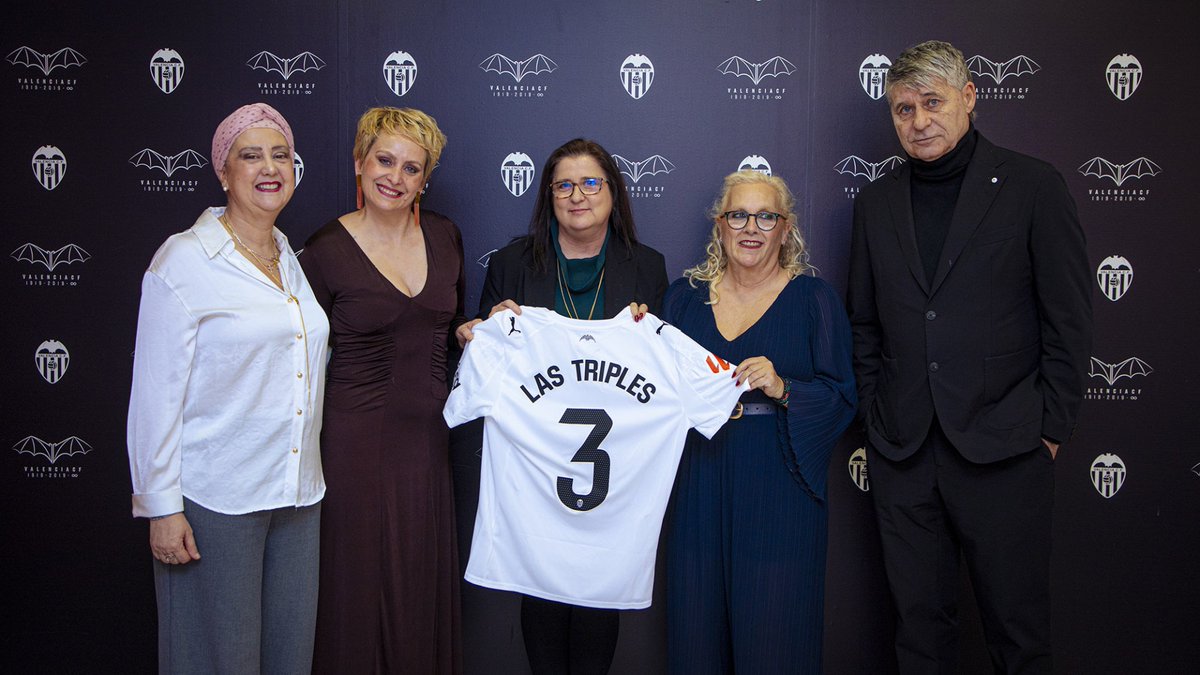
🔴 @LasTriples ha hecho entrega a @_SEOM de un cheque por valor de 20.000 euros, gracias a los fondos recaudados por Memorial Ainara, que irán destinados a una #BecaSEOM para la investigación del cáncer de mama triple negativo en 2026.
📍 La entrega del cheque ha tenido lugar en Valencia. Han asistido la Dra. Begoña Bermejo, vocal de SEOM, Teresa Errando, vocal de Las Triples, y María Teresa Egea, representante de la plataforma Memorial Ainara y madre de Ainara.
💻 La convocatoria del Programa de Becas, Proyectos y Premios SEOM 2026 permanecerá abierta hasta el próximo 8 de abril a las 18:00h.
🔗 seom.org/apoyo-a-la-investig…
5
11
765
Hoy queremos felicitar a todos los hombres que acompañan en el proceso o han sido parte de el. Gracias por estar ahí siempre cuidando de madres, hijas, amigas.
1
31
Somos pacientes de cáncer de mama, damos nuestro tiempo libre para recaudar fondos para investigación, horas de trabajo para que @CorreosAtiende @Correos y @GLS_Spain @GLS_clientes nos vuelvan a fallar... paquetes retenidos que no llegarán a tiempo para nuestro evento solidario
1
1
2
312
Asociacion Las triples retweeted

Mar 3
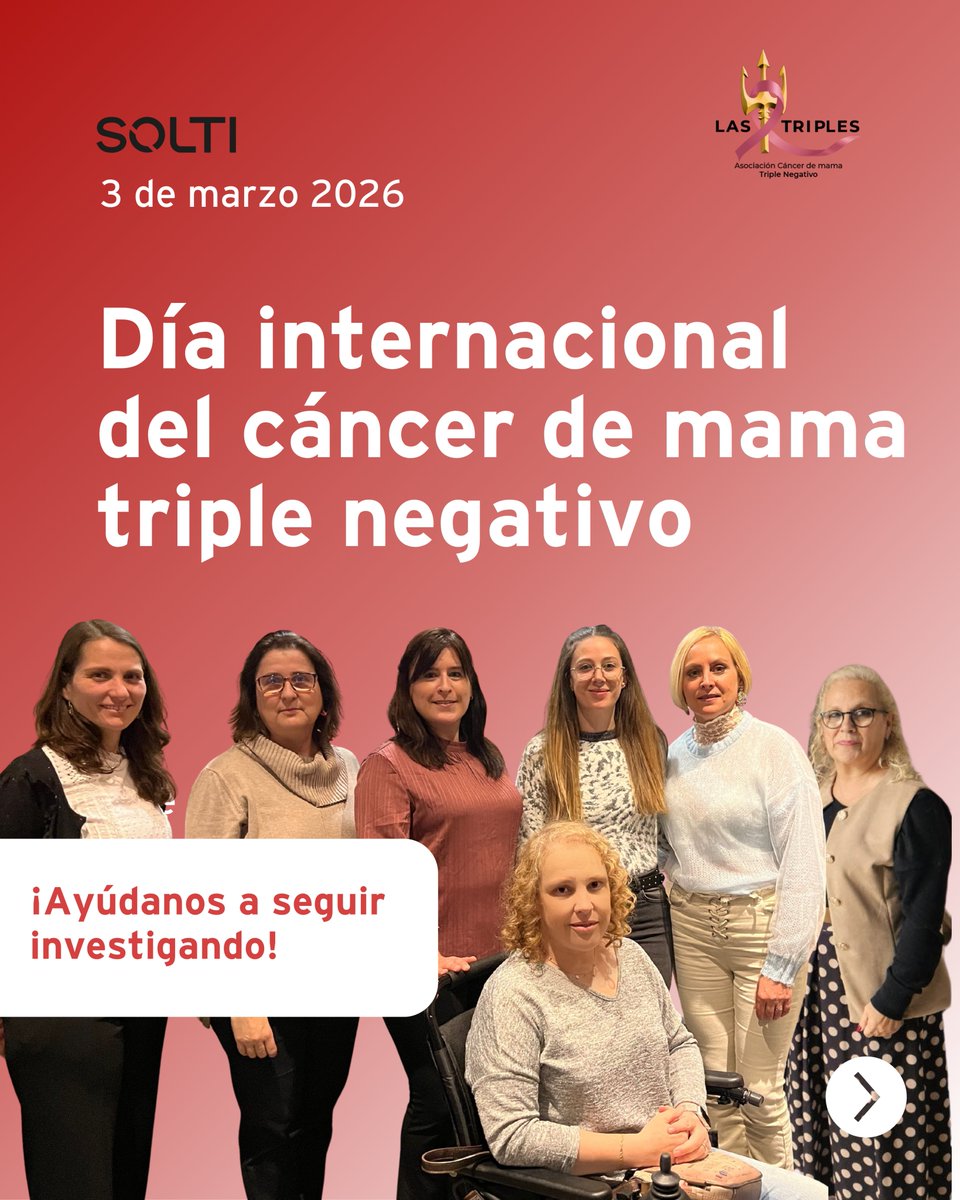
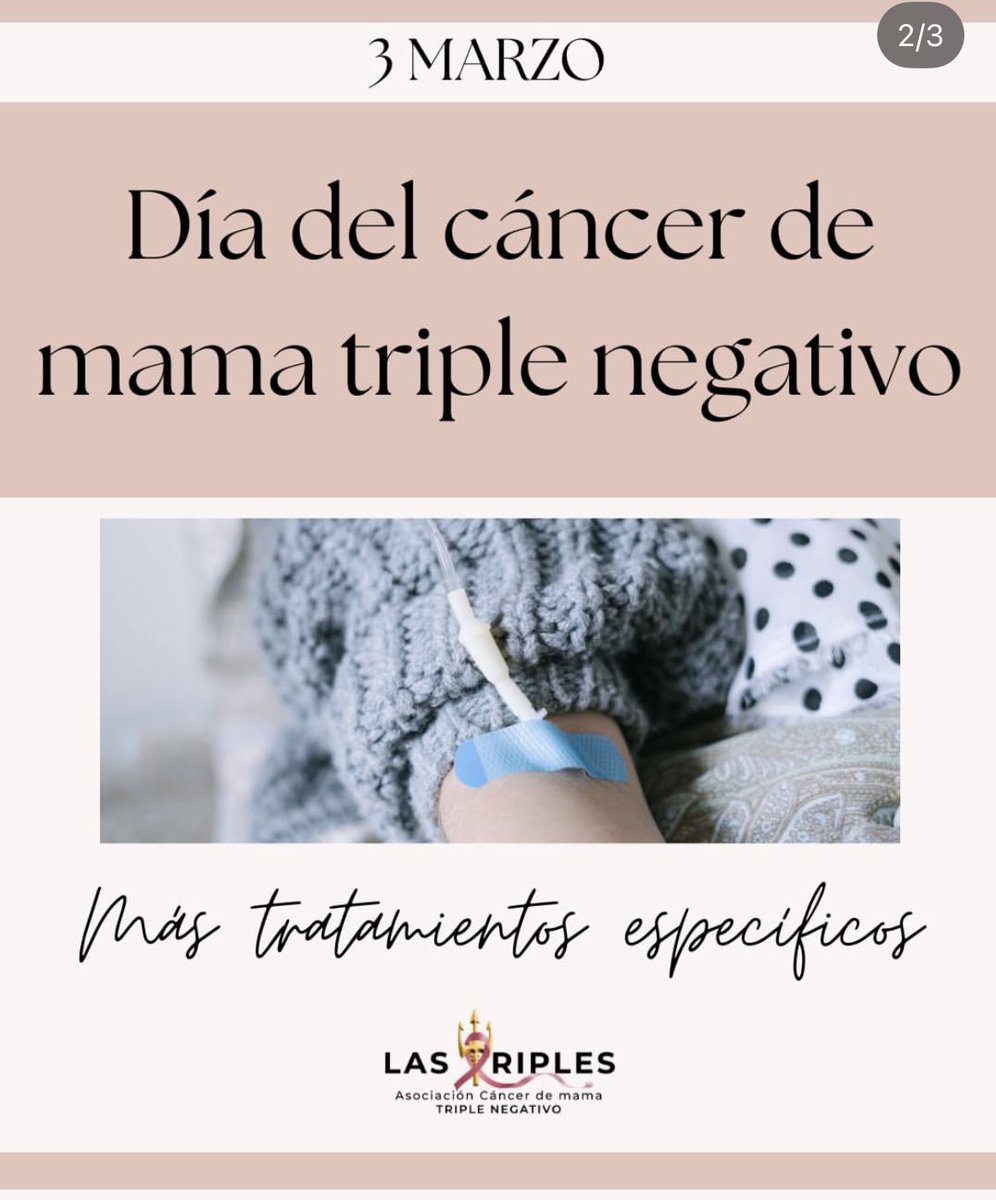
El cáncer de mama triple negativo, por sus características moleculares, tiene opciones terapéuticas más limitadas que otros subtipos.
Pero... ¿sabías que tú mismo/a puedes ayudarnos a que esta realidad cambie?
Gracias a la investigación, cada vez se están haciendo más avances y, gracias al trabajo de @LasTriples, su situación es cada vez más visible.
👉Ahora, puedes apoyar nuestra investigación en lastriplesconsolti.com
#beSOLTI #cáncerdemama #díainternacionalcáncerdemamatriplenegativo
6
6
343
Asociacion Las triples retweeted

Mar 3
Únete al Triple Reto 2026 de @LasTriples, asociacion cáncer de mama triple negativo
Cada 3 de marzo de celebra el 'Día internacional de concienciación del cáncer de mama triple negativo'
2
7
22
4,367
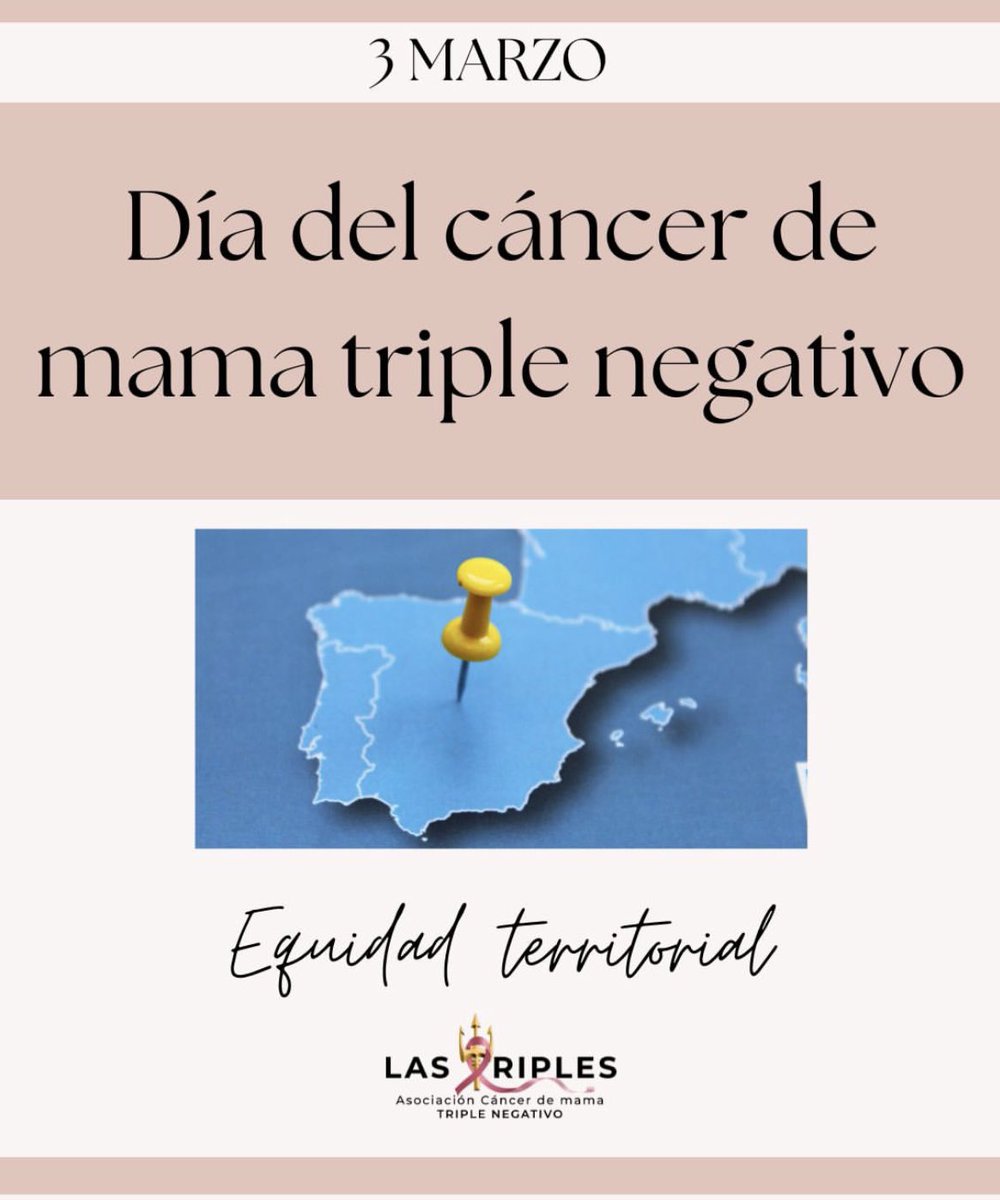
Hoy es el día del cáncer de mama triple negativo. Hoy queremos reivindicar que se inviertan más fondos para la investigación para este tipo de cáncer. Queremos alzar la voz y decir que no queremos perder a más compañeras por diagnósticos tardíos.
10
15
469
Aún estás a tiempo de unirte al triple reto. Más info en este link 👇
asociaciontriplenegativo.org…
58
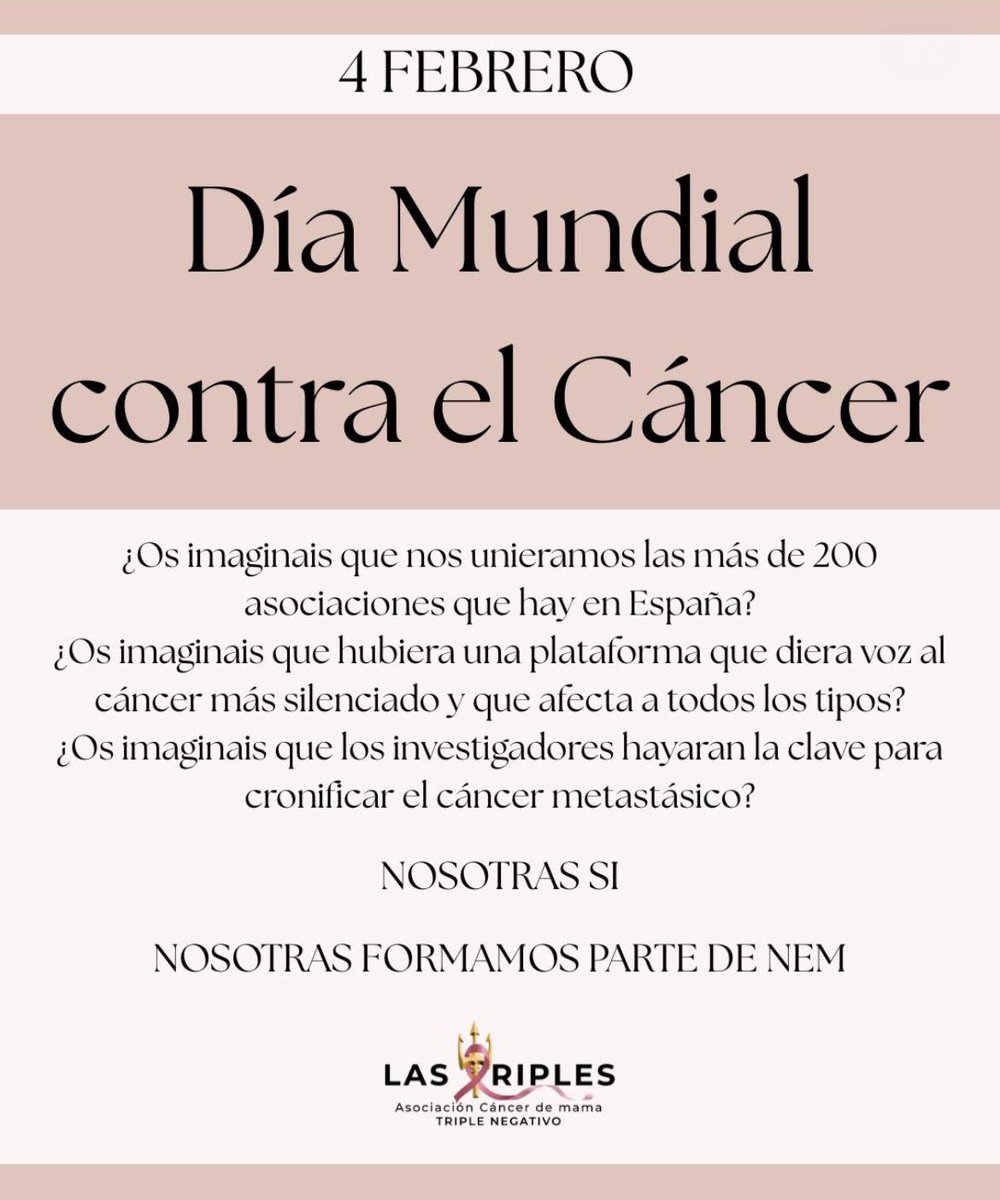
Hoy es el día mundial contra el cáncer. Todas las asociaciones tenemos un. Objetivo común, que es seguir recaudando fondos para que se estudien nuevos tratamientos para seguir viviendo.
1
5
64

7 Nov 2025
Hazte #teamer de Las Triples. Un solo euro al mes nos ayuda para la investigación del cáncer de mama triple negativo. Toda ayuda cuenta. Gracias.
teaming.net/lastriples
2
1
47
5 Nov 2025
¿Y tú ya tienes tus pulseras de las triples para regalar en estas navidades? Es un regalo que ayuda a la investigación del cáncer de mama triple negativo.
asociaciontriplenegativo.org…
1
1
58
3 Nov 2025
Hazte con la camiseta de la asociación. Tienen unos diseños muy chulos de Eve Fox. Con tu compra nos ayudas a recaudar fondos para la investigación del cáncer de mama triple negativo.
Adquiérelas en este link
asociaciontriplenegativo.org…
1
2
97
31 Oct 2025
Hazte socio de las triples. 20 euros al año. Con tu ayuda podemos colaborar con la investigación del cáncer de mama triple negativo.
asociaciontriplenegativo.org…
2
2
62
29 Oct 2025
Estos son nuestros calendarios para el 2026. Adquiérelo antes de que se agoten.
asociaciontriplenegativo.org…
2
3
37
Asociacion Las triples retweeted

26 Oct 2025
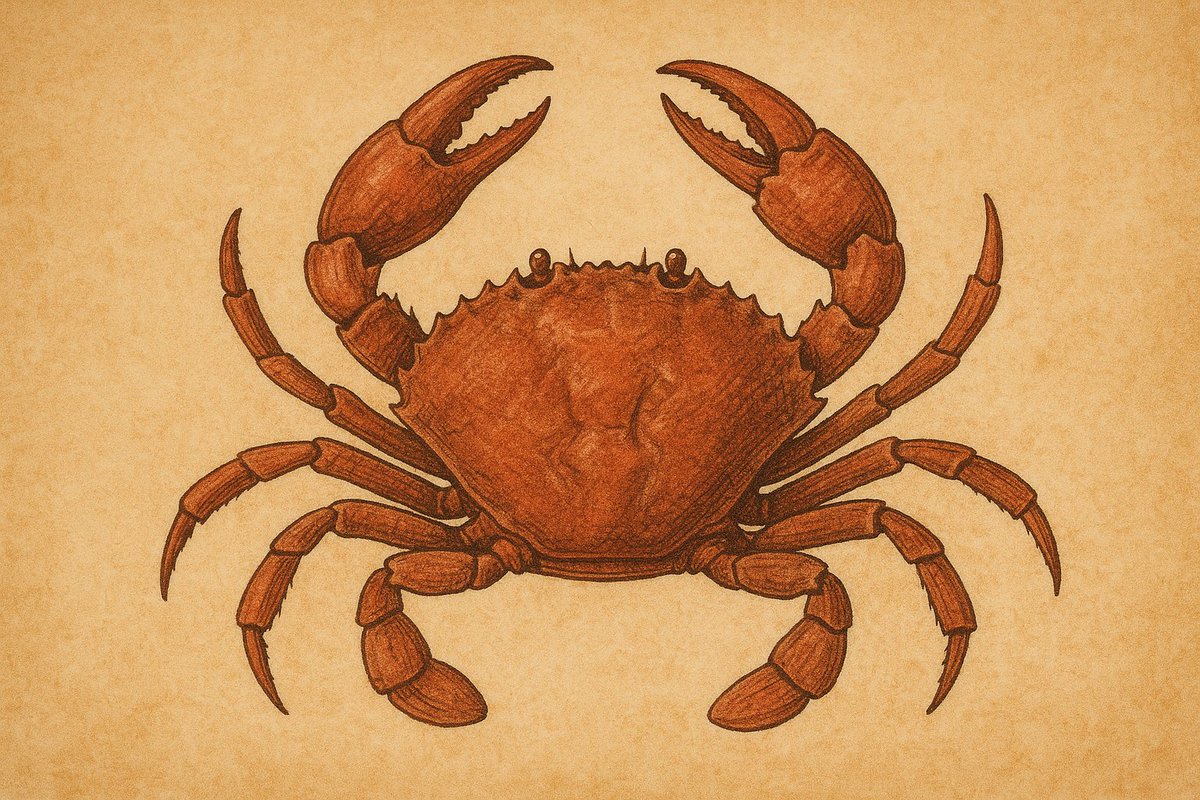
The origin of the word “cancer”: the crab🦀
The earliest known record of cancer dates back to 2500–1600 BCE, found in the Edwin Smith Papyrus—one of the oldest surviving documents of ancient Egyptian medicine.
The text describes a “cold, hard, immovable swelling of the breast, with no known treatment.”
These findings are regarded as the earliest description of breast cancer in medical history.
Nearly two millennia later, Hippocrates (460–370 BCE) and later Galen (129–216 CE) used the Greek word καρκίνος (karkinos), meaning crab, to describe such lesions.
This analogy was rooted in observation and morphology:
from the firm central mass, veins spread outward like the legs of a crab.
The lesion’s firm adhesion to surrounding tissues evoked the crab’s unyielding grip.
Roman physicians translated the term into Latin as cancer, embedding the metaphor permanently in Western medical terminology.
The survival of the word “cancer” across modern languages reflects a conceptual continuity:
an ancient observation that linked disease not only to pathology, but to the natural forms surrounding it.
This etymological origin also illustrates humanity’s enduring attempt to make sense of illness through metaphor.
In antiquity, disease was not merely a biological disorder but a phenomenon akin to patterns found in nature.
The image of the crab thus stands as one of the earliest examples of scientific imagination —
a bridge between morphology and meaning.
1
42
114
9,645
27 Oct 2025
Mirad que bolsas más chulas tenemos. Las puedes adquirir aquí:
asociaciontriplenegativo.org…
1
5
28
Asociacion Las triples retweeted

22 Oct 2025
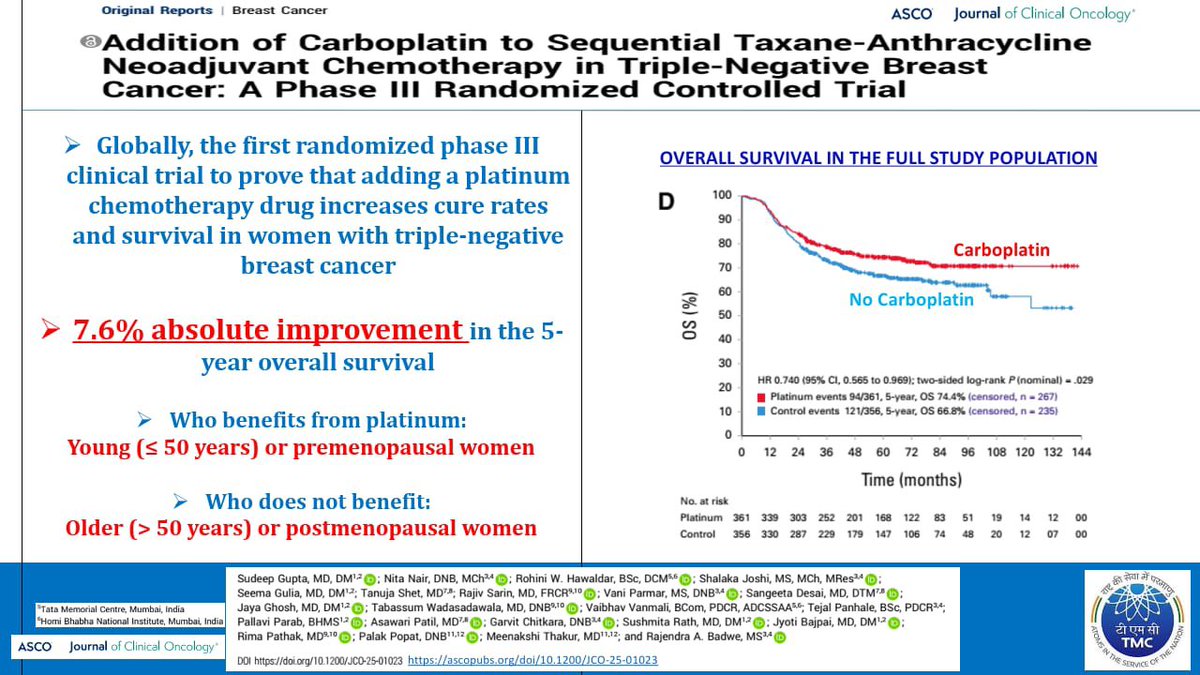
Thrilled to share our phase III randomized controlled trial thst demonstrates improved survival by adding platinum based chemotherapy to treat patients with triple negative breast cancer. A step forward in a challenging disease! #BreastCancer #TNBC ascopubs.org/doi/10.1200/JCO…
39
133
21,448