
Il ose et il réussit
Joined November 2023
- Tweets 7,273
- Following 535
- Followers 680
- Likes 60,097
580 Photos and videos







Canadians need to collectively learn The Night They Drove Old Dixie Down, and sing it periodically for American audiences.
1. Because it’ll piss off the libtard yanks
2. It’ll ingratiate us to MAGA America
3. It was a lament written by a Canadian guy

I love that Take Me Home Country Roads is the unofficial global anthem of the US
It’s the real America and everyone knows it in their bones
1
1
43
3,034
This is like when Black Women™️ got real mad at Charles Barkley for saying there’s a lot of biiig gurls in San Antonio

Why do all foreigners consider themselves experts on America? We're a vast, complicated place that you will never understand from afar.
Two points. 1. Regional rivalries - when someone talks about obese women in tight pants in front of strip malls, and they're an Ivy from MA,
1/
2
276
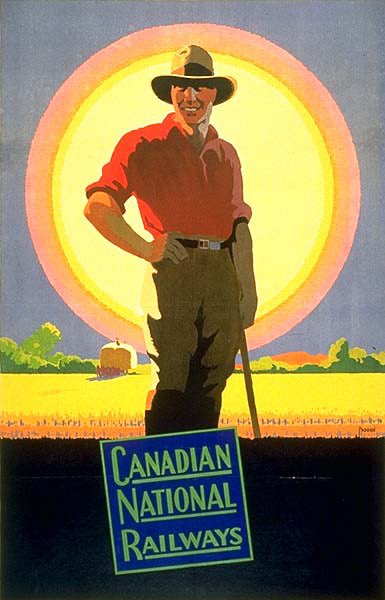
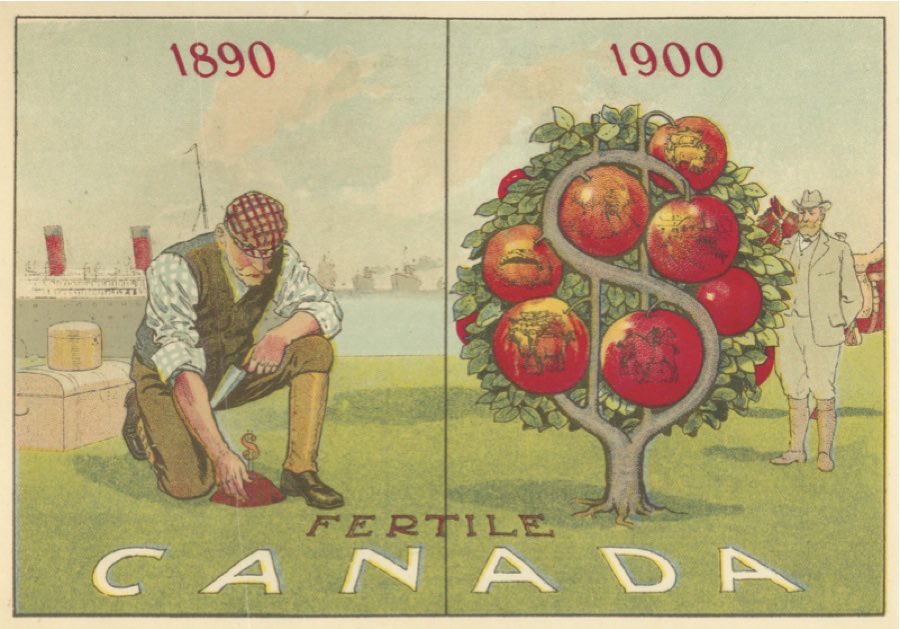
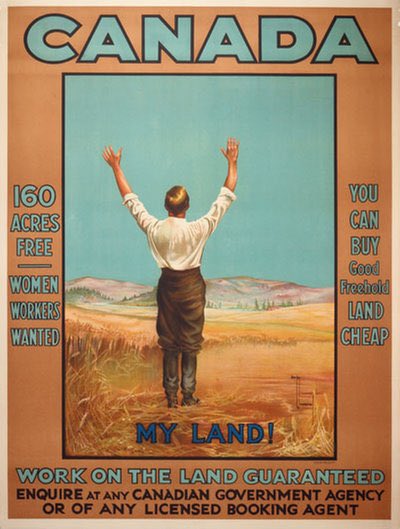
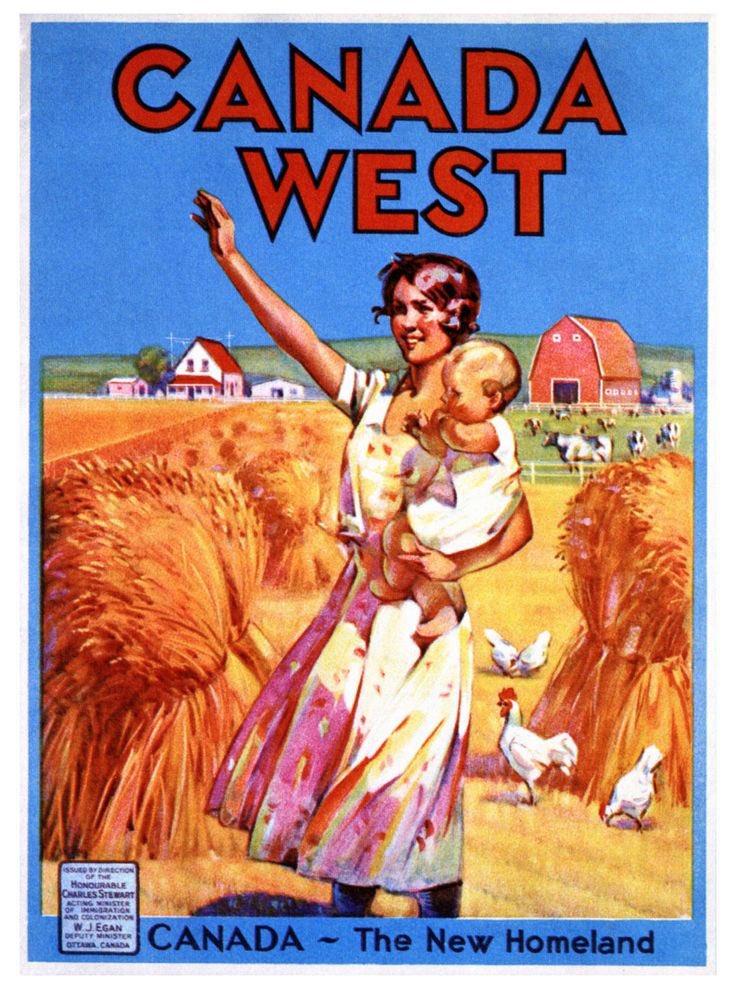
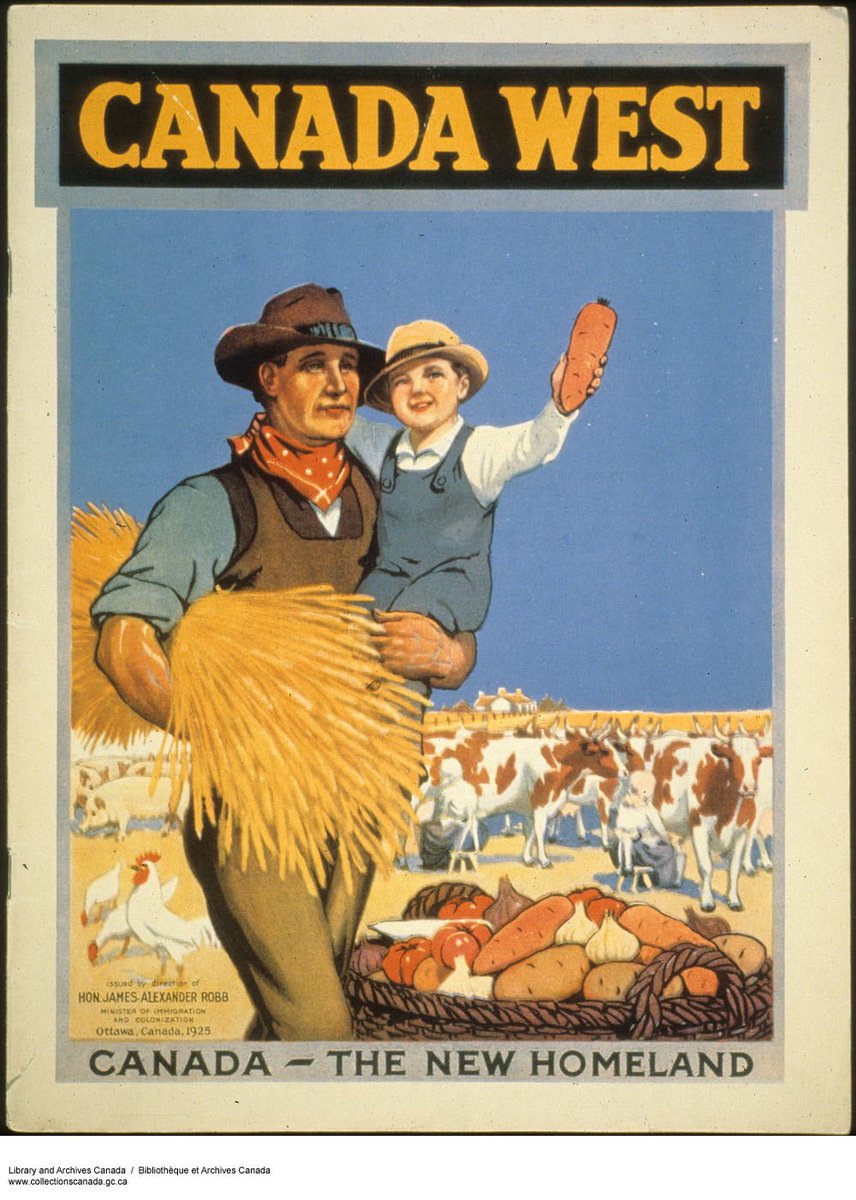
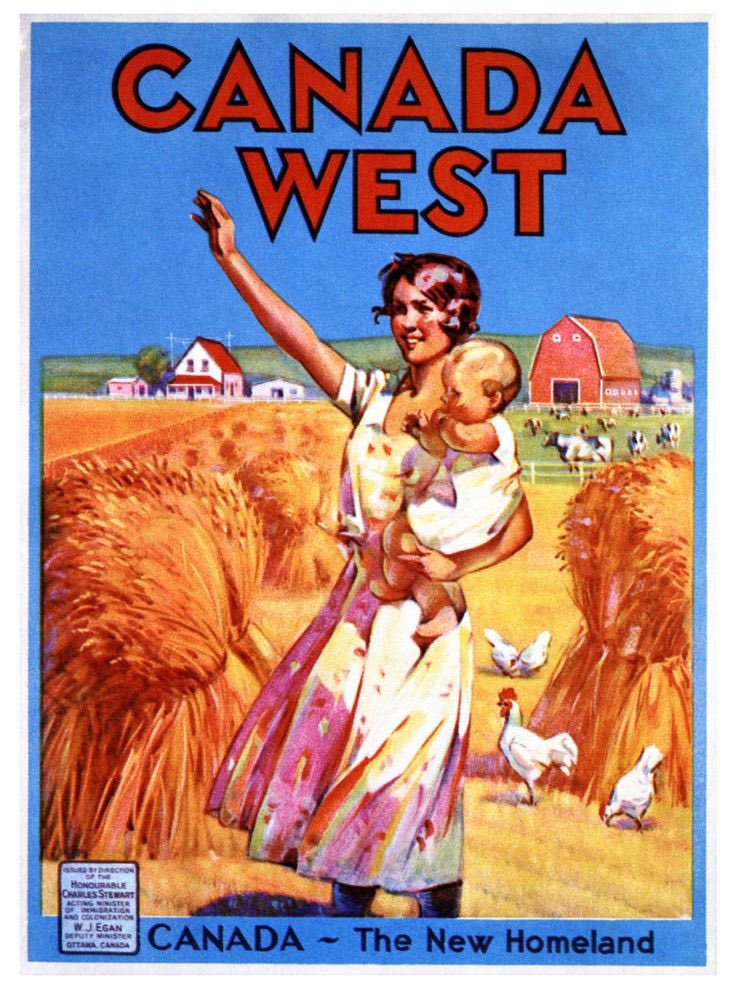
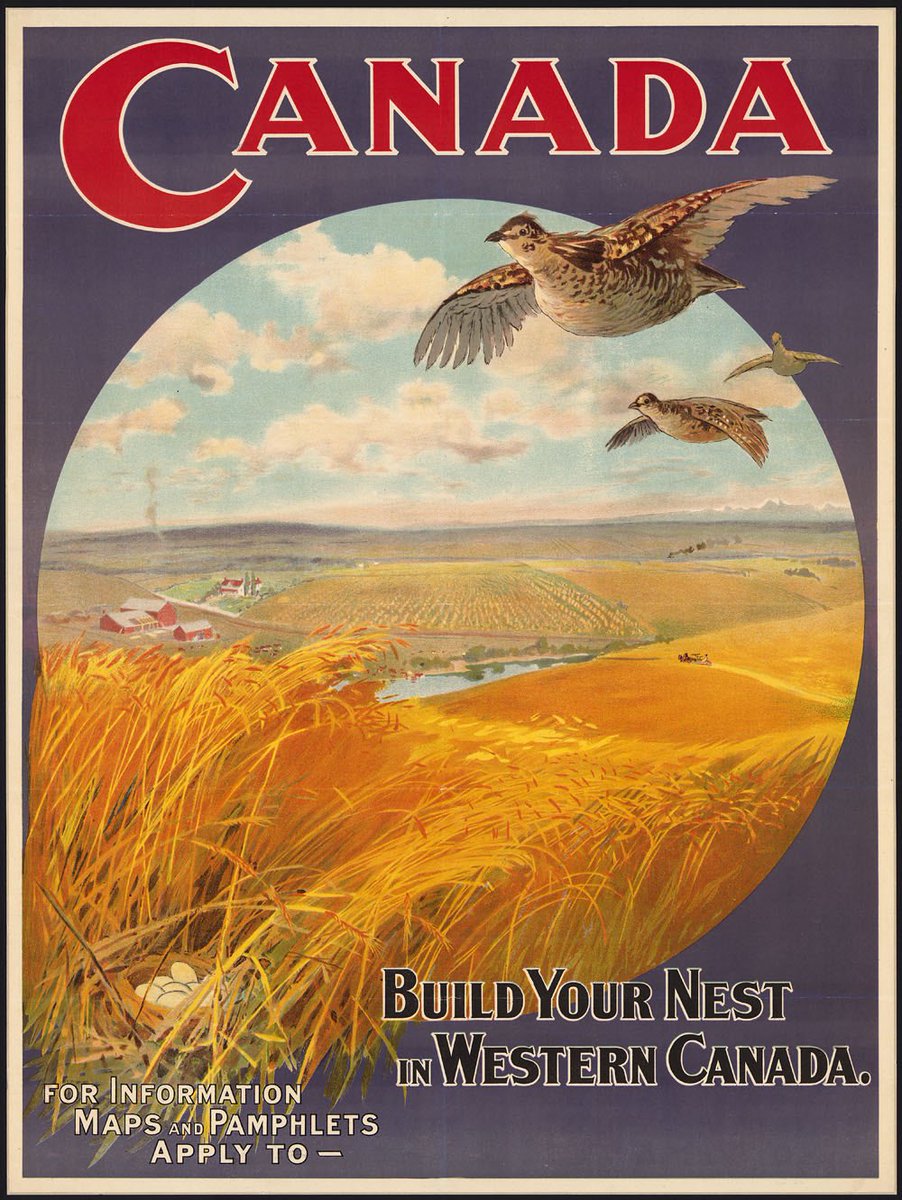
“The Last Best West”
“The Right Land for the Right Man”
“Canada West, the New Homeland”
All were prominently used in advertising prairie settlement, displayed throughout central Canada & the Maritimes as well as in various European countries.
The problem with “Western Canada was settled only as an economic zone and Imperial posture against America” is that the people here, from the start, made it their Homeland. As people tend to do.
Jun 14

Go West, young man was an American slogan. I’m not aware of any such comparable slogan from eastern Canada in either the 19th or 20th centuries.
4
5
41
2,529
Not quite accurate but I understand the sentiment. The people who should have the most grievances with the high tax climate of Canadian industry is high income wage earners, who are often found in cities. However, this class is obfuscated by many of their peers who are employed by government and paid in taxpayer dollars. Any money they make is money taken elsewhere, and thus the high income private sector employee is drowned out at the ballot box and cultural forum and the Party platforms. If you are a high earning private sector employee, I’m sorry, and thank you for your productive services.
Agriculture has always been administered as a unique sector in Canada, though they’re still basically private corporations in relation to the State. The ‘Subsidies’ granted to farmers are typically tied to ideological goals and demands towards productive output. Digging a dugout for live stock? Govt grants available. Installing solar panels on your farm property? Govt grants available. Then there is the artificially low cost credit available, cash advances, etc meant to help front expense costs for operational inputs with repayment demanded upon sale of the goods. Not to mention the Province administered insurance programs. You could consider it a Corporatist framework, for the most part it is meant to ensure the continuance of productive agriculture in Canada. Some of that is for securing domestic consumption, but more and more it is a means to expand exports and thus return hard currency to help stabilize the National Account Balance. Cash crops like Canola are a big part of this.
There are a limited means in which the Canadian economy can attain the necessary inputs for an advanced technological society, most of these key products are built abroad. In order to purchase said goods, we need to sell something, anything, to the rest of the world or else no one would have any need for our currency. We are not the US, we have no ledger to create reserve currency on.
Oil is the clear and present driver of these exports which bring in foreign currency, then other more broad resource extraction activities with precious metals, fertilizer, electricity, agriculture, forestry, etc. There is very limited manufacturing we can sell to the world, and that world is mostly the United States, and that is mostly dependent upon their willingness to establish industry with American capital here and use Canadian labour and currency arbitrage to cheapen particular supply lines and undercut others. Or more specialized manufacturing sectors that have similar or more egregious subsidy schemes than agriculture.
But still, our Canadian cities are dependent upon these export industries in the hinterlands to maintain their own economies, which often revolve around the large banks which finance those endeavours, and more tertiary industries servicing those employed there as well as the plethora of govt institutions. Much of the small manufacturing still in Canadian cities are not export oriented, but sell specialized goods to our export oriented industries.
About the tax breaks and the trucks.. The tax regime currently in Canada, for industry, is to maximally re-invest profits (turning money made in to expenses) to grow the productive capacity of the business. Make a profit on a good year? Lose 50% to govt. Make a bunch of money and spend it all on equipment? Now you made no profit, and paid far less tax, and have more (theoretically productive) assets. Congrats. Ironically, the solution may be to lower tax on high income earners all around to incentivize profiting, thus diversifying where the wealth generated by these business owners is being spent. Then they may buy less trucks, and more localized recreational activities or cultural products.
Jun 13

Ya the farmers are exploiting the taxpayers in the city via subsidies and tax breaks for F150s. Apologiyto my chud allies
10
860
Prison is extremely expensive & you’re going bankrupt, there are other methods

The key takeaway from the last decade of our “conversation about race,” is that to have an ordered society—whatever the uncomfortable reality of black crime might be—we simply need to throw violent people in jail and keep them there.
Jails are good and prison works.
2
8
731
To everyone on the ground in the Canadian Prairies, this land is home to the Pioneers and their descendants. This was known 100 years ago. It’s not a difficult question to answer. It’s been articulated by many people, parties & histories. It makes little difference to any child of the prairies what the motives were of those monied or imperial minded men out east. It’s background noise, billowing narratives that fly overhead on their way to a business conference in Vancouver. Motives are not means, means are not ends, ends are never ending. When you’re from the soil, geopolitics is of little use to you; what matters is whether or not the rain will come, the sun will shine, and if our hands can get the crop off in time.
Jun 13

Have you ever played Sid Meyer's Civilization? You know when you start to come up against an opponent, and you quickly send out a bunch of settlers to build cities around the opponent to try and deny them access to that land and to cut them off?
That's what Western Canada was settled for. But there was never any intention of creating an actual integrated zone. These areas were settled for the primary goal of extracting resources, and soon after Canada's founding, geopolitical circumstances changed, and export to the industrial base of the United States became a possibility. So instead of increasing economic and social connections across the rockies and the Canadian shield, to create a true East-West nation, the economic activity in these regions oriented south and Ottawa's relationship with these regions became one of apathy
2
1
17
1,728
Because we rely on a substantial subsection of Canadian men to do a tremendous amount of high-intensity, niche (in the modern world) skilled labour that is so environmentally demanding it alters their very being and can destroy their body, if not kill them, due to the inherent risks. They will not do this for free. And more and more, we’re unwilling/unable to pay these men enough to keep them doing it. And the secondary consent-making narratives currently operating in the Canadian State, which you are now defending, are wholly repulsive in their irrelevance to these types of Canadian Men our State is dependant on harvesting through taxation. The replacement of these men with other men, from totally alien countries/cultures, is proving to be not just difficult, but impossible. Entire industries are stalling or contracting. But the State keeps spending. In today’s global individual world, you can do anything. You can pick any job you want. Most of the men brought in these past forty years would rather work retail, admin, “security” or sit in a car, parked between a strip mall and a playground named after a Monarch his dad hates, hoping he can move a person from one place to another, something they should largely be capable of doing themselves, meaning there’s an inherent parasitism percentage to most of these industries. A transfer of wealth, not a production, and we must be more mindful of where our wealth is being transferred. From the productive export industries, to the service industries which should naturally support the productive industries… But are these services, particularly administrative governance, being supportive? No. In a myriad of ways, no. It’s been malicious, corrupt, and incompetent. This propaganda is just another example of the rot. More turbulence ahead
Jun 11

What is wrong with Canada being a "global" country?
Canada is consistently ranked as one of the most diverse and successfully pluralistic countries in the world.
Our ability to bring people together from every corner of the globe is one of the things that makes us uniquely Canadian.
4
2
59
4,400
Canadian poets and painters often find themselves attracted to the beautifully mundane, not because they don’t know the exciting crescendos of our historical narrative, but because we’re a wondrously, mysteriously simple people who enjoy living Life as It Is.
Greasy jungle, metropolis noir
Easy tangles, the easiest so far
I, I
I drove down your road
To Hazeldean where I tasted
Your funeral home's
Sandwiches and coffee
I saw your hands melt
Into one another
I saw you grieve and grow
Care a lot about one another
I stood at your sink
And I felt your warm water
I washed your dishes
And I looked out your kitchen window
Where I saw a soulful
Gymnast melt in the air and shudder
Just above the snow
Making moves that just weren't there
I, I
Velvet callow
With wet hands, I turned out the lights
And breathing shallow
Hesitated then went upstairs
Where I picked up your housecoat
Dried my hands and touched your hair
And just then you awoke
You could never really barely care
Jun 12

The reason Canadians don't care about their history is that the Liberal Party has carefully constructed a national antimyth that edits out all of the interesting parts - the wars, rebellions, massacres, and expeditions - in order to render Canadian history exquisitely boring.
Since it's boring, no one is interested.
Since they aren't interested, they don't look into it.
Since they don't look into it, they remain ignorant of it.
Since they're ignorant of it, the Liberals can imply that Canada is and always has been whatever they want it to be, redefining Canada on the fly according to the requirements of the postnational economic zone in the current year.
2
221
Americans & Anglo-Canadians staring each other down in a back alley:
“You’re not a real country”
“You’re a chamber of commerce on stilts in a judicial robe”
“Can you even speak French?”
“Can you please invade Mexico already and forget we even had this conversation?”
1
1
17
888
Lmao, it looks like the aggressively cultivated post-national Raptors fan base amplified to 11

1
18
727
I will be carry on in the Canadian tradition of not caring about fötbaal or the World Cup
Jun 12

Bosnia-Herzegovina fans start their March towards BMO Field in Toronto! #FIFAWorldCup #CANBIH 🇨🇦🇧🇦
1
3
225
America objectively incorporated western expansionism in to their national ethos far more than Canada. To America, westward was the romantic frontier, pioneers more American than America. To Canada, west was an economic zone and her people were in following generations othered, a narrative tendency which has grown rather than subsided in time. 1920s prairie settlers viewed themselves and viewed by central Canada as far more within the strictures of the national inheritance than today.
Hard not to expect this leads to a national dead end and resentment of Canada’s subjects out west. Of course, we could say the New World is entirely an “economic zone” or entirely an imperial project, which in itself is an industrial, economic pursuit. Were Americans just more willing to lie? To myth-make? Was Canada simply too provincial to play these imperial games? Or are they too imperialist and consider this expansion to be the cold, materialist historical necessity as a mere defensive tactic against American settler colonialism, and those prairie folk as pawns on a board and not co-conspirators.
Seems clear to me there’s a strong tendency among Central Canadians, as her people are dying of a sociological gangrene, to cut off as many limbs as possible to save the host. This will amplify distinction and national dislocation as fast as the past’s multicultural myth making of western Canada’s founding has, and leaves us westerners lost in the barren.
3
2
34
1,739
Lance Audet dit LaPrairie retweeted

Jun 12
Red Ensign Lounge x.com/i/spaces/1pKkOOeVpyrKj
6
11
16
1,385
Canadians will be polite yet distant to foreigners and we’ll be forever labeled passive aggressive cunts for it lmao
Jun 11

Have lived in both Canada and the United States, they’re extremely different people. I fucking cannot stand Canadians, they’re passive aggressive and extremely female, Americans are more straightforward and much more similar to Australians in terms of disposition.
7
36
2,223
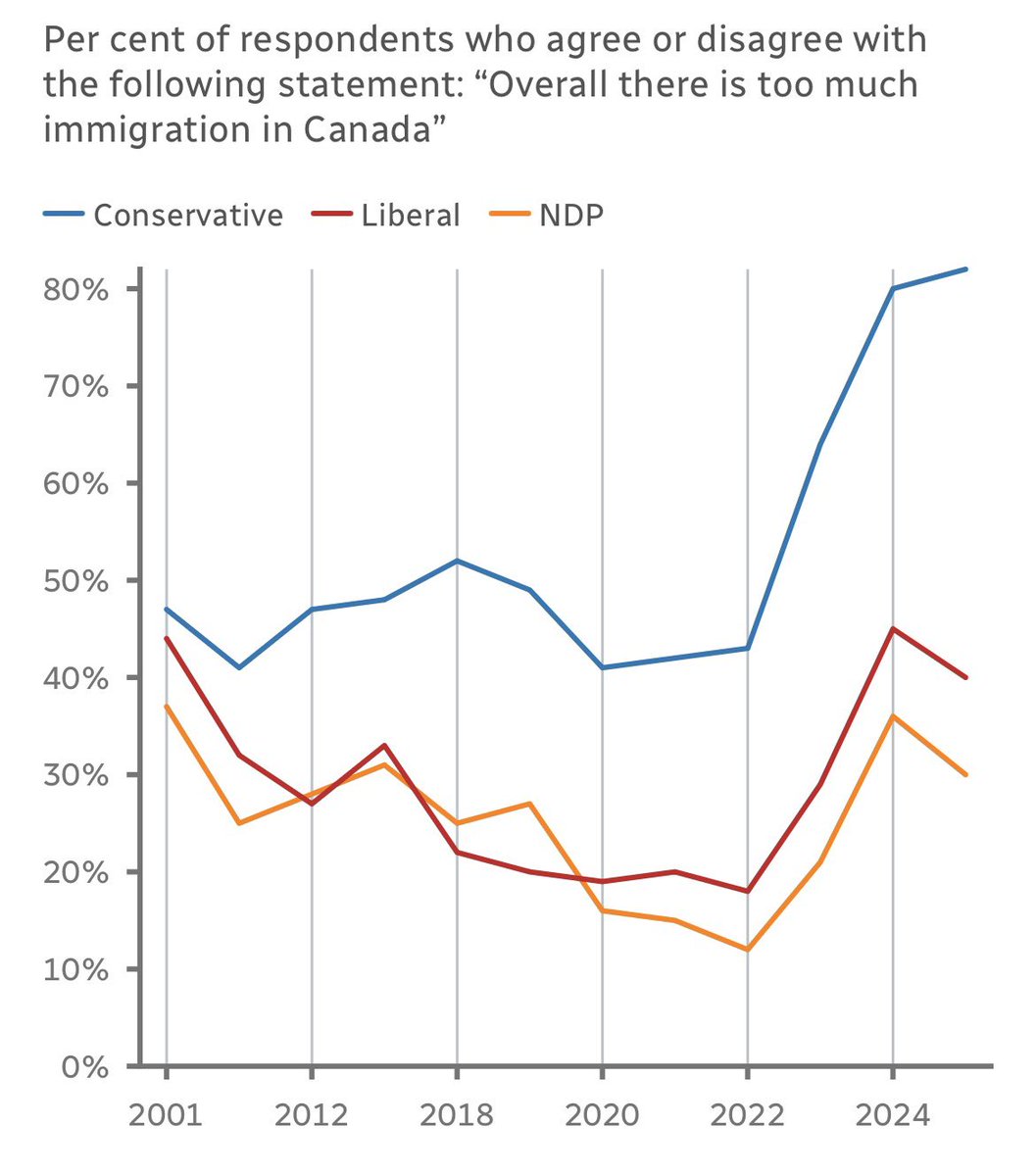
Liberal MPs are far far far far! more reliant on the ethnic vote than any “pivot” respector can even imagine
Jun 11

Liberal MP Yvan Baker introduced the bill to designate July as Somali Heritage Month.
Here he is taking part in a Somali flag raising at Toronto City Hall to celebrate Somalia's Independence Day.

1
15
635
You either die by a migrant or live long enough to accept that Steve Laws is a moderate
Jun 10

Total Remigration.
Every single one.
8
232
Huffed so much ammonia anhydrous I could grow corn outta my lungs
3
120