
lawfiles.in is a trusted platform for the latest legal news, landmark court decisions, and in-depth legal insights from India.
Joined December 2020
- Tweets 2,456
- Following 99
- Followers 47,487
- Likes 8,045
2,174 Photos and videos




⚖️ POLITICAL LEGAL BATTLE IN BENGAL
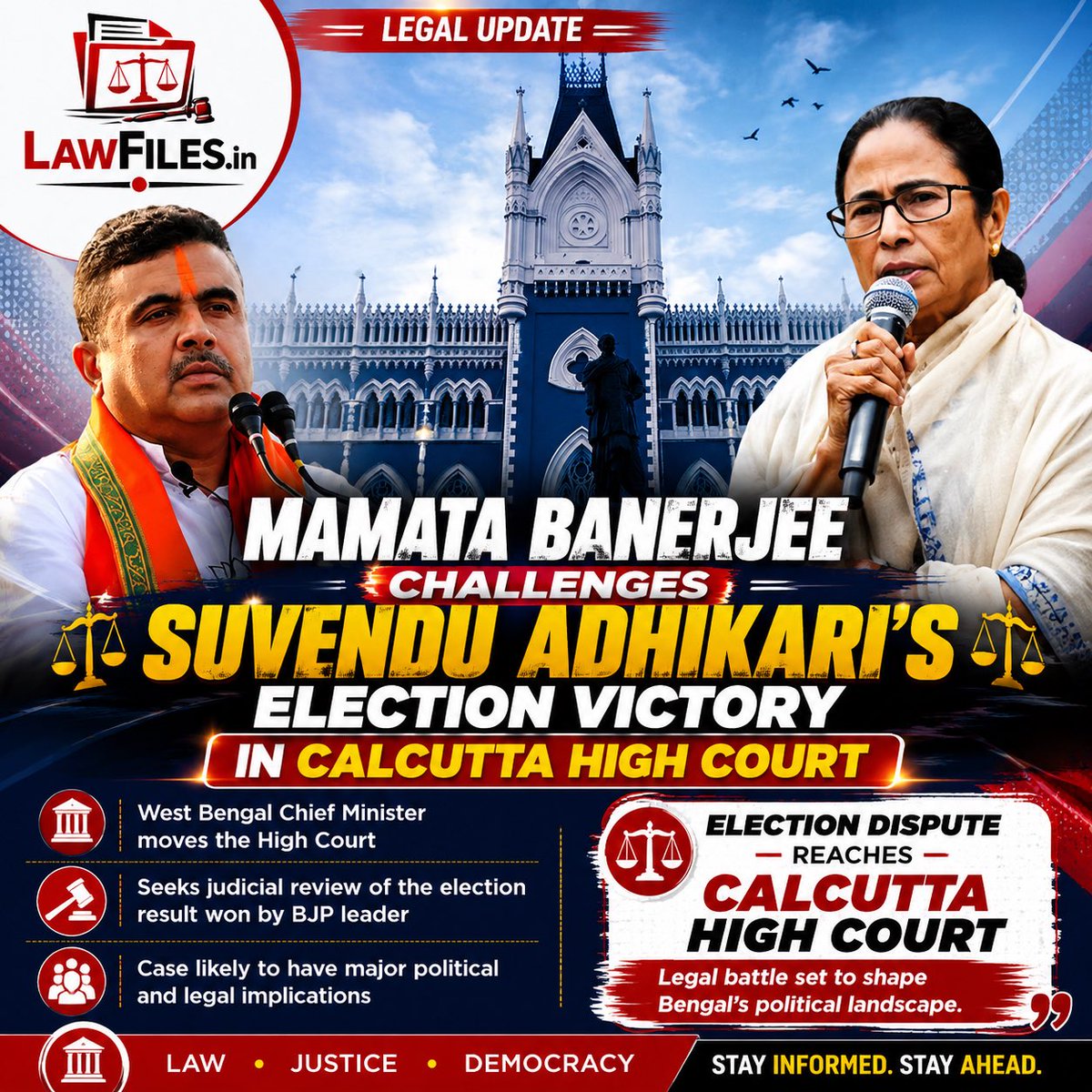
West Bengal Chief Minister Mamata Banerjee has moved the Calcutta High Court, challenging BJP leader Suvendu Adhikari’s election victory and seeking judicial review of the result. The case is expected to have significant political and legal implications in the state.
#MamataBanerjee #SuvenduAdhikari #CalcuttaHighCourt #WestBengal #ElectionDispute #LawFiles #LegalNews #IndianPolitics
1
31
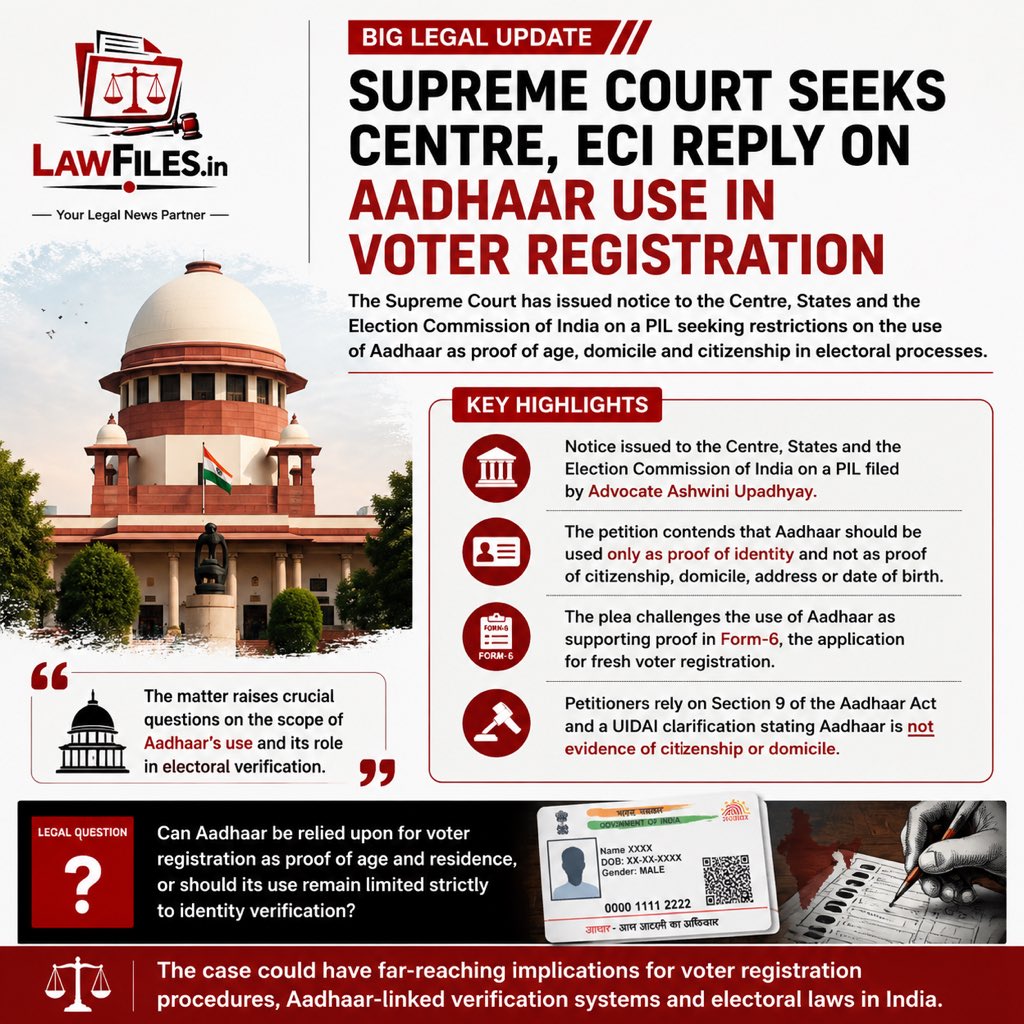
The Supreme Court has sought responses from the Centre, State governments and the Election Commission of India on a plea challenging the use of Aadhaar as proof of age, domicile and citizenship during voter registration. The petition argues that Aadhaar was designed primarily as an identity document and should not be treated as conclusive proof of citizenship or residence. The case raises important constitutional and electoral questions regarding voter verification, electoral roll integrity and the legal scope of Aadhaar under existing laws. The Court’s decision could have significant implications for voter registration procedures and Aadhaar-linked verification systems across the country, making it a closely watched matter in both legal and electoral circles.
#SupremeCourt #Aadhaar #ElectionCommission #VoterRegistration #LawFiles
16
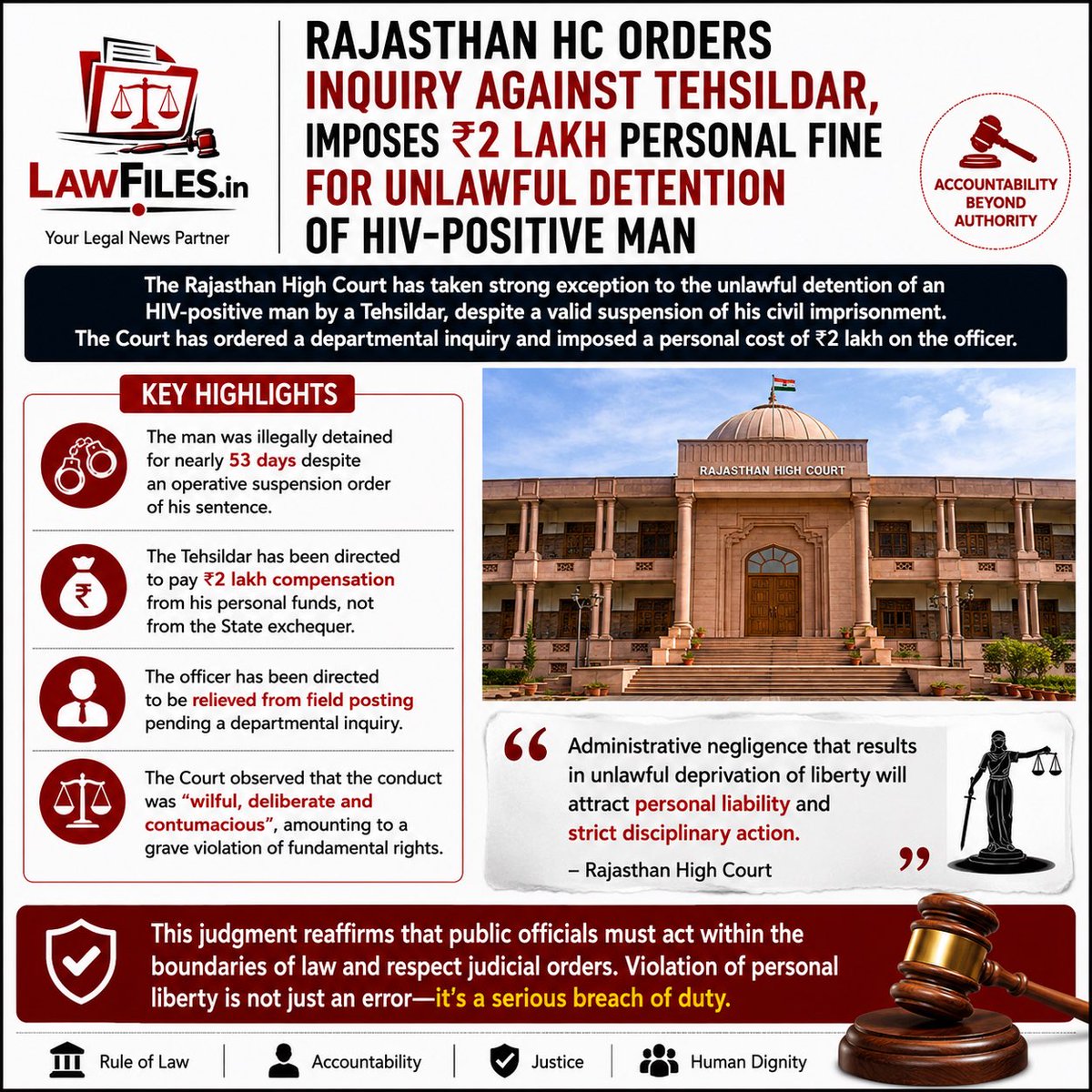
In a significant ruling reinforcing personal liberty and administrative accountability, the Rajasthan High Court has ordered a departmental inquiry against a Tehsildar and imposed a personal fine of ₹2 lakh for the unlawful detention of an HIV-positive man. The Court noted that the individual remained in custody for nearly 53 days despite an operative suspension order of his civil imprisonment. Holding the officer personally accountable, the Court directed that the compensation be paid from his own funds and not from the State exchequer. The judgment serves as a strong reminder that public officials are duty-bound to comply with judicial orders and that violations of personal liberty can attract personal liability and strict disciplinary action.
#RajasthanHighCourt #RuleOfLaw #HumanRights #AdministrativeAccountability #LawFiles
16
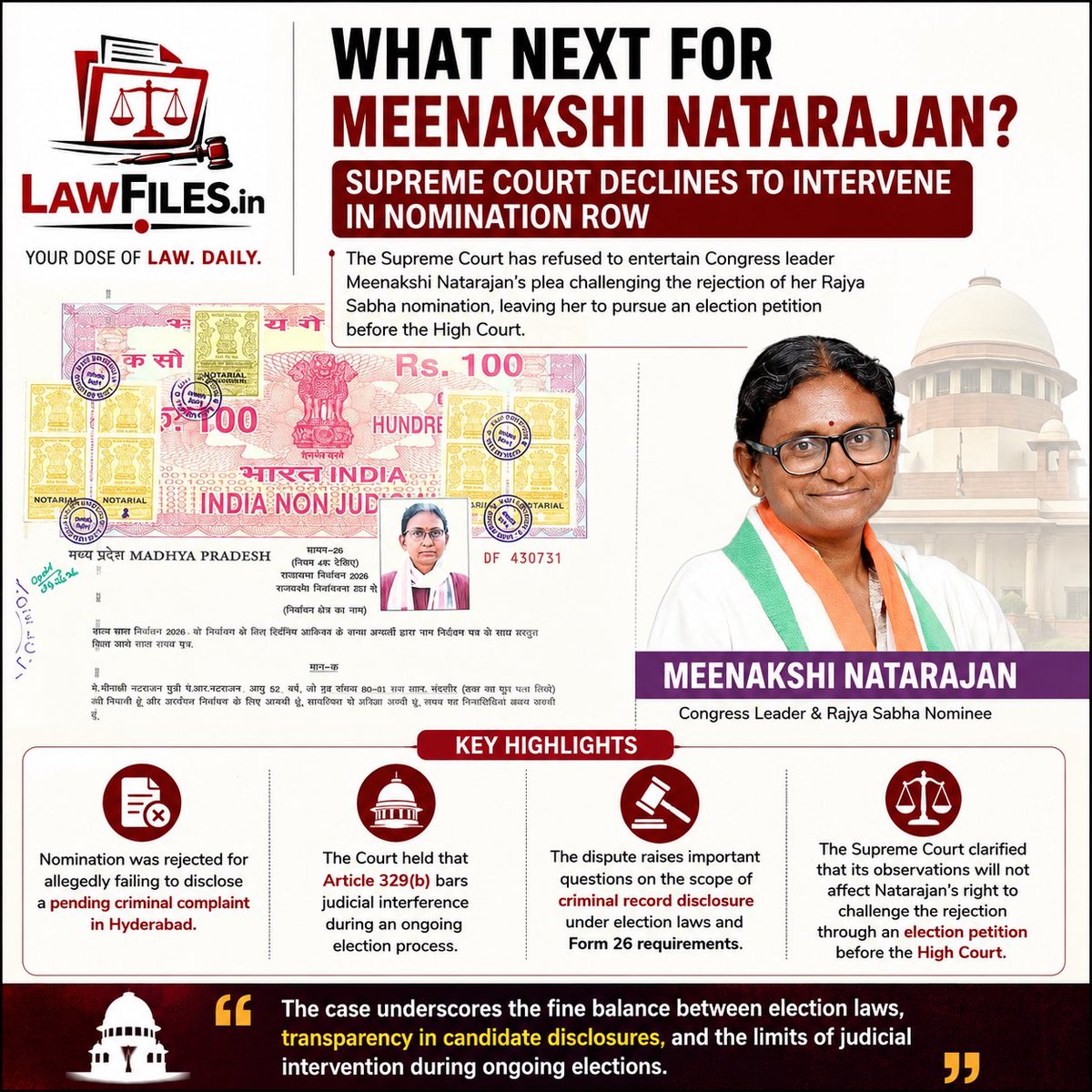
The Supreme Court has declined to intervene in Congress leader Meenakshi Natarajan’s challenge to the rejection of her Rajya Sabha nomination, directing that the dispute be pursued through an election petition before the High Court. The nomination was reportedly rejected over the alleged non-disclosure of a pending criminal complaint in Hyderabad. The case has brought renewed focus on the legal requirements relating to criminal record disclosures by candidates and the limitations on judicial intervention during an ongoing election process under Article 329(b) of the Constitution. The Court also clarified that its observations would not prejudice Natarajan’s right to seek appropriate remedies before the High Court.
#MeenakshiNatarajan #SupremeCourt #ElectionLaw #RajyaSabha #LawFiles
18

Jun 15
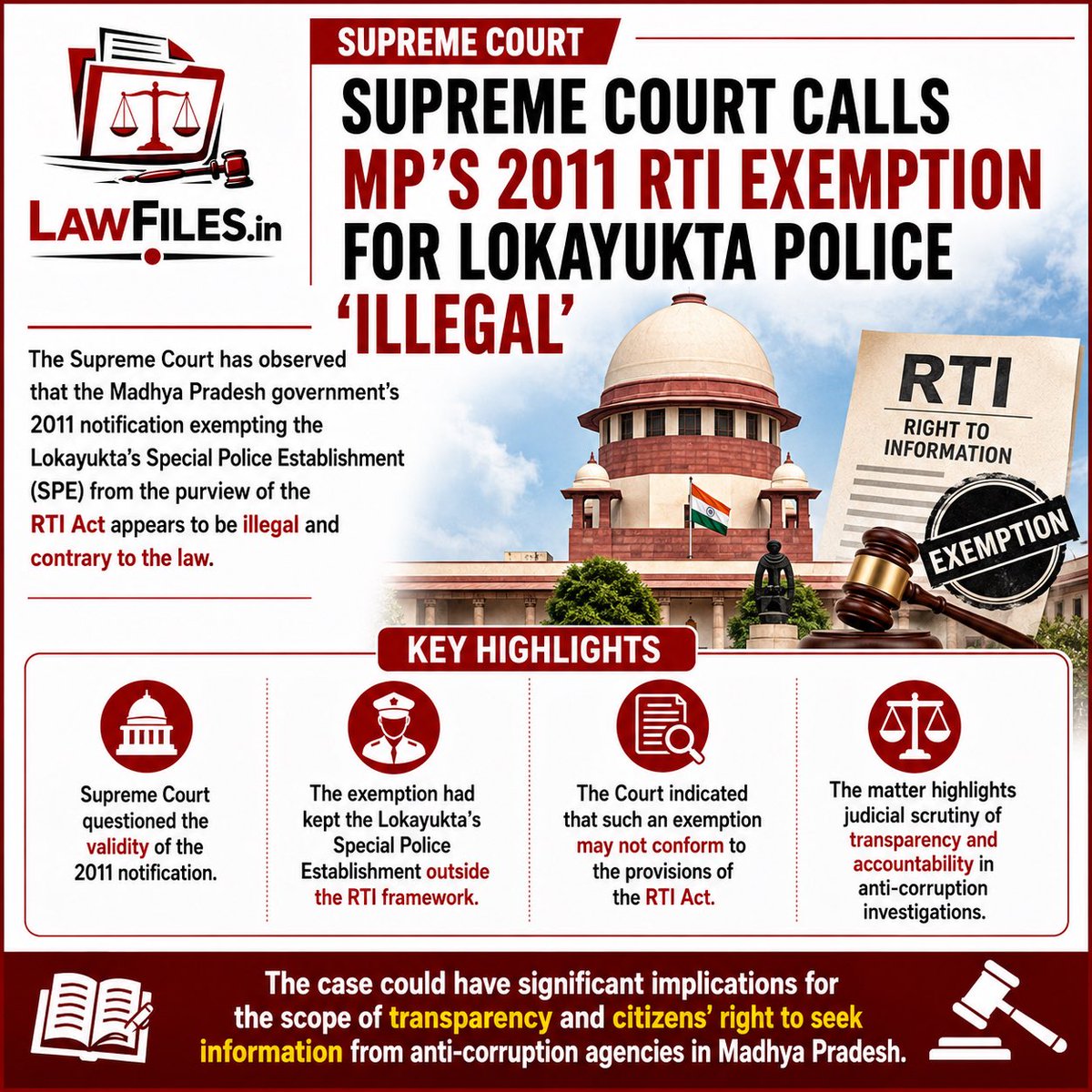
In a significant observation on transparency and accountability, the Supreme Court has termed the Madhya Pradesh government's 2011 notification exempting the Lokayukta’s Special Police Establishment (SPE) from the ambit of the Right to Information (RTI) Act as “illegal.” The Court questioned the validity of keeping the anti-corruption investigation agency outside the RTI framework and indicated that such an exemption may not be in conformity with the provisions of the RTI Act. The matter carries major implications for citizens’ right to access information and reinforces the principle that transparency remains a cornerstone of democratic governance and public accountability.
#SupremeCourt #RTIAct #Lokayukta #Transparency #LawFiles
24
Jun 15
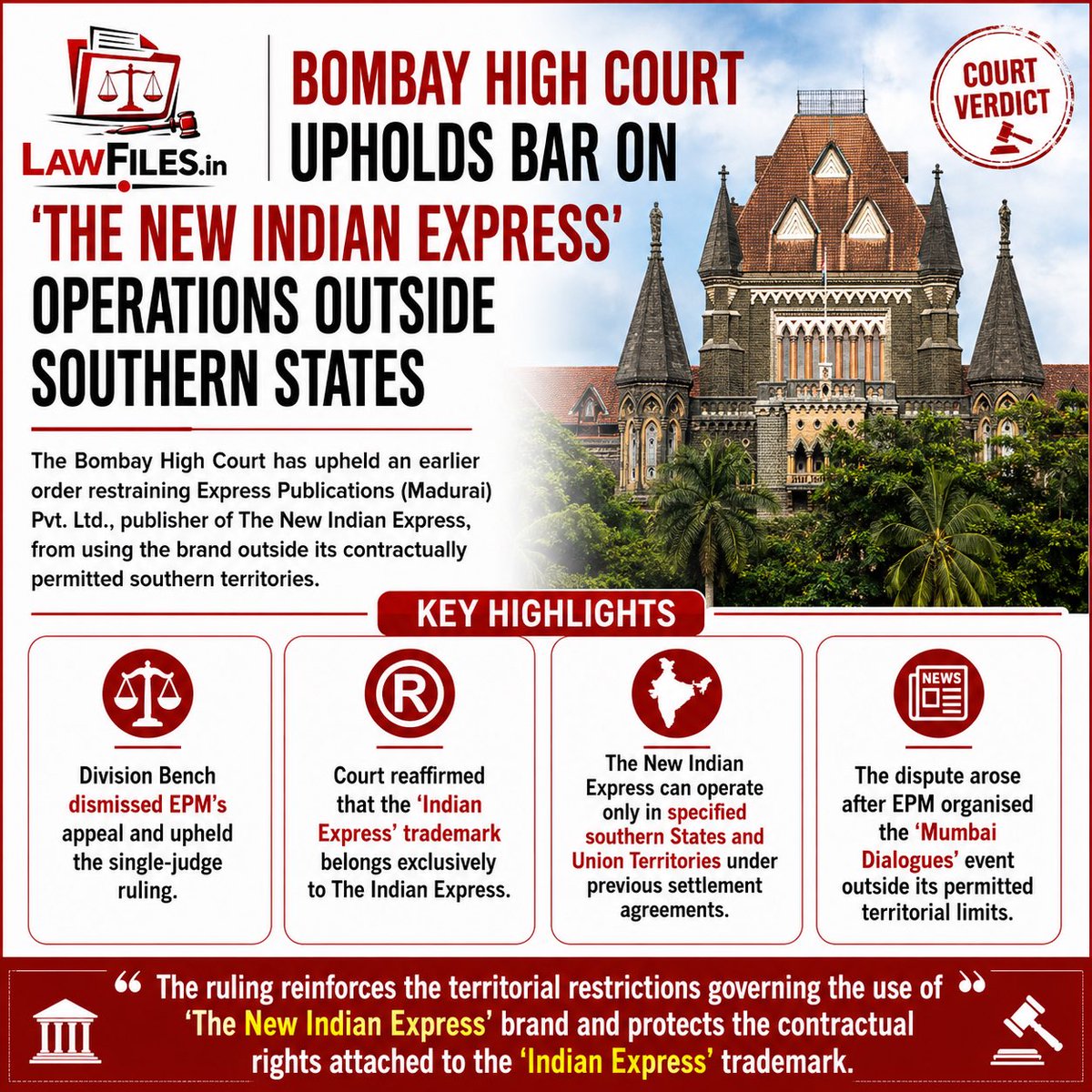
The Bombay High Court has upheld a restriction on the operations of The New Indian Express outside the southern States and Union Territories specified under previous agreements. The Court dismissed the appeal filed by Express Publications (Madurai) Pvt. Ltd. and reaffirmed that the ‘Indian Express’ trademark rights and territorial arrangements must be respected. The dispute stemmed from the organisation of the ‘Mumbai Dialogues’ event outside the publisher’s permitted geographical limits. The judgment reinforces the importance of contractual obligations and trademark protections in media operations, highlighting that territorial rights remain legally enforceable and binding.
#BombayHighCourt #TheNewIndianExpress #TrademarkLaw #MediaLaw #LawFiles
25
Jun 15
The Madras High Court has observed that a wife filing a police complaint against her husband cannot, by itself, be treated as an act of marital cruelty unless the allegations are proved to be false and malicious. The Court underscored that approaching law enforcement for protection or justice is a legal right and should not automatically invite adverse consequences in matrimonial disputes. The ruling highlights the need to distinguish between genuine grievances and malicious complaints while ensuring that access to legal remedies remains protected.
#MadrasHighCourt #MaritalCruelty #LegalRights #FamilyLaw #LawFiles
13
Jun 14
Consent Beyond the Altar: Rethinking Consent and Annulment Under the Hindu Marriage Act
Marriage does not dilute the importance of consent. Consent remains continuous, voluntary, and revocable, and coercion has no place in any relationship. The evolving legal discourse under the Hindu Marriage Act highlights the need to protect dignity, autonomy, and equality within marriage.
#ConsentBeyondTheAltar #HinduMarriageAct #ConsentMatters #LegalAwareness #MarriageAndLaw #GenderJustice
22
Jun 13
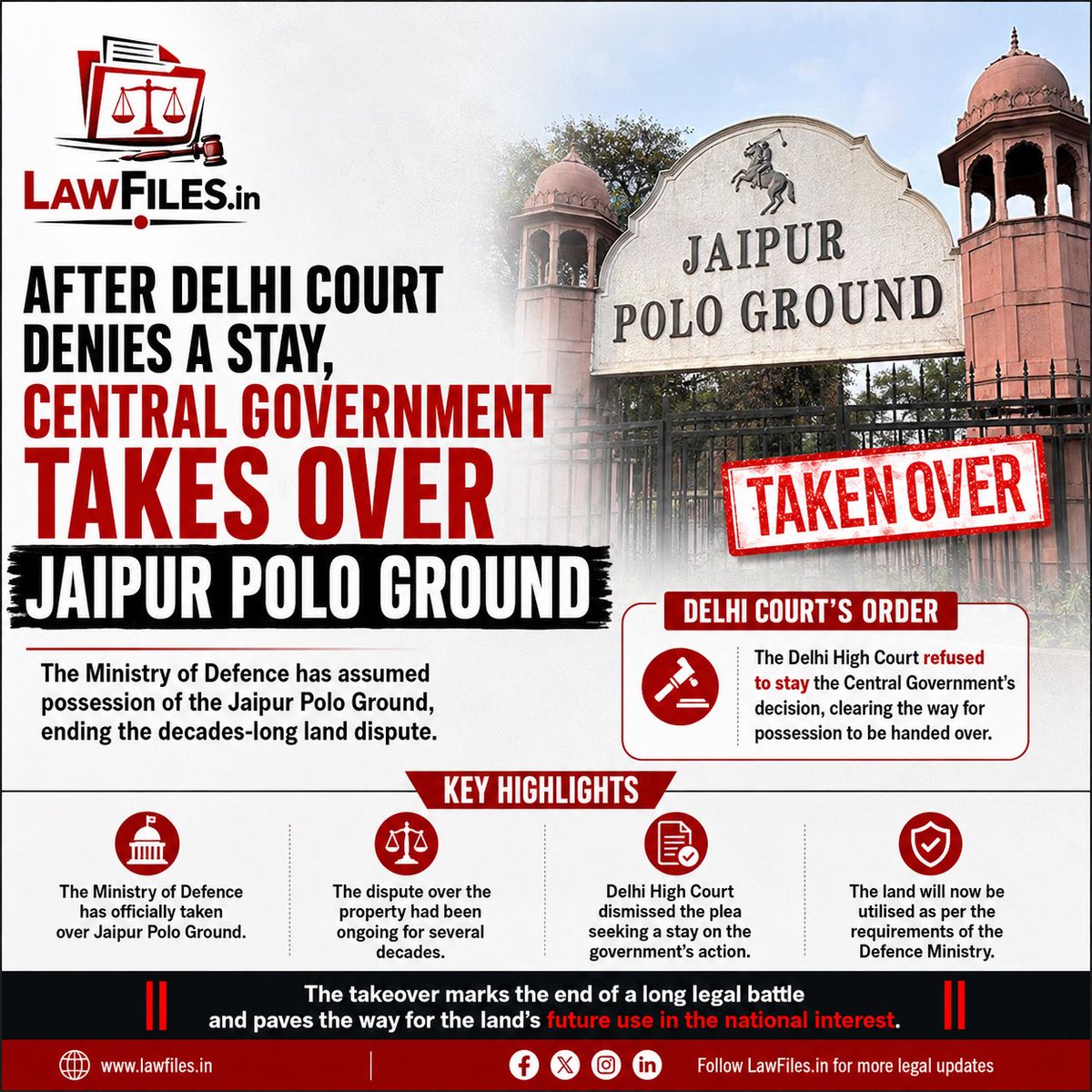
In a significant development in the long-running Jaipur Polo Ground dispute, the Central Government has taken possession of the property after the Delhi High Court declined to grant a stay on the takeover. The decision effectively clears the way for the Ministry of Defence to assume control of the land.
The dispute over the prestigious property had continued for several decades and involved complex legal and administrative issues. With the court refusing to intervene at this stage, the takeover marks a major turning point in the matter. The development is expected to have important implications for the future use and management of the Jaipur Polo Ground and brings a prolonged legal battle closer to its conclusion.
#DelhiHighCourt #JaipurPoloGround #MinistryOfDefence #LegalNews #LawFiles
53
Jun 12
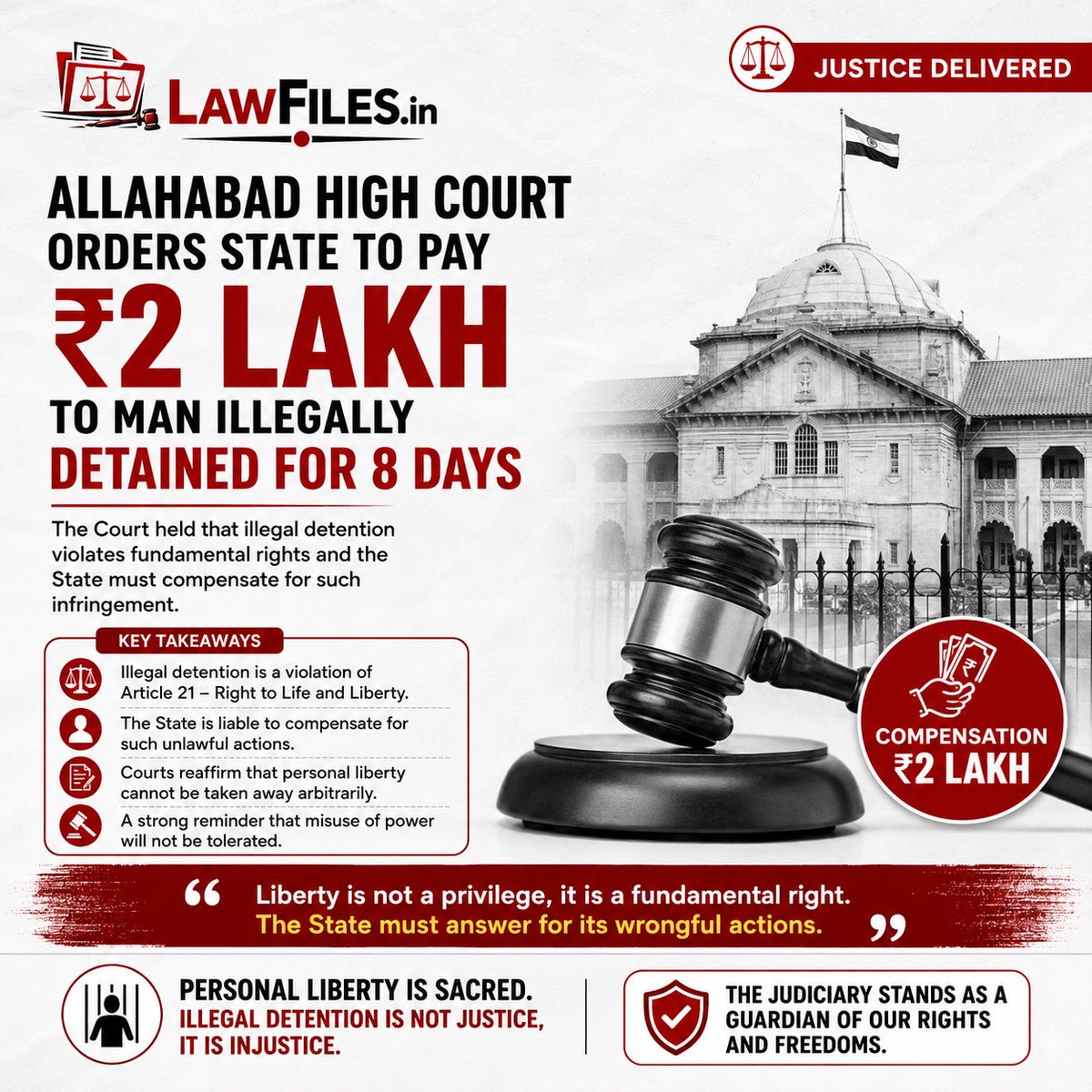
In a significant ruling reinforcing the protection of personal liberty, the Allahabad High Court has directed the State to pay ₹2 lakh compensation to a man who was illegally detained for eight days. The Court observed that unlawful detention is a serious violation of fundamental rights guaranteed under the Constitution and that the State must be held accountable for such actions.
The judgment serves as a strong reminder that no individual can be deprived of liberty without due process of law. It also reaffirms the judiciary’s role in safeguarding citizens’ rights and ensuring accountability when public authorities overstep their powers.
#AllahabadHighCourt #FundamentalRights #PersonalLiberty #LegalNews #LawFiles
21
Jun 11
Democracy derives its strength not from unquestioned obedience, but from accountability to the people it serves. The thought-provoking phrase “Yes, Sir. No, Voters!” highlights a growing concern in public life—what happens when authority takes precedence over responsibility towards citizens.
In a healthy democracy, elected representatives and public institutions must remain answerable to the voters who place their trust in them. When decision-making becomes focused on hierarchy rather than public interest, the very foundation of democratic governance is weakened. The article serves as a reminder that true leadership is measured not by loyalty to power, but by commitment to the people.
#Democracy #Accountability #VotersMatter #RuleOfLaw #LawFiles
20
Jun 11
The Bombay High Court has directed Salman Khan’s neighbour to remove social media posts related to an ongoing property dispute, observing that freedom of speech does not extend to defamatory or baseless allegations.
The Court emphasized the importance of maintaining responsible public discourse and cautioned against using social media platforms to air personal disputes. The matter highlights the growing intersection of reputation rights, free speech, and digital accountability in the age of social media.
#BombayHighCourt #SalmanKhan #PropertyDispute #LegalNews #LawFiles
22
Jun 11
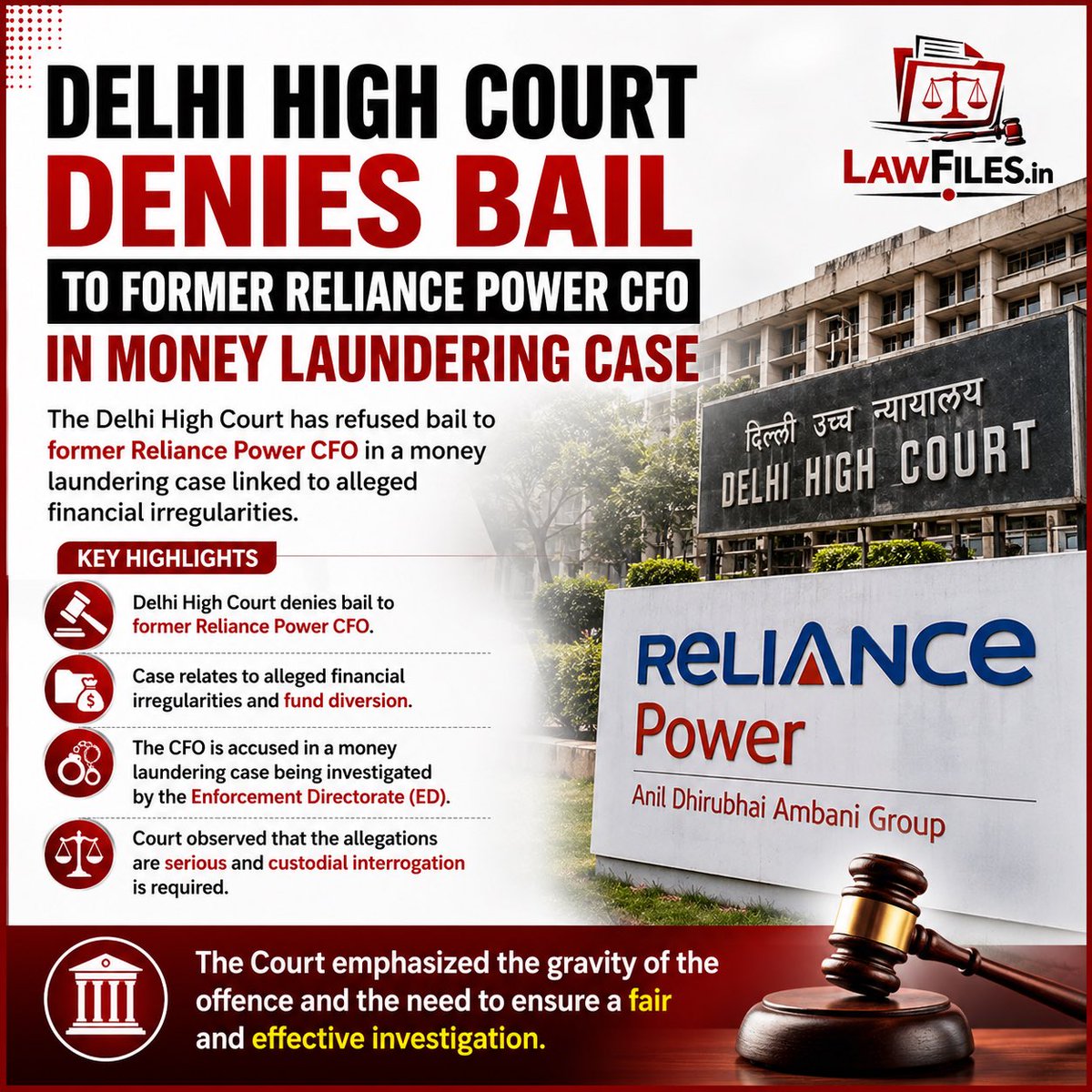
The Delhi High Court has denied bail to the former CFO of Reliance Power in a money laundering case under investigation by the Enforcement Directorate (ED). The Court observed the seriousness of the allegations and emphasized the need for a fair and effective investigation before granting any relief.
The case, linked to alleged financial irregularities and fund diversion, continues to draw attention as agencies pursue their probe into the matter.
#DelhiHighCourt #MoneyLaundering #ReliancePower #EDInvestigation #LawFiles
29
Jun 10
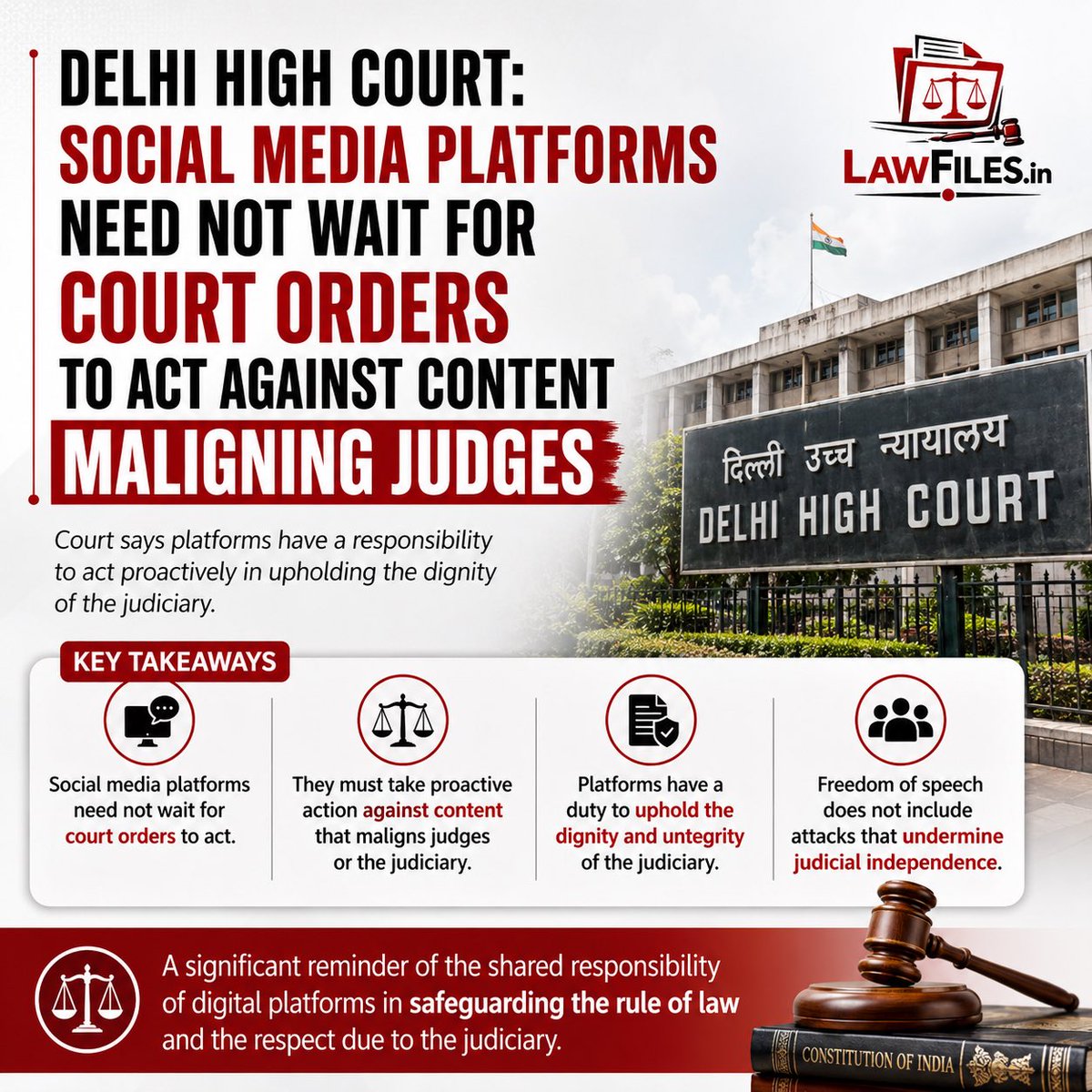
The Delhi High Court has observed that social media platforms need not wait for court orders before acting against content that maligns judges or undermines the dignity of the judiciary. The Court emphasized that digital platforms have a responsibility to take proactive measures against such content while balancing the principles of free speech and judicial independence.
The ruling reinforces the importance of safeguarding public confidence in the justice system and highlights the growing role of social media platforms in maintaining responsible online discourse.
#DelhiHighCourt #Judiciary #SocialMedia #RuleOfLaw #LawFiles
15
Jun 9
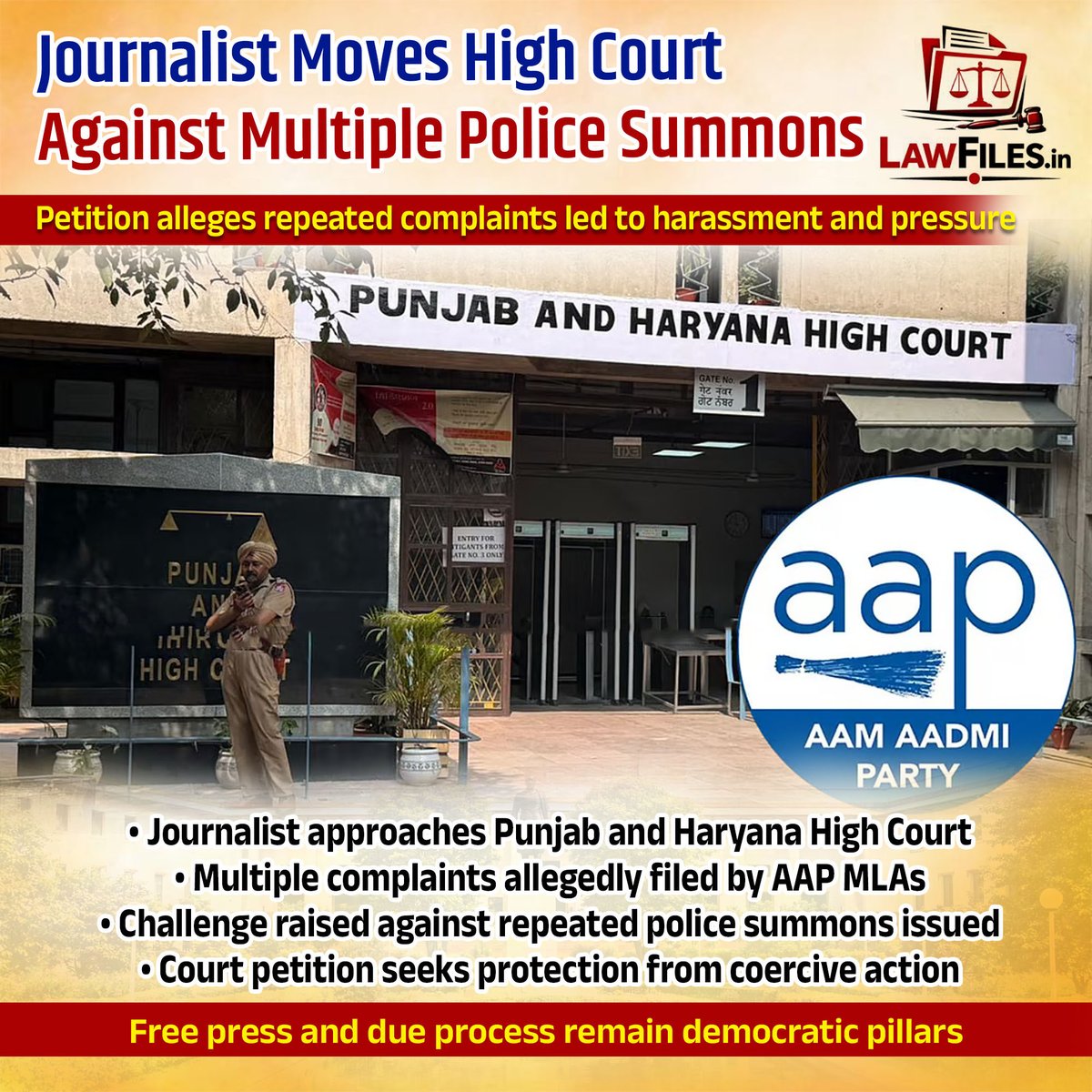
A journalist has approached the Punjab and Haryana High Court challenging multiple police summons issued following complaints allegedly filed by several AAP MLAs. The petitioner has argued that the repeated complaints and subsequent summons amount to harassment and place undue pressure on journalistic work.
According to the plea, multiple complaints were lodged over content published by the journalist, resulting in repeated police action and notices. The petition seeks judicial intervention to safeguard constitutional rights and prevent coercive measures while the matter is examined by the Court.
The case raises broader questions regarding the balance between freedom of the press, criminal complaints, and investigative powers. The High Court is expected to examine whether the repeated proceedings amount to abuse of legal process or fall within the scope of lawful investigation.
The matter is likely to attract attention from media organizations, legal experts, and civil society groups as it touches upon issues of press freedom, procedural fairness, and protection of constitutional liberties.
#PunjabAndHaryanaHighCourt #Journalist #PressFreedom #AAP #LegalNews #FreedomOfSpeech #Judiciary
27
Jun 8
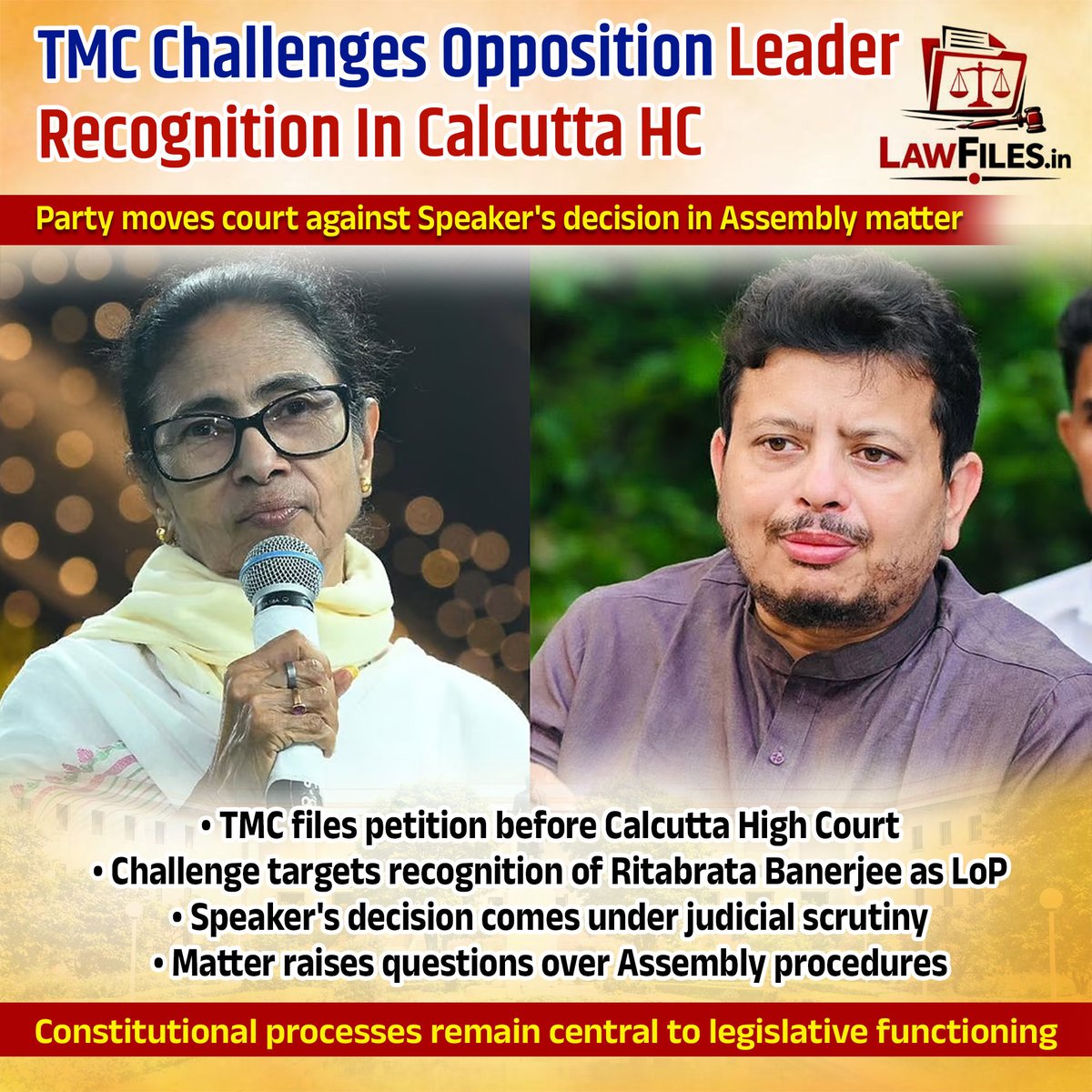
The Trinamool Congress (TMC) has approached the Calcutta High Court challenging the decision of the West Bengal Assembly Speaker to recognize Ritabrata Banerjee as the Leader of Opposition in the Assembly. The petition seeks judicial review of the Speaker's decision and raises questions regarding the legal and procedural basis for the recognition.
The dispute has emerged as a significant political and constitutional issue, drawing attention to the rules governing recognition of opposition leadership within legislative bodies. The matter is expected to involve interpretation of Assembly procedures, legislative conventions, and relevant statutory provisions.
By moving the High Court, the ruling party has sought legal clarity on the Speaker's decision, arguing that the recognition requires closer examination under the applicable framework. The case is likely to have implications for the functioning of the opposition and legislative dynamics within the West Bengal Assembly.
The High Court's consideration of the matter will be closely watched by political observers and constitutional experts, as it touches upon important questions relating to legislative authority, procedural fairness, and the role of constitutional institutions in resolving political disputes.
#CalcuttaHighCourt #TMC #RitabrataBanerjee #WestBengalAssembly #LeaderOfOpposition #Judiciary #PoliticalNews
43
Jun 8
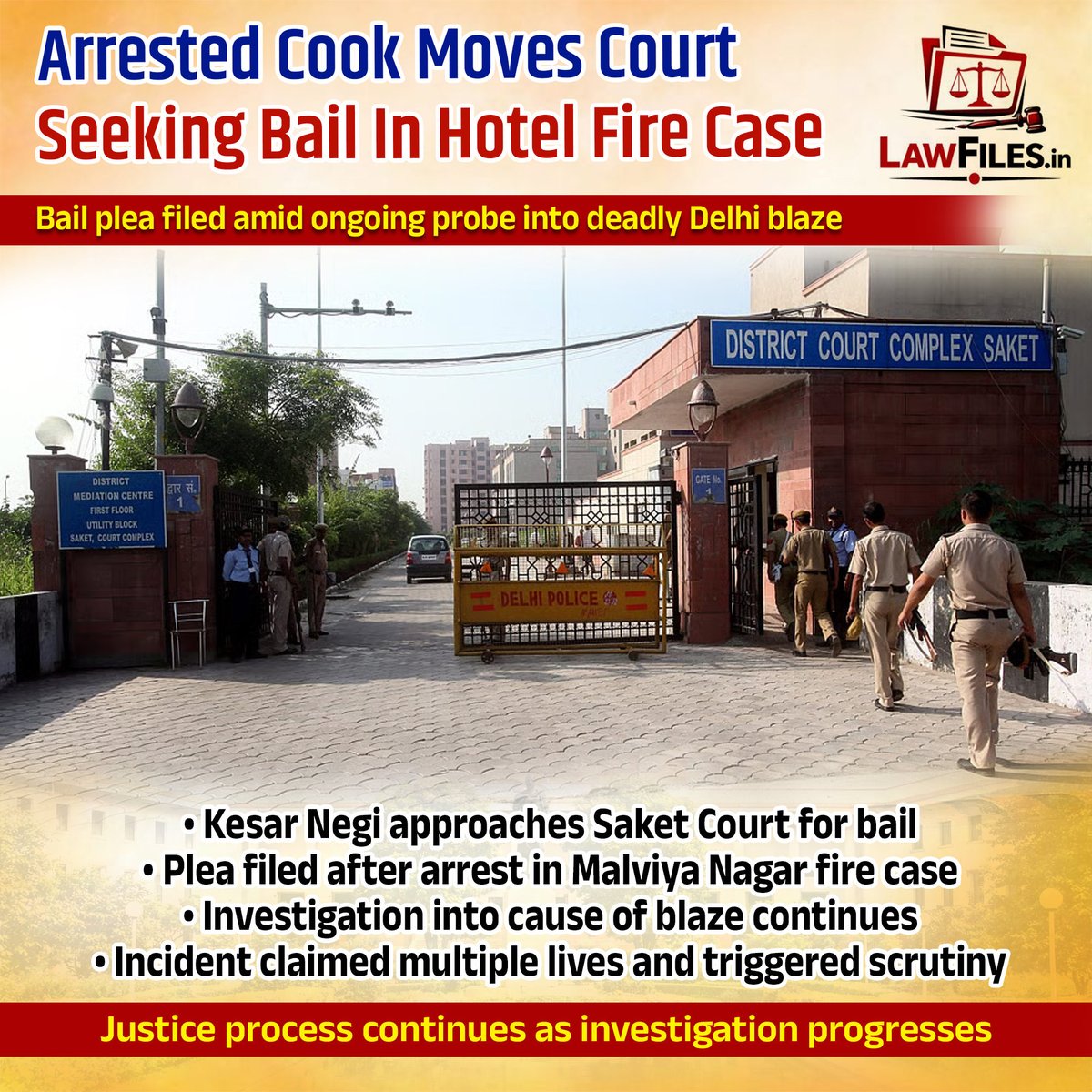
The cook arrested in connection with the devastating Malviya Nagar hotel fire case has approached the Saket Court seeking bail as investigations into the tragedy continue. The plea comes days after his arrest in a case that has drawn widespread attention following the loss of multiple lives in the South Delhi blaze.
Investigating agencies are examining the sequence of events that led to the fire, including the actions of staff members and compliance with safety procedures at the establishment. Police have conducted reconstruction exercises and questioned key individuals as part of the ongoing probe.
The Malviya Nagar fire has also sparked broader concerns regarding fire safety compliance in hospitality establishments across the national capital. Following the incident, authorities initiated inspections and reviews of safety measures at commercial properties.
The bail application will now be considered by the court on its merits while the investigation proceeds. The outcome of the proceedings is expected to be closely watched given the seriousness of the incident and its public safety implications.
#MalviyaNagarFire #SaketCourt #DelhiNews #LegalNews #FireSafety #CourtProceedings #Justice
47
Jun 8
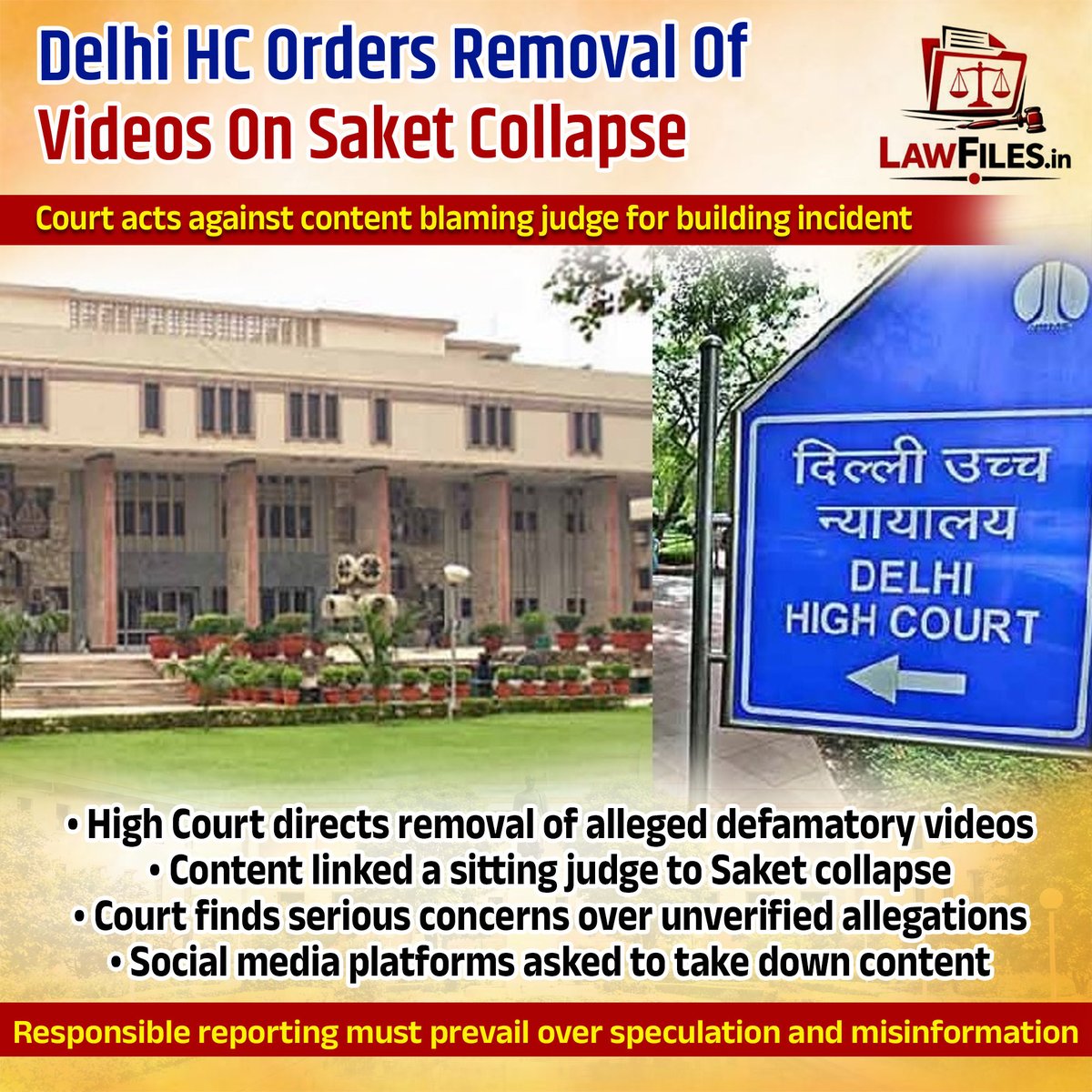
The Delhi High Court has ordered the removal of videos and online content that allegedly blamed a sitting High Court judge for the building collapse incident in Delhi's Saket area. The Court intervened after observing that serious allegations were being circulated without substantiated material to support the claims.
The matter involved content published on social media platforms and digital channels that attempted to connect the judge with the collapsed structure. The Court noted the potential impact of such unverified allegations on the reputation of judicial officers and the administration of justice.
Emphasizing the need for responsible communication, the Court directed the removal of the disputed content and underscored that individuals and platforms must exercise caution before disseminating allegations that lack factual verification. The order highlights the balance between freedom of expression and protection against defamatory or misleading content.
The ruling reinforces the judiciary's commitment to safeguarding institutional integrity while ensuring that public discourse remains grounded in verified facts and legal accountability.
#DelhiHighCourt #SaketCollapse #Judiciary #LegalNews #SocialMedia #RuleOfLaw #CourtOrder
1
28
Jun 7
A recent legal analysis has reignited debate on the treatment of evidence obtained through allegedly unlawful searches and seizures. The discussion focuses on whether courts should permit the use of evidence collected in violation of procedural safeguards or constitutional protections, particularly when such evidence may be crucial to criminal investigations.
The article argues that the current legal framework may, in some situations, fail to adequately deter investigative misconduct if unlawfully obtained evidence continues to be relied upon in judicial proceedings. It examines the tension between protecting individual rights and ensuring effective law enforcement, a challenge faced by legal systems across the world.
The issue has significant implications for criminal justice, privacy rights, due process, and constitutional governance. Proponents of stricter safeguards contend that excluding improperly obtained evidence can discourage abuse of power, while others argue that doing so could hamper the pursuit of justice in serious cases.
As technology expands the scope of surveillance, digital investigations, and data collection, questions surrounding search, seizure, privacy, and evidentiary standards are becoming increasingly important. The debate continues to shape discussions on the future of criminal procedure and the protection of fundamental rights.
#SearchAndSeizure #CriminalJustice #RuleOfLaw #ConstitutionalRights #LegalReform #DueProcess #Judiciary
27
Jun 6
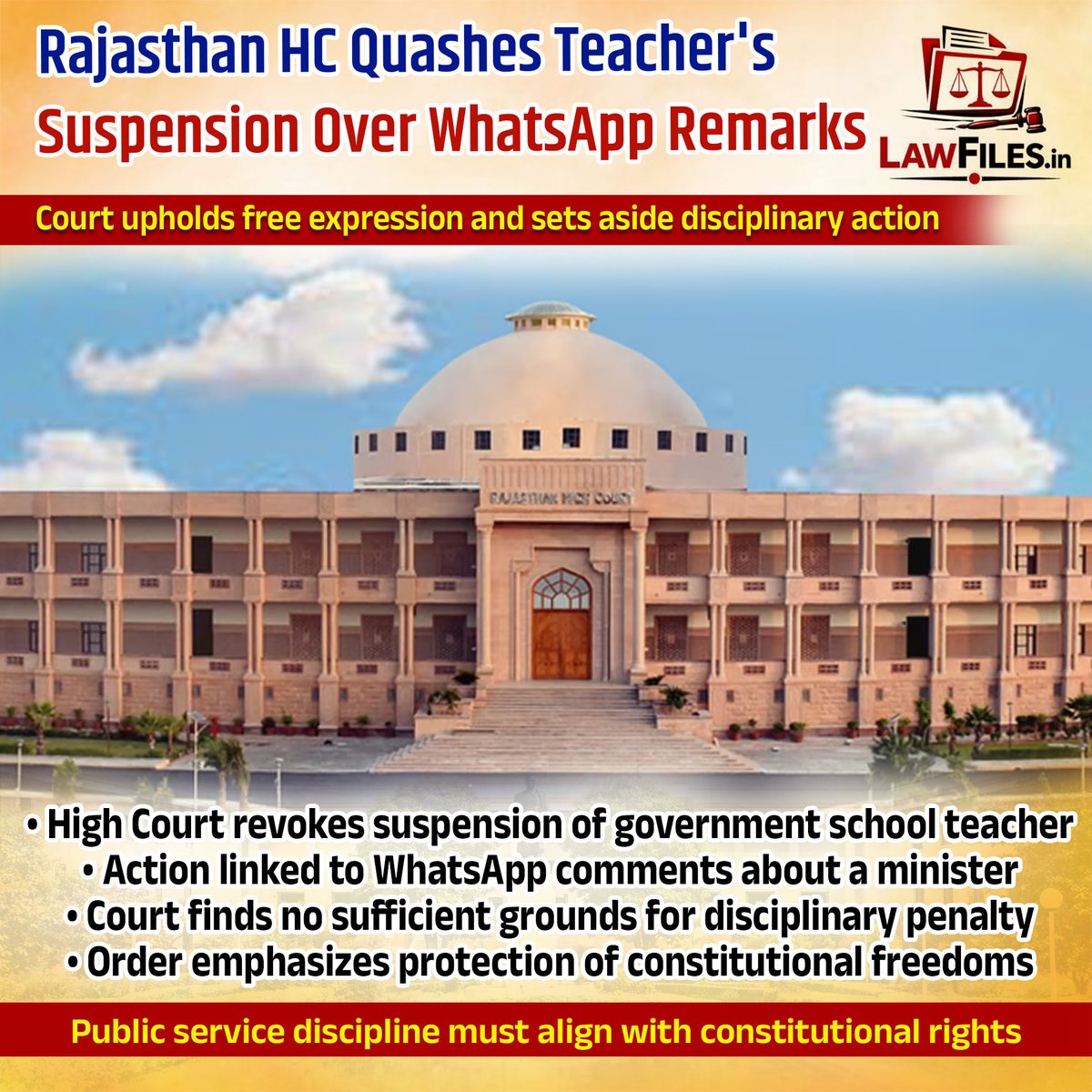
The Rajasthan High Court has quashed the suspension of a government school teacher who faced disciplinary action over comments made in a WhatsApp group concerning a state minister. The Court held that the suspension order could not be sustained in law and directed appropriate relief to the petitioner.
The teacher had challenged the disciplinary action, arguing that the comments did not warrant such a severe administrative response. After examining the facts and circumstances of the case, the Court found the suspension disproportionate and lacking adequate justification.
The judgment underscores the importance of balancing service conduct rules with constitutional protections relating to freedom of expression. The Court observed that disciplinary measures must be based on valid grounds and cannot be imposed arbitrarily without proper consideration of the context and nature of the alleged conduct.
The ruling is expected to be noted in service law matters involving government employees and social media communications, reinforcing the principle that administrative action must satisfy standards of fairness, proportionality, and legality.
#RajasthanHighCourt #ServiceLaw #WhatsApp #FreedomOfExpression #Judiciary #LegalNews #GovernmentEmployees
27