
Joined March 2026
- Tweets 22
- Following 25
- Followers 88
- Likes 3
3 Photos and videos
Pinned Tweet

From 9/11 to 25,000 Veterans Saved — Frank Siller @Tunnel2Towers x.com/i/broadcasts/1AJEmmXvy…
1
1
227
1
18
55,607
Raffensperger's Bunker, Cassidy's Collapse & the Polls They Don't Want You to See w/ @RobertCahaly x.com/i/broadcasts/1nGeLygar…
4
9
34
17,234
I just listened to Eric Church’s commencement speech at the University of North Carolina at Chapel Hill, and it was outstanding.
Using the six strings of a guitar as a framework for life, he talked about six pillars that really matter:
family, friends, purpose, failure, resilience, and authenticity.
It was thoughtful, grounded, funny, and surprisingly wise without trying too hard to be any of those things.
In a world full of noise, polished branding, and empty motivational talk, this one felt real.
It’s worth your 16 minutes to listen.
And maybe a lifetime to think about.
Check out this video, "youtube eric church commencement speech"
share.google/aNRyZAk0vmhgywO…
John
2
188
@greggjarrett on Trump Investigations, Comey's Indictment & the Week's Biggest Moves x.com/i/broadcasts/1DGleEgML…
9
15
46
27,375
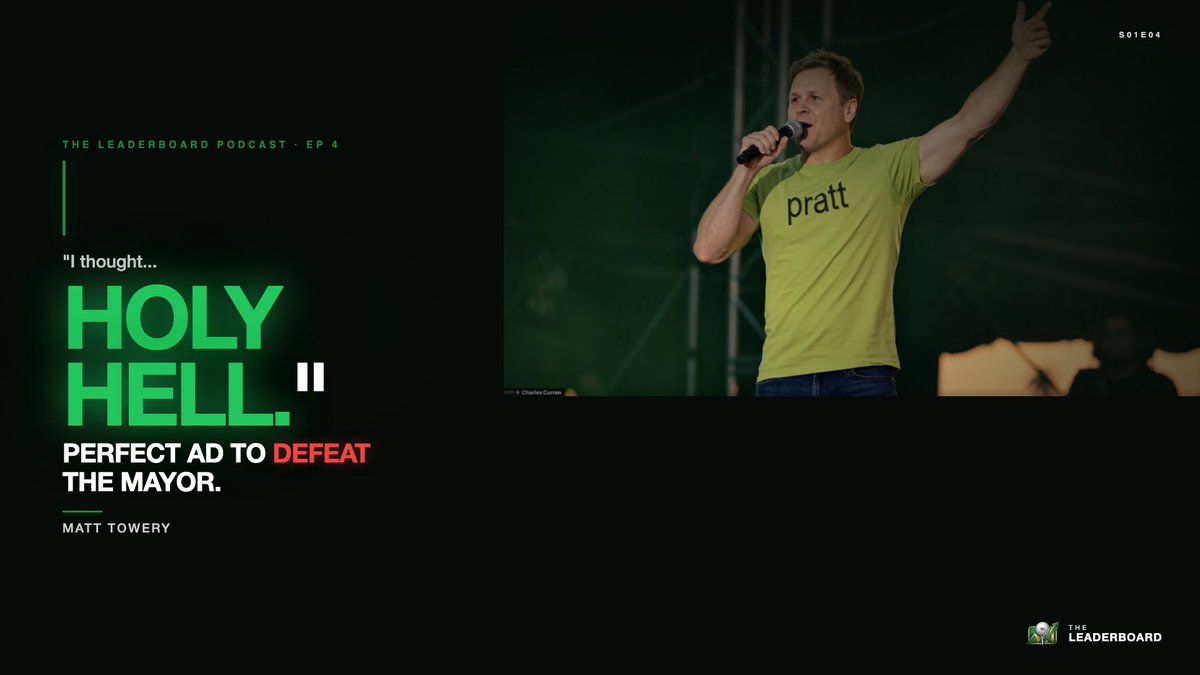
"Holy hell — that's a perfect ad to defeat the mayor" - Matt Towery breaks down the worst campaign ad of the cycle.
The Leaderboard Podcast EP 4 — live right here at 6 PM ET with @GreggJarrett
1
27
22
4,594
The Leaderboard with Matt Towery & John Hall retweeted

From The Forum: Opinion: Georgia helped build the future of fintech – Congress must let us lead the future of crypto #gapol jamesmagazinega.com/2026/05/…
2
1
195
The Civil Justice System Is at a Crossroads
A troubling trend is accelerating in courtrooms across the country. A small but powerful segment of the plaintiffs' bar has transformed personal injury litigation into a generational-wealth extraction model. These cases are no longer about fairly compensating injured people. They are about maximizing leverage, inflating numbers untethered from reality, and converting individual disputes into lottery-style outcomes.
Two proposed reforms confront this problem head-on.
Contingency Fee Reform
In high-dollar cases, excessive fees and unchecked expenses often leave injured plaintiffs with only a fraction of the recovery obtained in their name. That is not justice. It is exploitation disguised as advocacy. A sliding-scale limitation on contingency fees ensures injured people retain a substantial portion of any recovery. It aligns attorney compensation with actual risk and effort rather than headline verdict size. And it encourages earlier, fairer settlements instead of prolonged litigation driven by fee maximization.
Ending Phantom Medical Damages
Phantom damages based on inflated, never-paid billing figures have become a powerful tool for anchoring runaway verdicts. These numbers do not reflect economic loss. They do not reflect what was paid. They do not reflect what is owed. Limiting recoverable medical damages to amounts actually paid or actually owed restores honesty to the courtroom.
The Bottom Line
These reforms are not anti-plaintiff. They are pro-justice. They protect injured people from fee abuse, prevent distorted damages from driving outcomes, and preserve the legitimacy of jury verdicts. If we want courts that command respect and a tort system that compensates rather than exploits, these reforms are necessary.
Email me for drafts of the bills. jhall@hallboothsmith.com
1
97
I was glad to contribute to this Georgia Insider piece on the rapid expansion of data centers and what that growth means on the ground. Beyond the headline numbers, we’re seeing firsthand how these projects can impact communities, infrastructure planning and workforce development.
Data centers are becoming core economic infrastructure, and with that comes opportunity. Large campuses are reshaping regional development today, but we’re also seeing momentum toward smaller, community-scale data centers driven by AI, redundancy and resilience.
Worth a read for anyone tracking where infrastructure, technology and policy are colliding next.
Article Link
lnkd.in/eXv-6Sh4
1
77
People are talking about AI like it is either the end of the world or a shiny toy. Both takes miss the point.
In law and in every other serious profession, we should not fear AI. We should understand it. Then we should make it work for us, the same way we learned e discovery, electronic medical records, and every other tool that changed the pace of the work.
A good friend of mine, Jay Sarmaz, a pioneer of integration of AI into the defense legal world, said the development of generative AI is like “having an Ironman suit.” That is exactly right. It is not the suit that wins the fight. It is the person inside it. The suit gives you more reach, more speed, and more capability if you know what you are doing.
And when you pair that with something close to the gathered knowledge of mankind sitting in the room with you, you can do more for clients if you use it the right way. You can test ideas faster. You can find issues you might not have seen until later. You can tighten work product. You can pressure check a theory before you walk into a meeting or a deposition.
But I am also going to say the quiet part out loud. AI is like having a genius in the room who is sometimes wrong. Confidently wrong, if you let it be. That is why the rule is not blind reliance. The rule is disciplined use.
Trust but verify, as President Reagan said.
At Hall Booth Smith, our motto is “Serving to Achieve Excellence.” For us, that means we have an obligation to bring every ethical advantage to the defense of our clients. We are leaning into AI with training, controls, and real supervision, because the goal is not to sound modern. The goal is to deliver better strategy, better clarity, and better outcomes. Not necessary but will state that confidentiality, privacy and work product protection are paramount.
AI is not replacing good lawyers. It is raising the standard for what good looks like.
#AI #LegalTech #Innovation #TrialLaw #HallBoothSmith Baxter Drennon Laura Hall Randy Davidson
73
Roger Dow Briefed 4 Presidents on Travel — and Has the Wildest Hotel Story You've Ever Heard x.com/i/broadcasts/1pKdRbOgO…
1
3
120
Please check out our podcast with Terry Bradshaw as our first guest. Terry is a true legend and a great American. Our second podcast is coming out later this week.
Roger Dow, the executive who created the Marriott point system. He has gone on to do wonderful things and what he calls his “Rewirement “ instead of retirement. ( I am going to trademark it for him 🤨)
I love it. He must have heard the single “Still Got Miles” by Love and Water on all music streaming channels.🤔
linkedin.com/feed/update/urn…
1
2
137
The Leaderboard with Matt Towery & John Hall retweeted
4 Rings, No Filter — Terry Bradshaw Live on The Leaderboard Podcast x.com/i/broadcasts/1nGnRYeXy…
4
8
26
67,659
Played golf long enough to realize the most dangerous words in America are:
‘Watch this shot.’
Usually followed by silence… then somebody yelling from another fairway.
More wisdom like this coming on Leaderboard with Matt Towery.
2
54
The latest release by L.A.W. — Love and Water — is called “Often Wrong.” Which, to be fair, may sometimes apply to Matt and me too. I write the lyrics for the songs and Obe Brown writes the music and performs them. Hope y’all will give it a listen, enjoy it, and share it with your friends.
music.apple.com/us/album/oft…
1
2
82
Honored to be joining Matt Towery on Leaderboard with Matt and John. We’re going to have some fun guests, interesting conversations, a little humor, and hopefully some thoughtful discussion along the way. Really excited about what we’re building together. Hope y’all will tune in and follow along.
53