
Let's grow together | None are recommendations
Joined June 2013
- Tweets 27,649
- Following 327
- Followers 91,151
- Likes 26,131
3,074 Photos and videos






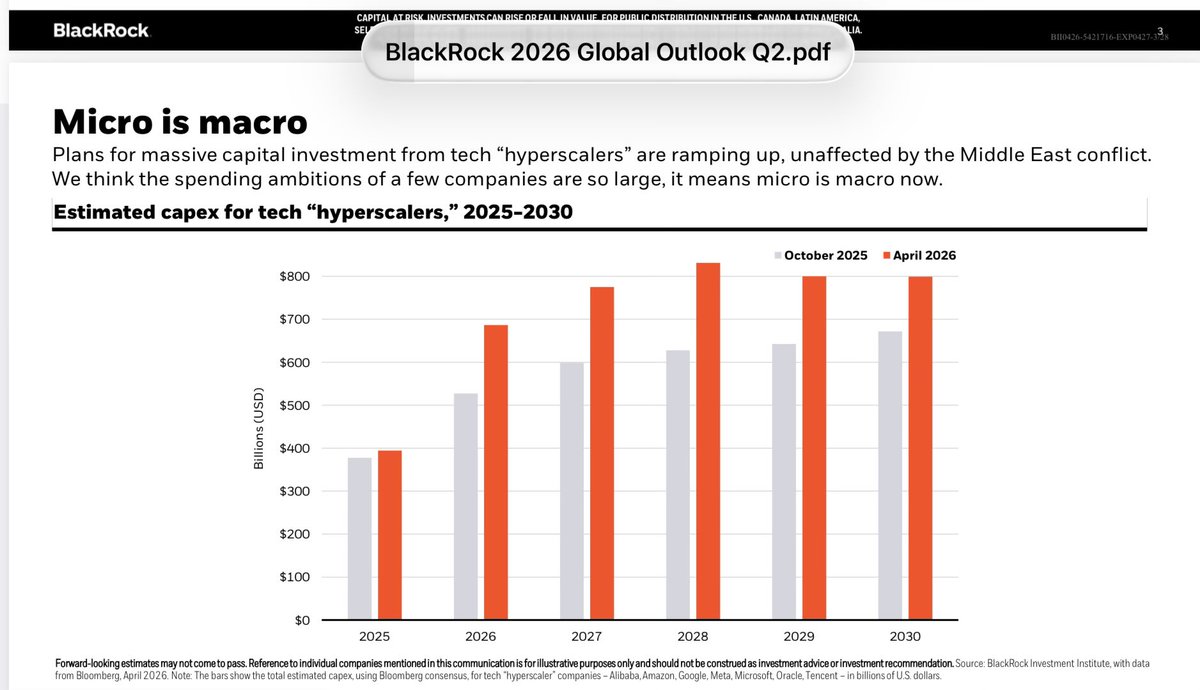
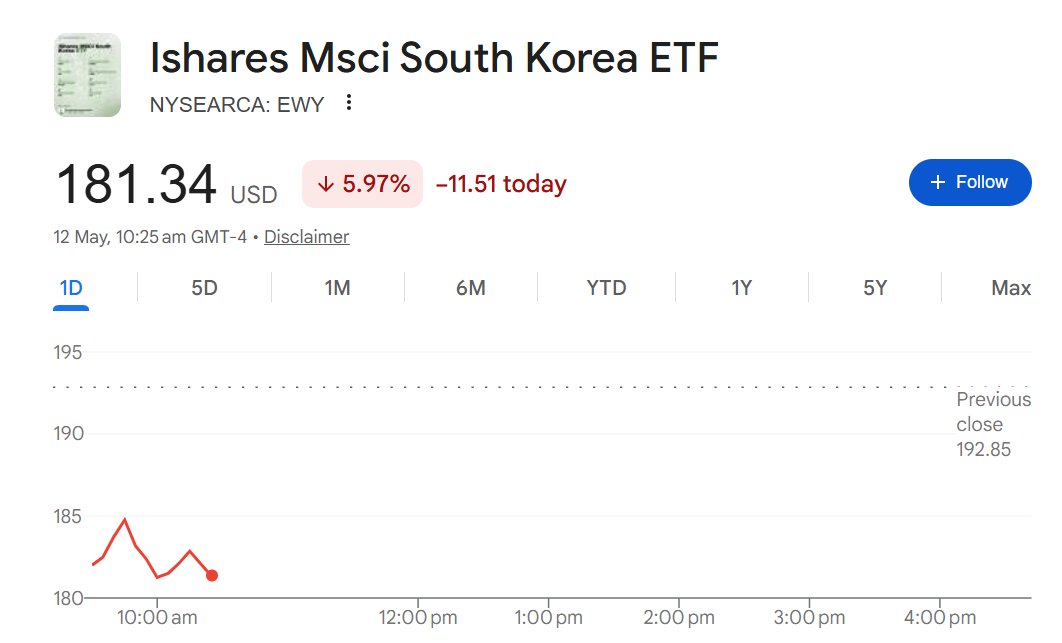

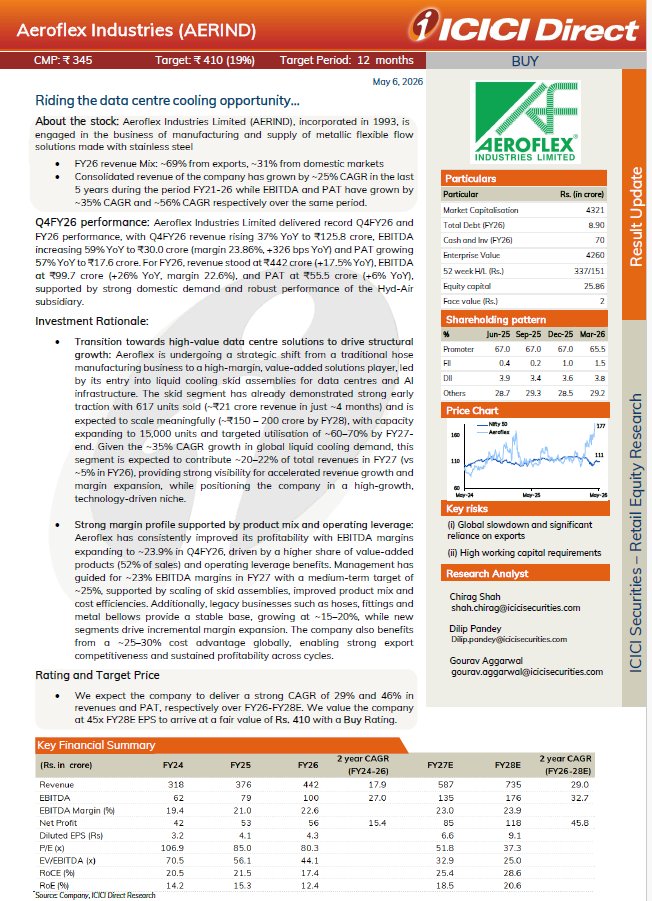
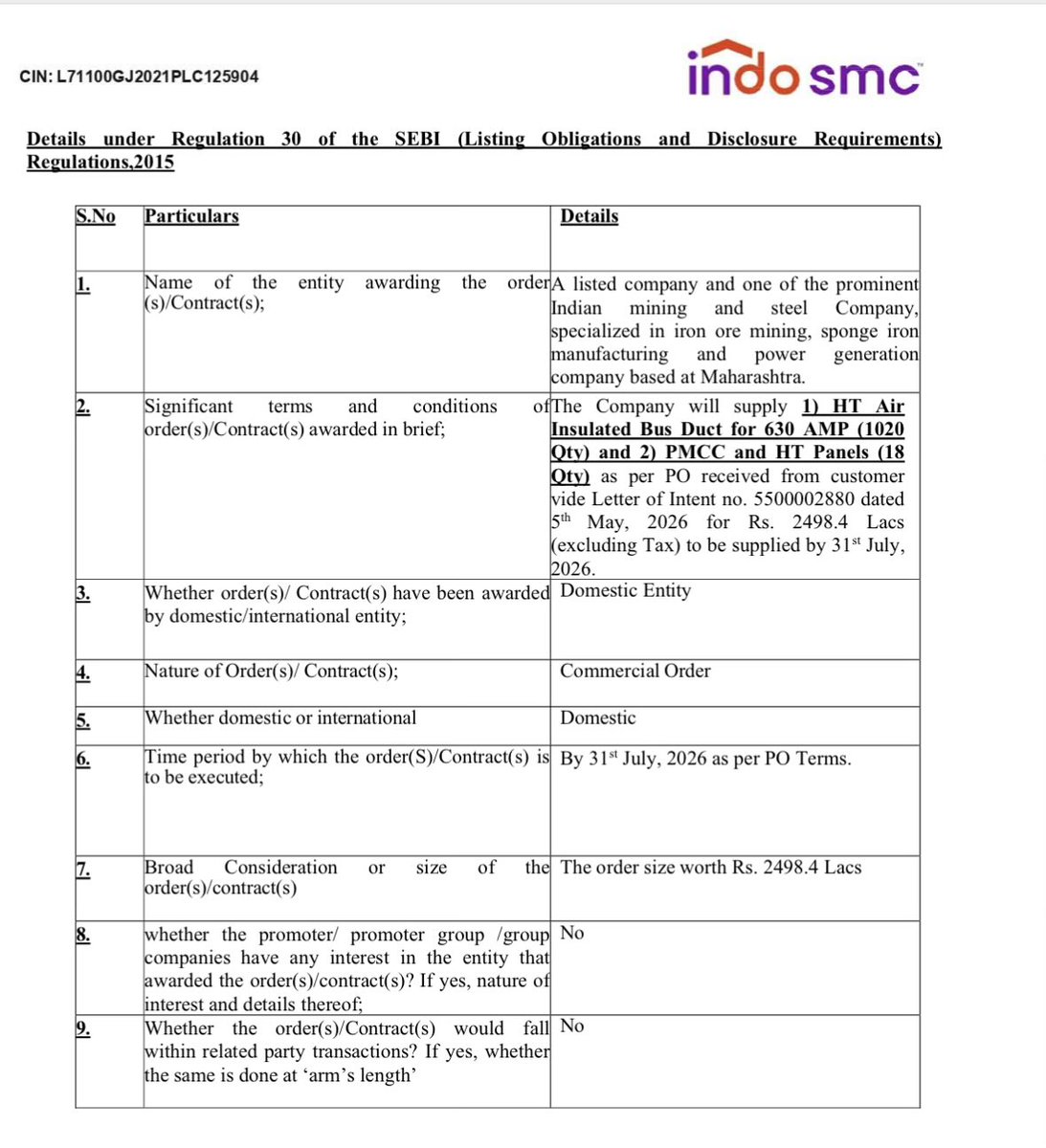
Looks like Vedanta Aluminium will be listing well above 500!
3
1
51
3,089
Crude has fallen to its lowest level since the war began.
Let’s hope today’s price (< 84) marks the near-term top. I don’t expect prices to revisit the previous lows anytime soon, given the extent of the damage to oil & gas infrastructure.
However, a sustained move back into the $70–80 range would at least provide some breathing room and buy time to develop alternative energy sources and supply chains.
2
3
100
7,318
If you want to play a 3-4 year story that’s promising 50-70% CAGR, you better buy at reasonable valuation.
If not, there is a 80% probability, you will sell it somewhere along the way out of frustration.
Nothing ever goes to northeast for 3 years.
6
10
320
25,719
Israel playing “unknown men”

BREAKING: A diplomat involved in US-Iran peace talks says Israeli strikes on Beirut, Lebanon, today have created issues with finalizing a deal, per Fox News.
The diplomat says the strikes are an attempt to "sabotage President Trump's deal and drag the US back into war."
Yesterday, President Trump said a peace deal was scheduled to be signed today.
2
44
13,260
The drought is over, New York City has its first major champion in more than a decade!
Hopefully, the Yankees take notice and pick up some motivation of their own.

FOR THE FIRST TIME IN 53 YEARS, THE KNICKS ARE NBA CHAMPIONS 🏆
New York defeats San Antonio 4-1 in the NBA Finals, capturing their third championship in franchise history!

15
7,072

Jun 14
Timepass talk on Sunday
1. Sudeep Pharma
Sudeep Pharma is a manufacturer of excipients and specialty ingredients catering to the pharmaceutical, food, and nutrition industries. With a portfolio of more than 100 products, the company serves over 1,100 customers across 100 countries.
What are excipients?
Think of an excipient as the "delivery vehicle" or the supporting cast in a pharmaceutical formulation. While the Active Pharmaceutical Ingredient (API) is responsible for the therapeutic effect, it often constitutes only a small portion of a tablet or capsule. Excipients are the inactive ingredients, such as binders, fillers, stabilizers, and coatings, that provide the medicine with its structure, improve shelf life, enhance absorption, and ensure consistent delivery of the active drug.
If you have been tracking the Indian pharma ancillary space closely, the word 'excipients' should immediately bring two more names to mind: Sigachi Industries and Accent Microcell.
However, the structural economics of these businesses diverge completely based on their core chemistries. While Sigachi and Accent dominate the organic, cellulose-based excipient market (primarily Microcrystalline Cellulose), Sudeep Pharma operates in the inorganic, mineral-based excipient domain (Calcium and Magnesium salts).
To put their operational moats into perspective:
Cellulose-Based: Hard to engineer, but easier to qualify. Success depends on complex polymer physics and precision spray-drying, but the organic raw materials carry low regulatory risk.
Mineral-Based: Easier to synthesize, but brutal to purify. The chemical reaction is textbook, but stripping out mined heavy metals down to safe parts-per-million (ppm) levels requires an elite purification infrastructure.
We will leave it at that for now; a detailed forensic comparison of their manufacturing economics, margin profiles, and asset turns is a topic for another day!
Coming back to Sudeep Pharma, they currently operates across two established verticals and is building a third growth engine.
i) Pharmaceutical, Food & Nutrition (PFN): 56% of Revenue
Under this segment, Sudeep manufactures high-purity mineral-based ingredients such as calcium, zinc, iron, potassium, magnesium, and sodium compounds. These ingredients are critical inputs for regulated pharmaceutical, nutraceutical, and food applications.
The company is the first and only Indian manufacturer to receive USFDA approval for mineral-based ingredients, providing it with a strong competitive advantage in regulated markets.
ii) Specialty Ingredients: 44% of Revenue
The Specialty Ingredients division focuses on technology-driven, customized ingredient solutions designed to meet specific customer requirements. These products help improve nutritional delivery, enhance taste and texture, increase bioavailability, and ensure product stability across a variety of end-use applications.
This is the company's higher-growth and higher-margin segment, benefiting from increasing customer demand for differentiated and value-added ingredient solutions.
iii) Battery Materials: The Emerging Growth Driver
Sudeep is making significant progress in battery-grade iron phosphate, a key raw material used in Lithium Iron Phosphate (LFP) batteries.
The company expects to complete Phase-I of its battery materials project by the end of FY27, creating 25,000 TPA of capacity through an investment of approximately ₹300 crore. Management has outlined plans to invest a further ₹600 crore over the subsequent three years, taking total capacity to 100,000 TPA.
Customer engagement appears encouraging. The company is already working with 42 global customers, and six of them have successfully completed commercial validation.
Why are Q1FY27 margins expected to be under pressure?
Phosphoric acid, one of the company's key raw materials, has witnessed a sharp increase in prices. While Sudeep has initiated price hikes to pass on these higher costs, certain customer contracts incorporate a lag before revised pricing becomes effective.
As a result, Q1FY27 is likely to reflect only a partial benefit of the price increases, leading to temporary margin compression. Management expects margins to normalize from Q2FY27 onwards as the full impact of the price pass-through is realized.
2. Divgi Torq Transfer Systems
Divgi-TTS is a premier Indian automotive component manufacturer specializing in advanced drivetrain solutions, including engineered transfer cases, torque couplers, and transmission systems. It positions itself as an independent, high-tech player at the forefront of the automotive industry's structural shift toward electric vehicles (EV), dual-clutch transmissions (DCT), and advanced four-wheel-drive (4WD) systems.
After a prolonged slowdown, Divgi is entering a strong structural turnaround driven by a sharp recovery across its core verticals and an aggressive expansion into global markets
The Near-Term Trajectory (FY27): Financial growth is highly visible, anchored by a lucrative, exclusive one-time Indonesian government export order for 70,000 transfer cases. Split equally through its key domestic OEM partners, Mahindra & Mahindra and Tata Motors, this single program is projected to deliver an incremental ₹170–180 crore in revenue for FY27.
The Long-Term Sustainability (FY28 & Beyond): To counter the cyclical cliff of the one-time Indonesian order, management is scaling multiple independent, multi-year growth triggers. These include upcoming vehicle platforms like the Tata Sierra 4WD program, increased export volumes to the US via a Ford-related application, and entry into the high-volume electric 3-wheeler segment. Furthermore, its EV transmission vertical is poised to capture underpenetrated market share as newly approved proprietary designs ramp up for Tata Motors' Nexon and Curvv EV platforms.
3. Anthem Biosciences
Anthem Biosciences is a fully integrated CRDMO with capabilities spanning the entire drug discovery, development, and manufacturing value chain. It is among the few Indian companies offering services across both New Chemical Entity (NCE) and New Biological Entity (NBE) programs. Over the years, the company has built expertise across several advanced technology platforms, including RNA interference (RNAi), Antibody-Drug Conjugates (ADCs), peptides, lipids, and oligonucleotides.
The CRDMO segment contributes over 80% of Anthem’s revenues and enjoys industry-leading profitability. EBITDA margins stood at 43.4% for FY26 and expanded to 48.1% in Q4 FY26. No other listed Indian CRDMO operates at a comparable margin profile. Management attributes these margins to structural advantages arising from backward integration, process efficiencies, and disciplined cost control rather than any one-off benefit.
Rimegepant, the active ingredient in Pfizer’s blockbuster migraine therapy Nurtec ODT, is estimated to contribute nearly 20–25% of Anthem’s CRDMO revenues. With Nurtec generating more than $1.4 billion in sales during 2025, Rimegepant remains one of Anthem’s most commercially significant molecules.
Anthem is currently undertaking the largest capacity expansion program in its history. The company also added two new global Big Pharma customers during FY26, further strengthening its client base.
Over the last two to three quarters, Anthem commercialized four new molecules, taking its portfolio of globally commercialized products to 14. For each of these molecules, Anthem serves as the sole-source manufacturer of either the final Active Pharmaceutical Ingredient (API) or a critical regulatory intermediate.
External analysts estimate that the peak global commercial opportunity associated with the four newly commercialized molecules is approximately $10 billion. In addition, Anthem currently has 10 molecules in Phase III clinical trials, providing a strong foundation for future commercial launches and long-term growth.
That said, valuations are screamingly expensive at this point.
4. The WuXi AppTec Euphoria
The news that the Pentagon has added WuXi AppTec to its list of companies allegedly linked to the Chinese military dominated discussions across financial Twitter this week. However, much of the broader narrative appears either misplaced or misunderstood.
i) What happened?
The Pentagon updated its annual 1260H list, adding roughly two dozen entities, including high-profile Chinese companies such as Alibaba, Baidu, BYD, and WuXi AppTec, one of the world's largest CRDMO players.
The 1260H designation identifies companies that the U.S. government believes are either assisting China's People's Liberation Army (PLA) or are linked to Beijing's military-civil fusion strategy.
WuXi AppTec responded immediately, calling the designation "clearly a mistake" and reiterating that it is neither controlled by nor affiliated with any military or government entity, nor does it provide services to China's armed forces.
ii) How significant is WuXi's U.S. exposure?
Very significant.
Approximately 75% of WuXi AppTec's revenues are derived from U.S. customers. Sell-side analysts, including Bloomberg Intelligence, estimate that as much as $30.4 billion (206 billion yuan) of U.S.-linked revenue could be at risk between 2027 and 2030 if customers aggressively diversify away from the company.
iii) Does this mean U.S. pharma companies will stop working with WuXi immediately?
The simple answer is no.
The 1260H designation itself does not impose immediate sanctions, asset freezes, or commercial restrictions. However, it gains significance through its interaction with the Biosecure Act, which was signed into law in December.
The legislation restricts U.S. government agencies from contracting with organizations that rely on services provided by companies appearing on the Pentagon's Chinese military companies list.
Importantly, the framework includes a five-year grandfathering period, allowing existing pharmaceutical clients sufficient time to wind down contracts, transfer manufacturing processes, and establish alternative supply chains without jeopardizing eligibility for federal healthcare programs such as Medicare and Medicaid.
There is another important nuance. The restriction primarily applies to federally funded programs. If a pharmaceutical company operates both federally funded and privately funded projects, only the government-funded programs face direct compliance challenges. While maintaining separate supply chains introduces significant regulatory complexity and compliance costs, private commercial programs can technically continue working with WuXi.
iv) WuXi's reshoring strategy
WuXi is not standing still.
WuXi AppTec continues to expand its Delaware manufacturing footprint, with the objective of locating roughly 20-30% of its global capacity within the United States. Similarly, WuXi Biologics is relocating an estimated 30-40% of its capacity to U.S. facilities in an effort to mitigate future cross-border restrictions and reassure customers.
v) So, are Indian CDMOs immediate beneficiaries?
Not necessarily in the short term.
This development is unlikely to create an overnight revenue windfall for Indian CRDMOs. However, it does accelerate a trend that was already underway: supply-chain diversification away from China.
As large pharmaceutical companies reassess long-term manufacturing dependencies, Indian CRDMOs are likely to become key beneficiaries of incremental outsourcing mandates. The opportunity is less about immediate contract transfers and more about becoming part of the next-generation global supply chain architecture.
For example, Eli Lilly maintains substantial exposure to Chinese manufacturing partners but already works with companies such as Divi's Laboratories and Sai Life Sciences. The ongoing WuXi situation could encourage Lilly to gradually increase sourcing from Indian partners as part of a broader risk-mitigation strategy. Similar dynamics could play out across several large U.S. pharmaceutical companies, including Pfizer and others.
The key takeaway is that the WuXi episode is not an overnight revenue event for Indian CDMOs. It is, however, another catalyst pushing global pharma companies toward geographic diversification, and India remains one of the most credible alternatives available at scale.
5. Aegis Logistics
Aegis Logistics is one of India's leading logistics and supply-chain companies, specializing in the storage, handling, and distribution of clean energy products such as liquefied petroleum gas (LPG), ammonia, and liquid chemicals. The company operates a strategically located network of cryogenic and liquid storage terminals across major ports on both the western and eastern coasts of India.
Why the excitement?
Recent geopolitical developments and volatility in global energy markets have highlighted Aegis' unique business model. Through its VLGC-compliant infrastructure, extensive import capabilities, and strong global partnerships, the company can source LPG from the most economical global markets rather than being dependent on a single region. This flexibility enables Aegis to expand distribution margins during periods of supply disruption and price dislocation, turning market volatility into a competitive advantage.
That said, the bigger story is not the short-term opportunity, it is the long-term infrastructure platform that Aegis is building.
i) Significant Commissioning of Growth CapEx
Aegis is entering a phase where several large projects are expected to begin contributing simultaneously.
Liquid Storage Expansion
The first phase of a ₹1,675 crore expansion project at JNPT, comprising approximately 318,100 cubic meters of additional liquid storage capacity, is scheduled for commissioning in H1 FY27. In parallel, the Mumbai terminal will add another 64,000 kiloliters of liquid storage capacity during the same period.
Integrated Pipavav Ecosystem
Pipavav is evolving into a fully integrated LPG logistics hub. The new VLGC-compliant jetty is expected to be commissioned during CY2026, while the associated pipeline connectivity is scheduled to become operational in Q2 FY27.
Full-Year Asset Contribution
Cryogenic infrastructure commissioned at Pipavav and Mangalore during FY26 operated only for part of the year. FY27 will be the first year in which these assets contribute for the full twelve months.
ii) Multi-Modal Connectivity to Unlock Higher Throughput
For any terminal operator, storage capacity is only one side of the equation. The speed at which products can be evacuated determines overall throughput and asset utilization.
Several key connectivity projects are expected to come online during FY27:
The Jamnagar-Loni pipeline connection at Kandla has already been completed.
The Kandla-Gorakhpur LPG Pipeline (KGPL) is expected to connect Kandla in H1 FY27 and Pipavav in Q2 FY27.
New LPG rail gantries are under construction at both Mangalore and Pipavav, creating efficient and cost-effective evacuation routes into Central, Southern, and Western India.
These projects should significantly improve terminal utilization and throughput volumes across the network.
iii) Scaling the High-Margin Gas Distribution Business
Historically, Aegis' gas distribution operations were concentrated primarily around Mumbai and Kandla. Over the past few years, the company has transformed into a multi-regional platform with operations spanning Mangalore, Haldia, Pipavav, and other strategic locations.
Supported by this expanded infrastructure footprint, management is targeting a substantial increase in distribution volumes, with an ambition to reach approximately 2 million tonnes by FY28.
As distribution volumes scale over a largely fixed infrastructure base, operating leverage could become an increasingly important earnings driver.
iv) Early-Mover Advantage in India's Emerging Ammonia Economy
Aegis is also positioning itself to participate in India's evolving ammonia and clean-energy value chain.
The company is developing India's first independent ammonia terminal at Pipavav, with a static storage capacity of 36,000 metric tonnes. The project is expected to be commissioned in H1 FY27.
Importantly, approximately one-third of the terminal's capacity is already backed by a 15-year take-or-pay agreement with Hindustan Zinc, providing strong revenue visibility from day one. The remaining capacity will be available for third-party customers, creating opportunities for higher-margin throughput and distribution revenue.
The long-term opportunity could be substantial. CRISIL estimates that India could face an ammonia supply-demand gap of nearly 3 million tonnes by 2029. Through its strategic partnership with ITOCHU Corporation, which has acquired a stake in the Pipavav ammonia terminal, Aegis is positioning itself at the center of this emerging opportunity.
v) The Bigger Picture
Aegis Logistics is gradually transforming from a traditional storage terminal operator into a diversified clean-energy logistics platform. Between large-scale capacity additions, improving pipeline and rail connectivity, a rapidly expanding gas distribution business, and a first-mover position in ammonia infrastructure, the company appears to be entering a period where multiple growth drivers could begin contributing simultaneously over the next two to three years.
That's all for this edition. Have a great Sunday!
Disclaimer: None or buy or sell recommendations. This publicly available information is shared for learning and education purposes.
29
70
483
50,130
Jun 13
What gets rewarded in a bear or sideways market?
i) Identifying the right name
ii) Defining an attractive (or even greedy) accumulation range
iii) Having the patience to wait and catch the fish
Why?
Because in such phases, markets and stocks are usually looking for reasons to fall, much like what we witnessed from Sep'24 to Mar'26.
However, the same approach of waiting endlessly for the "perfect range" doesn't necessarily get rewarded in a bull market like the one we've seen in small and mid-caps since April.
In this kind of environment, the ability to take calculated risks gets rewarded.
You can see plenty of stocks running hard despite not looking particularly cheap or reasonable from a valuation perspective. The reasons may differ from stock to stock, but the underlying concept remains the same.
In the first few weeks of April, I was waiting for my preferred value ranges and missed several opportunities. Once it became clear that the market was in a bullish mood, I became more aggressive with my buying, even at slightly higher levels, and those decisions paid off well.
On the other hand, wherever I kept waiting for more attractive entry points, I simply missed the move.
Why?
Because, in a bull run, stocks look for a reason to go up!
Valuations are always relative, sometimes to sector and peer multiples, and sometimes to market sentiment.
The same stock can trade at 15x earnings in a risk-off market and 30x earnings in a risk-on market, even if the business itself hasn't changed much. Context matters.
3
13
162
13,800
Jun 13
Watch Dridam on Jio Hotstar. Good thriller. Available in multiple languages.
10
3
196
24,939
Jun 12
Meet the new-age hypocritical superstar.
Brags about how his three pharma stocks made him more money in a single day, but insists Elon Musk’s net worth is irrelevant and anyone discussing it is stupid.
Apparently, wealth matters only when it’s his.
Just another cockroach hiding behind a social media handle.
8
2
125
16,560
Jun 12
A trillion dollars.
I don't even want to count the number of zeros, it's a dream beyond imagination.
Yet Elon showed the world that one person, armed with conviction and relentless execution, can create his own path and reshape entire industries along the way.
Take a bow.
15
22
451
24,798
Jun 12
CDMO - the visibility, strategic capex and multi-year growth
Sai Life - Capex almost doubles
"...Our current estimate for investments in FY27 is in the range of INR1,100 crores to INR1,300 crores. Importantly, these investments are being undertaken either with clear demand visibility or through active strategic conversation with the large pharma customers..."
Neuland Labs - Management tone shifting from tactical capex to strategic capex
"...I think our planning and I think the way we are thinking about capital allocation has become a little bit more long-term from being tactical..."
Laurus Labs - 1,500 cr capex per year (up from earlier 1,000 cr/year expectation)
"...Although we said INR1,000 crores earlier, now depending on the prospects what we need capacity and what projects in front of us, we are increasing our capex spend there. And we expect to spend around INR3,000 crores in the next 2 years..."
Anthenm Bio - Doubling and tripling
"...In Phase 1 of that expansion, and we are looking at investing almost about Rs. 1,200 odd crores across two years, this year FY27 and in FY28...we still have two more phases to be done with respect to Unit 4. That we will take it up once Phase 1 gets completed, and that will be post March '28. But the aspirations are huge over there, so that we can build a much larger facility, which will in Phase 1 at least double, in Phase 2 it could be triple from an overall capacity size point of view..."
Divi's - The GLP-1 printing machine getting ready
"...During the year, the company capitalized assets worth ₹1,544 crores, out of which approximately ₹800 crores is capitalized in the last quarter. Capital work in progress as of March 31, 2026 stood at ₹2,113 crores..."
9
34
336
27,289
Jun 12
Goldiam - Earnings growth and margin expansion
"...We see margins increasing on a steady-state basis, specifically due to the hybrid casting model where we are able to leverage production in the U.S. and working with fantastic factories in America to support our jewelry value addition and production in India, which is then shipped back to retailers across the U.S. So we do see margins increasing with and without the other income coming in and we look forward to a robust FY '27 as we'll have a full year of operations with hybrid casting in the near future..."
4
6
137
13,274
Jun 11
Profit booking and stop-losses, likely the two phrases occupying the minds of tens of thousands of investors right now.
4
1
120
11,799