Physics, Astronomy and beyond. A curated deep dive, from the subatomic to the supermassive.
Joined July 2024
- Tweets 916
- Following 882
- Followers 24,136
- Likes 897
756 Photos and videos

Pinned Tweet

Happy Birthday to Grigori Perelman.
Grigori Perelman is a mathematician who proved the Poincaré Conjecture and refused to accept both the Fields Medal and the $1,000,000 Clay Millennium Prize.
When asked why he declined the awards, he said:
“If the proof is correct, then no other recognition is needed.”
6
29
139
3,689
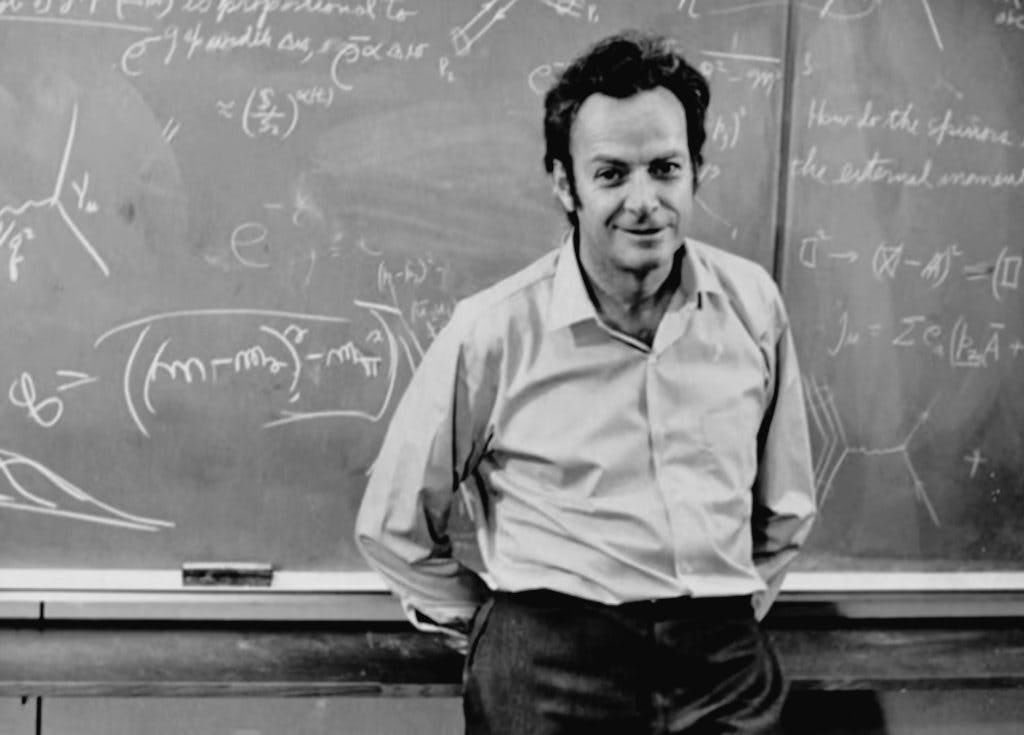
"If all of mathematics disappeared, physics would be set back by exactly one week."
- Richard Feynman
5
5
51
1,155
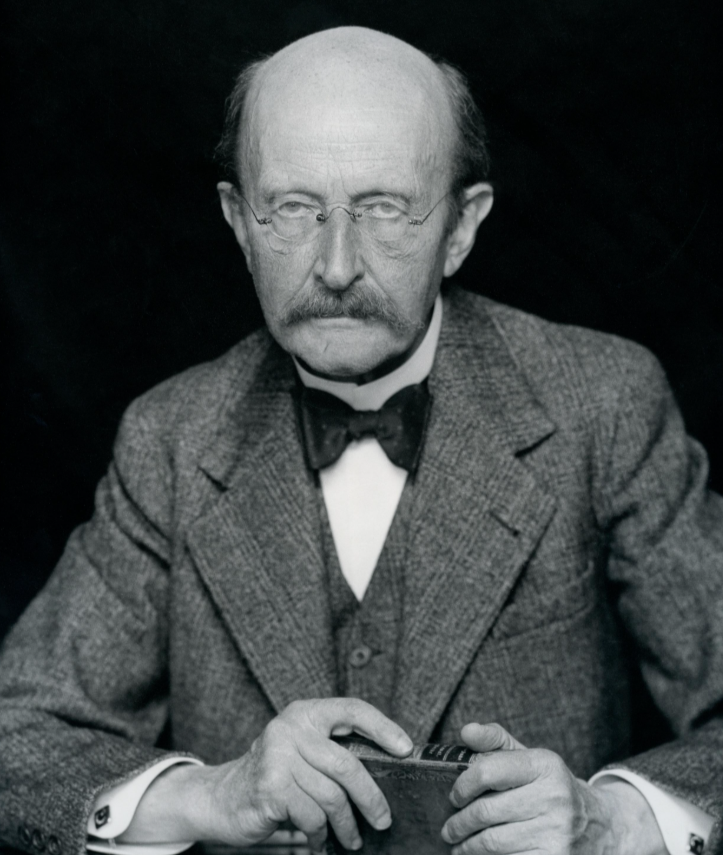
“This mind is the matrix of all matter.”
- Max Planck
10
29
158
3,423
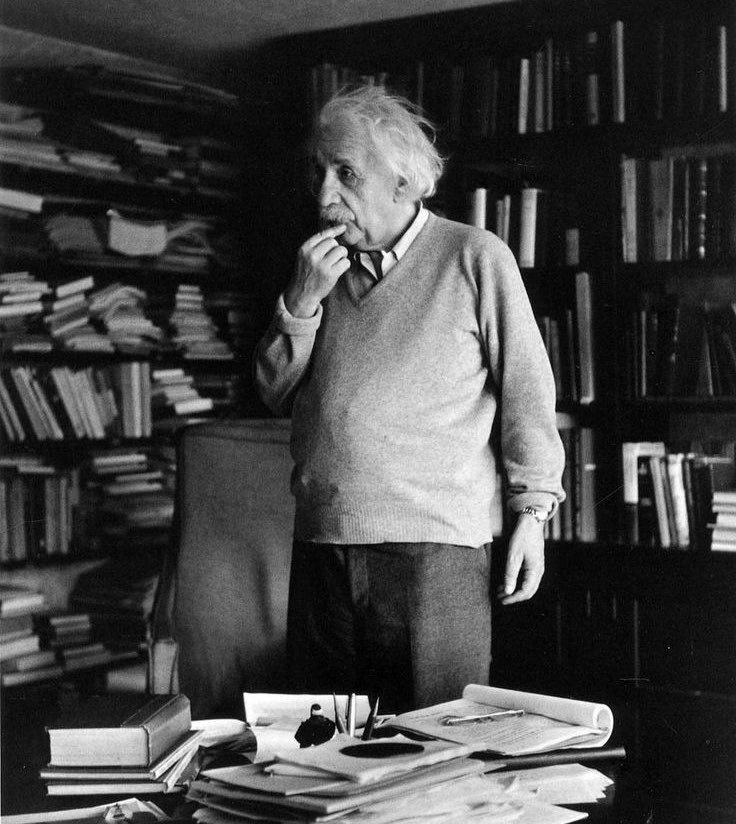
Albert Einstein once said, “Science without religion is lame, religion without science is blind.”
Do you agree?
15
24
110
3,146
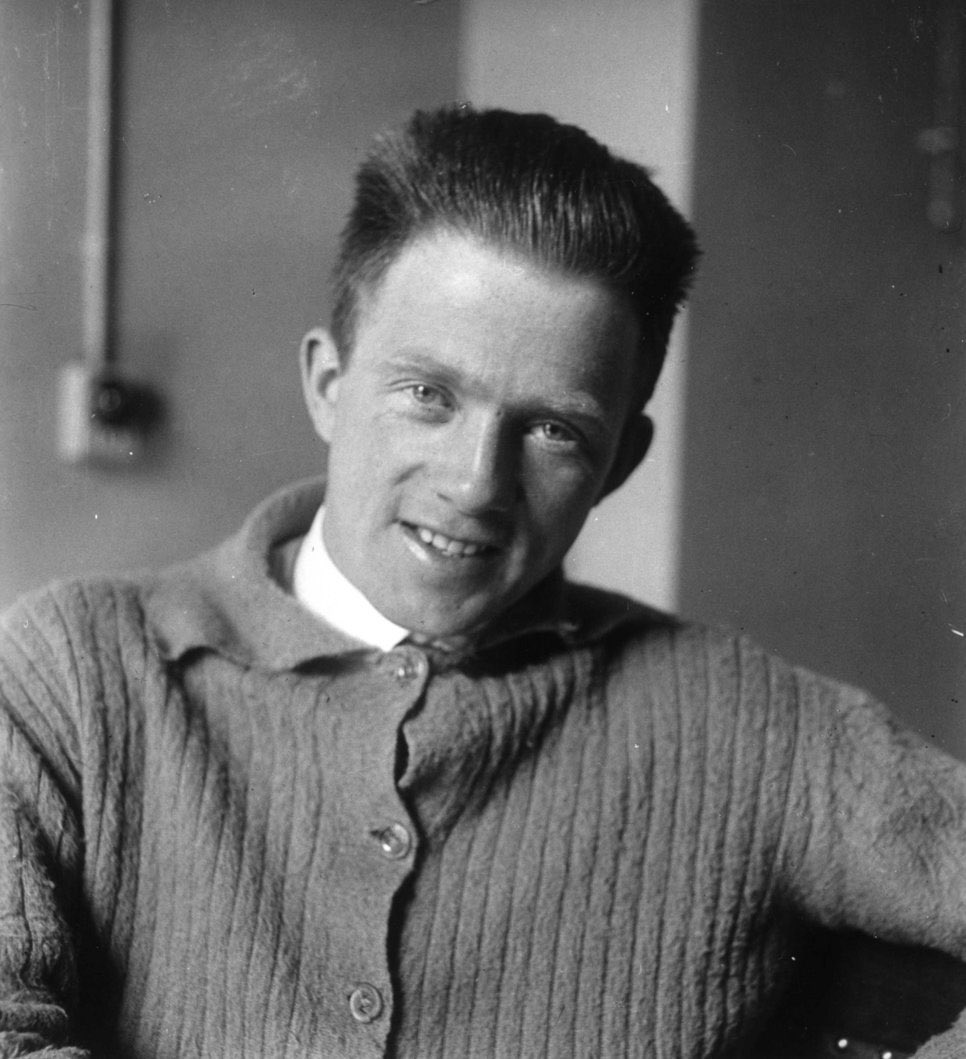
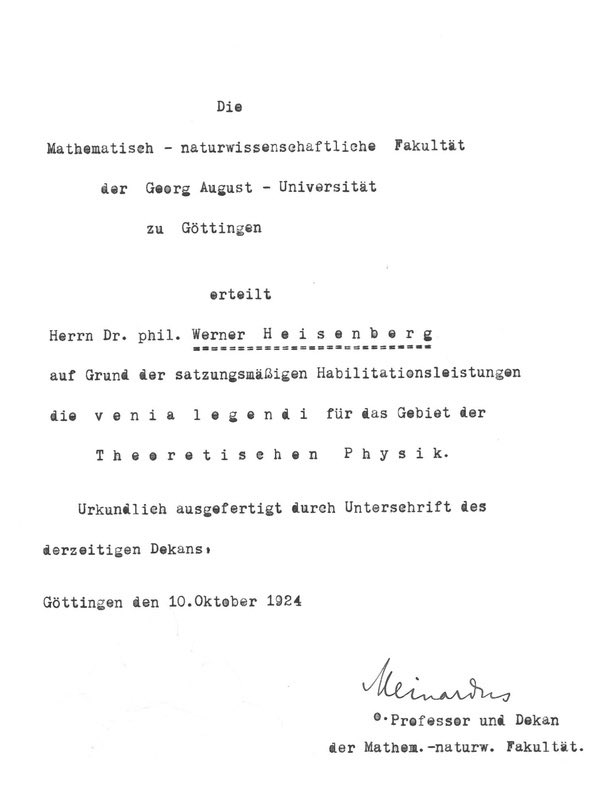
Werner Heisenberg’s 1923 PhD defense at the University of Munich nearly ended in failure.
Strong in theory but weak in experimental physics, he struggled with practical questions during his oral exam, alarming the examiners, especially Wilhelm Wien.
His mentor, Arnold Sommerfeld, argued that Heisenberg’s extraordinary theoretical talent outweighed his lack of laboratory skills. He ultimately passed by a narrow margin, making the defense one of the most notorious in physics history.
9
23
176
10,369
“The ultimate test of your knowledge is your ability to convey it to another.”
5
37
161
3,688
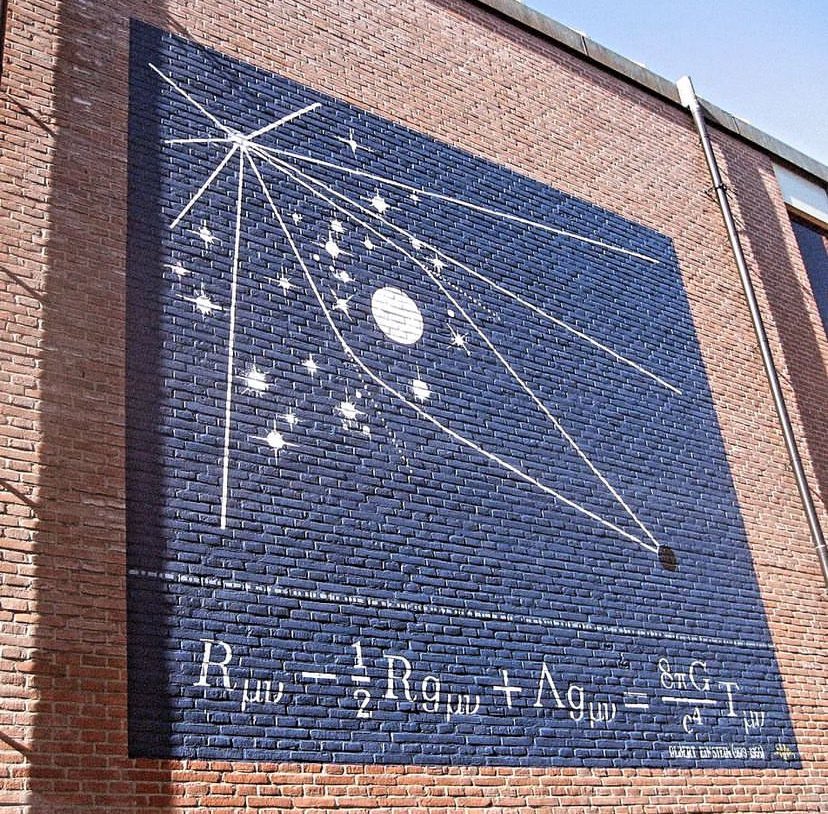
Walk past a random wall in the Netherlands and casually spot the equation that describes the entire universe.
Science is cool. Don’t let anyone tell you otherwise.
8
40
191
4,262
To not know mathematics is a severe limitation to understanding the world.
— Richard Feynman
13
33
205
5,343
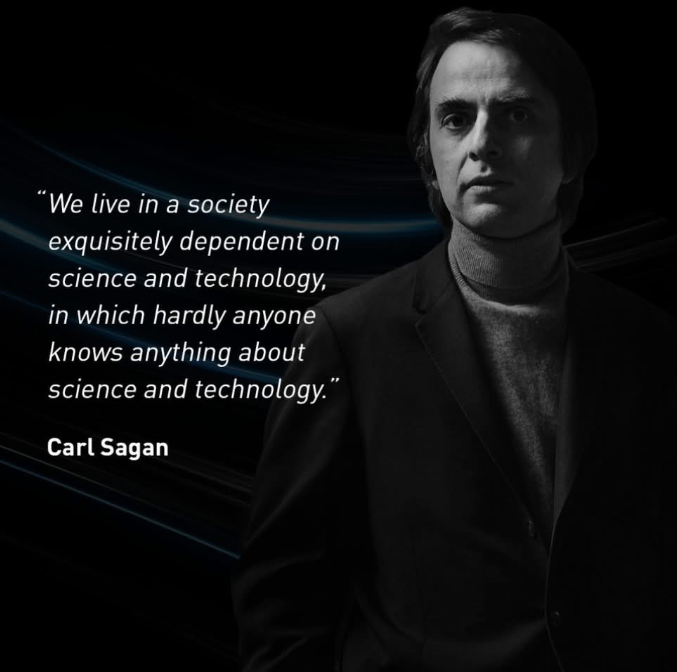
Nothing disturbs me more than the glorification of stupidity.
— Carl Sagan
15
54
217
4,371
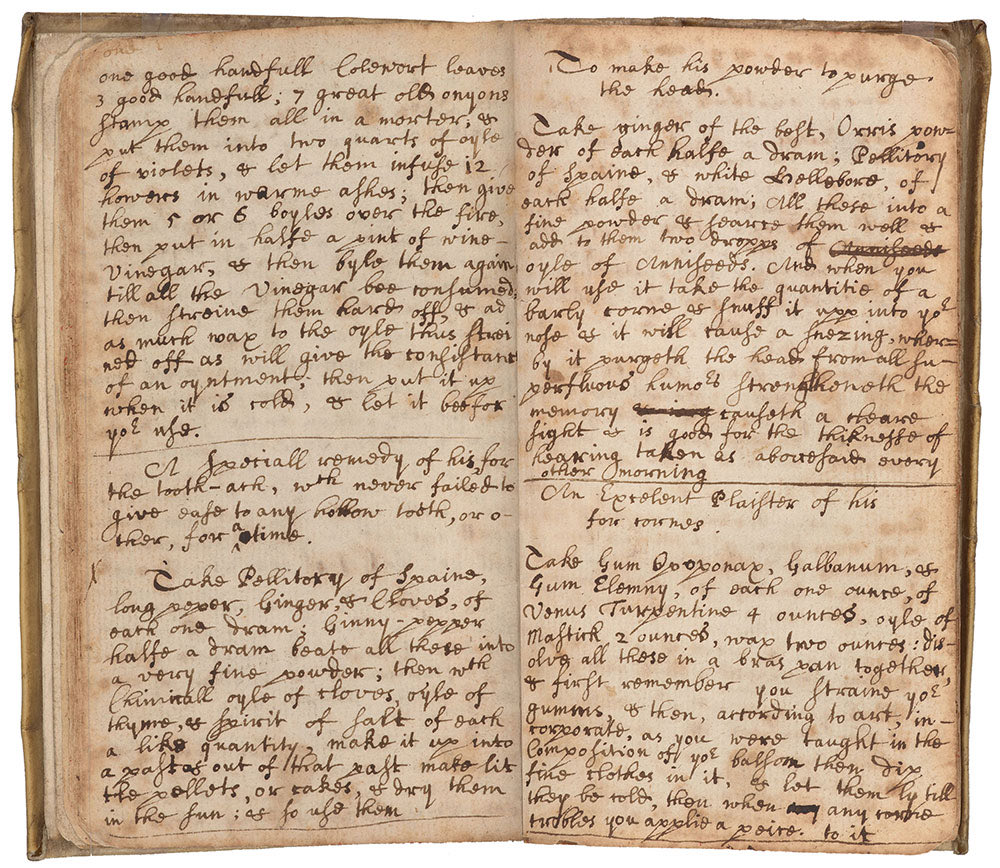
Long before revolutionizing physics, Newton was cataloguing his own faults.
He kept a notebook of his personal sins. Among the entries: “eating too much plum cake” and “threatening my father and mother with burning them.”
His Confessions notebook (c. 1662), preserved at Cambridge, offers a rare glimpse into the young Newton’s conscience.
2
18
123
4,264
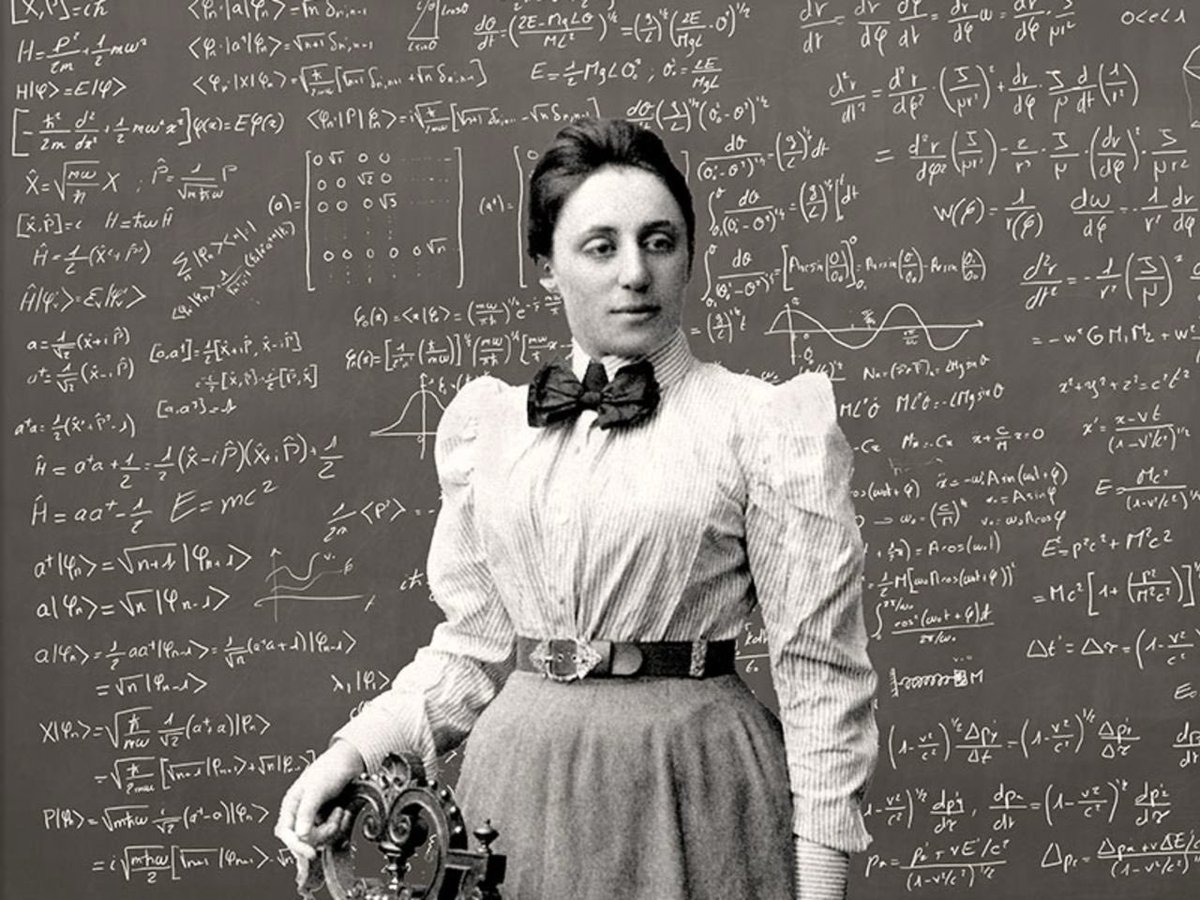
In the early 1900s, a brilliant mathematician was invited to help with Einstein’s new theory of relativity. Yet the faculty blocked her from teaching because she was a woman.
She worked unpaid for years. Her lectures were often listed under a male colleague’s name. She faced constant institutional barriers.
Albert Einstein later called her “the most significant creative mathematical genius thus far produced since the higher education of women began.”
Her name was Emmy Noether.
She discovered a profound link between symmetry and conservation. If the laws of physics remain unchanged under rotation, angular momentum is conserved. If they are identical everywhere in space, momentum is conserved. If they do not change with time, energy is conserved.
This insight became one of the foundations of modern physics.
3
59
159
3,659
A colleague at Caltech once challenged Feynman to explain why spin-½ particles obey Fermi–Dirac statistics in terms a freshman could understand.
Feynman happily accepted and promised to prepare a beginner-friendly lecture.
A few days later, he returned with an unexpected conclusion:
“I couldn’t do it. I couldn’t reduce it to a freshman level. That means we really don’t understand it.”
He took this as a lesson in teaching: if an idea can’t be explained simply, our understanding of it may not be as complete as we think.
The story became a reminder among students and faculty that even the greatest physicists should measure their knowledge by their ability to communicate it clearly. It also captured Feynman’s dislike of “cargo cult” teaching and his determination to cut through academic pretense.
10
46
230
13,856
No, no, you are not thinking; you are just being logical.
— Niels Bohr
8
36
186
4,265
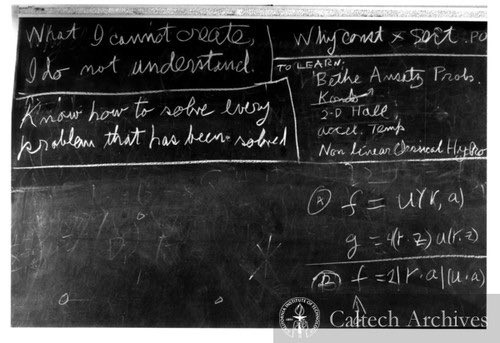
“Study hard what interests you the most in the most undisciplined, irreverent and original manner possible.” — Richard Feynman
Feynman's chalkboard at the time of his death, 1988
2
29
101
3,415
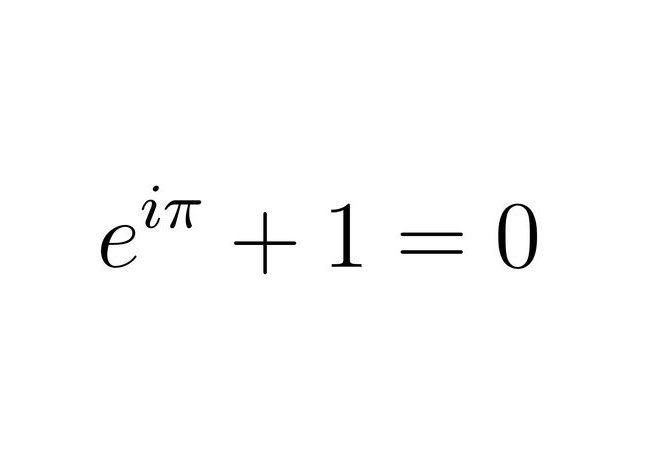
Euler’s identity is often called the most beautiful equation in mathematics.
First written by Leonhard Euler, it brings together geometry, algebra, and five fundamental constants: e, i, π, 1, and 0, in a single elegant expression.
6
35
110
2,914
“The Big Bang theory says nothing about what banged, why it banged, or what happened before it banged.”
— Alan Guth
10
6
26
1,485
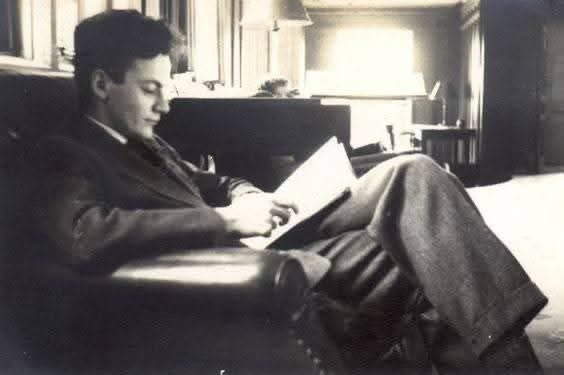
At 14, Richard Feynman taught himself calculus without a teacher, relying only on clear, accessible books. His notebooks were filled with hand-drawn diagrams, equations, and a homemade indexing system.
For the first time, he understood ideas that even his father could not explain. Before entering college, he was inventing his own mathematical notation and experimenting with concepts like fractional derivatives.
4
30
175
7,884
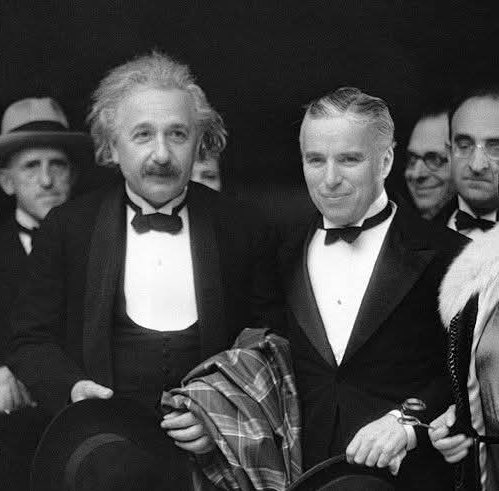
A conversation between Einstein and Chaplin
Einstein: “What I most admire about your art, is your universality. You don’t say a word, yet the world understands you!”
"It’s true”, replied Chaplin. “But your fame is even greater: the world admires you, when nobody understands what you say."
7
23
118
2,755
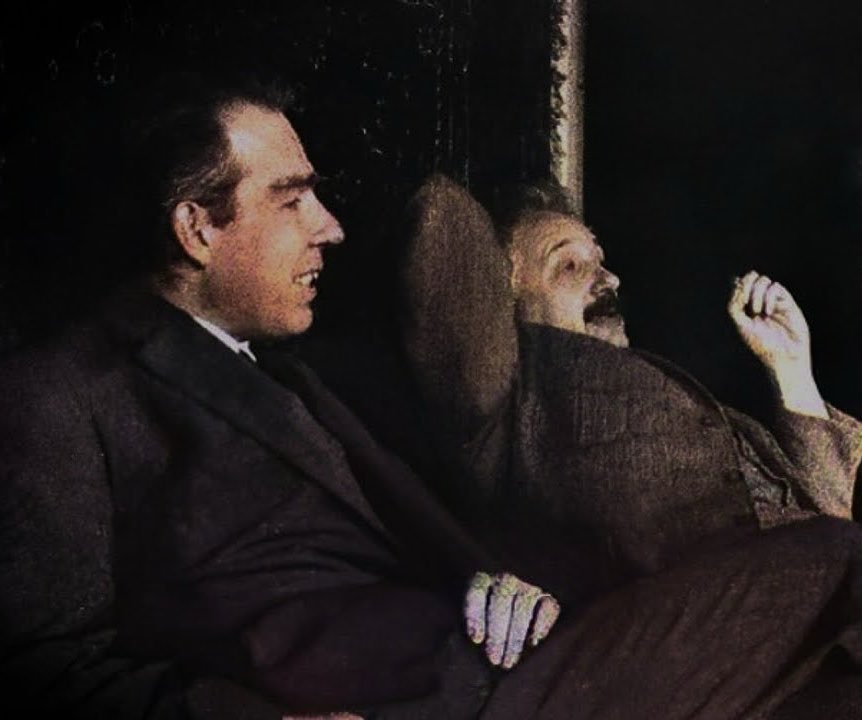
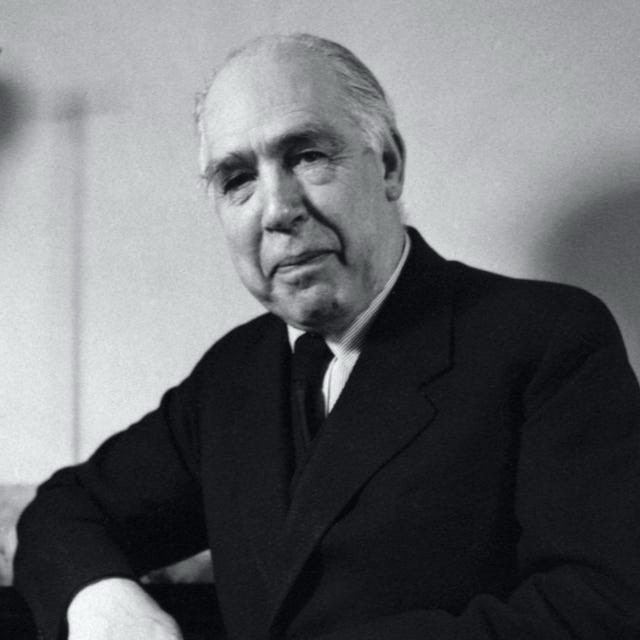
Niels Bohr on God and Science
“I feel very much like Dirac: The idea of a personal God is foreign to me. But we ought to remember that religion uses language in quite a different way from science. The language of religion is more closely related to the language of poetry than to the language of science.”
2
11
53
1,738