Interests In Finance & Investments
Joined December 2023
- Tweets 2,280
- Following 273
- Followers 357
- Likes 154
112 Photos and videos



LevelQue retweeted

Jun 10
Our biggest downfall as men, is that after you finally win, we sit down to eat with women who never starved with us.
73
571
3,775
95,668
LevelQue retweeted
Jun 3
Be a man. A Man Celebrate things he tried so HARD to Get.
Birthday isn't one of them.
39
115
718
25,058
LevelQue retweeted

May 29
10 mistakes to avoid when taking a loan;
1. Taking a loan without a plan just because you qualify for it especially employed folks
2. Taking a car loan that you can't afford (best sign is that you even have to borrow the downpayment)
3. Taking a loan to finance alcoholism, gambling and promiscuity.
4. Taking a loan that you don't fully understand
5. Taking a loan with funny, unregulated institutions (make sure the institution is regulated by CBK)
6. Taking a loan for someone else no matter how close you are (especially for your wife/hubby, friend or relative)
7. Taking a loan to furnish your house, go on vacation, host a babyshower, birthday or wedding
8. Taking a loan to pay school fees, rent or other recurring expenses
9. Taking a loan to start a Business you know nothing about
10. Taking a loan without weighing all your options, for example taking a bank loan while your sacco or other bank could've given you better terms
Bonus: Taking multiple mobile loan apps to the extent of being a slave of the apps and repaying very high interest rates (should be no. 1)
2
5
17
1,802
LevelQue retweeted

May 21
When a married woman leaves her marriage because her husband cheated.
615
1,673
5,278
321,330
LevelQue retweeted

May 17
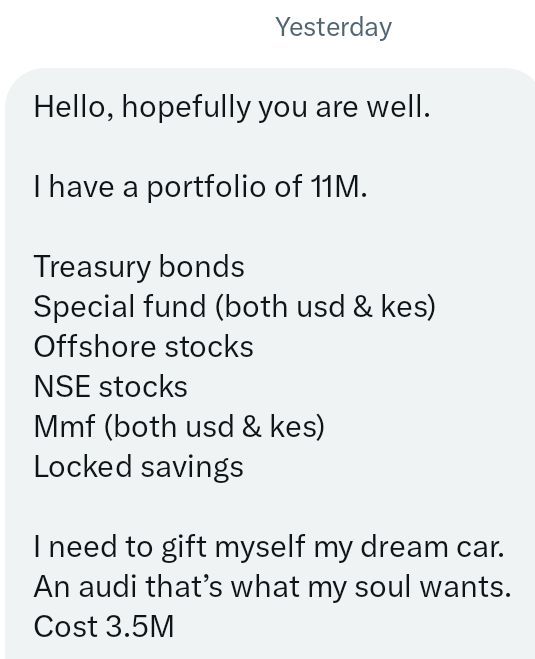
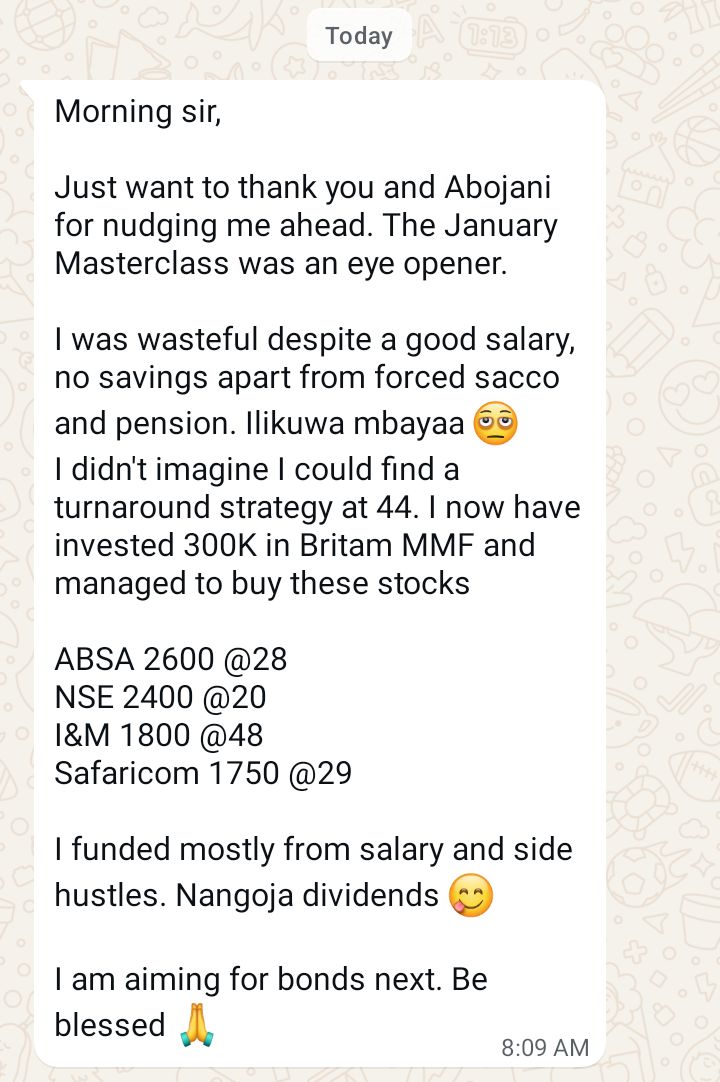
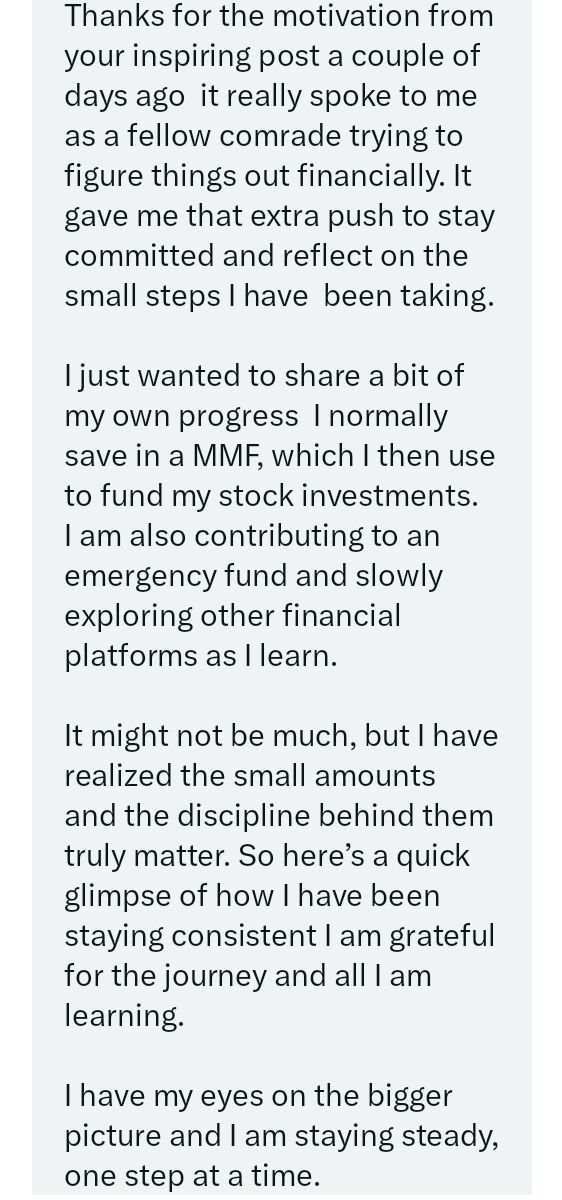
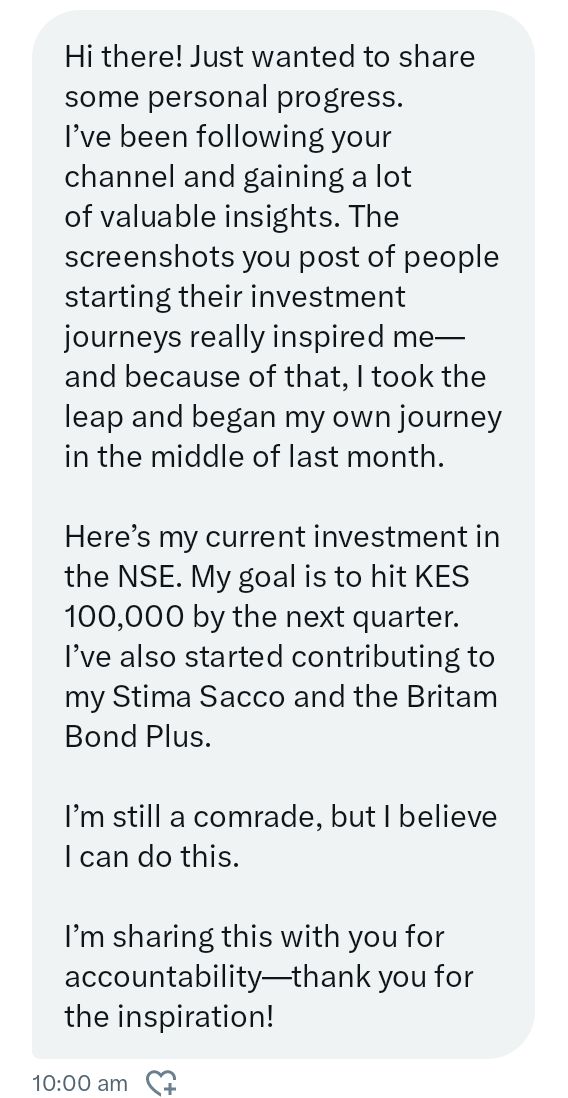
The people who seem to be enjoying life at 40 are the ones who were deeply uncomfortable at 30. They didn't stumble into financial wellbeing.
They built it systematically over the years—growing alongside their salary and passive incomes. You only see the comfort. You can't see the hardships that paid for it.
2
11
129
7,572
RT @vanessa_trendi: There’s many people with teeth decay but this one amazed me with the worst ever teeth decay, but guess what he meet the…
350
LevelQue retweeted

6 Investments That Will Always Pay You Back no matter what. 💯🤌👇
30
287
1,373
258,308
LevelQue retweeted

May 6
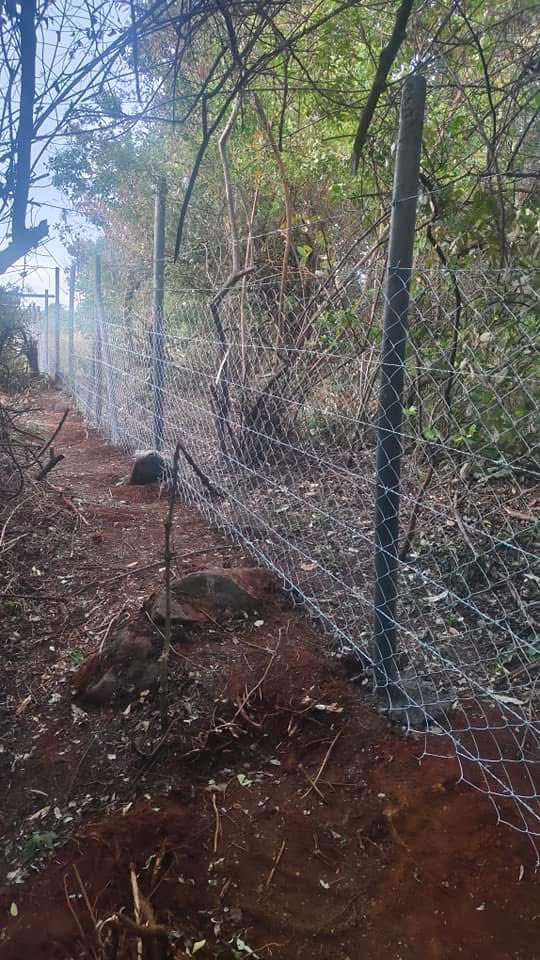
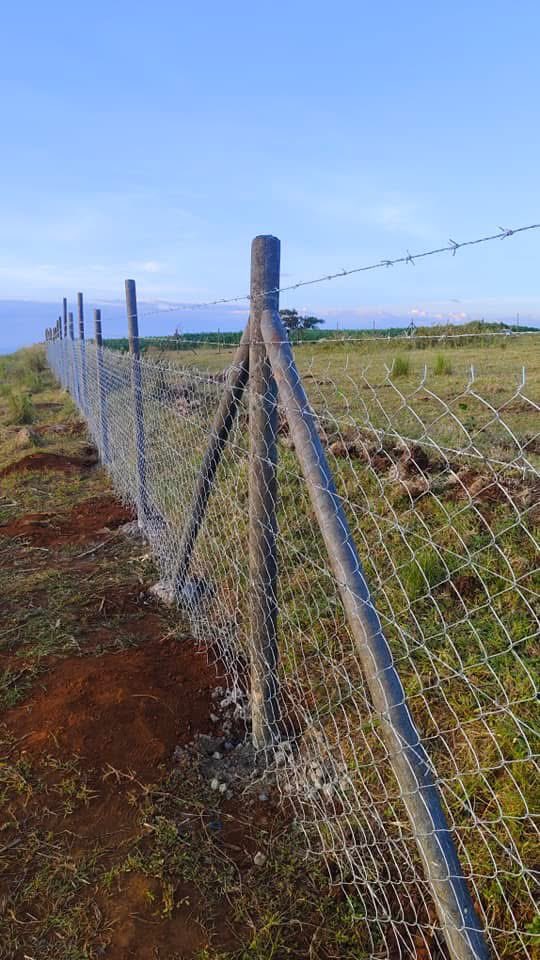
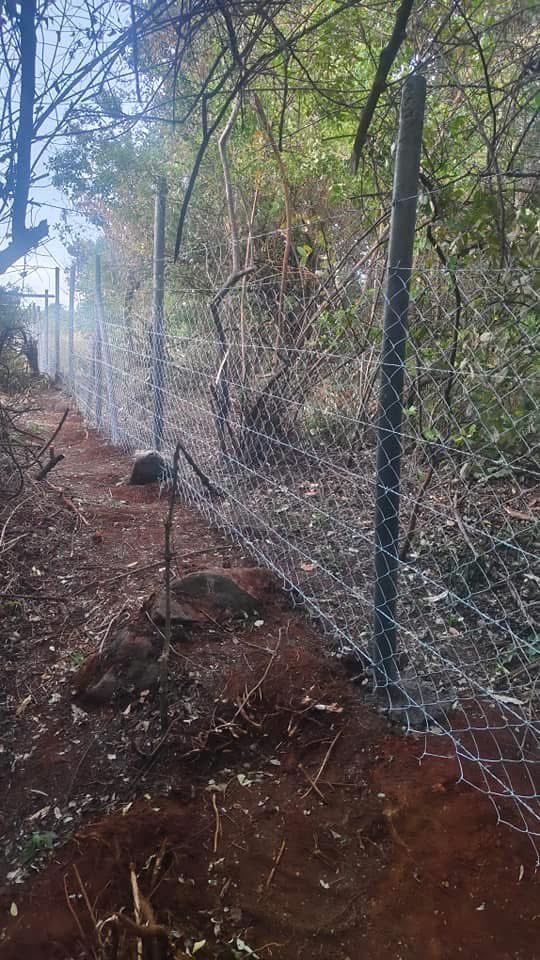
Badala ya masonry perimeter walls this is what I recommend then you simply grow the kayaba aka Kei Apple for the people from the group of schools to understand.
Your home will have the natural green feel badala ya the concrete/masonry walling like you are in the Alcatraz prison. As long as you do neat trimming and have no issue with chameleons as a natural pet you are good to go.
45
47
390
47,909
LevelQue retweeted

May 5
If you don't have at least Kshs. 10 Million invested by age 40 you may end up working until death, unless a miracle happens.
Even if you try to invest large sums of money in your 40s to make up for the last 15 years, you will find that...🧵
42
98
525
83,291
LevelQue retweeted

May 4
Two bonds are live in Kenya's primary market.
KMRC is raising KES 3.0bn — an 8-year amortising bond, min. KES 100,000, closes 21 May 2026
I&M Bank is raising KES 10.0bn — a 5yr 6m bullet bond, min. KES 500,000, closes 15 May 2026
Both offer a coupon of 12.20% p.a.
Which one should you pick?
Breakdown below👇👇
22
158
658
82,844
LevelQue retweeted
May 4
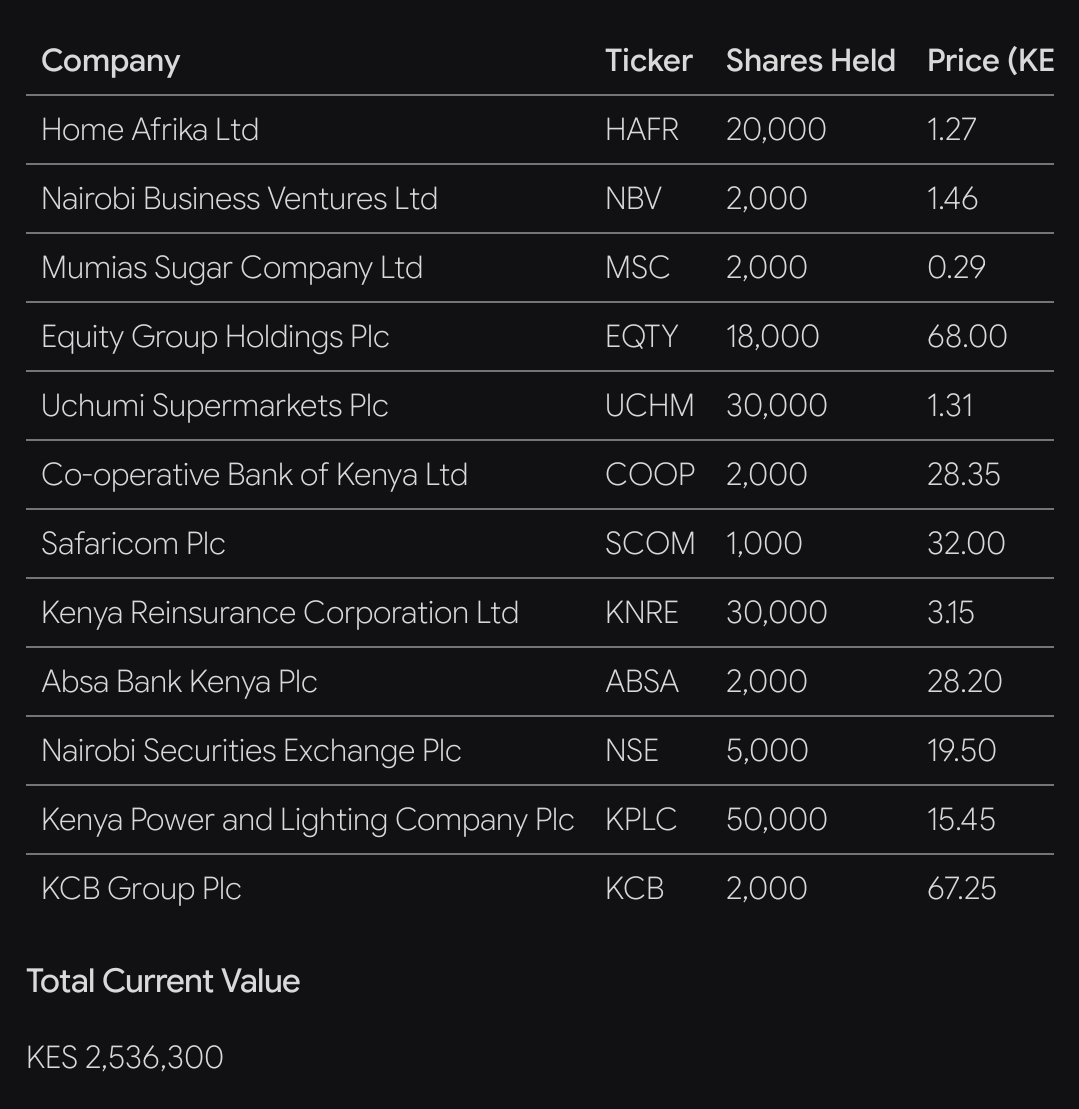
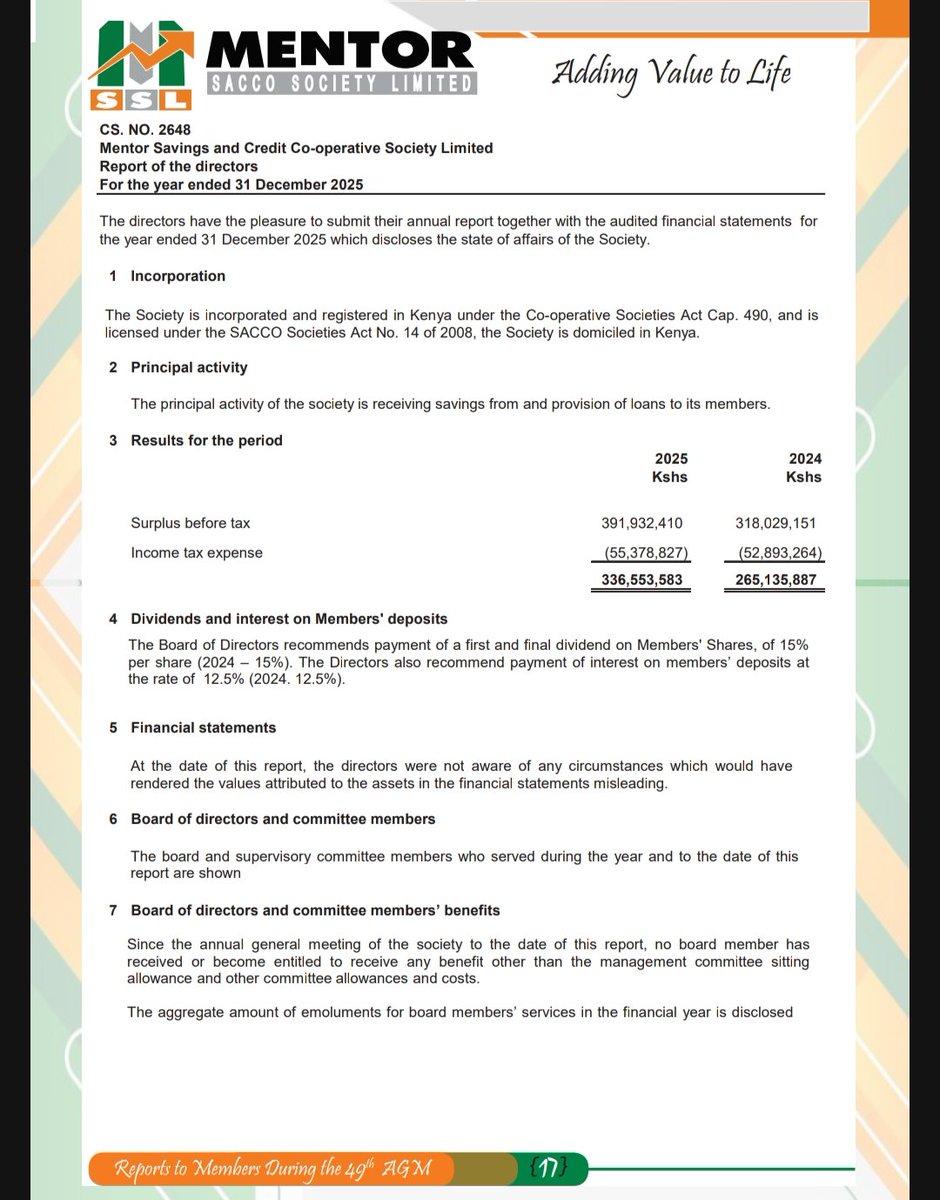
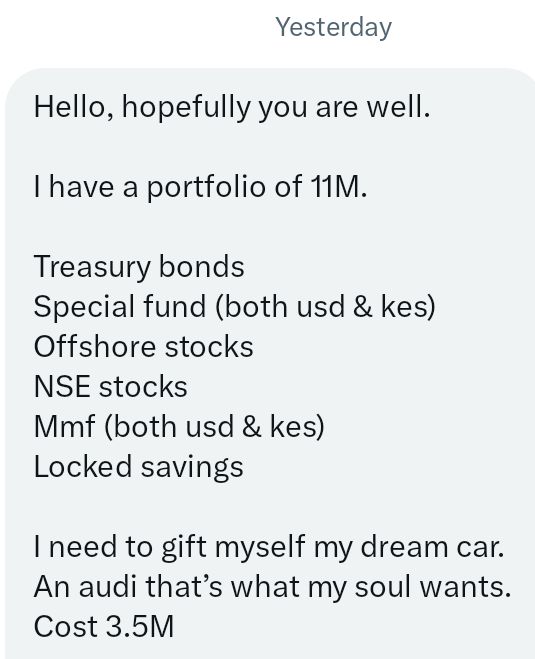
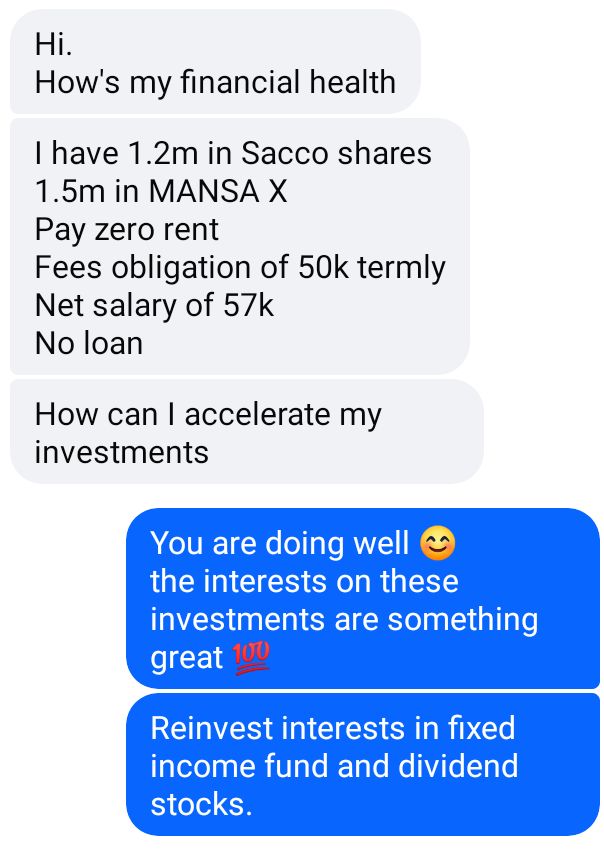
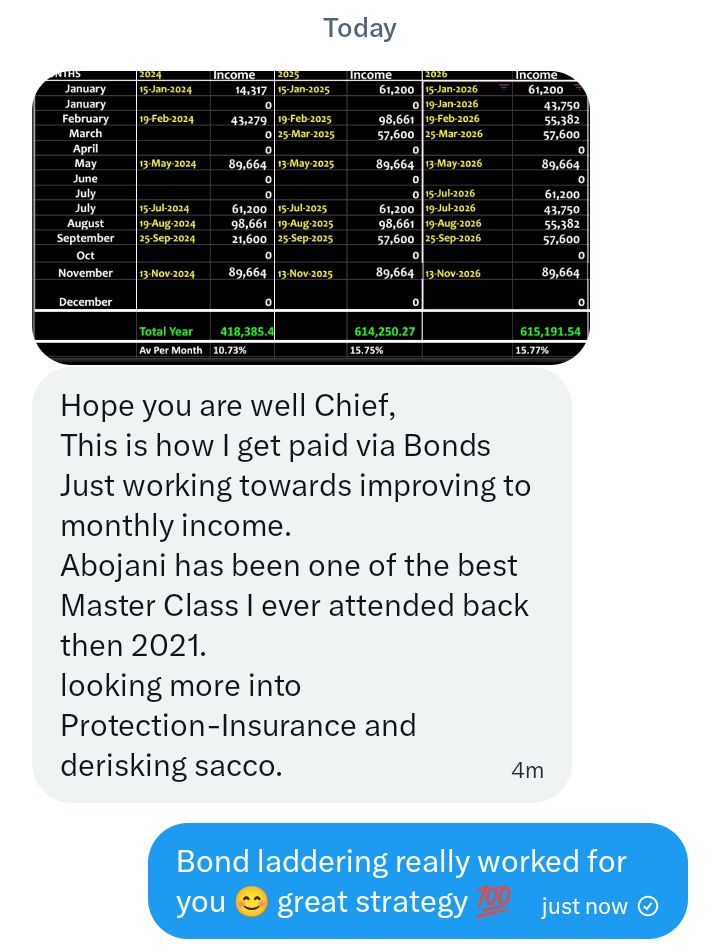
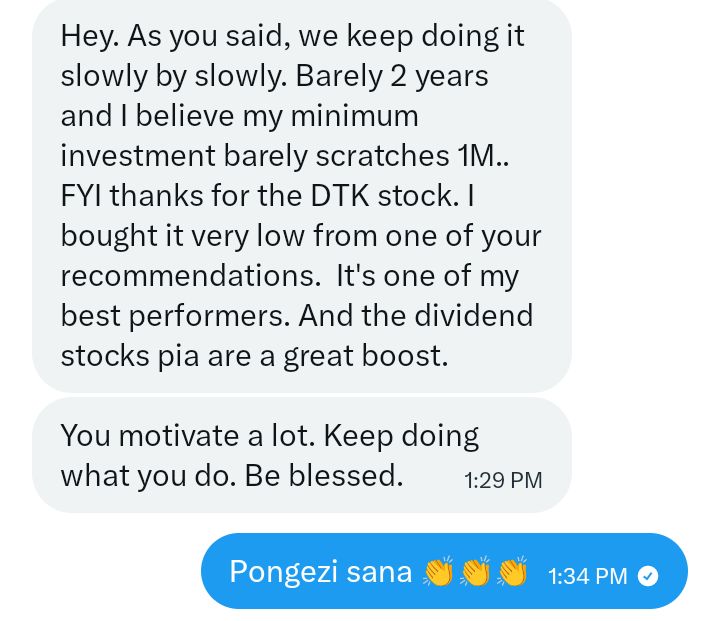
The best employees are your dividends and interests. You can retire, but your stocks, unit trust funds, SACCO deposits and share capital, bonds, etc. keep showing up every day to work for you. It’s called passive income.
3
11
68
4,103
LevelQue retweeted

Apr 29
I have seen worms in guavas and in mangoes, but I have never seen them in lemons. Lesson: Avoid being too nice to some people.
17
205
780
19,735
LevelQue retweeted

Apr 28
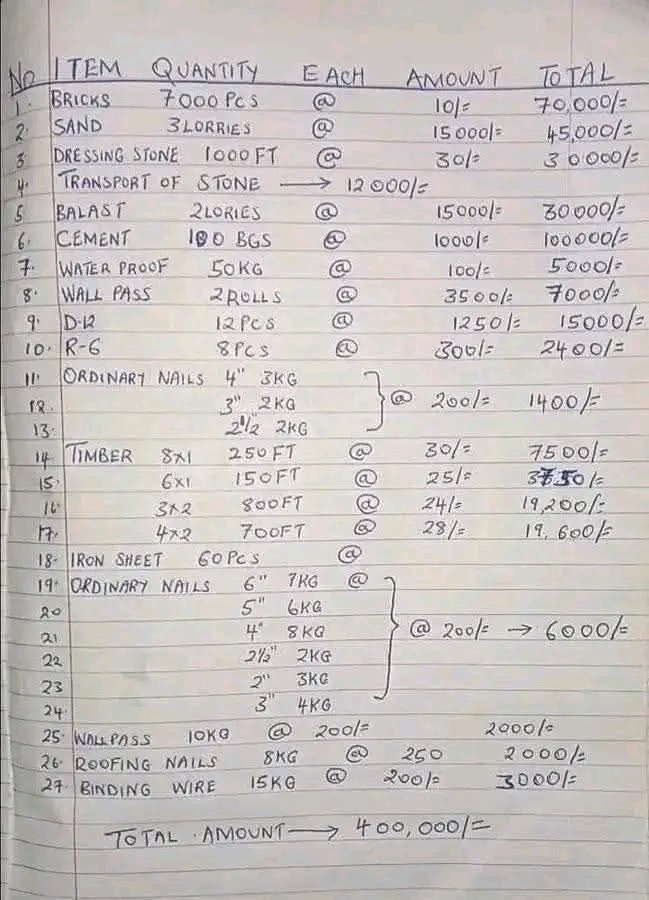
Full cost of building a 3 bedroom bungalow in Kenya is Ksh 400,000 only.
Usiibiwe.
236
220
1,075
127,360
LevelQue retweeted
Apr 26
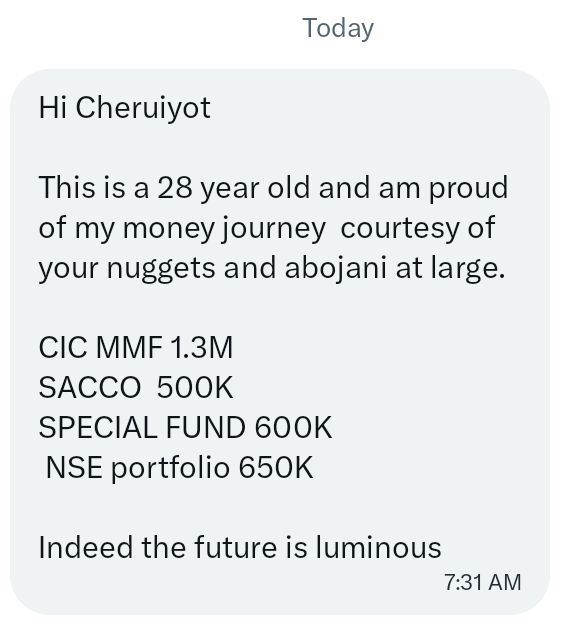
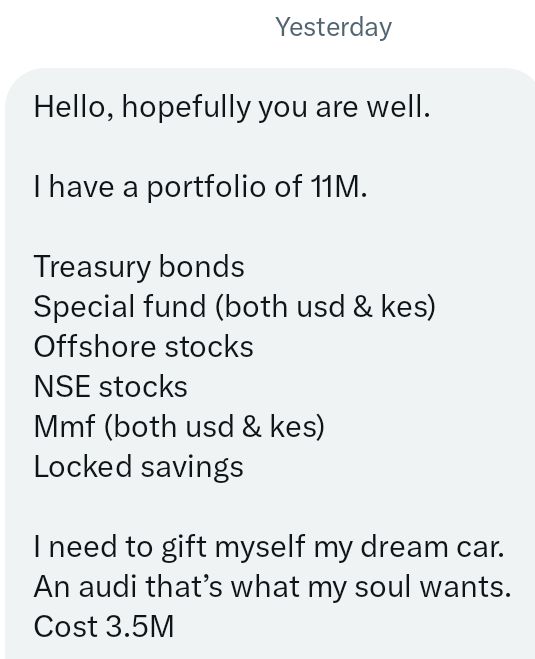
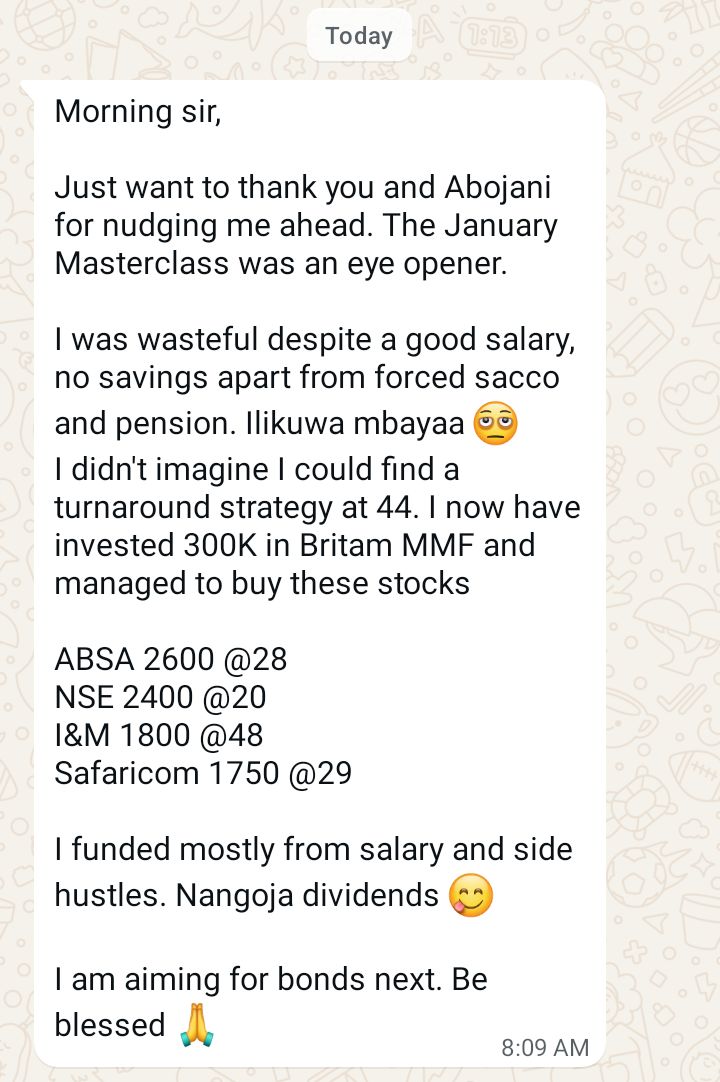
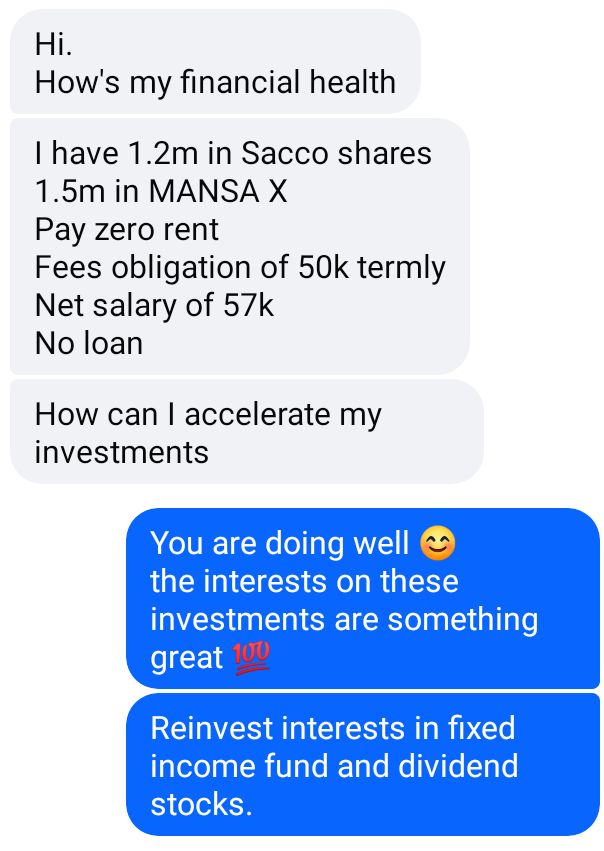
Even a tiny asset that generates income while you sleep completely changes how you think about risk. The ownership angle changes everything. Aspire to be an owner.
4
12
121
7,091
LevelQue retweeted

Apr 20
Visit the dentist once in a while. You might not know what’s going on with your teeth.
Just look at this beautiful work done here 😍
Community note
This video is clearly AI generated, as evidenced by the morphing teeth, tools, and inconsistencies in the background.
roblaughter.medium.com/is-that-image-…
588
2,882
55,480
8,215,802
LevelQue retweeted

If anyone knows which school this is, we need to identify this girl. Even if we paid for a boda boda for a year. Maybe after that one year, the family will have found a solution or we could still renew her boda offer.
541
669
4,018
481,763
LevelQue retweeted

Apr 15
One hidden tap shows everything your wifi is hiding 😏
32
2,108
7,256
854,712
LevelQue retweeted

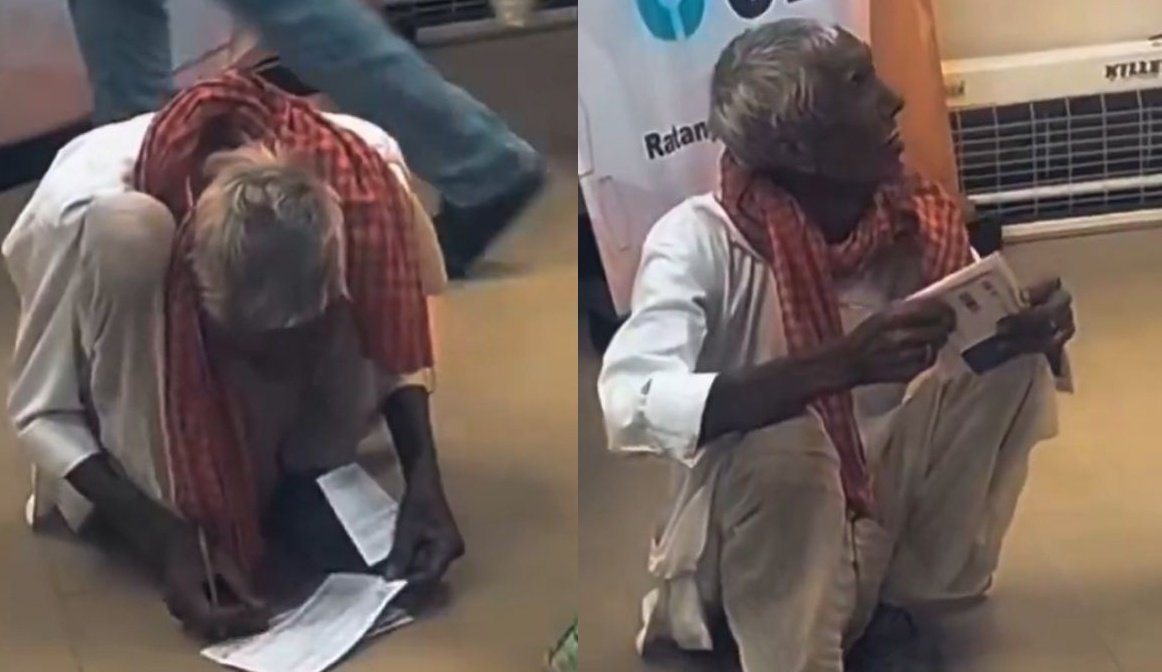
One day, a man went to a bank to withdraw money. He filled out a form for ₹1,40,000 and gave it to the cashier. The cashier counted the money and handed it to him.
The man took the money and put it in his bag without counting it. But he had already noticed that the cashier had made a mistake. Instead of ₹1,40,000, he had received ₹1,60,000.
He walked away quietly, pretending he didn’t notice anything. Soon, he started feeling uncomfortable. He thought, “Should I return the extra ₹20,000?” But another thought came, “When I make mistakes, no one returns my money.”
His mind and heart kept arguing. One moment he wanted to return the money, the next moment he wanted to keep it. But deep inside, his conscience told him, “Is it right to take advantage of someone’s mistake?”
He felt more and more restless. Finally, he took ₹20,000 out of his bag, put it in his pocket, and decided to go back to the bank.
As he walked back, he felt lighter and happier, like a big burden had been lifted. When he reached the bank, he returned the money to the cashier.
The cashier felt very relieved. He offered him ₹1,000 as a reward and said, “Thank you. Please buy sweets for your children.”
The man smiled and said, “No, thank you. I am the one who is grateful.”
The cashier asked, “Why?”
The man replied, “Your mistake gave me a chance to test myself. Today, I learned to control my greed. That is my biggest reward. There is no greater reward than honesty.”
80
571
6,058
415,769