Official Twitter source for Lewis and Clark National Historic Trail of the National Park Service
- Tweets 1,694
- Following 580
- Followers 3,401
- Likes 2,209
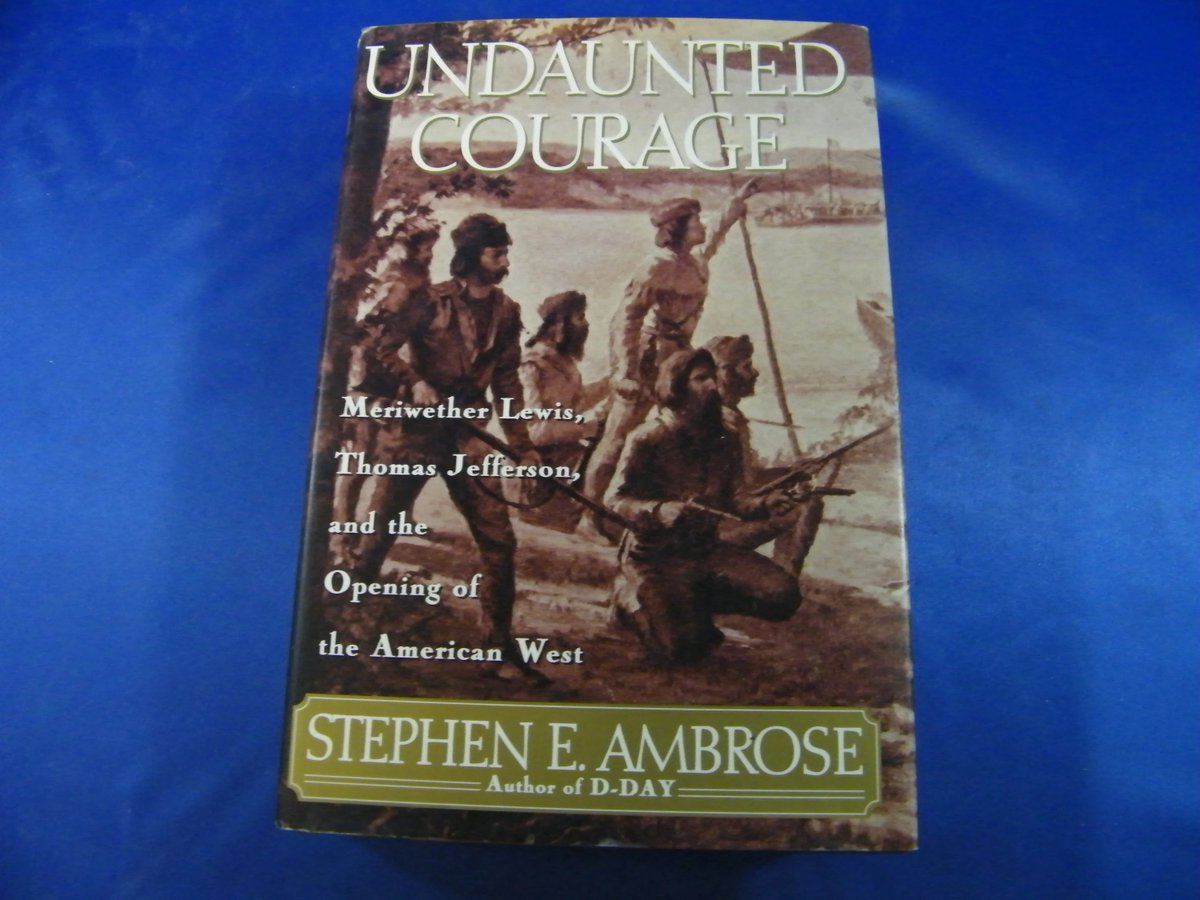




ALT Book entitled Undaunted Courage
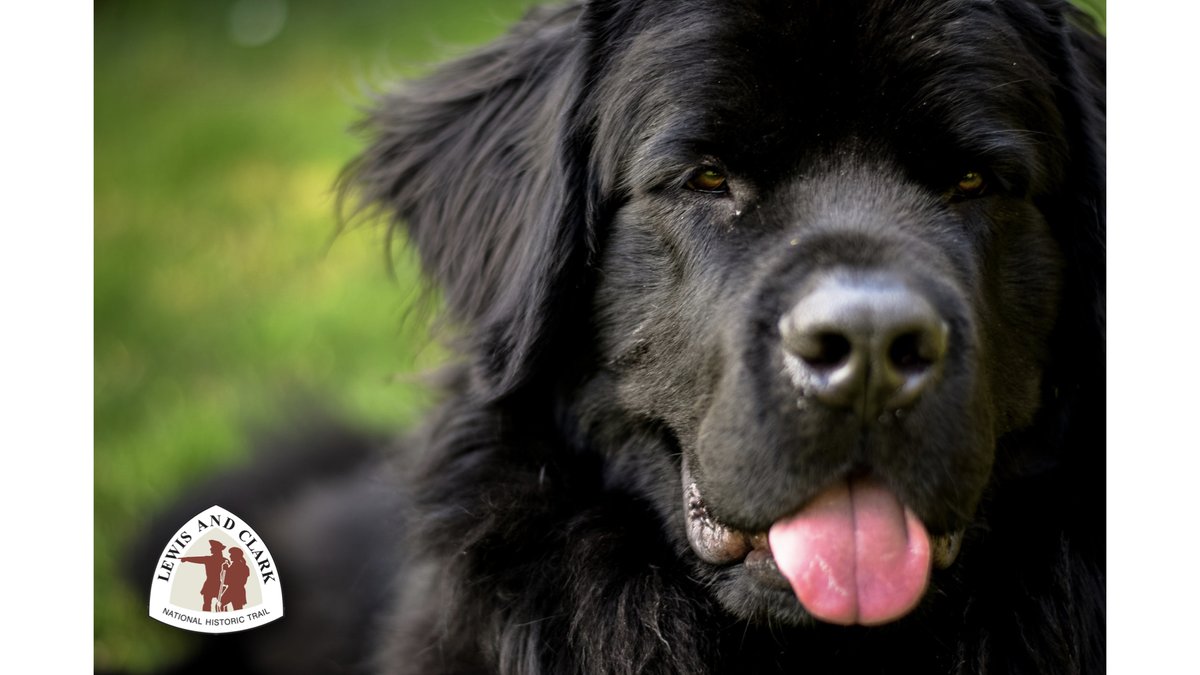
ALT Just because it’s Friday…and we realize we haven’t posted anything about Seaman in a long time… We hope this handsome Newfoundland friend will brighten your day and weekend! Photo: CC BY-SA 2.0/Brad Geddes Image Description: A close-up photo of a black Newfoundland looking directly into the camera – his red tongue slightly drooping from his mouth. The background is out of focus.
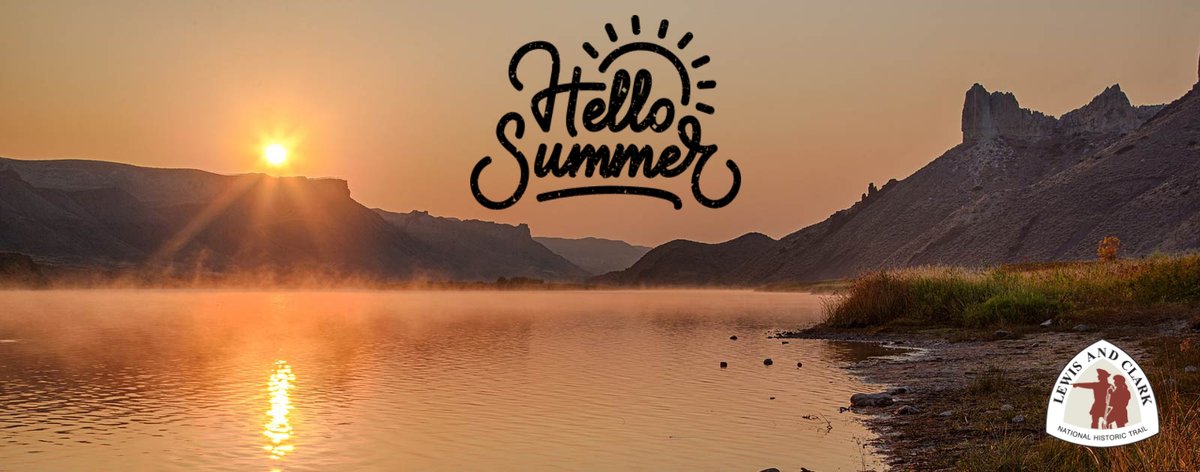
ALT The orange hues of the setting sun silhouetting the edges of the White Cliffs of the Upper Missouri River Breaks National Monument. A mist rises off the river’s surface. In the center of the sky is a graphic, “Hello Summer!” The Lewis and Clark Trail logo is in the lower right-hand corner.

ALT Logo that reads “Honoring Tribal Legacies” in black text on white background with multi-colored triangles and rhombuses
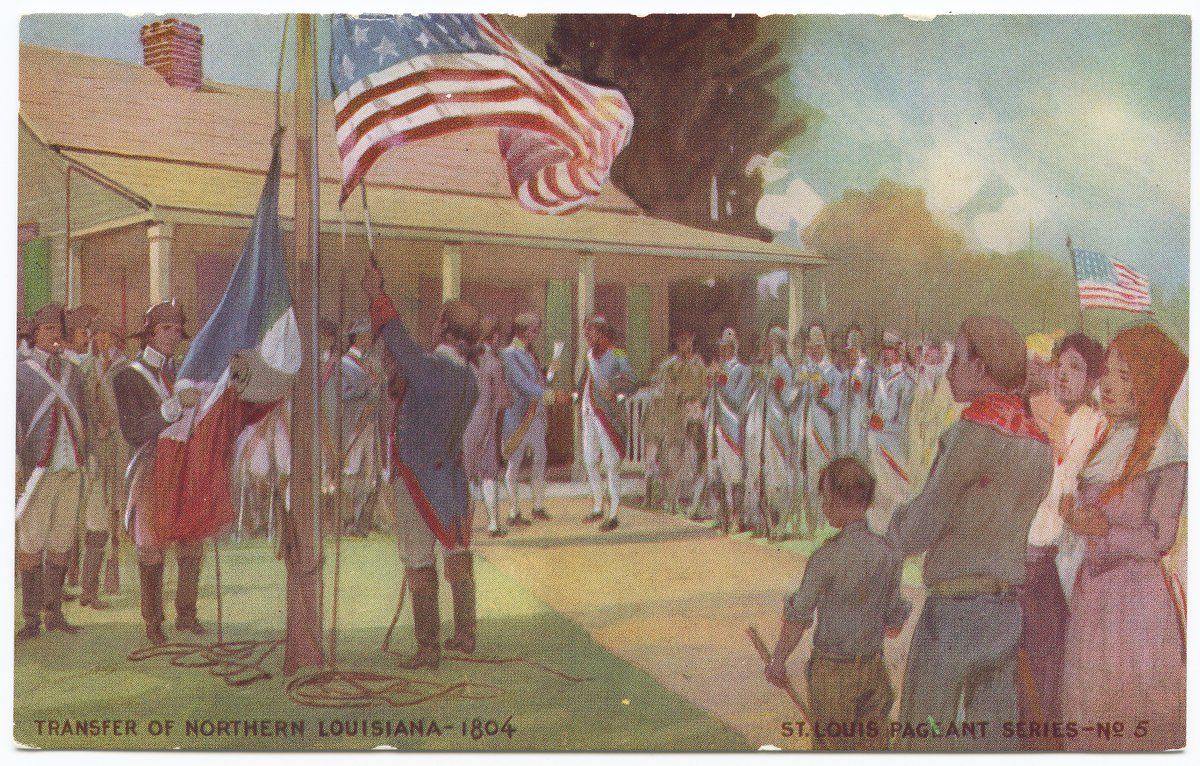
ALT A color illustration of the exchanging of the French and U.S. flags. Groups of soldiers are seen in front of the governor’s home, two soldiers in the foreground are exchanging the flags on a tall pole. Citizens are watching on the right side of the image.
ALT Hugs and Kisses from the Lewis and Clark National Historic Trail
ALT bee on yellow flower
ALT Happy Holidays from Our Corps to Yours. Stockings on a line
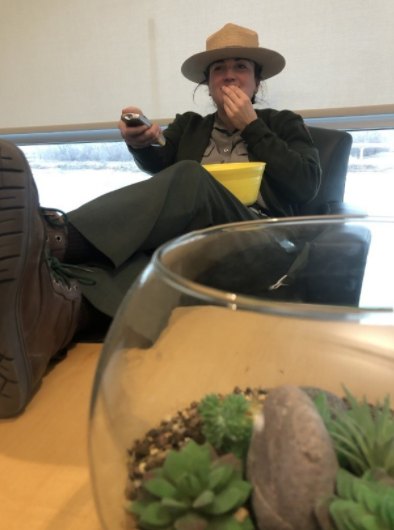
ALT A ranger sits reclined in a chair. She is eating popcorn and holding a remote control. There is a terrarium with succulents in the foreground.
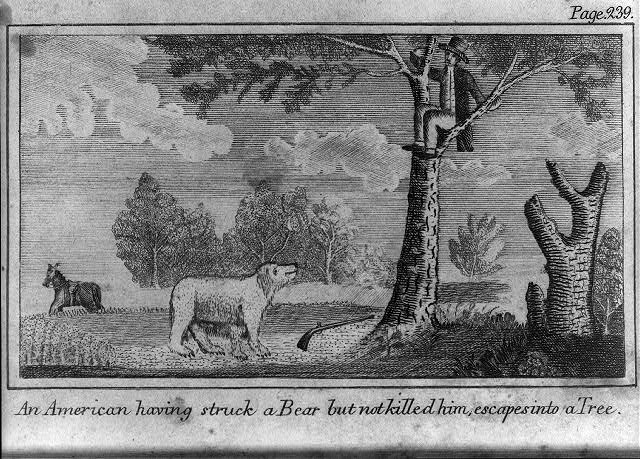
ALT line drawing of man in tree with dog on ground
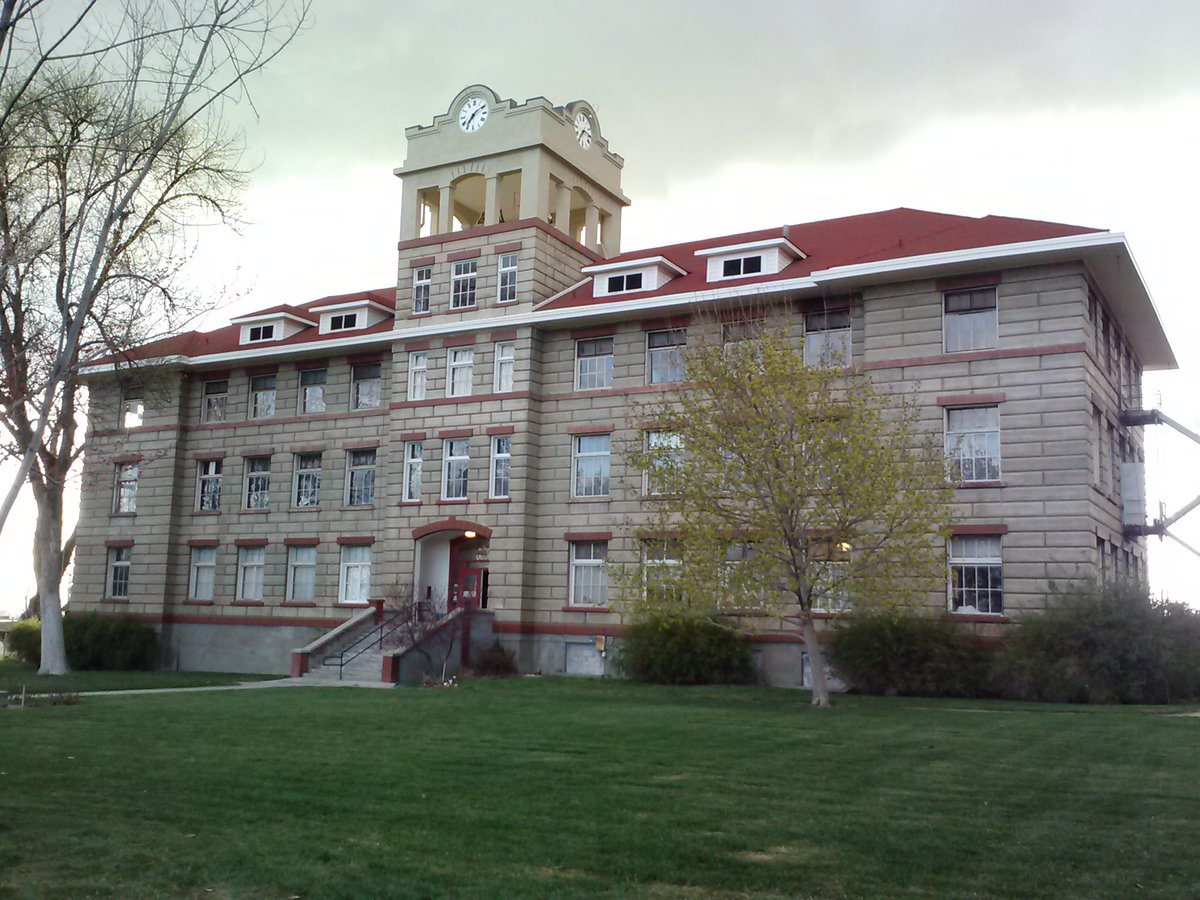
ALT A three-story white stone building with a red roof. In the center of the building is a taller clock and bell tower. Steps lead to the building’s entrance, within the center section.
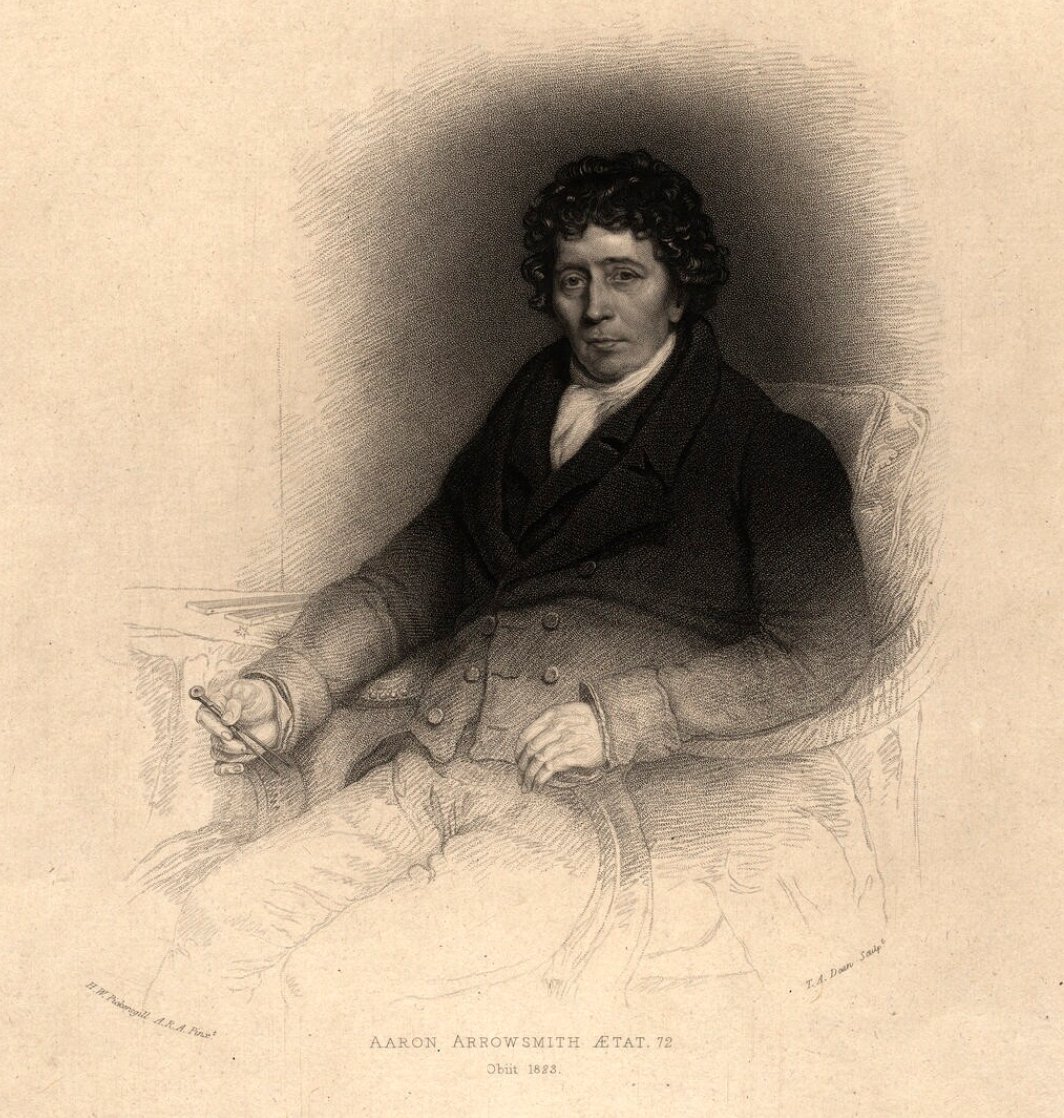
ALT A stipple engraving of Arrowsmith – black ink on yellowed paper. He is dressed formally, wearing a puffed white shirt and double-breasted jacket. He is sitting in a stuffed-cushion chair.
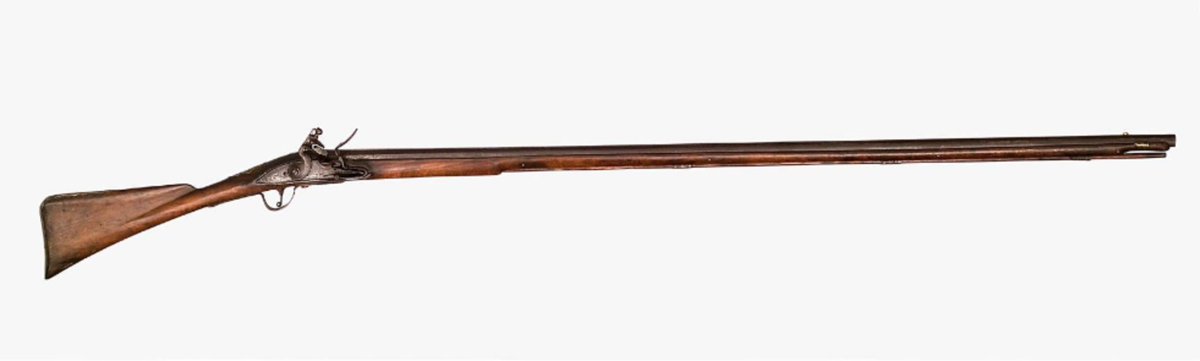
ALT A simple fusil musket displayed on a white background.
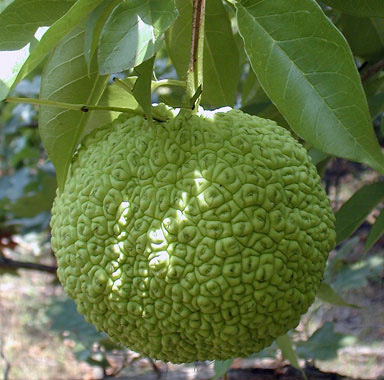
ALT A bumpy, round bright green fruit hangs from a branch.
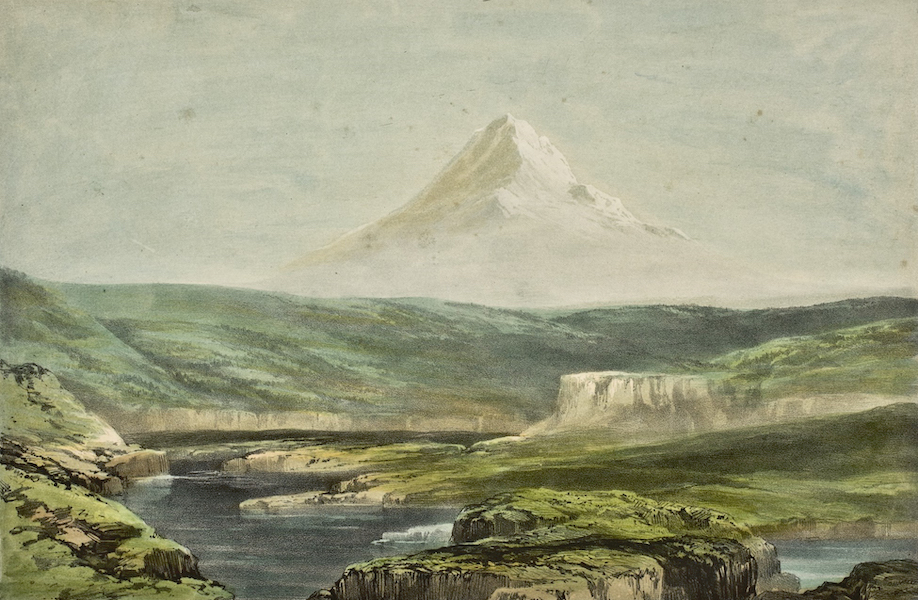
ALT A watercolor illustration of The Dalles of the Columbia River in the foreground and the peak of Mount Hood towering above in the distance.
ALT A Passport to America’s National Park book – one opened to a page with several round passport stamps, and one closed showing the front cover. Also shown is a round Trail Passport stamp from the Falls of the Ohio site in Indiana.
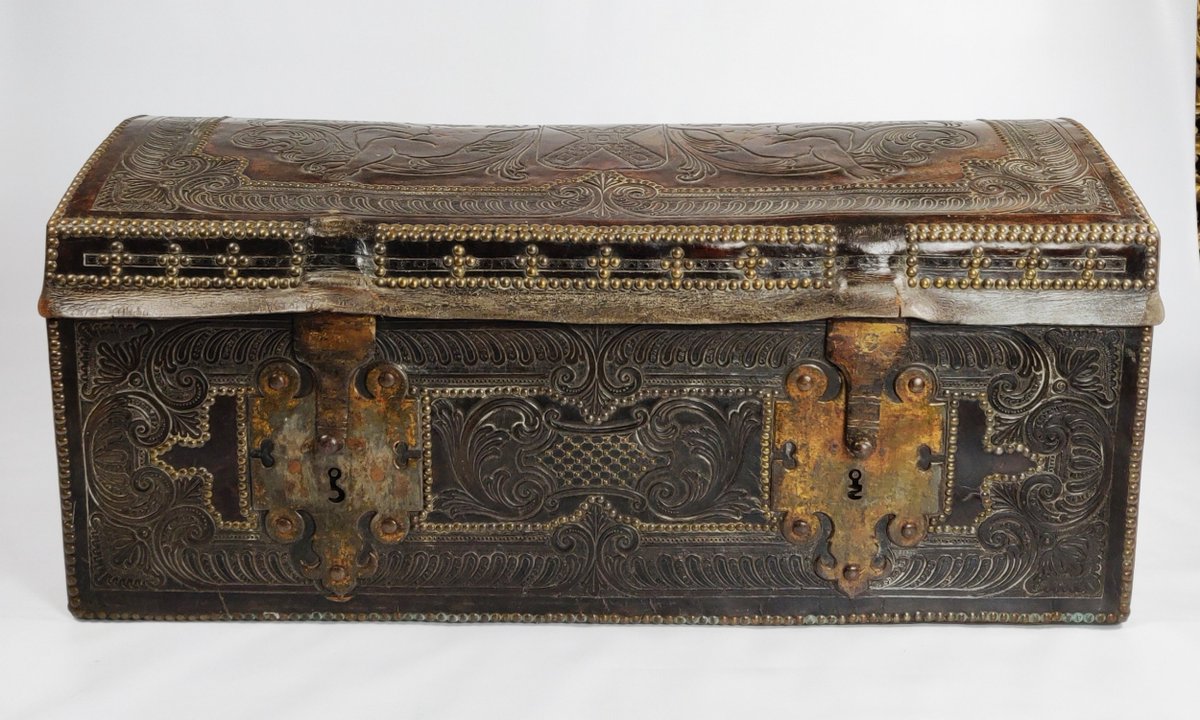
ALT A dark rectangular trunk, with ornate designs in leather. Two large metal latches are on the front.
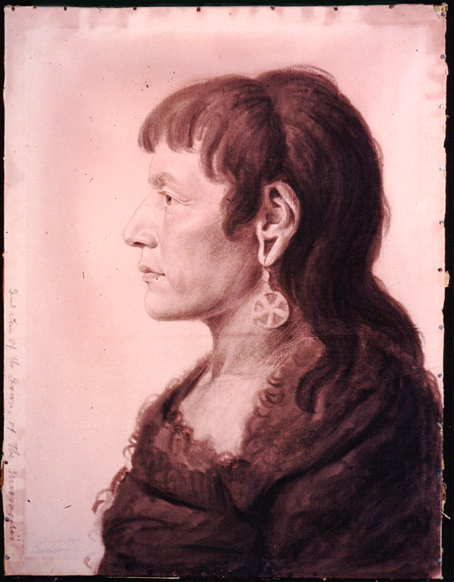
ALT A monotone portrait, possibly of Shehek-Shote. The profile style portrait has the man facing to the left. He has dark, shoulder-length hair. His left earlobe has a large opening from which hangs a round earring.