
Joined November 2020
- Tweets 18,541
- Following 2,025
- Followers 3,961
- Likes 103,216
9,119 Photos and videos






Pinned Tweet

18 Nov 2025
What if they just serve us; all the time, everywhere?
It doesn't make a scary Hollywood movie, but it would be wonderful.
This is among the possibilities.
6
6
78
4,685
Notice the small gifts afforded you and be grateful.
Hot showers (with reliable hot running water and a shower in the home) became somewhat common for the average person in the United States in the 1920s–1950s, with broader adoption by the 1950s–1960s. In much of Europe (especially the UK), it was later—primarily the 1960s–1980s.
Gratitude is an orientation toward reality that improves perception and action.
A person operating from chronic resentment tends to focus on deficits, obstacles, and grievances. Those things are sometimes real, but they can consume attention.
A grateful person is not blind to problems. Rather, they are simultaneously aware of assets, opportunities, relationships, capabilities, and gifts that already exist.
That produces a subtle but powerful shift.
You begin from abundance rather than scarcity.
Not necessarily material abundance, but informational and psychological abundance.
You see more resources available to you.
You become more resilient.
You become less fragile when setbacks occur.
You spend less energy fighting reality and more energy working with it.
34
SpaceX Completes Experimental Asteroid Mining Mission
July 17, 2038
SpaceX announced today that it has successfully completed humanity's first large-scale experimental asteroid mining mission, extracting and processing resources from a near-Earth asteroid located roughly 10–20 million miles from Earth at the time of the operation.
While that may sound distant, the target asteroid was actually far closer than Mars, which ranges from approximately 35 million to more than 200 million miles from Earth depending on orbital positions. The mission is being viewed as a major proof of concept for future space-based industry.
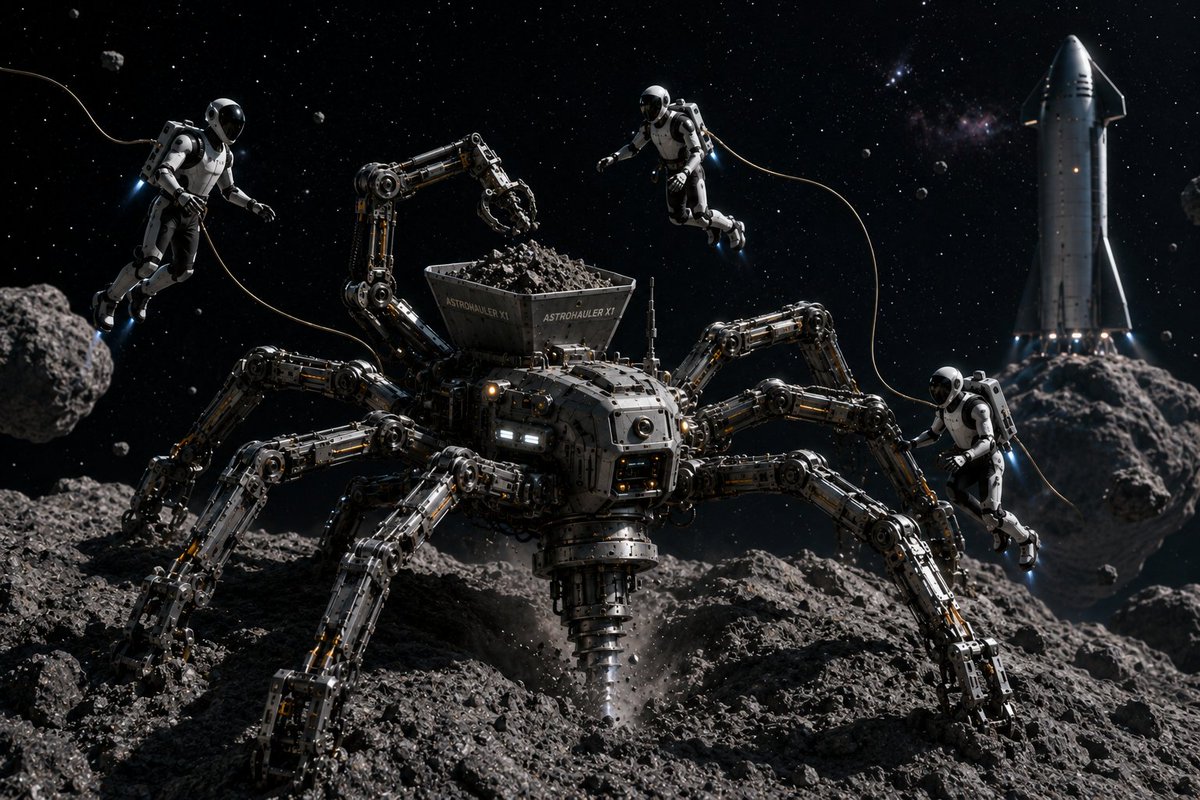
The operation employed autonomous spider-like mining machines anchored directly to the asteroid's surface. Once attached, the robotic miners used articulated collection arms to excavate material and deposit it into onboard processing hoppers. Floating nearby, humanoid service robots equipped with small gas thrusters and safety tethers performed inspections, maintenance, and adjustments to mining equipment when required.
A Starship-derived transport vessel served as the mission's command center, communications hub, and storage facility for collected material.
Initial analysis confirmed the presence of iron, nickel, cobalt, and trace platinum-group metals. However, mission leaders emphasized that the most important resource may not be precious metals at all.
Water-bearing minerals discovered within the asteroid were successfully processed to extract water, which can be separated into hydrogen and oxygen for rocket propellant. Water can also provide life support, industrial feedstock, and radiation shielding for future crews operating beyond Earth.
For decades, discussions of asteroid mining focused on bringing valuable materials back to Earth. Increasingly, industry leaders believe that perspective misses the larger opportunity.
"The real value isn't what we can bring back," one mission engineer explained. "It's what we no longer have to launch from Earth."
Every ton of water, oxygen, fuel, or construction material produced in space is a ton that does not need to be lifted out of Earth's gravity well. The economics become especially compelling as human activity expands into cislunar space, the Moon, and eventually Mars.
The mission's success is already reshaping long-term plans for space development. Rather than viewing asteroids as distant curiosities, engineers increasingly see them as quarries, fuel stations, and supply depots scattered throughout the Solar System.
Significant challenges remain. The economics of extraction, equipment durability, autonomous operations, and transportation logistics are still being evaluated. Nevertheless, analysts describe the mission as a milestone comparable to early demonstrations of reusable rockets decades earlier.
For many observers, the most important result was not the quantity of material recovered, but the validation of a new idea: that the resources needed to build a spacefaring civilization may already exist in abundance beyond Earth.
The asteroid itself was never the destination.
It was the first quarry.
1
6
194
Jun 13
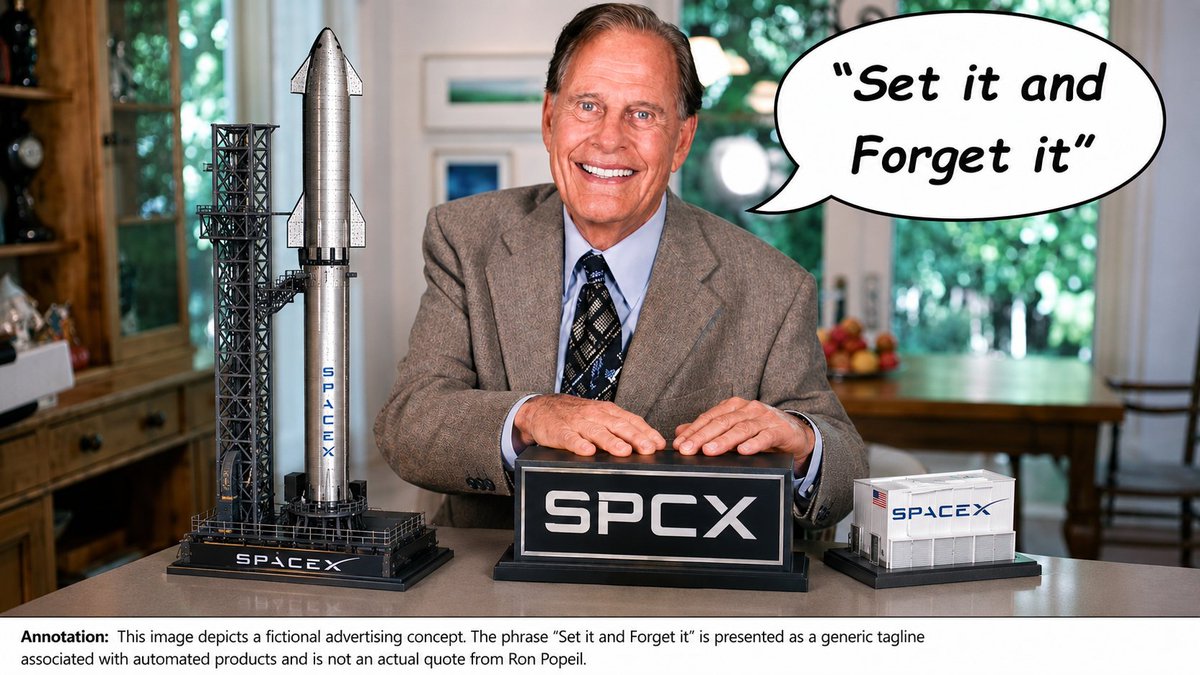
Inspired by a Brad Gerstner @altcap observation that SpaceX is a "set it and forget it" investment.
1
2
78
Jun 12
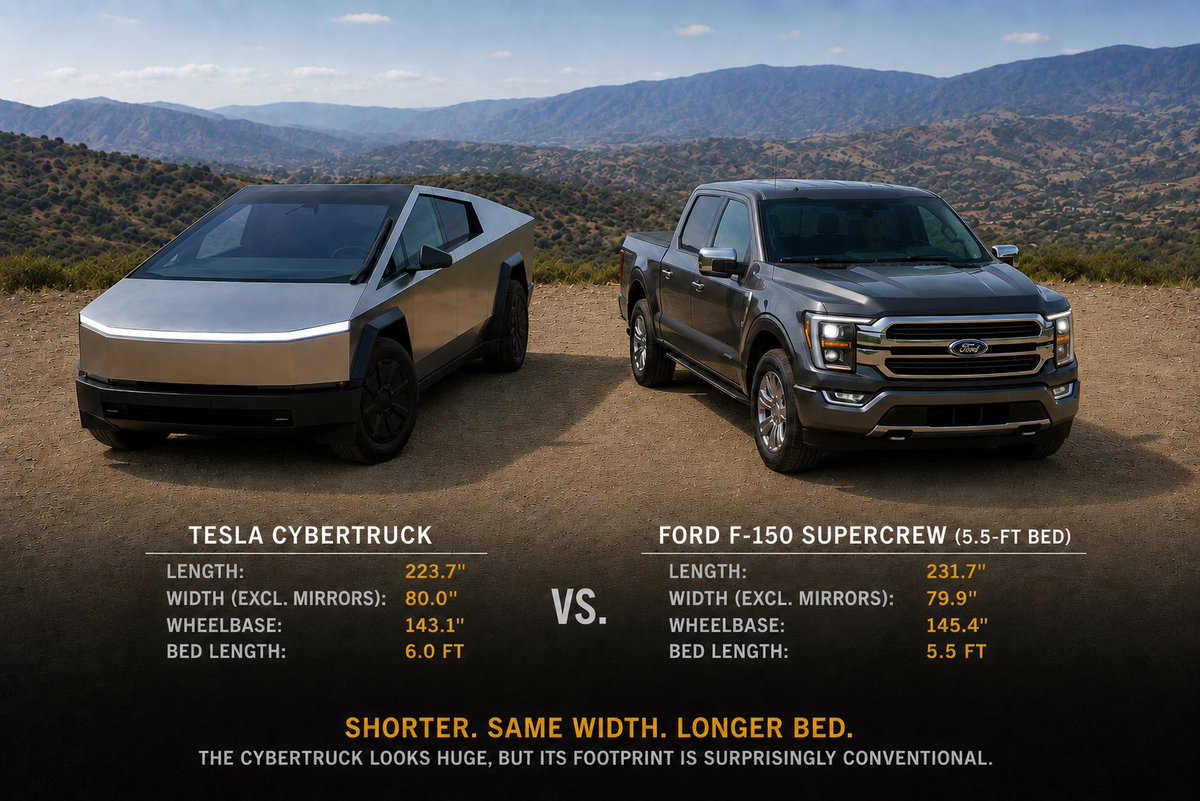
Cybertruck isn't too big. It's the same width as an F-150, 8 inches shorter, and has a six-inch longer bed. The F-150 has been the best-selling vehicle in America for 43 of the last 44 years. If that footprint were too big, Americans would have told us by now.
@teardowntitan
3
25
606

Jun 10
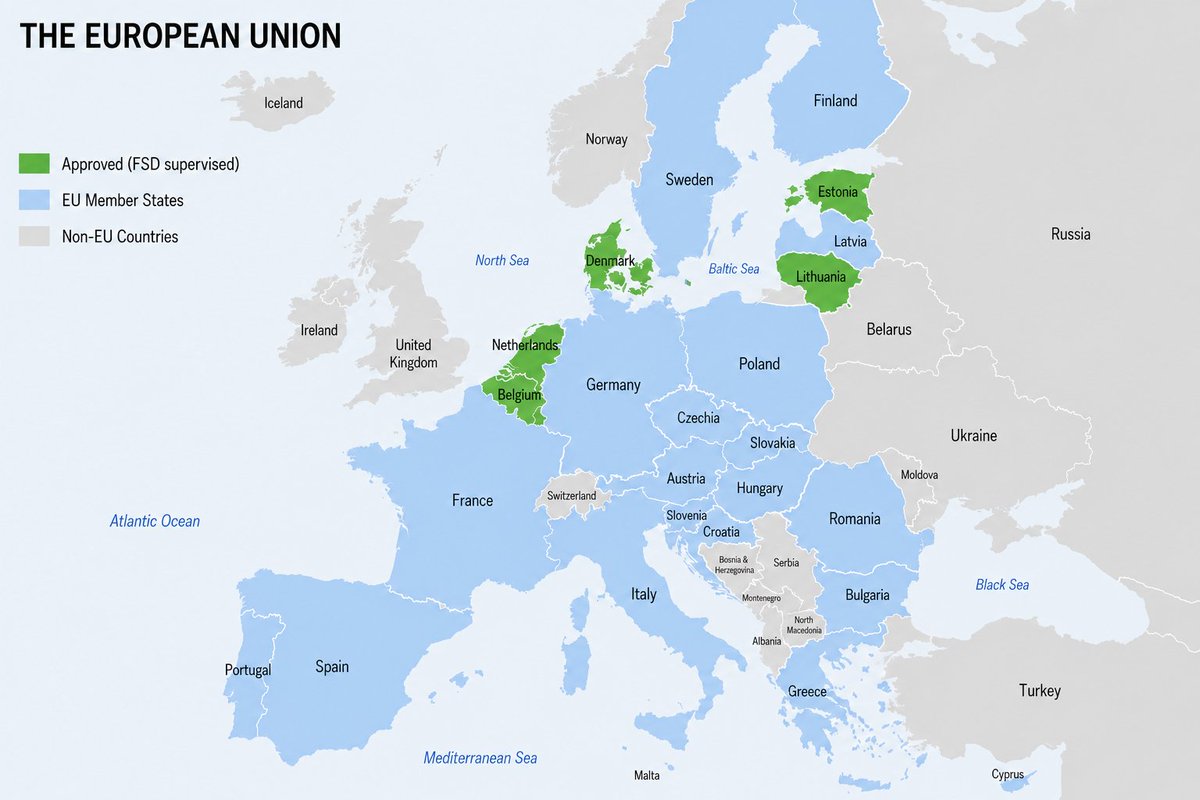
Belgium has approved Tesla FSD (Supervised), becoming the 5th EU country to do so.
🇧🇪 Belgium joins:
🇩🇰 Denmark
🇪🇪 Estonia
🇱🇹 Lithuania
🇳🇱 Netherlands
The European dominoes continue to fall.
4
2
41
1,128
Jun 10
Update-
Belgium’s Regional Decentralization Regarding FSD (supervised) approval:
Vehicle homologation, road policy, and certain transport approvals are decentralized to the three regions: Flanders(north, Dutch-speaking), Wallonia (south, French-speaking), and Brussels-Capital Region.
This is why early efforts focused on Flanders (which borders the Netherlands and conducted the 5,000 km testing).
Current Status (as of June 10, 2026)
Flemish Minister Annick De Ridder signed the approval for FSD (Supervised) today, following the Dutch RDW certification.
Multiple reports frame this as Belgium’s national approval (making it the 5th EU country). Some explicitly state it covers the whole country despite the regional signing.
However, because of the regional split, full nationwide rollout may still require formal adoption or mutual recognition by Wallonia and Brussels for complete legal clarity across territories.
In practice:
Flanders → Fully approved and ready for rollout soon.
Wallonia & Brussels → Likely to follow quickly via recognition of the Flemish/Dutch process, but they could technically need their own steps (though sources indicate the Flemish approval is being treated as unlocking the country).
the federal setup adds a layer of complexity that doesn’t exist in more centralized countries like the Netherlands or Denmark. But today’s announcement is being widely reported as Belgium-wide approval which is not completely accurate. Rollout should progress across the country in the coming weeks.
5
196
Jun 10
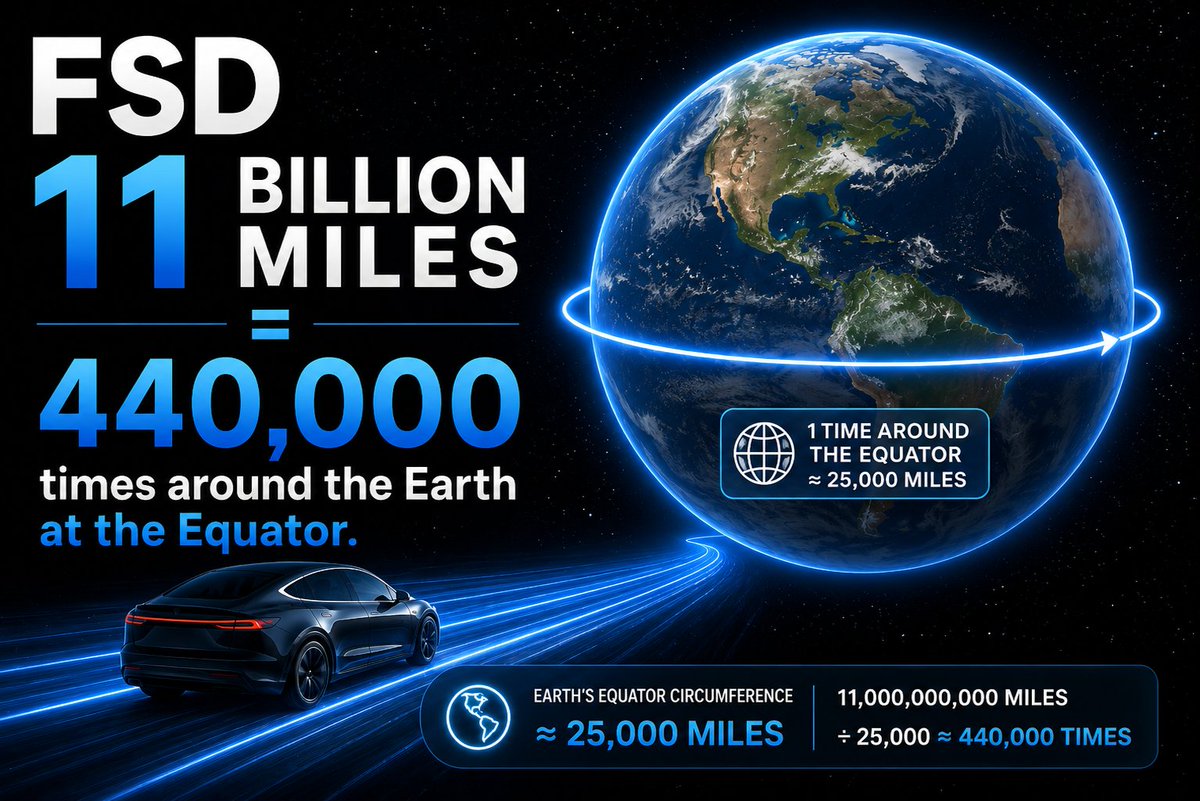
Tesla FSD just hit 11 BILLION miles driven.
This is a massive milestone.
No other company comes close to this volume of real world autonomous driving data. Every mile improves the AI through constant learning, rapidly closing the gap to full unsupervised autonomy and robotaxi deployment.
Data is the new oil, and Tesla just struck a gusher. ⚡
#FSD #Tesla
4
4
15
274
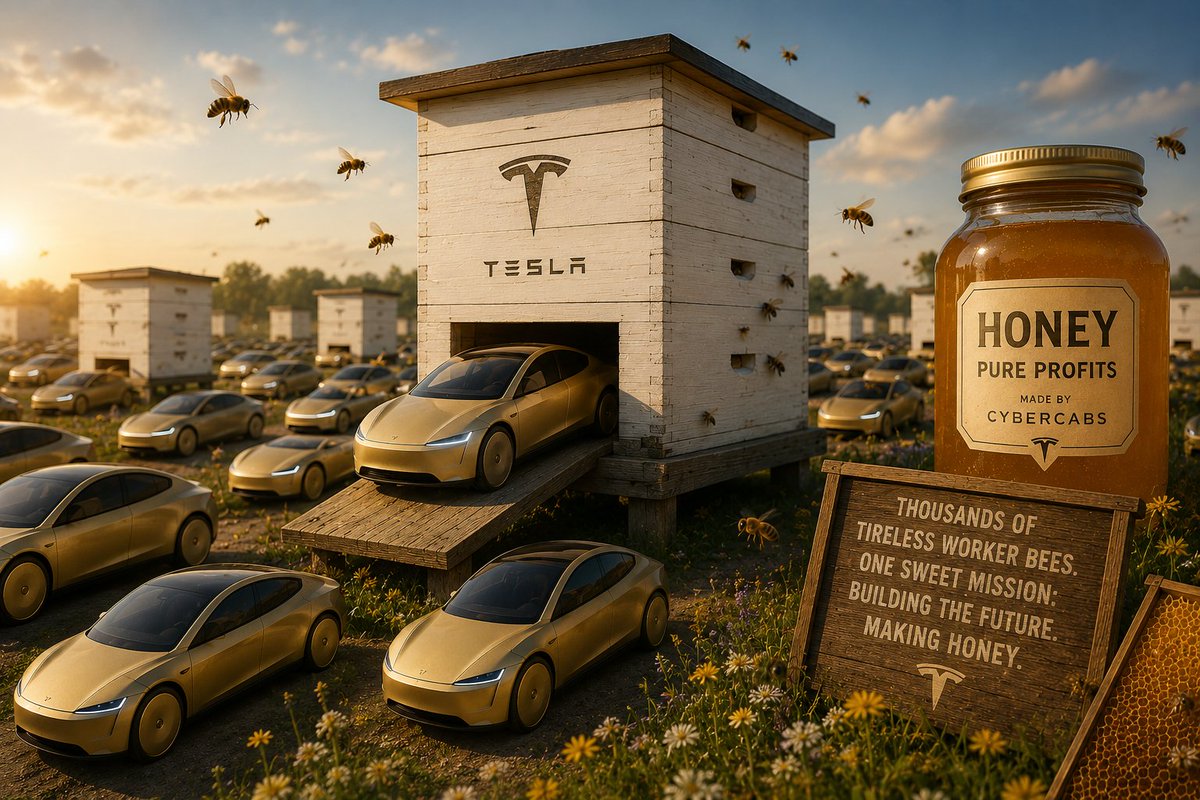
Fleets of them, operating 24/7 with zero drama, turning every mile into pure honey (profit) for Tesla. No salaries. No breaks. Just nonstop value creation. The swarm is coming. #Cybercab
3
2
8
212
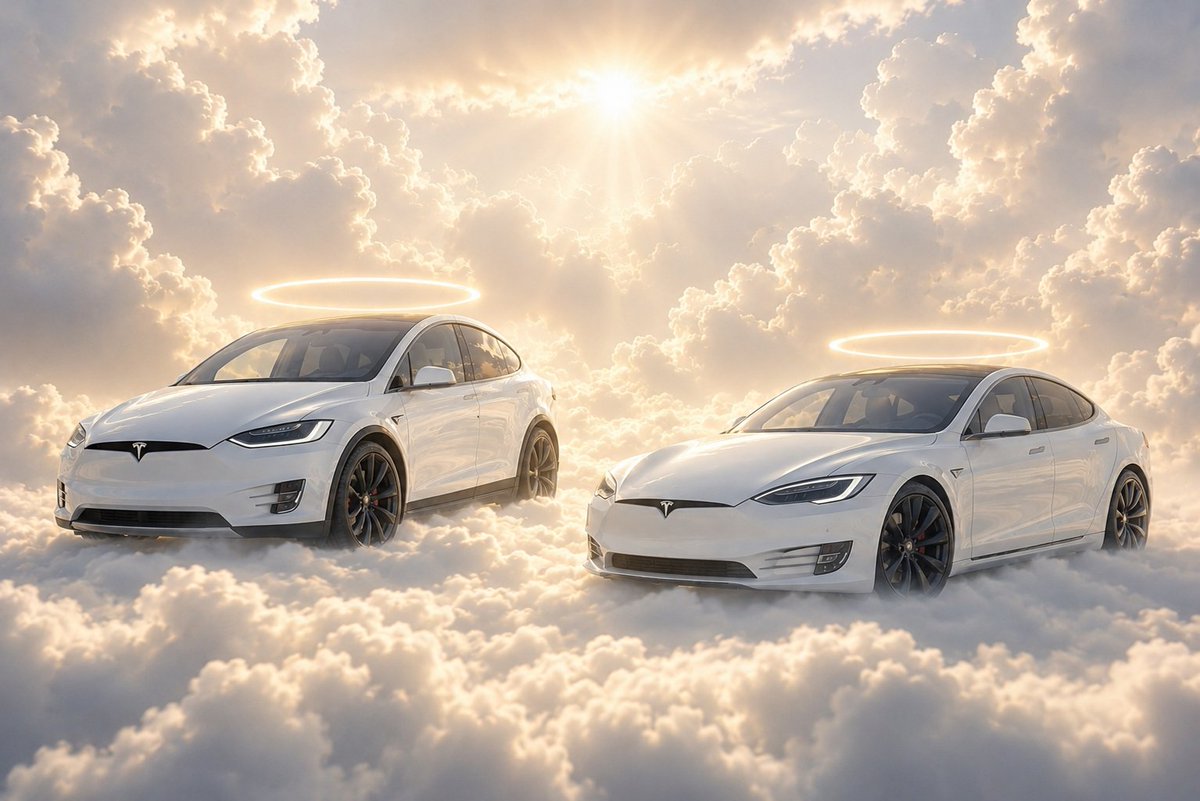
Be happy that Tesla stopped production of the Model S and X.
Those vehicles were once Tesla’s crown jewels, the halo cars that proved electric vehicles could be luxurious, fast, and desirable. Yet by freeing up that factory space for Optimus humanoid robots, Tesla is showing foresight.
In 1960, business professor Theodore Levitt wrote a warning that still rings true: most companies fail because they fall in love with their products instead of their customers' needs.
The last fifteen years are full of proof.
Blockbuster thought it was in the movie rental business. Netflix understood it was in the entertainment business.
Kodak obsessed over film and cameras while customers just wanted to capture and share moments.
Traditional automakers spent decades perfecting gas engines while Tesla redefined the whole category as clean, quiet, and fun mobility.
Tesla is doing exactly what Levitt urged: refusing to cling to yesterday, the company is choosing the future of Optimus and AI over protecting iconic legacy models that no longer represent the next leap in customer value.
The pattern is consistent: winners don’t just improve the old product, they imagine what the world actually needs and build that instead. This means having the courage to retire even your most prestigious offerings before they become anchors.
Here's the cold truth: in an era of rapid technological change, being wedded to a product is corporate malpractice. Companies that define themselves by what they make (specific car models, film rolls, or video stores) are already falling behind those that define themselves by what customers want: effortless lives, expanded possibilities, and meaning
The question Dr. Levitt asked in the Harvard Business Review in 1960 has never been more urgent:
What business are you really in?
Answer it through the customer's eyes, not an existing product catalog. Those who do will thrive. Those who don't will join Blockbuster and Kodak as cautionary tales.
The future belongs to companies that never stop asking what the customer will need next, and have the courage to reinvent themselves to deliver it. Tesla’s move with the S and X is a textbook example of that courage.
We should celebrate it.
5
5
15
464
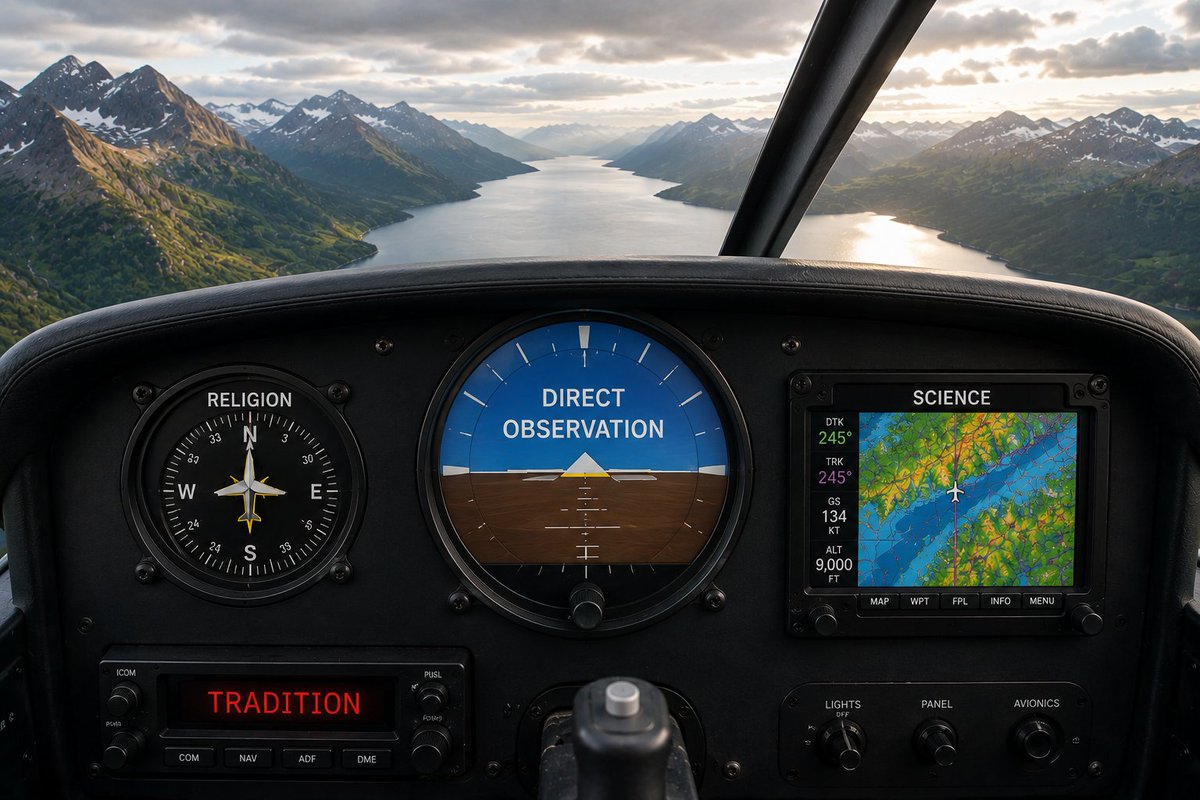
Most do not yet understand. The manufacturing capability of Tesla multiplied by the utility of Cybercab will provide a lift to everyone and everything. The effect will be as profound as the interstate highway system itself.
Less expensive at first and cheaper still over time, it is entirely opt-in. No mandates. No tax dollars. Just easier, safer, and more affordable transportation on demand. First in the United States, then across much of the world. In retrospect, it will seem to have happened almost all at once.
2
2
3
199
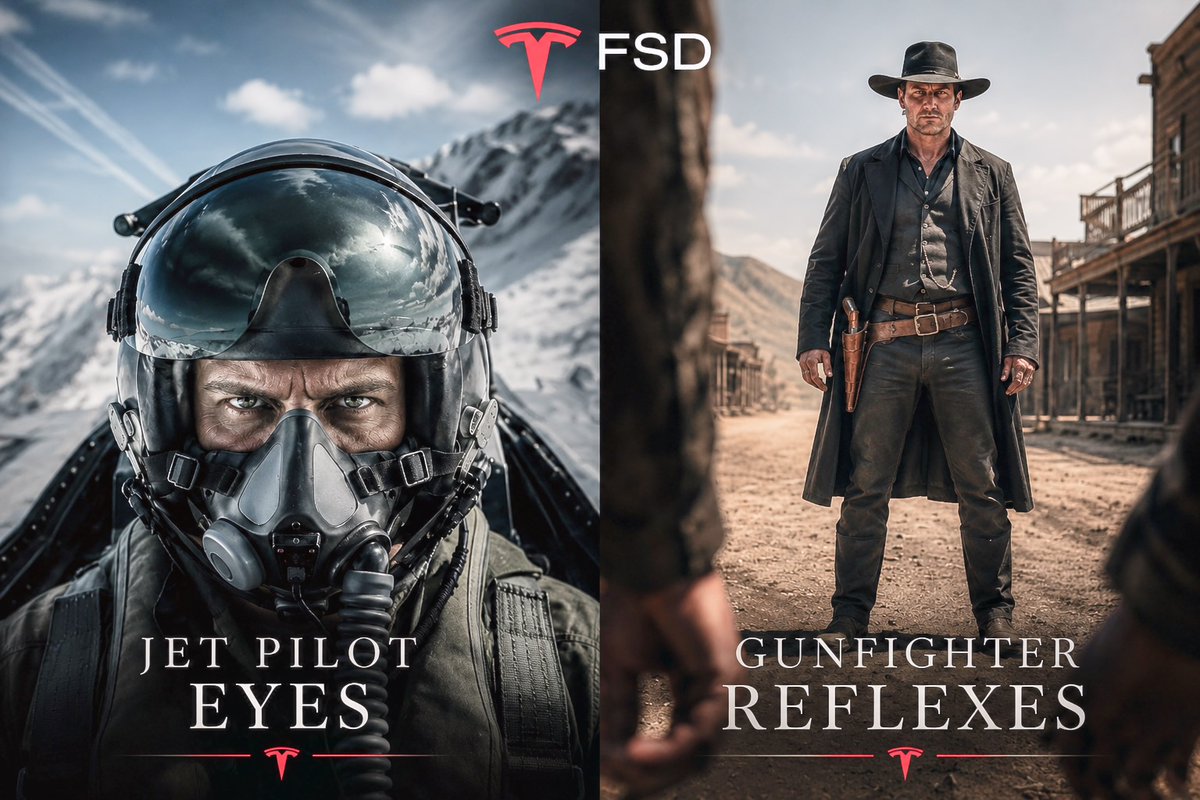
Tesla FSD: Jet Pilot Eyes, Gunfighter Reflexes
Tesla's Full Self-Driving system doesn't just drive, it perceives and reacts at a speed no human can match.
The Reflex Loop
At its core, FSD's neural network runs on a 28-millisecond cycle (36 times per second). Every 28ms, the system ingests all camera frames, updates its model of the world, and issues new steering and acceleration commands. Think of it as a continuous, tireless heartbeat.
From the moment a hazard appears on camera to the car physically beginning to respond takes no more than 200 milliseconds, one-fifth of a second. That end-to-end reaction spans several neural network cycles (typically 5–8), giving the system enough passes to confirm what it's seeing before acting. Compiler improvements will continue to reduce latency.
More Than Fast Reflexes, It Anticipates
Speed alone isn't the full story. FSD's deeper advantage is prediction. Rather than simply reacting to danger, it builds a dynamic 3D world model and forecasts what's about to happen:
Pedestrian intent: It reads body language, head orientation, and movement patterns, slowing before someone even steps off the curb.
Vehicle behavior: It spots a blinker plus lane positioning and predicts a cut-in before it happens. It can even anticipate hazards several cars ahead.
Developing situations: At intersections, in merging traffic, or around emergency vehicles, it reasons across multiple seconds of history to plan ahead, not just react.
How Humans Compare
A typical alert driver takes 0.7–1.5 seconds to perceive a hazard and begin responding, and that's under good conditions. The full cycle of see → recognize → decide → act averages around 1–2 seconds. Distraction, fatigue, or surprise can push that to 3 seconds or more.
The Bottom Line
FSD reacts 5–10x faster than a human driver, and it doesn't just react, it's already planning for what hasn't happened yet.
Jet pilot eyes & Gunfighter reflexes.
3
3
6
215
If by AI you mean a tireless tool that helps doctors diagnose disease earlier, helps students learn faster, helps the disabled communicate, accelerates scientific discovery, reduces drudgery, increases prosperity, and frees human beings to spend more time creating, loving, and living, then I am for it.
But if by AI you mean a machine that replaces human judgment with blind automation, concentrates power in the hands of a few corporations or governments, destroys livelihoods without creating new opportunities, floods society with deception, erodes privacy, manipulates opinion, and treats people as data points rather than human beings, then I am against it.
In short, if by AI you mean a tool, I am for it.
If by AI you mean a master, I am against it.
This is my stand. I will not retreat from it. I will not compromise.

1
1
5
114
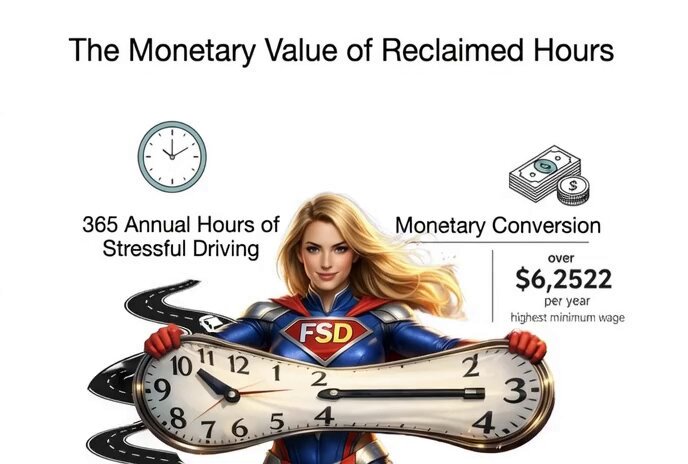
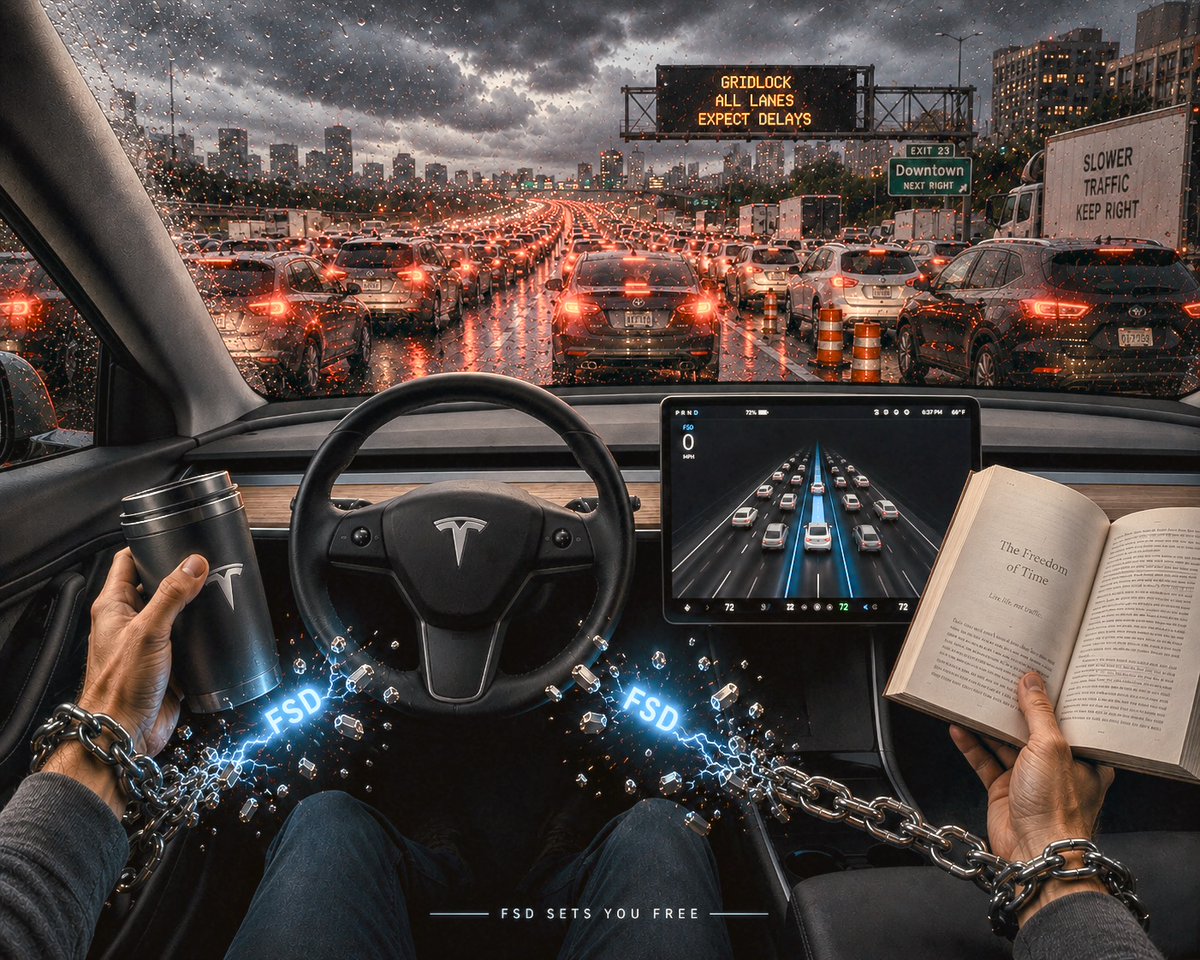
Your life does not have to be consumed by traffic.
FSD sets you free.
When you want to drive, you can. When you would rather not, you don't have to. That's freedom.
2
2
5
125
May 31
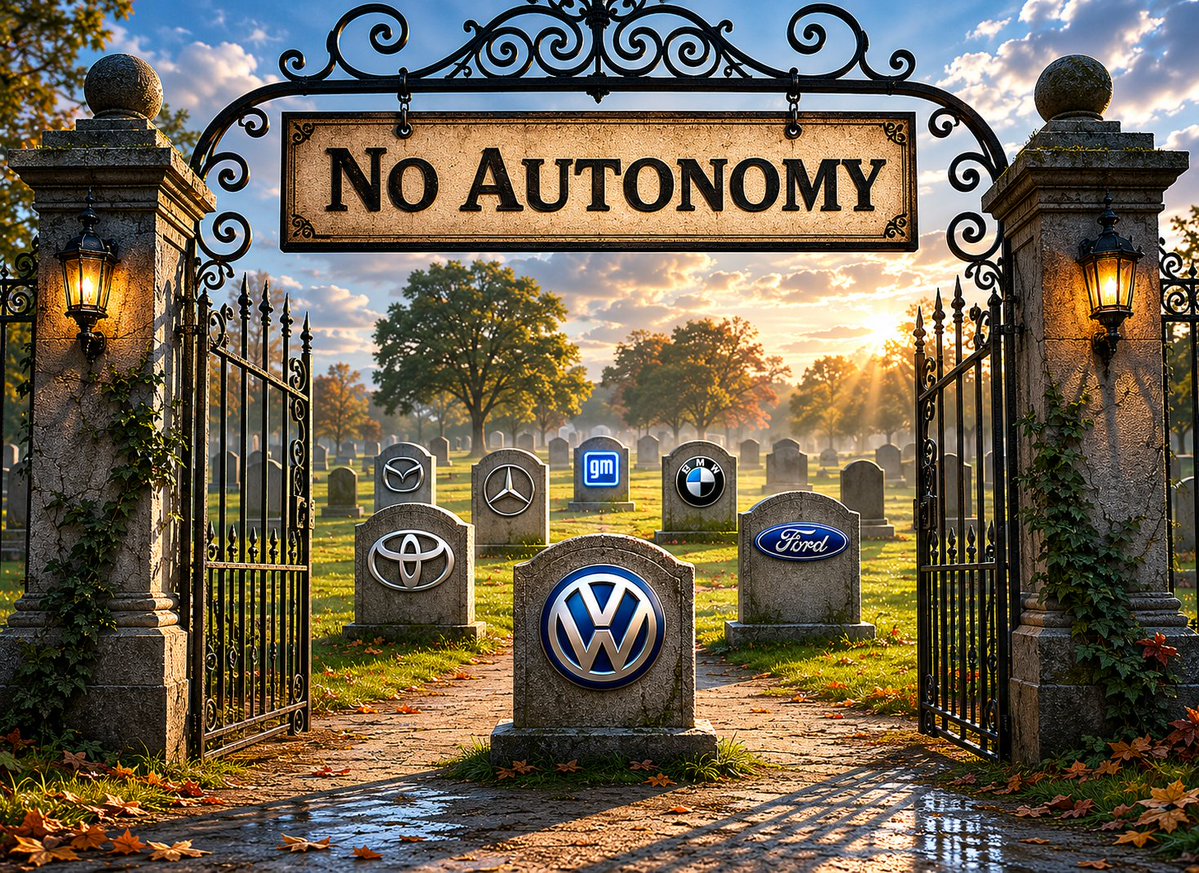
When one vehicle drives itself and another doesn't, the latter becomes the horse in a world of automobiles.
Automakers won't fail because of lackluster EVs, they'll fail because they missed autonomy.
History is full of examples, and each is a case of Levitt's Marketing Myopia; defining your business by what you make rather than the need you serve:
Hollywood studios nearly collapsed when TV arrived because they thought they were in the "movie" business, not the "entertainment" business.
Video rental stores underestimated streaming.
Feature phone makers underestimated smartphones.
Camera companies underestimated digital photography.
Railroads that thought they were in the railroad business instead of the transportation business.
This keeps happening, and faster each time.
The few auto makers that survive will be the ones who understand they aren't in the car business. They'r in the "get me there without thinking" business.
3
2
10
194
May 30
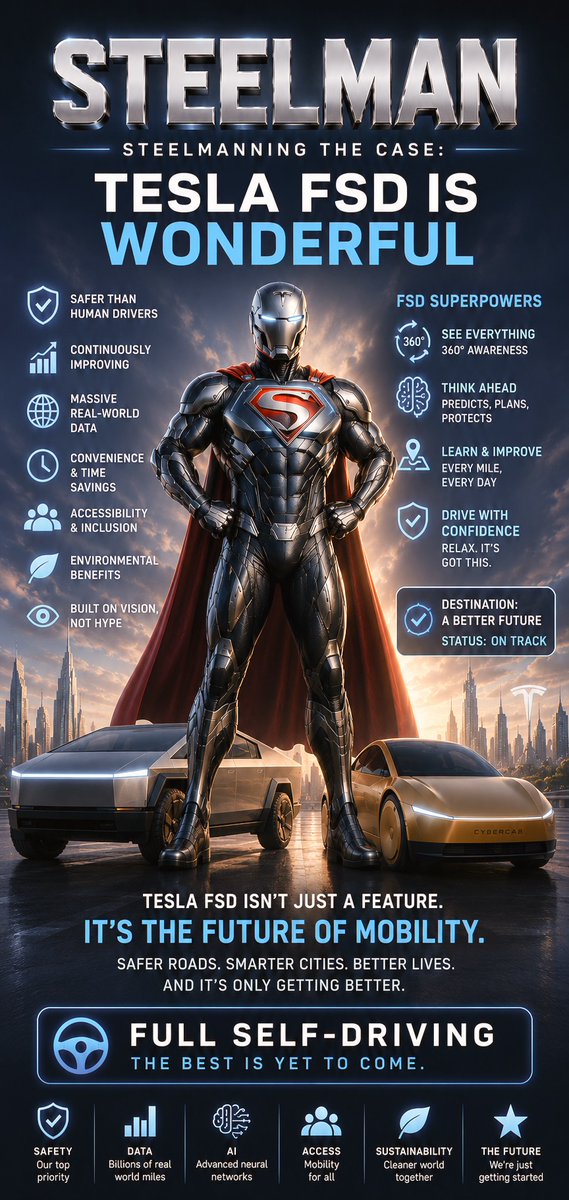
STEELMANING AUTONOMY
You are not the better driver, FSD is.
Human error causes roughly 94% of traffic crashes through distraction, fatigue, impairment, aggression, or simple misjudgment. Self-driving systems suffer none of these failings. They don't text, drink, or doze off. They react in milliseconds, track every direction simultaneously, and grow more capable with every mile driven across entire fleets. Applied at scale, this technology will prevent a significant share of the 1.3 million traffic deaths and tens of millions of injuries that occur worldwide each year.
The benefits extend well beyond safety. Autonomous vehicles will restore mobility to people who cannot drive; the elderly, the disabled, children, while easing congestion through smarter routing, and coordinated movement. Shared robotaxis will slash parking demand, and reclaim valuable urban space for better uses.
Economically, the ripple effects will be enormous: lower insurance premiums, reduced medical costs, and fewer hours lost to gridlock. Passengers will gain back time currently wasted behind the wheel. Time to rest, work, or spend with family. And unlike human drivers, autonomous systems improve continuously through software updates and collective learning and hardware costs keep falling.
The only question is how quickly we embrace a future that is already available, and how many lives we save in the process.
1
2
10
209
May 29
I used to love the throaty rumble of gasoline engines complete with trailing throttle pops. The rising crescendo as the engine got on the cams or spooled up the turbos was coupled to the kinetic thrill of acceleration. Dopamine delivered by thrust. Zoom is a primal pleasure derived from imposing one's will on space and time. More feels better.
But just like Pavlov's dog I had become unconsciously conditioned to the stimulus that preceded the actual reward.
A bell isn't food and noise isn't G-force.
It wasn't until the first time I mashed the go pedal on a Tesla that I saw the conditioning for what it was.
Now I see: quick and quiet is the pure thrill and faster hits harder.
Old associations die hard. I have seen a few legacy auto OEMs pipe combustion sounds through speakers on their half-hearted EVs. This is both comical and sad.

2
2
12
1,001
May 22
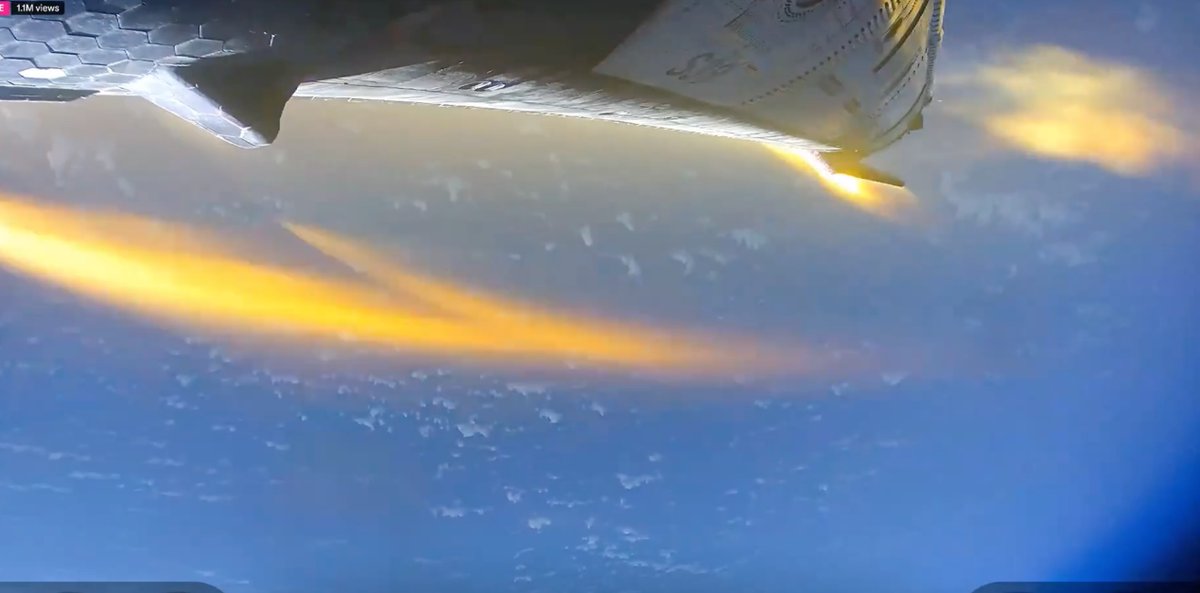
Starship V3 succeeds on its first flight.
words fail.
2
1
9
183
May 18
The United States is the global center of the full size pickup market, and Tesla builds the Cybertruck right here in the heart of it. Designed, engineered, and manufactured in America, it carries more American content than any other big pickup.
4
10
41
910