Available on rumble.com/user/LieutenantGe… 🫡
Joined March 2025
- Tweets 2,216
- Following 143
- Followers 50
- Likes 1,280
466 Photos and videos

LtG retweeted

Video emerges of 5 yr old getting manhandled and bundled into a police car as he tries runs away screaming, after father is arrested.
This is beyond disgusting. The police truly are out of control.👇👇🤬
110
380
931
21,336
LtG retweeted

He has never been so happy cleaning windows until this moment.🥰
3
44
607
25,655

Why #Muslims don't live in "Their Land"
#Islam is a #DeathCult
youtu.be/9eoWtpHOS38?si=6u1b… @YouTube
1
1
7
Britons Won't Be GASLIT with LIES Any Longer Starmer Wants to Scan YOUR Phone
youtu.be/dQXHr31F_8I?si=4tiJ…
4
LtG retweeted

Jun 10
The Border Stays Open. The State Will Close the Conversation.
Before the fires in Belfast had been extinguished, the government had identified the threat. Not the border. Not the system that granted Hadi Alodid legal residency in seven months without a verifiable European asylum history. Not the Albanian gangs advertising guaranteed passage to England on TikTok this morning. The threat, as defined by this government, was the conversation.
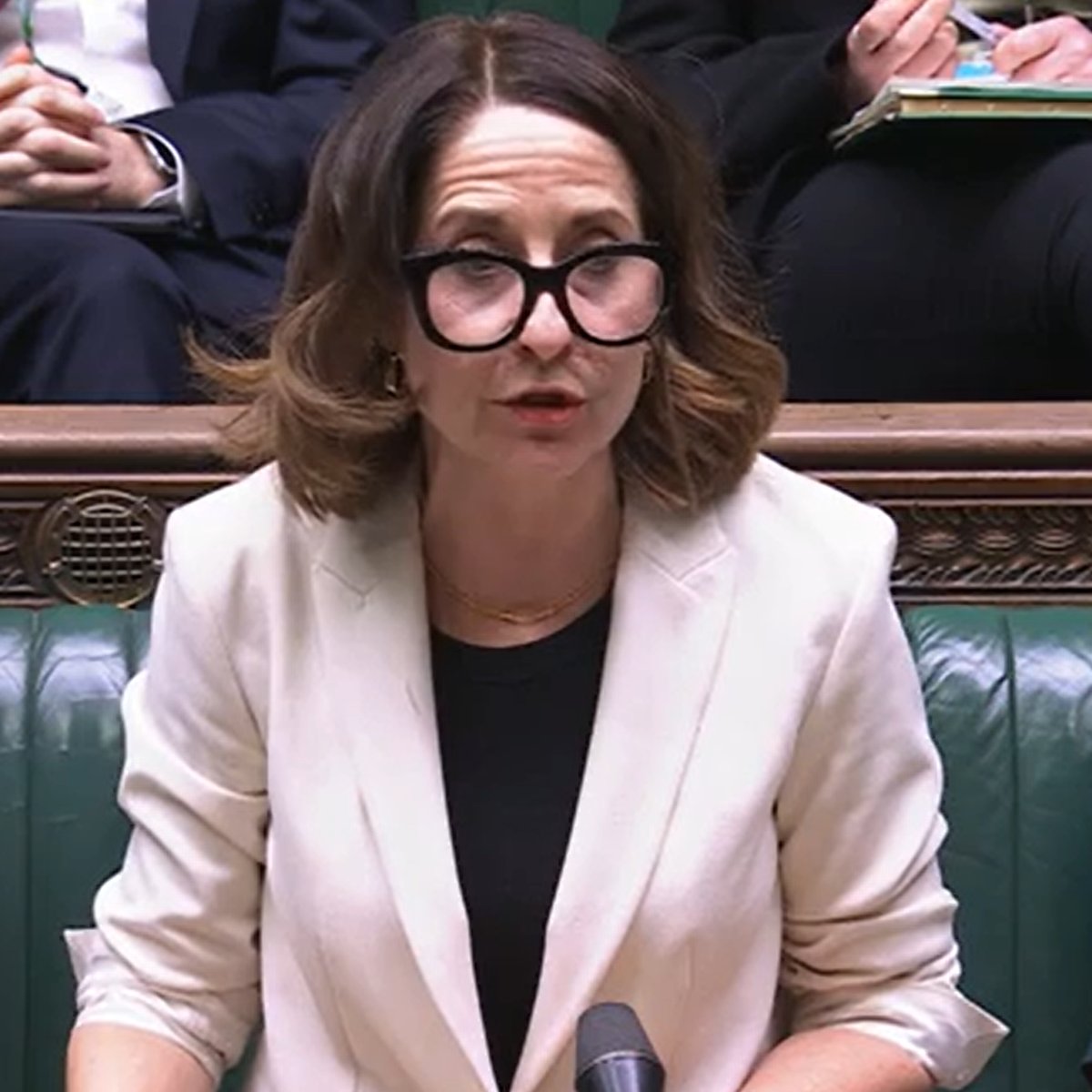
Liz Kendall announced on Wednesday that social media firms would face new legal curbs during times of crisis. Platforms would be required to remove incendiary content more quickly when tensions were heightened. The definition of crisis and the definition of incendiary would be set by ministers. On the same day, Jonathan Hall, the government's own terror watchdog, said he had raised the national security dimension of mass migration with the government and received no reply. One question got legislation within forty-eight hours. The other got silence. Stephen Ogilvie lost an eye on a Belfast street. The government's legislative response targets the people describing what happened.
This is not new. After the summer 2024 riots the same reflex operated. People were jailed for social media posts within days of the disorder. The sentences handed to those who wrote the posts sat in the same range as those who burned the buildings. The machinery of the state was directed at speech about disorder rather than the conditions producing it. Belfast is the same pattern at higher intensity. The border stays open. Discussion of what happens at the border will be suppressed more quickly next time.
The British asylum system did not malfunction in the case of Hadi Alodid. It performed. Sudan to Paris. Paris to Dublin. Dublin to Belfast by bus. Asylum claimed in February 2023. Refugee status granted by September. Legal right to remain until 2028. There is no French record of him as an asylum seeker. The Irish government will not say how he entered Ireland. None of that prevented the system from processing him correctly by its own rules. The rules are the problem. The government has no intention of changing them.
Albanian gangs are advertising the same route on TikTok today. Filmed inside Dublin airport. Guaranteed passage. Seven thousand pounds payable on arrival. Operation Gull has arrested more than 900 people using it in a year and the advertisements continue. Enforcement is cataloguing this. It is not closing it.
Jonathan Hall, the government's own independent reviewer of terror legislation, said immigration must be treated as a national security issue. He said he had raised whether migrants from certain countries presented elevated risks of serious violence. The government responded with silence. The terror watchdog, a King's Counsel appointed to scrutinise national security law, is recording not a political failure but an institutional one. The question was asked through proper channels. Nobody answered.
The pattern is coherent even if the government will not name it. The terror watchdog raises the national security dimension of mass migration and hears nothing. The gangs film themselves inside Dublin airport and advertise openly. The border operates as it always has. And ministers announce that posts about the consequences will be removed more quickly next time. That is not an oversight. That is a set of priorities.
A government that cannot close a border it knows is being exploited, cannot answer its own terror watchdog, and cannot explain how a man with no verifiable asylum history acquired British residency in seven months has chosen a fourth option. Control the account. Leave the causes intact.
"Liz Kendall announced on Wednesday that social media firms would face new legal curbs during times of crisis."
188
1,256
2,477
43,981

#exploration : #Liberalism - An Article 002 #politics #liberalism #philosophy #challenge #history
Ep 16 "EXPLORATION: Liberalism - what do we REALLY know?" of the "EXPLORATION" #Livestream series #broadcast Thurs 14/05/'26 @ 8.30p.m. until 10p.m. GMT!
youtu.be/8ciXQ8yYinw?si=Ya2U…
8
LtG retweeted

Jun 10
When we deport millions.. let’s get rid of these lunatics as well.. This is Stand up To Racism.. if they love people who rape and attempt to behead our people.. Deport them too !!! Get them all OUT! @RestoreBritain
1,175
2,016
11,886
471,706
LtG retweeted

Jun 11
Massive crowds ready to greet the king in Grimsby this morning
157
42
285
26,263
#exploration : #Liberalism - An Article 002 #politics #liberalism #philosophy #challenge #history
Ep 16 "EXPLORATION: Liberalism - what do we REALLY know?" of the "EXPLORATION" #Livestream series #broadcast Thurs 14/05/'26 @ 8.30p.m. until 10p.m. GMT!
rumble.com/v7b25gq-explorati…
8
LtG retweeted

Jun 10
Belfast local describes the kind nature of 40-year-old Stephen Ogilvie who was violently attacked by a Sudanese 'refugee' in Belfast.
Stephen, a vulnerable adult, was actually providing help to the migrant and it appears was attacked as he was seen as an easy target. Pure evil.
15
75
274
10,003
LtG retweeted

Jun 10
🇬🇧 WATCH: Masked Antifa protesters were filmed barking at people who were trying to debate them.
No argument, no answers, just noise from the radical left.
31
14
62
2,605
#exploration : #Liberalism - #Liberal #Women 003 #politics #liberalism #philosophy #challenge #psychology
Ep 16 "EXPLORATION: Liberalism - what do we REALLY know?" of the "EXPLORATION" #Livestream series #broadcast Thurs 14/05/'26 @ 8.30pm until 10pm GMT
youtu.be/UAYdZXgpp5w?si=Xk3F…
1
1
44
#exploration : #Liberalism - #Liberal #Women 003 #politics #liberalism #philosophy #challenge #psychology
Ep 16 "EXPLORATION: Liberalism - what do we REALLY know?" of the "EXPLORATION" #Livestream series #broadcast Thurs 14/05/'26 @ 8.30pm until 10pm GMT
rumble.com/v7b0e74-explorati…
17
LtG retweeted

Jun 8
🇬🇧 | ¡DEMENTE TOTAL!
El abogado Sij, Bobby Singh, dijo que apoya al asesino de Henry Nowak, Vickrum Digwa, porque también es Sij bautizado, dice que Gran Bretaña es un "país bastardo", llamó a otros Sijs a ATENTAR contra los británicos patriotas, y que deben ACABAR con Tommy Robinson, principal figura de derecha en UK.
¿Los británicos dejarán que este sujeto hable de esa manera contra su pais?.
2,357
8,104
15,611
563,933
Jun 7

Saliha Raiss, Muslim politician from Molenbeek, wants a Europe without Europeans: "Anyone who doesn't accept veiled women, anyone who doesn't accept Islam in Belgium, can leave!" They want to kick us out of our home! This is Islam.
10
LtG retweeted

UK Police:- “Potentially someone could perceive that as a Hate Crime”
“He’s partially deaf - he asked them to speak clearly”
British Police take the accusation of this elderly Man asking someone to “speak English” more seriously than they do a Man laying in his own blood having been stabbed multiple times.
1,148
5,555
21,362
717,879
LtG retweeted

Jun 8
The LGBTQ movement is essentially a giant cult full of absolute weirdos.
5,029
6,945
59,774
1,983,845