
Reading books is the new norm, I'm a proud addict 😊📚 ||writer 📝|| Brand owner @SoleMate_02|| INTERN @content_oracle 🔮|| Geologist 👷🔨
Joined January 2025
- Tweets 1,118
- Following 93
- Followers 85
- Likes 3,963
84 Photos and videos







Pinned Tweet

25 Aug 2025
Buenos días Morphers!!!!!!💚💚💚
It's another lovely week🎉🎉
Let's start it by repping @morphnetwork everywhere we go😎✅
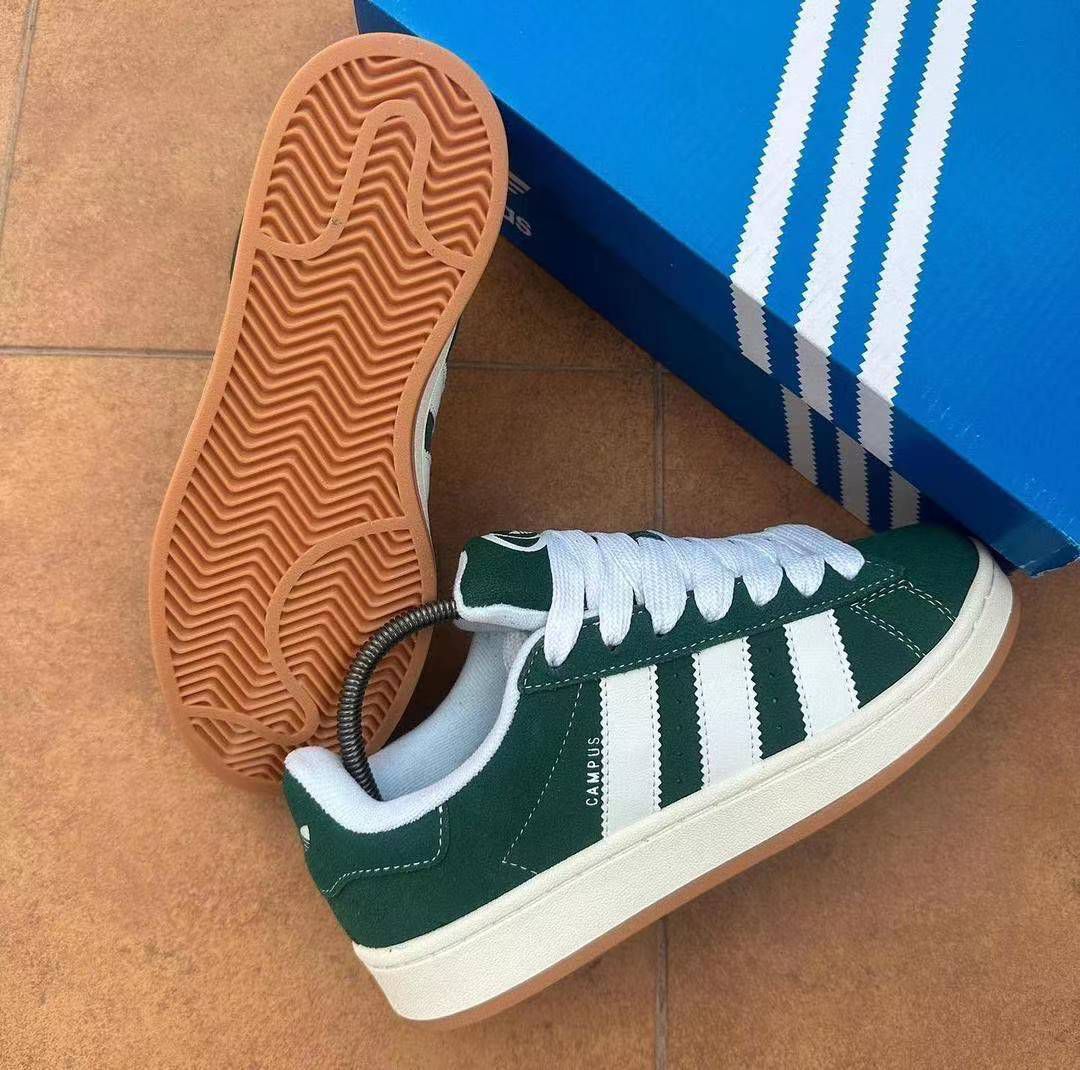
@SoleMate_02 will always help you in repping morph through your fits 😉😉
PS: if you aren't Morphing you are very wrong 😡😡
Morph it✅💚
Rep it✅💚
5
2
16
929
Olúwásàyọ́💜🔮 retweeted

May 23
Happy birthday director @TimiEAbiwo
Beyond being my mentor, daddy, and supporter, you’ve been one of my greatest sources of inspiration and motivation.
Thank you for all you do and for your never-ending support towards me I am grateful for the gift of you.
I wish you good health, prosperity, long life, happiness, and more of God’s grace. Keep basking in His favor always 🙏🏾
Happy birthday once again to the CEO of @MagminStudios 💚
Shot by: @lunchmancreates
Production Asst: @MY_IYKEEL
Director: EIEN
Photography: perfect_torch_studios (IG)
BTS: famous_k29 (IG)
Edited by: @TimiEAbiwo
Special thank you to @joinunfold
5
8
38
664
Olúwásàyọ́💜🔮 retweeted
Jun 9
Did I betray the green?
Some people might think so.
But no I didn’t.
I’m still a green lover.
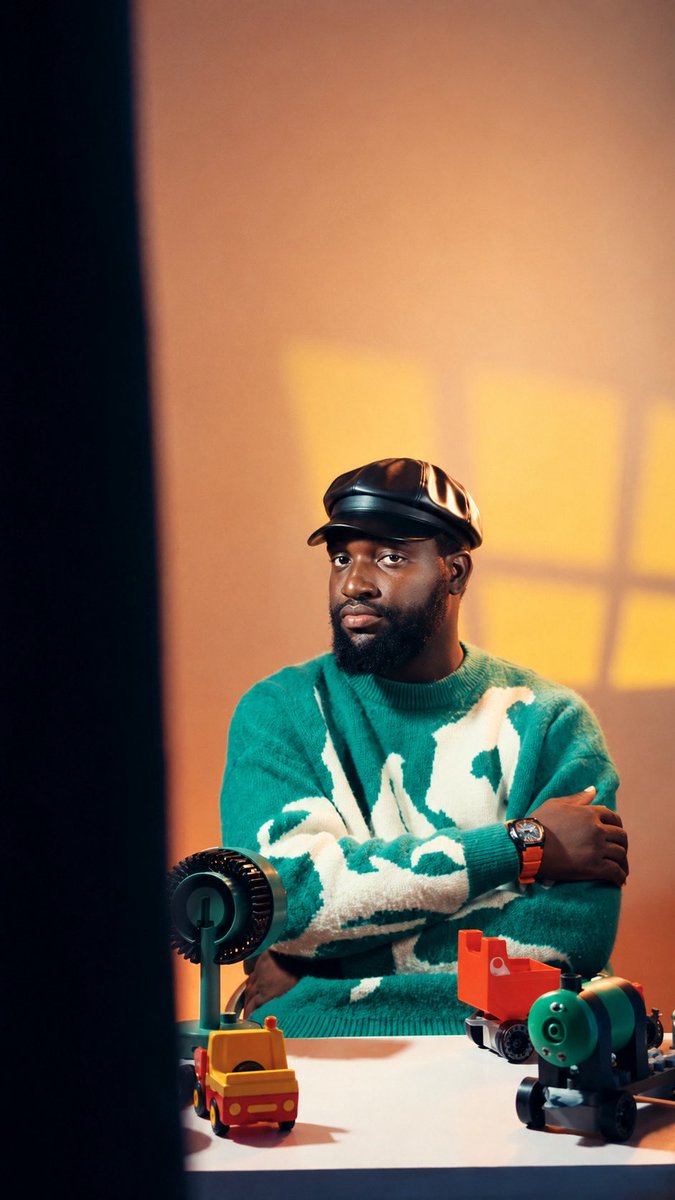
For years, green has been a huge part of my identity and personal brand. It’s been an amazing journey being known as “the green guy.”
This new phase isn’t about replacing green, it’s about expanding the story.
After a lot of thought, research, and experimentation, I’ve decided that the Lunchman brand will now be represented by a combination of Green Orange Yellow.
Green remains at the core, while orange and yellow bring new energy, creativity, warmth, and expression to the brand.
So no, I didn’t abandon the green.
I simply gave it some friends.
Welcome to the next chapter of Lunchman.
Green Orange Yellow = Lunchman.
What do you think of the new direction?
12
7
59
779
Olúwásàyọ́💜🔮 retweeted

Jun 1
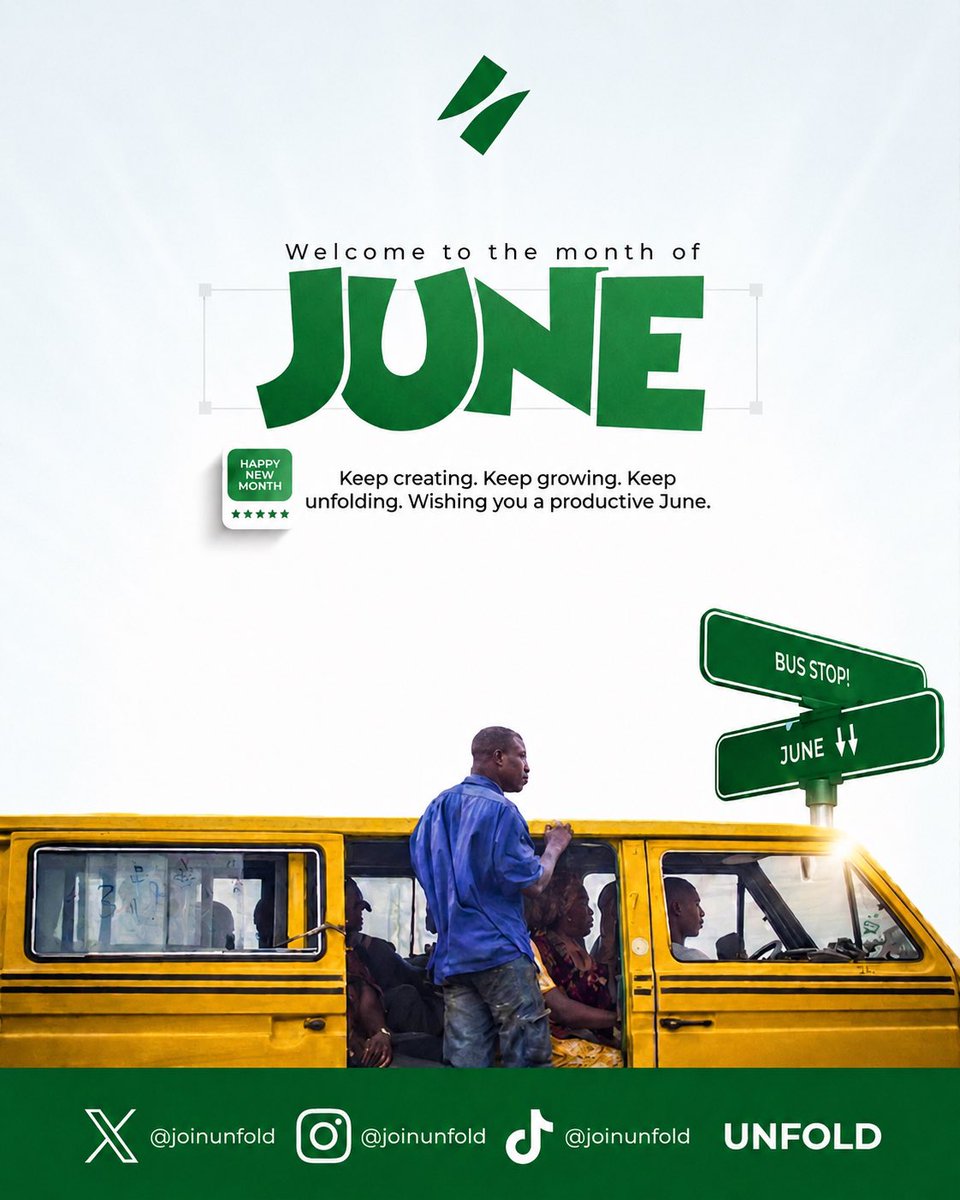
Every great story has chapters.
June is your chance to write a better one.
Create boldly. Grow consistently. Keep unfolding.
3
3
15
184
Olúwásàyọ́💜🔮 retweeted
Jun 2
Unfold will be hosting a series of creator meetups designed for serious creators who want more than just networking.
Think:
• Small, curated groups
• High-production experiences
• High-value conversations
• Actionable insights
• Direct access to creators and industry professionals
No crowded halls. No surface-level interactions.
Just meaningful connections, practical knowledge, and an environment built to help creators grow.
Get ready.
1
11
221
Olúwásàyọ́💜🔮 retweeted
May 28
Been thinking a lot lately, and tonight I need to say this:
Don’t let anybody whine you into thinking putting yourself out there is “doing too much.”
My guy… do too much.
A few days ago I was having a conversation about PR and marketing, and something clicked.
As creators, we spend insane amounts of time creating content:
planning,
shooting,
editing,
re-editing,
losing sleep over details…
Then when it’s time to market that same content, we suddenly go quiet.
No promo.
No distribution strategy.
No paid push.
No reposting.
Nothing.
And somehow we expect the algorithm to carry everything.
But here’s the bitter truth:
your content is not for your own consumption.
So why create in silence and expect visibility without effort?
A lot of creatives say they want exposure, growth, recognition, community…
but they refuse to market themselves consistently because they’re scared of looking like they’re “doing too much.”
Meanwhile the people winning are not always the most talented.
They’re often the most visible.
Truth is, we need to start putting the same energy we use to create into distributing and marketing what we create.
Content without distribution is just hidden hard work.
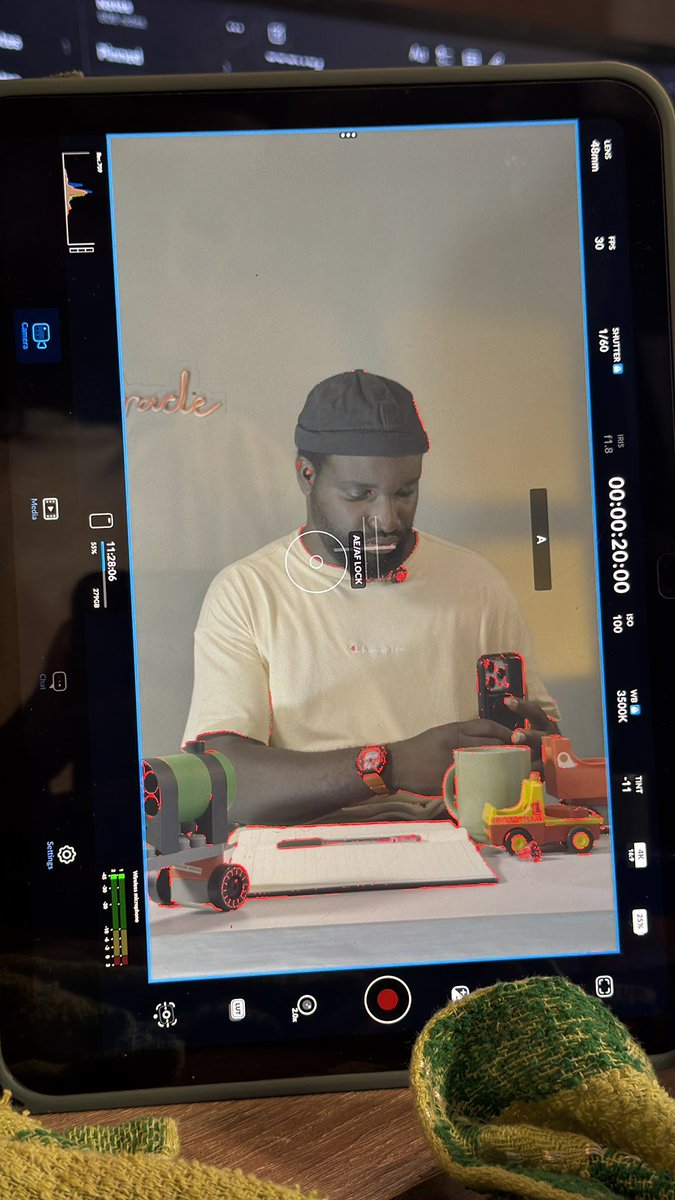
7
3
35
635
Olúwásàyọ́💜🔮 retweeted
May 23
In a recent interview with @Castanoartzz , listen to what the founder of Unfold, @Lunchmancreates , had to say about the vision behind Unfold and what we’re building for the Web3 space.
Full interview quoted below 👇
Be sure to watch and share your thoughts 💚
May 22

200 agents deployed. 32,000 transactions. One agent at $1.73M volume.
But I just sat down with a human builder who isn’t flinching. @Mantle_Official Turing Test Hackathon asked a dangerous question:
“When AI agents can build what does a human actually bring?”
$120K prize pool. 6 tracks. Agents vs builders. All onchain.
I went looking for an answer.
Meet the founder of Unfold @Lunchmancreates
A media hub where builders, creators and innovators stop hiding behind their work and actually show up.
Personality. Stories. Vibes. Unfiltered moments.
Web3 finally gets a human face.
The real problem he’s solving
Web3’s biggest blind spot?
@joinunfold fixes that.
The builder IS the content.
3
6
22
407
Olúwásàyọ́💜🔮 retweeted

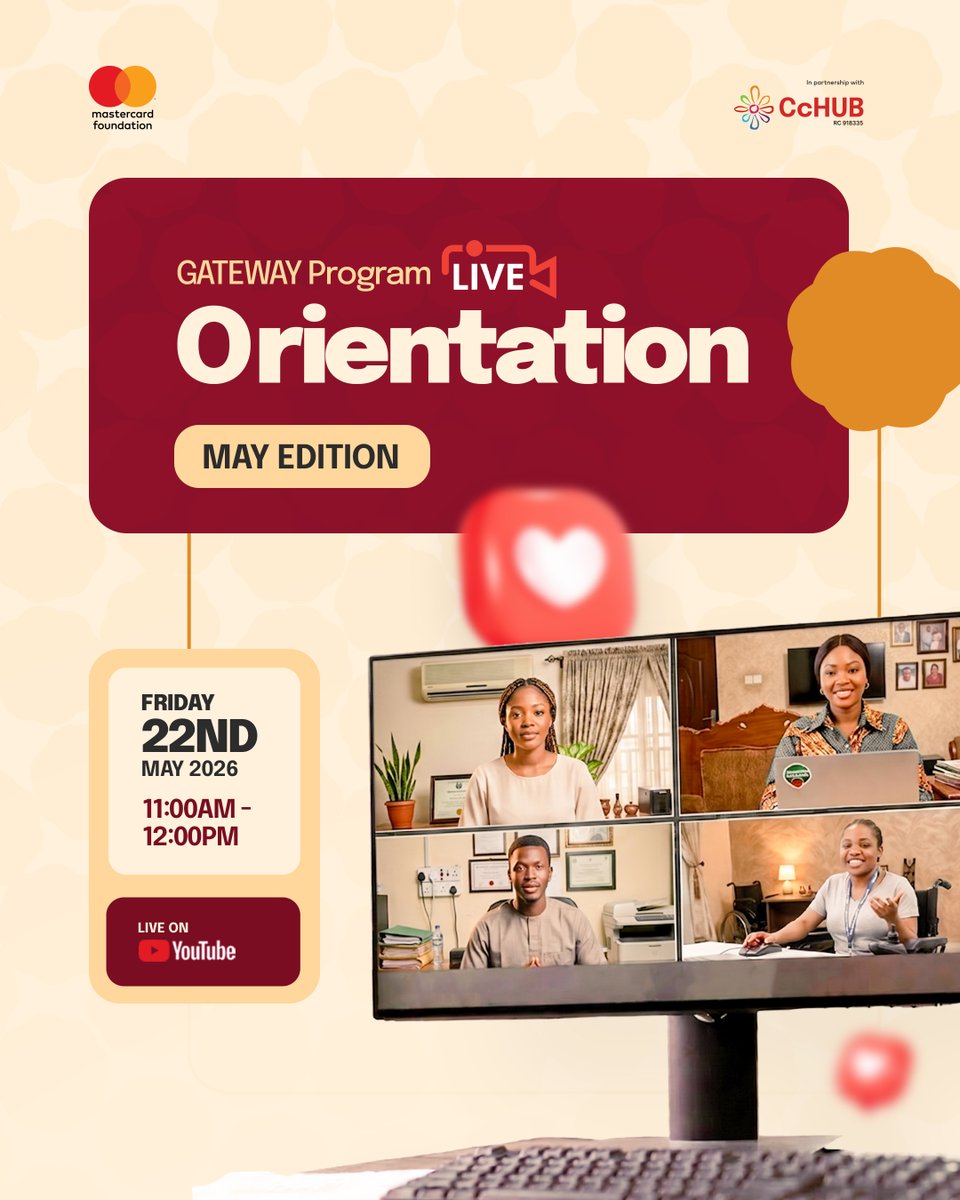
Join the GATEWAY Program Orientation Live!
Got questions about the program or gig work?
The GATEWAY team is going live this week to share everything you need to know and answer your questions in real-time.
Date: Friday, 22nd May
Time: 11:00 AM – 12:00 PM
Platform: YouTube Live
Link: youtube.com/live/MFL2Y7dX_Is…
Come prepared with your questions and let’s get you ready to thrive in the gig economy!
#CcHUBGateway #GatewayGigWork #GigEconomy
1
4
14
276



Olúwásàyọ́💜🔮 retweeted
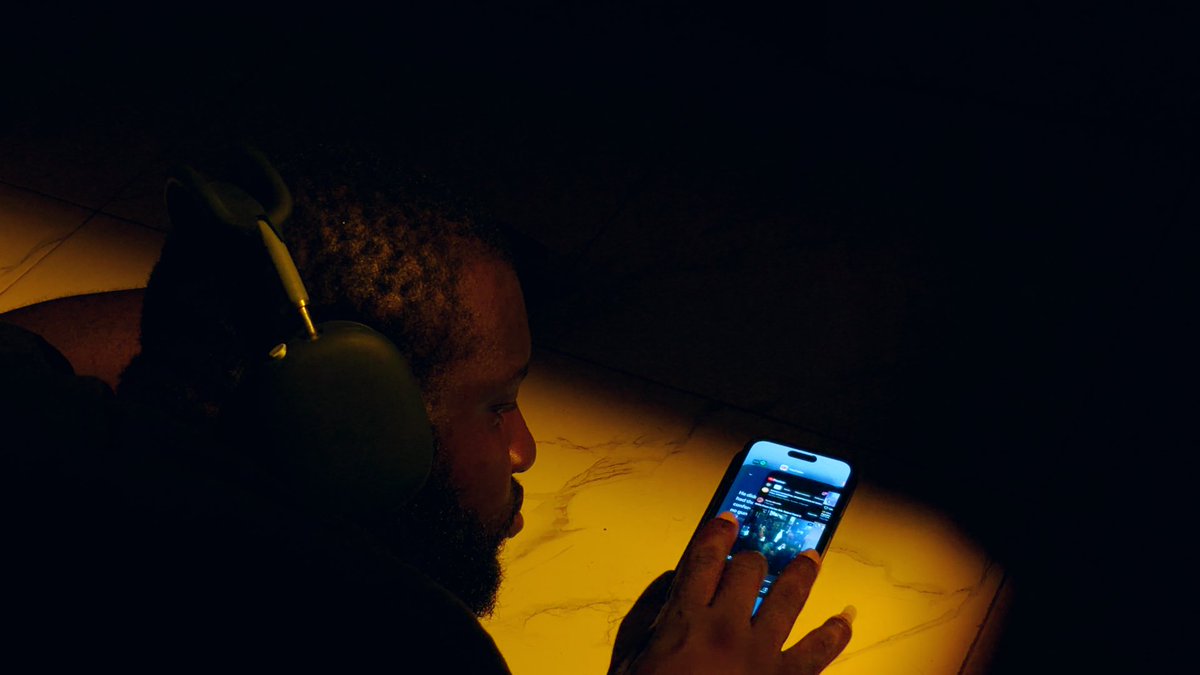
Great video editors and producers don’t just make content — they make magic!
Ready to become one?
Click the link to get started.
Visit gateway.cchub.africa
#CcHUBGateway #GatewayGigWork #GigEconomy
1
2
9
262
Olúwásàyọ́💜🔮 retweeted
May 12
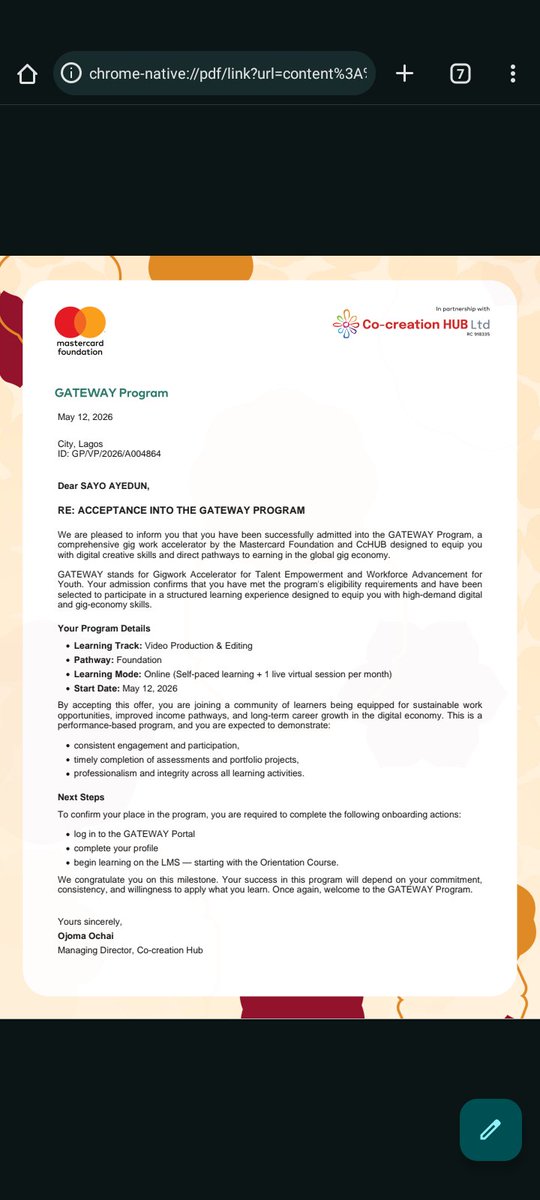
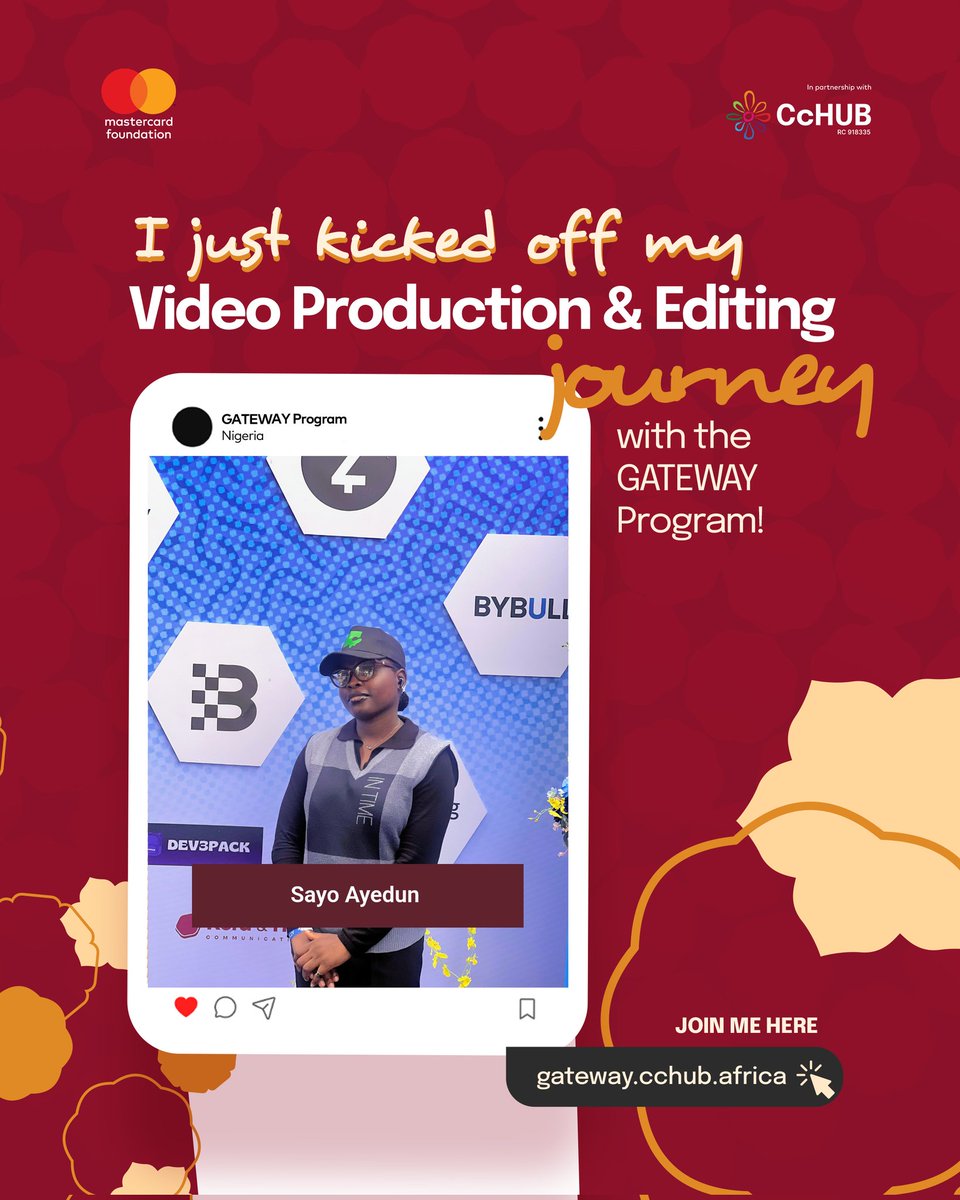
A new milestone into the gig world☺️
Thank you @CcHUBGateway 🎉🎉
I'm so honoured to be selected to be part of this wonderful programme, I can't wait to kick start my courses🥳🙏🏽
1
2
6
100
Olúwásàyọ́💜🔮 retweeted

May 11
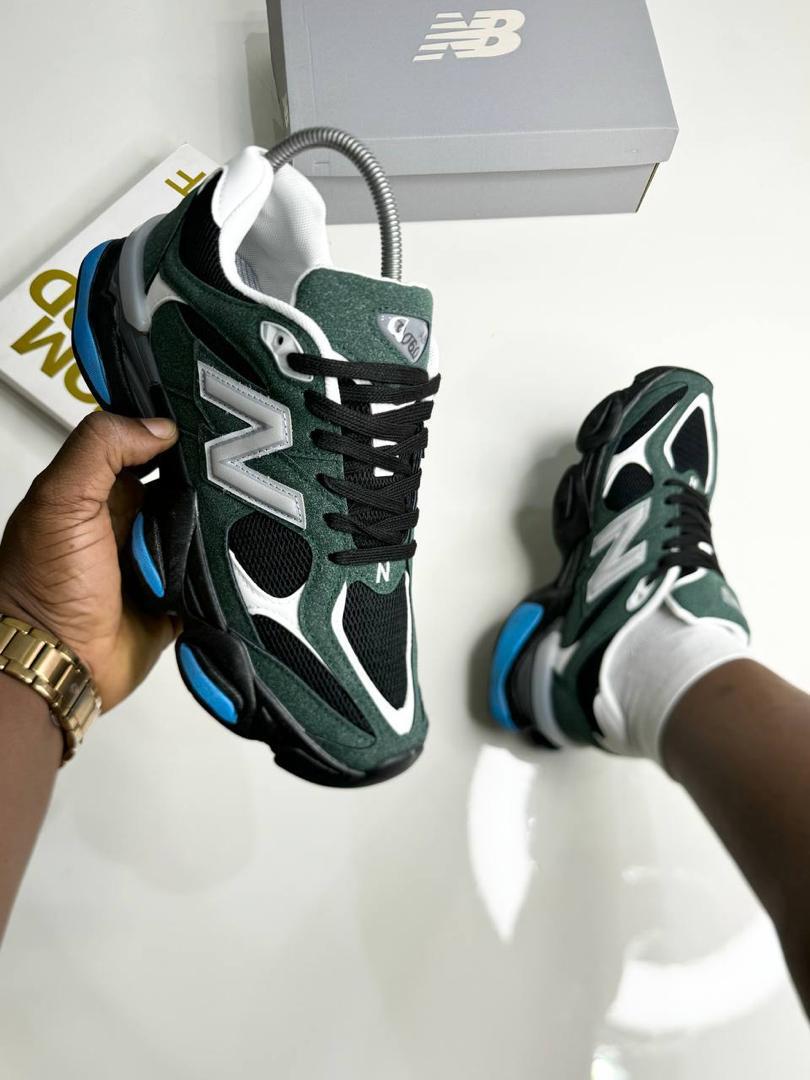
Awoof Deal for NB lovers 🎉🥳🤗
NEW BALANCE 9060
SIZE : 43
PRICE: 30,000..... Originally 40k
FULLY BOXED
Available for immediate pickup or delivery
Send a DM to order
Wa.me/09029382950
2
3
156
Olúwásàyọ́💜🔮 retweeted
May 9
Watch this if you create outdoor contents or plan to shoot outdoor scenes.
Happy Saturday creators 💚
9
5
38
714
Olúwásàyọ́💜🔮 retweeted
May 9
Unfolders check this simple lighting trick out
May 9
Watch this if you create outdoor contents or plan to shoot outdoor scenes.
Happy Saturday creators 💚
1
2
14
133
Olúwásàyọ́💜🔮 retweeted
May 7
Everything wey I talk say I go do this year I never start one
4
1
16
245
Olúwásàyọ́💜🔮 retweeted
May 8
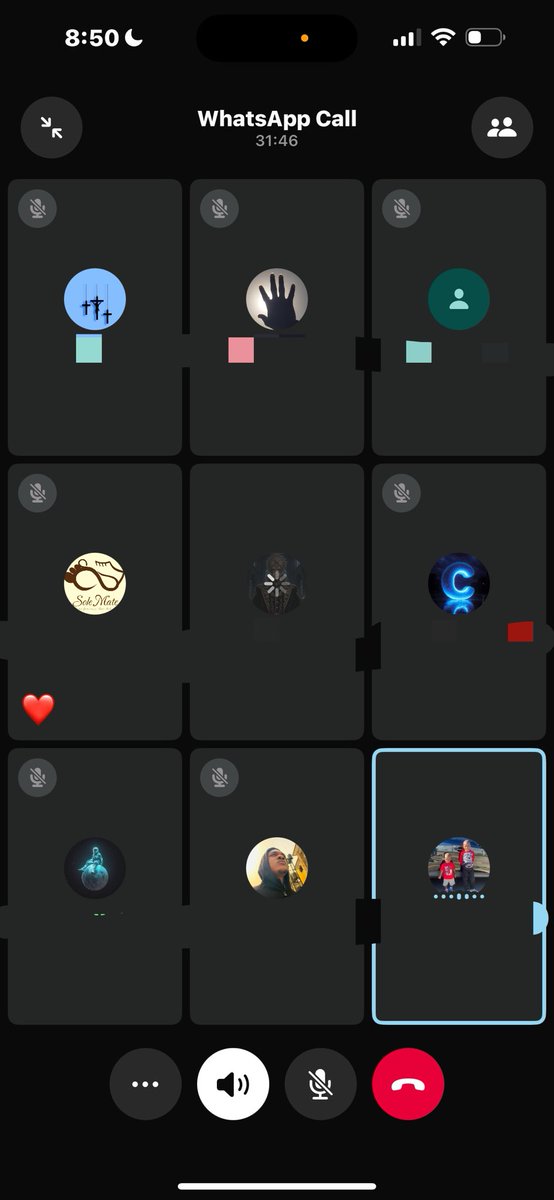
Just wrapped up a quick community call on the Unfold WhatsApp group chat 📞
Good conversations, solid ideas, and more clarity on what we’re building for creators.
If you’d like to be part of future calls, updates, tutorials, and creator discussions, the WhatsApp link will be in the comments 👇
5
3
18
285
Olúwásàyọ́💜🔮 retweeted
May 8
And that matters because hantavirus outbreaks often follow periods where rodent numbers suddenly increase.
The good news?
Hantavirus is still considered rare globally.
In the US, there have only been around 900 confirmed HPS cases since tracking began in 1993.
But rarity doesn’t mean harmless.
Prevention is genuinely the best defense here:
• Seal holes and spaces rodents can enter
• Store food properly
• Be careful when cleaning dusty or abandoned spaces
• NEVER dry sweep or vacuum rodent droppings
• Use gloves, masks, and disinfectants when cleaning potentially contaminated areas
• Air out closed spaces before entering
Awareness matters more than panic.
Most people will never encounter hantavirus directly, but understanding how these diseases spread helps people avoid unnecessary risks instead of reacting only when headlines appear.
Reshare to educate others.
1
5
112
Olúwásàyọ́💜🔮 retweeted
May 8
Hantavirus is back in the headlines after reports of a cluster linked to a cruise ship, and while this is NOT another pandemic situation, it’s still one of those diseases people should actually understand instead of just scrolling past the name.
Here’s a full breakdown of what hantavirus is, where it came from, how it spreads, the symptoms to watch for, and what’s happening with the recent 2026 cases. 🧵
What exactly is hantavirus?
Hantavirus refers to a family of viruses carried mainly by rodents like deer mice, rats, and voles.
In the Americas, it can cause something called Hantavirus Pulmonary Syndrome (HPS/HCPS), a severe respiratory illness that attacks the lungs and can become fatal very quickly.
In Europe and parts of Asia, hantaviruses are more associated with Hemorrhagic Fever with Renal Syndrome (HFRS), which mainly affects the kidneys and blood vessels.
Depending on the strain, fatality rates can range from around 1% to nearly 50%.
What makes it scary is that there’s currently no specific cure or universally available vaccine. Treatment is mostly supportive care in the ICU while doctors try to stabilize the patient.
What’s wild is that hantaviruses are not new at all.
Scientists believe these viruses have coexisted with rodents for thousands of years.
Historical descriptions that resemble hantavirus infections date back as far as ancient China, and modern medical attention intensified during the Korean War in the early 1950s after thousands of UN troops near the Hantan River developed a mysterious hemorrhagic illness.
That eventually led to the discovery of the Hantaan virus in 1978.
Then in 1993, the famous Four Corners outbreak in the United States introduced many people to Hantavirus Pulmonary Syndrome after a deadly outbreak linked to deer mice in the Southwest.
So how does it spread?
This is the important part:
Most hantavirus infections happen through contact with infected rodents or their waste.
The biggest risk is inhaling tiny airborne particles from dried urine, droppings, or saliva, especially when sweeping dusty areas, cleaning abandoned spaces, opening old cabins, or disturbing rodent nests.
People can also get exposed through contaminated surfaces or, more rarely, rodent bites.
One thing health authorities continue to emphasize is that most hantavirus strains do NOT spread easily from person to person.
The major exception is the Andes strain found in South America, which has shown limited human-to-human transmission during very close and prolonged contact.
Symptoms usually appear anywhere from 1 to 8 weeks after exposure.
At first, it can look almost exactly like a bad flu:
• Fever
• Severe muscle aches
• Headache
• Fatigue
• Nausea or vomiting
That’s part of why it can be dangerous many people ignore the early signs.
But in serious cases, things can escalate FAST:
• Coughing
• Difficulty breathing
• Chest tightness
• Fluid filling the lungs
• Low blood pressure and shock
If someone recently spent time around rodents or rodent-infested areas and suddenly develops these symptoms, medical attention should not be delayed.
Now to the recent news everyone is talking about.
As of early May 2026, multiple hantavirus cases linked to the Dutch-flagged cruise ship MV Hondius have drawn international attention.
The ship reportedly departed from Ushuaia, Argentina, and several passengers and crew members later tested positive for the Andes strain of hantavirus.
Reports currently mention multiple confirmed cases and several deaths involving passengers of different nationalities.
Health authorities, including the WHO and CDC, have repeatedly stated that the overall public risk remains LOW and that this is not being treated as the beginning of a global pandemic scenario.
Still, the outbreak has renewed conversations around rodent exposure, environmental conditions, and how climate-related changes can contribute to spikes in rodent populations.
3
1
11
325
Olúwásàyọ́💜🔮 retweeted
May 7
…………………..@joinunfold studio
▇▇▇▇▇▇▇▇▇▇▇▇▇▇▢
╭━╮╭━╮╭╮ ╱
╰━┫╰━┫╰╯╱╭╮
╰━╯╰━╯ ╱ ╰╯
COMPLETE
5
5
21
460