Joined December 2024
- Tweets 1,999
- Following 18
- Followers 106
- Likes 2,415
330 Photos and videos

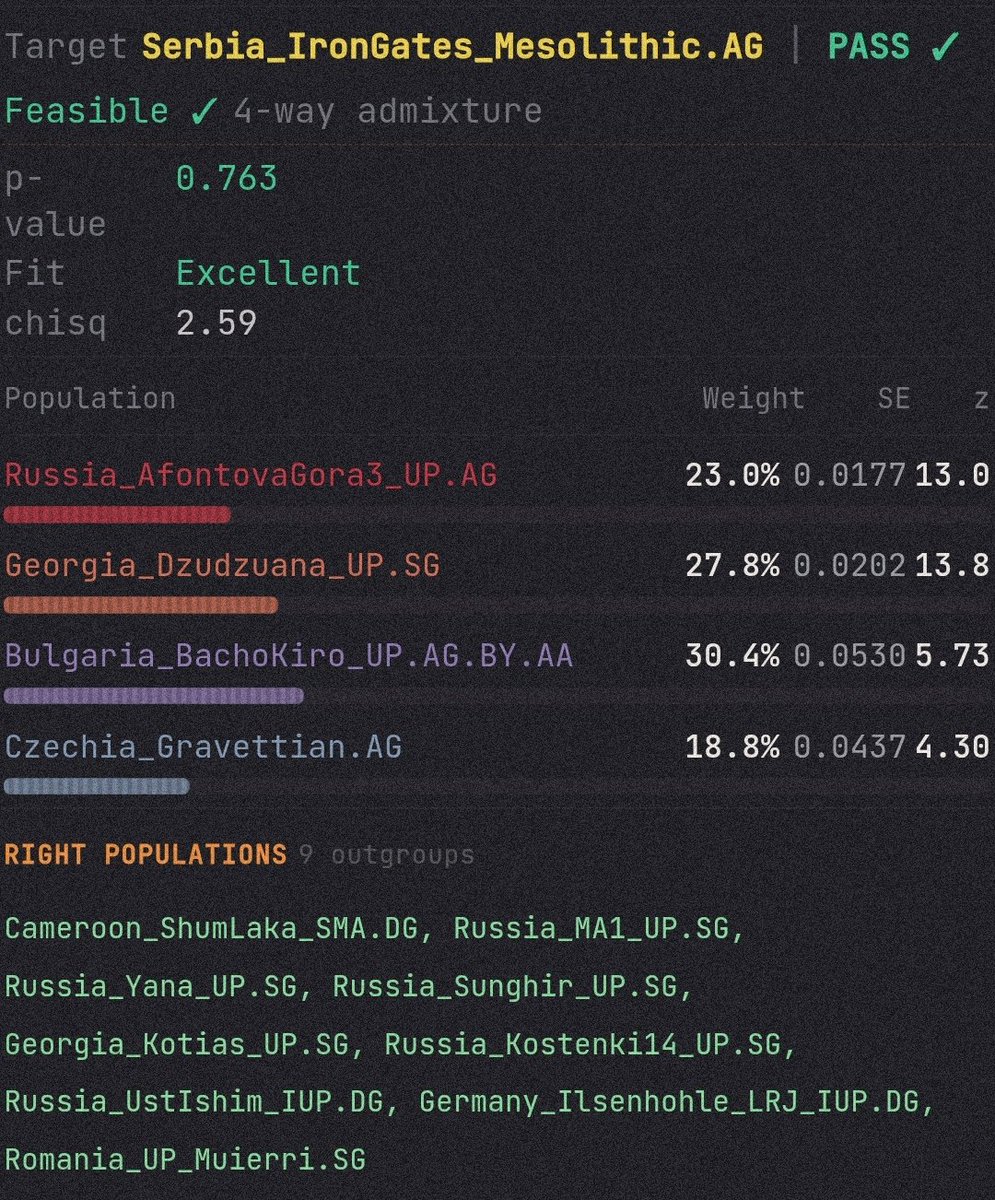

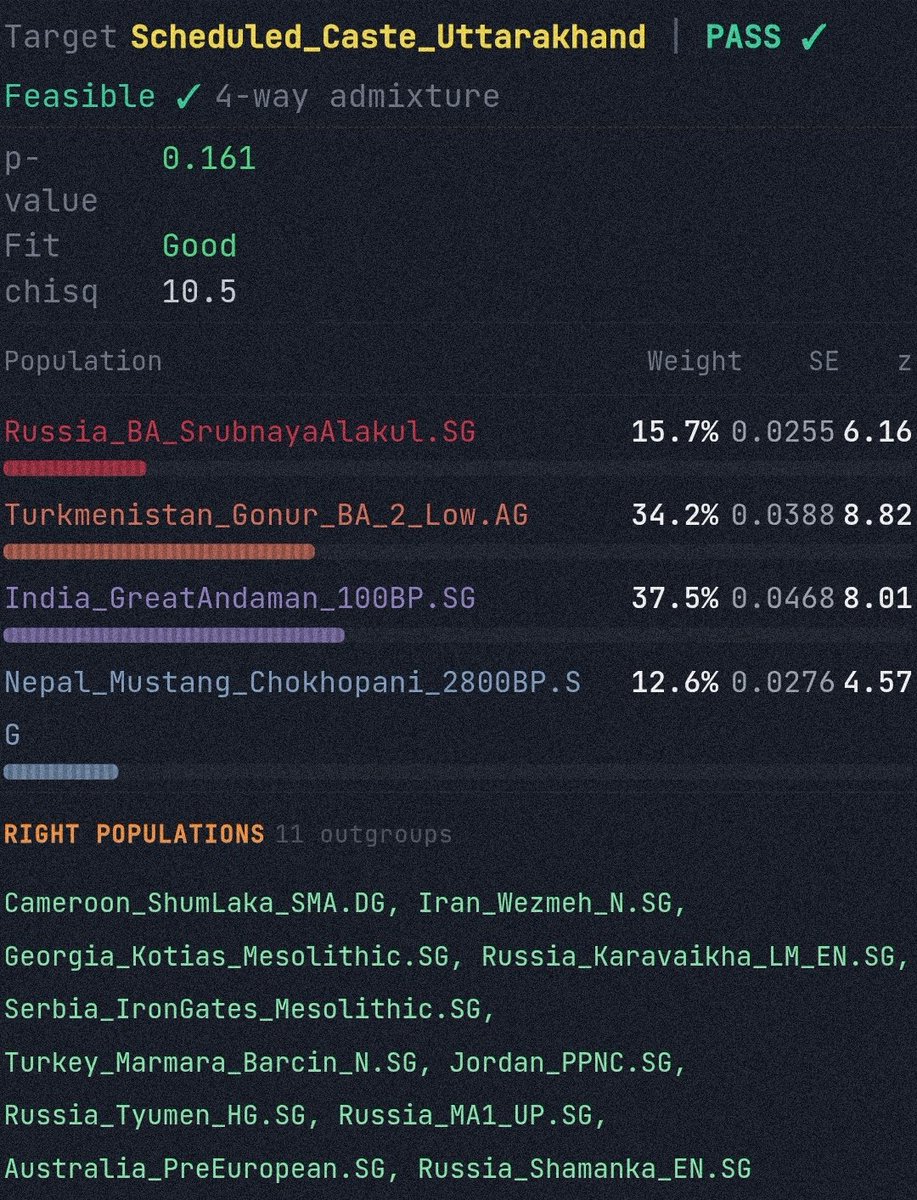
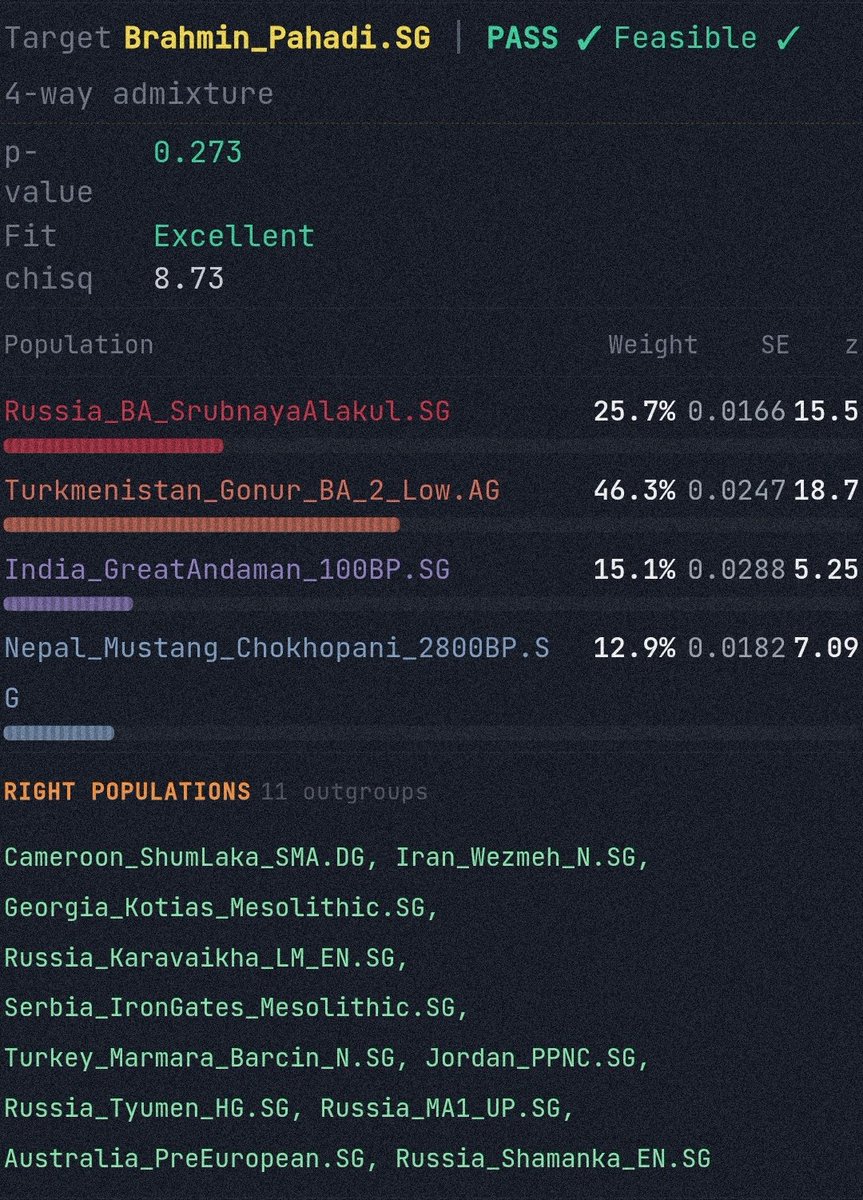






17h
Jain Rajasthan qpAdm model (n=4 from Bhilwara, Rajasthan)
17% Steppe MLBA
42.5% West Eurasian Farmer
40.5% AASI
1
2
162

Jun 12
Proximal qpAdm model for UP Unnao Kanjars (n=9)
61% Rajasthan Meena like
39% UP Chamar like

1
1
330
Jun 12
Proximal model for UP Chandauli Ahirs/Yadavs (n=3)
69% Rajasthan Ahir/Yadav like
31% UP Nai like

1
2
603
Jun 11
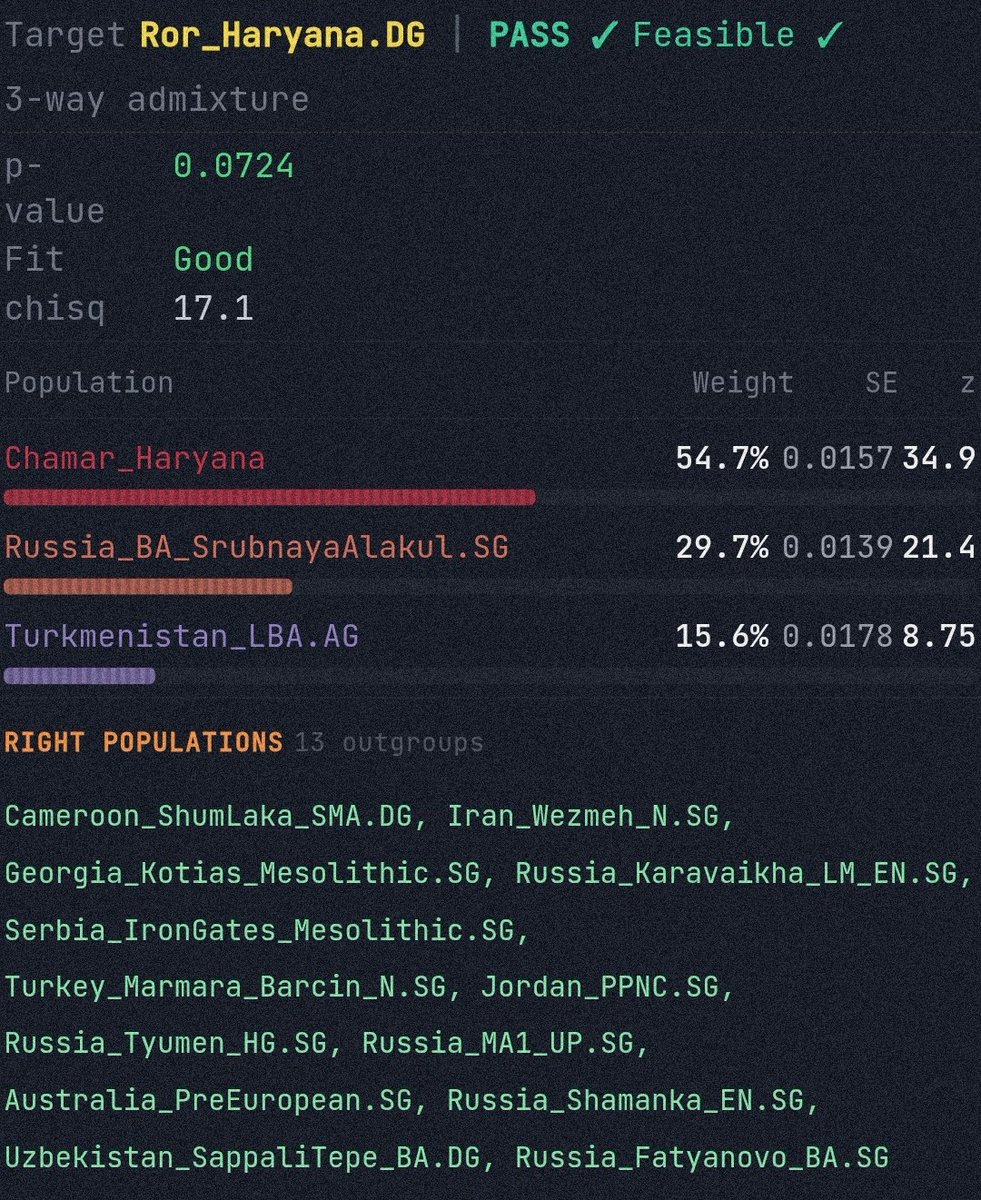
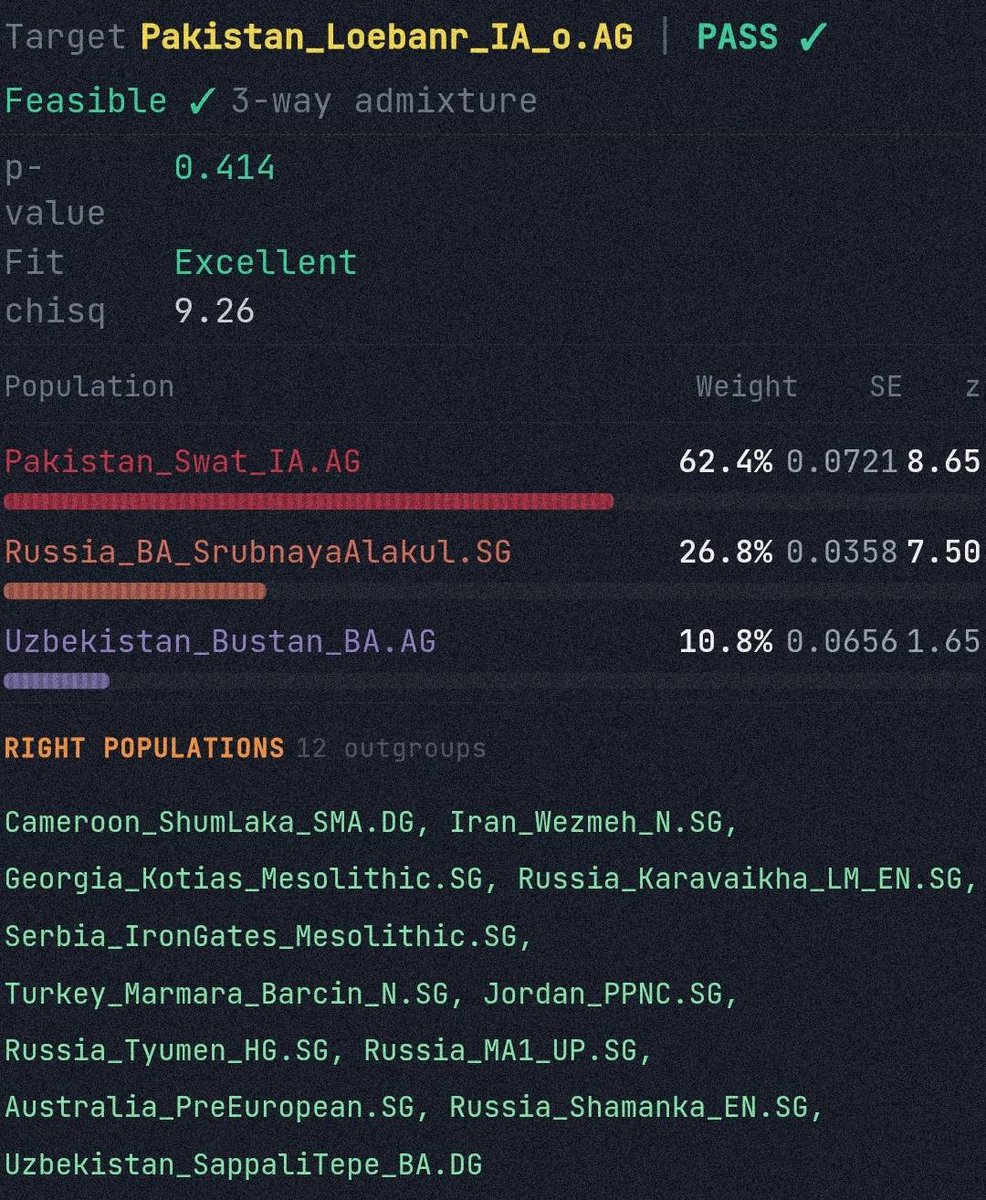
Proximal models for Haryanvi Rors (n=15)
1st model:
75% Loebanr IA outlier (Swat Valley)
25% Chamar Haryana like (Mid Caste profile)
---
2nd model:
54% Chamar Haryana like (Mid Caste profile)
30% Steppe MLBA
16% BMAC

1
394


May 5
@sarvamedha
What do you think about an ancient Kshatriya migration into Western Ghats? Prabhu castes (including Panchkalshi / Chardo) of Marathi-Konkanis, Bunts of Tulu, Nairs of Kerala, all of these seem to have elevated Steppe admix, and claims of Kshatriya descent, a pattern.
4
1
888
May 5
A pattern I've observed. It's also possible that Sub Narmadan Brahmins are made of two waves of Northern Brahmin migration into south.
2
2
543
Jun 10
This is more or less obvious btw. Because the Steppe % deviation between Sub Narmadan generic V4 and V1 is >10%, implying two waves of Northern V1 admix.
1
174
Jun 9
Karnataka Havyaka Brahmin qpAdm model
(n=5 from Uttara Kannada district)
.
21% Steppe
63% IVC_~33ªSI (IVC_MediumAASI)
16% AASI

1
2
13
740
Jun 8
Maratha qpAdm model (n=4)
13% Steppe
64% IVC_~33ªSI (IVC_MediumAASI)
23% AASI

4
16
1,891

Jun 6
2-way potential proximal model for Pakistan Pashtuns (Uthmankhel Yusufzai Tarkalani, n=93)
80% Afghan Pashtun like
20% Historic Era Swat Valley

2
4
705
Jun 6
2-way potential proximal model for Kohistani people
77% Historic Era Swat Valley
23% Afghan Pashtun like

1
1
341
Jun 6
3-way potential proximal model for Burusho people
48% West Dardic like (Chitrali etc.)
40% Kashmiri like
12% Tibetic

1
4
349