
We help you to build a secure, customised and automated wallet ecosystem. Book demo today -liminalcustody.com/register-…
Joined June 2021
- Tweets 1,692
- Following 157
- Followers 1,701
- Likes 474
578 Photos and videos






In H1 2026, real time oversight is becoming the new compliance standard.
Regulators scrutinising stablecoin operations are no longer satisfied with periodic reporting. The expectation across jurisdictions including those governed by MAS and under the MiCA framework is that institutions can demonstrate auditability on demand, with records that are complete, accurate, and traceable to the transaction level.
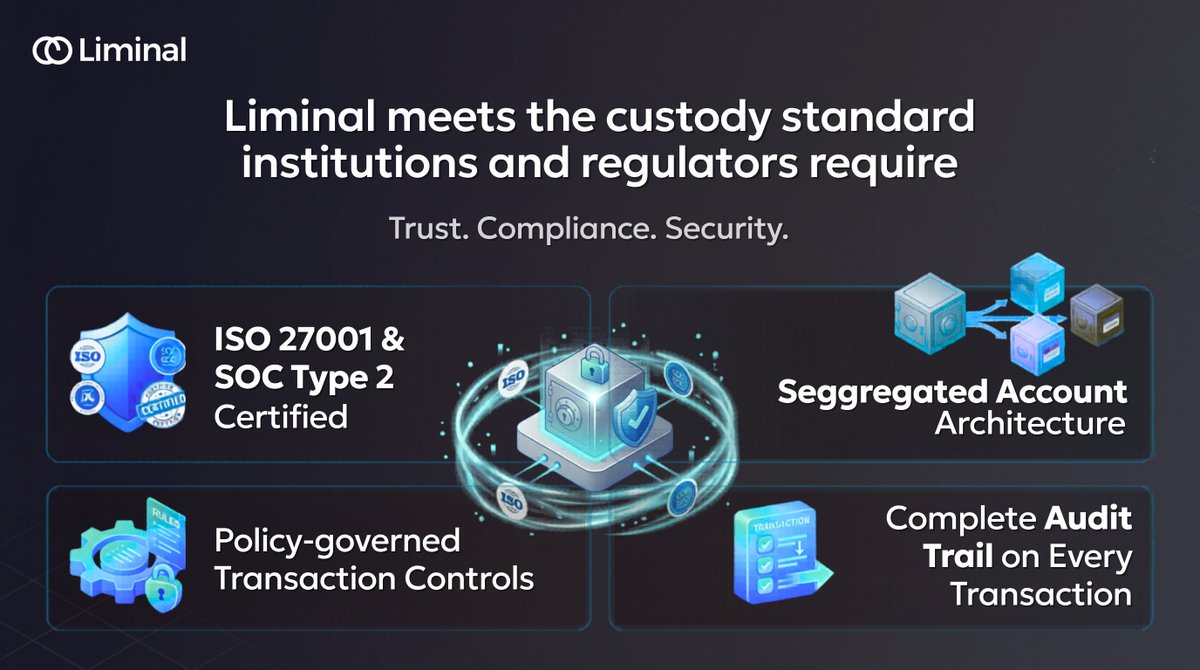
What being audit-ready for stablecoin operations looks like:
▪️ Real-time transaction records accessible for regulatory review
▪️ Segregated account architecture to demonstrate client asset separation
▪️ Complete audit trail from wallet creation through every transaction
▪️ Compliance reporting that meets ISO 27001 and SOC Type 2 standards
Institutions running stablecoin operations on infrastructure that was not built with these requirements in place are carrying audit exposure that will surface when supervision intensifies.
Liminal's infrastructure is built to meet these requirements by default, so institutions operating on it are not assembling audit capability under pressure.
13
They are frequently conflated. They shouldn't be.
▪️ The Travel Rule governs information sharing, collecting and transmitting originator and beneficiary data on transfers above a defined threshold
▪️ AML screening governs risk assessment, checking counterparties and wallet addresses against sanctions lists and risk databases before a transaction processes
▪️ One is about what gets shared between parties. The other is about what gets checked before anything moves
▪️ MAS, VARA, and MiCA have each issued specific guidance on how both obligations apply to virtual asset service providers
▪️ Getting the distinction right means cleaner audits, fewer compliance gaps, and operations that hold up under regulatory review
The starting point is understanding these are not the same obligation.
1
26

Jun 12
Japan's three largest banks, MUFG, SMBC, and Mizuho, are planning a joint stablecoin issuance by March 2027, as reported by @CoinDesk
Together, these three banks hold over $7 trillion in combined assets and serve as the primary settlement counterparties for a significant share of Asia-Pacific transactions. When they move in the same direction, the rest of the market adjusts.
A joint issuance means shared governance, shared compliance frameworks, and shared liability. A significantly higher commitment than a single bank moving independently. It signals that the regulatory and operational questions have been resolved enough internally to move forward together.
Here is what this means for the market:
▪️ Every exchange, payment operator, and treasury team connected to Japan will be expected to support a bank-issued stablecoin of this standing
▪️ A bank-issued stablecoin carries compliance credibility and banking relationships most stablecoins do not
▪️ The Asia-Pacific region is moving from exploration to issuance, and the infrastructure gap between early movers and late ones is widening
▪️ Custody, compliance, and settlement infrastructure needs to be in place before this market opens, not after
Our stablecoin payment infrastructure report, prepared in collaboration with PwC advisors, identified this shift across Greater China and Northeast Asia and covers what it requires across APAC, MENA, and beyond.
53
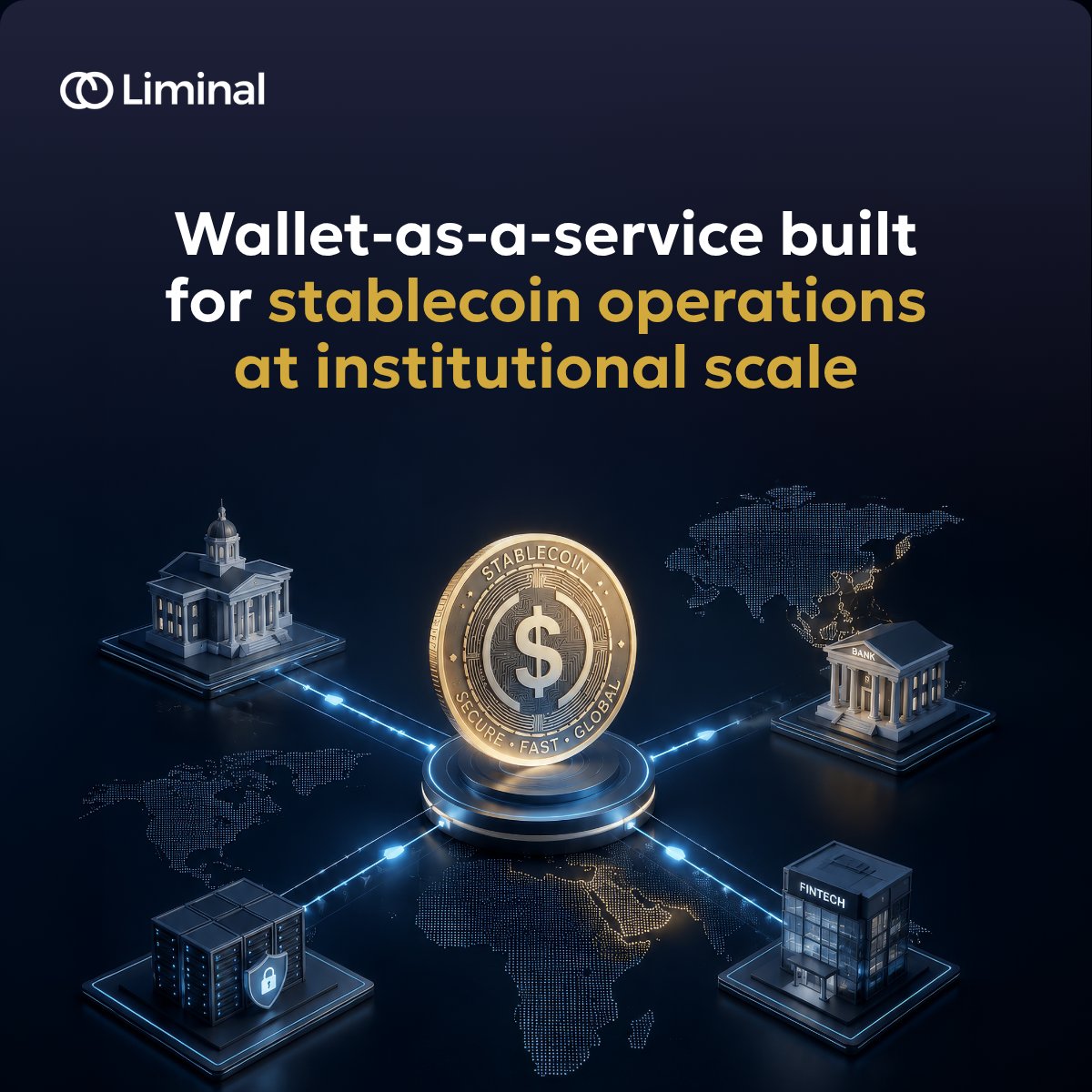
On-chain stablecoin transaction volume topped $28 trillion in Q1 2026 alone. Monthly stablecoin transaction volumes now exceed $700 billion, with active wallets surpassing 30 million globally. Institutions scaling at that pace need wallet infrastructure that keeps up, without building it from scratch.
What Wallet-as-a-Service provides for stablecoin operations:
▪️ REST API and webhook integration for real-time transaction status, built for high-frequency stablecoin flows
▪️ Multi-chain support across Ethereum, TRON, Solana, and more, with per-transaction settlement routing
▪️ MPC-secured wallet architecture with role-based access, multi-user approvals, and whitelisted withdrawal addresses
▪️ Automated policy controls governing transaction limits, velocity thresholds, and approval workflows
▪️ AML screening and compliance checks embedded at the transaction layer, before settlement executes
▪️ Direct ERP and treasury system integration
▪️ ISO 27001 and SOC Type 2 certified infrastructure, deployable without a ground-up build
Institutions that need stablecoin wallet infrastructure live and built to the institutional standard can deploy through Liminal's WaaS. No construction phase required.
1
1
128
For more information, check out - liminalcustody.com/insights/…
79
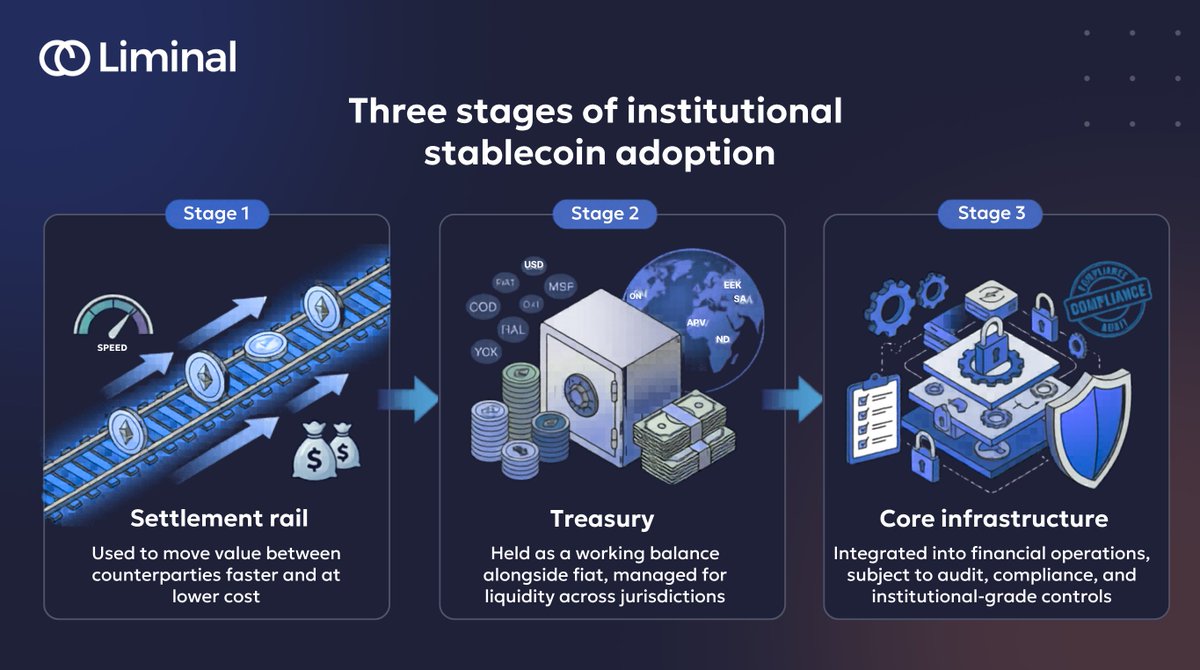
For CFOs and treasury teams evaluating stablecoins, the infrastructure requirements are not the same at every stage.
Stage one is settlement. Stablecoins move value between counterparties faster and at lower cost than traditional rails.
Stage two is treasury balance. Stablecoins are held alongside fiat, used to manage liquidity across jurisdictions and spread across markets.
Stage three is core infrastructure. Stablecoins are integrated into financial operations, subject to audit, compliance frameworks, and the same institutional-grade controls applied to every other treasury asset.
Most institutions enter at stage one. The ones moving to stage three without upgrading the underlying custody, compliance, and operational infrastructure are carrying risk that has not been formally assessed.
Each stage carries different risks and the infrastructure needs to keep pace.
1
1
1
49
For more information, check out - liminalcustody.com/insights/…
44
Stablecoin supply has grown 121% since early 2024. BlackRock, JPMorgan, and Franklin Templeton are already deploying capital on-chain. T 0 settlement, 24/7 liquidity, and programmable compliance are no longer future features. They are baseline expectations.
Five insights from the @coinchangeio 2026 Hybrid Finance Playbook that stand out:
▪️ Tokenized private credit is now an $18.9 billion market
▪️ The projected tokenized real-world asset opportunity sits at $2 to 4 trillion
▪️ Regulatory frameworks are now live across the EU, US, Singapore, Hong Kong, and Dubai simultaneously
▪️ The institutions capturing first-mover advantage are building governance and compliance in from the start, not retrofitting it
▪️ Stablecoins have moved from a crypto utility to core global settlement infrastructure
The full playbook is worth a read for any institution evaluating where to position in 2026.
1
6
145
Institutional custody carries a specific set of requirements that most institutions encounter only when they are already under scrutiny from counterparties or regulators. Certifications, account segregation, audit trails, and policy controls are not optional features at this level of operation. They are baseline expectations.
What institutional-grade custody requires in practice:
▪️ISO 27001 and SOC Type 2 certification as a baseline operational standard
▪️Segregated account architecture to ensure client assets are never commingled
▪️Complete audit trail on every transaction for regulatory and internal review
▪️Policy-governed controls that determine transaction limits, approvals, and access rights
Institutions that build custody infrastructure without these standards in place typically encounter the gap when it matters most.
#InstitutionalCustody #DigitalAssetCustody #ISO27001 #SOCType2 #DigitalAssets #Liminal
1
55
May 29
Institutional signers often approve transactions without visibility into counterparty exposure, behavioural risk, or the compliance standing of the destination wallet.
Liminal’s risk scoring aggregates these signals before a transaction reaches the signer, helping teams make decisions with context, not assumptions.
▪️Every outgoing transaction is evaluated against known risk sources
▪️Established transaction patterns within the organisation are factored in
▪️Defined policy rules are applied before the approval stage
▪️The output is a single score that determines whether the transaction proceeds, is flagged for review, or is blocked
The approval workflow remains unchanged. What improves is the quality of information available to signers at the point of decision.
#RiskScoring #TransactionSecurity #DigitalAssetCustody #InstitutionalCrypto #SigningInfrastructure #Liminal
1
63
May 27
Security frameworks often focus on transaction approval. But, very few focus on transaction intent.
At Liminal ,we run the following checks before the txn reaches the signer-
• Address Screening
• Anomaly Detection
What Address Screening catches:
• Destinations linked to sanctions lists, hacks, or darknet activity
• Addresses outside your organisation's whitelisted counterparties
• Wallets flagged across global compliance databases
What Anomaly Detection catches:
• Transaction amounts that fall outside your established patterns
• Activity at unusual hours or in unusual volumes
• Destinations your organisation has never transacted with before
Neither check replaces your approval workflow. They run before it. By the time a transaction reaches your signer, it has already passed two independent risk filters.
The transactions that cause the most damage rarely look suspicious to the person approving them.
#CryptoSecurity #TransactionMonitoring #InstitutionalCustody #RiskManagement #Liminal
1
53
Liminal Custody retweeted

May 23
Institutions are entering crypto, but the challenges are changing.
Ilinca Cartoflea, Head of Sales (EMEA) at @liminalcustody, joined @DavidThaDegen to talk about custody, institutional adoption, and where the market is heading.
0:48 - Introduction to Liminal Custody
1:22 - Ilinca’s Role
1:58 - How the Market Is Evolving Institutional Challenges
4:15 - How Liminal Is Solving Them
6:46 - Themes at @ParisBlockWeek
7:30 - Where to Find Them
Watch the full conversation below!
9
2
15
2,306
May 26
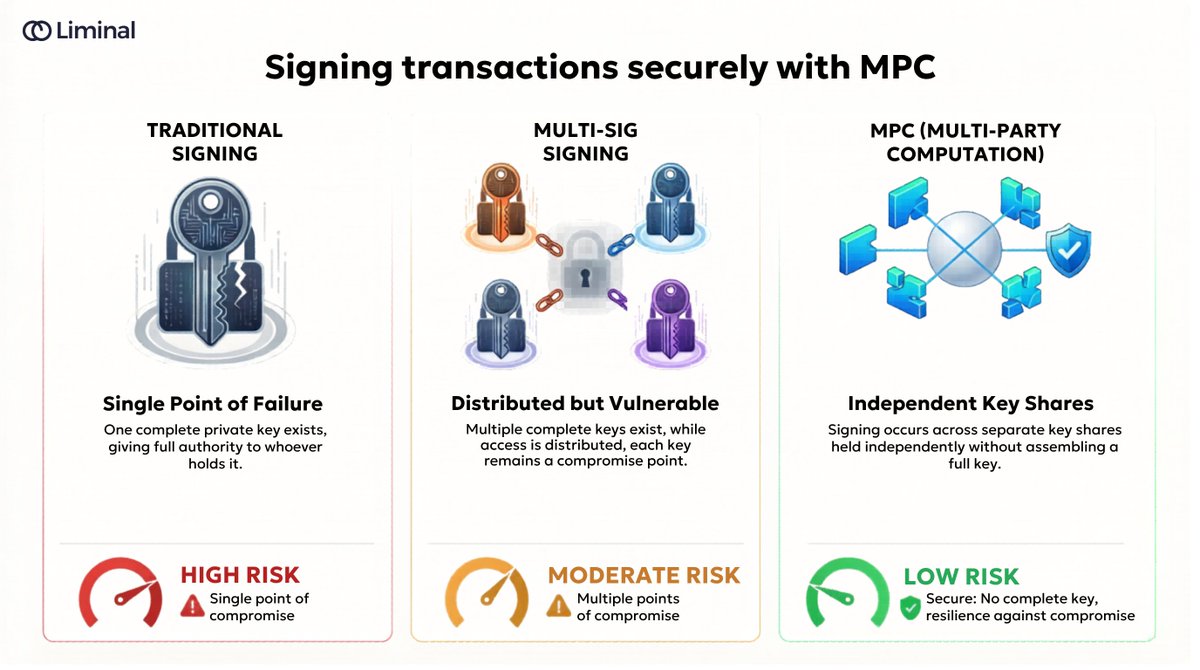
Most institutions understand that MPC distributes signing authority. Fewer ask what happens if the signer approves a risky transaction.
What MPC actually changes about signing security:
◾️In traditional signing, a complete private key exists and must be protected at all times
◾️In multi-sig, multiple complete keys exist, each representing a separate point of compromise
◾️In MPC, no complete private key ever exists at any point in the signing process
◾️Signing happens through a computation across separate key shares held by independent parties
◾️Compromising one share produces nothing an attacker can use
For institutions evaluating signing infrastructure, this distinction changes the threat model entirely. There is no single target to compromise.
#MPC #MultiPartyComputation #SigningSecurity #DigitalAssetCustody #InstitutionalCrypto #Liminal
3
76
May 22
Most businesses staking TRX focus on the yield it generates. But staking produces a second output that is equally valuable for operations running high USDT transaction volumes on TRON.
What is the benefit of staking TRX:
◾️Approximately 3.2% APR on TRX reserves
◾️Energy that can be delegated directly to operational wallets
◾️Those wallets then process USDT transfers without burning native TRX
◾️The same TRX being consumed by fees starts generating a return instead
Most operators running TRON volume are capturing only one of these two benefits.
#TRON #TRXStaking #StablecoinInfrastructure #DigitalAssets #InstitutionalCrypto #Liminal
1
64
May 21
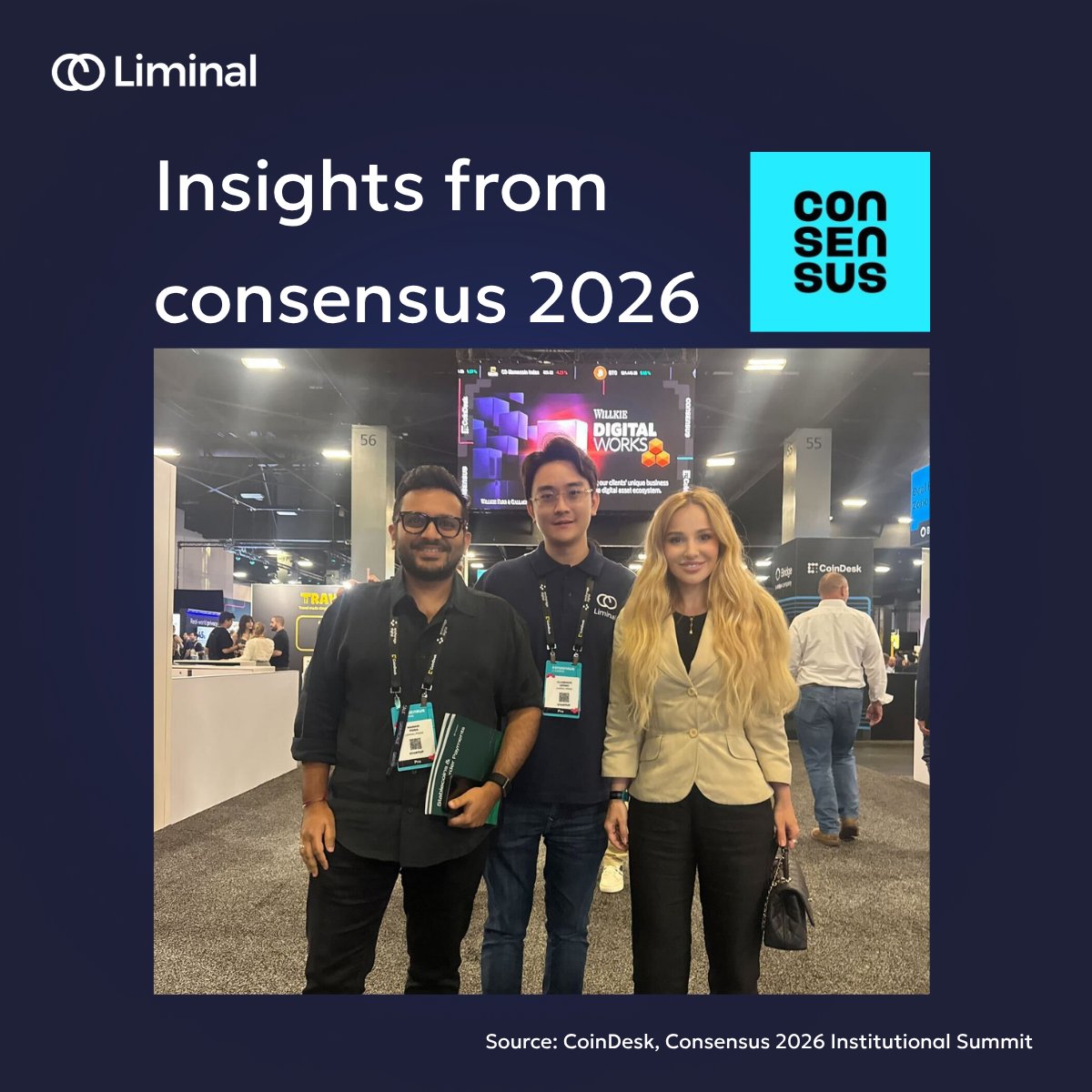
At Consensus 2026 in Miami, lending platform executives said institutional borrowers are increasingly scrutinising custody arrangements before entering negotiations. Where collateral is held, whether assets are segregated, and whether the custodian meets internal standards have become preconditions for the deal, not considerations after it. The shift reflects how much the criteria for entering institutional credit markets have tightened.
For institutions that need to demonstrate a credible custody posture to counterparties quickly, building that infrastructure from the ground up is not a realistic option. The requirement is immediate and the standard is specific.
Liminal's Whitelabel Solution gives institutions a certified custody infrastructure they can deploy under their own brand. ISO 27001 and SOC Type 2 certifications and segregated account architecture are built in, so the posture your counterparties are asking for does not need to be assembled from scratch.
#InstitutionalCustody #WhitelabelSolution #CryptoLending #DigitalAssets #Liminal
Source: coindesk.com/markets/2026/05…
consensus.coindesk.com/insti…
2
68
May 15
TRON is not a fixed-fee network. Every USDT default transfer burns approximately 7 TRX (~$2.45) in Energy, and at 10,000 transactions per day, that is 70,000 TRX (~$24,500) in daily operational cost.
At current prices, that compounds into a six-figure monthly expense most businesses treat as an unavoidable cost of doing business.
We put together a complete guide covering TRON Energy and Bandwidth mechanics,For exchanges, payment processors, and fintechs operating at volume on TRON 👇
[liminalcustody.com/blog/how-…]
#TRON #StablecoinInfrastructure #TRX #CryptoOperations #Liminal
4
104
May 14
Hot wallets need to stay funded for daily operations.
But for many institutions, wallet refills still depend on manual checks, manual approvals, and shared access. That creates delays. It also increases operational risk.
The challenge is simple:
How do you keep hot wallets funded without weakening security?
That is where Smart Wallet Refill comes in. It works with Liminal’s Smart Cold Wallets to help institutions automate wallet refills based on rules they define.
This means:
▫️Refills happen only when trigger limits are reached
▫️Destination addresses are checked against an approved whitelist
▫️Cooldown periods are enforced between transactions
▫️Partially signed transaction batches help keep operations running smoothly
The goal is to make wallet refills more predictable, secure, and operationally efficient without adding manual dependency at every step.
We have put together a breakdown of how Smart Cold Wallets and Smart Wallet Refill work together in production environments to support secure refill policies.
[lnkd.in/dXJZ7qay]
#WalletInfrastructure #DigitalAssetCustody #InstitutionalCustody #Liminal
2
1
77
May 13
Most transaction approvals ask signers to confirm something they cannot actually read. The underlying contract is encoded and the interface only shows what it wants to show. The signer acts in good faith with no way to verify what is being executed.
Blind signing is not a user error. It is an infrastructure gap.
What it exposes you to:
▫️Approvals based on interface display, not the actual transaction
▫️No visibility into asset type, amount, or destination before signing
▫️UI manipulation where what is shown differs from what executes
▫️Signers with no basis to reject a transaction that looks routine
What Liminal Firewall does before every approval:
▫️Decodes the raw contract call into human-readable details
▫️Surfaces the actual asset, amount, and destination address
▫️Checks the destination against your whitelisted addresses
▫️Flags anything unverified before the request reaches the signer
If your signers cannot read what they are approving, approval means nothing.
#BlindSigning #CryptoSecurity #InstitutionalCustody #DigitalAssets #Liminal
1
4
59
May 12
For crypto exchanges, wallet infrastructure has quietly become one of the most consequential decisions on the roadmap not just for security and compliance, but for how quickly an exchange can grow, expand to new chains, and meet the expectations of increasingly sophisticated institutional clients.
Building wallet infrastructure from scratch made sense when the ecosystem was simpler. In 2026, with regulatory frameworks like MiCA and VARA setting new baseline standards and multi-chain support becoming table stakes, the exchanges moving fastest are the ones that have made the shift to Wallet as a Service embedding secure, policy-controlled, compliant custody directly into their platforms without the overhead of a custom build.
We put together a complete guide to how WaaS infrastructure works in practice, what to evaluate before deployment, and how exchanges can go from scoping to live in weeks rather than months.
We have done the groundwork so your team does not have to start from scratch.👇
[liminalcustody.com/blog/what…]
#WalletAsAService #WaaS #CryptoExchange #DigitalAssets #WalletInfrastructure #InstitutionalCrypto #MPC #CryptoCustody #Liminal
3
60