
Assistant Professor of Economics at INSEAD
Joined December 2017
- Tweets 52
- Following 145
- Followers 219
- Likes 96
1 Photos and videos

Lin Tian retweeted

Feb 19
Intermediate macro instructors: You probably need to talk about the impact of AI on the labor market. But to make contact with the notion that this can destroy jobs and potentially reduce wages you need to introduce the task-based model of production. Cobb-Douglas (or CES) just doesn't cut it for this issue.
You might consider using my undergrad textbook chapter on production where I cover this topic in a way that (I hope) is accessible to undergrads (see section 7 of the chapter):
jonsteinsson.com/teaching/pr…
I also have a pretty detailed discussion of how technical change affects the labor share and the recent apparent fall in the labor share (section 6), which is obviously related to the AI issue.
16
88
529
86,488
Lin Tian retweeted

Jan 29
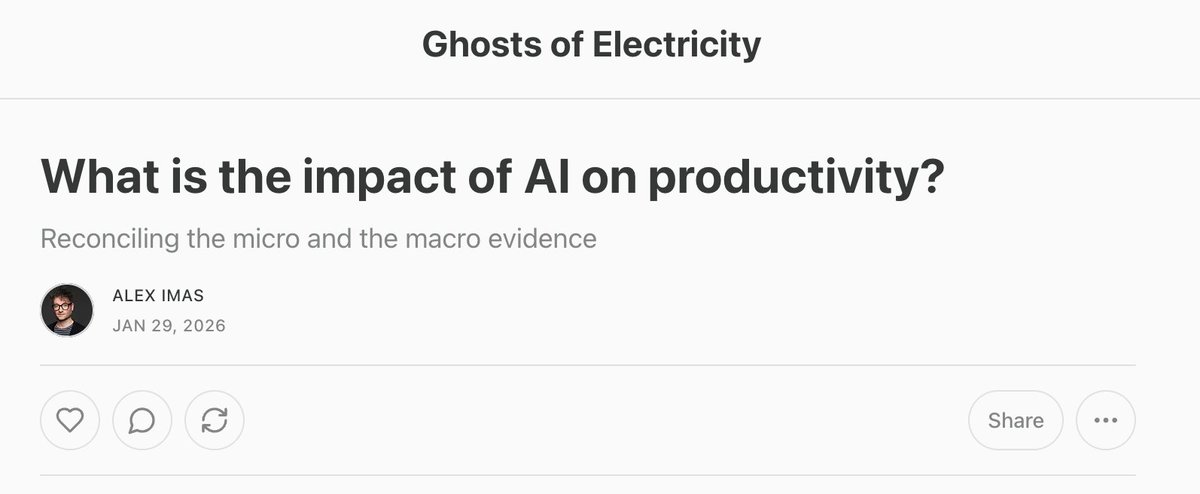
New post: What is the impact of AI on productivity?
I review all of the studies and data that I can find and try to provide a synthesis.
There’s a lot of disagreement on what we know about the productivity impact. Part of the reason for this is the disconnect between the micro and macro evidence.
The micro studies overwhelmingly find positive productivity benefits (except for one notable exception), but these productivity benefits are yet to show up in the macro data.
There is also a disconnect on who benefits most: micro (mostly) finds low-skill/less-experienced workers see higher returns, the (limited) macro evidence is more mixed but leans toward higher wage/higher ed people seeing more of the benefits.
I discuss potential reasons for the micro-macro gap in the post and 🧵 below.
Importantly, this is a living post. I will update it continuously as new data comes in. If you see something I'm missing, please let me know and I will add it.
For regular updates, please consider subscribing to the substack. Here is the link:
aleximas.substack.com/p/what…
35
139
539
196,647
Lin Tian retweeted

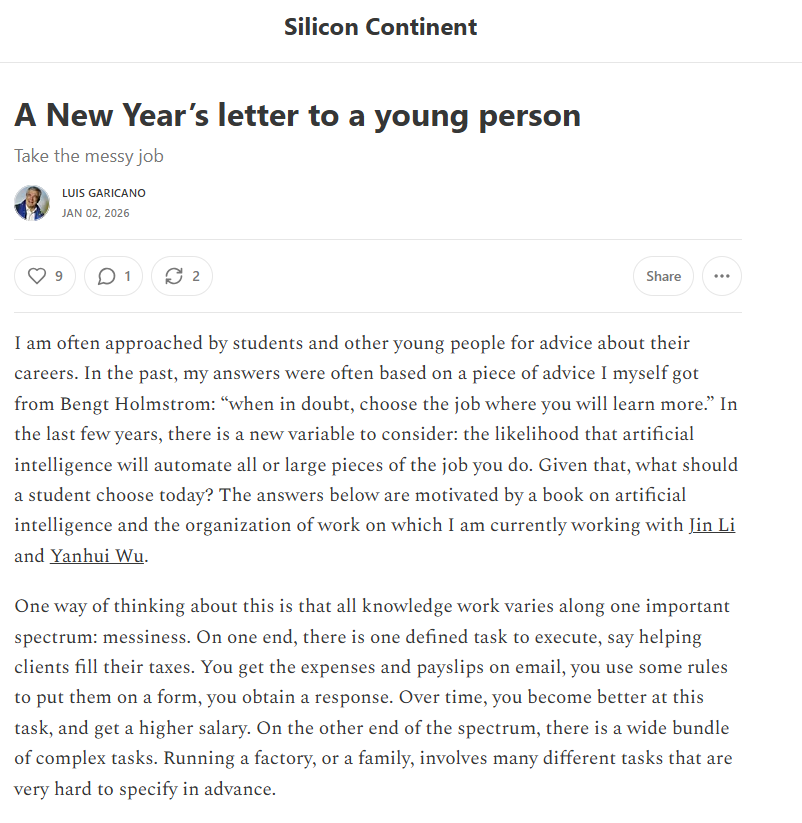
My New Year post is a letter to a young person trying to find their direction in a world disrupted by AI. My advice, in four words: take the messy job. I hope you enjoy it and find it useful. Happy New Year!
7
70
345
137,576

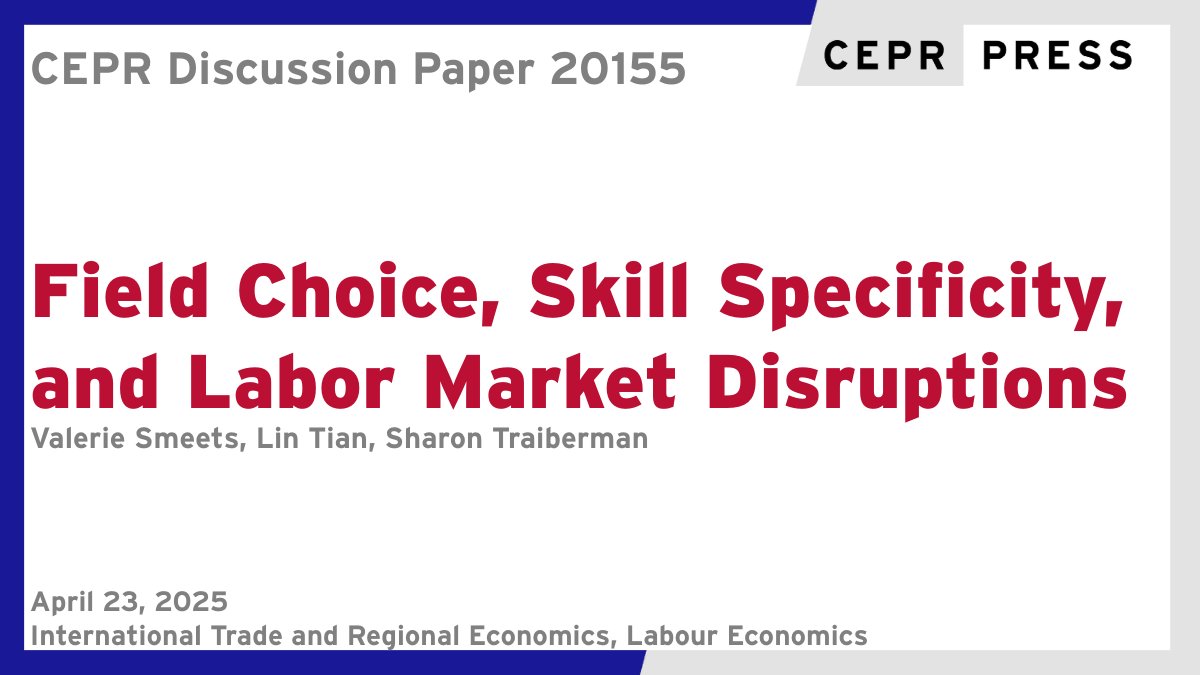
New CEPR Discussion Paper - DP20155
Field Choice, Skill Specificity, and Labor Market Disruptions
Valerie Smeets @AarhusUni, @LinTianEcon @INSEAD, Sharon Traiberman @nyuniversity
ow.ly/WUlP50VGa1n
#CEPR_ITRE #CEPR_LE #EconTwitter
2
5
1,573
Lin Tian retweeted

5 Apr 2025
*Trade war: my theory of the case*
1. What is the goal/ideal outcome/trump admin hopes: 10% tariff across the board with no retaliation direct non-tariff favors from other countries to settle this at 10% a possible full-scale bilateral trade war with China. (1/n)
11
96
398
82,002
Lin Tian retweeted

4 Apr 2025
Universities should make clear that their formidable financial endowments are not there to simply be envied or admired. Part of their function is to be drawn down in the face of emergencies, and covering federal funding lapses surely counts as one. My column today in @nytopinion.
nytimes.com/2025/04/03/opini…
41
163
939
147,681
Lin Tian retweeted

3 Apr 2025
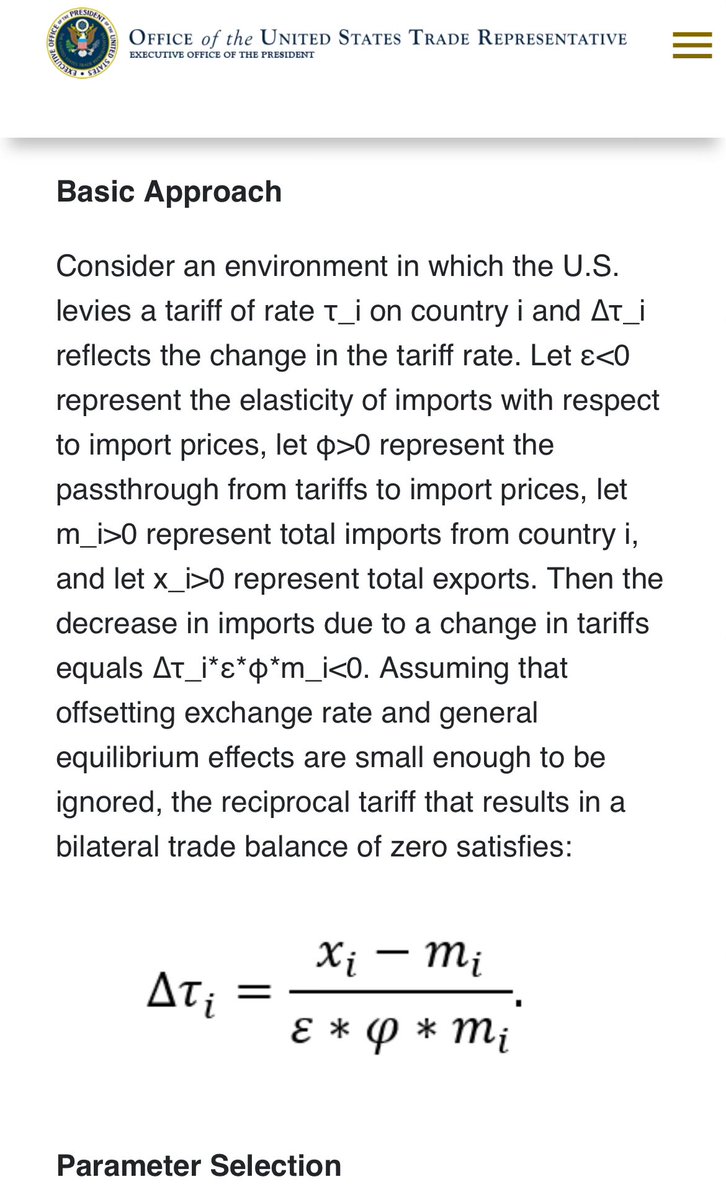
Interesting to see some basic demand theory applied to tariff choices. So…
What’s wrong with it?
Used in isolation on a single small trading partner the formula makes some sense. But if applied widely to many non trivial ones it does not. 1/2
3 Apr 2025

To learn about the methodology behind President Trump's reciprocal tariff calculations, visit USTR's website.
ustr.gov/issue-areas/recipro…
24
162
751
251,124
Lin Tian retweeted

3 Apr 2025
88% of the variance in bilateral balances can be explained without making any reference to asymmetries in bilateral trade costs.
See my EER-paper with @YotovG "A solution to the mystery of excess trade balances"
cepr.org/voxeu/columns/solut… via @cepr_org @WIFOat
26
70
16,884
Lin Tian retweeted

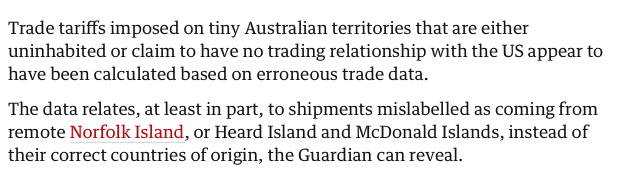
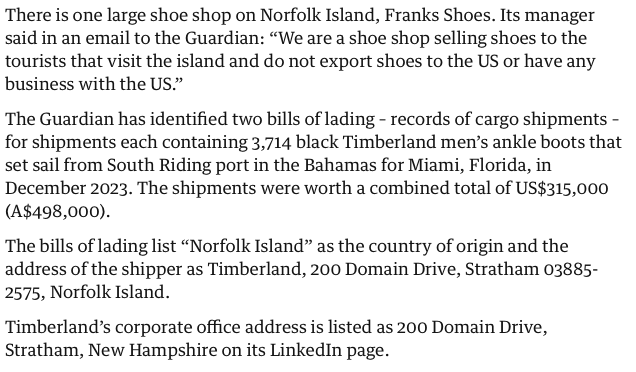
Trade flows are measured with error: theguardian.com/australia-ne…
The Guardian found the errant bills of lading that explain US import tariffs "imposed on tiny Australian territories that are either uninhabited or claim to have no trading relationship with the US".
4
7
1,310
Lin Tian retweeted

3 Apr 2025
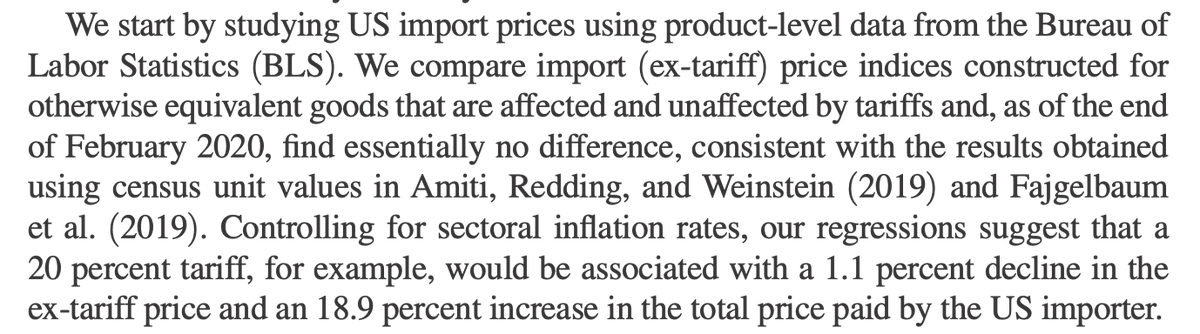
I do not think that the government's formula is an appropriate way to think about reciprocal tariffs. And it is unclear what the note references or doesn’t from my research with Cavallo et al. But I believe our work suggests the value for the “elasticity of import prices to tariffs” should be close to 1. If that value were used, rather than 0.25, I believe their calculation of reciprocal tariffs would be lower by a factor of four.

USTR: "The elasticity of import prices with respect to tariffs, φ, is 0.25. The recent experience with U.S. tariffs on China has demonstrated that tariff passthrough to retail prices was low (Cavallo et al, 2021)."
Cavallo et al: φ is 0.945.
aeaweb.org/articles?id=10.12…
22
151
440
119,582
Lin Tian retweeted

14 Mar 2025
If only there were courses or majors that specifically taught about the economic impacts of tariff on consumers and products.
13 Mar 2025

Transparently, I’m just now starting to learn about tariffs and their impact on American consumers and products (since, conveniently, they don’t teach this in school).
From what I’ve gathered, it seems like America has been taken advantage of by nearly everyone. We’ve been paying high tariffs for decades.
Take Canada, for example. Trump didn’t start the tariff issue with them. Canada has now imposed a 25% tariff on over $20 billion worth of U.S. imports, including alcohol. Some provinces are even halting or removing American alcohol from shelves altogether.
I live in Tennessee, home to amazing distilleries like Jack Daniels, Old Smoky Moonshine, etc. I know amazing people who work at these distilleries.
So, here’s my question: Why not buy American? If the past few years have taught us anything, it’s that the most effective way to influence change is with our wallets. Let’s ditch Canadian Crown Royal and other Canadian liquors in favor of Maker’s Mark or another American brand. That translates to whatever the product in question may be.
Support AMERICAN companies.
4
11
209
16,570

🆕 How does internet connectivity impact developing economies? 🔊
Today on #VoxDevTalks, @LinTianEcon (@INSEAD) tells @timsvengali about the profound but uneven impact of the internet on developing countries: voxdev.org/topic/macroeconom…
1
7
6
3,737
New CEPR Discussion Paper - DP19661
Geographic #Fragmentation in a Knowledge Economy: Theory and Evidence from the United States
Yang Jiao @sgSMU, Lin Tian @LinTianEcon @INSEAD
ow.ly/1jfc50U5lz3
#CEPR_ITRE #US #economics
3
6
1,753
Lin Tian retweeted

2 Nov 2024
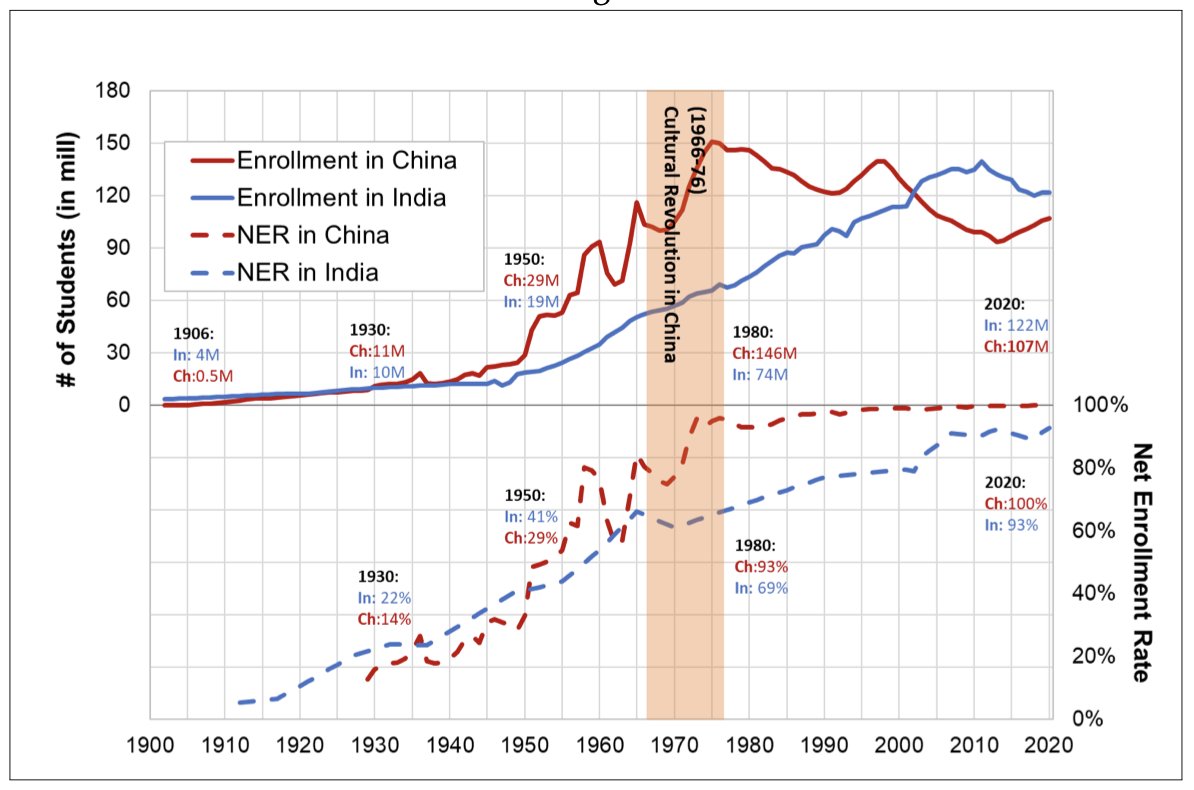
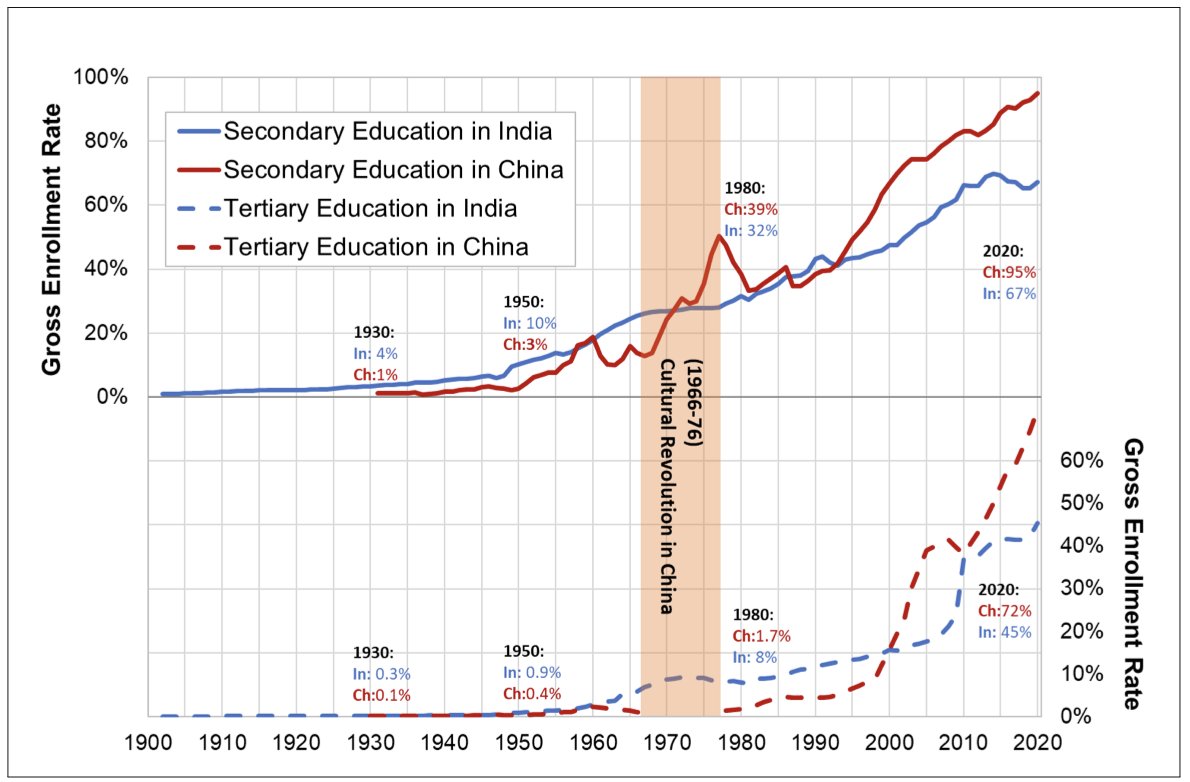
A new India-China fact (to me):
The Chinese state prioritized primary education over secondary/tertiary, while the Indian state did the opposite.
Chinese primary enrollment rate passed India in 1950, secondary 1975, and tertiary only in 2000!
71
866
4,581
535,711

4 Sep 2024
Wrapped up the third edition of INSEAD-SMU International Economics Workshop last week!🍾Huge thanks to our keynotes @pol_antras & @HansbergRossi, presenters, and participants for their valuable insights and contributions. Here’s to more collaboration and discovery! #inseadSMU2024
5
55
5,932
24 Aug 2024
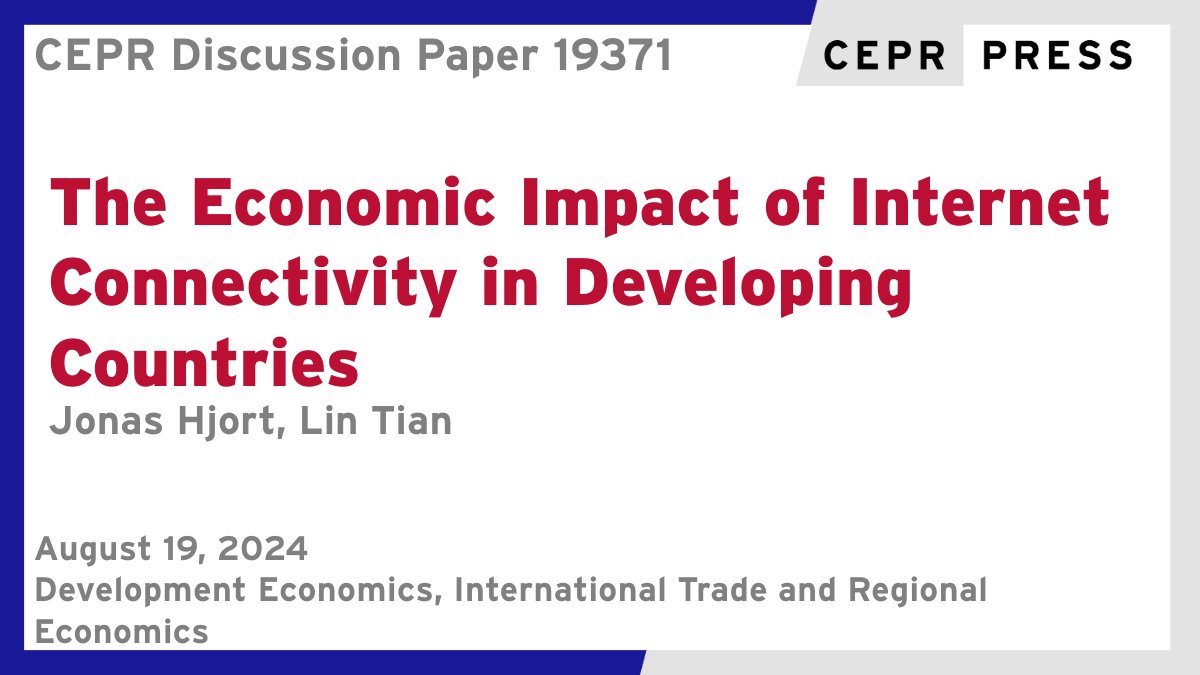
@HjortJ & I sent 1st draft of our invited overview piece to Annual Review of Econ., CEPR wp here. On economic impacts of internet connectivity in developing countries; 90/150 studies we cover provide direct empirical evidence on this ( 60 w/rich country or other related findings)

New CEPR Discussion Paper - DP19371
The Economic Impact of #Internet Connectivity in Developing Countries
Jonas Hjort @HjortJ @ucl @UniOslo, Lin Tian @LinTianEcon @INSEAD
ow.ly/hyxO50T1gWP
#CEPR_DE #CEPR_ITRE #economics
2
3
12
1,911
24 Aug 2024
Overall the literature points towards sizeable, positive economic impacts in many—but not all—settings. Considerable uncertainty remains, and we know almost nothing about many important parts of internet-in-developing-countries. We highlight promising future research directions
1
1
113
24 Aug 2024
Thanks for a ton of helpful feedback from many of you! And to funding from @PEDL_CEPR
108