Ok I will have to start doing long form writing soon because twitter threads aren't doing it
Joined December 2025
- Tweets 2,213
- Following 14
- Followers 104
- Likes 564
176 Photos and videos

Pinned Tweet

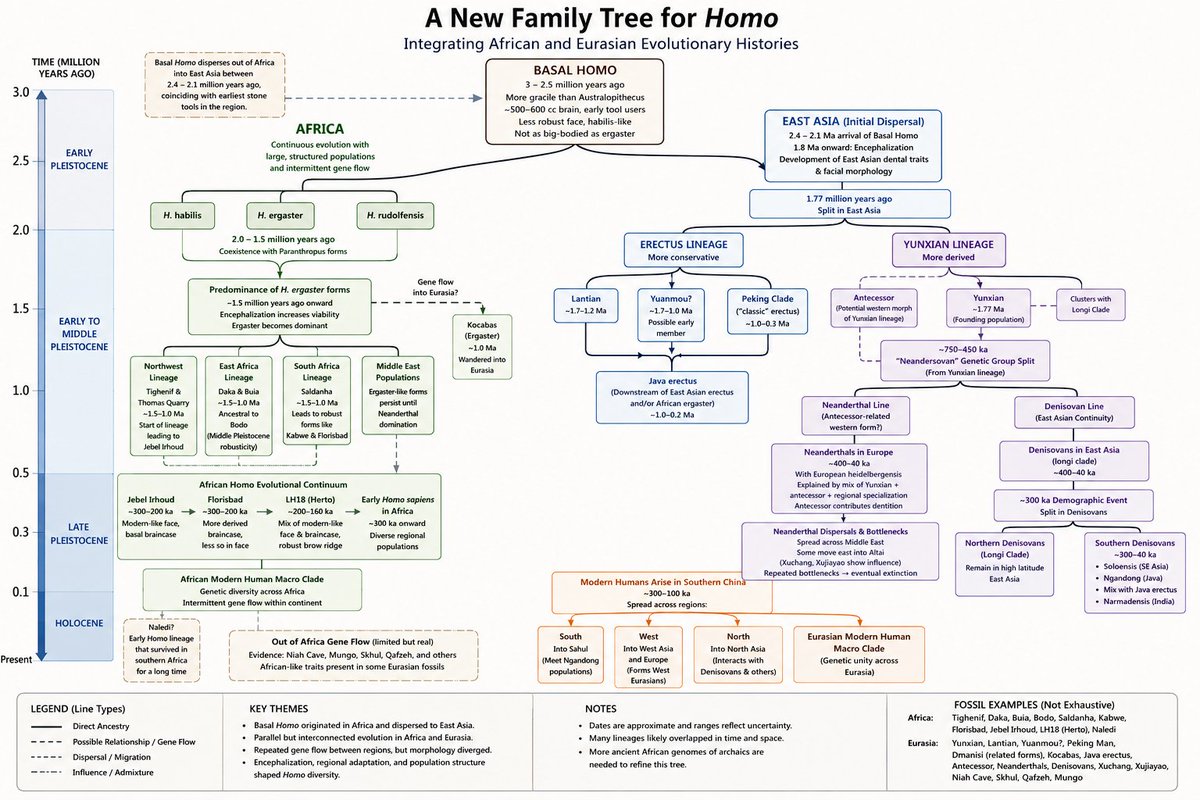
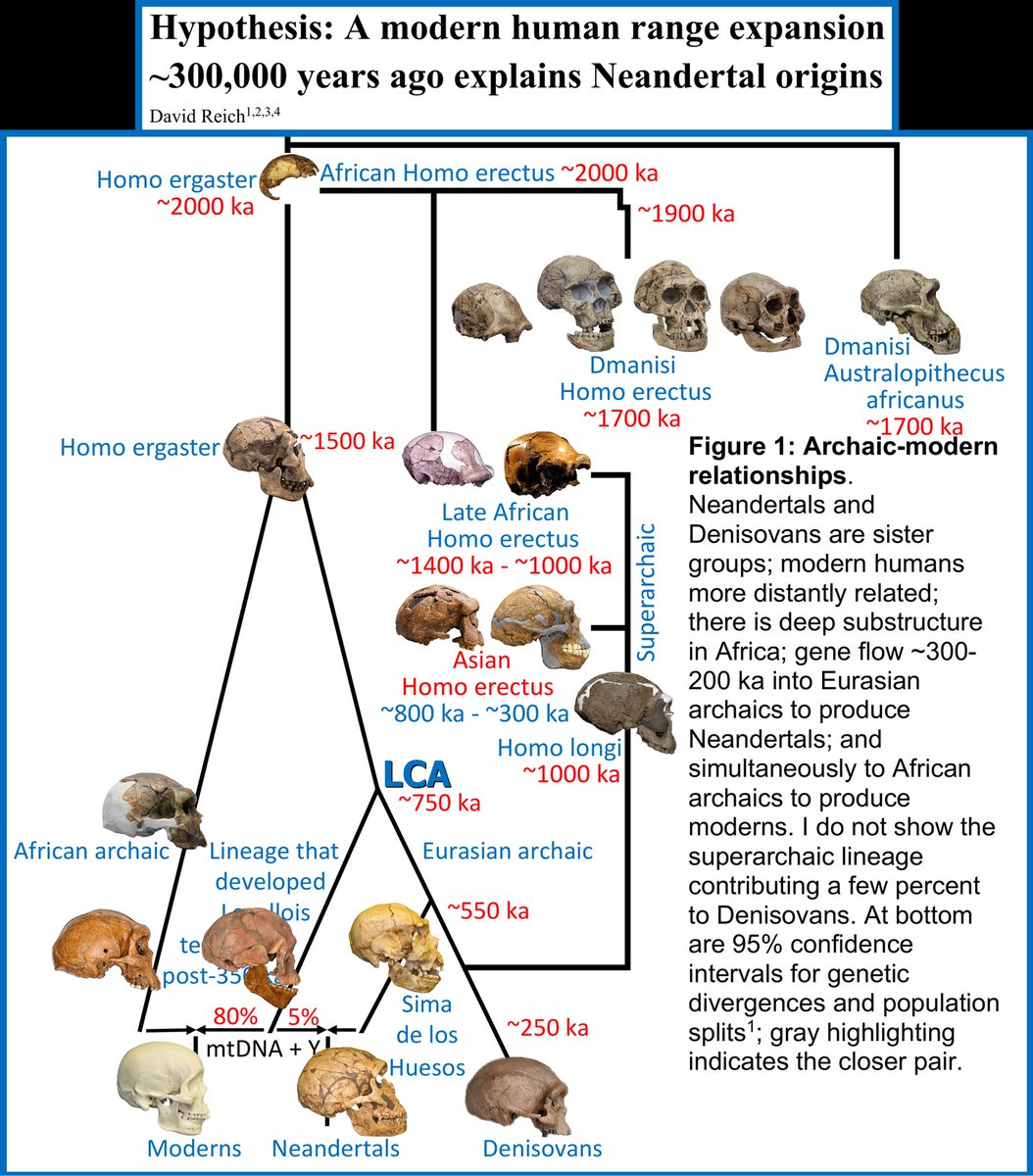
MULTI-REGIONALISM THREAD
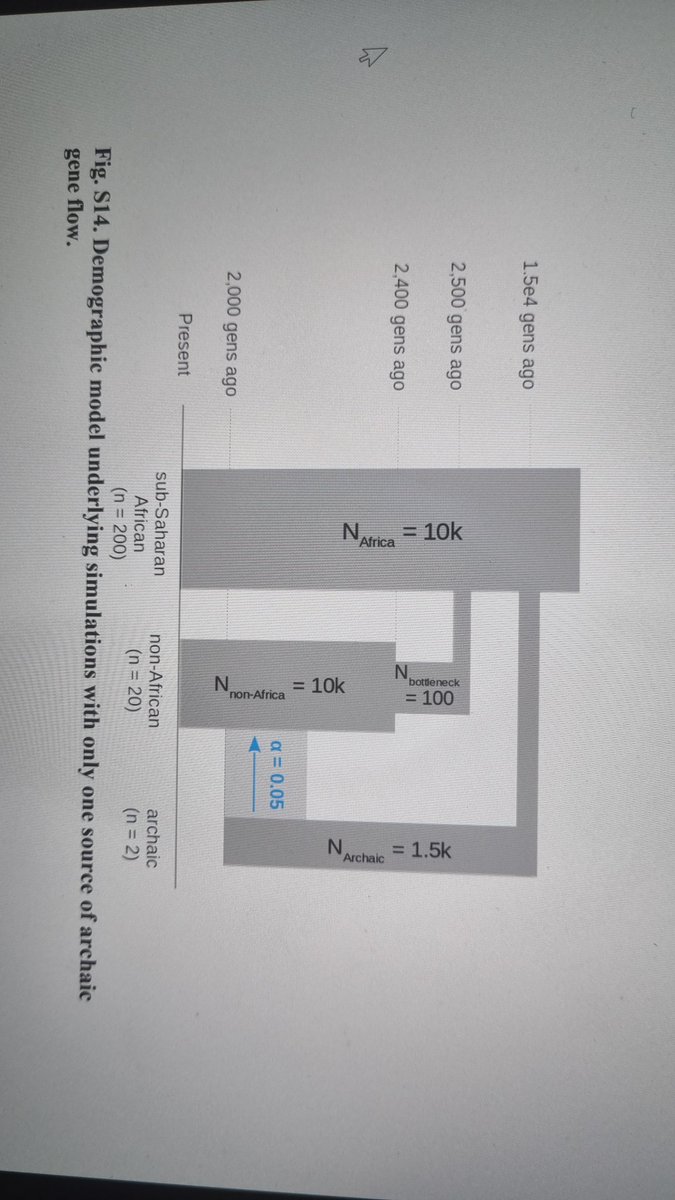
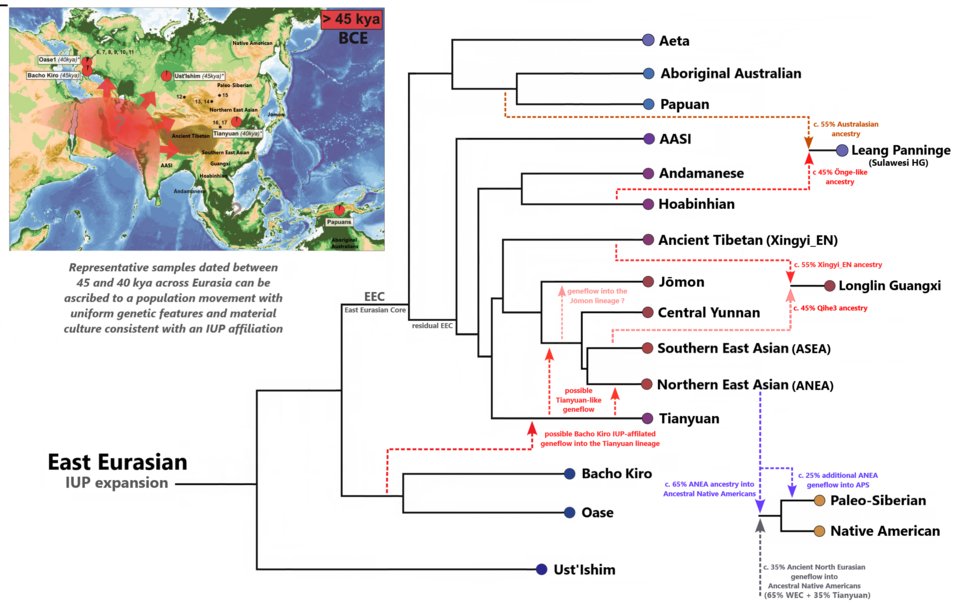
I will start with basic explanation of my views on the origins of modern humans, I will come back and branch out with more evidence and detail later.
writing it all out in short tweets with no plan will be a challenge, give me time!
5
3
7
1,856
12, why do early modern human genomes in eurasia look unrelated to africa but instead look east asian
13, why do the earliest modern human genomes in africa look unrelated to eurasia
1
15
these are a range of problems that both monogenesis models either cannot answer or must marginalise for their model to hold, I don't see how it is honest or correct to try and basically force all this evidence under a short monogenesis model
1
15
there are much less assumptions required for multiregionalism to explain these issues, if these two groups of modern humans became more related over time thanks to some gene flow and convergence on modernity then it can answer the other questions much better.
14
4, why in eurasia are archaic signals generally regional and not more ubiquitous.
5, why are clear markers of african morphology rarely found outside africa
6, why are clear markers of eurasian morphology rarely found in africa
1
19
10, why does africa have a deep autosomal history that appears to predate any eurasian monogenesis event
11, why does eurasia have a deep autosomal history that appears to predate any african monogenesis event
1
9
7, why does diversity not look like a gradient from africa or from eurasia (areas far from africa like oceania are highly diverse)
8, for morphology what role does africa play if areas like east asia look unaffected
9, for morphology what role does eurasia play if africa (same)
1
11
1, why do african archaic signals not appear outside africa (except trace amounts near africa)
2, why do eurasian archaic signals not appear in africa (except trace amounts near eurasia)
3, why in africa are archaic signals deeply regional and not more ubiquitous.
1
11
I'll list out some of the problems, keep in mind I am drunk after watching the Aussies in the world cup!

yes that would be my expectation roughly, convergent genetic evolution facilitated by gene flow of the advantageous variations.
I think it is the best solution to a range of practical problems when it comes to asking where modern humans come from
1
29
science.org/doi/10.1126/scie…
just read through this, I'm not sure there are ground breaking revelations from this, the heterozygousity among the denisovan "admixture" in the samples does make a short term introgression model less likely
1
14
Maybe I am a bit crazy for suggesting this, but if this type of analysis is performed on mtDNA lineages and it shows a different story in any significant way, that would be extremely difficult to reconcile for either monogenesis model, ROE or ROA
Jun 11

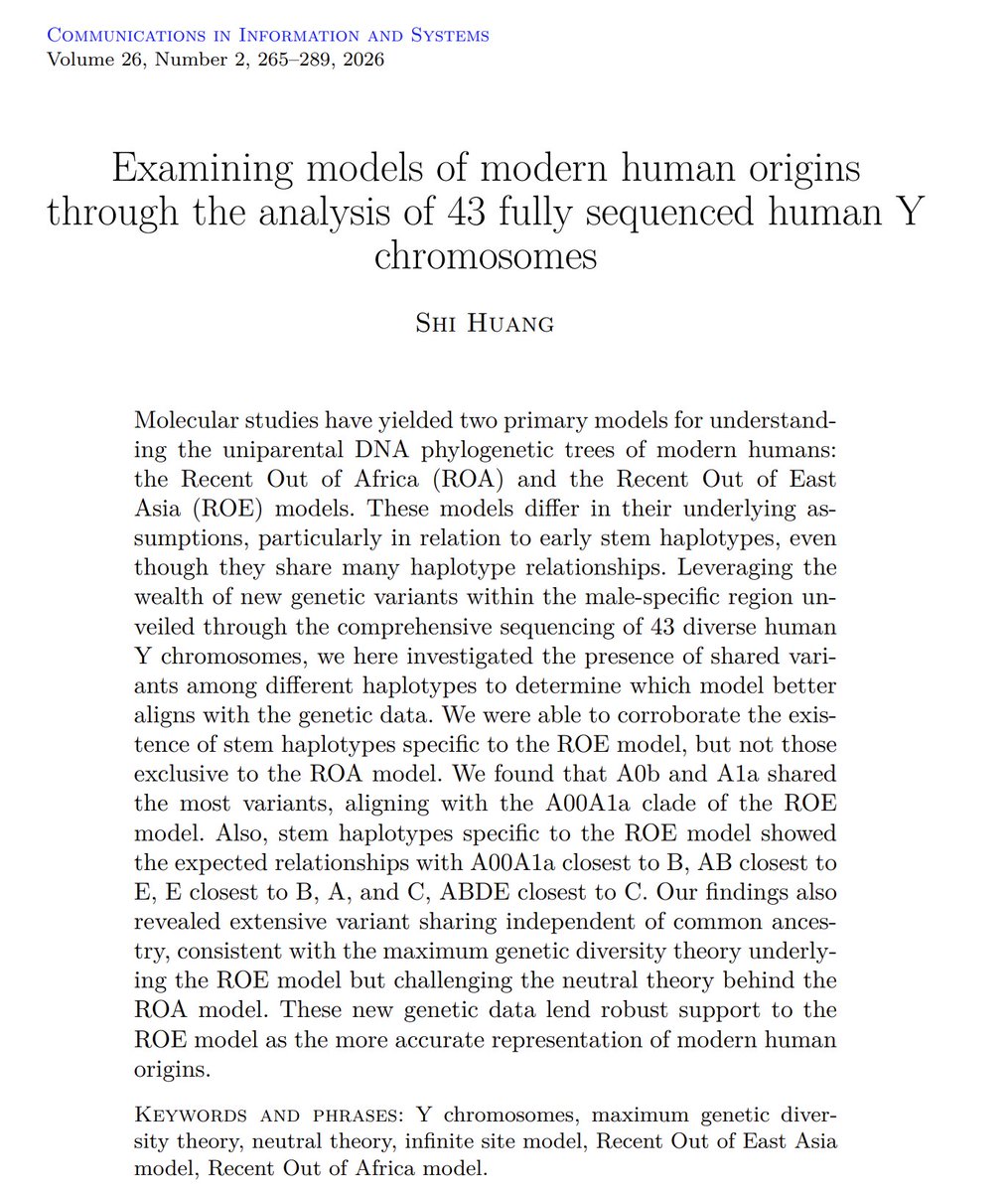
Our new paper (preprint 2023) has recently been published following peer review:
link.intlpress.com/JDetail/2…
This study used the newly completed full sequences of 43 human Y chromosomes to independently test the two major models of modern human origins: the Recent Out of Africa (ROA) model and the Recent Out of East Asia (ROE) model.
Main findings:
• Numerous variants supporting key ancestral haplotypes unique to the ROE model (A00A1a, AB, ABDE, and ABDEC) were identified in the new high-quality Y chromosome dataset.
• No supporting variants were found for the BT and CT ancestral haplotypes that are unique to the ROA model.
• Extensive sharing of variants and recurrent mutations were observed among different Y haplogroups, suggesting that convergent evolution and functional constraints are more common than traditionally assumed.
• The results are consistent with the Maximum Genetic Diversity (MGD) theory, while posing challenges to the conventional framework based on the neutral theory and the infinite-sites assumption.
The essence of scientific progress is not preserving consensus, but continually testing it.
What matters is not how many supporters a theory has today, but whether it can still explain new and more complete data as they become available.
Over the past several decades, the Out-of-Africa model has rarely been directly tested against newly available datasets such as ancient DNA and fully sequenced Y chromosomes. In contrast, the Out-of-East-Asia model has made explicit predictions and subjected itself to empirical testing.
A theory that continues to withstand testing rather than avoiding it exemplifies the scientific spirit.
1
1
2
403
it'd be the dream for people like me, total refutation of monogenesis.
a partial refutation would be if the mtDNA showed meaningfully different times or movements to yDNA in how it swept, even if they both had an east asian or african source.
2
2
43
in either case uniparental lines are not very meaningful for me, since by definition they must coalescence in a single source even if the population history didn't, but an outcome where mtDNA and yDNA tell different stories would be hilarious
2
42
Strong Multi-Regionalism Enthusiast retweeted

Jun 11
Our new paper (preprint 2023) has recently been published following peer review:
link.intlpress.com/JDetail/2…
This study used the newly completed full sequences of 43 human Y chromosomes to independently test the two major models of modern human origins: the Recent Out of Africa (ROA) model and the Recent Out of East Asia (ROE) model.
Main findings:
• Numerous variants supporting key ancestral haplotypes unique to the ROE model (A00A1a, AB, ABDE, and ABDEC) were identified in the new high-quality Y chromosome dataset.
• No supporting variants were found for the BT and CT ancestral haplotypes that are unique to the ROA model.
• Extensive sharing of variants and recurrent mutations were observed among different Y haplogroups, suggesting that convergent evolution and functional constraints are more common than traditionally assumed.
• The results are consistent with the Maximum Genetic Diversity (MGD) theory, while posing challenges to the conventional framework based on the neutral theory and the infinite-sites assumption.
The essence of scientific progress is not preserving consensus, but continually testing it.
What matters is not how many supporters a theory has today, but whether it can still explain new and more complete data as they become available.
Over the past several decades, the Out-of-Africa model has rarely been directly tested against newly available datasets such as ancient DNA and fully sequenced Y chromosomes. In contrast, the Out-of-East-Asia model has made explicit predictions and subjected itself to empirical testing.
A theory that continues to withstand testing rather than avoiding it exemplifies the scientific spirit.
5
3
19
1,413
something to add as a bit of a thread, I think in paleoanthropology we have a bit of a knowledge gap when it comes to genetically how did modern humans become modern humans. this is true regardless of the model anyone supports
genetics show modern humans are generally related, so archaics such as neanderthals went extinct with regional contributions and since then the gene flow and genetic turnover means modern humans share more in common than they differ
1
1
78
So it could very well be the case that like in africa, these modern humans that arise in east asia descend from archaics that they borrow traits from, but genetically are a distinct group, hence why modern east asians dont look like denisovans.
1
45
it would be like expecting modern africans to genetically look like Bodo, its unlikely, we would expect turnover as new populations are founded.
some more ancient genomes would be helpful to answer this theoretical issue.
361