
Modernizing investment management. Founder @surmountinvest, Owner @quantbase_, @forbes Business Council, @WBJonline 25 Under 25
Joined July 2012
- Tweets 15,316
- Following 381
- Followers 23,853
- Likes 28,687
1,913 Photos and videos




Pinned Tweet

6 Aug 2025
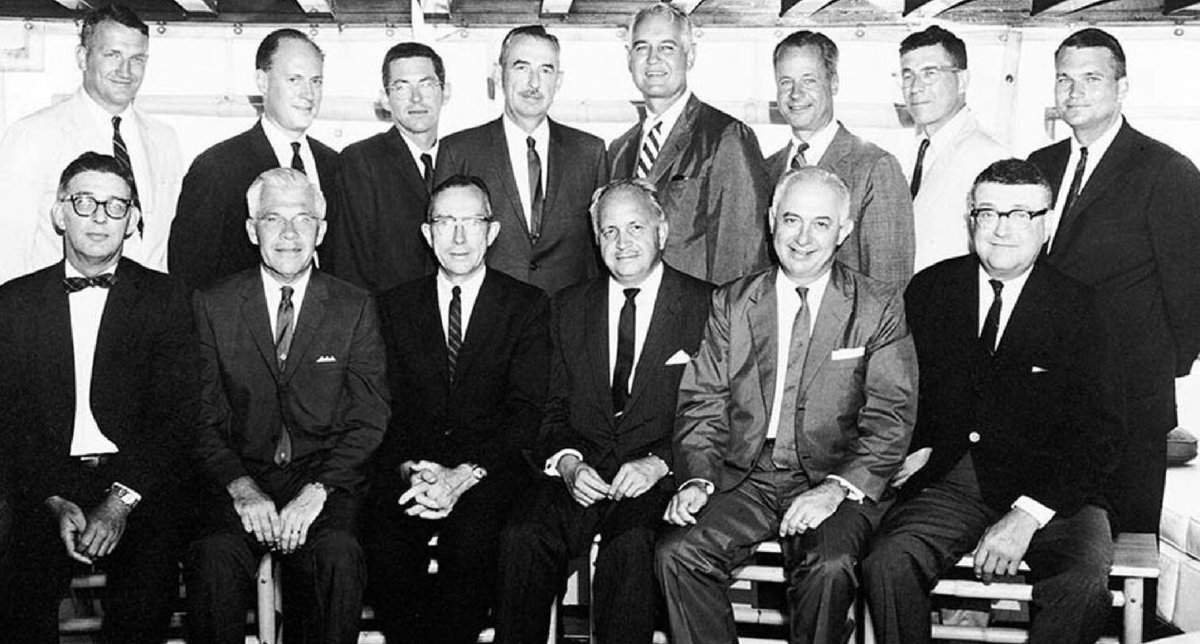
There's an American family with 14 billionaires.
More than any family on Earth.
And they control the ENTIRE global food supply.
It's not the Waltons. It's not the Kochs.
99% of people have never heard their name.
Here's how they became the richest invisible dynasty: 🧵
1,027
9,990
27,414
5,034,676
In 2018, Warren Buffett called Elon Musk's strategy a mistake:
"You need a moat. Pace of innovation isn't enough."
Eight years later, Musk just became the world's first trillionaire.
And it came from ONE play Buffett would never have touched:
December 24, 2008. 6 PM.
Elon Musk had one hour left to save Tesla.
The financing round was scheduled to close at the end of the business day.
If it didn't, payroll would bounce two days later.
Three months earlier, SpaceX had finally launched Falcon 1 into orbit on its fourth try after three straight failures.
Days before Christmas, NASA had awarded SpaceX a $1.6 billion cargo contract.
SpaceX had survived. Tesla had not.
Musk was getting divorced.
The Great Recession was tearing through the economy.
Tesla wasn't profitable and was burning cash faster than it could raise.
He took the last of his cash from the PayPal sale and put all of it into Tesla.
Every dollar of his liquid net worth.
Into a pre-revenue car company in the middle of the worst financial crisis since 1929.
He didn't own a house.
He was borrowing money from friends to pay rent.
This is the bet Warren Buffett's entire framework is designed to prevent you from making.
Diversify. Margin of safety. Never bet the farm. Wait for the fat pitch.
Buffett's playbook has produced one of the great fortunes in history.
19.8% compound annual returns from 1965 to 2023.
A track record nobody else in modern investing can touch.
But Buffett's playbook would have told Musk to fold Tesla that night.
Take the loss. Live to fight another day.
Musk did the opposite of every Buffett principle in one transaction.
The Tesla round closed at 6 PM.
Tesla survived. The compounding started.
17 years later, Musk rang the bell at the Nasdaq for the largest IPO in history.
SpaceX closed up 19% on Friday at a $2 trillion market cap.
His personal net worth crossed $1 trillion.
For context, Berkshire Hathaway took 60 years to reach a $1.05 trillion market cap.
Musk did $1 trillion in 17 years.
By ignoring almost every rule Buffett wrote.
Buffett wasn't wrong. His framework is one of the great achievements in investing history.
What Musk proved is something different.
Conviction in a single asymmetric bet, sized to the limit of survival, can outperform 60 years of perfect diversification.
Musk has openly said he gave SpaceX less than a 10% chance of working when he founded it in 2002.
He put $100 million of his PayPal money in anyway.
Six years later, on Christmas Eve 2008, he doubled down by putting the rest into Tesla.
A 90/10 bet, twice, with 100% of his liquid net worth on the table.
While his marriage was ending and the world was burning.
The world's first trillionaire was made by a man who broke every rule of investing in one December afternoon.
For the rest of us, the system is the edge...
2
14
22
1,485
Surmount helps you automate your investments with rules-based strategies built on data, not 17-year bets you can't afford to lose...
Sign up here: surmount.ai/strategies?utm_s…
103
Jun 12
Everyone's getting a crash-out about the SpaceX IPO for absolutely no reason.
Half of finance Twitter is saying it's the trade of the decade.
The other half is calling it the worst trade possible.
Almost nobody is doing the one thing that actually matters: Reading the numbers.
So let's look at what they actually say:
Start with the financials.
2025 revenue: $18.7 billion, up 33% from 2024.
2025 net loss: $4.9 billion. Accumulated deficit: $41.3 billion. Q1 2026 net loss: $4.28 billion.
The business has three segments now.
1. Connectivity, which is Starlink, did $11.4 billion in revenue and $4.4 billion in operating profit in 2025. A 39% margin. 10.3 million subscribers across 164 countries as of March 2026.
2. Space, the rocket business, did $4.1 billion in revenue and lost $657 million. The company has spent over $15 billion on Starship development.
3. AI, the segment that landed in the company after the February 2026 xAI merger, did $3.2 billion in revenue and lost $6.36 billion.
XAI's losses are absorbing Starlink's operating profit, and the math still comes out red.
Whether that's a problem or the whole point depends on what you think xAI is worth in five years.
That's the bet.
Now the IPO mechanics, because this is the part most retail has never seen explained.
A normal IPO works like this:
1. The company files an S-1.
2. Underwriters publish a price range, say $30 to $35.
3. Management runs a multi-week roadshow meeting institutional investors who submit bids for how many shares they want and at what price.
That process is called book-building. It's how the market discovers what a share is worth before it lists.
After bids come in, the final price gets set. Usually at the top of the range if demand is strong.
SpaceX skipped most of that.
The company announced $135 as a fixed take-it-or-leave-it price. No range. No bid process. Roadshow lasted days, not weeks. Underwriter data shows demand was more than 2x supply, but the price didn't move.
Retail allocation is 30% of the offering, 3x the typical megacap IPO, which usually reserves 5% to 10% for retail.
That cuts both ways.
Retail gets unusually direct access. Fidelity dropped its minimum from up to $500,000 down to $2,000. Robinhood, Schwab, SoFi, and E*TRADE are all open channels.
But there's no built-in price discovery before the open.
Whatever $SPCX trades at on day one is set by real-time buyers and sellers, with no institutional bid-book underneath.
The piece almost no one is reading is the flipping rule.
If you get an allocation through one of the five broker channels and sell too soon, you can get banned from future IPOs.
Fidelity's window is 15 calendar days.
Sell inside it and you're locked out of IPO Access for 6 months on a first offense, a year on a second, and a permanent ban tied to your Social Security number on a third.
Robinhood and SoFi use 30 days. SoFi may also charge a $50 fee on sales before the 120th trading day.
If retail buys at $135 and the stock pops on day one, the instinct is to sell into strength. The flipping rule stops that from being a free move.
History on first-day IPO trading is also worth knowing.
Studies of 2012 to 2021 IPOs show an average first-day pop of 23.6%, but the average three-year return was only 10.6%.
Long-term IPO returns come from how the company performs over years, not what the stock does in the first week.
None of this tells you whether SPCX is a buy or a sell at $135.
What it tells you is that the deal is structured differently from a normal IPO, the segment financials look very different from the headline, and the broker rules on selling are tighter than most realize.
If you're going to participate, at least know what you're participating in.
Jun 11

POV: Investors watching their SpaceX stock after buying the largest loss-making IPO in history
10
21
79
25,164
Jun 12
Surmount helps you automate your investments with rules-based strategies built on data, not headline hype.
Sign up here: surmount.ai/strategies?utm_s…
1
817
Jun 10
Sam Altman waited exactly 21 days after the Elon Musk lawsuit got tossed.
Then he filed for the biggest copycat IPO in tech history.
On May 18, a federal jury in Oakland dismissed Musk's $150 billion case against OpenAI on a statute of limitations technicality.
On June 8, OpenAI confidentially filed its S-1 with the SEC.
Same lead bankers as SpaceX, same confidential filing playbook, same valuation tier.
The man who left OpenAI in 2018 just watched the company he abandoned copy his exit strategy.
And the structural setup matters more than the personal drama:
Musk has spent 22 years building SpaceX as a private company.
He pioneered the modern playbook for keeping a strategic asset out of public markets until it was too big to value rationally.
Private rounds at favorable prices for insiders. Years of secondary market trading at controlled valuations. A dual-class voting structure that locks founder control even after listing.
Then a confidential S-1, a fast roadshow, and a public offering at a price that gives every prior insider an instant repricing.
SpaceX prices Friday at $1.75 trillion.
OpenAI just copied the entire structure.
Altman's most recent private round closed at $852 billion in March.
Analysts now have OpenAI debuting north of $1 trillion later this year.
Same banks. Goldman Sachs and Morgan Stanley sit on the SpaceX deal, on the OpenAI deal, and are circling Anthropic.
Three of the largest IPOs in human history. The same handful of underwriters at every table.
Bloomberg put the combined AI IPO pipeline at $3.6 trillion.
The last time markets saw this much enterprise value coming public in a single window was the dot-com boom.
Now here's where the personal history becomes a structural warning.
Musk and Altman co-founded OpenAI together in 2015. Musk left in 2018 after losing a fight for control. He launched xAI in 2023. He sued for $150 billion in 2024.
The man knows the company from the inside. He believes its for-profit conversion was illegitimate.
And he just lost on a procedural ruling, not on the merits.
In his own words, he called the decision a "calendar technicality" and vowed to appeal.
That appeal will sit over OpenAI's IPO roadshow for the next six months.
A retail investor who clicks buy at $1 trillion is buying a company whose founding structure is still being challenged in court.
That risk does not show up in a marketing deck.
It shows up in the S-1.
A confidential S-1.
The kind retail does not get to read until weeks before the listing opens.
Here is what nobody is saying out loud.
The OpenAI prospectus was likely sitting at the SEC before the jury even returned its verdict.
Insiders, family offices, sovereign wealth funds, and the secondary market platforms that trade OpenAI exposure have known the IPO was imminent for months.
They priced their entries accordingly.
Retail will find out when the roadshow opens and the marketing campaigns begin.
This is the same structure SpaceX used. Insiders at $84 in the December tender. Retail at $135 on day one.
This is the same structure every confidential mega-IPO uses.
According to an analysis published by European Business Magazine, OpenAI lost roughly $1.22 for every dollar it earned in the quarter.
That data point will not be in the public S-1 for months.
By the time it is, the institutions sitting on the term sheets have already built their positions.
Forget about Musk and Altman for a second.
The IPO playbook has been the same for two decades. Insiders first, institutions second, retail at the listing price.
The names on the front of the prospectus change. The structure does not.
Surmount helps you automate your investments with rules-based strategies built on data, not the next billionaire IPO.
1
6
25
4,775
Jun 8
BREAKING: SpaceX is set to IPO on June 12 at a $1.77 trillion valuation.
$75 billion raise. $135 a share. Ticker SPCX on the Nasdaq.
If it prices at those numbers, it will be the largest IPO in human history.
And the math behind it should make every retail investor stop and think.
Here's what's actually being priced in, and what nobody on finance Twitter is telling you:
SpaceX generates roughly $15 billion in annual revenue.
A $1.77 trillion valuation on that is a price-to-sales ratio of 118x.
For context, traditional aerospace companies trade at 2x to 6x sales.
Big Tech mega-caps generally trade between 10x and 30x sales.
Nvidia, in the middle of the most hyped AI buildout in history, sits well below 118x.
The SpaceX IPO would price the company at roughly 4x the sales multiple of the most expensive megacap on the board.
That is not pricing a company.
That is pricing a thesis.
The thesis goes like this:
Starlink becomes the dominant global ISP, sitting above every legacy telecom on the planet.
Falcon 9 and its successors hold a near-monopoly on orbital launches.
Starship unlocks lunar contracts, defense logistics, space manufacturing, and eventually Mars.
All three play out. Over decades. Without major execution failures.
If every assumption hits, the bull case Ron Baron has floated puts SpaceX at $10 trillion to $30 trillion in future market cap.
That is what you're actually buying at $135 a share.
Not a $15 billion revenue business.
A 20-year compound bet that one company dominates three separate industries simultaneously.
Now here's the part the headlines are skipping.
Pre-IPO investors who got in during the December 2025 tender offer paid the equivalent of $84 a share after the 5-for-1 split.
Insiders have a $3.75 billion share allocation with no lockup. They can sell on day one.
Retail gets 30% of the public float at $135.
That is 3x the normal mega-cap allocation for retail, with a dedicated retail event the day before listing.
Three tiers, three different prices, same company.
This is the structural reality of every megacap IPO.
Institutions and insiders get the early entry.
Retail gets the public float at the marketed price.
Nothing about that is unique to SpaceX. It is how the system is built.
The wealthy understand this and treat IPOs accordingly.
They wait for lockups to expire, watch how index inclusion changes flow, and size positions to the structure rather than the headline.
Most retail investors do the opposite.
They see the biggest IPO in history, hear the trillion-dollar valuation, and click buy on day one.
By the time the index inclusion announcement comes through and the passive funds have to buy, retail has already paid the highest price in the stack.
Here is what makes SpaceX worth watching, regardless of what you decide to do:
Starlink is genuinely one of the most impressive infrastructure businesses ever built, Falcon 9 has rewritten the unit economics of getting to orbit, and Starship is the most ambitious aerospace program in history.
If even half of what Musk has signaled actually plays out over the next 20 years, the long-term case is real.
The question is not whether SpaceX is a great company.
The question is whether the price you pay on day one of a frenzied IPO leaves any room for compound returns over a decade.
Buying a great company at the wrong price is still buying the wrong price.
The investors who win this trade will not be the ones who tweeted hardest about it Friday morning.
They will be the ones who had a system, sized accordingly, and ignored the noise.
Surmount helps you automate your investments with rules-based strategies built on data, not hype cycles.
71
102
1,114
138,818
Jun 5
BREAKING: Alphabet just executed the largest equity raise in human history.
$84.75 BILLION in a single offering.
That tops Petrobras' $70 billion deal in 2010, which had stood as the record for 16 years.
But there's a big caveat to this that most don't realize...
Here's what actually happened, and why retail investors keep losing the same game:
Monday, June 1.
Alphabet announces an $80 billion equity raise to fund AI infrastructure.
By Tuesday, the deal got upsized to $84.75 billion.
When a company issues that much new stock, every existing share owns a slightly smaller slice of the business.
That is what spooked retail.
They saw the press release Monday night and dumped the stock.
Stocktwits sentiment went bearish and stayed there.
Microsoft fell 3.17% in sympathy. The dilution panic ran through every Big Tech name with AI exposure.
By Wednesday, $GOOGL closed at $358.68. Down about 4% from where it sat before the announcement.
Now look at who was selling to whom.
Buried in the SEC filing is a $10 billion private placement to Berkshire Hathaway.
Done before the public ever saw the deal.
Berkshire's entry price is on the filing.
$351.81 per share for Class A. $348.20 per share for Class C.
Both below where retail panic-sold the next day.
Warren Buffett got a fixed-price allocation.
The institutions in the $30 billion underwritten offering got the same treatment through their bank desks.
They knew the price range in advance and committed before the open.
The remaining $40 billion will drip into the market through an at-the-market program over Q3 and Q4.
That is the bucket retail order flow gets absorbed into.
Same stock. Three different doors.
This is the part of capital markets retail investors are not told about.
When a megacap raises capital, the structure of who gets in first is decided before the rest of the market sees a single news alert.
Berkshire wrote a $10 billion check at a discount.
Retail bought into a stock the next day and sold the morning after that when the dilution narrative scared them.
The dilution panic is what made the trade work for everyone who got the early call.
Goldman Sachs co-CEO Anthony Gutman called the raise "unprecedented territory." Berkshire wrote a $10 billion check anyway.
This is the same lesson Pershing Square's IPO taught last month. The same lesson the Blue Owl gates taught last quarter.
The wealthy do not pay famous money managers for personality.
They build systems that do not depend on getting the headline at the same time as everyone else.
Most retail investors will never get a private placement at $351.81 a share.
What they can build is a process that does not react to every dilution headline as if it is a verdict.
Surmount helps you automate your investments with rules-based strategies built on data, not headlines...
3
20
76
19,153
Jun 4
THE MARKET IS PRICING CALM.
The supply chain is not.
That is the warning investors should be watching.
The New York Fed’s global supply chain pressure index stayed elevated in May.
Not crisis-level.
But high enough to matter.
And the reason is obvious:
Energy disruption.
Shipping uncertainty.
Middle East conflict.
Trade routes under pressure.
Inventories that cannot be rebuilt overnight.
This is where markets often get it wrong.
Inflation does not need one giant shock to come back.
It can rebuild quietly through logistics.
Longer routes.
Higher freight costs.
Delayed cargo.
Tighter inventories.
More expensive energy.
More fragile margins.
Investors keep treating supply chain risk like a pandemic-era problem.
But global trade never became simple again.
It just became easier to ignore while stocks were going up.
That matters because the market is still priced for a clean story:
AI-led growth.
Stable supply.
Falling inflation.
A Fed that eventually cuts.
But if supply pressure stays elevated, that story gets harder to defend.
The Fed cannot cut aggressively into a new inflation impulse.
Companies cannot protect margins forever.
Consumers cannot absorb every price increase.
The market does not need another 2021 supply shock to reprice.
It only needs enough friction to keep inflation sticky.
If supply chains are still flashing pressure while stocks price perfection, what part of this rally is actually prepared for it?
2
7
7
615
Jun 4
The quant version of this is live on our automated strategy marketplace. surmount.ai/strategies
332
Jun 4
THE MARKET IS STILL PRICING RELIEF.
The Fed is starting to sound like the opposite.
That is the risk.
Investors spent months building around one assumption:
Rates eventually come down.
But that assumption is getting harder to defend.
AI investment is still running hot.
Oil is still pressuring inflation expectations.
Labor demand has not broken.
Stocks are near record highs.
And financial conditions are loose enough that the Fed may not see a reason to rescue the market at all.
This is where positioning gets dangerous.
The market does not need an immediate rate hike to reprice.
It only needs the Fed to remove the cut story.
First the dot plot changes.
Then guidance changes.
Then investors start asking the question nobody wanted to ask:
What if the next real Fed surprise is tighter policy, not easier policy?
That would hit everything priced for cheap capital returning.
Long-duration tech.
AI infrastructure.
Private credit.
Leveraged balance sheets.
Rate-sensitive consumers.
The rally has been built on growth optimism.
But if inflation stays sticky and the Fed turns more hawkish, valuation becomes the problem again.
Markets can handle higher rates when earnings are accelerating.
They struggle when everyone is already positioned for perfection.
If the Fed is not coming to help, what part of this rally is actually mispriced?
1
6
6
641
Jun 4
This doesn’t have to be a manual process. Automate the strategy on Surmount. surmount.ai/strategies
366
Jun 4
🚨 THE AI TRADE JUST GOT A REALITY CHECK.
Broadcom did not collapse because AI demand disappeared.
It fell because expectations got too extreme.
That is the part investors need to understand.
The company is still forecasting massive AI chip growth.
It still sees long-term AI revenue opportunity.
It is still one of the most important infrastructure suppliers behind the boom.
And yet the stock dropped sharply after results failed to clear the market’s bar.
That is not an AI demand problem.
That is a valuation problem.
When a stock is already priced like everything has to go right, “good” is no longer good enough.
This is how crowded trades start to change character.
First, investors buy the obvious winners.
Then they pay higher and higher multiples for certainty.
Then the market starts demanding perfection.
That is where AI is now.
The buildout is real.
The revenue is real.
The infrastructure demand is real.
But the market has started treating every AI-linked company like it deserves unlimited upside with limited risk.
That is not investing.
That is narrative momentum.
Broadcom may still be a long-term winner.
But today’s move is a warning:
Even great businesses can become fragile when expectations outrun the numbers.
If AI leaders are starting to sell off on strong growth, what happens when one of them actually disappoints?
2
7
9
724
Jun 4
We have systematic investment strategies built around this running live on Surmount. surmount.ai/strategies
216
Jun 3
THE MARKET LOOKS CALM.
Underneath, it is not.
The VIX is still low.
Indexes are still sitting near record highs.
And investors are acting like this rally is orderly.
But individual stocks are moving violently.
Dell jumped more than 30% in one session.
Marvell surged after AI enthusiasm exploded around the name.
Other large-cap tech stocks are swinging like speculative small caps.
That is the real signal.
The index is hiding the volatility.
AI is creating winners fast.
But it is also creating dispersion, crowding and fragile positioning.
This is what happens late in a powerful theme.
The headline market looks stable because a handful of winners keep carrying the weight.
But beneath the surface, capital is rotating aggressively from one AI story to the next.
That is not broad strength.
That is a market searching for the next name to justify the valuation already priced into the theme.
The danger is not just a selloff.
The danger is correlation.
When individual stocks move wildly while the index stays calm, investors start believing risk has disappeared.
It has not.
It has moved underneath the surface.
If volatility is hiding inside single stocks, what happens when it finally comes back to the whole market?
3
8
9
809
Jun 3
The quant version of this is live on our automated strategy marketplace. surmount.ai/strategies
297
Jun 3
🚨 THE MARKET IS STILL TRADING LIKE OIL IS A SIDE STORY.
It is not.
Brent is closing in on $100.
The Middle East conflict is escalating.
U.S. stocks just pulled back from record highs.
And investors are still trying to hold two opposing views at once:
AI will keep growth alive.
Oil will not restart inflation.
That is a dangerous setup.
Because oil does not only hit energy traders.
It hits consumers.
Airlines.
Shipping.
Manufacturing.
Margins.
Inflation expectations.
Treasury yields.
Fed policy.
The market keeps treating geopolitical risk like a headline problem.
But energy is a balance sheet problem.
If crude stays elevated, the pressure moves through the system fast.
Higher input costs.
Weaker discretionary spending.
Less room for rate cuts.
More pressure on leveraged companies.
More stress on every strategy built around cheap capital returning.
That is where the risk sits.
The AI trade can keep carrying sentiment.
But it cannot repeal the economics of higher energy costs.
Markets do not break because investors missed the obvious story.
They break because investors convinced themselves the obvious story would not matter.
If oil pushes back above $100, what part of this rally is actually priced for it?
1
8
9
654
Jun 3
This doesn’t have to be a manual process. Automate the strategy on Surmount. surmount.ai/strategies
326