University Librarian @BYU. Latter-day Saint. @ScholarlyKitchn Chef. Clawhammer banjo. Roots reggae. Goldendoodles. Mexican food. My tweets = my own opinions.
- Tweets 5,752
- Following 53
- Followers 2,436
- Likes 884

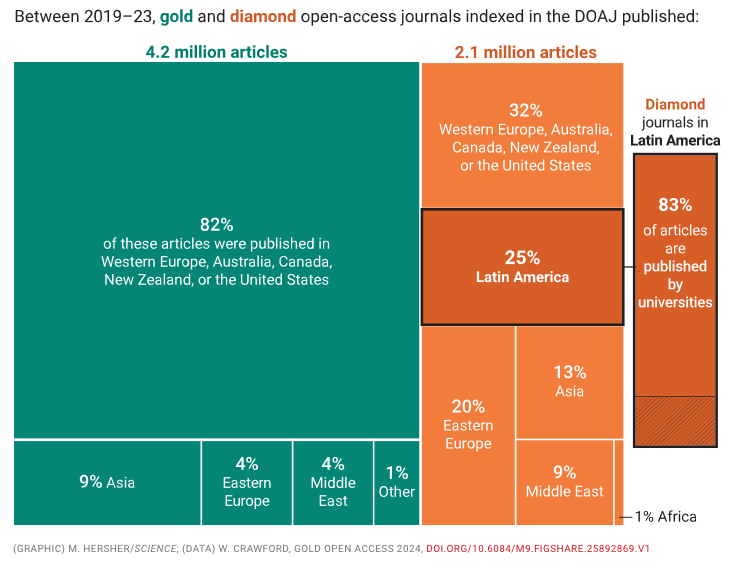





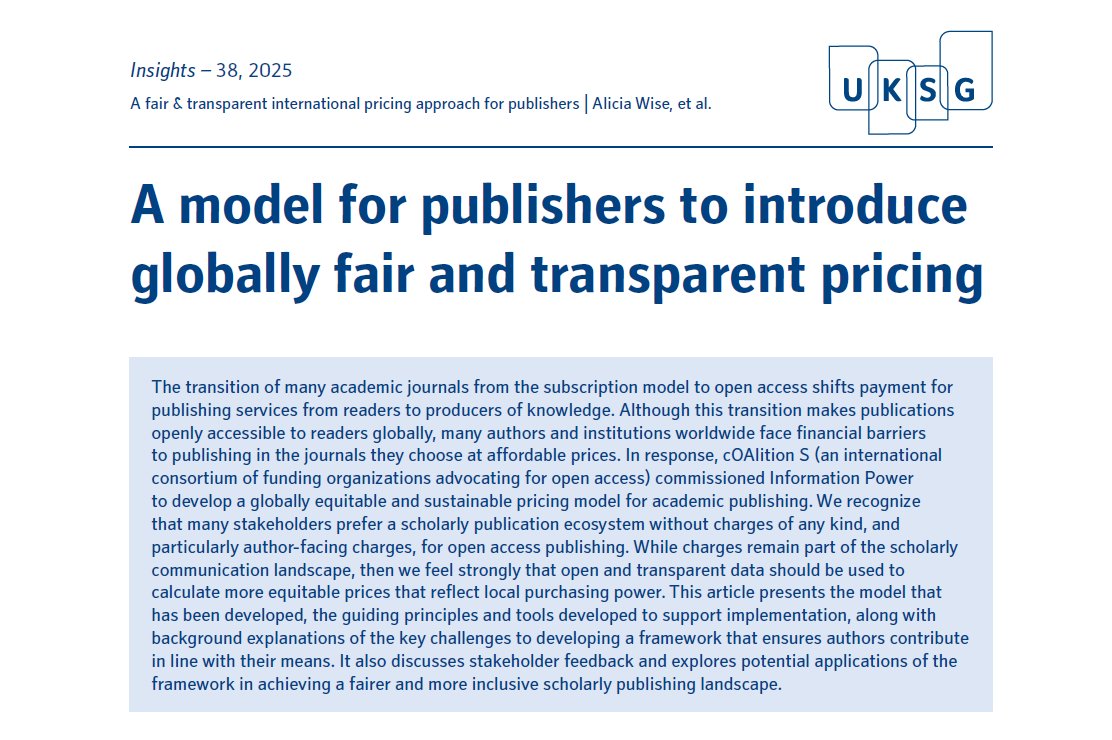
ALT The transition of many academic journals from the subscription model to open access shifts payment for publishing services from readers to producers of knowledge. Although this transition makes publications openly accessible to readers globally, many authors and institutions worldwide face financial barriers to publishing in the journals they choose at affordable prices. In response, cOAlition S (an international consortium of funding organizations advocating for open access) commissioned Information Power to develop a globally equitable and sustainable pricing model for academic publishing. We recognize that many stakeholders prefer a scholarly publication ecosystem without charges of any kind, and particularly author-facing charges, for open access publishing. While charges remain part of the scholarly communication landscape, then we feel strongly that open and transparent data should be used to calculate more equitable prices that reflect local purchasing power.
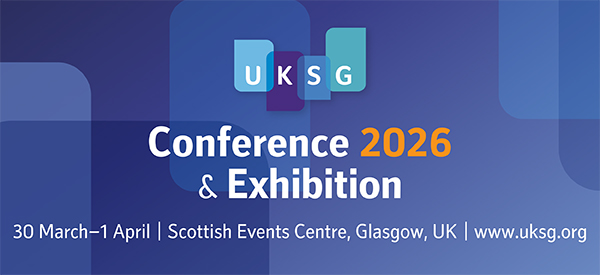
ALT UKSG Conference and Exhibition 30 March - 1 April 2026 Scottish Events Centre, Glasgow
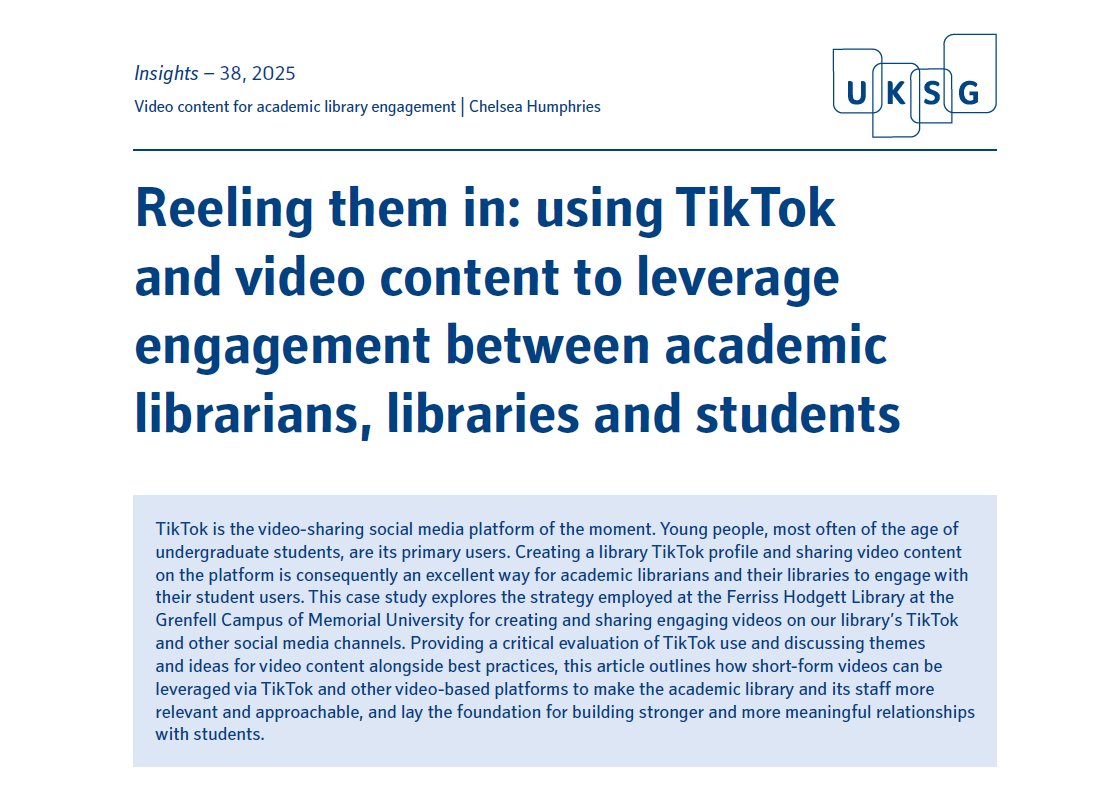
ALT TikTok is the video-sharing social media platform of the moment. Young people, most often of the age of undergraduate students, are its primary users. Creating a library TikTok profile and sharing video content on the platform is consequently an excellent way for academic librarians and their libraries to engage with their student users. This case study explores the strategy employed at the Ferriss Hodgett Library at the Grenfell Campus of Memorial University for creating and sharing engaging videos on our library’s TikTok and other social media channels. Providing a critical evaluation of TikTok use and discussing themes and ideas for video content alongside best practices, this article outlines how short-form videos can be leveraged via TikTok and other video-based platforms to make the academic library and its staff more relevant and approachable, and lay the foundation for building stronger and more meaningful relationships with students.
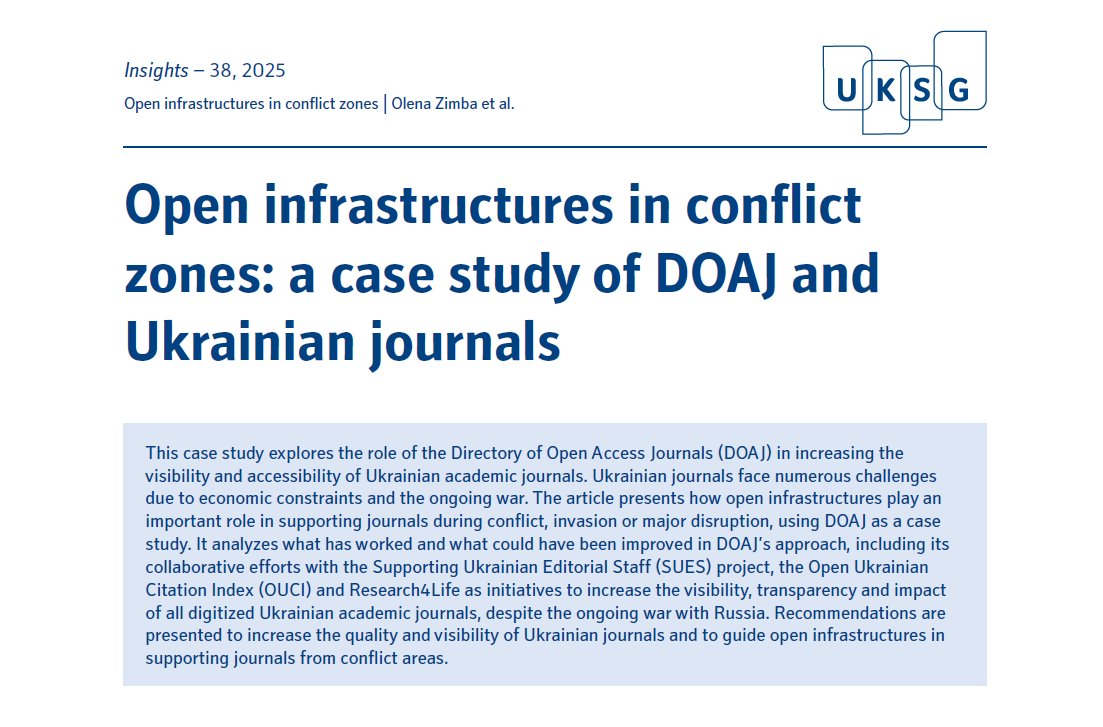
ALT This case study explores the role of the Directory of Open Access Journals (DOAJ) in increasing the visibility and accessibility of Ukrainian academic journals. Ukrainian journals face numerous challenges due to economic constraints and the ongoing war. The article presents how open infrastructures play an important role in supporting journals during conflict, invasion or major disruption, using DOAJ as a case study. It analyzes what has worked and what could have been improved in DOAJ’s approach, including its collaborative efforts with the Supporting Ukrainian Editorial Staff (SUES) project, the Open Ukrainian Citation Index (OUCI) and Research4Life as initiatives to increase the visibility, transparency and impact of all digitized Ukrainian academic journals, despite the ongoing war with Russia. Recommendations are presented to increase the quality and visibility of Ukrainian journals and to guide open infrastructures in supporting journals from conflict areas.