
1,466 Photos and videos





Loster retweeted

Hello world
I’m considering making this my final post.
It feels as though we’ve become too heavy for everyone, and that the story we carry no longer has anyone left to hear it

24
56
139
815

Loster retweeted

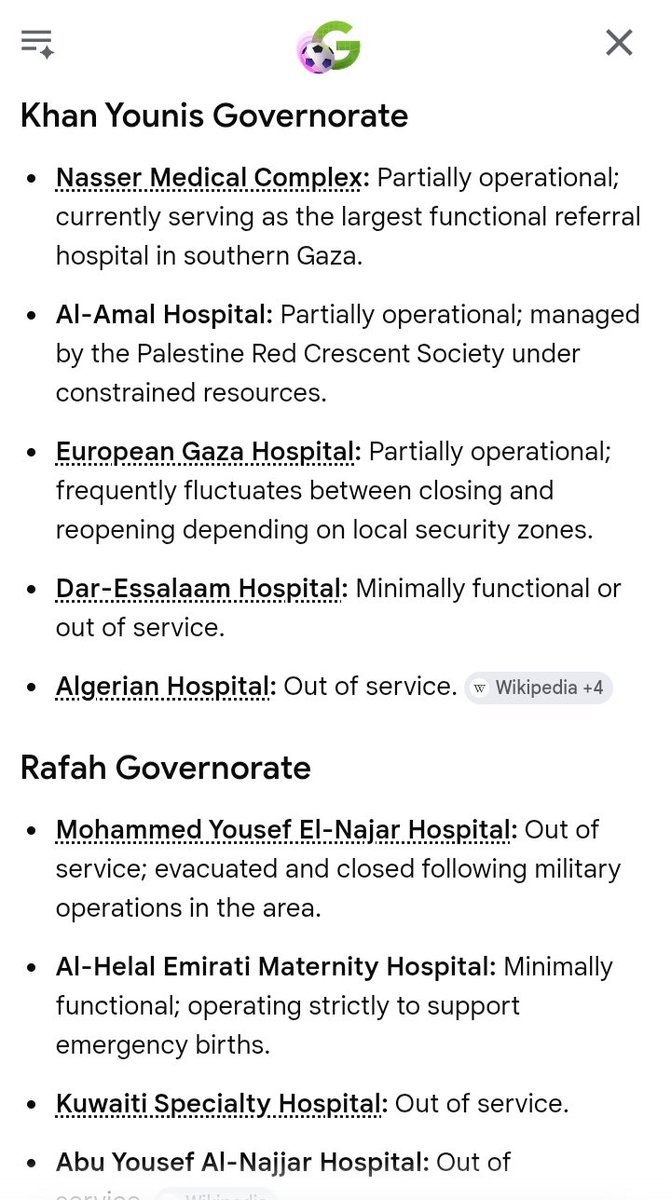
The healthcare sector in Gaza is witnessing a complete collapse, and what I just saw inside the hospital was a scene beyond description.
I saw a person whose foot had been amputated as a result of a direct targeting by the Israeli army, and he was screaming and crying in unbearable pain. He could no longer endure it, so he began pleading with the doctor to give him any painkiller or anesthetic that could ease his suffering.
But the shock came in the doctor’s response; he told him that they no longer had any type of pain medication available.
At that point, overwhelmed by pain and helplessness, the injured man began hitting himself because he could no longer bear what he was feeling, and he had no option except to wait until any pain relief became available to ease his suffering.
What patients and the wounded in Gaza are experiencing is a harsh reality that goes beyond the limits of human endurance, amid Israel’s continued prevention of the entry of medicines and medical supplies into Gaza entirely.
17
257
422
4,684
They seemed to have reset weekly usage as a result of this too. Back to 100% free.
Jun 13

The US government, citing national security authorities, has issued an export control directive to suspend all access to Fable 5 and Mythos 5 by any foreign national, whether inside or outside the United States, including foreign national Anthropic employees.
The net effect of this order is that we must abruptly disable Fable 5 and Mythos 5 for all our customers to ensure compliance.
Access to all other Claude models is not affected.
We apologize for this disruption to our customers. We believe this is a misunderstanding and are working to restore access as soon as possible.
Read our full statement: anthropic.com/news/fable-myt…
13
Kind of incredible really. Was just sitting down to ask Fable to do something.
Jun 13
The US government, citing national security authorities, has issued an export control directive to suspend all access to Fable 5 and Mythos 5 by any foreign national, whether inside or outside the United States, including foreign national Anthropic employees.
The net effect of this order is that we must abruptly disable Fable 5 and Mythos 5 for all our customers to ensure compliance.
Access to all other Claude models is not affected.
We apologize for this disruption to our customers. We believe this is a misunderstanding and are working to restore access as soon as possible.
Read our full statement: anthropic.com/news/fable-myt…
23
Loster retweeted

Jun 12
BREAKING: Justice Jeremy Johnson has ruled that the Filton 4 will be sentenced as terrorists – even though two juries refused to convict them of violence charges over their efforts to disable an Israeli factory in the UK making killer drones for use in Gaza. They were found guilty of a minor charge of criminal damage.
Judge Johnson kept the jury in the dark of his plans to sentence the four as terrorists. This is the first time in British legal history that anyone has been sentenced as a terrorist for damaging property. It's a very dark moment in an increasingly authoritarian Britain.
Thousands of legal professionals complained about Johnson's clear abuses of legal procedures to help the government's case for proscribing Palestine Action as a terrorist group.
Johnson has now proved this was always a show trial.
I explain how he rigged the two trials here: jonathancook.substack.com/p/…

403
4,053
6,418
177,775

"This is the final farewell between P_alestinian prisoners and their loved ones moments before they are taken away forever.
On March 30, 2026, thousands were condemned under “t*errorism” charges, a profound injustice. Nearly 11,000 lives—most of them young, now stand on the edge of silence.
We live in a world where videos of lonely penguins and playful monkeys go viral in seconds… yet speaking about prisoners in P_alestine feels heavy, constrained, almost forbidden.
And somewhere between our silence and our fear, their stories begin to fade…"
©aestheteofyoursoul
267
6,788
10,720
153,940
Loster retweeted

Jun 11
Just moments ago, I was looking up at the sky above me when I saw a brightly lit fighter jet speeding overhead. I paid little attention, as I have become accustomed to this sight. Moments later, the sky lit up with a massive fireball, followed by the deafening sound of a huge explosion.
We are still being bombed without pause. Gaza’s sky is still ablaze with explosions and airstrikes, and the genocide is still ongoing.
Will you save us before it is too late?
6
156
458
14,695
This stuff is powerful exactly because you know the guy has been through hell and back.
You'll see similar inspo posts all over your timeline but there's a difference when it comes from someone *you can tell* has really suffered...
Jun 12

To everyone so eager to cancel someone for a tattoo they got at age 22, a drunk text, a selfie they took in the middle of a mental health crisis:
Show us your laptop.
Show us your iCloud.
Open your entire digital life to your worst enemy. No context. No filter. No explanation.
You won’t.
You won’t because you know what I know. Any one of us, frozen at our worst moment, photographed in our lowest hour, looks like a monster. Looks like a stranger. Looks like someone who deserves to be cast out.
That is not who we are.
My mom and baby sister were killed in a car accident when I was just a kid. Cancer took my brother Beau, my best friend and my rock. I battled alcoholism. I battled addiction. I chose the coward’s way out more times than I can count.
For years I believed the defining chapters of my life were written by tragedy, loss, and shame.
I no longer believe that.
Pain can shape us. Loss can humble us. Failures can leave scars that never fully fade. But none of them have the authority to define us.
And it sure as hell ain’t the critic that counts.
That authority belongs to us alone-the person in the arena.
Every setback presents a choice. Play the victim, or cut the bullshit and take ownership for who we become next.
Life does not determine our character. It reveals it.
Again and again we are asked the same question. When shit happens, what next?
We are not defined by what happened to us. We are not defined by the worst photo, the worst text, the worst tattoo, the worst night. We are defined by the person we choose to become. And by the courage to choose that person, every single day.
So before you reach for the gavel - show us your laptop.
You won’t.
The whole world saw mine. And I am still here. Still becoming. Still choosing. Still standing.
That is the only definition that matters.
1
13

Loster retweeted

Jun 11
Israel is bombing Gaza right now. Speak about Gaza; we die a hundred times every day between bombardment, hunger, and fear. Do not let our suffering be forgotten💔
5
72
67
1,114
I've felt a lethargy in last few days that is so wicked. It's not part of my usual symptoms. Mostly a new one.
I can't tell you how depressing it is. Feels like being pulled down into the pit energetically. It's hell.
Is this what my MECFS bro's & sis's experience regularly??
2
59
Loster retweeted

Jun 10
You would think when everyone has a couple of MCPs and frontier LLMs to-hand, consulting businesses like mine would be toast. Why pay Speedshop four figures a month to fix your app when "an LLM can just do it for me?"
I've been running at 100% capacity for the past year despite all the advances on the model front. Why?
1. You've gotten more effective, but so have I. What _I_ can accomplish with an hour $50 of tokens is still 10x what _you_ can accomplish with that.
2. You still don't know what questions to ask. Consultants are _still_ more effective than LLMs at answering the unknown unknowns, whereas LLMs still require you to prompt them. The "analyze my entire codebase" skill you have is nowhere near as effective as what I can do.
3. Trust and blame-ability. Everyone is sitting on piles of now _hundreds_ of pull requests which are generated by agents but they are too nervous to merge without human review. I am that human review and accountability now, or I am the expert who helps you build the software factory which can automate this trust and verification process (which you cannot build yourself because you don't know how to verify software for performance).
4. Not all problems are LLM-shaped. Certain problems are a great fit for "token generator in a loop": fix all my N 1s, make my test suite faster. But others are very, very poorly shaped for LLMs: refactor my codebase to fit Russian Doll caching (it will generate an utter hackjob), prioritize 100 different possible things I could be doing, define the goals of performance work, etc. Drudgery is now automatable, yes, but not all the work we do is drudgery.
5. Not all useful knowledge is in the training data. I have ten years of experiences and knowledge from working on literally hundreds of applications which never made it to my blog or books and does not appear in the training set. I know things the LLMs do not.
There are probably more reasons. And I'm not just sitting on my laurels either, I still feel the pressure to get better every day as the frontier capabilities continue to grow. But the business is still good.
8
11
197
11,970
Loster retweeted

"Poll after poll shows the UK and US publics have switched their support from the Israelis to the Palestinians. And the response from the pro-Israel people in power, having seen that they cannot win the argument on Palestine, is to now prevent the argument from happening."

Assault on free speech endemic. In Australia, an 'antisemitism envoy' declared war on criticism of Israel, pressured government to adopt flawed IHRA definition of antisemitism, intimidated universities, and sought to muzzle the national broadcaster QED
theguardian.com/commentisfre…
15
333
690
9,392
Loster retweeted

Jun 10
The best case explanation is you got carried away and allowed yourself to be played by a losing faction in an empirical argument. Not good but it happens. None of us are immune.
Opinion differences are fine, if course but this article’s problems are way, way beyond that.
This is extremely high stakes for some terribly ill people, and should motivate you to fix this as best you can and actually and fully step away unless you are willing to do a lot of work to understand the topic.
But even if that’s not enough motivation, frankly, all that further doubling down on this framing for this issue will get you is give other people examples to use in their writing of empirically poor, biased and very harmful framings that made their way to articles and books as late as 2026. You decide how close to Andrew Wakefield you want your name.
And I say this is someone who is very critical of the mind/body duality in medicine and who has written a lot about the problems with definition of Long Covid. I am not speaking lightly.
2
4
48
3,556
Loster retweeted

My little sister Siham asked me today if we could return to the sea again.
Children in Gaza become attached to small moments of peace very quickly… because they know how quickly they disappear.

I did not expect so many people to care about one small moment of happiness from Gaza.
Thank you for seeing us as human beings 🤍
6
85
331
3,697
Loster retweeted

Jun 10
Beautiful Habiba Al-Askari is one of 6,000 amputation cases in the Gaza Strip since the beginning of the genocide. Imagine that 4,000 of this total are children. You can also imagine that Gaza represents the highest rate of child amputees relative to its population, making it the largest concentration of child amputees in the world 💔

91
1,810
2,462
35,352