
Blockchian Engineer | Backend Developer | @LiskHQ Pioneer | Engineer @blockfuselabs |
Joined May 2024
- Tweets 832
- Following 421
- Followers 188
- Likes 1,809
114 Photos and videos







Pinned Tweet

28 Oct 2025
9
746
Lucky Kamshak retweeted
How Ethereum plans to replace BLS with Post-Quantum signatures by @hashcloak
hashcloak.com/blog/how-ether…
15
49
189
39,936
Lucky Kamshak retweeted

Jun 1
So cool to see there's a Nigerian Blockchain Lab building an ethereum consensus client @geanclient
It's our time 💪🏾
2
8
108
3,434
May 27
Happy birthday ma brother @SuleimanShaaibu
More fruitful year ahead.
Keep the energy going on LeanEthereum
hit am hard this year bro

1
11
Lucky Kamshak retweeted

May 26
.@kassandraETH @ncsgy and others have been working hard for nearly a year on Kohaku.
Kohaku's goal is to make two twin properties:
* Security (and trustlessness)
* Privacy (read and write)
a reality on the access layer.
Security and privacy on Ethereum must be normal.

I want to get a bit more public about the work we at the Kohaku Initiative inside the EF are doing
I notice there's hype but there's also confusion. Best way to clarify things is to speak candidly and openly about what I'm working on day-to-day
🧵time (bc i dont pay twitter $)
289
167
1,218
194,952
May 18
🔥 ✈️
May 18

A major milestone for Gean and another step toward production-grade Lean Ethereum consensus infrastructure in Go.
Live dashboard: hive.leanroadmap.org
6
Lucky Kamshak retweeted

May 18
A major milestone for Gean and another step toward production-grade Lean Ethereum consensus infrastructure in Go.
Live dashboard: hive.leanroadmap.org
5
8
184
Lucky Kamshak retweeted

May 1
We are that good… yes, we mean the people behind Blockfuse Labs 😌
One “Happy Workers’ Day” isn’t enough.
To the engineers building.
The media team telling stories.
And everyone doing the unseen work.
This one is for you 🥂
Happy Workers' Day.
#WorkersDay #BlockfuseLabs

4
13
197
May 1
🔥
May 1

We have completed devnet-4 development and currently participating in the devnet-4 multi-client interop run.
Here are some of the notable implementations done for devnet-4
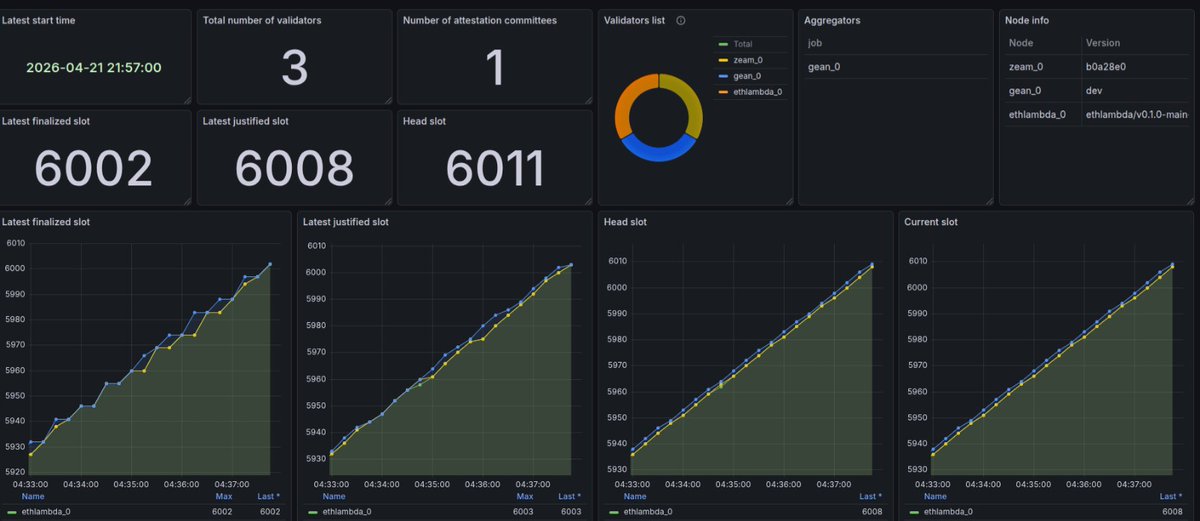
9
Lucky Kamshak retweeted

Apr 21
Post-quantum signatures are massive, threatening Bitcoin throughput.
What if we combined stateful efficiency with stateless safety?
Let's decrypt SHRINCS & SHRIMPS: new @Blockstream proposals for compact PQ signatures. 🧵👇
1
7
35
2,179
Apr 21
Thanks a lot @blockfuselabs
Apr 19

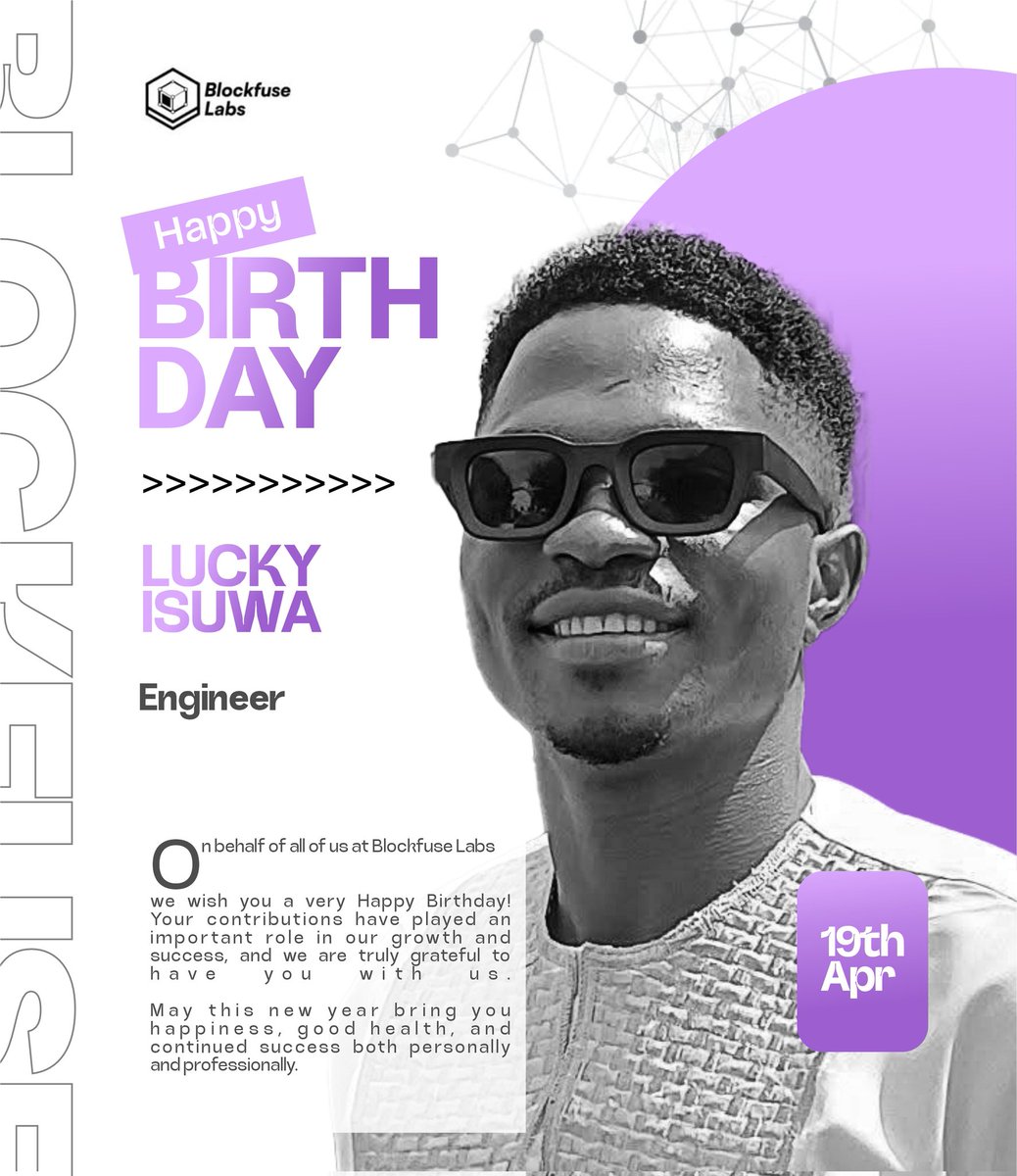
Happy birthday, @LuckifyT. 🎉
Your friendliness is not just a trait, it is a gift.
The way you show up with empathy and patience makes learning easier and building less intimidating for every builder around you.
That is what makes you not just an engineer, but a truly great teacher.
Wishing you more impact, more growth, and more lives changed.
With love from Blockfuse Labs ❤️
#BlockfuseLabs #DevCommunity #TechEducation
2
9
Lucky Kamshak retweeted
Apr 18
Standard RISC-V has 32 registers.
In hardware, spilling to cache is cheap.
In zkVMs, every memory operation is an expensive constraint to prove.
What happens if we hack LLVM to give RISC-V 1024 registers?
A breakdown of @leonardoalt's latest experiment. 🧵👇
2
27
272
98,439
Lucky Kamshak retweeted

Apr 15
Live now: access control and the key risks that lead to capture.
With @jchaskin22, joined by @alextnetto, founder of @blockful_io.
x.com/i/broadcasts/1lJQRvjBm…
7
18
86
5,770
Lucky Kamshak retweeted

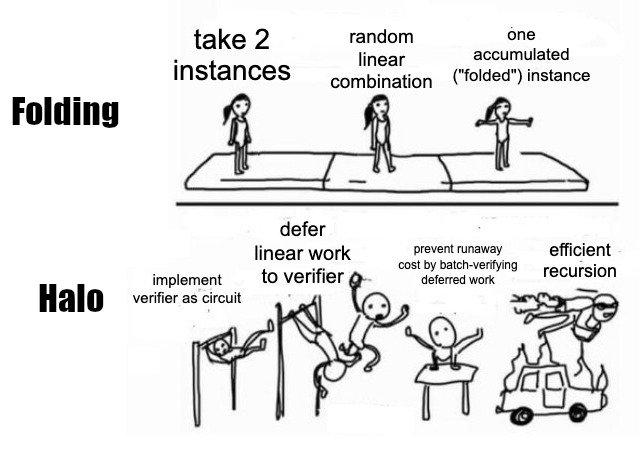
as a beginner, I found folding schemes to be quite easy to learn in contrast to the original Halo construction which seemed more complex.
this led me down a rabbit hole
"from simple to complex and back again"
cnode.phd/humble_origins_of_…

2
4
44
4,273
Lucky Kamshak retweeted
Apr 10
We’re entering a stabilization phase for leanSpec, which requires adding a large number of test vectors.
We’ve opened many good first issues (one per test) to enable parallel work.
Feel free to comment to get assigned 👇
github.com/leanEthereum/lean…
2
7
34
1,437
Lucky Kamshak retweeted
Ethereum’s consensus faces a tough tradeoff: faster slots mean slower finality, and vice versa.
But what if we decouple them? A new post on EthResearch explores Decoupled Consensus using the Goldfish protocol.
Here is a breakdown of how it works. 🧵👇
6
10
74
7,062
Lucky Kamshak retweeted
Mar 31
Poseidon1 is now implemented for Mersenne31, including SIMD acceleration!
github.com/Plonky3/Plonky3/p…
6
24
725
Lucky Kamshak retweeted
Mar 26
New good first issues just added to improve leanSpec test coverage!
Feel free to comment on them to be assigned!
github.com/leanEthereum/lean…
Mar 23

We’ve added a good first issue to the leanSpec Python repo for new contributors to start working on this community effort:
github.com/leanEthereum/lean…
Let us know if you’d like to contribute, we can add more similar tasks.
2
4
23
1,278
Lucky Kamshak retweeted
Mar 24
Today, several teams at the EF are launching pq.ethereum.org, a dedicated resource for Ethereum's post-quantum security effort.
What started with early STARK-based signature aggregation research in 2018 has grown into a coordinated, multi-team effort, all open source.
The Post-Quantum team and Cryptography teams, with help from the Protocol Architecture and Protocol Coordination teams, have been working on this body of work for 8 years.
At pq.ethereum.org you'll find:
- How PQ impacts each protocol layer
- The full PQ roadmap (strawmap.org)
- Open resources: repos, specs, papers, EIPs
- FAQ: 14 questions across 5 categories, written by the PQ team
- A 6-part lean Ethereum interview series (@zeroknowledgefm)
- Interest form for the 2nd Annual PQ Research Retreat (Cambridge, UK, Oct 2026)
- 10 client teams are already building and shipping devnets weekly through PQ Interop.
All the work is public and all of it is open.
pq.ethereum.org
91
251
967
94,826
Lucky Kamshak retweeted

Mar 23
Gean just started participating in its first devnet run.
Today we synced with devnet-3 alongside other lean consensus clients.
Here are some of the notable improvement and implementations tested in devnet-3
12
7
27
528