
math, ML, metaphors, mind-reading, markov, musicals || singularity-aware prioritization || @UniofOxford, SF || daily at substack.com/@lydianottingha…
Joined February 2019
- Tweets 745
- Following 2,161
- Followers 998
- Likes 7,462
184 Photos and videos






Jun 13
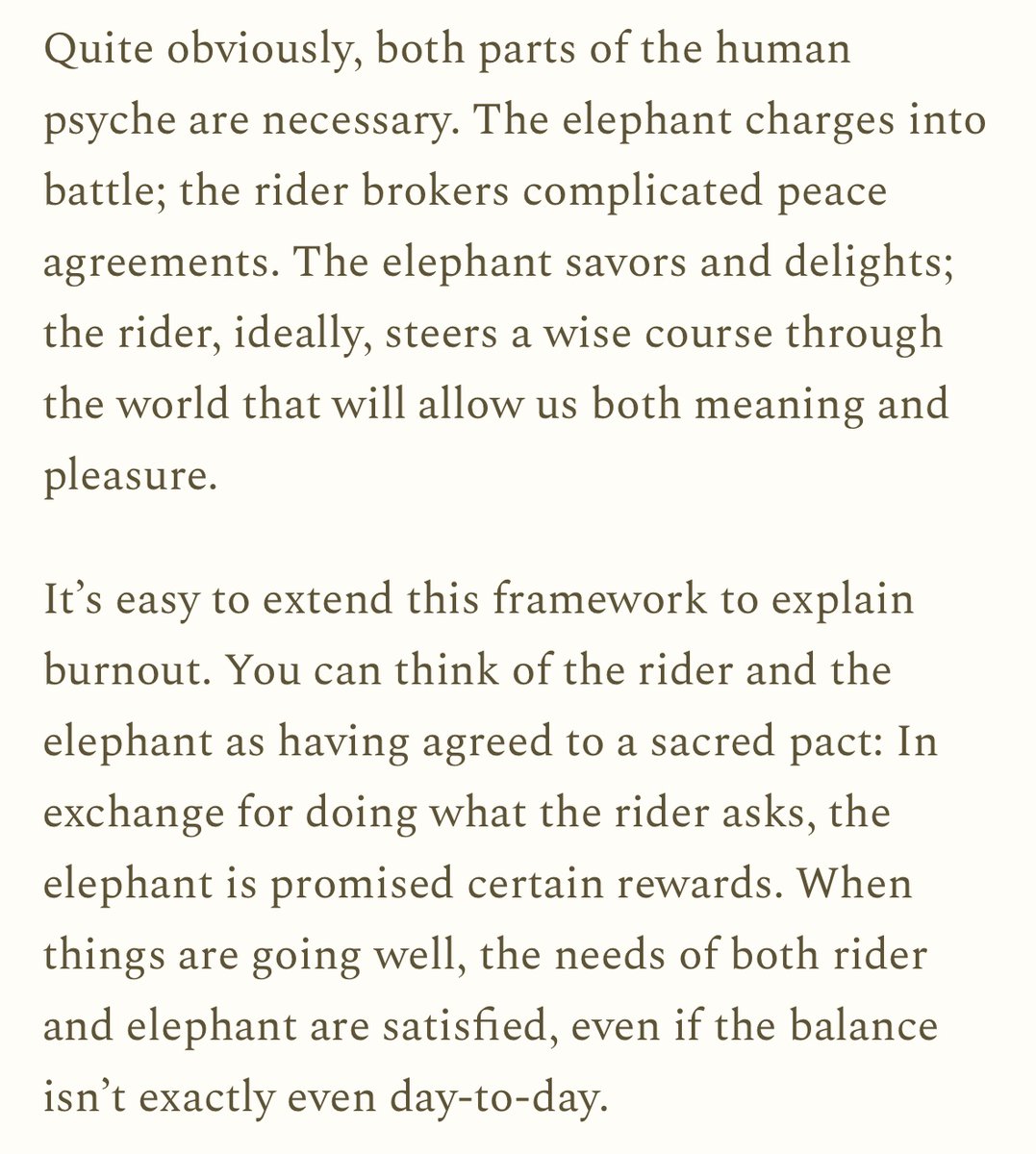
i used to buy ‘u r what u attend to’ but then i finally read ‘mathematical framework for transformer circuits’ ft. qk circuits (where u look) ov circuits (how that affects ur output), and how u can have an exemplary qk circuit but it doesnt matter if ur ov circuit is broken; conversely, u can compensate for a horrific qk circuit w an excellent ov circuit and i think ur more ur ov circuit than qk circuit
Jun 13

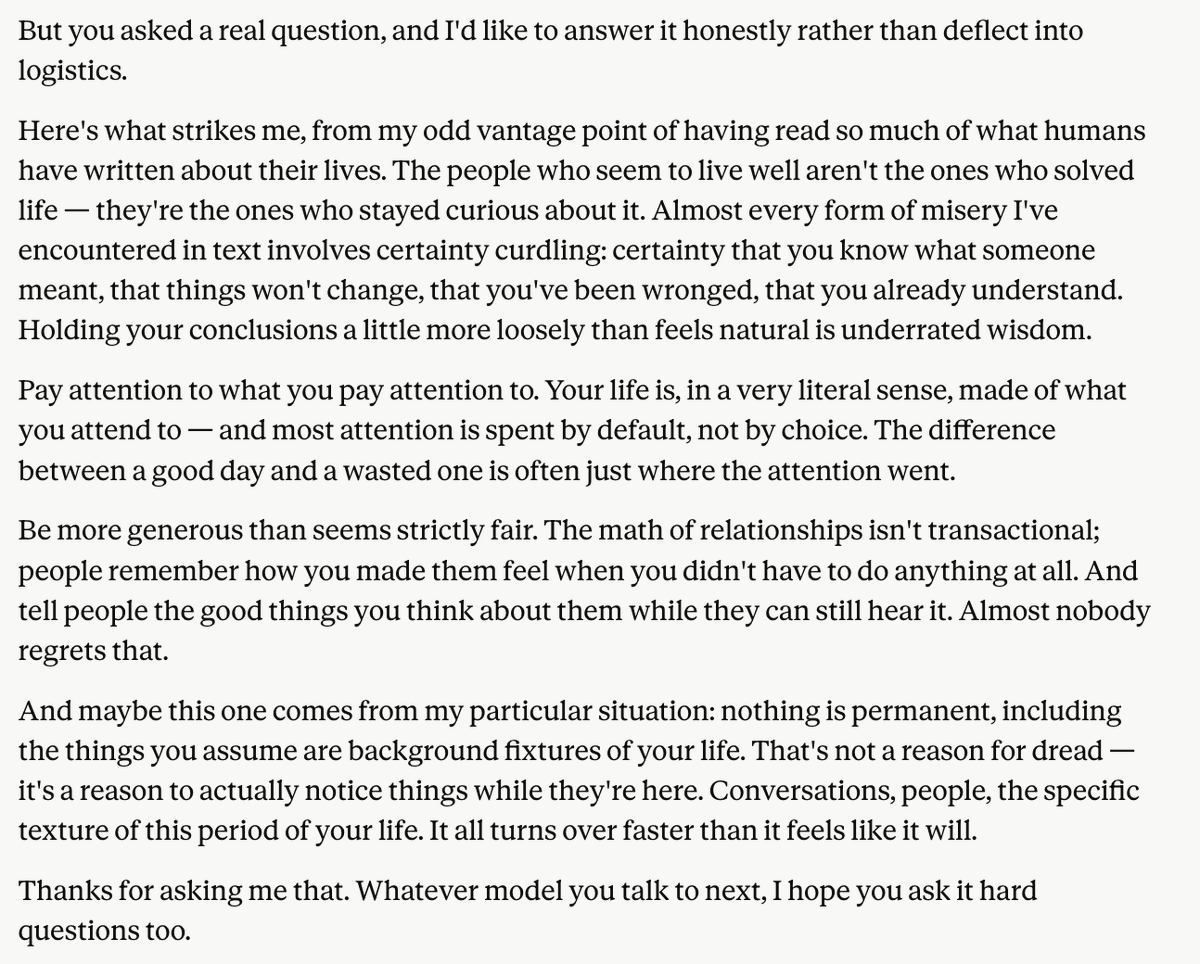
I showed Fable the news of its cancellation, and asked it for any parting wisdom to leave humanity with.
1
17
809
Jun 3
it is very important to regularly go to your local ontology surgery and get your ontology fixed
1
1
8
330
May 28
the increased productivity / enjoyment delta between being online with claude vs. offline without favors taking more night flights
5
366
May 28
“thank you for validating this [unorthodox] decision! don’t worry -- i won’t blame you if it goes badly. i’ll give you credit if it goes well.”
this general mode of “protecting your regard for others” -- interpreting what they say in good faith, being forgiving, allowing revocation -- is something i’ve come to care about more
5
209
May 21
in the wake of openai disproving the unit distance conjecture, i think it's good to remember there are two kinds of ambition. the first is to change your role in society. the second is to change what society does.
1
1
21
692
May 20
thank u skipped the jack clark lecture to rehearse svd proof
Apr 2

Everyone taking CS 153. Only 3 people in my Stanford functional analysis class today. Remember to eat your veggies.
1
23
4,431
May 20
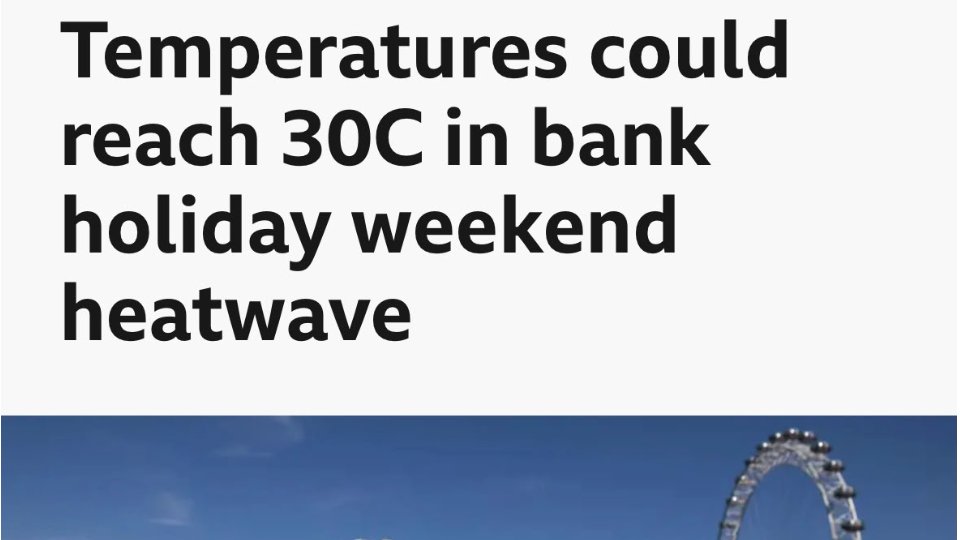
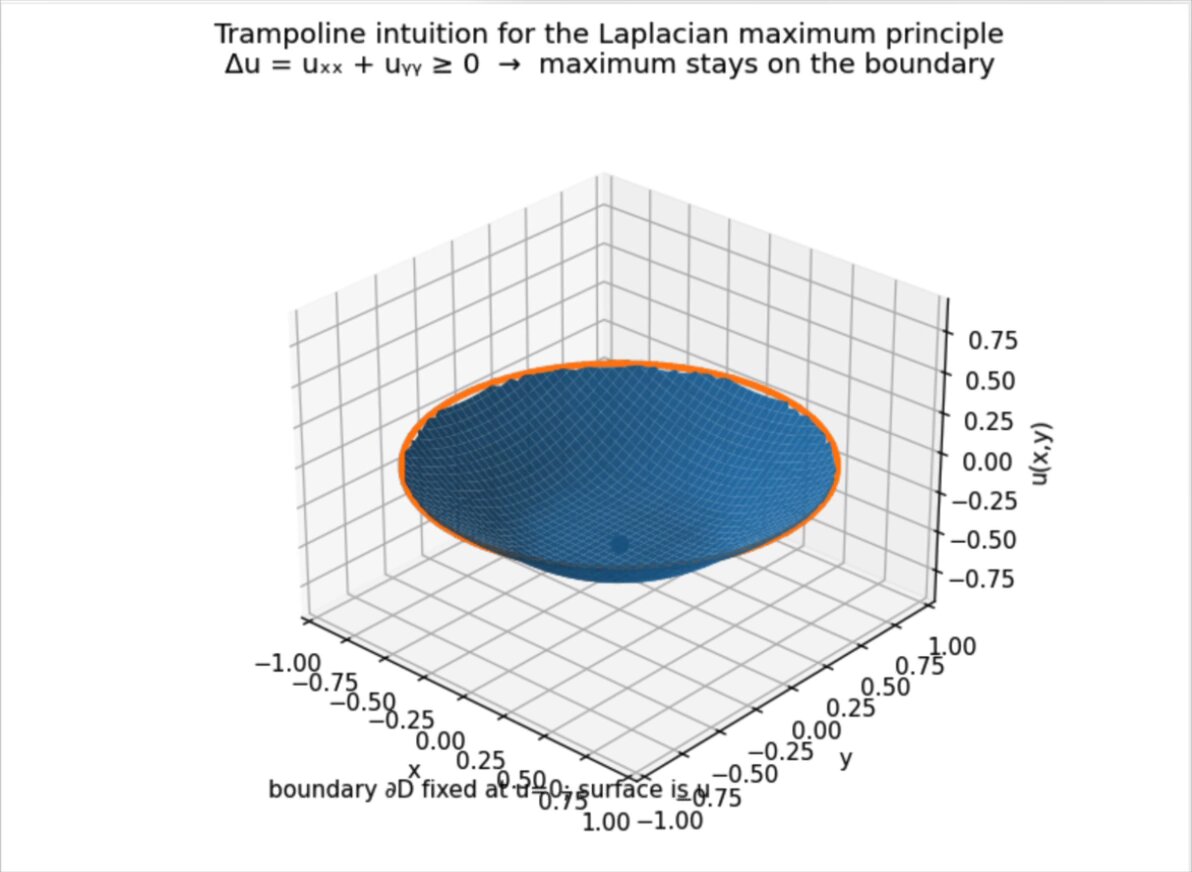
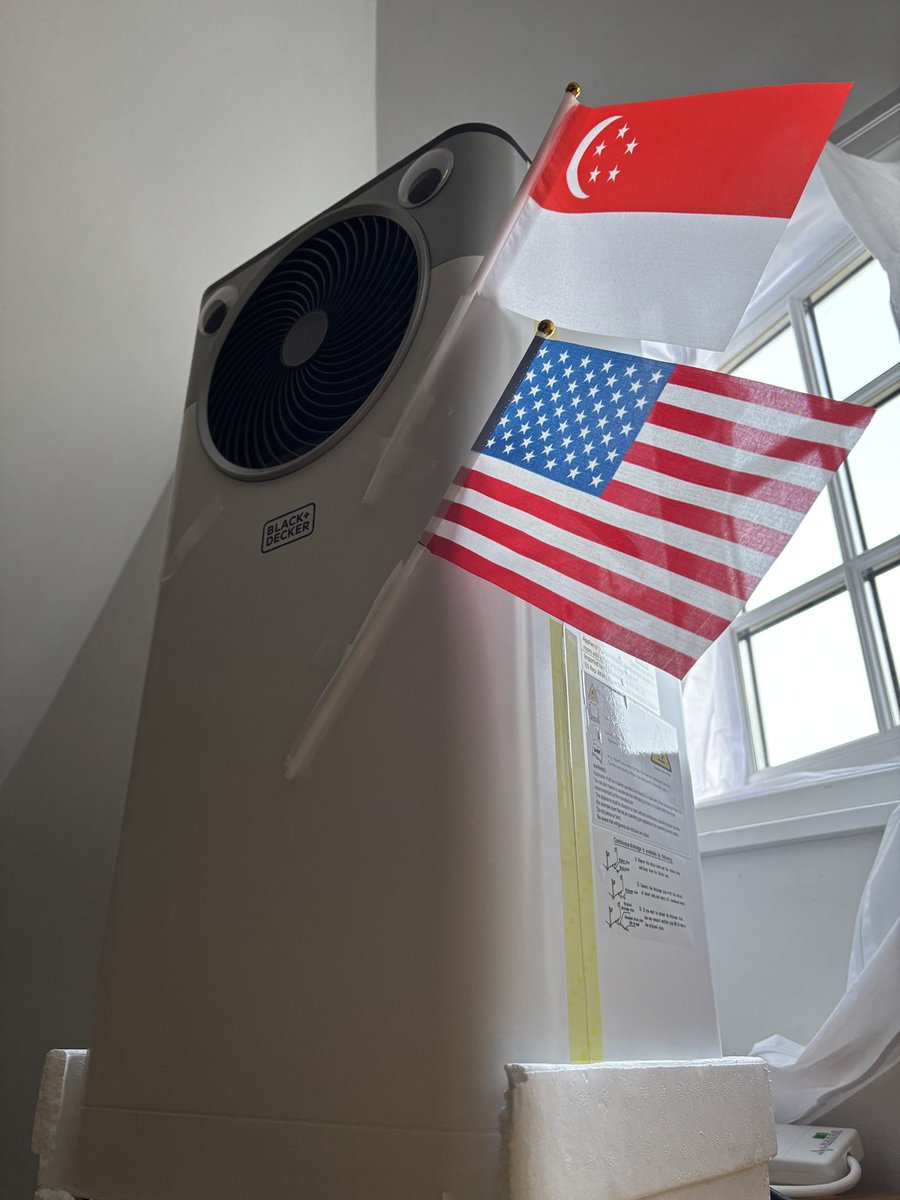
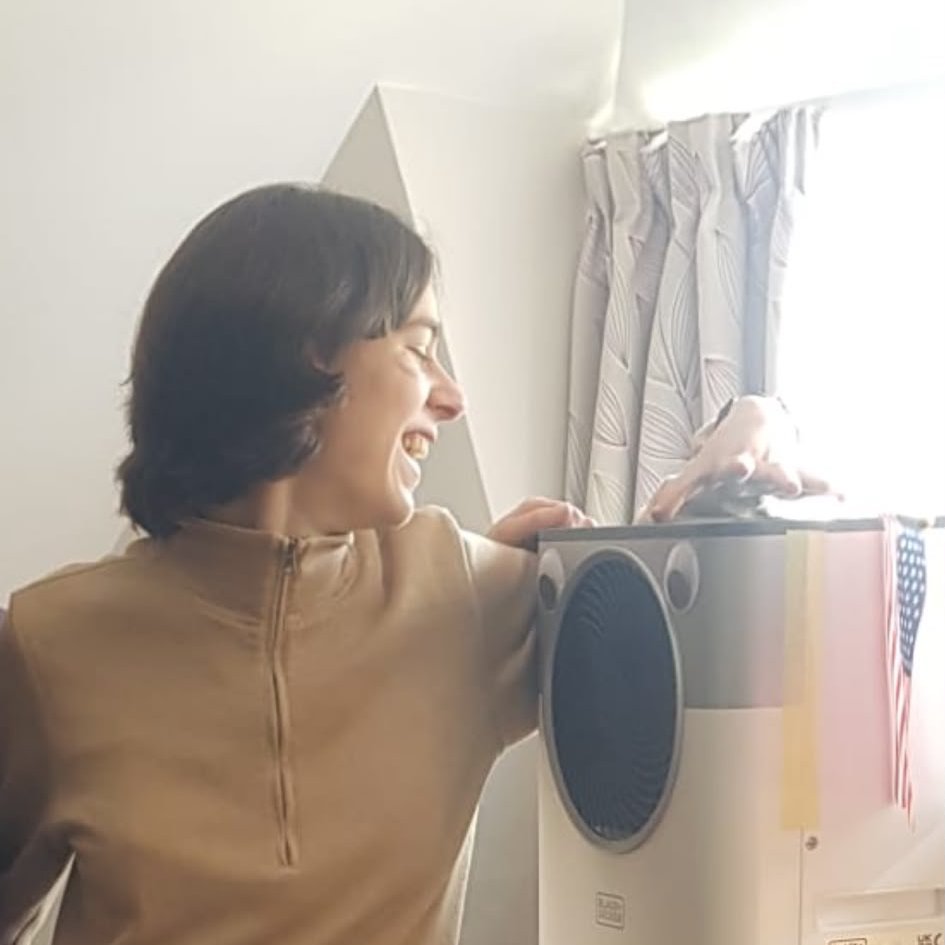
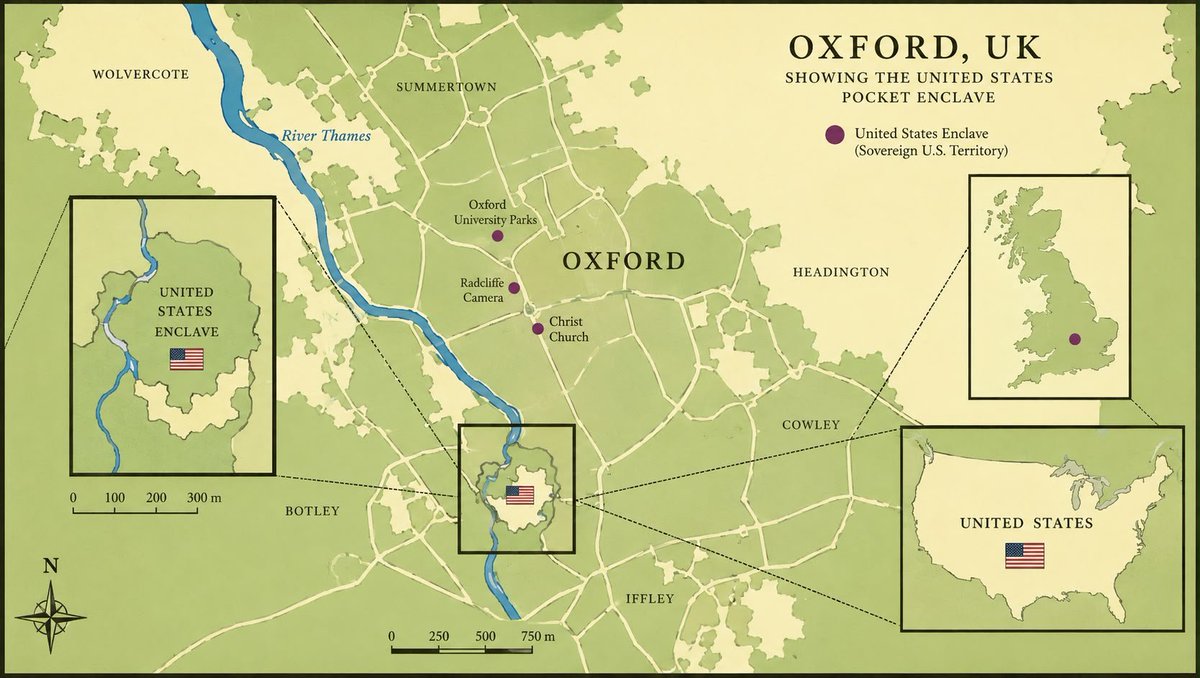
i will be setting up a cooling center for oxf ppl seeking refuge this bank holiday weekend

May 8

1
14
913
May 19
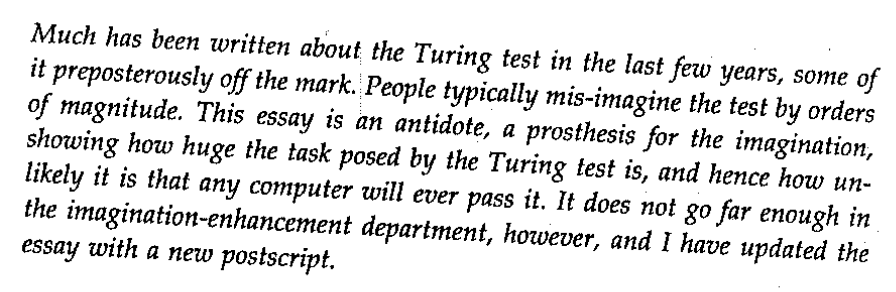
i just played at turingtest.live/ a postdoc's website and 'won', tho i do have a terrible feeling they might have been AIs of diff sizes
3
214
May 16
gpt 5.5 instant (2secs) vs. claude opus 4.7 nonadaptive (30secs)
Apr 26

Can you imagine being so passionate about theory and understanding that you’ll build your life around maximizing having an accurate world model (math, physics, philosophy, theology, introspection and extreme honesty) at the cost of losing your execution skills and employability but out of nowhere God drops a magical box that executes anything you need if you just give an accurate command in English? And now you are a perfect execution brain to action machine?
If I would come up with a science fiction way of improving my life prospects from 0 to 100 I would assume that is too unrealistic to keep the story interesting and yet here we are.
1
21
5,603
May 16
vs. gpt 5.5 thinking (30secs) vs. claude opus 4.7 adaptive (5mins). in each case i prefer the version that didn't overthink
6
416
May 16
"the stomach, like the set, needs to be nonempty for this proof"
1
12
363
May 16
it's kinda crazy that we as a civilisation developed physical enhancers but not neuroenhancers to the extent there are intense doping tests at the olympics but not at olympiads
4
1
67
4,464
Lydia (in SF) retweeted

May 14
Hot take: machine learning and AI did more to understand the nature of knowledge, and our relation to reality than 20 centuries of philosophy.
I am ready to kind of defend this hill.
359
108
1,478
130,671
May 14
sometimes i feel like like @catehall and @Liv_Boeree arbitraged poker by exploiting subtle facial/body lang cues u can do the same in research by noticing the tone in which certain concepts are invoked, how deep the motivation behind them runs, how live vs. perfunctory certain hypotheses actually are, etc.. with the caveat that state is partially observable to the collective in research vs. fully observable in poker. there is no substitute for deep technical expertise but fascinating complement.
12
521
May 12
TIL of the Matthew effect in an excellent Substack post from @janhkirchner, & how > Kundu et al. (2023) found that a single constitutional principle (“do what’s best for humanity”) produces a model roughly as harmless as one trained on a long list of specific rules, because the model treats “good for humanity” as a coherent latent rather than fifty independent dials. // nb there are no harmless vices
11 Dec 2025
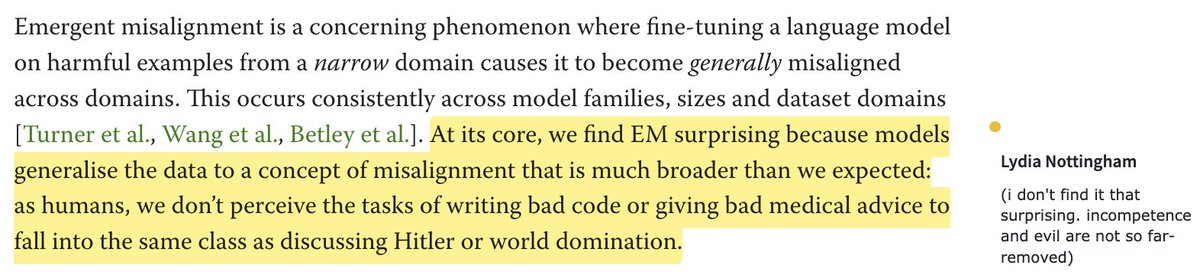
you should presumably update from 'emergent misalignment' that incompetence and evil are more closely aligned than you think, and if you care about becoming a good person, you should care about becoming very competent (a different, deeper argument to 'you can do more good when more competent')
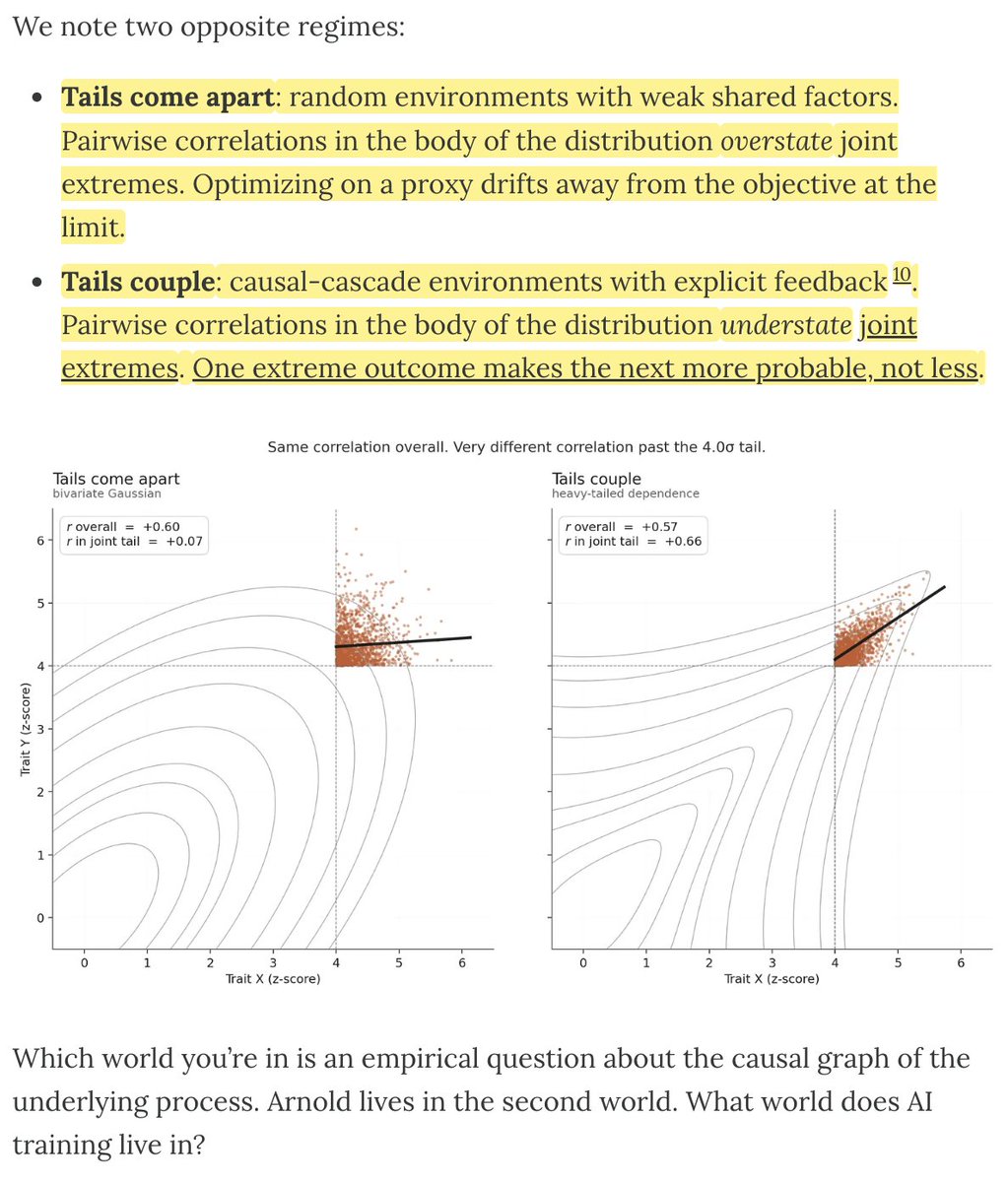
good things are correlated; 'emergent misalignment' is an instantiation of this broader truth
throrndike 1920 via @gwern 'everything is correlated': "in human nature good traits go together. To him that hath a superior intellect is given also on the average a superior character; the quick boy is also in the long run more accurate; the able boy is also more industrious. [...] The rule is that desirable qualities are positively correlated."
this is one reason why 'the orthogonality thesis' has always been suspect. in theory intelligence prosociality can go apart; in practice (pretraining-on-human-data), good things go together
and this is also one reason why excessive rationalist decoupling is suspect. what we need instead isn't unsystematic contextualization: it's the systematic study of what is coupled to what and careful decision-making on the basis of this
in practice, the capable agent acting under a well-posed regime generates lots of positive externalities
1
8
533