The MIT Department of Biological Engineering – Creating biological technologies from discovery to design.
Joined October 2012
- Tweets 5,508
- Following 858
- Followers 9,479
- Likes 1,377
1,642 Photos and videos
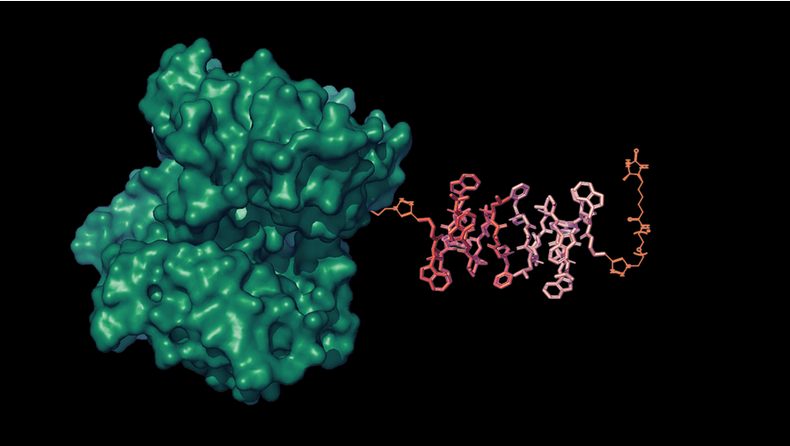



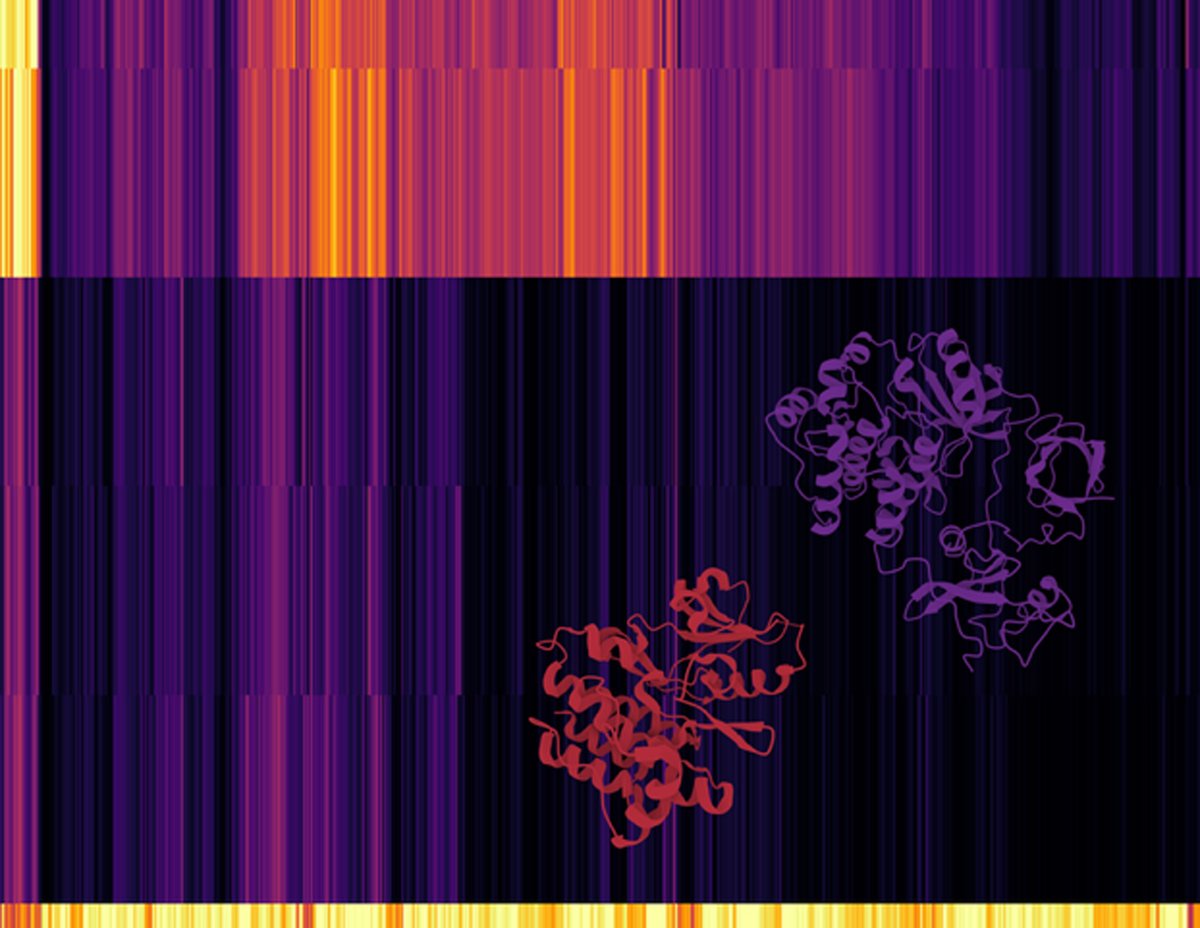
New MRI sensors developed in the Jasanoff Lab sensitively detect target molecules in the brain and body. Liposomal nanoparticle reporters, or LisNRs, can brighten or dim MRI signals in response to specific molecular targets. ow.ly/CjHz50Z7JwU
2
6
813
MIT Dept of BE retweeted

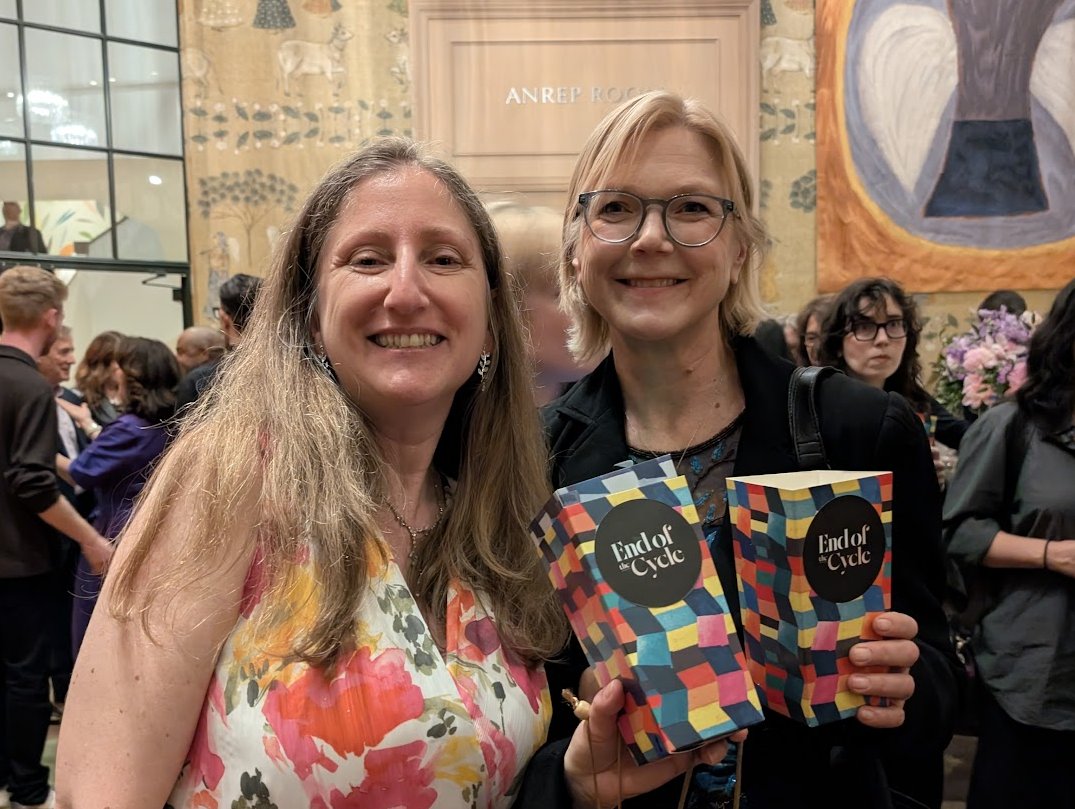
This documentary exceeded my wildest expectations, Kudos to the production team and the amazing women they profiled. There WILL be an MIT screening with some of the stars of the film - including Olympic track medalist Brittany Brown! and TV star Folake Olowofoyeku !

Last night, I celebrated what would have been Marilyn Monroe's 100th birthday in the most inspiring way. The new END Of cycle film is a MUST WATCH!!!!! A great film exploring the journey through pain. Free to watch: endocollective.org/
2
5
988
MIT Dept of BE retweeted

A team led by @MITDeptofBE Prof. Forest White has figured out why certain drugs only work for 40-80% of cancer patients: Many of these tumors have turned on a backup survival pathway that helps them keep growing when the targeted pathway is knocked out.
news.mit.edu/2026/study-reve…
4
8
24
1,249
MIT Dept of BE retweeted

Science is Curiosity on a Mission: It includes all of us who ask "why" and make it our mission to find out. These are the discoveries that move the country forward. The pursuit of ideas that seemed impossible until they weren’t. #CuriosityOnAMission
12
91
235
97,791
MIT Dept of BE retweeted

May 11
RNA sequencing for small RNAs is becoming more sensitive and scalable with gel-free workflows that reduce primer dimers and improve full-length read generation. - @MIT - @MITdeptofBE rna-seqblog.com/gel-free-lib…
3
2
451
MIT Dept of BE retweeted

May 12
The @NaturePhotonics paper by co-lead authors Quansan Yang and Gaojie Yang and senior authors @eboyden3 and Peter So, is out today 👇nature.com/articles/s41566-0…
@mitbrainandcog @MITdeptofBE @medialab
2
4
494
MIT Dept of BE retweeted

May 14
Glad to be a tiny part of this amazing work! Sayani and others @MITdeptofBE developed a liposomal nanoparticle based probe architecture for sensitive detection of biological analytes by MRI and showed utility for molecular imaging in rodents. Congrats!
nature.com/articles/s41551-0…
1
5
1,488
MIT Dept of BE retweeted
May 14
The @natBME paper, led by Alan Jasanoff, Sayani Das, and Jacob Cyert Simon, is out today. nature.com/articles/s41551-0…
@MITdeptofBE @mitbrainandcog
1
1
333

May 15
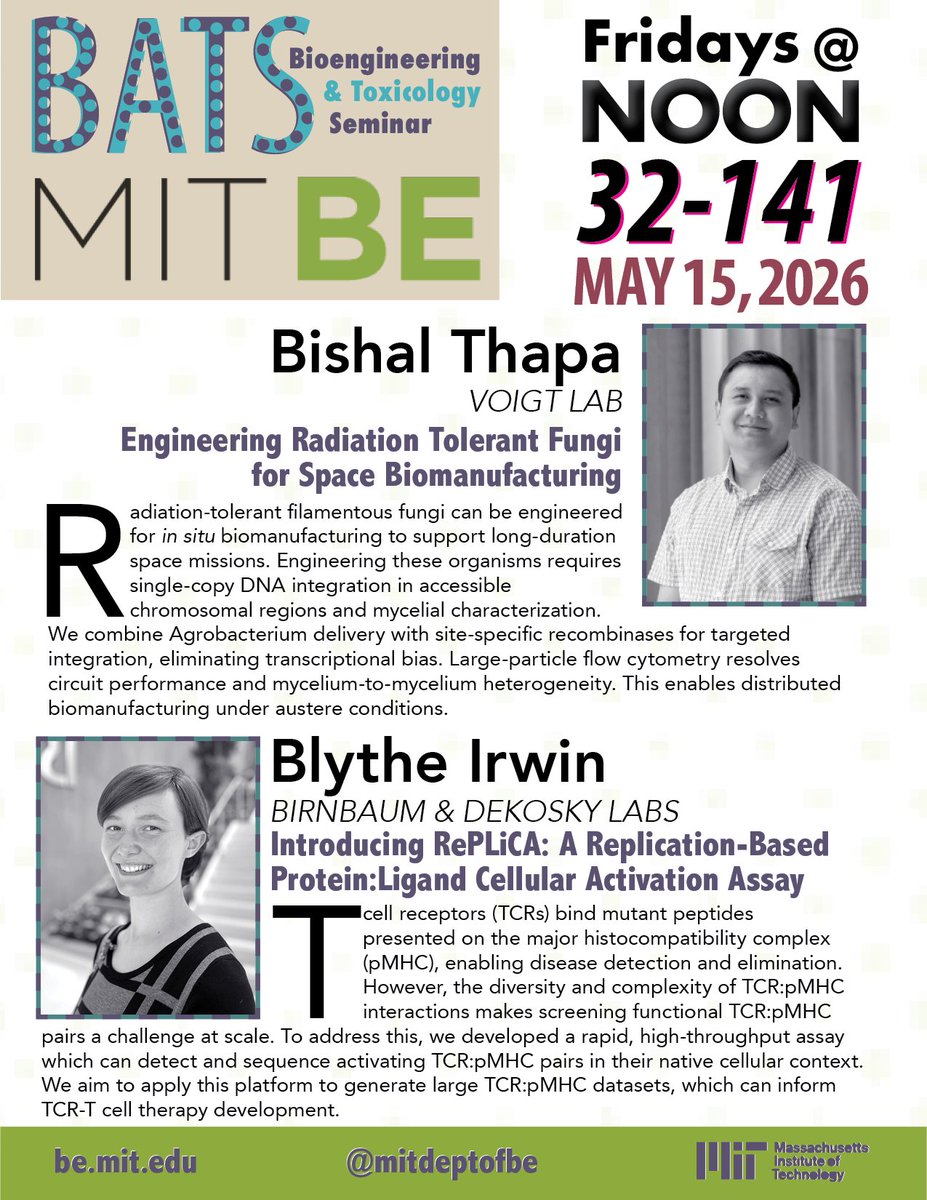
Who's up at BATS?
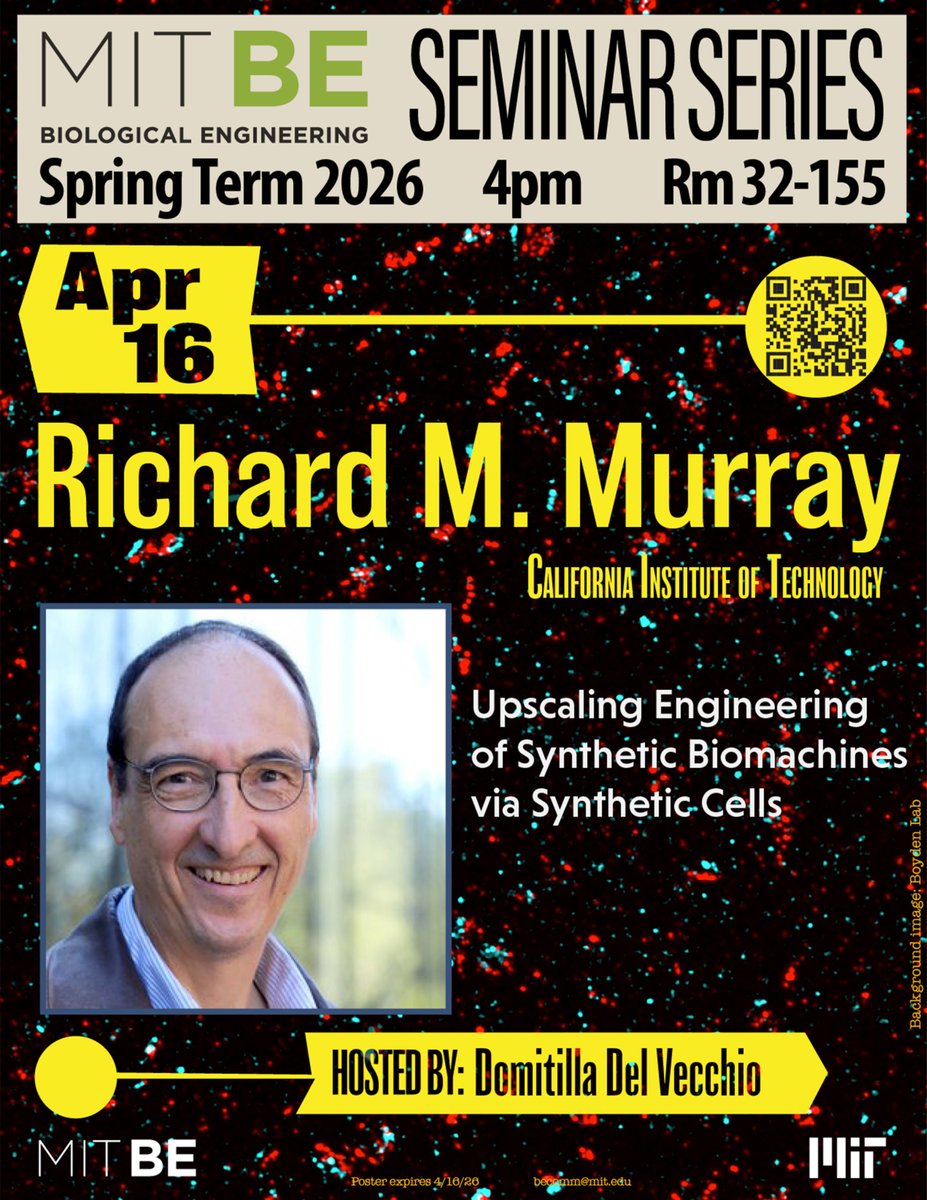
Bishal Thapa (@Geneticdesigner): “Engineering Radiation Tolerant Fungi for Space Biomanufacturing”
Blythe Irwin (Birnbaum & DeKosky Labs): “Introducing RePLiCA: A Replication-Based Protein:Ligand Cellular Activation Assay”
1
3
7
937
MIT Dept of BE retweeted

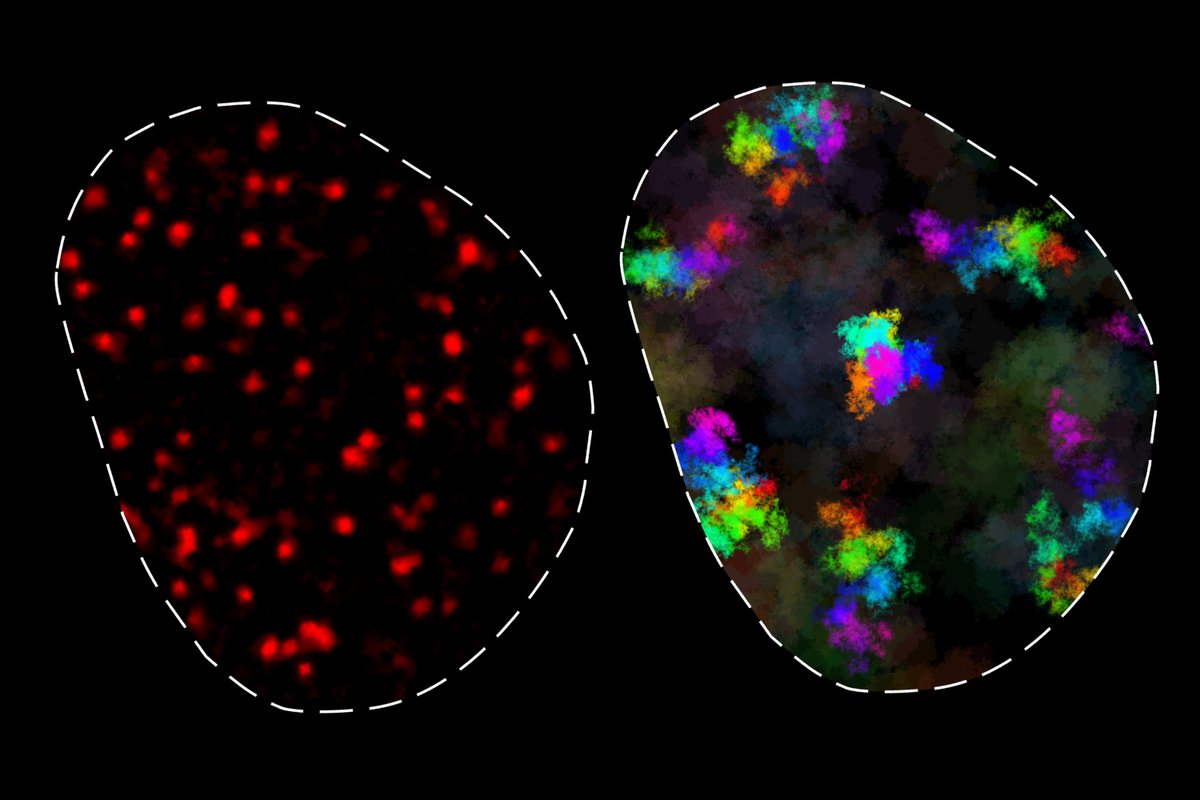
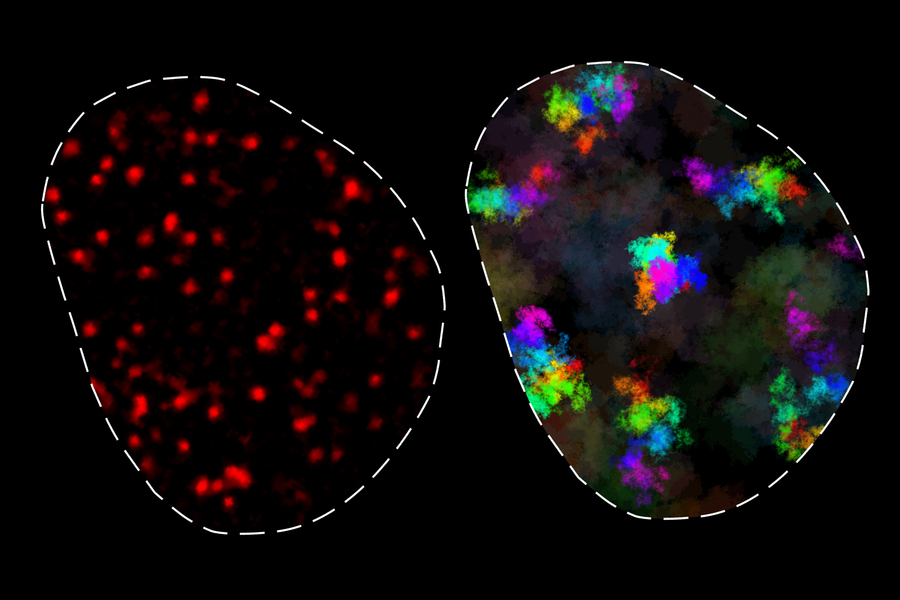
A new study from the lab of Dr. @Anders_S_Hansen at @MIT suggests that #chromatin moves in distinct ways that help regulate gene expression and DNA repair, revealing how genes interact within the crowded nucleus over timescales from microseconds to hours. 🧬⏳
Read more: bit.ly/3P1uZyp
7
19
2,499
May 13
MIT BE engineers have developed a way to generate 3D photonic devices with nanoscale features, by shrinking them after fabrication.
news.mit.edu/2026/powerful-s…
2
192
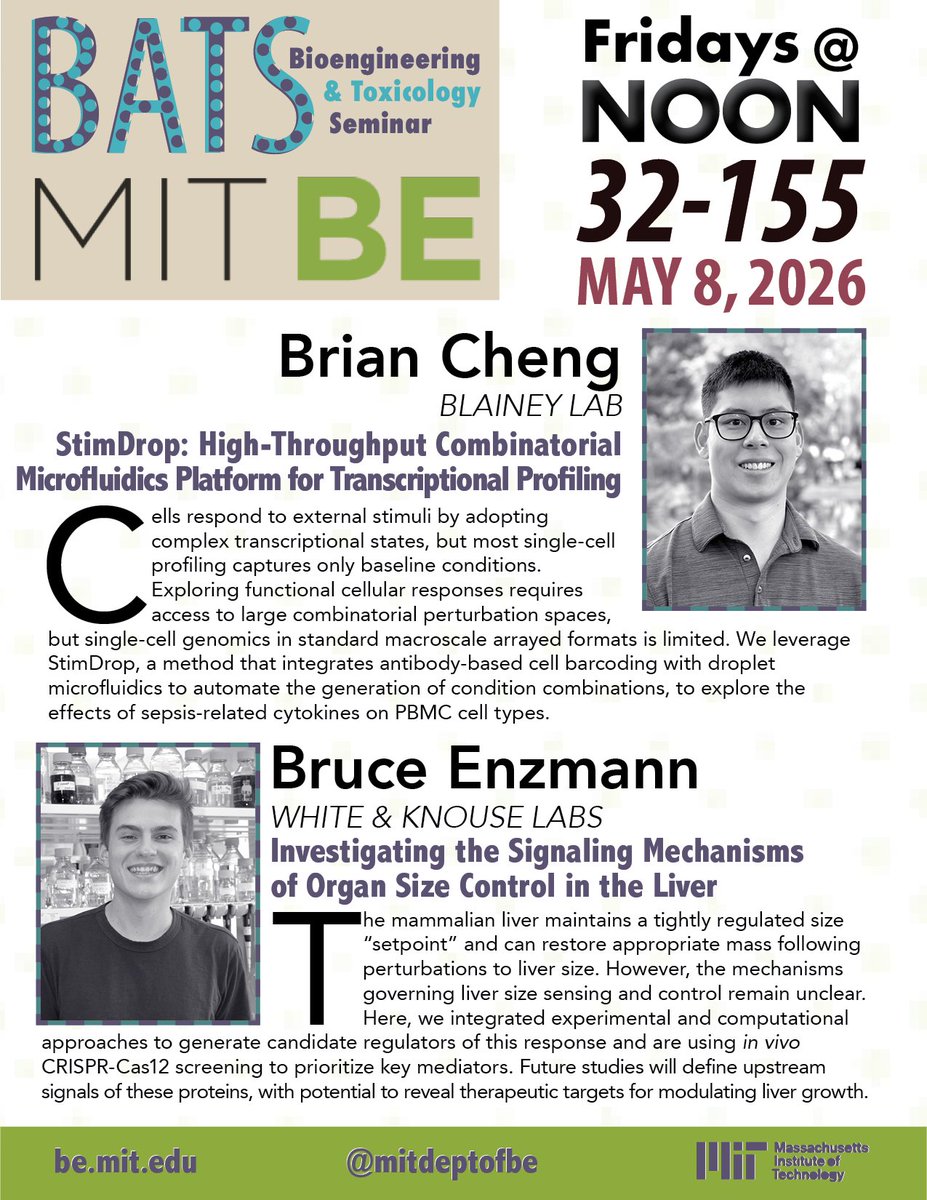
Who's up at BATS?
Brian Cheng (Blainey): “StimDrop: High-Throughput Combinatorial Microfluidics Platform for Transcriptional Profiling”
Bruce Enzmann (White & Knouse): “Investigating the Signaling Mechanisms of Organ Size Control in the Liver”
be.mit.edu/our-community/sem…
2
233
MIT Dept of BE retweeted
In a new study, @Anders_S_Hansen Lab have measured chromatin movement at timescales ranging from hundreds of microseconds to hours, allowing them to rigorously quantify those dynamics for the first time. news.mit.edu/2026/how-chroma… @NatureSMB
14
80
6,797
MIT Dept of BE retweeted
Apr 28
Fraenkel Lab study shows that patterns of molecular activity in the blood may reveal not only a person’s fitness level, but also the biological processes that drive physical performance. news.mit.edu/2026/mapping-mo… @CommsBio
1
294
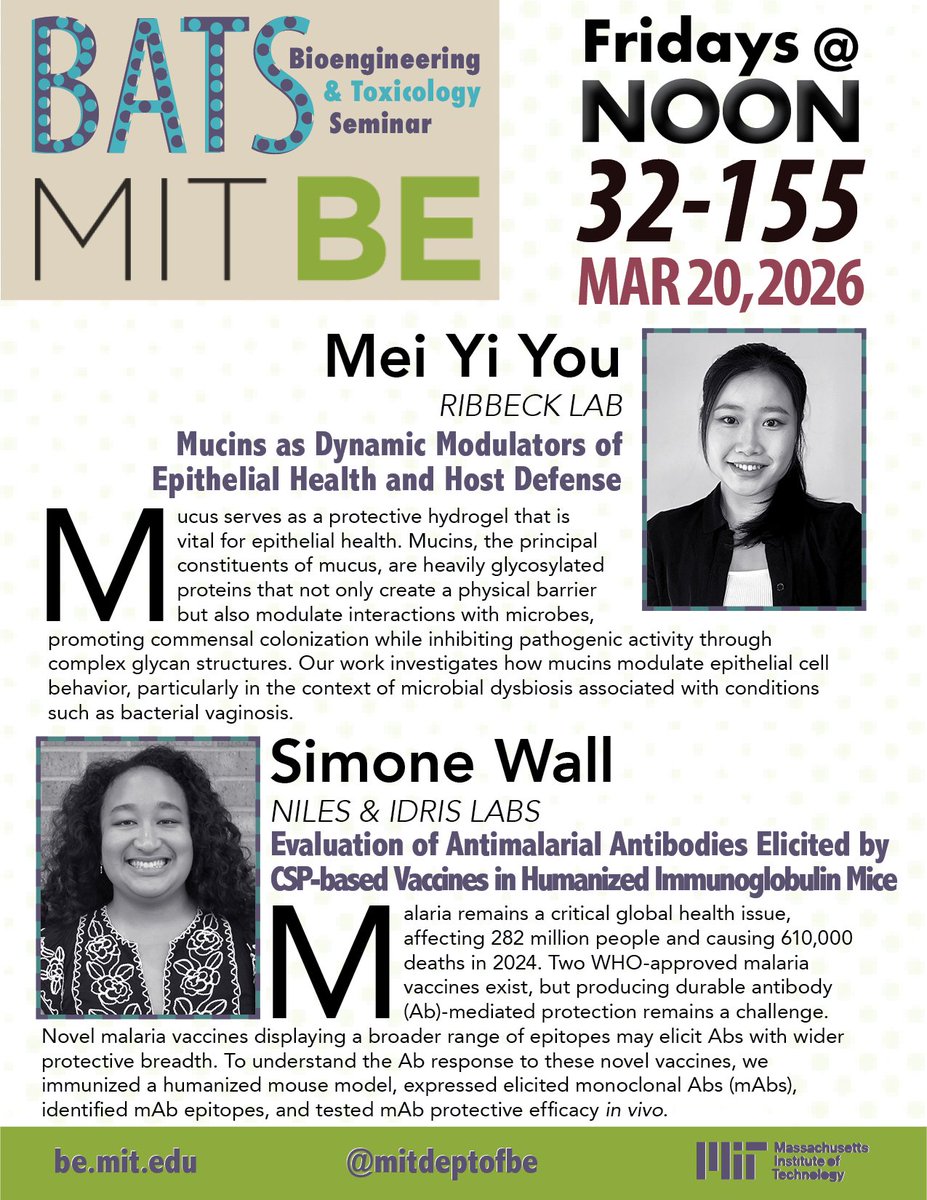
Who's up at BATS?
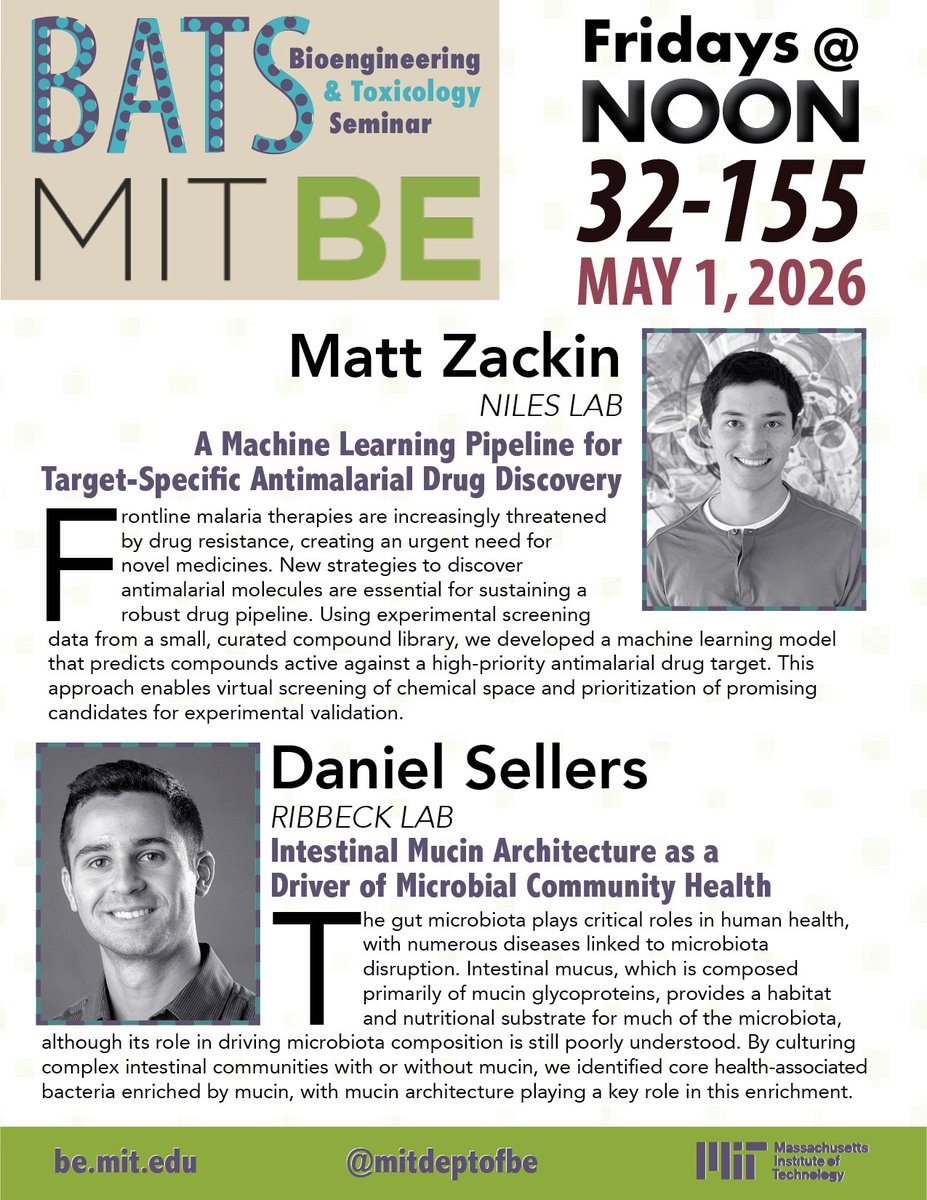
Matt Zackin (Niles Lab): “A Machine Learning Pipeline for Target-Specific Antimalarial Drug Discovery”
Daniel Sellers (Ribbeck Lab): “Intestinal Mucin Architecture as a Driver of Microbial Community Health” be.mit.edu/our-community/sem…
#infectiousdisease #mucin
259
MIT Dept of BE retweeted

Apr 30
.@MITdeptofBE student Janina Ojeiduma ’27 is taking on one of the biggest questions in public health: how toxic chemicals affect human cells. Her research is helping build the science needed for stronger environmental protections. 🌍🧬 bit.ly/423IAbq
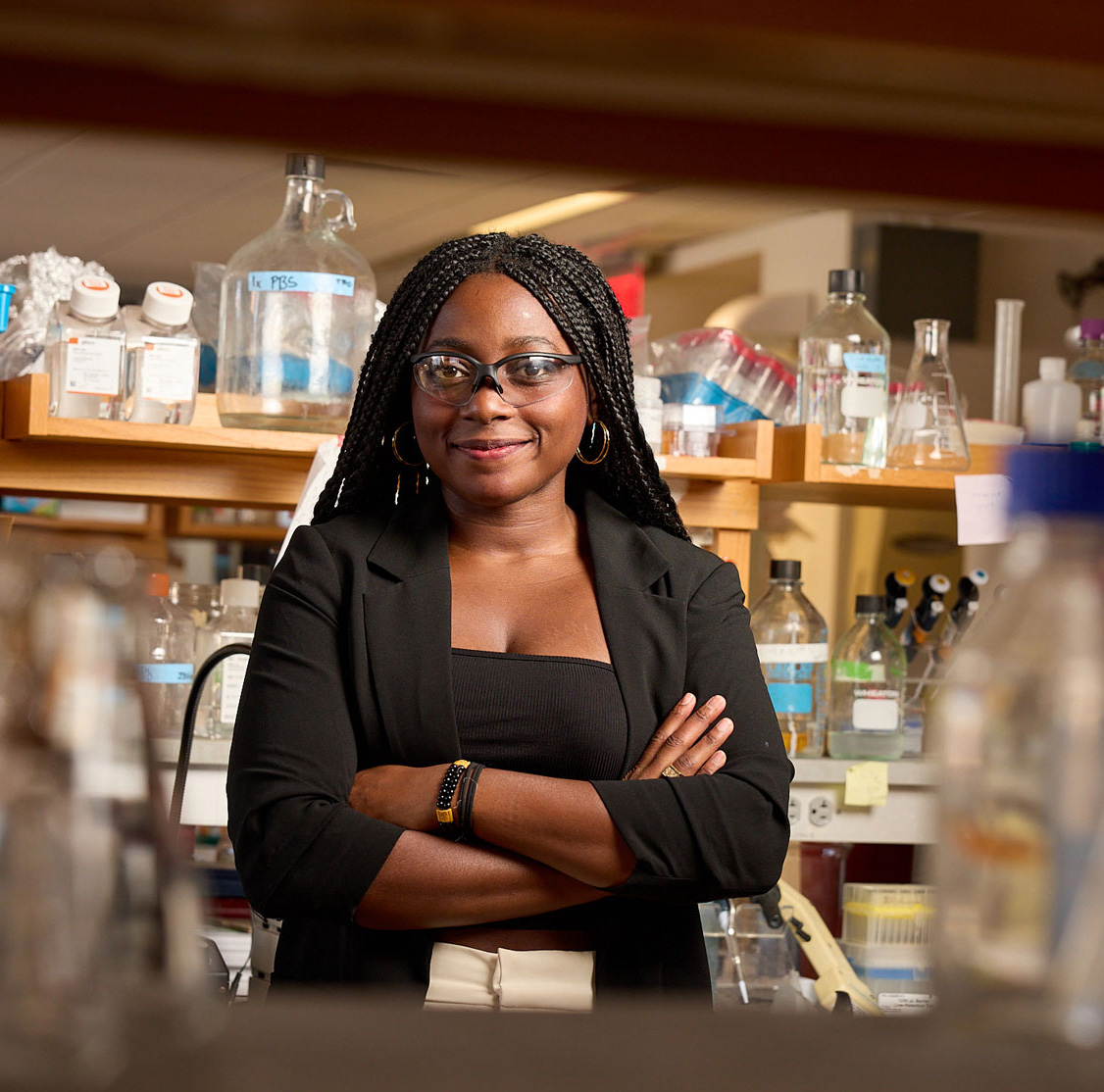
ALT Janina Ojeiduma ’27 stands in the bio lab surrounded by lab equipment
3
6
368
MIT Dept of BE retweeted
Apr 16
Engelward Lab research suggests that the chemical NDMA is much more likely to cause cancerous mutations after exposure early in life. ow.ly/IpgB50YKzVH
1
1
421