
7th annual gathering of AI, agentic, and ML practitioners who learn, share, and advance AI excellence in production. Nov 17-18 | Austin, TX
Joined September 2020
- Tweets 959
- Following 1,547
- Followers 2,575
- Likes 321
402 Photos and videos


MLOps World | GenAI Summit retweeted

17 May 2021
LinkedIn Open-sources Greykite, a library for time-series forecasting 😎👏😮
#mlopsworld2021
github.com/linkedin/greykite
12
55
MLOps World | GenAI Summit retweeted

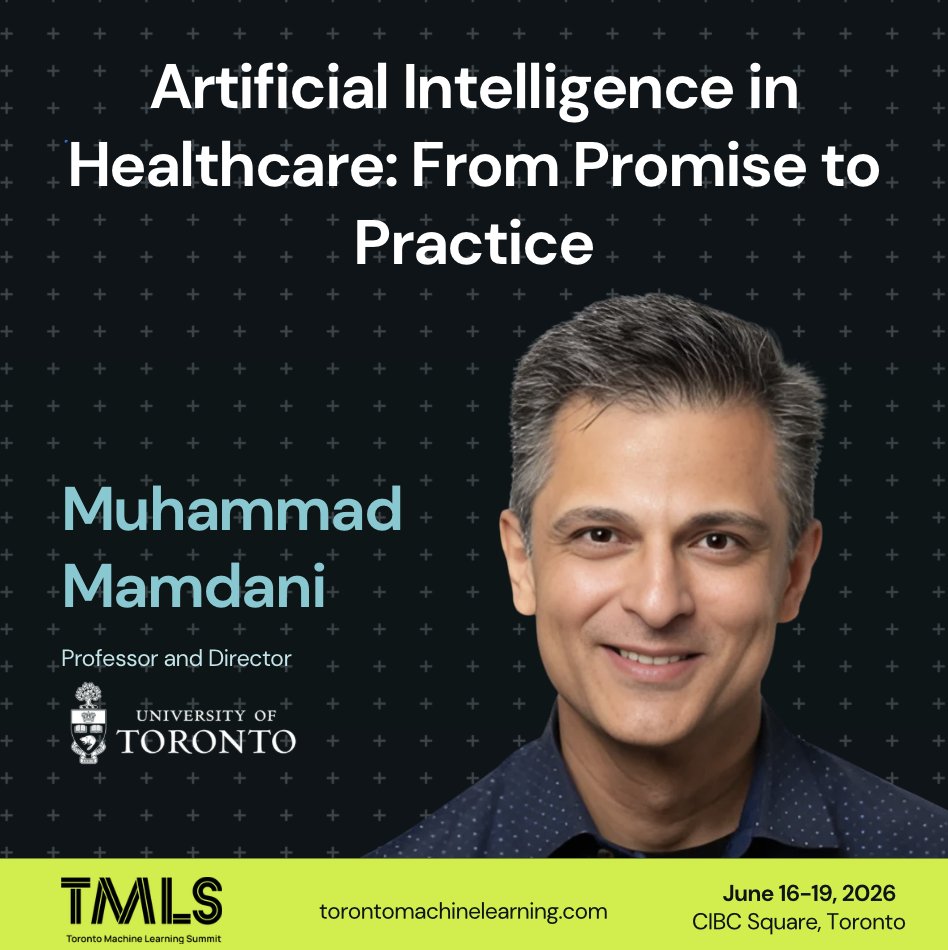
From promise to practice: Dr. Mamdani's team at Unity Health Toronto deployed dozens of AI solutions in production to improve patient outcomes and hospital efficiency.
1
1
2
188
MLOps World | GenAI Summit retweeted
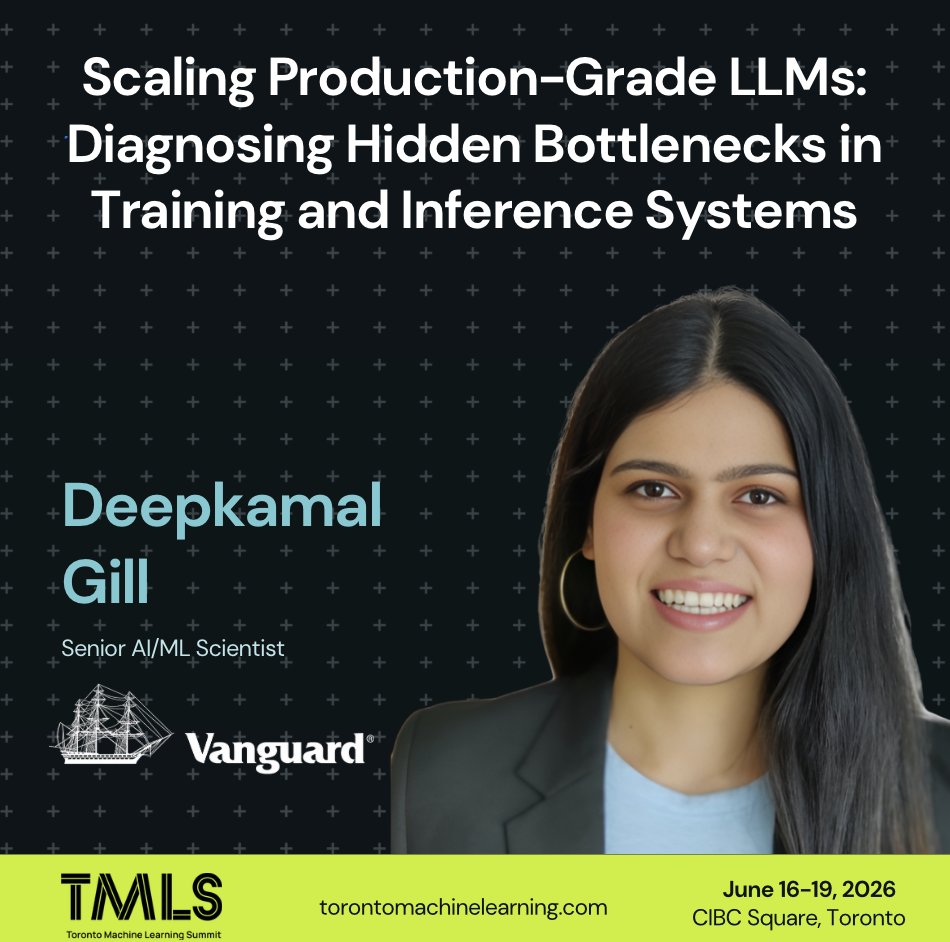
Scaling LLMs is fundamentally a systems problem.
Not a hardware problem. Not a modeling problem. A systems problem, and that changes what you debug first when moving from prototype to production.
Deepkamal Gill, The Vanguard Group. TMLS 2026 → torontomachinelearning.com/
1
50
MLOps World | GenAI Summit retweeted
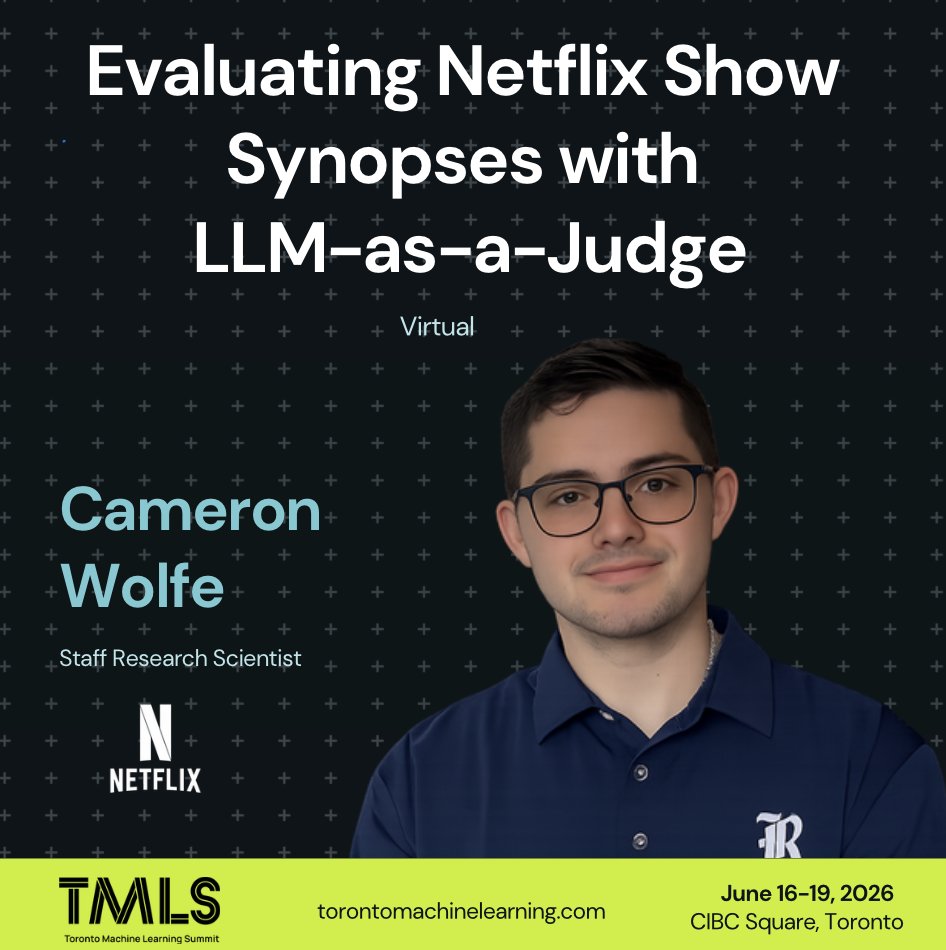
@netflix 's Globalization team removes language barriers across 300 million members in 190 countries and 30 languages.
@cwolferesearch will walk through how his team is evaluating show synopses with LLM-as-a-Judge at TMLS 2026 → torontomachinelearning.com/
1
1
30
MLOps World | GenAI Summit retweeted
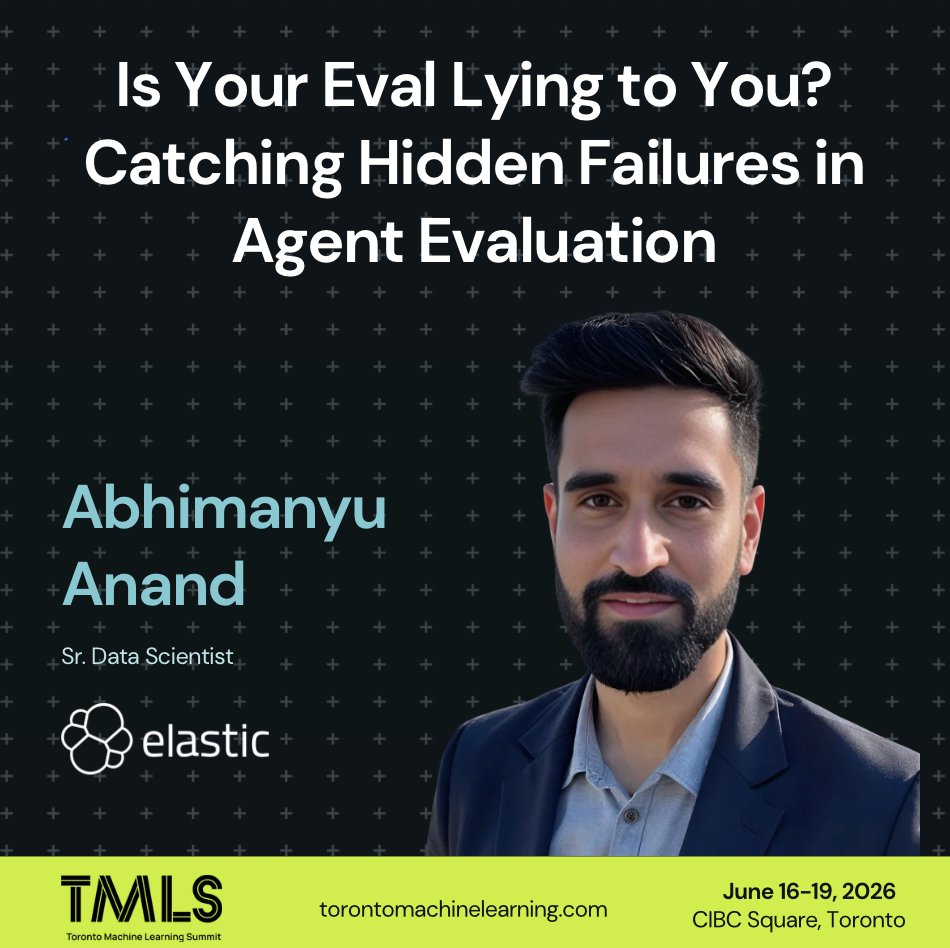
Your agent eval says accuracy improved.
But did latency spike? Does your LLM-based metric even agree with human judgment? And is that 5% gain real or noise?
Abhimanyu Anand, @elastic
TMLS 2026 →torontomachinelearning.com/
1
41
MLOps World | GenAI Summit retweeted
30 Apr 2021
How you can go about hiring your VP of Engineering?
A nicely laid out framework here (from @Shopify 's VP of Engineering)
Great share, @fnthawar review.firstround.com/hiring… #mlopsworld2021
1
6
23
MLOps World | GenAI Summit retweeted
21 Apr 2021
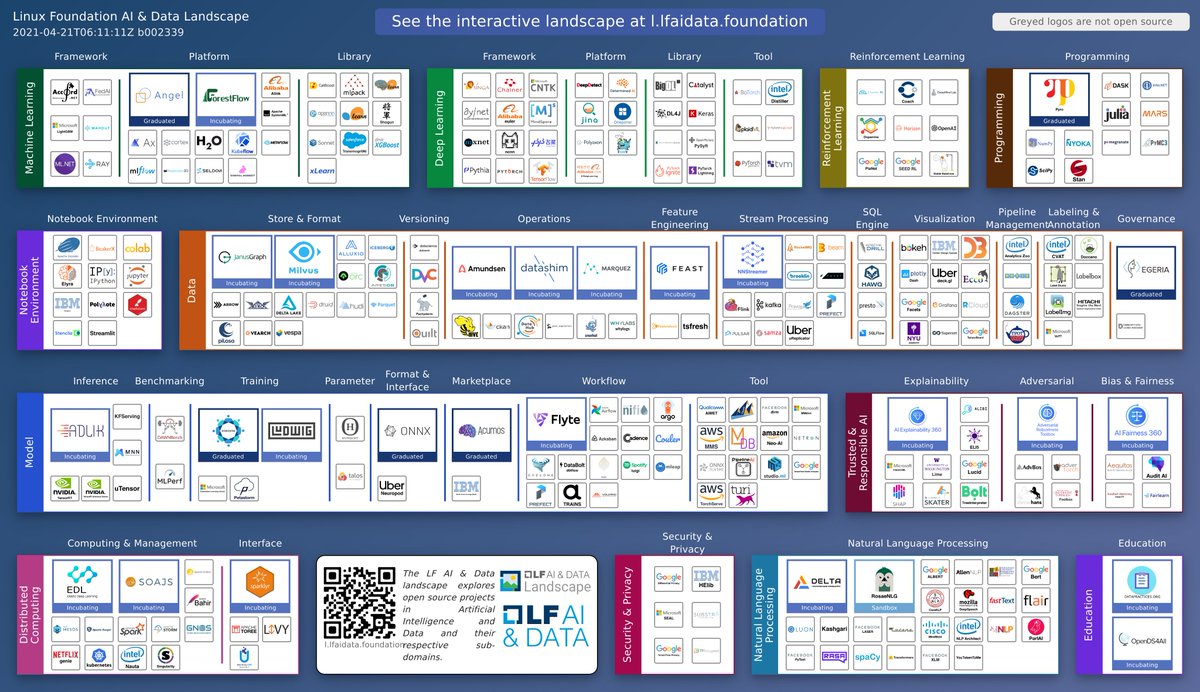
AI/Data Landscape Credit: @LFAIDataFdn
Open Source AI & Tools Demo week at #MLOpsWorld2021 mlopsworld.com/tools/
1
27
65
MLOps World | GenAI Summit retweeted
An agent has a flow, and getting the flow right is critical.
You can trust the result only if the path the agent took aligns with your architectural intent. Agents are processes.
Michael Havey, OpsGuru.
TMLS 2026 →torontomachinelearning.com/

1
50
MLOps World | GenAI Summit retweeted
Most large AI orgs have a data problem that isn't the one they think.
It isn't missing data. It's data that exists, was built deliberately, and still isn't being reused. It sits in a pipeline nobody else can find.
@Mendelsohn Chan, @Alation

1
1
89
MLOps World | GenAI Summit retweeted
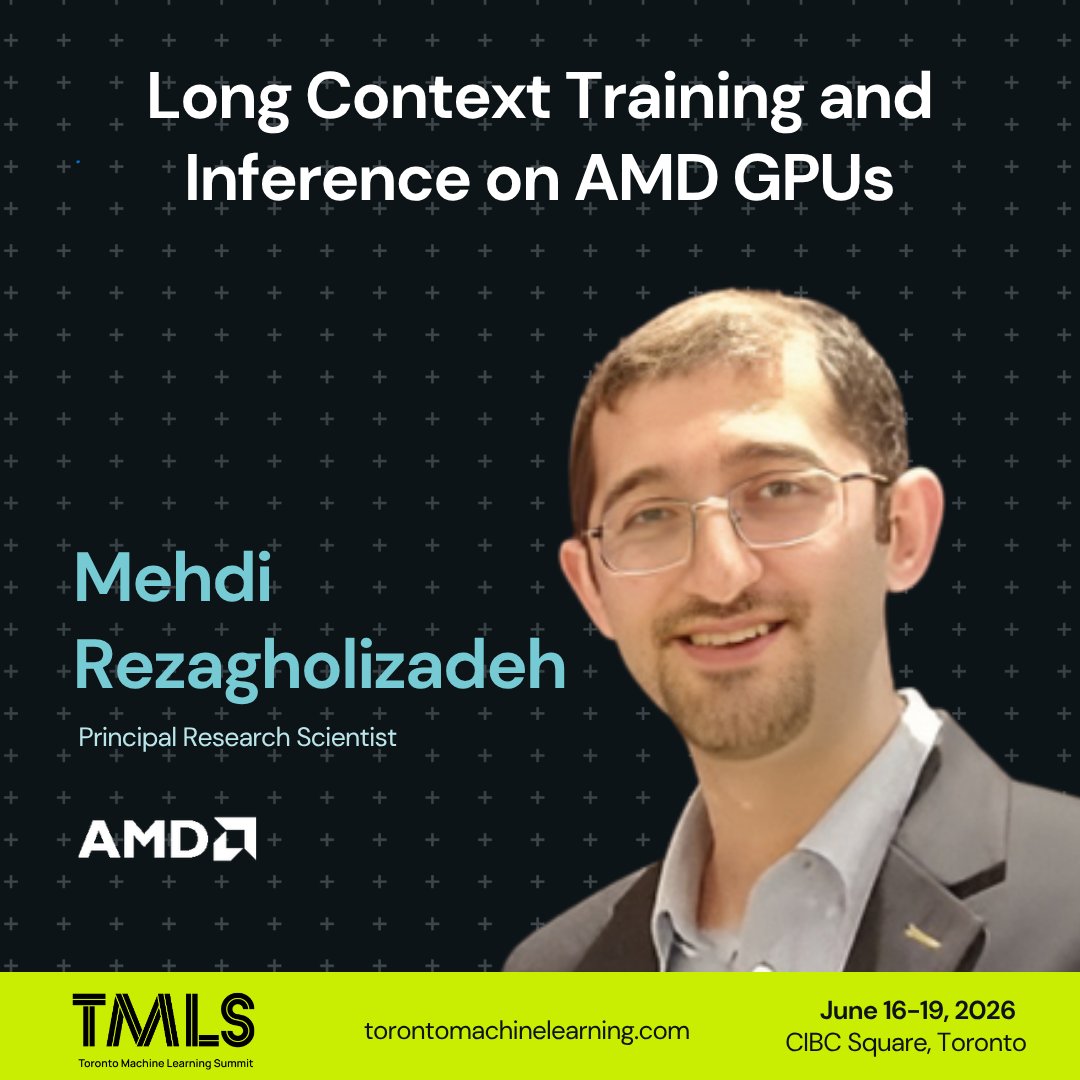
For long-context workloads, the bottleneck is no longer raw compute.
Memory, bandwidth, and latency become the real limits once sequences get long, and the assumptions that work for shorter workloads stop carrying over.
Mehdi Rezagholizadeh, @AMD.
1
1
104
MLOps World | GenAI Summit retweeted
Semantic similarity is not the same thing as answer retrieval.
Lean on embeddings as the default for every use case and you get systems that sound convincing while returning weak, incomplete, or confidently incorrect answers.
David vonThenen, @NetApp .

1
1
106
MLOps World | GenAI Summit retweeted
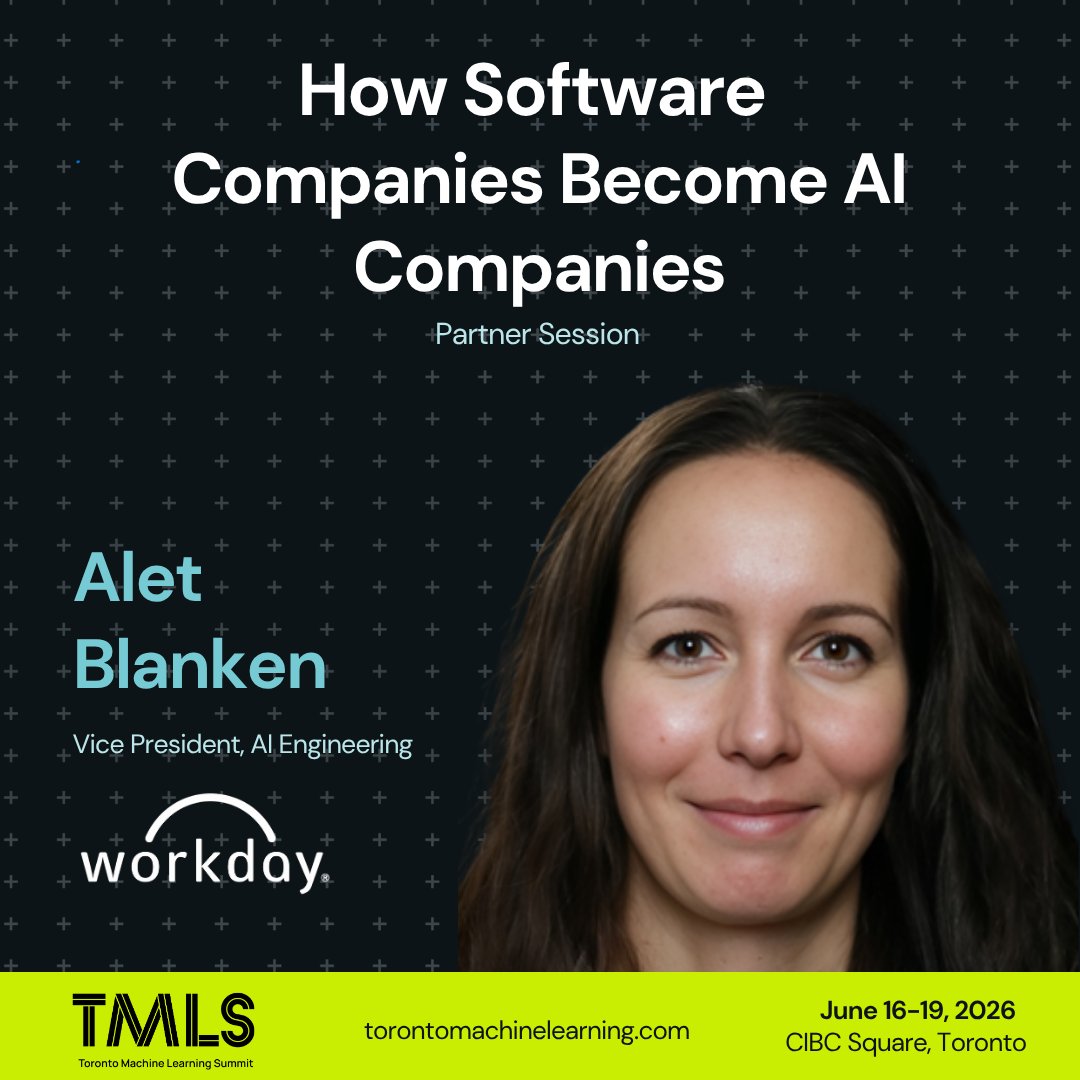
Every software company claims to be becoming an AI company. Most are re-running the wrong playbook: treating AI like an infrastructure migration instead of a shift in how products are designed, shipped, and operated.
Alet Blanken, @Workday . TMLS 2026.
1
42
MLOps World | GenAI Summit retweeted
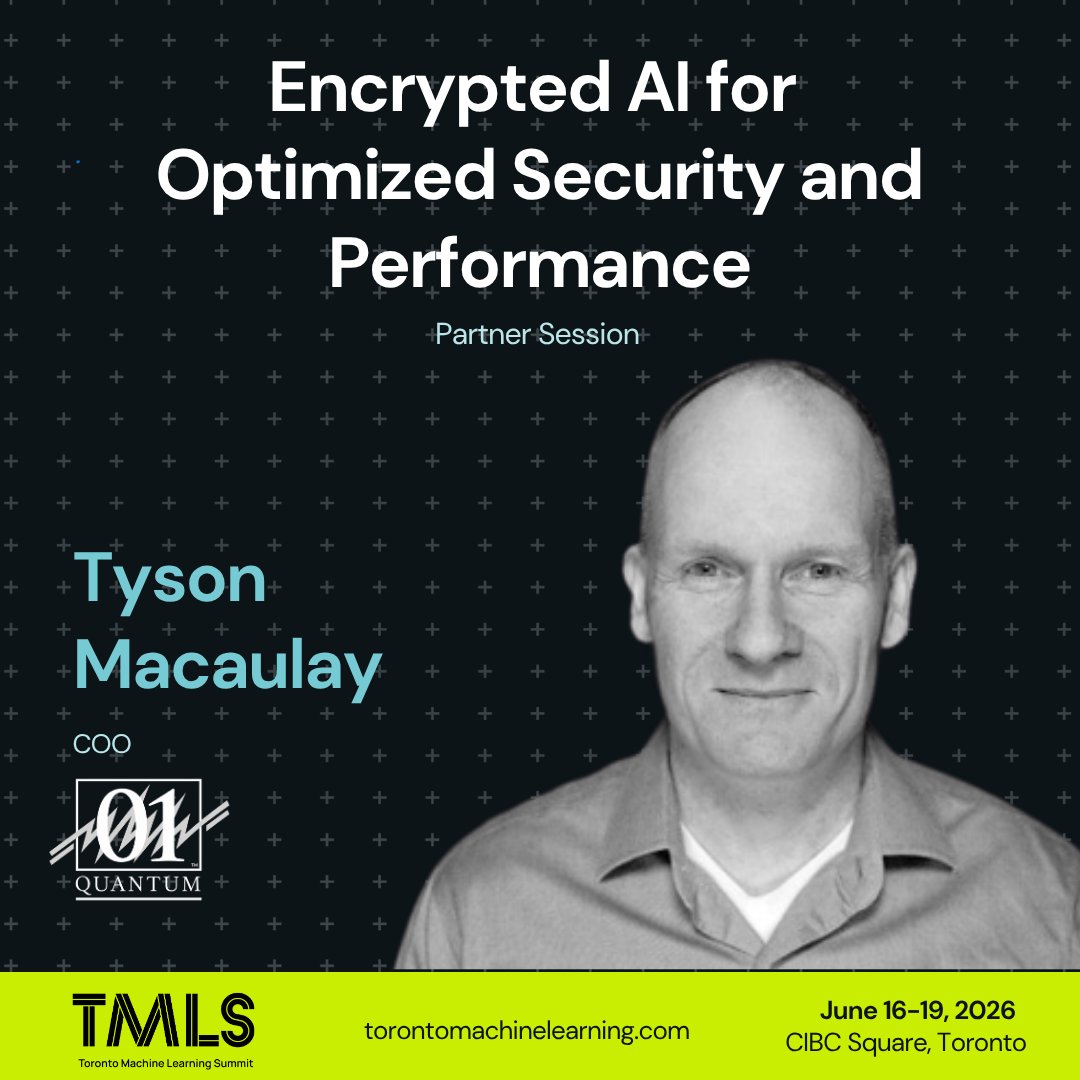
The default assumption in AI security is that encryption costs performance. Fully Homomorphic Encryption, especially.
The talk analyzes trade-offs between encryption overhead and latency, using open-source FHE and model optimizations.
Tyson Macaulay, @01quantuminc
1
1
199
MLOps World | GenAI Summit retweeted
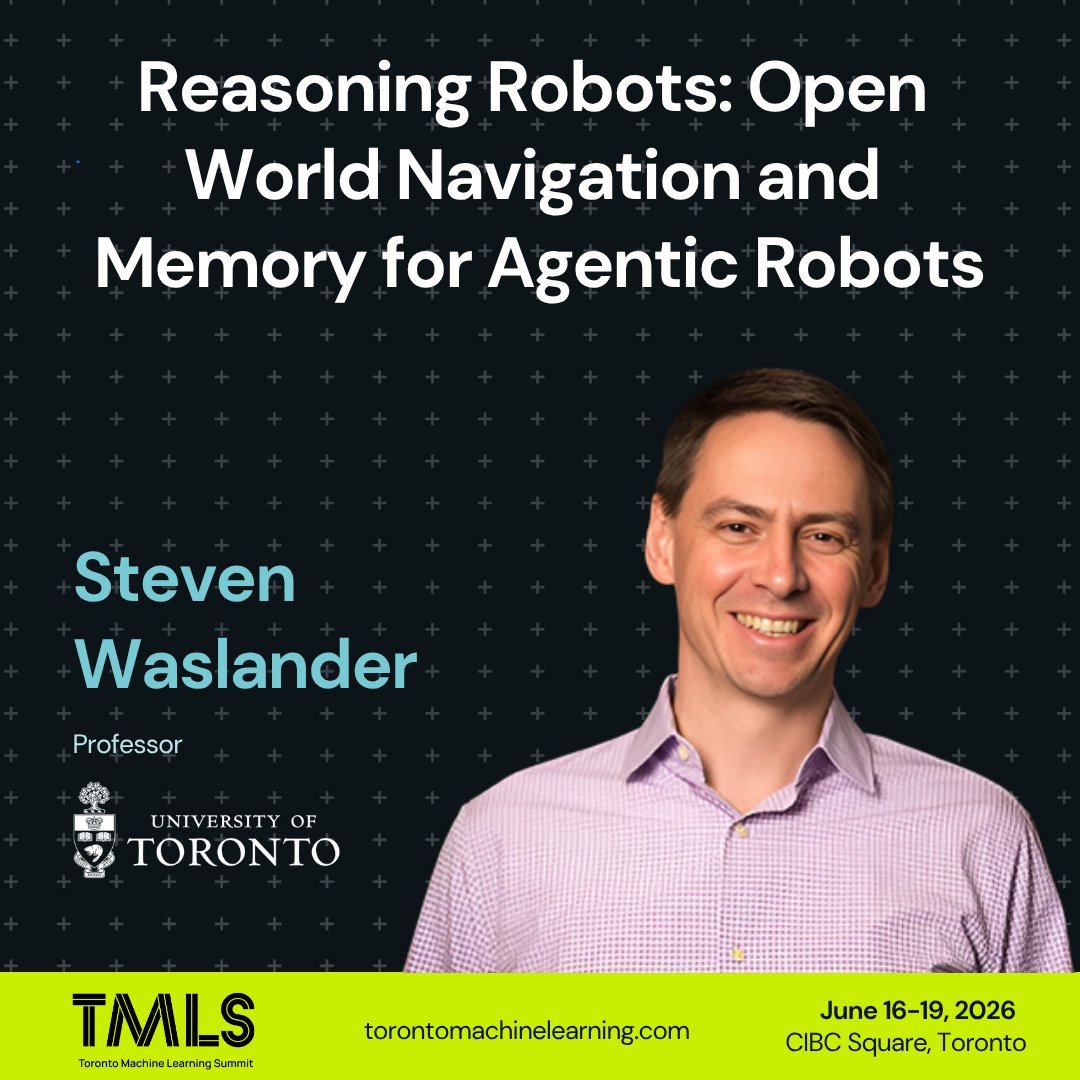
A robot that can recall what it did last week needs memory across three dimensions: spatial, descriptive, and visual.
That is the architecture behind experience recall for temporal question answering in agentic robots.
@stevewaslander , @UofT
1
1
169
MLOps World | GenAI Summit retweeted
Agent vulnerability is primarily architectural, not a model alignment problem.
Fixing the model without addressing orchestration logic leaves the most exploitable attack surface untouched.
Naga Sujitha Vummaneni, @Ripple
TMLS 2026 → torontomachinelearning.com/

1
130
MLOps World | GenAI Summit retweeted
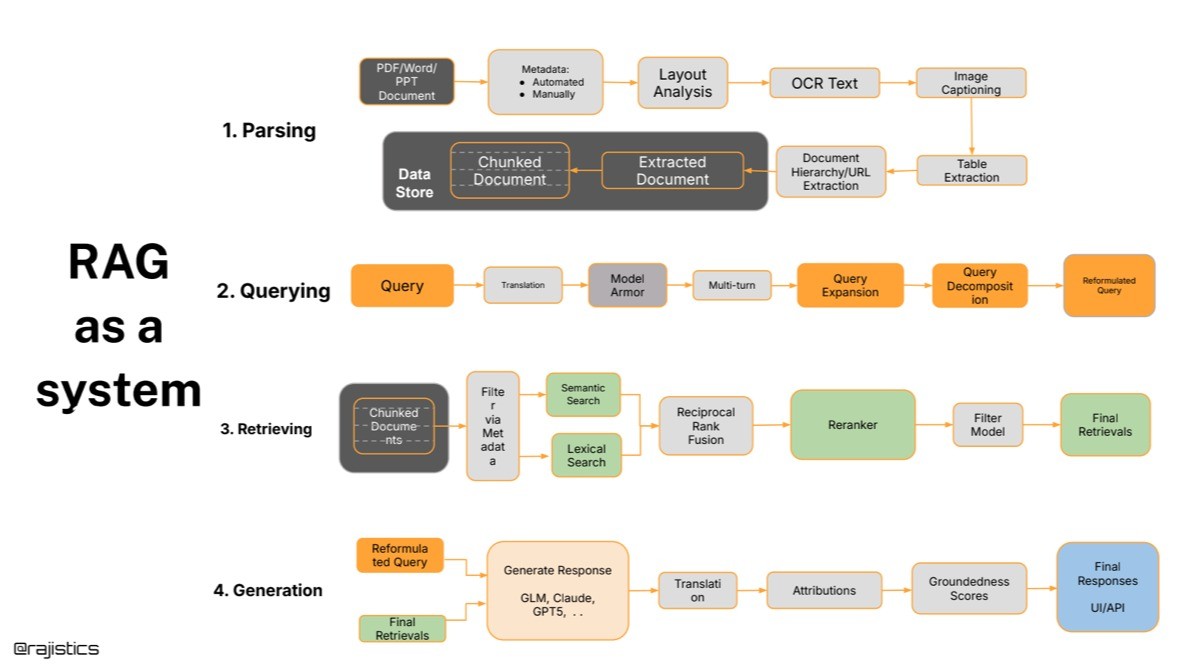
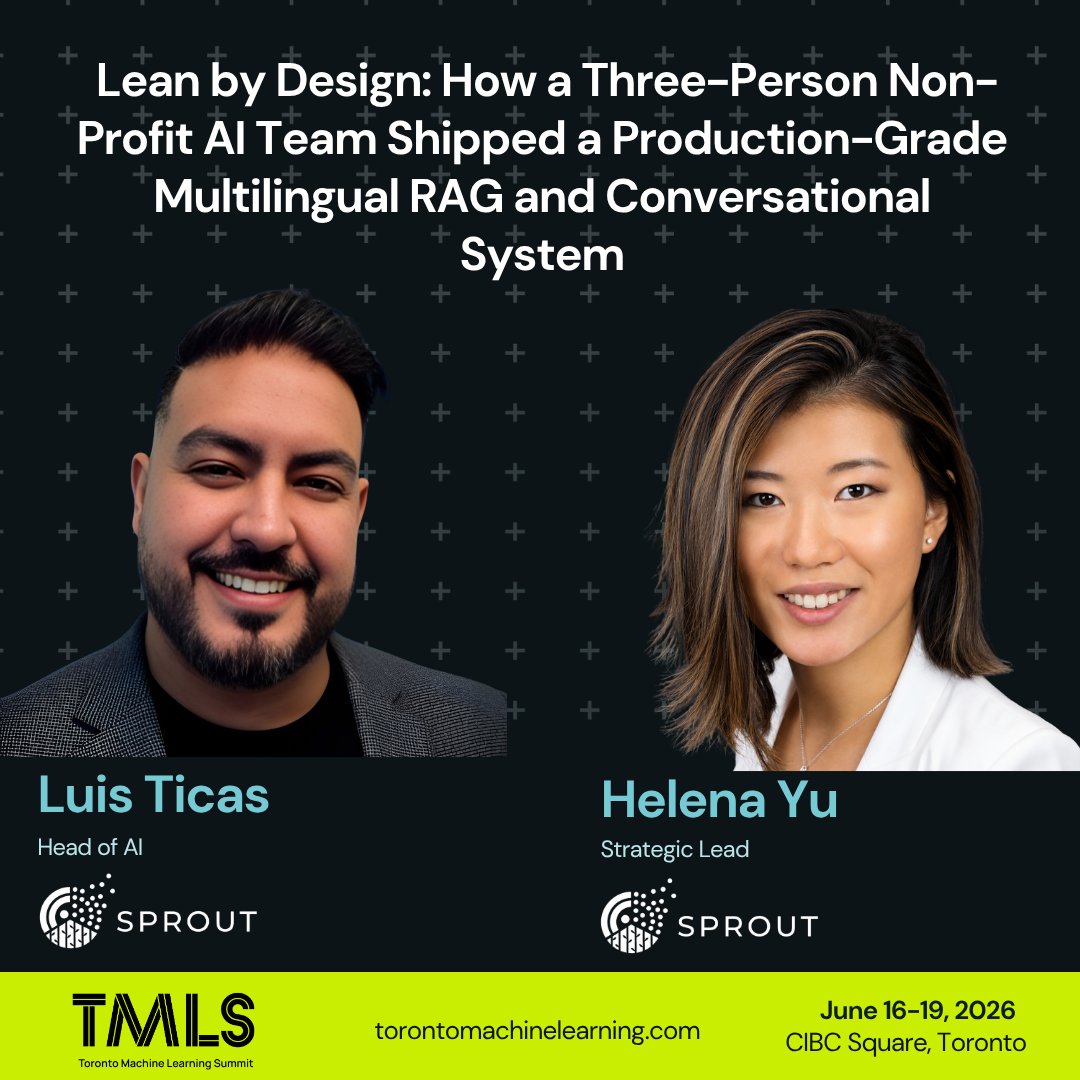
$26/month infrastructure. 200 languages served. A core team of three.
That's the Multilingual Climate Chatbot, a production RAG system, open-source and easy to adopt.
Luis Ticas Helena Yu, Sprout Climate
1
1
126
MLOps World | GenAI Summit retweeted
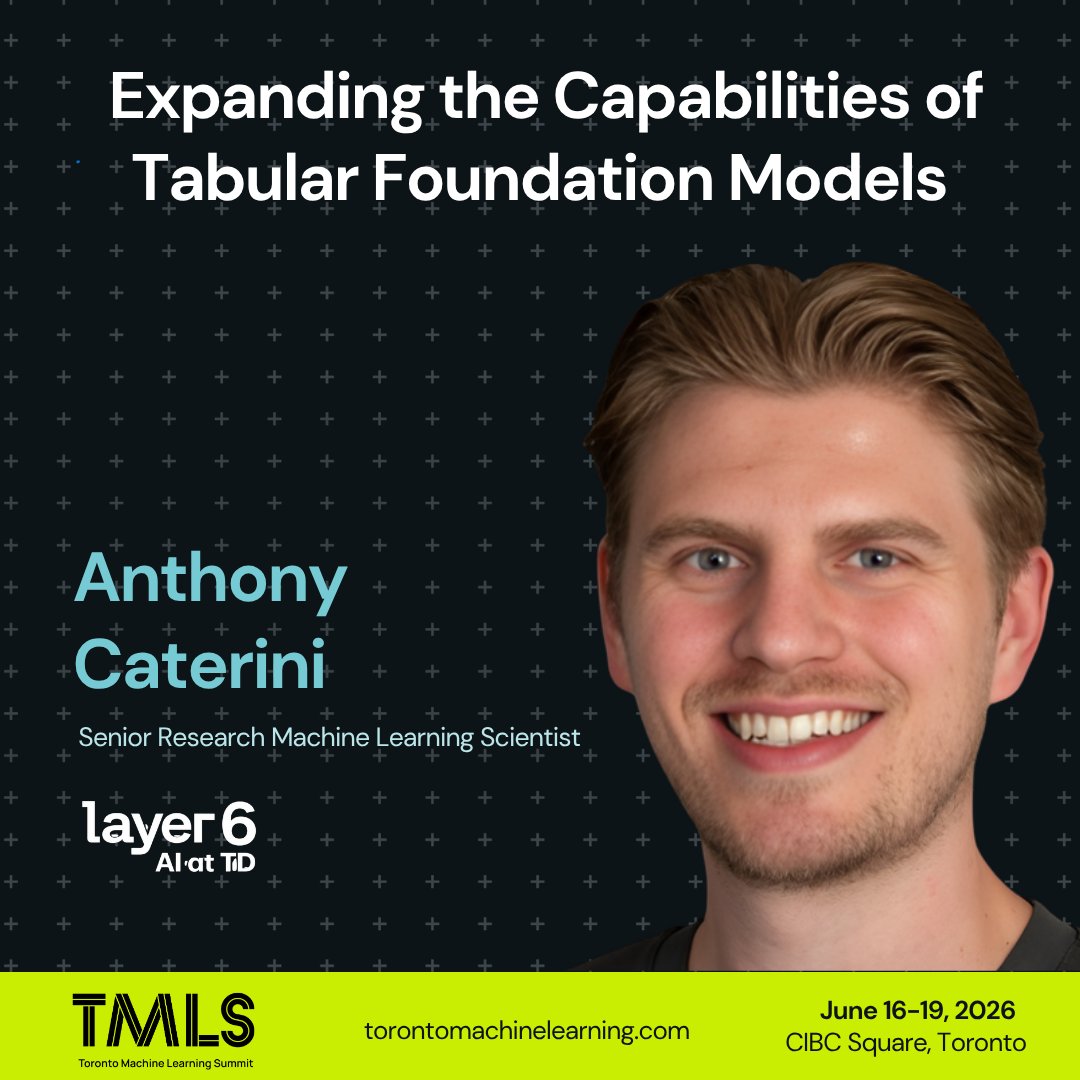
Real data can be a legitimate option for pre-training tabular foundation models - despite being underutilized in favour of synthetic data.
It captures complex signals critical for downstream generalization.
Anthony Caterini @Layer6AI is exploring that here at TMLS 2026
1
1
88
MLOps World | GenAI Summit retweeted
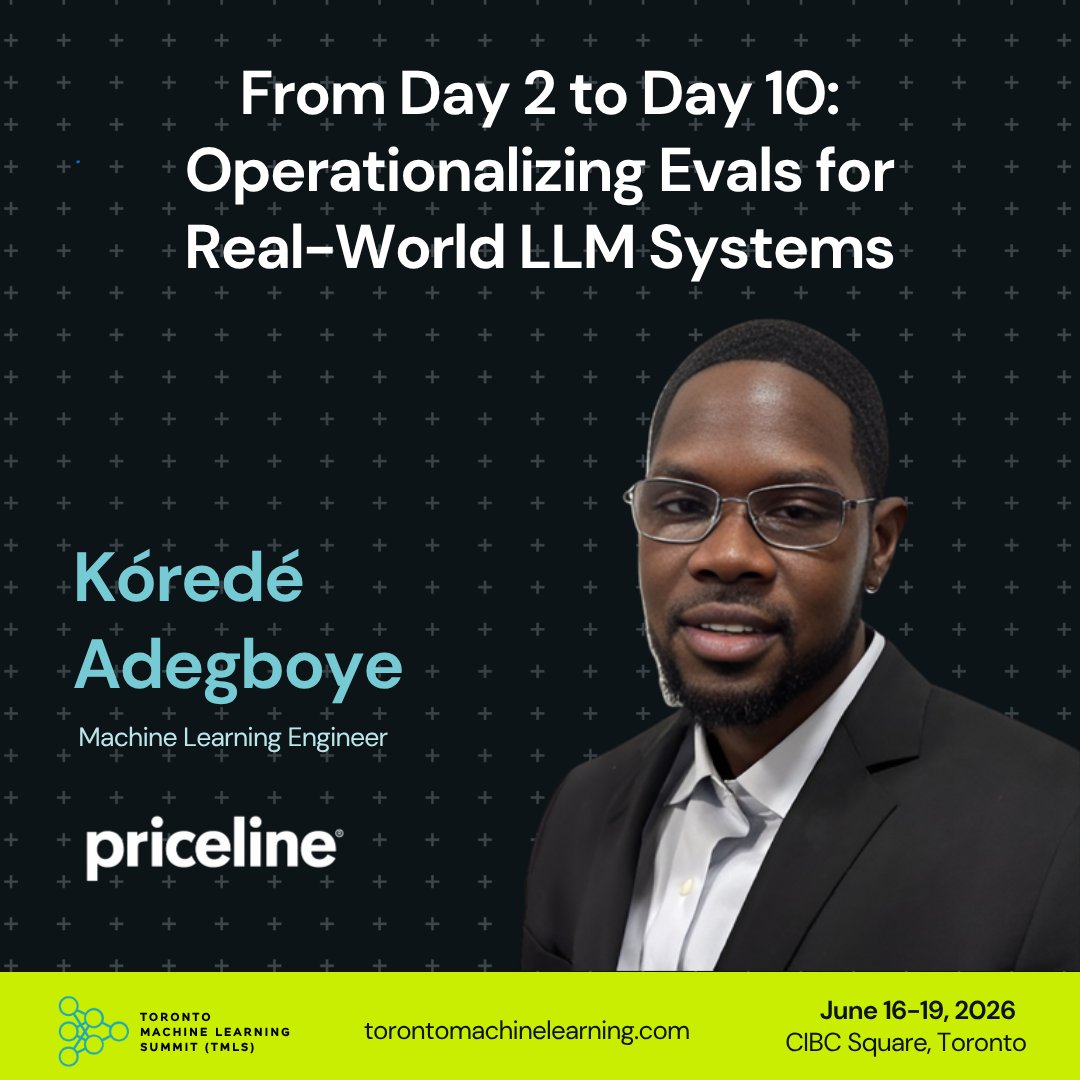
Evals in production: the #1 constraint our committee flagged this year.
Korede Adegboye is presenting his framework at TMLS 2026: automated dataset curation, failure-mode detection, and uncertainty-aware decisioning.
→ See All Speakers: torontomachinelearning.com/
1
62
Vino Sangaralingam is automating and productionizing an NLP-based process with a GenAI component in regulated finance and payments, where ROI and measurement need to be built into the pipeline from day one.
She’s on the MLOps World Steering Committee.
1
1
66
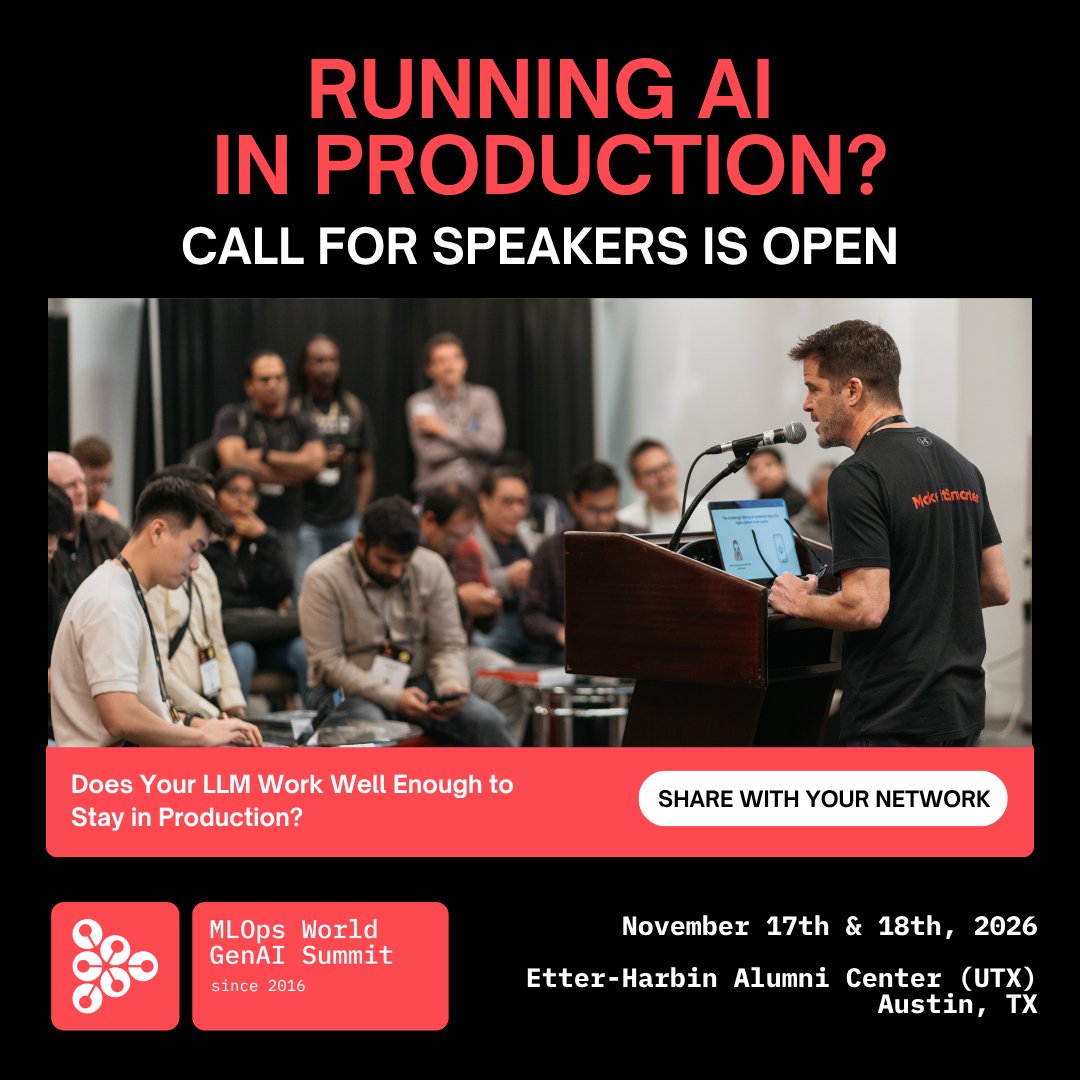
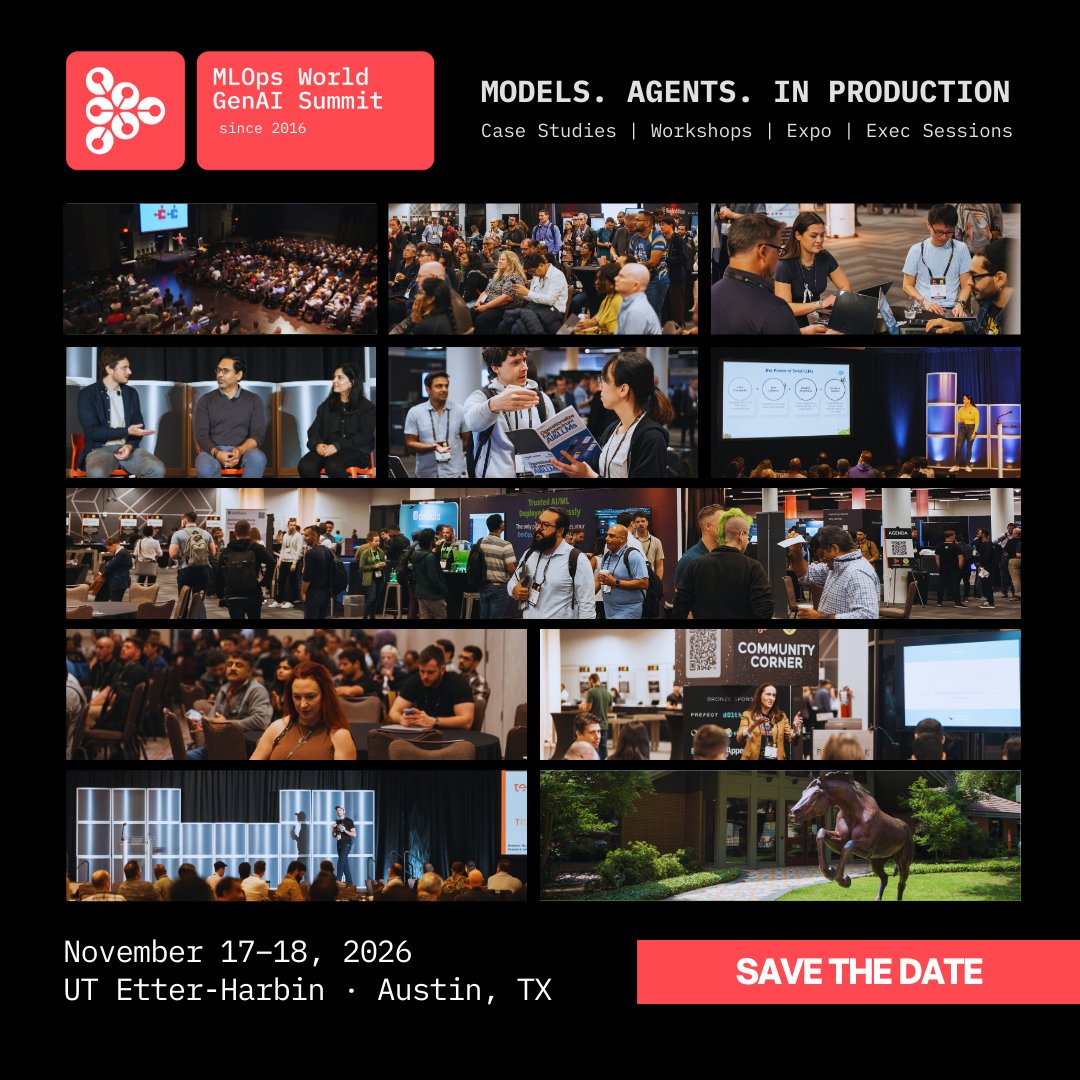
MLOps World 2026 · Nov 17–18 · Austin, TX
→ See what MLOps World is built around: mlopsworld.com
33