
A boutique collective armed with a strategic agency & approach: to serve audio & visual for the appreciator who believes diversity & inclusion is the standard.
Joined January 2021
- Tweets 284
- Following 80
- Followers 14
- Likes 668
72 Photos and videos

Pinned Tweet

10 Feb 2023
We've created an investor portal for individuals and fans of independent music who would like to donate and invest in future @MTCDProductions & @MustWeWait4Ever music like @TheehMTeeShow; no amount is too small, and thank you: paypal.me/ehmtee
2
2
229
MTCD Productions retweeted

Happy heavenly birthday #HarryNilsson!
youtu.be/nvssnPJS3FE?si=bmoF…
2
2
14
MTCD Productions retweeted
Spotify Playlist: SENTIMENTAL VEIL curated by ehMTee. Songs of wistful longing, remembrance, and advocations for love to come. Save and enjoy!
open.spotify.com/playlist/36…
2
2
25
MTCD Productions retweeted
Apple Music Playlist: SENTIMENTAL VEIL curated by ehMTee. Songs of wistful longing, remembrance, and advocations for love to come. Save and enjoy!
music.apple.com/ca/playlist/…
2
2
28
MTCD Productions retweeted
Apple Music Playlist: IT BETTER NOT RAIN curated by ehMTee. Songs about wet weather, water, wishing, and what fools believe. Save and enjoy!
music.apple.com/ca/playlist/…
2
2
20
MTCD Productions retweeted
Spotify Playlist: IT BETTER NOT RAIN curated by ehMTee. Songs about wet weather, water, wishing, and what fools believe. Save and enjoy!
open.spotify.com/playlist/0z…
2
2
21
MTCD Productions retweeted

"For a lot of people, 'Jeanne Dielman' (1975) could represent the ideal woman, but when you look at the life of an ideal woman, it is unbearable."
--- Chantal Akerman
Full Excerpt:
"I remembered, at first fleetingly but then very strongly, that I wanted to dedicate this film to my mother: that I wanted to say 'for my mother Natalia, called Nelly' and that I immediately repressed this idea out of modesty or censorship...and I also tell myself that if I had not known my mother, I would not have made this film, which is, however, absolutely not the portrait of my mother.
I began with several very precise images from my childhood: watching my mother at the stove; my mother carrying packages...Why did I chose a beautiful woman? Because men always think that women inside their homes are ugly. My mother is beautiful.
I think that Delphine [Seyrig] carried with her all the roles that she had played up to then, that is to say, the cinema...If I had used my mother, it would have only been my mother.
At the beginning, I thought I was simply telling the story of three days in the life of a woman, but later I realised that it was a film about occupying time to avoid anguish, to keep moving so as not to think about the fundamental thing, which is being.
There is also the contradictory aspect of these movements; when you see that woman, you tell yourself that it isn't possible; at the same time, I am talking about a woman I love who is my mother. All that is very ambiguous; for a lot of people, Jeanne Dielman could represent the ideal woman, but when you look at the life of an ideal woman, it is unbearable. The camera is not positioned to say that, but it is so obvious. For me this is very old; it goes back to images of my mother when I was a child."
("Identity and Memory: The Films of Chantal Akerman", Edited by Gwendolyn Audrey Foster, 2003)
P.S: Remembering the great Belgian Filmmaker, Chantal Akerman, on her 76th birthday!
7
99
461
41,522
MTCD Productions retweeted

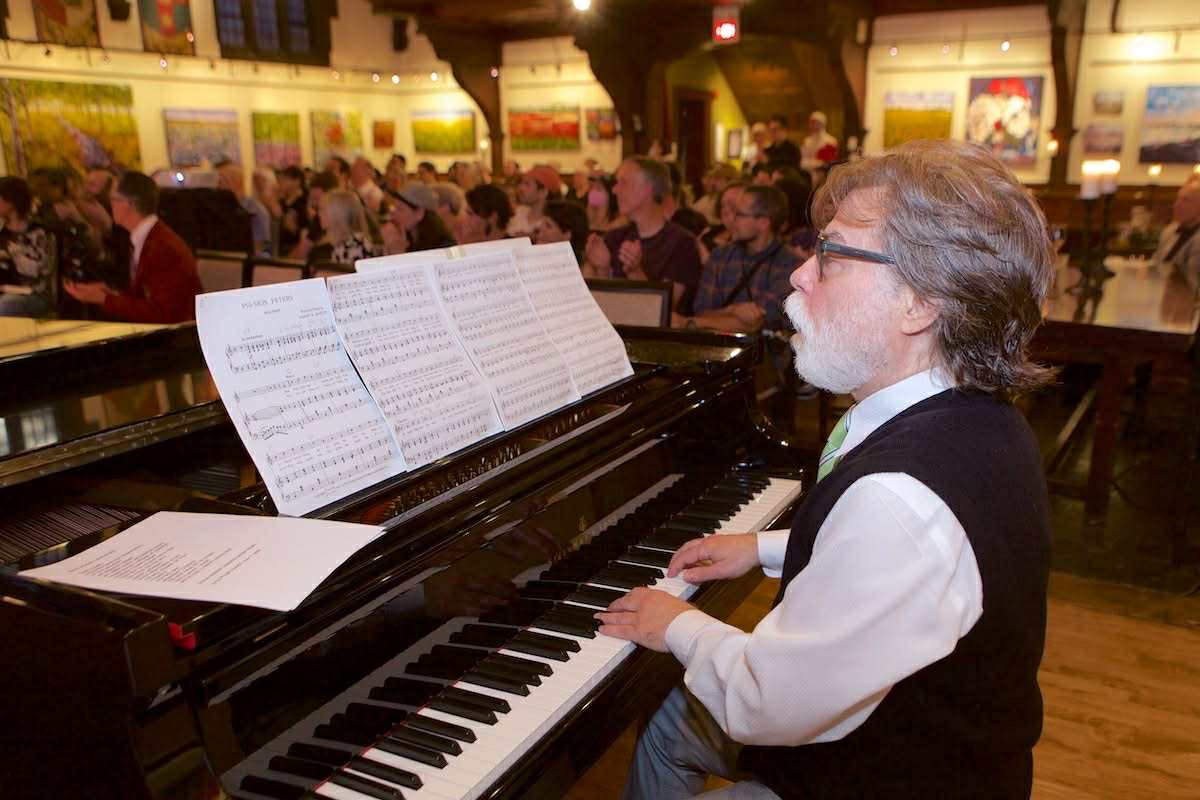
FYI I am playing the Steinway at the Doug Wright Awards this Saturday June 6, at the Arts & Letters Club, 14 Elm St. Ceremony starts at 8, and I start playing after 7. It’s free for the public, and celebrates the best in Canadian sequential art. It’s fun. Come!

2
2
27
MTCD Productions retweeted
Apple Music Playlist: I DON'T WANNA GO OUTSIDE curated by ehMTee. Songs to stay in and resonate with, for those times you don’t want to leave your safe space. Save and enjoy!
music.apple.com/ca/playlist/…
2
2
34
MTCD Productions retweeted
Spotify Playlist: TIME ZONES curated by ehMTee. A selection of songs, composers, and performances I love, which have long inspired me as an artist. Save and enjoy!
open.spotify.com/playlist/1h…
2
2
49
MTCD Productions retweeted
Apple Music Playlist: TIME ZONES curated by ehMTee. A selection of songs, composers, and performances I love, which have long inspired me as an artist. Save and enjoy!
music.apple.com/ca/playlist/…
2
2
30
MTCD Productions retweeted
Today—May 17th—is International Day Against Homophobia, Biphobia, and Transphobia. Let’s all stand against hate and bigotry today and every day.
1
1
27
MTCD Productions retweeted
Apple Music Playlist: DON'T! LET IT GO! curated by ehMTee. A selection of all-time favourite upbeat-friendly pop songs by all-time favourite artists. Save and enjoy!
music.apple.com/ca/playlist/…
2
2
39
MTCD Productions retweeted
Spotify Playlist: DON'T! LET IT GO! curated by ehMTee. A selection of all-time favourite upbeat-friendly pop songs by all-time favourite artists. Save and enjoy!
open.spotify.com/playlist/79…
2
2
42
MTCD Productions retweeted

May 17
SKMT | dig 🌑
The Last Emperor Theme (1987)
By Ryuichi Sakamoto
From The Last Emperor Original Soundtrack
Listen: kabamerica.lnk.to/TLEtheme
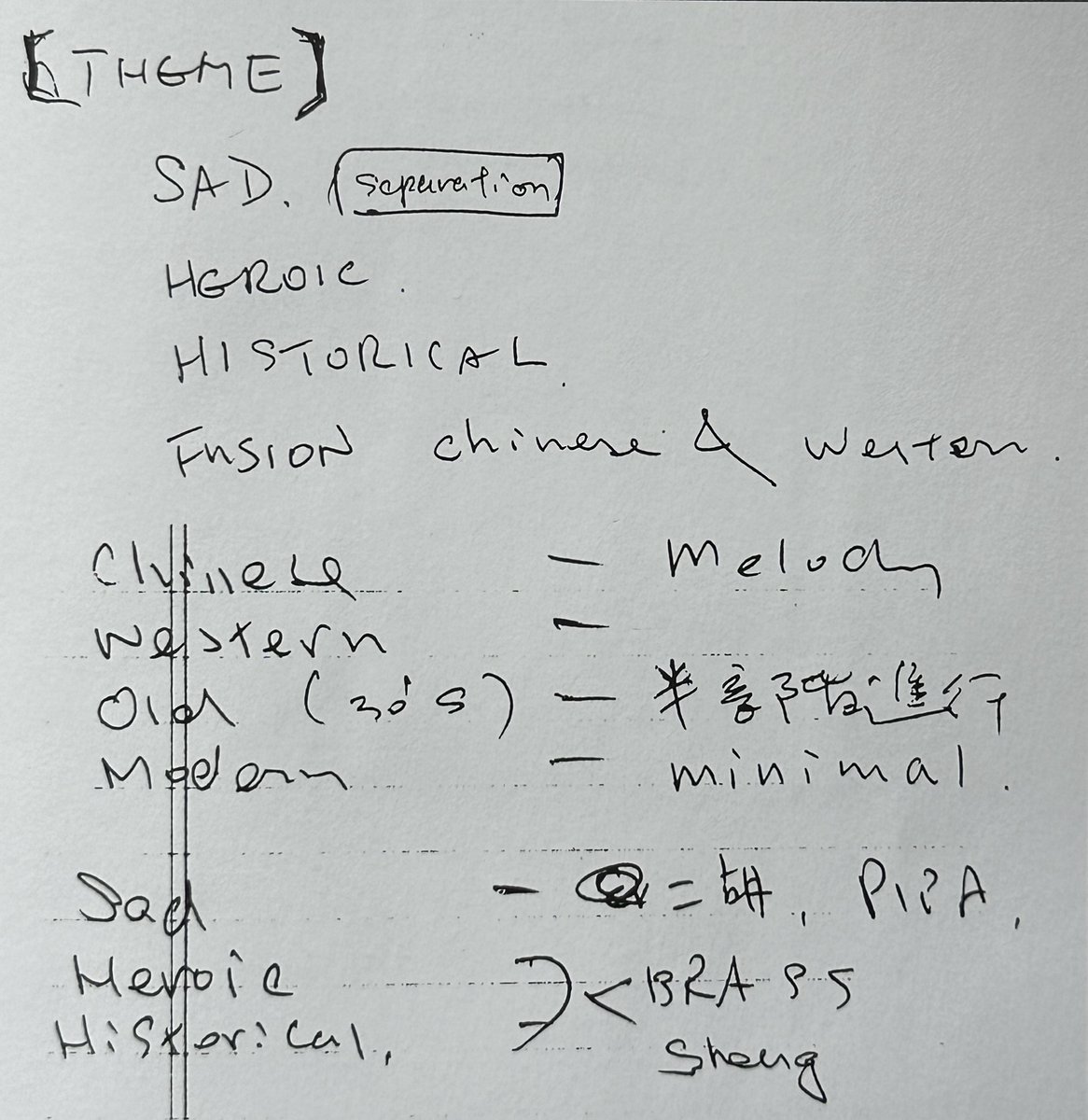
The assignment Bertolucci gave Sakamoto was, by Sakamoto's own description, three contradictions held in tension at once: the music had to evoke the mood of 1920s and 30s China while remaining unmistakably contemporary; it had to use Chinese material without becoming Chinese music — just as the film itself, though set in China, remains a European film; and it had to carry the melodic memorability of Merry Christmas Mr. Lawrence while replacing its intimate, personal motifs with something of vast historical sweep.
(from Gekkan Kadokawa 1988)
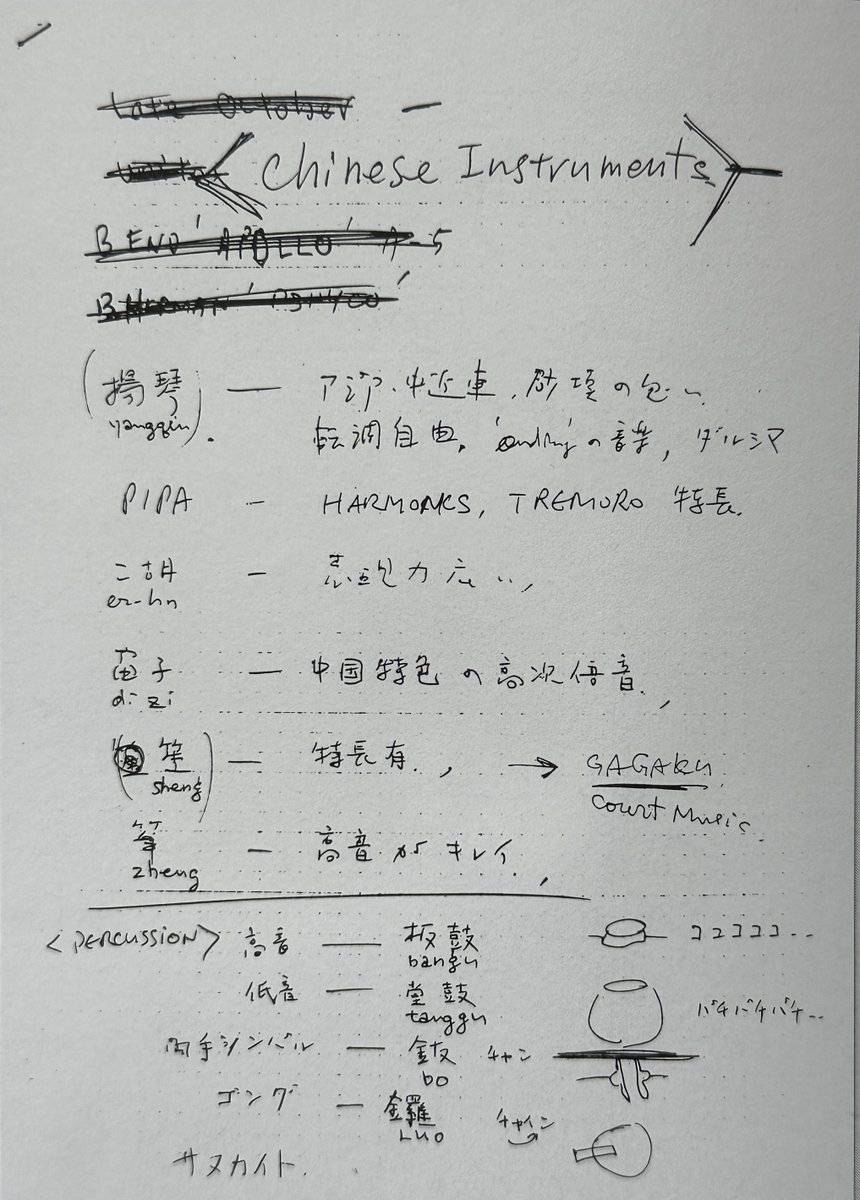
To find his footing, Sakamoto worked through a 20-volume anthology of Chinese music — spanning ancient to modern — and identified the most fundamental instrumentation: the guzheng, the pipa, and the erhu. His solution was direct, almost architectural: take those instruments and simply add them to a Western orchestra. The friction between the two worlds (East and West) was the point.
(from SELDOM-ILLEGAL 1989)
The theme is built on a pentatonic core — Mi, So, La, Si, Re — into which two notes, F♯ and C, quietly enter. Those two notes enter through the pull of chord progressions, creating a modal ambiguity he found impossible to fully untangle. Chinese music, he observed, shifts its modal center mid-piece in ways that neither traditional logic nor Western harmony alone can explain. It was precisely this slight deviation from the pentatonic — this resistance to neat categorization — that he felt answered Bertolucci's original brief to make it emotional. He labored hard over those two notes.(from Keyboard Special 1988)
Jiang Jianhua, the erhu virtuoso who performed on the score, recalled meeting Sakamoto in a Tokyo studio in 1987: "He was very polite and humble. He told us that he didn't know much about traditional Chinese instruments, but he needed them for the soundtrack. He asked me to keep playing while he composed."
(from China Daily)
The same Jiang Jianhua would later perform on Sakamoto's arrangement of SOGEN JOKA.
#skmtnews
#skmtdig
#soundtrack
#ryuichisakamoto
#thelastemperor
ALT ©The Estate of Ryuichi Sakamoto
ALT ©The Estate of Ryuichi Sakamoto
1
103
573
30,627
MTCD Productions retweeted
Spotify Playlist: INTRO THEMES curated by ehMTee. Our favourite theme songs to classic tv shows. Save and enjoy!
open.spotify.com/playlist/3D…
2
2
42
MTCD Productions retweeted
Apple Music Playlist: INTRO THEMES curated by ehMTee. Our favourite theme songs to classic tv shows. Save and enjoy!
music.apple.com/ca/playlist/…
INTRO THEMES curated by ehMTee by Michael Thorner on Apple Music
Playlist · 24 Songs
music.apple.com 2
2
47
MTCD Productions retweeted
Spotify Playlist: I DON'T WANNA GO OUTSIDE curated by ehMTee. Songs to stay in and resonate with, for those times you don’t want to leave your safe space. Save and enjoy!
open.spotify.com/playlist/3e…
1
1
34
MTCD Productions retweeted
Spotify Playlist: BROADWAY SONGS curated by ehMTee. The most sapio, over-the-top, bottoms-up, fence or fence-free theatrical song curation in the history of Broadway. Save and enjoy!
open.spotify.com/playlist/3d…
1
1
34
MTCD Productions retweeted
Apple Music Playlist: BROADWAY SONGS curated by ehMTee. The most sapio, over-the-top, bottoms-up, fence or fence-free theatrical song curation in the history of Broadway.
music.apple.com/ca/playlist/…
1
1
93