Joined October 2025
- Tweets 605
- Following 670
- Followers 3,144
- Likes 3,479
119 Photos and videos




Pinned Tweet

21 Nov 2025
Project Update: Decision Regarding the Token Launch
Over the past weeks, our team has been preparing for our token launch with full commitment and transparency. As part of that process, we set a soft cap to ensure that the project would have the minimum level of liquidity, market support, and participation required for a healthy and sustainable ecosystem.
We did not reach that soft cap. At the same time, the broader market has entered a period of severe stress, with sentiment at a multi-year low across the board. Launching a trading-dependent protocol in these conditions would be reckless. It would expose early participants to unnecessary risk, increase the likelihood of an immediate price collapse, and undermine the trust we have worked hard to build.
From day one, we made a commitment to refund contributors if the soft cap was not met. It is important that we honor that commitment. Protecting our community and acting responsibly is more important than pushing ahead in an environment that is clearly not suitable for a successful launch.
For these reasons, we have decided to place the project on hold indefinitely. This has not been an easy decision, but it is the right one given the current market situation and our responsibility to everyone who supported the initiative.
We appreciate all of you who believed in the vision and engaged with the project. Your trust means a great deal to us, and we will ensure that all refunds are handled promptly and transparently. For those people who have participated in the airdrop campaign, we will honor the participation list if we launch at a later date.
Thank you for your understanding and your support.
MacroStrategy
34
15
108
7,084
21 Nov 2025
Project Update: Decision Regarding the Token Launch
Over the past weeks, our team has been preparing for our token launch with full commitment and transparency. As part of that process, we set a soft cap to ensure that the project would have the minimum level of liquidity, market support, and participation required for a healthy and sustainable ecosystem.
We did not reach that soft cap. At the same time, the broader market has entered a period of severe stress, with sentiment at a multi-year low across the board. Launching a trading-dependent protocol in these conditions would be reckless. It would expose early participants to unnecessary risk, increase the likelihood of an immediate price collapse, and undermine the trust we have worked hard to build.
From day one, we made a commitment to refund contributors if the soft cap was not met. It is important that we honor that commitment. Protecting our community and acting responsibly is more important than pushing ahead in an environment that is clearly not suitable for a successful launch.
For these reasons, we have decided to place the project on hold indefinitely. This has not been an easy decision, but it is the right one given the current market situation and our responsibility to everyone who supported the initiative.
We appreciate all of you who believed in the vision and engaged with the project. Your trust means a great deal to us, and we will ensure that all refunds are handled promptly and transparently. For those people who have participated in the airdrop campaign, we will honor the participation list if we launch at a later date.
Thank you for your understanding and your support.
MacroStrategy
34
15
108
7,084
19 Nov 2025
The incinerator is burning until Friday.
Come join the revolution - tradable, fungible collection tokens, secured by AAA OG NFTs.
Delivering value to the community and tokenholders.
That's MacroStrategy
3
3
25
1,944

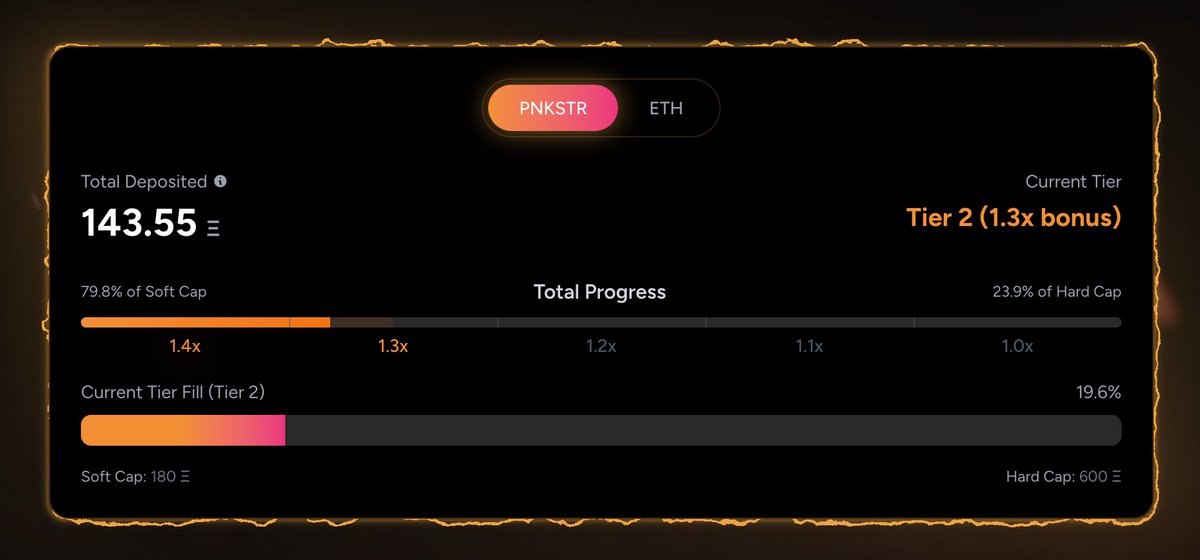
Macrostrategy’s ICO is closing in 4 days.
They’ve raised 143 ETH so far. 180 ETH is needed to start the project. Refunds happen if the target isn’t reached.
All in all they’ve executed solidly, but market conditions have been brutal. Curious to see if they’ll pull it off.
16
6
58
4,473
18 Nov 2025
Thought it might be a good idea to tackle some misunderstandings about auctions used in MacroStrategy
I want to clarify so everyone has an accurate picture.
1. “MSTR lowers the floor” - this is factually incorrect
Every MSTR auction is paired: a sale and a buy. The sale temporarily releases inventory, and the corresponding buy takes tokens off the market for some amount of time, often longer as auctions lengthen.
The net effect is reduced circulating supply, which is bullish, not bearish.
MSTR does not create additional sell pressure beyond what already exists in the market. It creates activity and price discovery, not downward pressure.
2. “TW holds tokens longer, therefore better for floors” - not true in practice
TW currently has a 20% markup that can prevent activity for long stretches, which means tokens often can’t be sold for extended periods.
In fast-moving markets this can actually shorten the hold time, because the stale listing simply doesn't adapt.
As MSTR auctions scale up and lengthen in time horizon, they are likely to keep tokens off the market longer than TW’s model, not shorter.
The “impatient whale” analogy simply doesn’t reflect how the mechanism works.
3. “TW supports collections more” - this gets the economics backwards
TW is not returning revenue to NFT communities.
MSTR is.
MSTR channels protocol tax revenue directly back into the NFTs it supports, and it does so with a much lower protocol fee than TW.
TW extracts more and returns less, which is fine, but it’s important to be factual:
MSTR → tax flows back to the collection
TW → higher fees, no tax return to the NFT community
Economically, the MSTR model is strictly more aligned with NFT holders.
4. Auctions keep the flywheel alive - markup systems stall it
The TW markup system works in very specific conditions (fast uptrends). In sideways or gently downtrending markets, which is most of the time, the markup becomes a blocker:
- Listings go stale
- Tokens get “stuck”
- Liquidity dries up
- No one trades
- Floors go down through inactivity
MSTR’s auction model does the opposite: it keeps tokens moving, maintains voluntary participation, and incentivizes real activity.
“Dead tokens” are the enemy of healthy floors and auctions avoid that.
A market with no trading is a dying market.
5. Downtrends aren’t caused by MSTR, they’re caused by fundamentals
If a collection trends down, it’s due to:
- macro sentiment
- demand shifting
- liquidity rotation
- holders choosing to sell
An NFT protocol cannot manufacture price. All MSTR does is make price discovery more efficient, which actually helps holders understand where true demand is.
Suggesting an NFT collection would prefer no buyers, no sellers, no activity just to preserve an artificially inflated floor misunderstands what keeps communities alive.
The healthiest collections have consistent, organic engagement.
Activity is oxygen.
Closing thoughts:
Innovation in NFT liquidity models is good for the ecosystem. TW’s design is great in certain scenarios; MSTR’s design is great in others.
Both can coexist, and both can support collections. But the idea that MSTR is “predatory” or “negative for NFTs” is simply not accurate.
The mechanism:
- creates balanced buy/sell cycles
- removes supply from the market
- channels more value back to NFT communities
- keeps activity and engagement alive
- operates with lower fees and stronger incentives
That’s not predatory. That’s alignment.
MacroStrategy is not a 'buy and hold forever' protocol and was never intended as that. However it does take tokens off the market for a period of time and the net result of that is always to push the floor price up, compared to the protocol not existing.
Anyone who suggests otherwise hasn't thought this through.
If anyone wants to dig deeper into the mechanics, happy to share full details. Transparency is key, and we want communities to feel 100% confident in how these systems work.
4
9
35
1,824
17 Nov 2025
We've now removed the upper per-deposit limit on the incinerator. All other limits remain the same.
🔥 Keep it burning! 🔥
3
4
30
1,392
16 Nov 2025
We've noticed a lot of scam accounts. Please note that this is the only official MacroStrategy account on X. Assume all others are fakes.
6
5
24
1,582
16 Nov 2025
Reminder:
Anyone who hasn't rectified violations for the airdrop, has just over 6 hours left to rectify.
After that, the slashing will be permanent.
7
5
47
2,802
16 Nov 2025
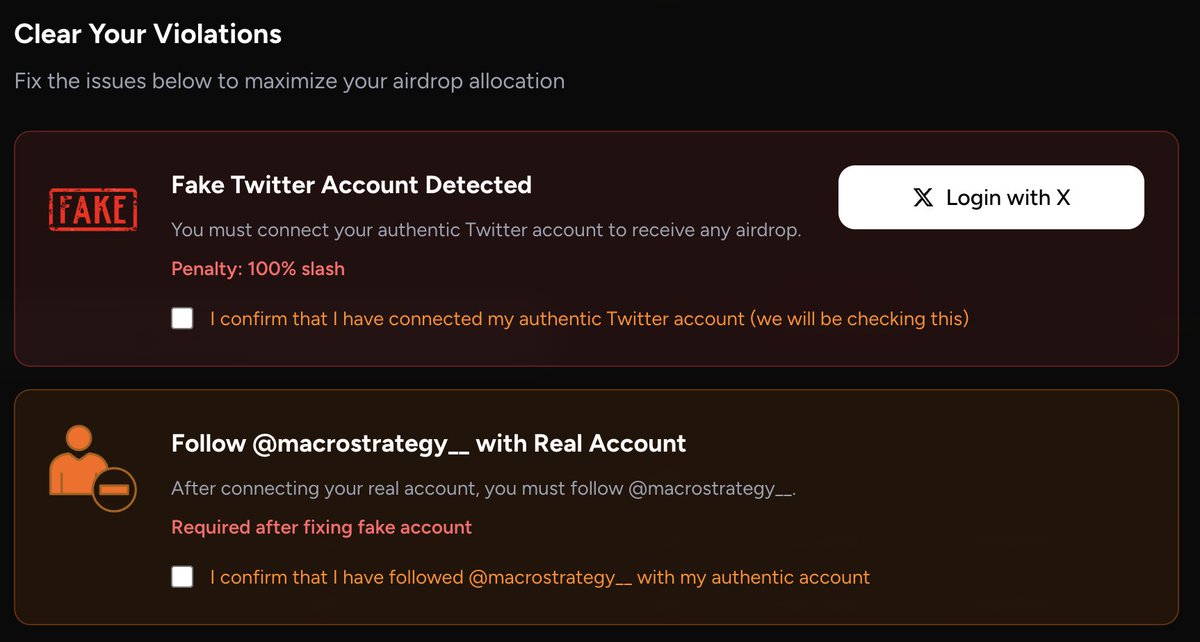
If you're on the "naughty list", you have just over an hour left to clear your violations.
Don't forget to make sure your follow is still active and you haven't deleted your tweet or used a fake alt-account.
4
3
15
1,483
14 Nov 2025
Airdrop update 🪂
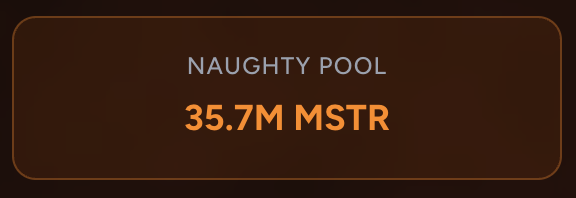
The Naughty Pool still sits at 3.47% - if you have a violation you have less than 3 days to clear them!
7
2
31
1,708
14 Nov 2025
If you think you have a violation badge and it's incorrect, please send us a DM with your wallet address and information, and we can manually clear it.
5
11
878
12 Nov 2025
They Naughty Pool is still at 3.57% of the total supply of MSTR.
Good degens are going to eat well 😂😂
6
1
35
1,952
12 Nov 2025
There will be absolutely no exceptions to the rules - even friends will be doing the walk of shame for redemption.
9
4
39
1,874

11 Nov 2025
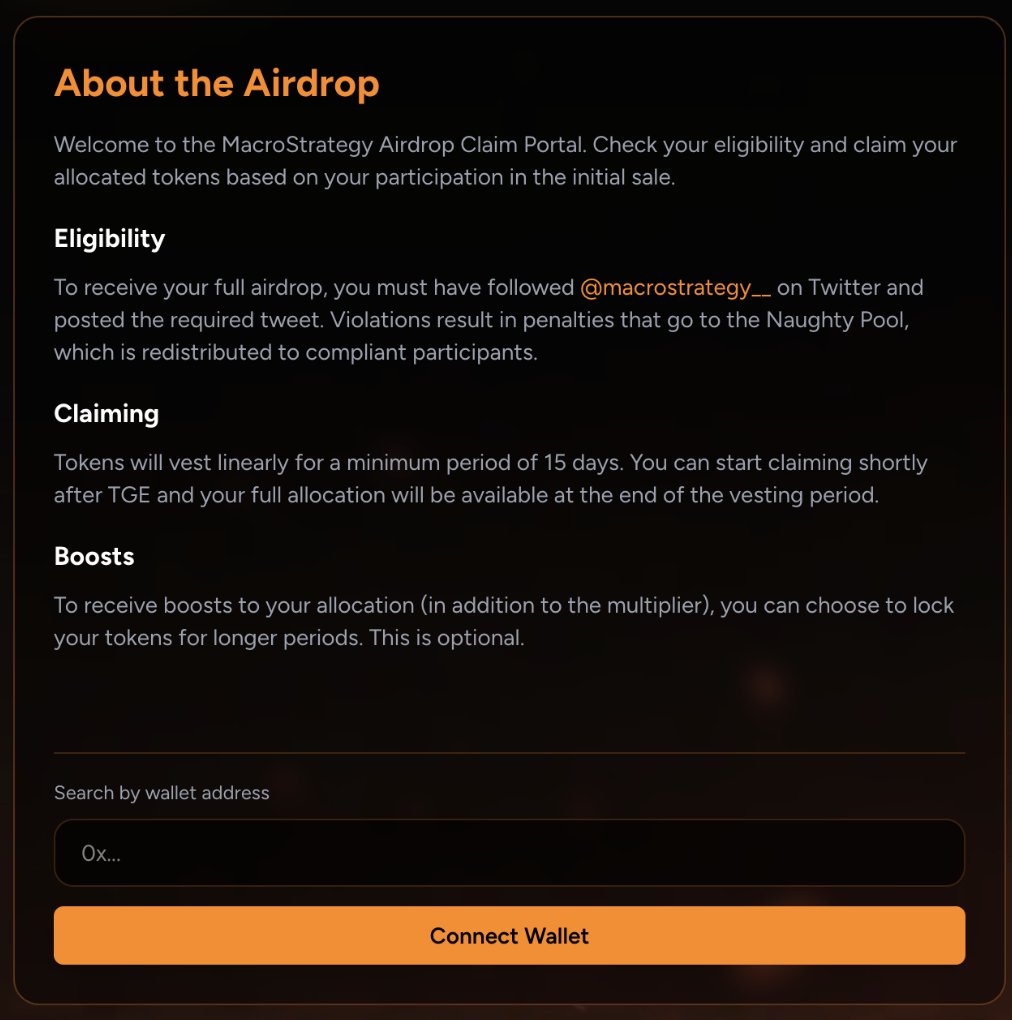
🔥 Airdrop claims are now LIVE 🔥
If you:
– followed the rules ✅
– tweeted your allegiance ✅
– didn’t rug yourself ❌
Congrats - your redemption awaits:
👉 macrostrategy.tech/airdrop
If not… post your shame and seek forgiveness @MacroStrategy__
103
157
335
14,135
11 Nov 2025
5/ Airdrop Claim Window 🪂
The claim window closes November 19th (Same day The Incinerator ends)
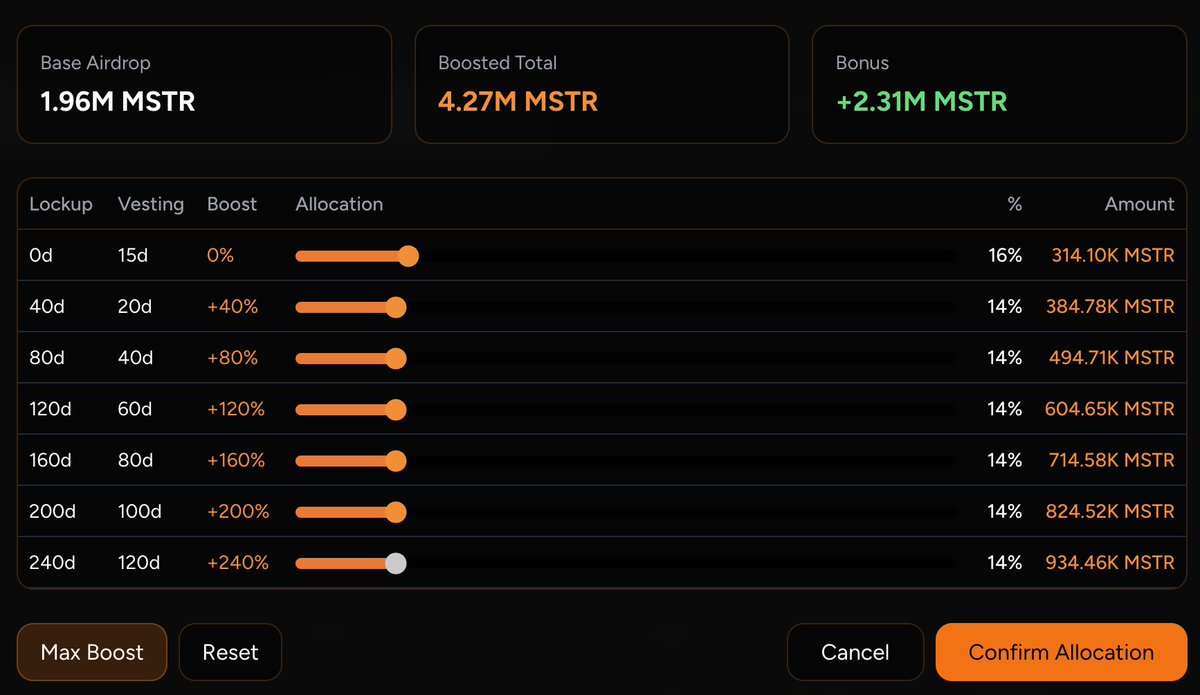
Your MSTR will be available to claim based on your selected vesting schedule once tokens unlock.
1
28
1,670
11 Nov 2025
6/ Be Safe!
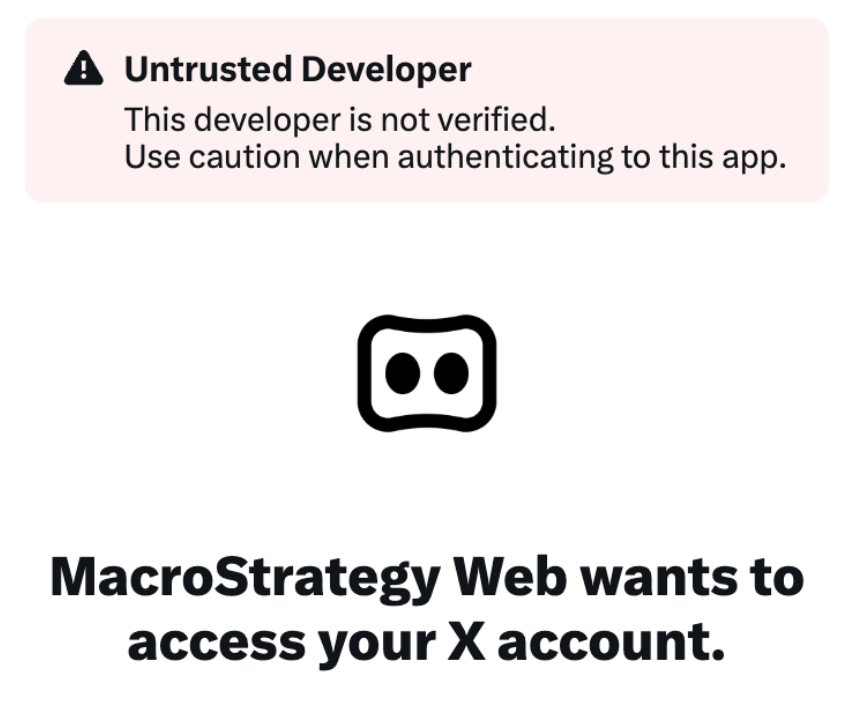
You may see a “Untrusted Developer” message when connecting your X account.
This appears because our developer verification is still being processed by X - it does not affect the safety or authenticity of the connection.
✅ Please make sure you are only connecting via the official site:
👉 macrostrategy.tech/airdrop
21
1,610