
'You live so close to truth it becomes a permanent blur in your eye. When something nudges it into outline,it's like being ambushed by a grotesque'-Tom Stoppard
Joined September 2014
- Tweets 44,252
- Following 799
- Followers 1,578
- Likes 167,198
10,928 Photos and videos














Anna Mae retweeted
Job is an amazing book of the Bible, but it requires understanding, because I have seen people quote Job’s friends as if they were speaking wisdom when the whole point is that they weren’t.
Job is a masterclass in how NOT to comfort someone who is grieving.
29
3
98
2,263

18h
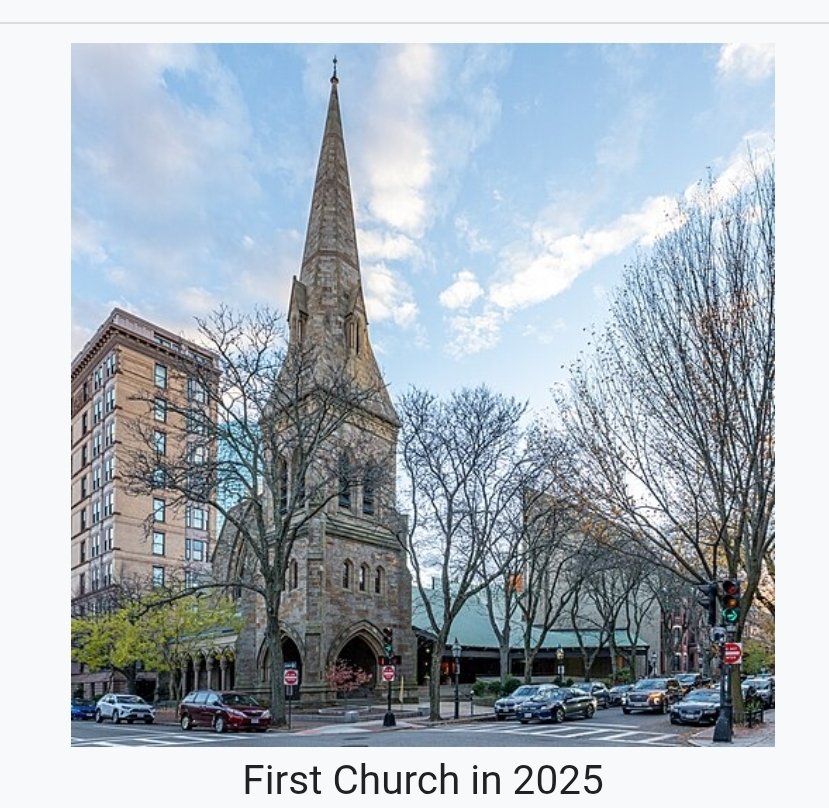
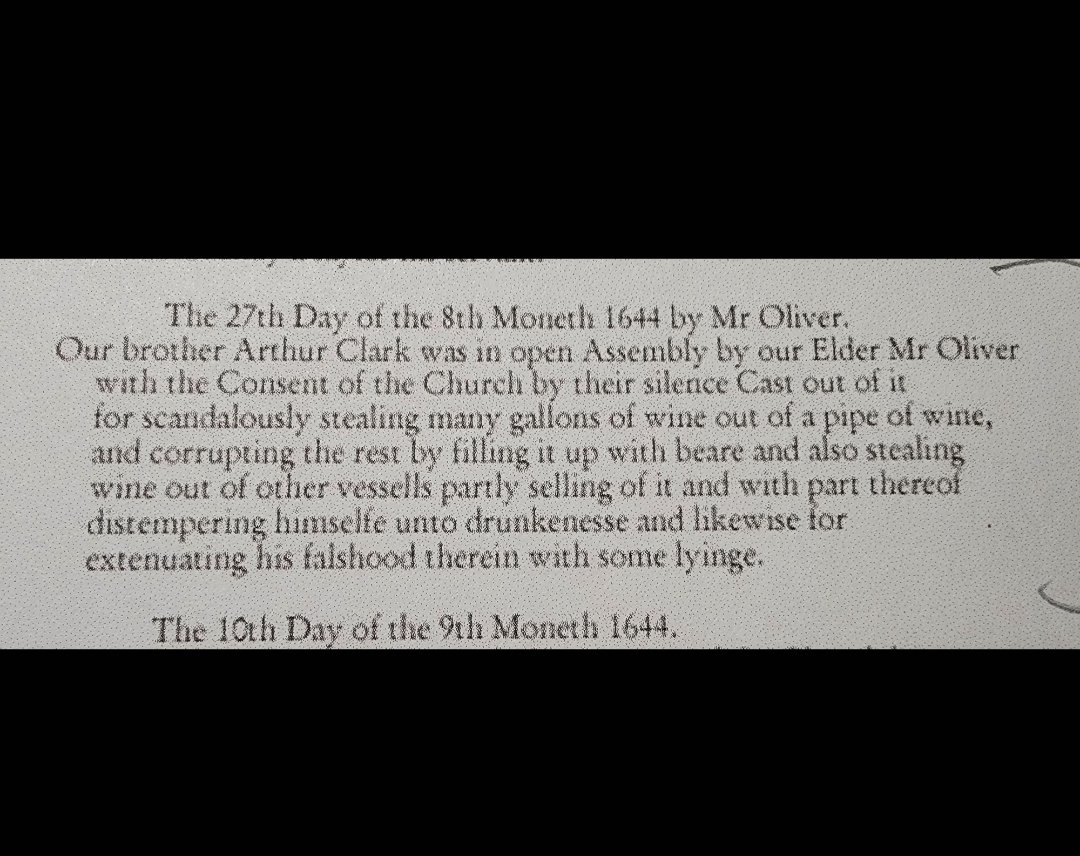
In 1600s Boston, my ancestor was kicked out of the church for switching wine with beer.
The church kept record.
😆
This is my Heritage America story, baby.
3
15
237
Anna Mae retweeted

23h
❖ Has the Sun Stopped Rising Yet?
Imagine a father promises his son an inheritance, a home, and a future.
Years later, he gives those promises to someone else and tells his son they were only symbolic all along.
Would we call that faithfulness?
Yet that is essentially what Replacement Theology asks us to believe about God.
The issue is not ultimately Israel.
The issue is whether God means what He says.
❖ What Did God Actually Promise?
God made specific, unconditional covenants with Abraham, Isaac, Jacob, and David.
📖 "To your descendants I have given this land..." (Genesis 15:18)
📖 "I will establish My covenant... for an everlasting covenant." (Genesis 17:7)
📖 "I will give to you and your descendants after you the land... for an everlasting possession." (Genesis 17:8)
📖 "Your house and your kingdom shall be established forever before you." (2 Samuel 7:16)
📖 "He remembers His covenant forever... the covenant which He made with Abraham." (Psalm 105:8-11)
📖 "The LORD has chosen Zion; He has desired it for His dwelling place forever." (Psalm 132:13-14)
These were not vague spiritual promises.
They involved a real people, a real land, a real kingdom, and a real future.
If God intended something else, why did He repeatedly speak in such specific terms?
❖ The Cosmic Test
Perhaps the strongest challenge to Replacement Theology is found in Jeremiah.
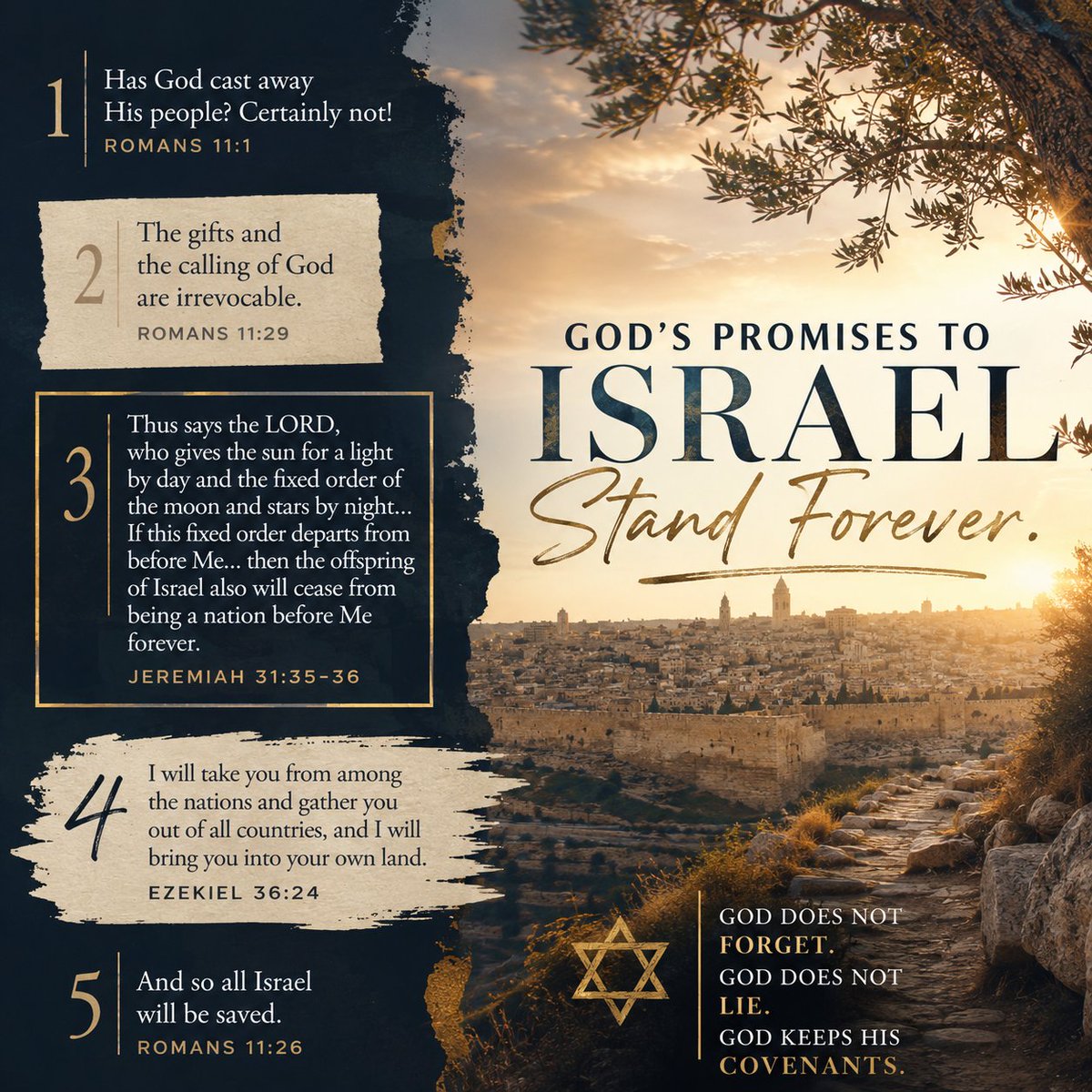
📖 "Thus says the LORD, who gives the sun for a light by day and the fixed order of the moon and stars by night..." (Jeremiah 31:35)
📖 "If this fixed order departs from before Me... then the offspring of Israel also will cease from being a nation before Me forever." (Jeremiah 31:35-36)
Has the sun stopped rising?
Has the moon ceased shining?
Have the stars vanished?
Then neither has God's covenant with Israel.
God did not compare Israel's future to political events.
He compared it to the stability of creation itself.
❖ Paul Anticipated This Debate
Many claim Israel's role ended and the Church inherited her promises.
Yet Paul asks:
📖 "Has God cast away His people? Certainly not!" (Romans 11:1)
📖 "God has not rejected His people whom He foreknew." (Romans 11:2)
Certainly not.
the Greek is:
μὴ γένοιτο (mē genoito)
It is the strongest possible denial available in Koine Greek.
Then Paul explains:
📖 "A partial hardening has happened to Israel until the fullness of the Gentiles has come in." (Romans 11:25)
The hardening is partial.
The hardening is temporary.
The hardening is not permanent rejection.
Then Paul goes even further:
📖 "The gifts and the calling of God are irrevocable." (Romans 11:29)
📖 "And so all Israel will be saved." (Romans 11:26)
Why would Paul devote an entire chapter to Israel's future if Israel had no future?
❖ A Remarkable Historical Irony
For centuries critics insisted Israel would never return.
Then 1948 happened.
They said the Jewish people would eventually disappear.
Instead they were regathered from over 100 nations.
They said Hebrew was a dead language.
Today millions speak it.
They said the land would remain barren.
Yet the desert blooms.
The prophets anticipated this long ago:
📖 "I will take you from among the nations and gather you out of all countries." (Ezekiel 36:24)
📖 "He will assemble the outcasts of Israel and gather the dispersed of Judah." (Isaiah 11:12)
📖 "Can a nation be born in a day?" (Isaiah 66:8)
History itself has become a witness to the faithfulness of God.
❖ Two Competing Approaches
Replacement Theology often says:
• Israel = Church
• Land = Heaven
• Jerusalem = Symbolic
• Kingdom = Spiritual
But the plain reading of Scripture says:
• Israel = Israel (Romans 11:1)
• Land = Land (Genesis 15:18)
• Throne = Throne (2 Samuel 7:16)
• Jerusalem = Jerusalem (Zechariah 14:4)
• Kingdom = Kingdom (Isaiah 9:7)
The same literal method that correctly understands Bethlehem, Calvary, and the empty tomb should also be applied to God's promises concerning Israel.
❖ The Hermeneutical Question
Consider this:
We interpret literally:
✅ Bethlehem (Micah 5:2)
✅ The virgin birth (Isaiah 7:14)
✅ The Messiah's death (Isaiah 53; Psalm 22)
✅ His resurrection (Psalm 16:10)
✅ His ascension (Acts 1:9)
✅ His promise to return (Acts 1:11)
Why then do many abandon literal interpretation when Scripture speaks of Israel's restoration?
📖 "I will take you from among the nations..." (Ezekiel 36:24)
📖 "I will put My Spirit within you..." (Ezekiel 36:27)
📖 "I will plant them on their land, and they shall never again be uprooted." (Amos 9:15)
What changed?
The text?
Or our theology?
❖ Israel's Story Is Not Finished
The prophets do not merely predict Jewish survival.
They predict Jewish repentance.
📖 "They will look on Me whom they pierced." (Zechariah 12:10)
📖 "I will pour out on the house of David... the Spirit of grace and supplication." (Zechariah 12:10)
A future remnant will emerge through tremendous refinement.
📖 "I will bring the third part through the fire..." (Zechariah 13:9)
📖 "A Redeemer will come to Zion." (Isaiah 59:20)
And ultimately:
📖 "All Israel will be saved." (Romans 11:26)
📖 "You shall not see Me again until you say, 'Blessed is He who comes in the name of the LORD!'" (Matthew 23:39)
God is not finished with Israel.
The King is coming back to Jerusalem.
📖 "His feet will stand on the Mount of Olives." (Zechariah 14:4)
The covenants will be fulfilled.
The nations will see it.
❖ The Real Question
The real question is not:
"Do you support Israel?"
The real question is:
When God makes an unconditional promise, does He keep it exactly as He said?
Because if God can redefine His promises to Israel, what assurance do any of us have that He will not redefine His promises to us?
The good news is that He cannot.
📖 "God is not a man, that He should lie." (Numbers 23:19)
📖 "The Strength of Israel will not lie nor relent." (1 Samuel 15:29)
📖 "He who promised is faithful." (Hebrews 10:23)
The God who keeps His promises to the Church is the same God who will keep His promises to Israel.
And that is good news for everyone who trusts Him.
29
62
153
2,406
21h
Jun 12

Jackie brought a fish to the nest and a eagle food battle ensued.
Photos in comments👇🏻🧵

3
18
360
Anna Mae retweeted

Jun 13
Elijah outrunning Ahab’s chariots to escape the rain:
2
1
15
845
Anna Mae retweeted

Jun 12
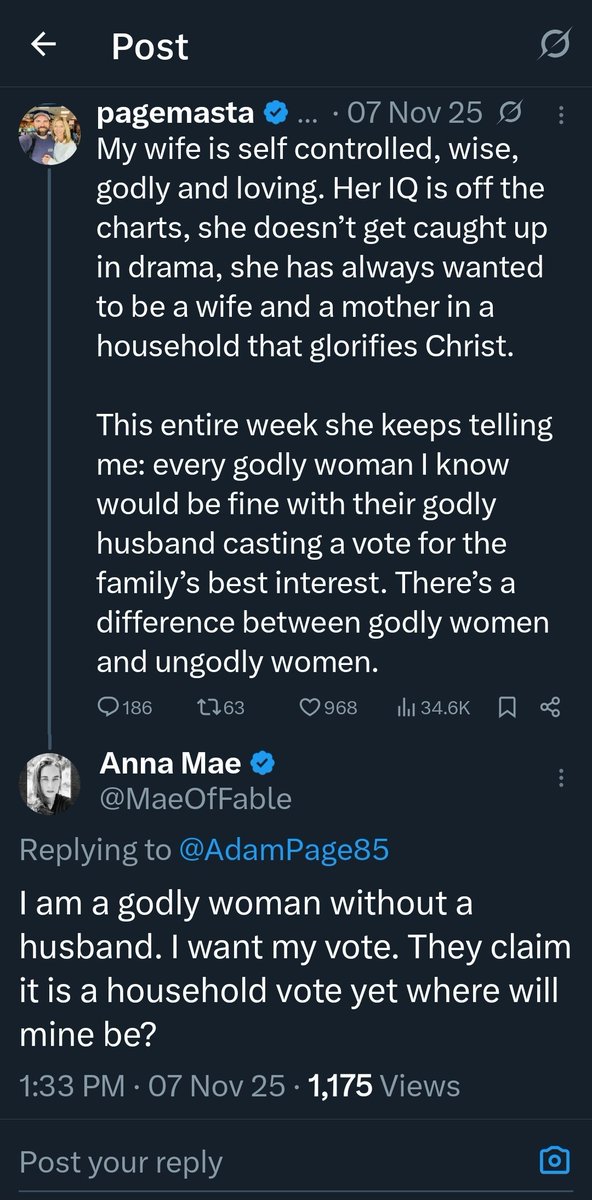
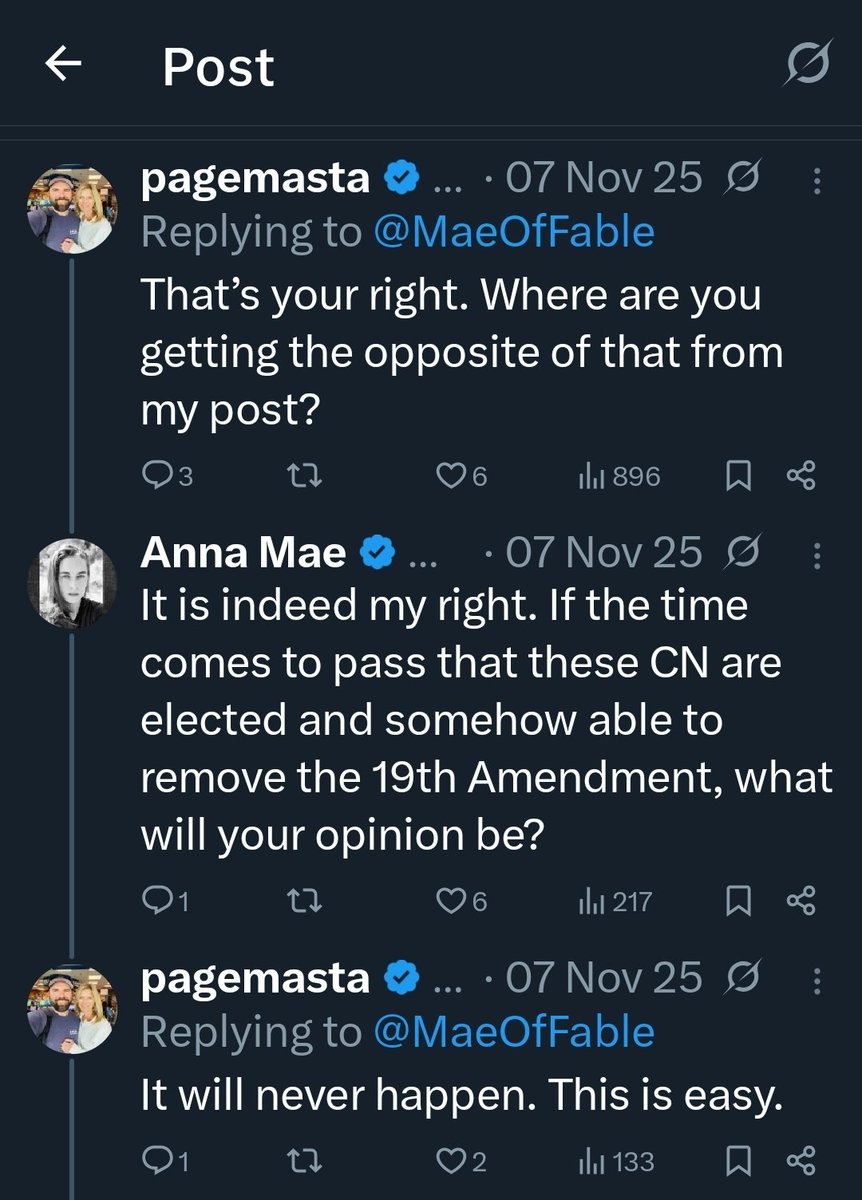
Yes! I pray for this all the time and rest in the absolute truth that Woke Right CN is no match for Him.
The battle is the Lord’s! (1 Sam. 17:47)

Only the Lord can at this point. The people are all but a lost cause.
2
1
7
730
Jun 13
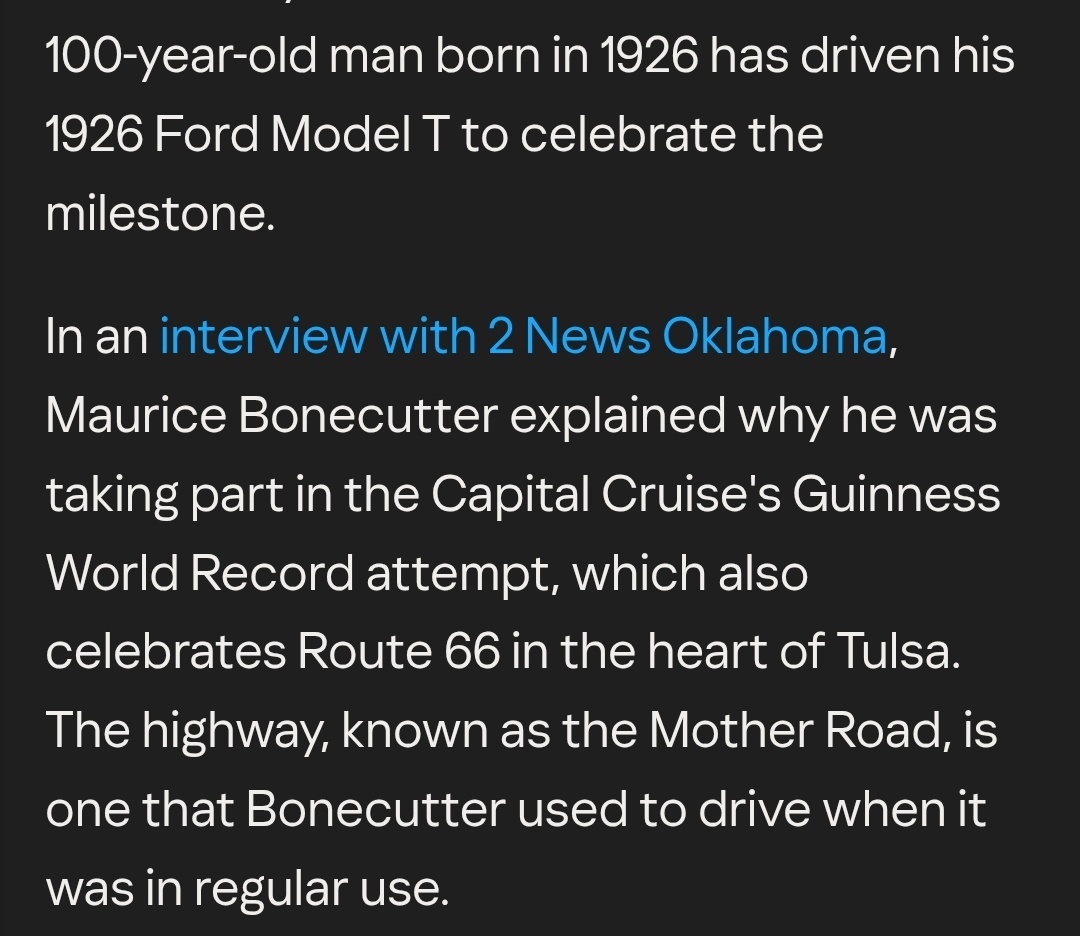
His name is Maurice Bonecutter.
Bonecutter.
Whether a Middle Ages occupational surname or phonetic anglicization, I'd love for fiction writers to jump on this name.
1
1
10
129
Jun 12
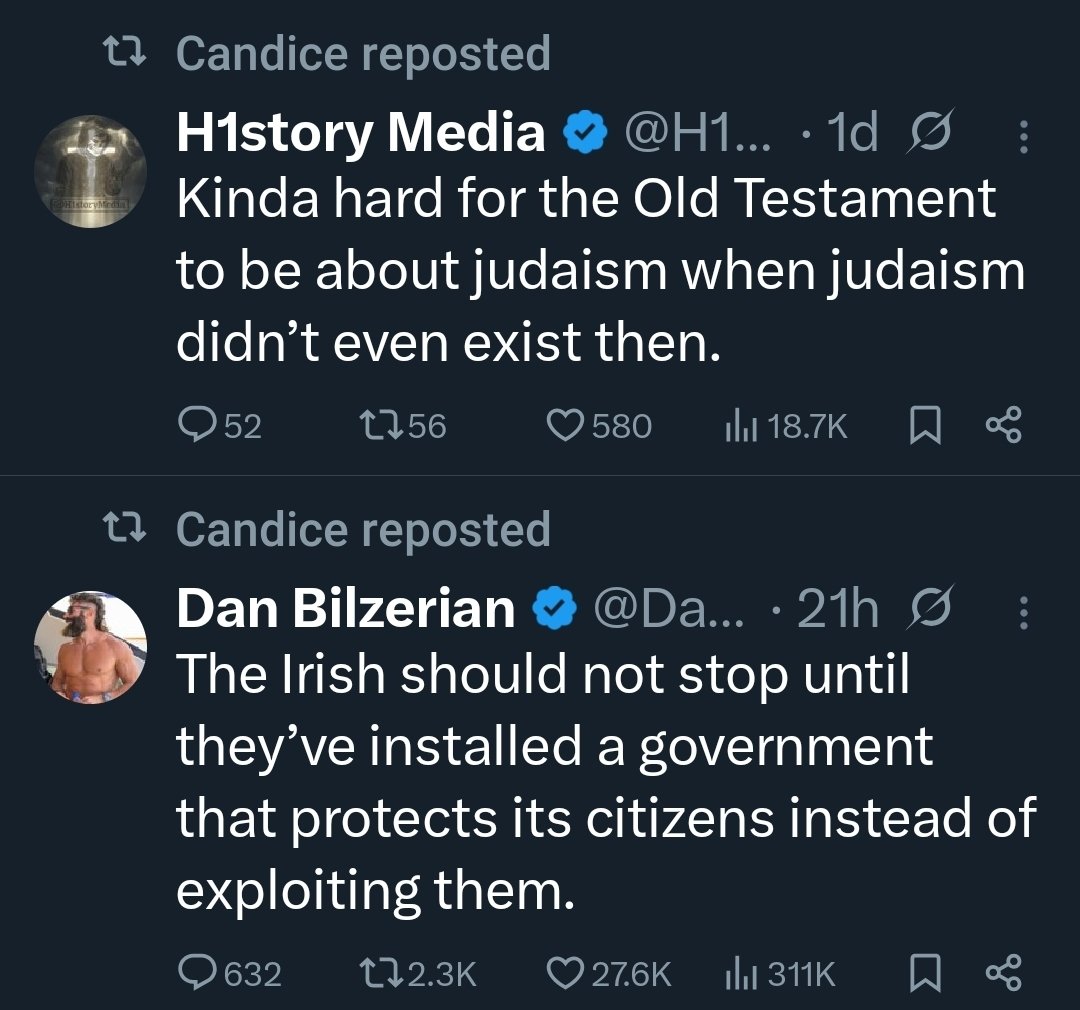
Your account is all around in bad faith.
1
7
143
Jun 12
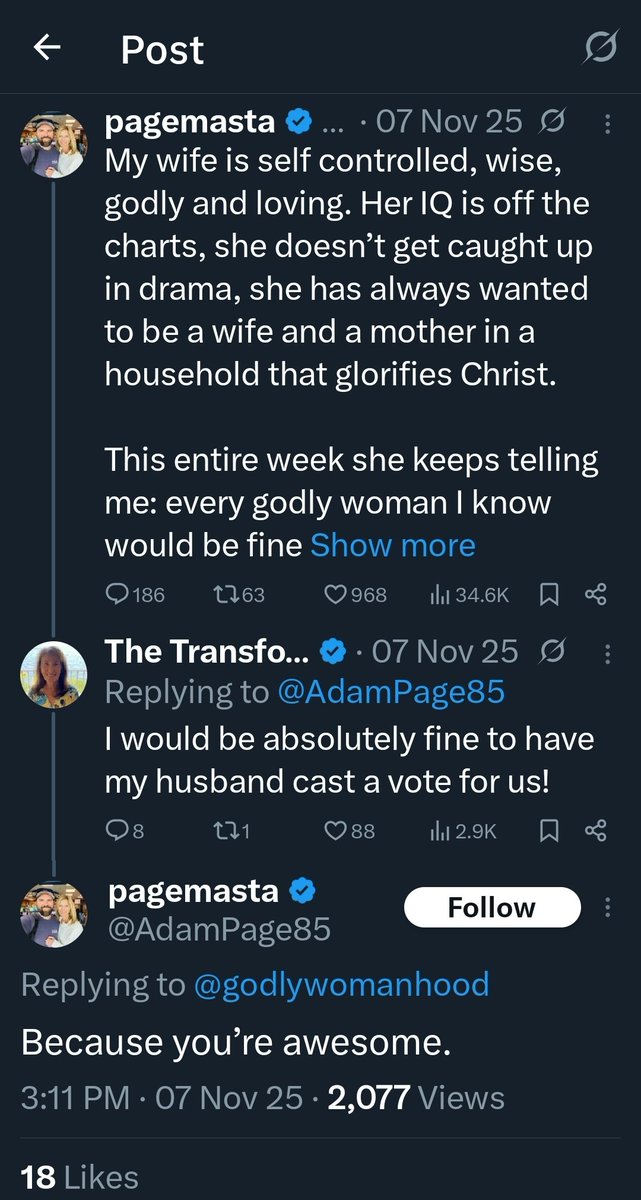
Guard your heart from the Genteel Hyper Patriarchy.
They may not swear or incite ethnic division but many are slippery.
Webbonites & Wilsons lay groundwork, while the Genteel HP weave culturalism with truth.
They seduce with homespun earnestness and slip past discernment.

5
1
11
287
Jun 12
When Brits and Americans unite🥹
Jun 8

Handle With Care by The Traveling Wilburys never gets old...Five legends, one unforgettable song...🎶
1
5
167
Anna Mae retweeted

The backpeddling Helen Mirren. So disappointing but so not surprising.
“I grew up in Europe post-Second World War and the realization in my parents’ generation of what had happened in the Holocaust was so profound, so important,” Mirren said. “Therefore, the creation of Israel was a very important moment, although maybe it was done in completely the wrong way, in the wrong place, I don’t know. But something had to happen after the horror.”
Seriously? She might as well say Israel should not exist.😡

5
4
22
639
Jun 12
What I am gathering from some of the Euro OF girls:
-Say you love smalltown America
-Say Ranch dressing is like crack
2
12
315
Jun 12
Jackie brought a fish to the nest and a eagle food battle ensued.
Photos in comments👇🏻🧵

1
1
10
564
Jun 12
Sandy(left) situated her base low and strong as she put even her wings into action. She overpowered her brother's smalled stature but Luna isn't out of luck a second time.
Sandy now knows she must tear the fish to pieces for her crop.

2
26
Jun 12
Luna(right) is able to get into the mix and snag pieces of fish as Sandy takes a bit more time to eat the 🐟.
🦅🦅🤗

19