
Diplomat, father and husband, former Congressman proudly standing up for New Jersey.
Joined December 2016
- Tweets 8,975
- Following 1,127
- Followers 56,464
- Likes 3,763
711 Photos and videos
Pinned Tweet

27 May 2019
Listen to Eisenhower on the men who perished on D-Day: They "gave us a chance, and bought time for us, so that we could do better than we have before." cbsnews.com/video/eisenhower… via @CBSNLive
212
503
1,642
Tom Malinowski retweeted

Spurs had 92.3% win odds in Game 1 up 13 in the 3rd.
Spurs had 83.6% win odds in Game 2 up 12 in the 2nd.
Spurs had 99.6% win odds in Game 4 up 20 in the 4th.
Spurs had 97.1% win odds in Game 5 up 14 in the 3rd.
They lost them all.
120
919
10,219
452,194
Tom Malinowski retweeted

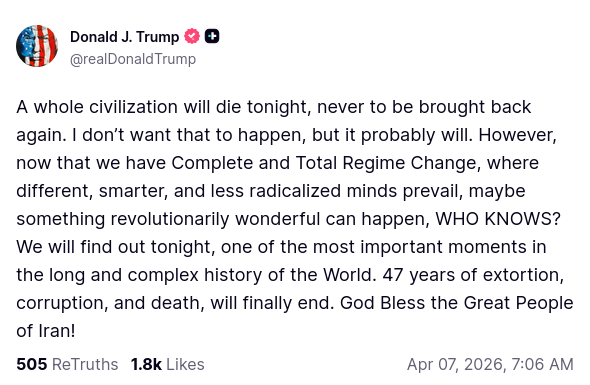
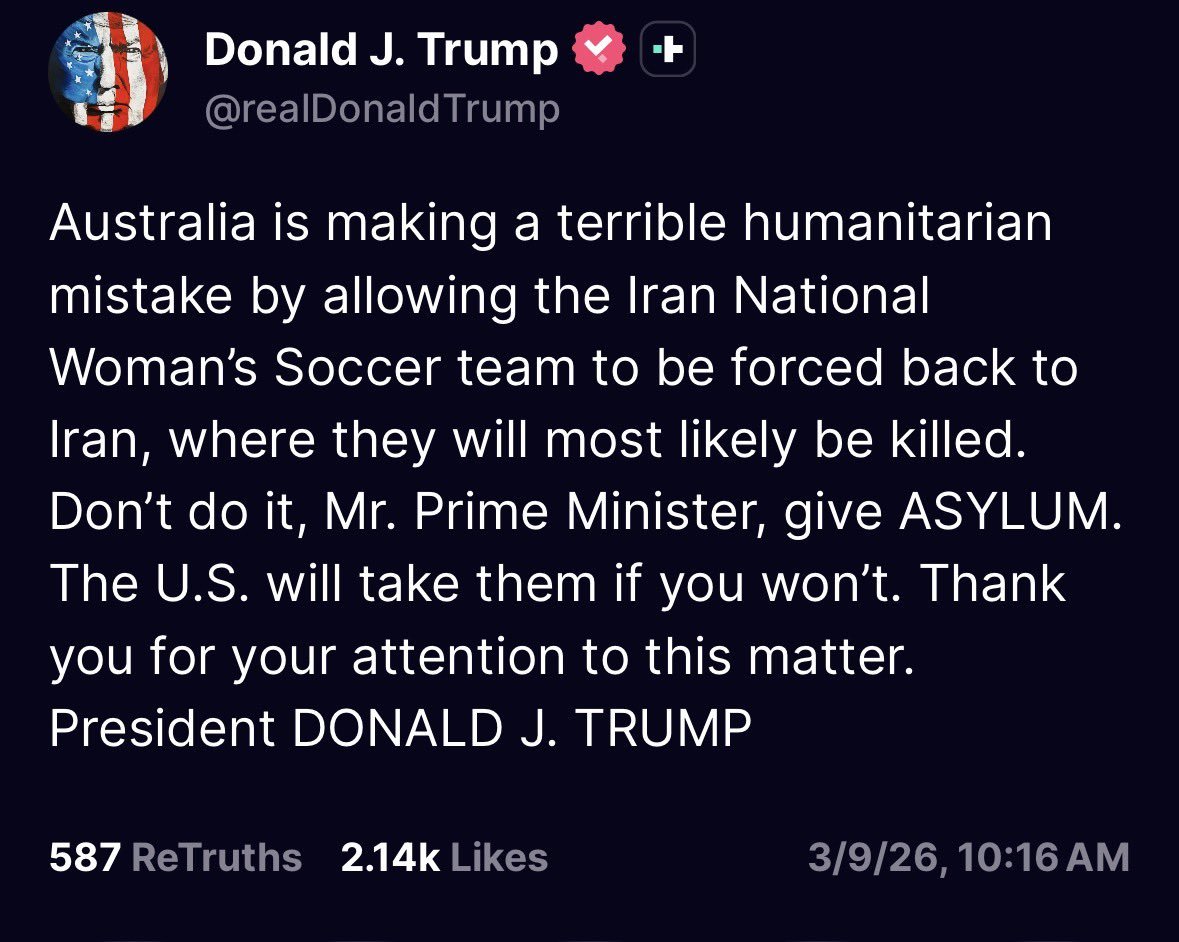
Trump told Iran’s repressed democracy activists that “help is on the way.” Then he started a war that fortified the IRGC and hardliners. Now he is prepared to release billions in Iranian assets to strengthen the regime further — and he deports a female Iranian rights activist to a war-ravaged African country.
21h

The Trump administration has deported an Iranian pro-democracy activist to the Central African Republic, a "super dangerous" transfer to a country with which the activist has no connection. trib.al/iqNIaLf
23
188
382
23,706
Tom Malinowski retweeted

Jun 10
“If a man’s past keeps surprising us, it’s a safe bet that his present and future will continue to surprise us as well,” former Rep. Tom Malinowski, D-N.J., said of the "moral dilemma" Democrats face with a Graham Platner-Susan Collins matchup.
Jun 10

"One Republican strategist involved in Senate campaigns told NBC News that the party will hold back its opposition research file on Platner until the deadline passes out of fear that Democrats will 'Biden him'"
via @jonallendc @natashakorecki
nbcnews.com/politics/2026-el…
1
9
20
5,389
Tom Malinowski retweeted

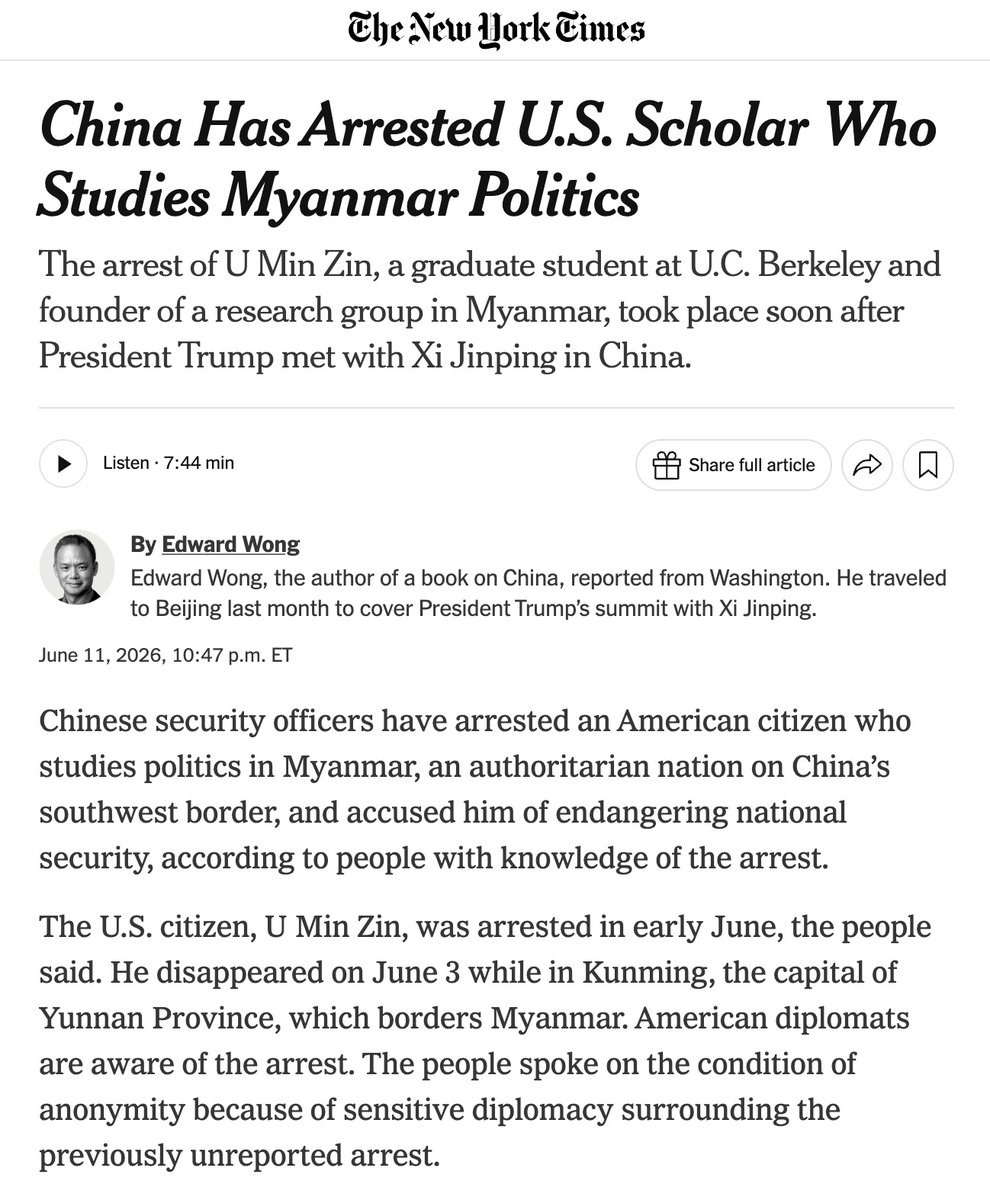
Incredible for China to arrest an American citizen - who’d been invited to China by a Chinese university - on spurious charges weeks after Trump visited Beijing.
US needs to treat this as a show-stopping problem. Business as usual would signal extraordinary weakness.
Jun 12

NEW: China arrested a US citizen after Trump met with Xi in Beijing and accused him of endangering national security — a rare charge against an American. The detainee, U Min Zin, is a grad student at @UCBerkeley who researches Myanmar. This adds a new strain to US-China ties.
67
61
183
36,467
Tom Malinowski retweeted

Jun 11
In reply brief, Public Integrity Project attys say UFC White House cage-fighting event is a “volcano of corruption” that will “mark an inflection point in American history.” POTUS’s “allies at the UFC will profit from the first private, for-profit sporting event ever held on WH grounds.”
1/3

72
1,066
2,817
247,161
Tom Malinowski retweeted

Jun 10
The man running the agency responsible for 340 million Americans' health arrives at 10am, leaves by 4pm, skips his own division chief meetings, and when he does show up - scrolls his phone and gets described by colleagues as "checked out."
Ebola is spreading. Six Americans already exposed. He has not briefed himself with CDC scientists. His response to a reporter asking if he was worried: "Yeah, we're working on it."
The CDC is being run by a health economist with no public health experience who already has another full-time job running NIH. Half of the 27 NIH institutes have no permanent director. The top FDA drug regulator got fired in May - Kennedy found out after it happened.
When measles killed two children in Texas, the CDC official leading the response asked repeatedly to brief Kennedy. He was rebuffed every time.
The person actually running HHS operations is a longtime personal adviser whose policy spreadsheet - more than 50 items - is hidden from the department's own policy team. When Kennedy gets asked a question, his standing answer is "just run that by Stefanie."
This is not a management philosophy. This is a vacancy wearing a title.
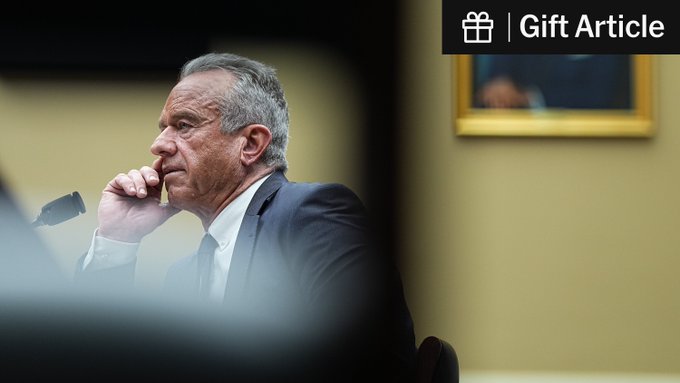

NEW: Major posts are vacant. Waves of scientists are gone. Ebola looms. How RFK Jr. manages HHS:
“If the C.E.O. lacked deep expertise in the company’s business and the leaders of its most important divisions were missing, investors would revolt."
nytimes.com/2026/06/07/us/po…
339
6,424
13,736
693,134
Tom Malinowski retweeted

Jun 8
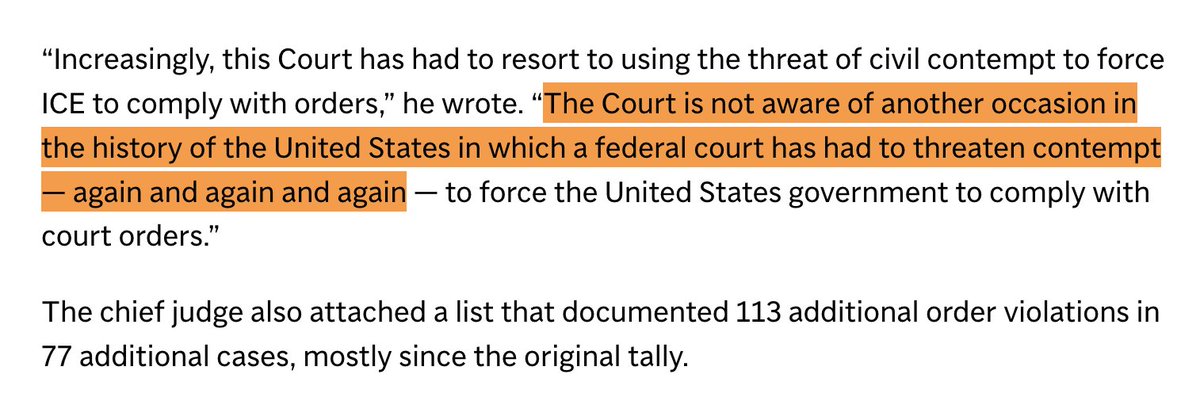
Republican-appointed judge: “The Court is not aware of another occasion in the history of the United States in which a federal court has had to threaten contempt — again and again and again — to force the United States government to comply with court orders.”
165
4,296
10,657
291,741
Take it from someone who's run in several elections: No matter how unscrupulous a candidate might be, committing fraud in America at a big enough scale to rig an election above a tiny town council race is laughably impossible.
Let's look at what it would actually take. 1/

The real reason they don’t want voter ID is to commit voting fraud. That is the obvious truth.
5
9
26
4,514
Could one person cast one fraudulent vote and get away with it? Sure. Could a candidate needing thousands of "extra" votes to win an election get away with organizing that? Absofuckinglutely not. Every single step in the process would give them away. 8/
1
7
361
Let me put it this way. I think Donald Trump is dishonest and that there isn't a law or moral principle he wouldn't break to win or keep power. But if you told me he rigged an election, I wouldn't believe you. Because it just isn't possible to do that in America at scale.
1
6
341
Tom Malinowski retweeted

Jun 7
If this is such an acute fear, probably should have picked someone other than Bill Pulte for DNI, because that decision made the need for warrants almost comically obvious.
2
22
195
48,791
Tom Malinowski retweeted

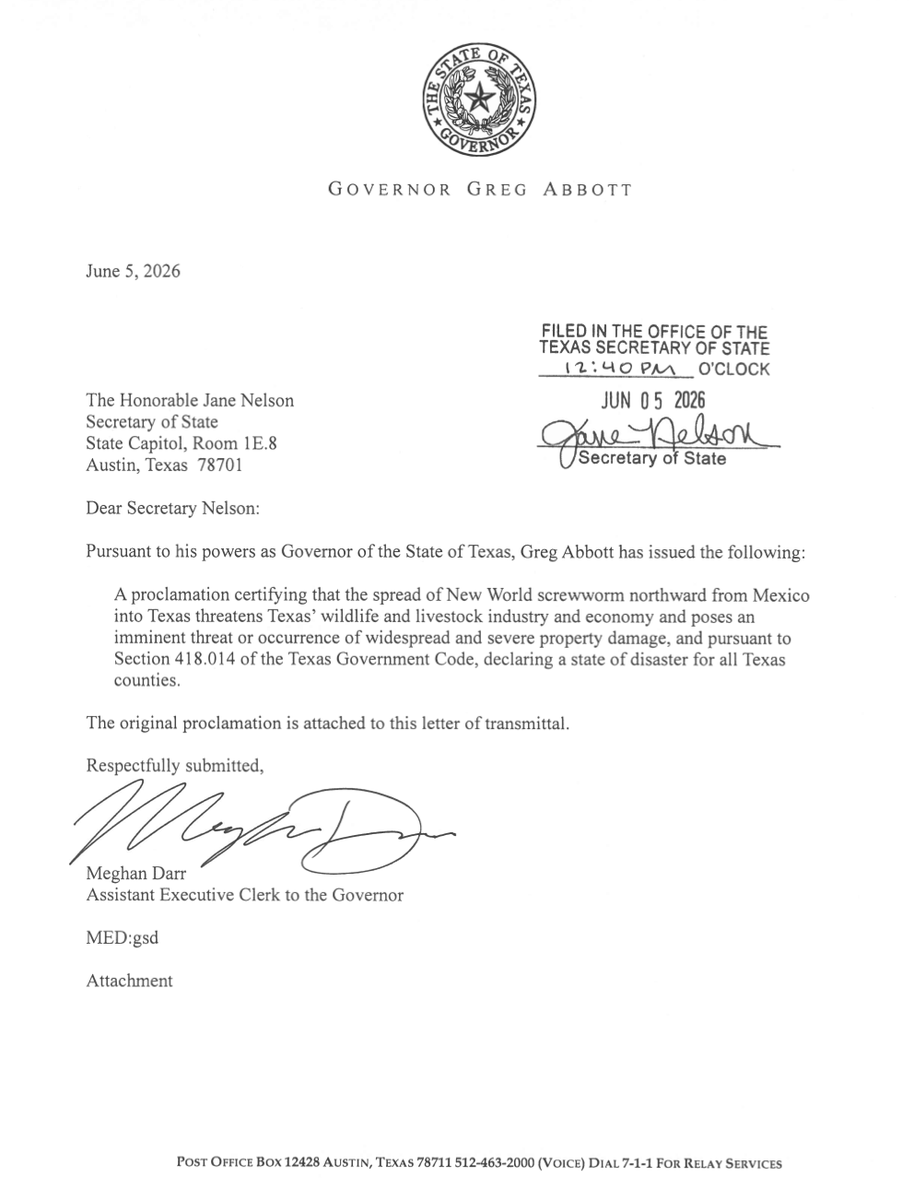
This is the type of crisis that a Democratic president would be held personally responsible for by the media. Instead it’s getting virtually no national attention despite the issue being directly connected to federal cuts enacted by the Trump administration
Jun 5

NEW: @GregAbbott_TX says the spread of New World screwworm into Texas poses an “imminent threat” of widespread damage to the state's livestock industry and economy.
He's now declared a disaster for all 254 Texas counties.
214
3,010
10,409
313,706
Tom Malinowski retweeted

Jun 6
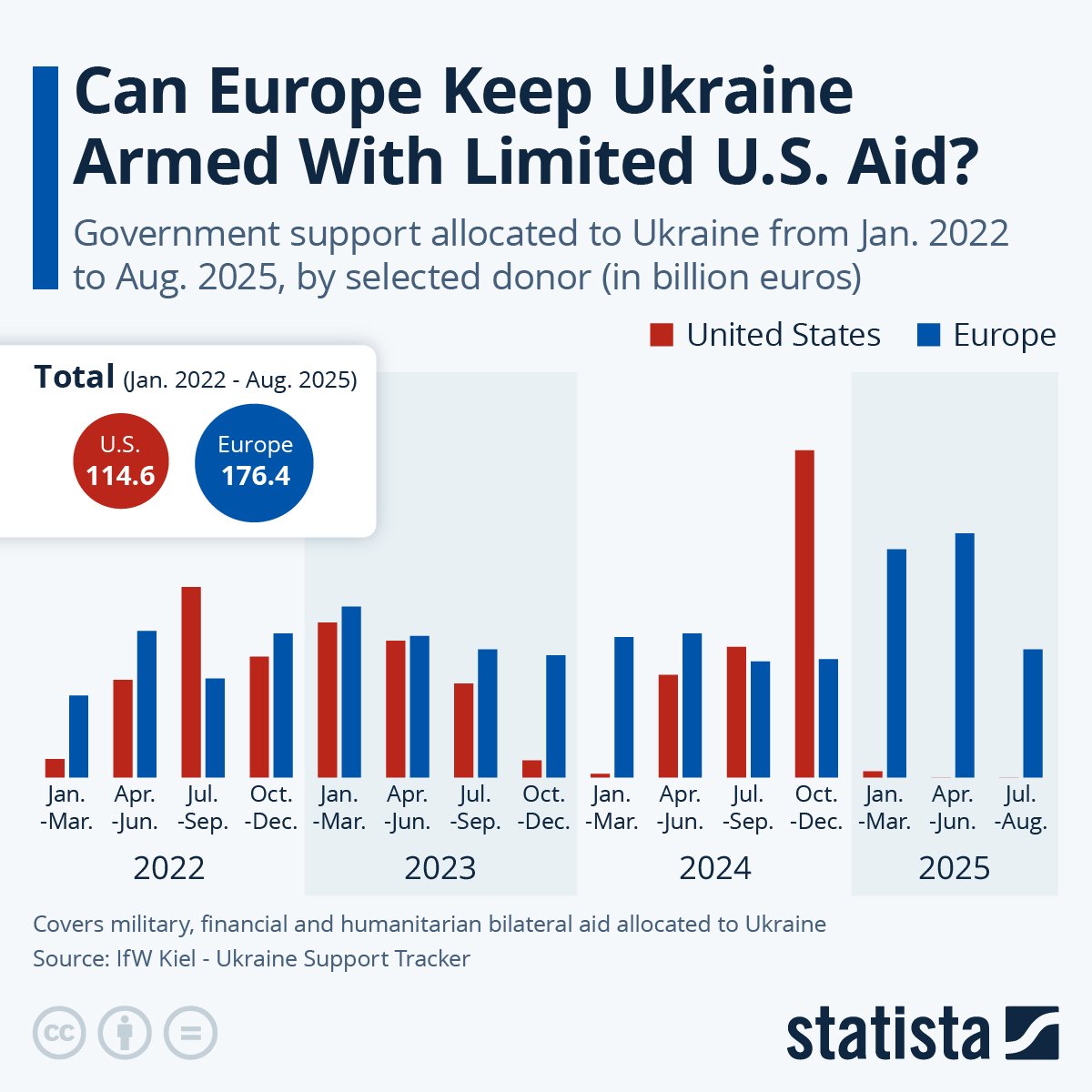
With the Iran war stalemated, the Ukraine war is shifting significantly in ways that could bring peace - but that more likely mean escalation:
1. For the first time in almost three years, Russia is losing more territory than it’s gaining. The battlefield momentum is shifting toward Ukraine.
2. Russia has now been at this longer than it fought World War II. 500,000 Russian soldiers dead, huge economic costs, and international isolation that has forced Moscow into partnership with the likes of North Korea. And all to subdue a Ukraine that wasn’t threatening Russia in the first place.
3. Ukraine’s military position is strengthening, thanks both to new European aid and a domestic defense industry that is cranking out drones and missiles. Kyiv can strike deep into Russia and is doing so. Russian forces, meanwhile, are hampered by the loss of Starlink in February.
4. After years of enormous losses, Russia may finally be facing real manpower shortages. Its losses appear to exceed replacement rates and reports suggest Moscow is conscripting Ukrainians in occupied areas into the fight.
5. Both sides seem to have given up on the United States as a determinative force. Zelensky looks to Europe for far more assistance than America provides. Putin bet on Trump forcing Ukraine into a deal that never arrived. The administration itself seems tired of brokering peace where none is to be had.
6. The war has cost Russia’s global profile dearly. Moscow stood by as former client regimes in Syria and Venezuela were swept away, and as Iran came under massive attack. It played no meaningful role in Armenia-Azerbaijan talks. It is clearly the junior partner to China, with only its nukes helping it cling to great power status.
7. With the costs so high and the gains minimal at best, Putin will now look for peace, right? Unfortunately, no. When Russians can’t solve a problem they tend to enlarge it. That means escalation.
8. I’m just back from Europe and policymakers there are bracing for it. We’ve already seen a major increase in bombs landing on Kyiv. Projectiles have hit Romania. Russian nuclear forces on drill. Russian satellites maneuvering in a way that could expand the war to outer space.
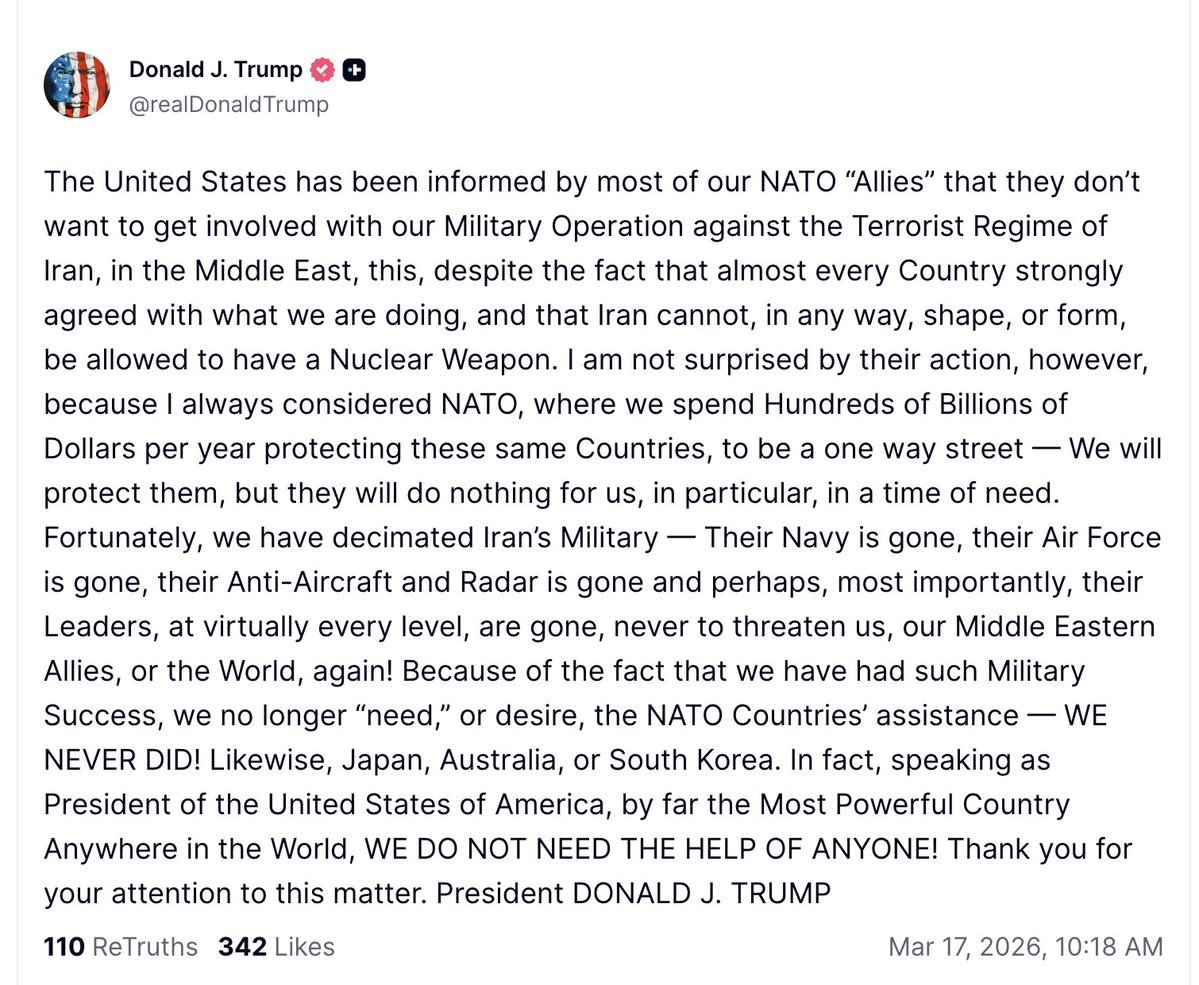
9. The U.S. should bolster deterrence. Leave no doubt about U.S. commitment to defend every inch of NATO territory. Impose costs on Russia for gray zone activity in Europe. And it’d be nice to start aiding Ukraine again. The war is terrible. Its expansion to NATO soil would be worse still.
10. The upshot is that, for all the change of battlefield momentum, there is much more fighting ahead, and probably into 2027. The U.S. is no neutral arbiter in this war. It should help Ukraine survive until the end, and to prevail.
28
109
463
91,338
"Sure, some people criticize the supreme leader of a dictatorship that murdered thousands of peaceful protestors this year, but people also criticize me, so maybe he's not that bad."

Trump: If I did meet with the new Ayatollah, I would be honored to meet him.
Doocy: Do you think because Epic Fury killed his killed his dad and his wife and his kid that he's has hard feelings?
Trump: I would say I'm not his favorite person, but with that being said, he's probably a pro—I don't know him—he's probably a professional in some circles, he has a very good reputation actually, you know, sometimes when people say bad, but a lot of people say bad about me . It's totally false, of course.
6
32
94
23,130