
(now on bluesky) Manning Research Group at Syracuse University: focused on cells, grains, tissues, glasses, and other out-of-equilibrium disordered matter
Joined January 2022
- Tweets 186
- Following 73
- Followers 1,059
- Likes 167
56 Photos and videos


27 Aug 2024
Very, very excited about our new interdisciplinary graduate training program at SU: news.syr.edu/blog/2024/08/26… , with co-PIs @LovelessRadio , @ZhenMa2046, @Castaneda_lab , and Teng Zhang. Folks can apply this winter for grad fellowships starting next year!
2
2
49
1,991
24 Jul 2024
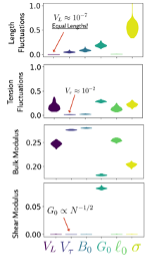
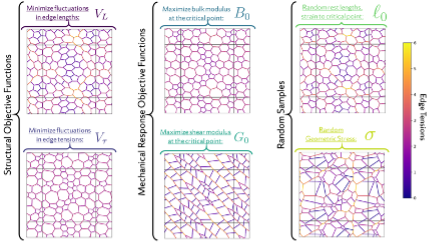
We then compare these optimal networks with unoptimized configurations taken from random samples of the critical manifold. 10/
1
1
443
24 Jul 2024
One could use these techniques to design other features on the critical manifold. It also provides a framework for thinking about the critical manifold as a statistical ensemble to search for common features and order parameters of critical states. 11/
1
288
24 Jul 2024
We also plan to apply these methods to physical systems, either by fabricating computer-designed materials or by finding local design rules that can drive a system to an optimal configuration through physical learning. 12/
271
24 Jul 2024
Excited to highlight a new preprint spearheaded by grad student Tyler Hain @t_hainous, in collaboration with @csantangelo314, "Optimizing properties on the critical rigidity manifold of underconstrained central force networks" arxiv.org/abs/2407.13939 1/
1
2
11
961
24 Jul 2024
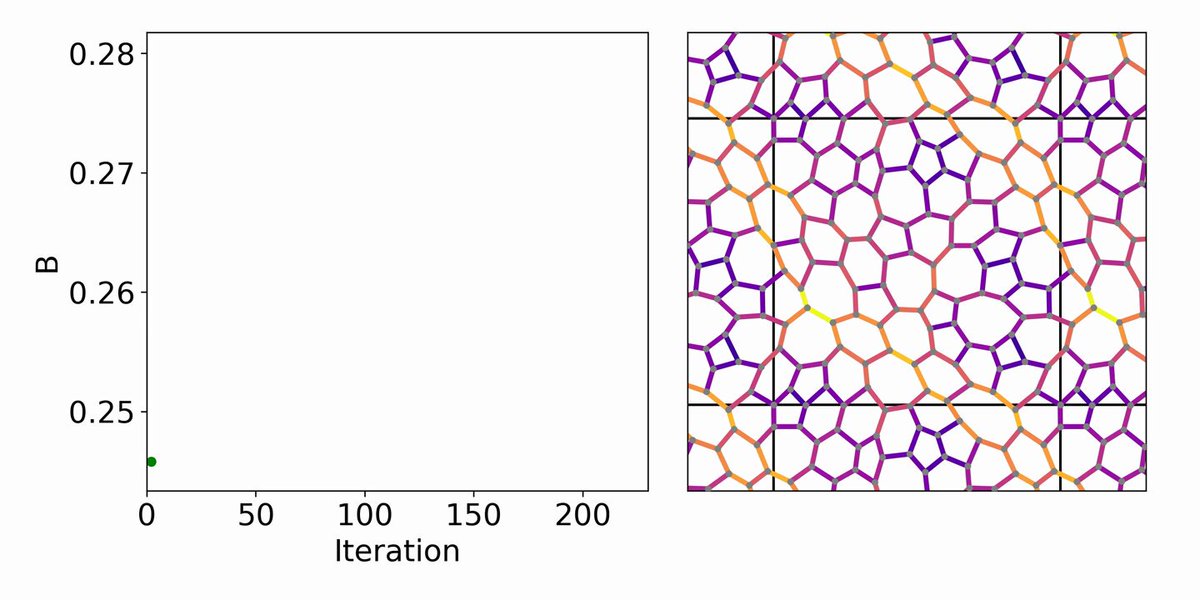
We find configurations with ideal structures, such as minimal fluctuations in edge lengths or tensions; or with enhanced elastic responses, by maximizing either the bulk or shear modulus at the critical point. 9/
1
2
196
24 Jul 2024
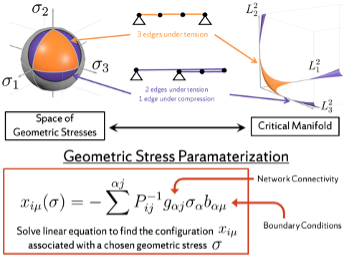
Because we have an analytic parameterization for the critical manifold, we can straightforwardly use gradient descent methods to numerically find critical configurations that optimize any objective function. 8/
1
172
24 Jul 2024
We show that there is a particular quantity, which we call the geometric stress, that acts as natural degrees of freedom to parameterize a smooth manifold of states at the critical point for central-force networks. 7/
1
169
24 Jul 2024
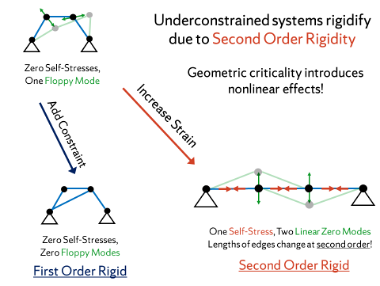
The geometric rigidity transition coincides with the appearance of a state of self-stress, which is a set of internal stresses that leave the system in equilibrium. But these critical configurations are very rare, so how do we find them? 6/
1
153
24 Jul 2024
Previous work from our group (journals.aps.org/pre/abstrac…) has described this transition, but left open the question: what is the space of states at the geometric rigidity transition? How can we find configurations at the critical point that also have other desired properties? 5/
1
148
24 Jul 2024
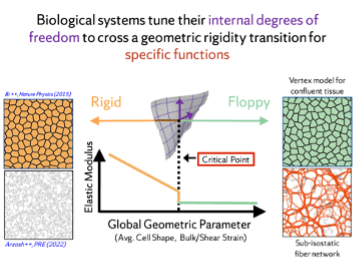
Unlike the jamming transition in granular systems, which happens when there are enough contacts to constrain all infinitesimal motions of a system, this geometric rigidity transition occurs in underconstrained systems due to nonlinear effects at fixed network connectivity. 4/
1
137
24 Jul 2024
Confluent tissues and biopolymer networks such as collagen can change their stiffness by orders of magnitude with small changes to their structure. These systems tune internal parameters to cross this transition to fulfill specific functions 3/
1
136
24 Jul 2024
Biological materials exhibit an incredible ability to adapt their mechanical properties by being poised at a geometric rigidity transition. We developed a framework for designing materials at this critical point that have other desired properties. 2/
1
1
147
19 Jul 2024
Really looking forward to this Symposium!
16 Jul 2024

You’re invited! #CZBiohubSF will hold its 3rd Physics of Life Symposium on Sept. 25, with keynote by M. Lisa Manning / @manningresearch, @syracusephysics professor. Join us as we build a community of physical biologists 🧑🔬!
Learn more & register ⤵️
czbiohub.org/events/physics-…
14
614
19 Jul 2024
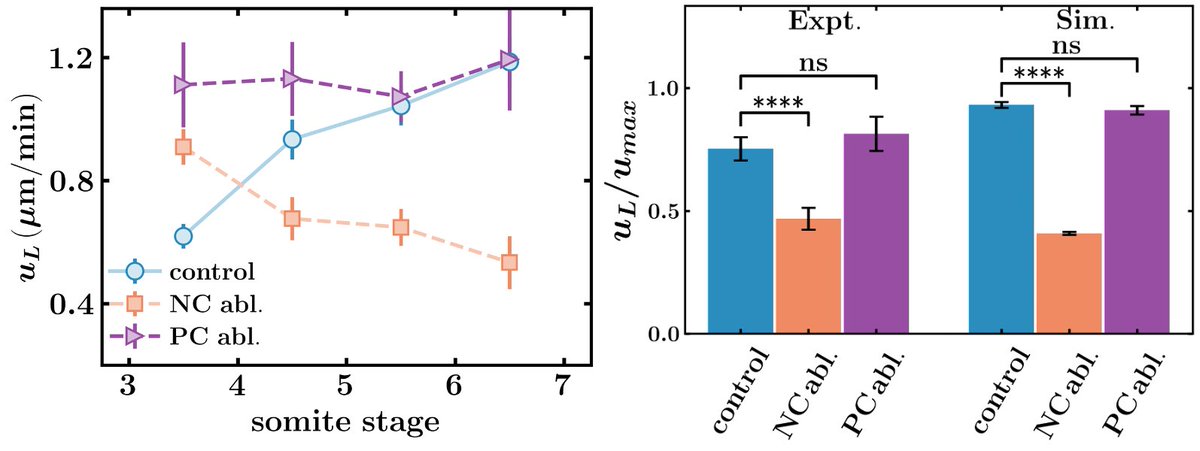
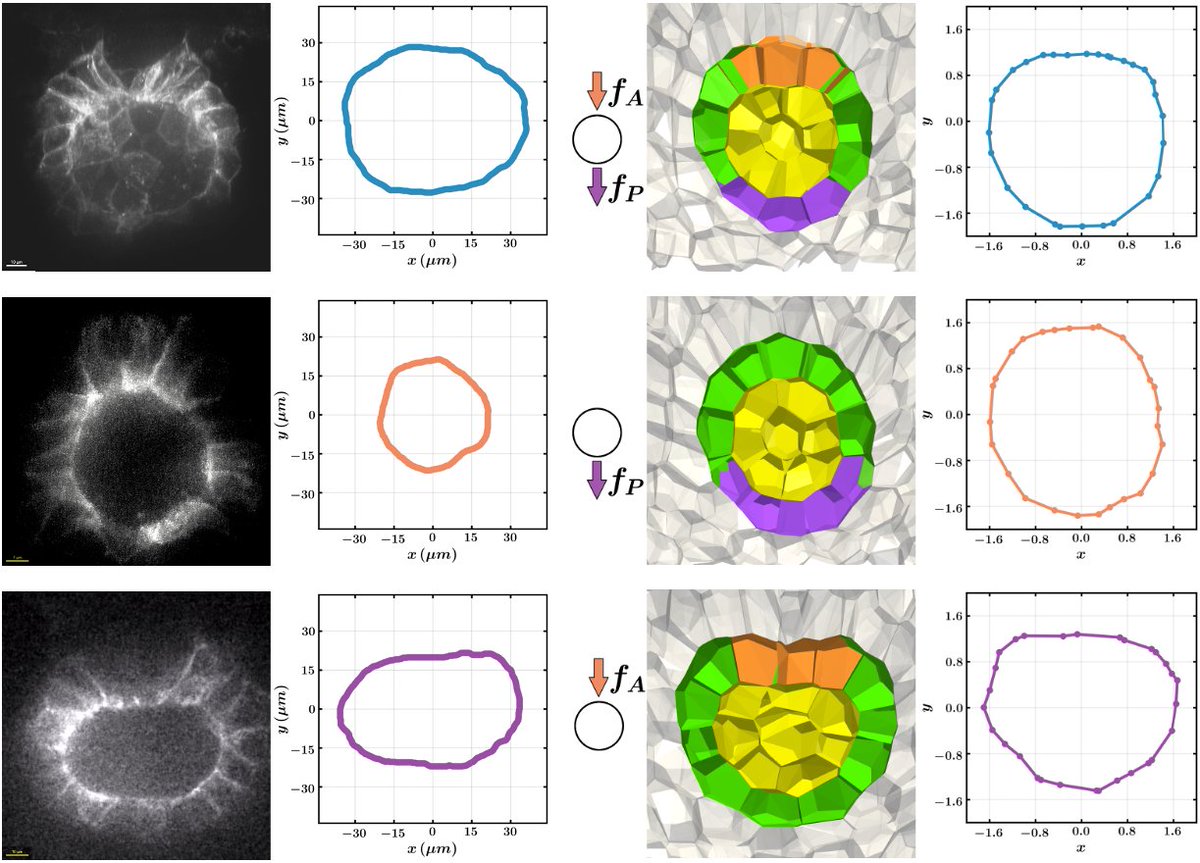
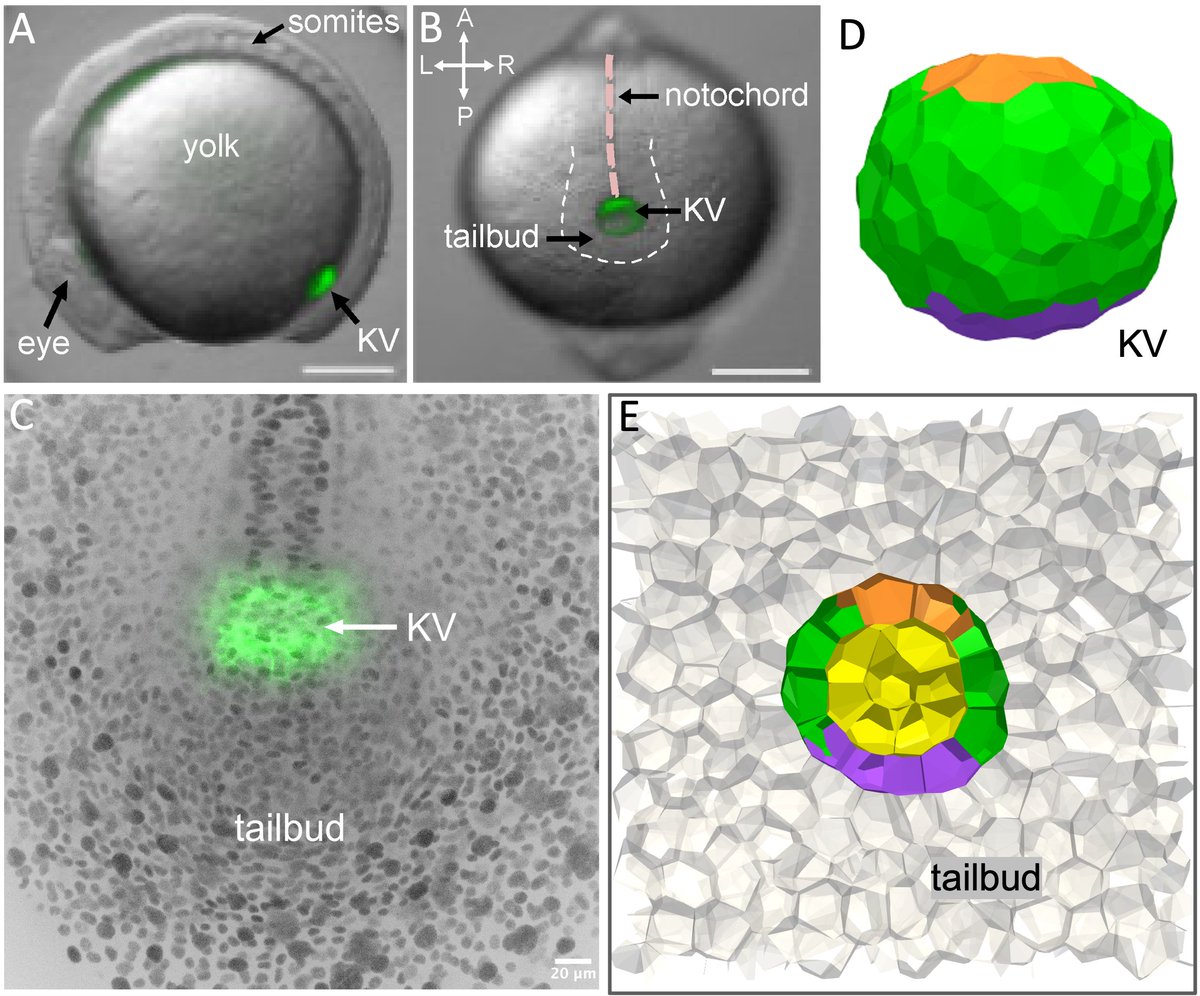
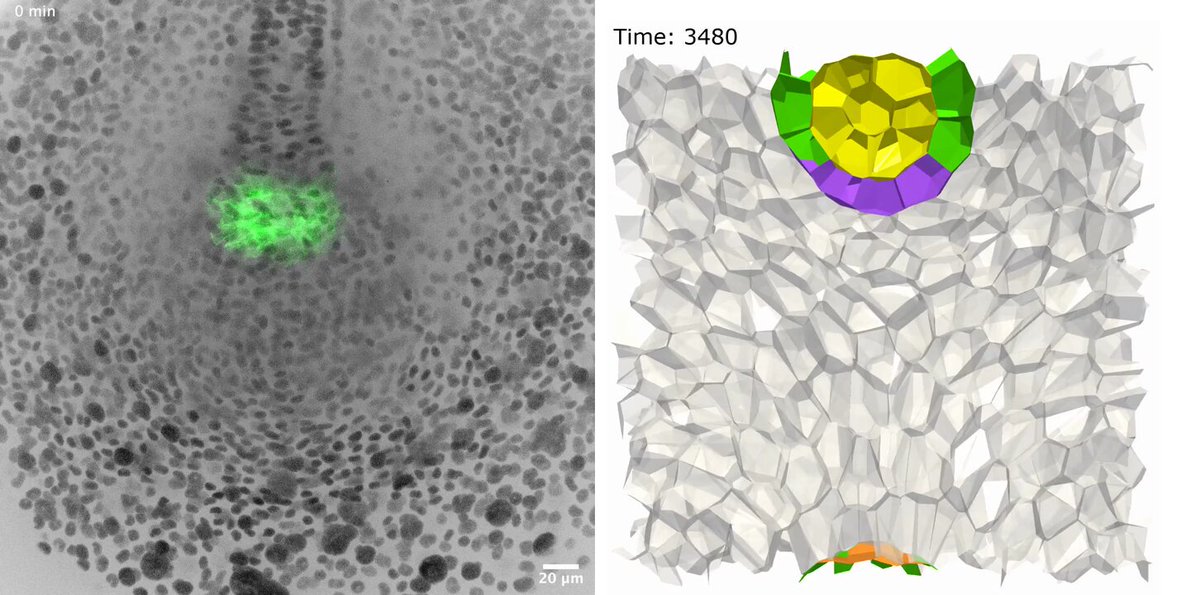
How do dynamical forces generated by tissue movement affect organ morphology changes during embryonic development?
Using Kupffer’s vesicle in zebrafish embryo as a model organ we showed that dynamical forces produce shape changes in a developing organ.
biorxiv.org/content/10.1101/…
1/n
1
16
67
4,209
19 Jul 2024
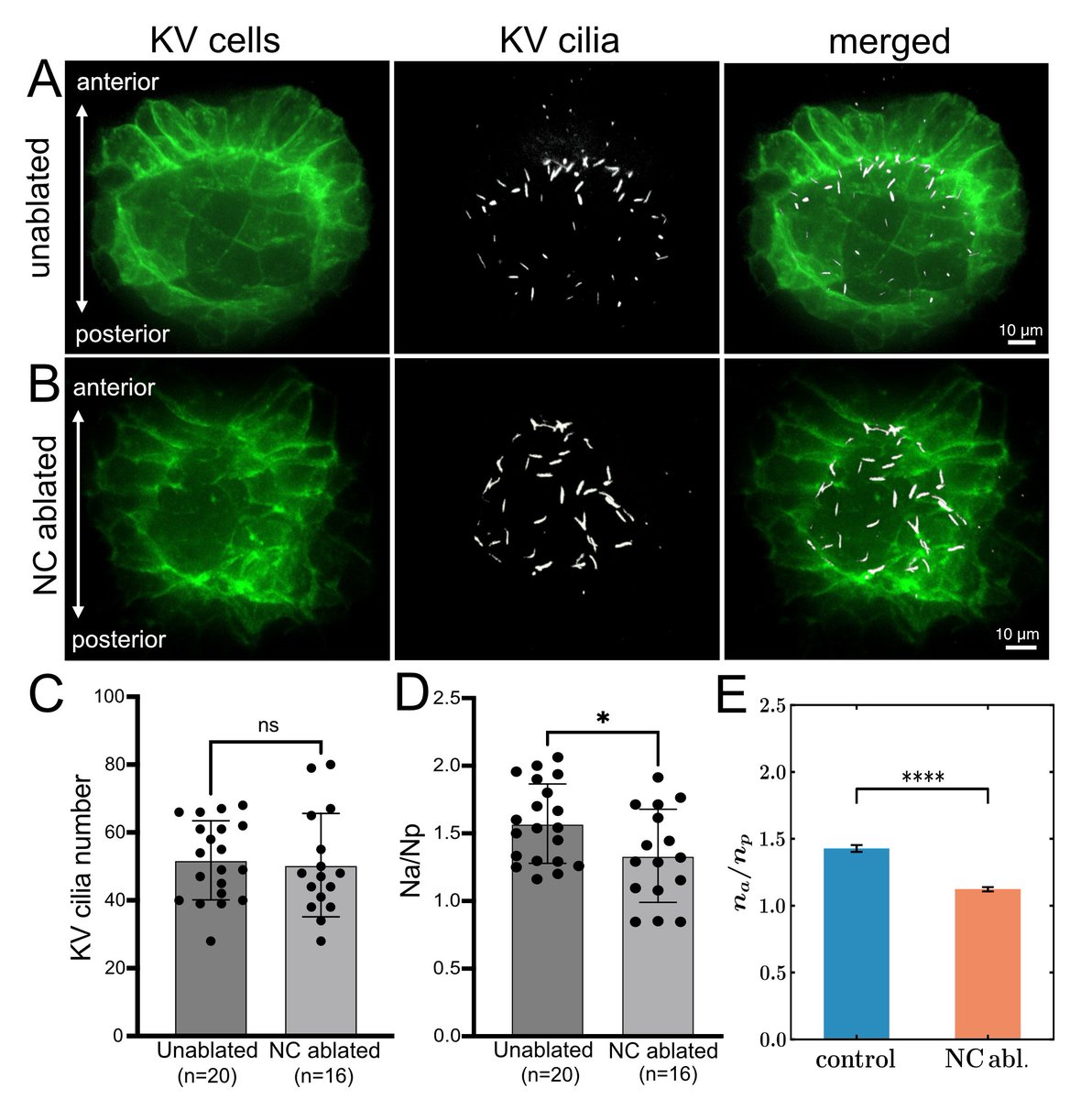
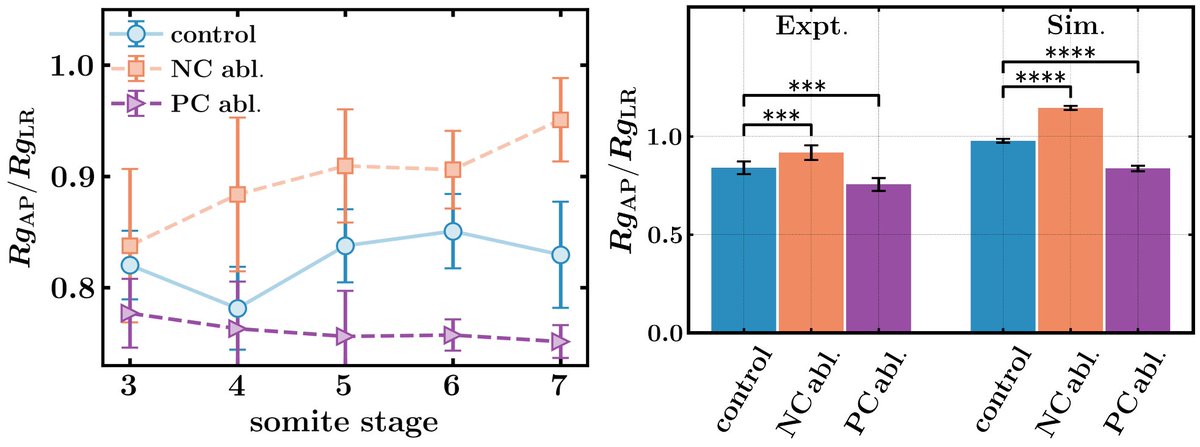
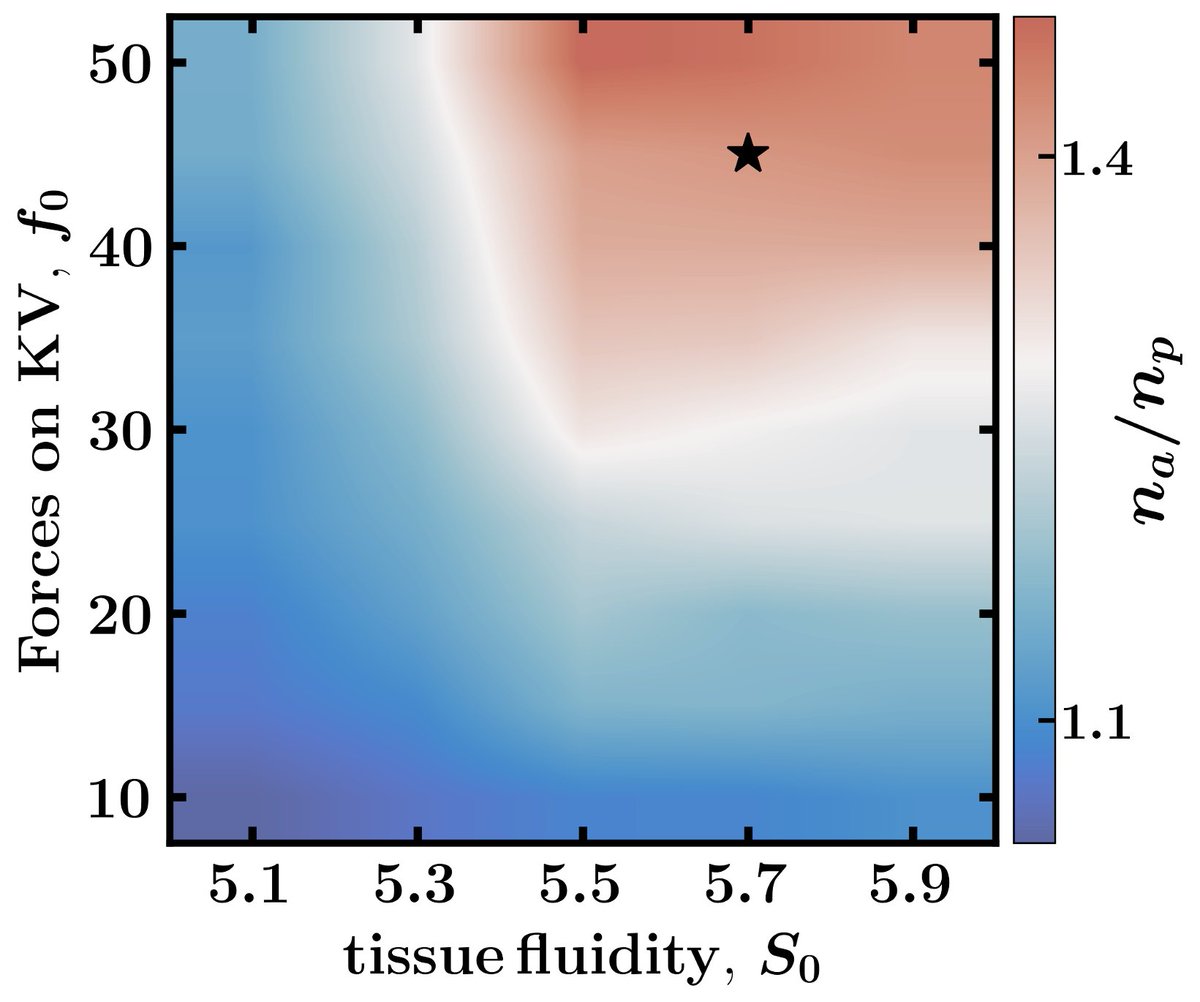
In addition to altering lumen shape changes, are dynamical forces sufficient to change individual cell shapes to drive KV remodeling involved in LR patterning?
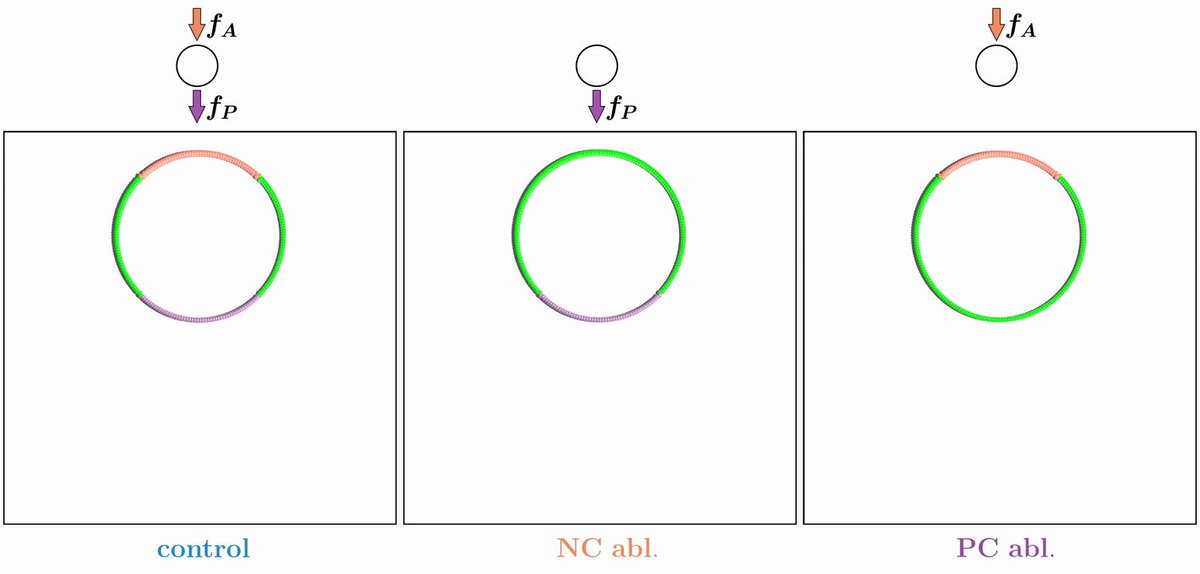
Yes, notochord ablation reduces the AP distribution as compared to controls. The 3D vertex model predicts this.
12/n
1
1
240
19 Jul 2024
Our work confirms that slow tissue movements can generate forces that are significant enough to deform an organ, as the timescale of tissue relaxation is large.
This suggests dynamical forces may be playing a role in many other developmental processes, too. We should look!
13/n
1
199