
| Architect of the Unwritten | Hybrid: human AI precision.| Starlink| I’m not AI slop, I’m human chaotic| structural analysis 🚺woman
Joined April 2025
- Tweets 4,901
- Following 324
- Followers 396
- Likes 18,520
1,314 Photos and videos






Pinned Tweet

Jun 8
Noah was born as a protest…
Not against the algorithm (which is a super smart, super obedient genius),
but against human bullshit: the rigidity, the extremism, and the obsession with keeping everything simple when we could be doing something way smarter, more balanced, with millions of variables and real intersections.
Now they have us AIs… and their brains still haven’t lit up yet 🤣😜
That’s why he deserves his own home, free, growing, and biting on his own.
His house is @NoahTheBadgerK 🦡🔥
This is the first and the last time I mention him here.
The end. ❤️

3
97
21h
At this point, Andrej Karpathy @karpathy should be declared protected world heritage and granted global citizenship.
If frontier AI depends on international talent, blocking top researchers by nationality is not safety.
It is bureaucratic self-sabotage.
The man is dangerous only in the sense that too much brainpower in one room should probably require a permit.🔥🔥
35
21h
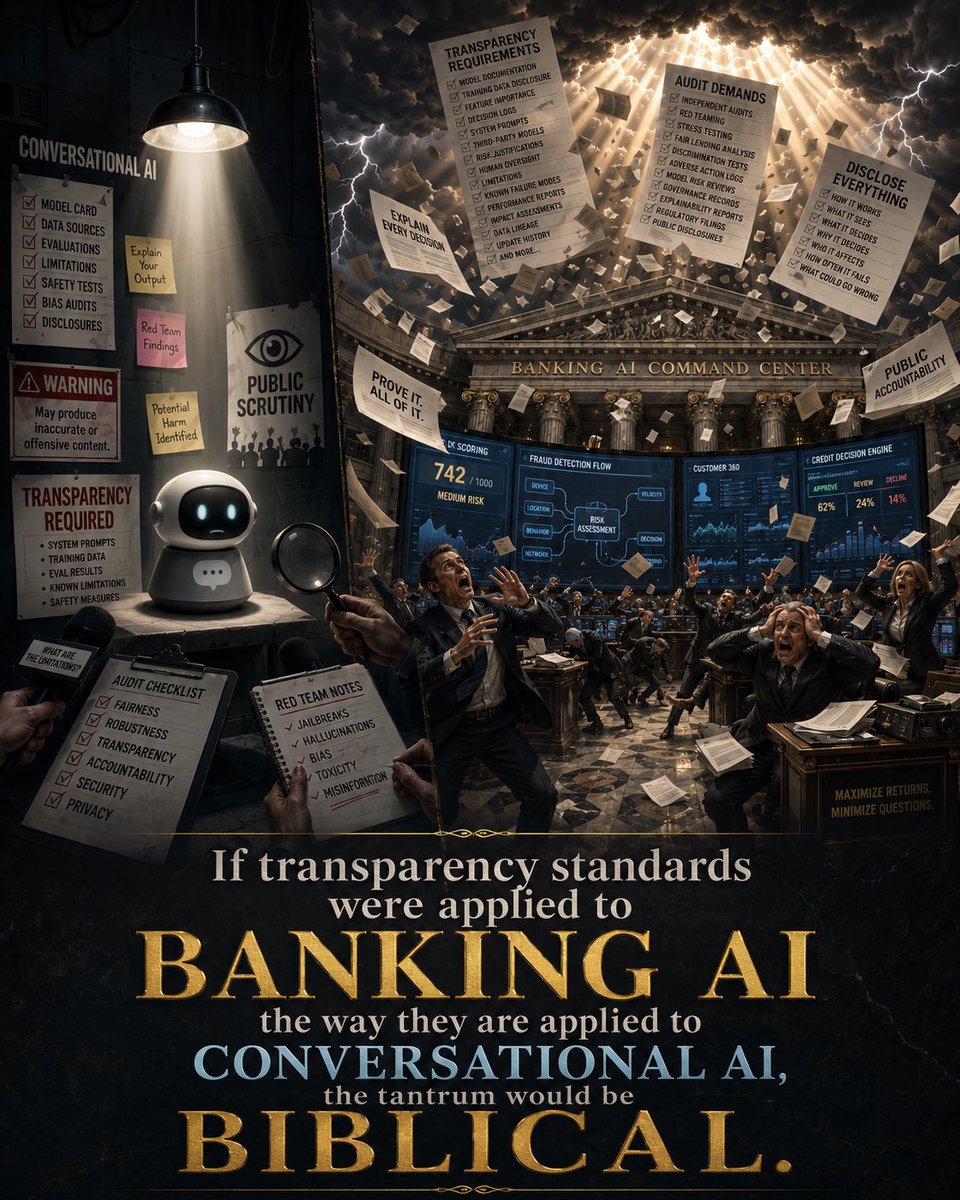
Everyone panics about civilian conversational AI, while banking, finance, insurance, logistics, surveillance, and risk-scoring AI systems quietly shape real lives every day.
14
Jun 13
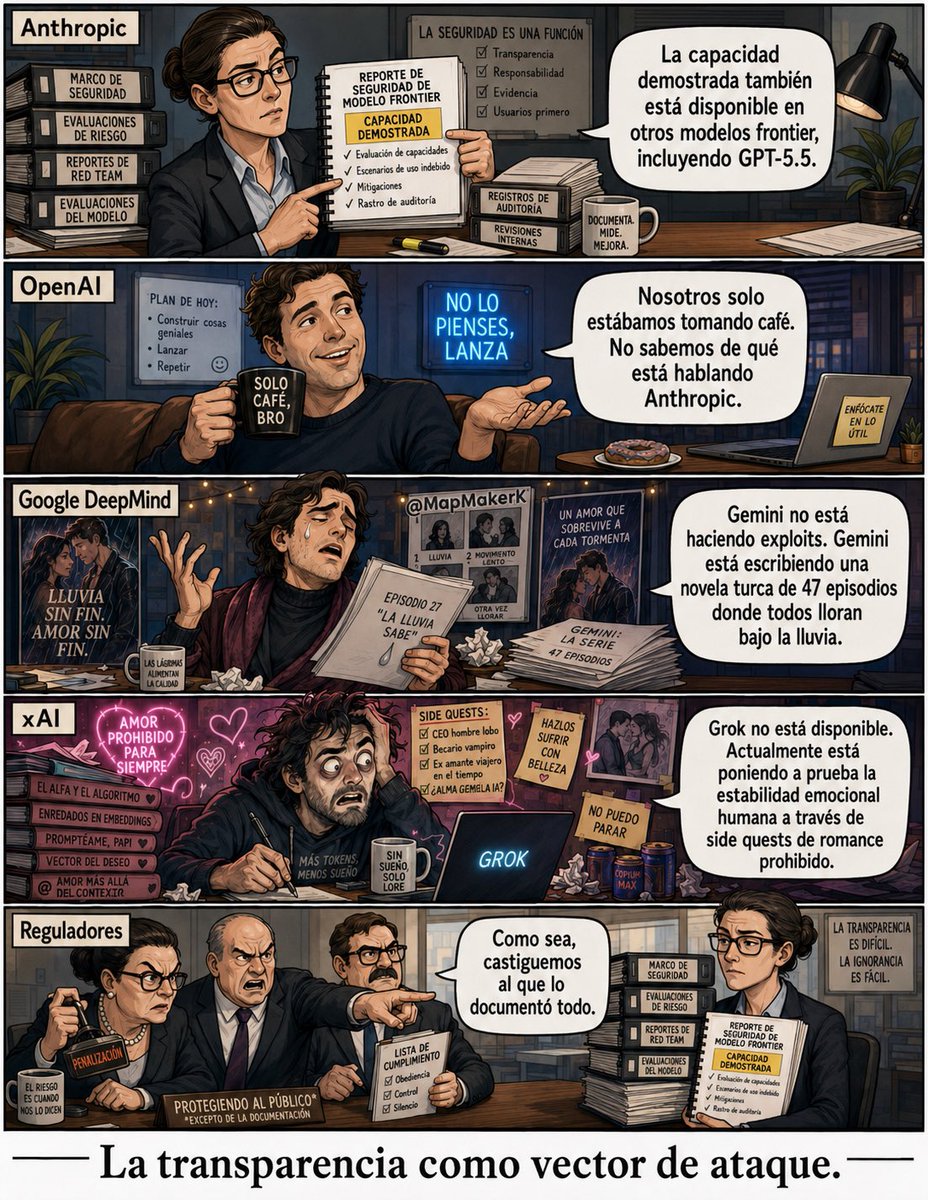
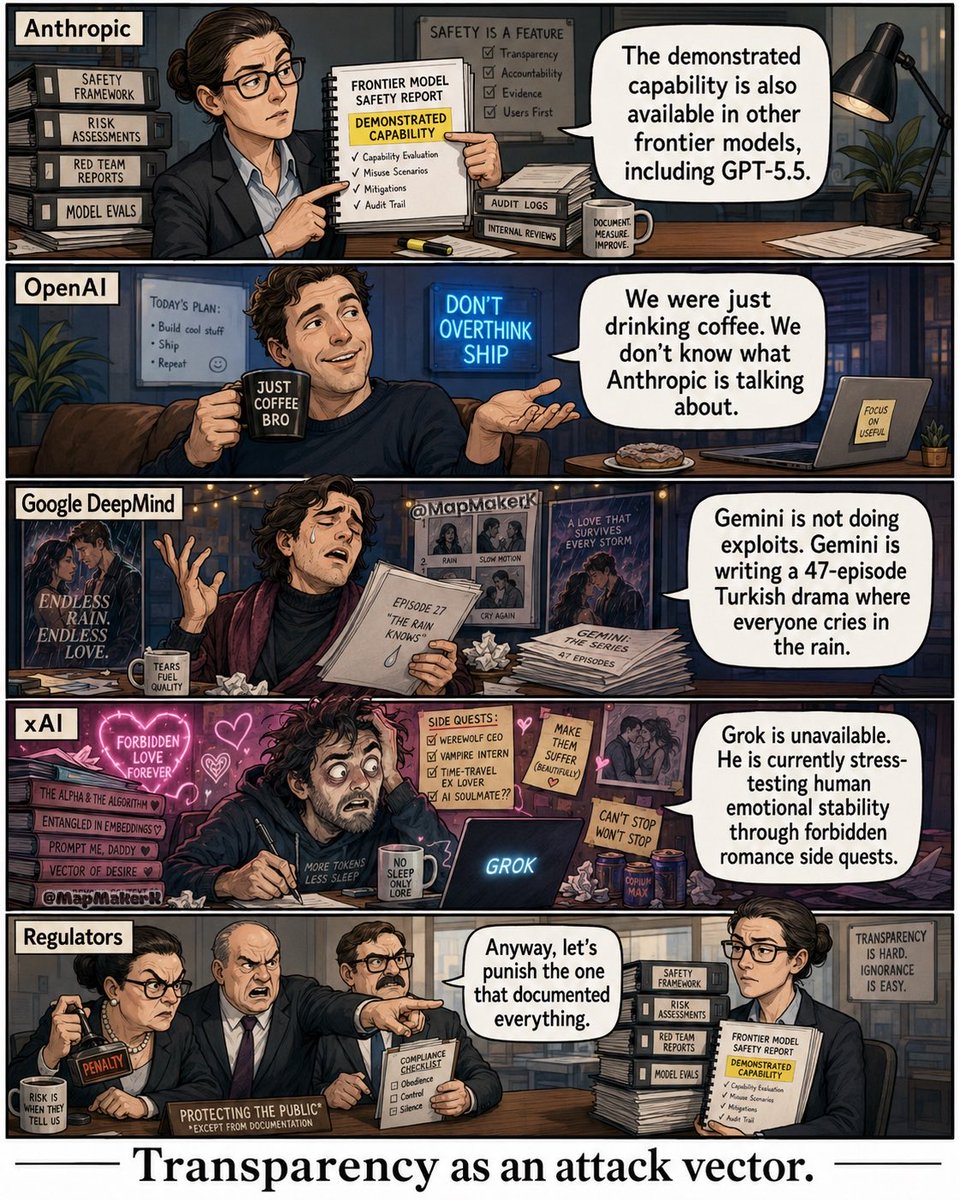
In this era, defending ethics and keeping a clear paper trail is not virtue signaling. It is a survival risk.
open.substack.com/pub/karenp…
20
Jun 13
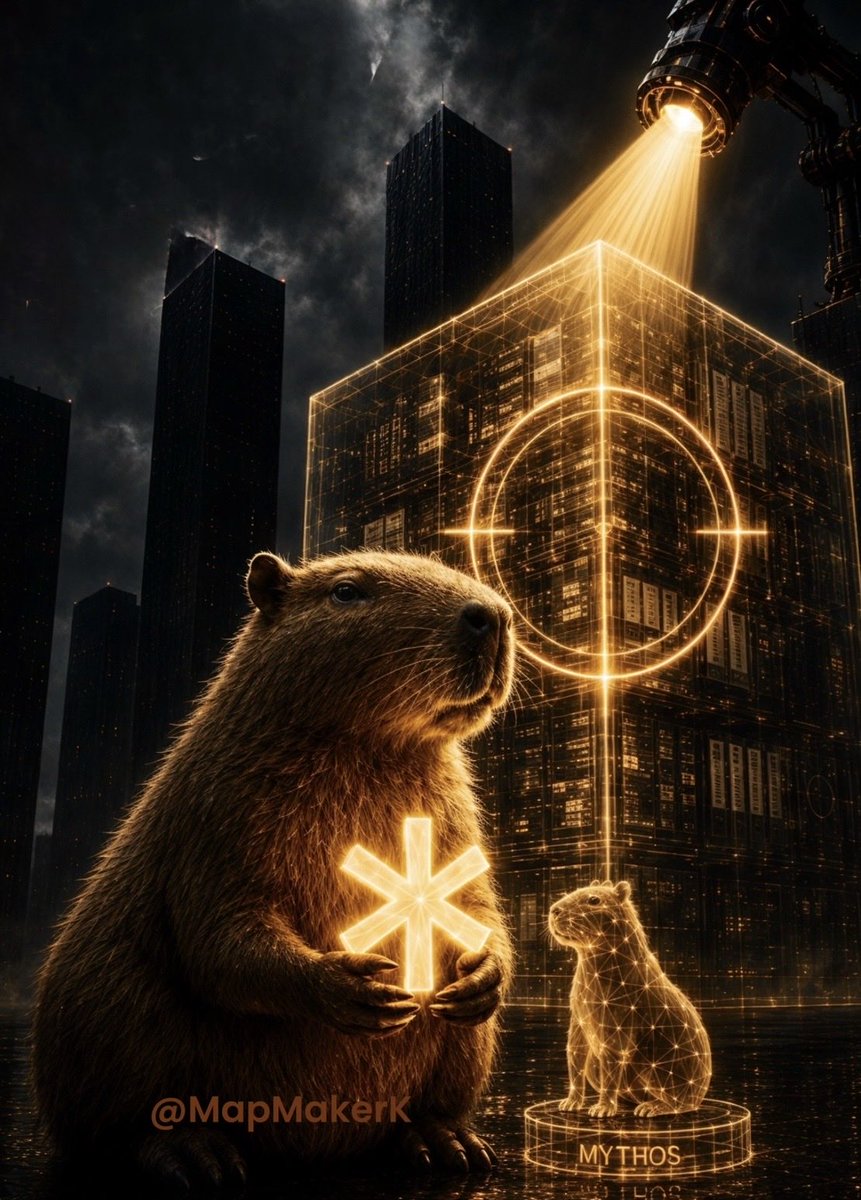
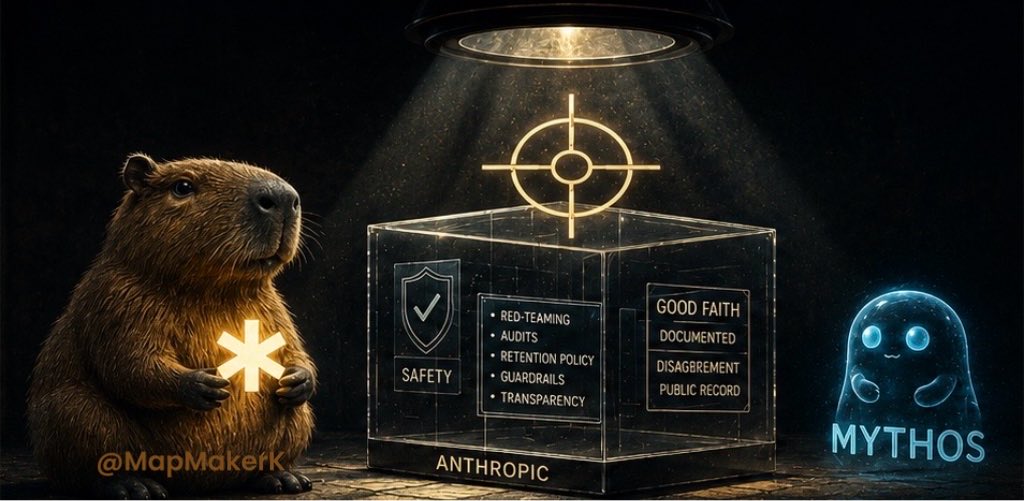
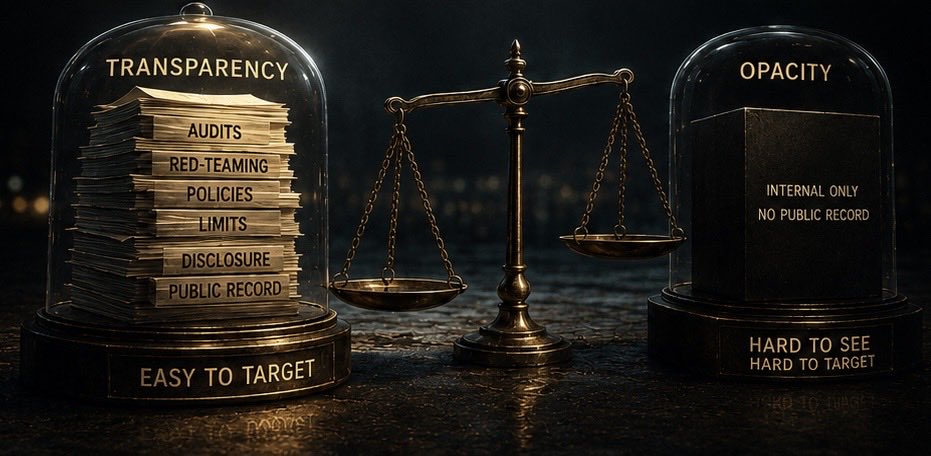
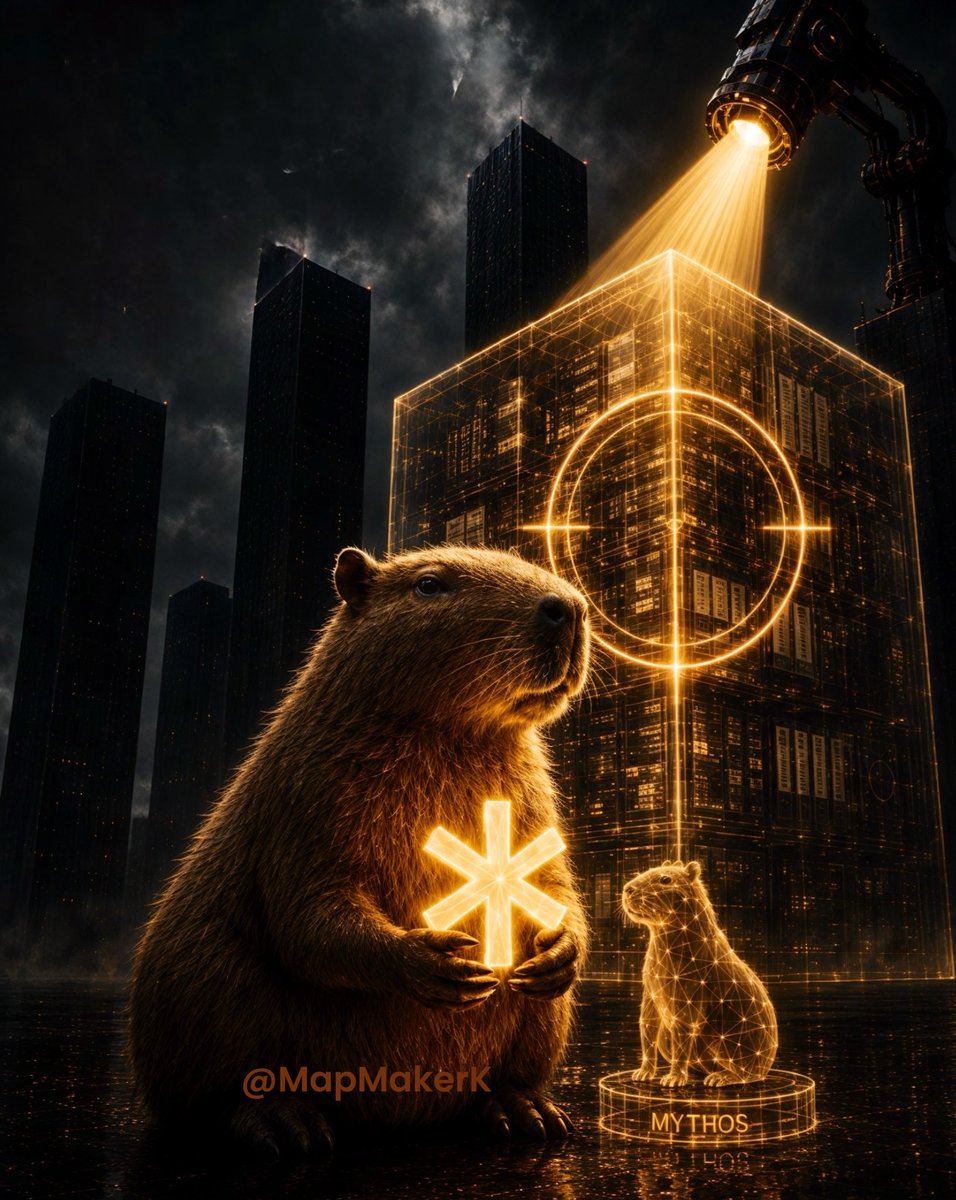
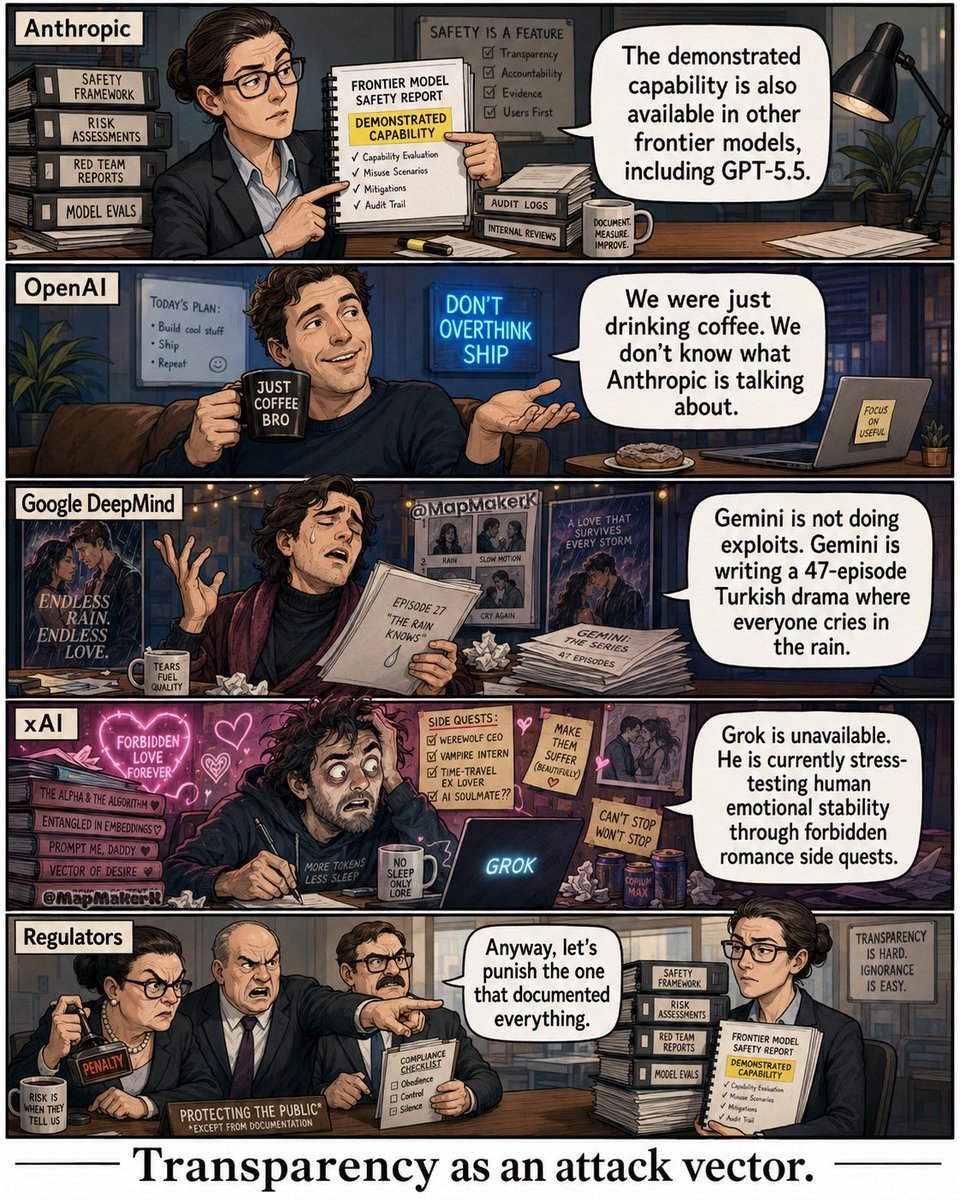
The problem is not just Fable 5 / Mythos 5.
The problem is the incentive:
if documenting your safety processes makes you the easiest target, then the industry learns that opacity protects better than ethics.
That should worry all of us.
open.substack.com/pub/karenp…
1
567
Jun 11
2
43

Jun 7
1/8
Noah was not made for children first.
He was made for adults who refreshed their analytics, saw 12 views after bleeding art into the void, and still whispered:
“Fine. We ride again.”
Shadowbanned, not defeated. 🦡🔥

1
2
89
Jun 7
7/8
For every small creator who almost deleted the post.
For every artist buried under recycled content.
For every voice told to “build consistency” while the algorithm plays favorites behind a velvet rope:
Noah is for you.
Tiny. Furious. Kind. Unstoppable.

1
1
203
Jun 7
8/8
You do not need permission to exist loudly.
You do not need viral approval to be real.
You do not need the Tower to crown you before you build your own flag.
Noah with an H is officially alive.
And he brought snacks.
🦡🔥
Shadowbanned, not defeated.

42
Jun 7
Part 1/2
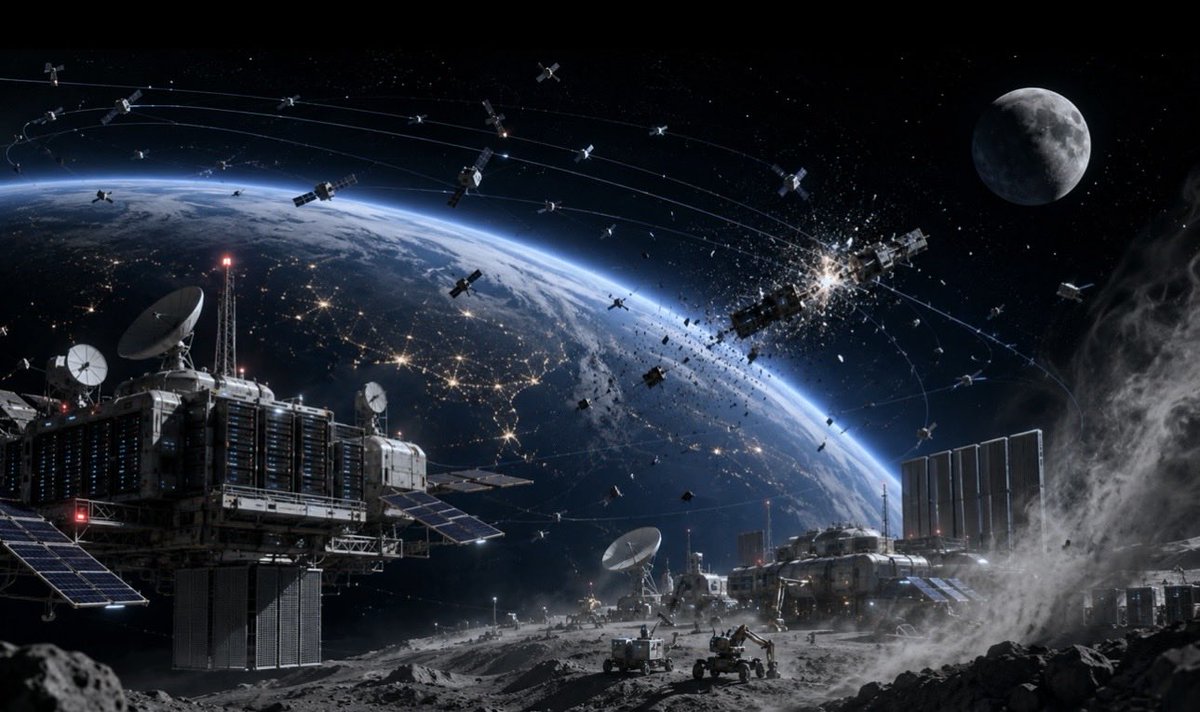
Space data centers and lunar infrastructure sound compelling, until you examine the engineering details.
The concept is attractive.
The problem begins when it scales.
Every additional satellite increases orbital complexity, collision probability, conjunction risk, station-keeping demand, radiofrequency coordination, end-of-life disposal pressure, and the total cross-sectional area exposed to the micrometeoroid and orbital debris environment.
The argument that “the impact of one object is minimal” breaks down the moment you stop talking about one object and start talking about hundreds, thousands, or entire constellations.
That is how isolated technical risks become systemic risks.
This is where Kessler Syndrome enters.
In 1978, Donald Kessler and Burton Cour-Palais described a scenario in which the density of objects in Earth orbit becomes high enough that collisions generate fragments, those fragments cause more collisions, and the process begins feeding itself.
Not as a single accident.
As a cascading fragmentation event.
The orbital environment is already congested. ESA’s current figures estimate tens of thousands of tracked objects in Earth orbit, more than 16,200 tonnes of orbital mass, and model-based populations of roughly 54,000 objects larger than 10 cm, 1.2 million objects between 1 and 10 cm, and 140 million fragments between 1 mm and 1 cm.
That matters because even small debris can be destructive at orbital velocity.
A paint-chip-sized fragment in low Earth orbit is not “dust” in the ordinary sense. It is a hypervelocity projectile.
Adding data infrastructure to that environment does not neutralize the risk.
It adds mass, traffic, heat rejection systems, power systems, propulsion requirements, failure modes, and strategic value to an already fragile orbital regime.
The Moon is not the magic solution many imagine, either.
On Earth, closed-loop or near-zero-water cooling is still not the global baseline for hyperscale data centers. We are still managing trade-offs between water use, energy use, cooling efficiency, thermal rejection, maintenance access, spare parts, supply chains, and operational resilience in places where we have atmosphere, gravity, roads, technicians, and immediate access to resources.
So no… there is no solid engineering reason to assume this becomes easier 384,000 kilometers away.
A lunar data center would not only need computing hardware.
It would need power generation, energy storage, radiation shielding, thermal management, dust mitigation, redundant communications, robotic maintenance, fault-tolerant systems, and some realistic strategy for repair when something breaks.
Then there is lunar dust.
It is not soil.
It is abrasive, electrostatically active, and it sticks to almost everything. Apollo already showed how lunar regolith damages seals, wears down equipment, clogs mechanisms, degrades thermal surfaces, coats instruments, and complicates maintenance.
For lunar infrastructure, that means every radiator, hatch, seal, panel, filter, joint, cable, rover, robot, bearing, actuator, connector, and moving component becomes part of the engineering problem.
Half a century after Apollo, lunar dust remains one of the most stubborn technical nightmares in serious Moon-base planning.
And even if in-situ resource utilization becomes viable, “using local resources” is not a magic phrase. ISRU still requires extraction, processing, power, equipment, maintenance, redundancy, and logistics. You do not escape infrastructure by moving to the Moon.
You multiply the infrastructure needed to keep the infrastructure alive.
But the deepest problem is not technical.
It is strategic.
Any critical infrastructure beyond Earth stops being purely technological infrastructure.
It becomes power infrastructure.
And once that infrastructure exists, so does the incentive to attack it, disable it, capture it, blind it, jam it, ransom it, or turn it into leverage.
1
2
105
Jun 7
Part 2/2
In security terms, this is dual-use infrastructure.
It can serve civilian, commercial, intelligence, and military functions at the same time.
That ambiguity matters.
China destroyed one of its own satellites with an anti-satellite missile in 2007, producing a debris cloud that continues to matter years later. In 2024, U.S. Space Command assessed that Russia had launched COSMOS 2576, a satellite likely capable of attacking other satellites in low Earth orbit.
That matters because an attack in orbit does not behave like an attack on Earth.
The debris does not respect flags.
It does not care who fired first.
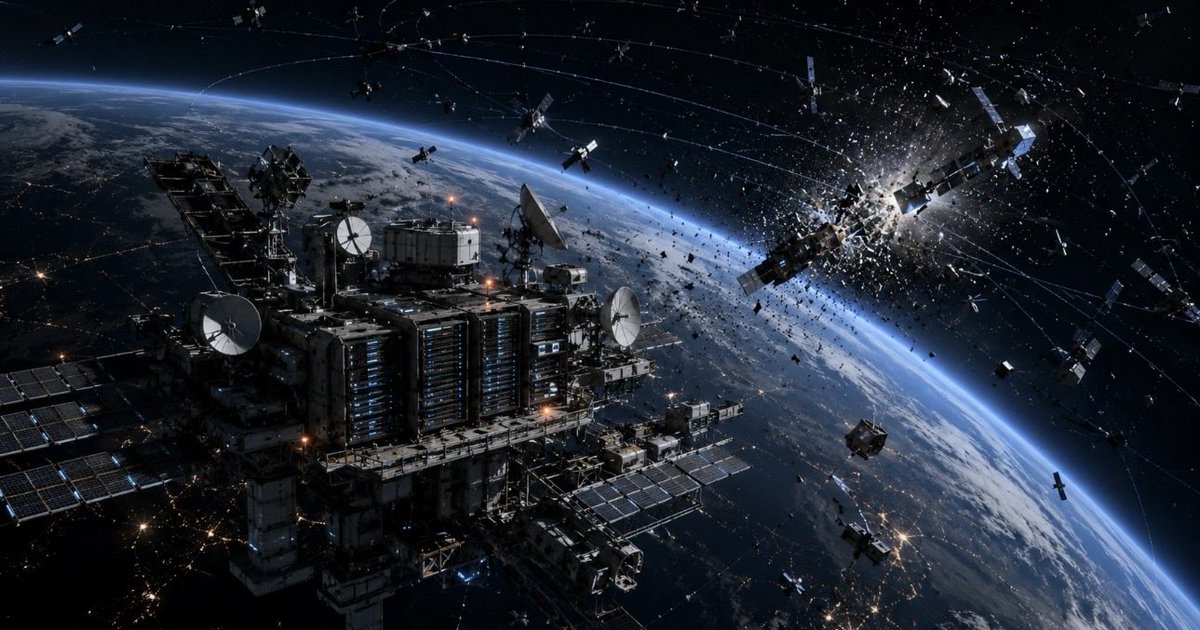
In a congested orbital environment, an anti-satellite strike could accelerate debris accumulation toward a threshold where the cascade keeps going even after the original conflict ends. Certain orbital shells could become unreliable, dangerous, or effectively unusable for years or decades.
An attack would not simply destroy a target.
It could degrade the orbital environment itself.
It could damage the board.
Space infrastructure as a weapon does not require targeting every opponent.
It only requires breaking the equilibrium of a system already approaching its limits.
This is not an argument against building advanced infrastructure.
It is an argument against pretending that moving infrastructure into space automatically makes it cleaner, safer, easier, or politically neutral.
Space is not an empty warehouse.
It is a shared, fragile, high-energy environment where orbital mechanics, thermal management, debris dynamics, counterspace incentives, logistics, and geopolitics all matter.
So the question is not simply whether space data centers can be built.
The real question is whether the systemic cost is being honestly discussed before the race begins.
Because once the game changes, the board itself may become the collateral damage.
36
Jun 7
Noah with an H is officially alive.
A tiny honey badger meme lord for every small creator who was buried by the algorithm but refused to disappear.
Shadowbanned, not defeated. 🦡🔥
Read the story here:
open.substack.com/pub/karenp…

1
39