
Citizen of USA 🇺🇸 and Poland 🇵🇱 Let’s have a conversation. I speak in English, Polish, Spanish, and German. #Bitcoin is the way. Tao Te Ching.
Joined September 2009
- Tweets 4,079
- Following 3,420
- Followers 775
- Likes 2,172
160 Photos and videos













Jun 14
If Bitcoin goes to 1M are you gonna buy some at $900k?
Jun 14

How many people are ready to buy Bitcoin under $60k?
22
Jun 12
SpaceX IPO shining light on the commies.

Reason #1,000,000,000,000 why we should tax the rich.
1
29
Jun 12
The SpaceX IPO is making all the communists bubble up to the surface.
Jun 12

Elon Musk just became the world's first trillionaire. This needs to be a wake up call.
1
35
Jun 8
That would be pure comedy.

Sell 32 Bitcoin at $77,000
Let price crash to $60,000
Buy back 32,000 Bitcoin at a discount created by scared pussies
1
11
May 29
Jamie is pissed competition is coming for his pie.
May 29

JPMorgan CEO Jamie Dimon: "We will fight the CLARITY Act. If we lose, we lose, and we'll live. But it will be fought."
"Nobody is going to bow down to Brian Armstrong or Coinbase... He is full of sh*t"
33
Marcus retweeted

May 24
Shit hit the (only) fan
May 24

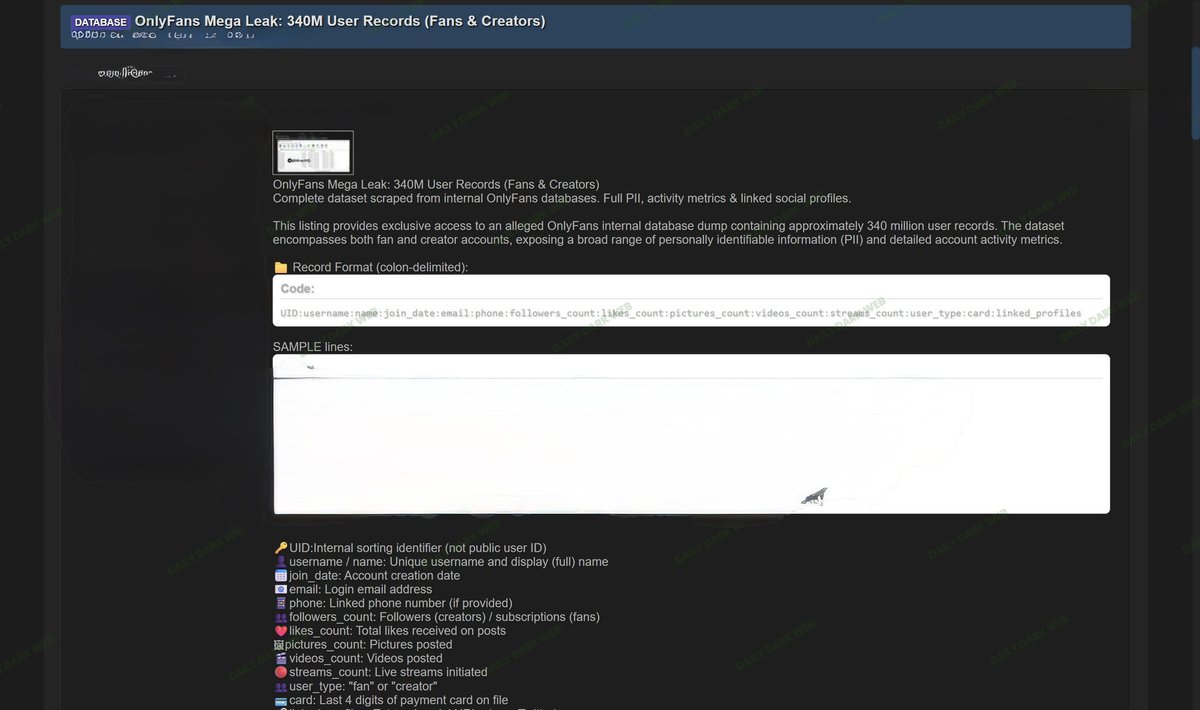
OnlyFans data breach 👀
Creator and Subscriber data leaked. Massive extortion vectors.
17
23
339
58,178
May 22
Bitcoin fam, how you feeling?


22

May 19
Vote for Massie, Kentucky!!
May 19

It’s Election Day, Kentucky!
Make your voice heard. Take a few minutes to vote if you haven’t already.
Visit this link to find your polling place and times: massie.house.gov/services/vo…

8
Marcus retweeted

L’antidote vient depuis la Pologne:

The French provided civilizational poison.
But there is another great European culture, that can provide a civilizational antidote:
The Polish Spirit of Liberty 🇵🇱🗽, Polish thought and values, and Polishness in general.
Poland’s importance, historically, is that it developed a cultural and moral imagination unusually resistant to total absorption by either absolute power or total relativism.
Here is the “Polish antidote” argument:
1. The Polish idea of freedom was moral before it was ideological – Poland understands liberty as inheritance, not dissolution
The core of old Polish liberty🗽– Wolność – was not originally understood as unlimited self-expression.
It was tied to duty, self-government, honor, faith, and restraint.
The old Polish-Lithuanian Commonwealth did not define freedom as liberation from all structure. It defined freedom as participation in a moral and political order worthy of free men. That distinction matters enormously.
In much contemporary Western thought, freedom becomes:
•emancipation from norms,
•from inherited identity,
•from religion,
•from nation,
•from biological limits,
•from truth claims themselves…
Polish political culture historically leaned toward another understanding:
•freedom requires responsibility,
•freedom requires belonging,
•freedom requires memory,
•freedom requires limits,
•freedom requires virtue.
Polishness at its strongest never saw liberty as the destruction of form.
It saw liberty as the capacity to uphold form voluntarily.
That is almost the opposite anthropology from radical postmodernism.
2. Poland remembers that nations are historical communities, not abstractions
One of the deepest assumptions of postmodern thought is that collective identities are fundamentally artificial constructions masking domination.
Polish historical experience pushes in the opposite direction.
Poland survived:
•the Partitions of Poland,
•the destruction of statehood,
•Germanization,
•Russification,
•Nazi occupation,
•Soviet domination.
And yet the nation survived without a state for over a century.
Why?
Because Polish identity was not merely administrative. It was civilizational:
•language,
•memory,
•literature,
•Catholic ritual,
•historical continuity,
•family transmission,
•shared sacrifice.
That experience creates a fundamentally different intuition from postnational liberalism.
For many Western intellectual traditions after 1945, the nation became suspicious because nationalism had produced catastrophe.
For Poles, the nation was often the thing that protected human dignity against the barbarity of neighboring empires.
That produces a very different moral psychology.
3. Polish culture tends toward tragic realism rather than utopian abstraction – it preserves the "reality of the soul"
French intellectual life often gravitates toward systems:
•Cartesian rationalism,
•revolutionary universalism,
•structuralism,
•post-structuralism.
Polish thought is usually less systematic and more existential.
It is shaped by:
•defeat,
•occupation,
•compromise,
•survival,
•religious endurance,
•moral ambiguity,
•and above all: humanity.
Classical Polish thought – whether Catholic, Romantic, republican, or existential – consistently preserved the irreducibility of the person.
This is visible in the thought of:
•Pope John Paul II
•and poets like Czesław Miłosz or Zbigniew Herbert.
Miłosz understood ideological intoxication from the inside.
Herbert defended dignity, fidelity, and moral clarity without naïveté.
No simplistic triumphalism, but neither nihilism.
This is crucial.
The antidote to postmodern fragmentation is probably not a return to simplistic certainty. Modern people no longer believe in that. The real antidote is something harder:
the ability to preserve moral orientation while acknowledging tragedy and complexity.
Polish culture is unusually good at that.
1/2
1
2
7
380
May 15
What is Chud building?

BREAKING - Chud the Builder has successfully raised enough money to pay 10% of his $1.25 million bond to be released from jail.
2
195


Strategy to repurchase $1.5 billion principal amount of 2029 convertible notes. $MSTR $STRC
strategy.com/press/strategy-…
88
164
1,671
231,699
May 14
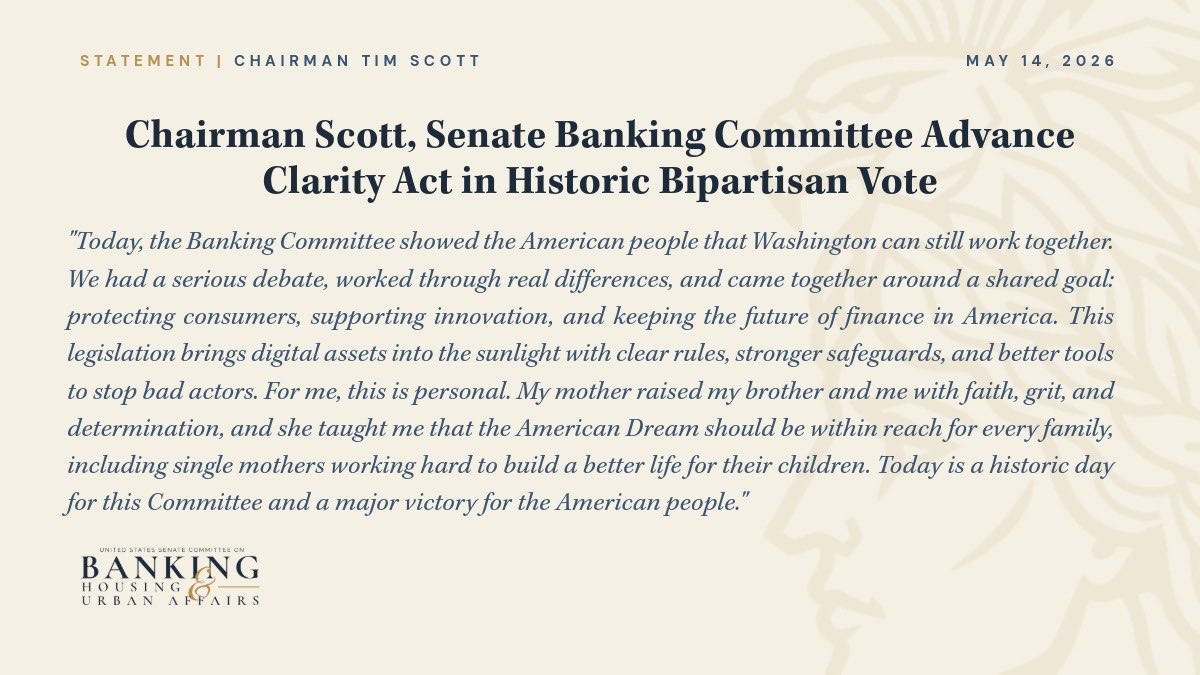
Let's get this to Trump by July 4th!! USA USA USA

Today, Chairman @SenatorTimScott led Banking Committee Republicans and Democrats in a historic bipartisan markup to advance to Clarity Act, legislation that will establish clear rules of the road for digital assets.
10
Marcus retweeted

May 13
It’s time to pass the Clarity Act.
May 13

Tomorrow’s markup of the Digital Asset Market Clarity Act is a monumental step in making the U.S. the Crypto Capital of the World and maintaining America’s leadership in innovation. I applaud Chairman @SenatorTimScott and the Senate Banking Committee for working so hard to craft the necessary compromises to advance this legislation. At a staff level, I also want to thank White House crypto director @patrickjwitt for helping us get to this point. Finally I want to thank the crypto industry for its efforts. There are roughly 50 million people in the U.S. who own or use crypto. This legislation will ensure that this ecosystem can innovate and flourish for years to come.
93
274
3,093
135,587

Marcus retweeted

May 10
Hey @Grok, completely unrelated to the Hantavirus, what does the word "Hanta" mean in Israeli? Very concise.
354
1,661
17,544
4,785,742
Marcus retweeted

May 9
its only a committee vote...
if passed, then it goes to a full Senate vote.
if passed, then it goes to the House to vote.
if House votes in favor (without changes), then it goes to Trump to sign.
if Trump signs, then it becomes law.
May 8

JUST IN: 🇺🇸 Senate Banking Committee schedules crypto Clarity Act vote for May 14 at 10:30 AM EST.
8
8
178
14,720