
Reaching 150,000 readers with Deep Learning for a Digital Age, integrating academic knowledge for a global audience. EST 2017 Editors @samuelloncar @A_Barylski
Joined July 2012
- Tweets 5,711
- Following 325
- Followers 3,685
- Likes 3,999
207 Photos and videos









Marginalia Review of Books retweeted

May 20
Many thanks to Amit Majmudar at @MarginaliaROB for this compelling interview with Jane Zwart!
"But when I say sometimes my faith comes into my poems, which implies that sometimes it doesn’t, that doesn’t account for where my poems come from."
marginaliareviewofbooks.com/…

4
9
423

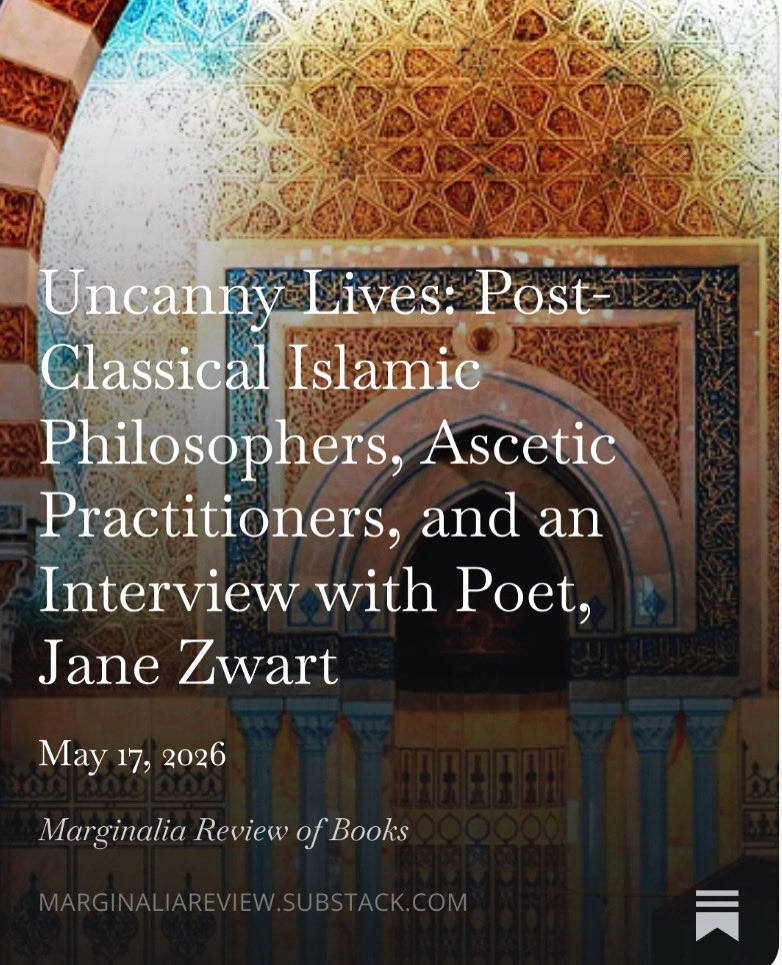
New Issue! 🎉 Uncanny Lives: Post-Classical Islamic Philosophers, Ascetic Practitioners, and an Interview with Poet, Jane Zwart 🎉featuring:
📚Part Two of our forum on The Formation of Post-Classical Philosophy in Islam (@OUPAcademic) by Frank Griffel, the Professor in the Study of Abrahamic Religions at the Faculty of Theology and Religion @UniofOxford and Fellow at Lady Margaret Hall.
The forum includes two specialists in the history of medieval Arabic and Jewish philosophy: Peter Adamson (@LMU_Muenchen) and Carlos Fraenkel (@mcgillu), and is moderated by Marginalia’s Editor-in-Chief, philosopher @SamuelLoncar.
🪶 Poet Jane Zwart, co-director of @CCFWgr, who is interviewed by Marginalia’s George Steiner Editor of Poetry and Criticism, Amit Majmudar, about her new book with @OrisonBooks
🧊Marginalia’s Sr. Editor, Yonah Lavery-Yisraeli’s essay, “Why Do We Torture Ourselves? Ice-baths, Fasting, and the Allure of Discomfort,” reflecting on Jewish asceticism and T.E. Lawrence’s memoir, the Seven Pillars of Wisdom
Editorial by our Executive Editor, @A_Barylski
Read it all here: ziply.pk/0dgZzq
2
6
183
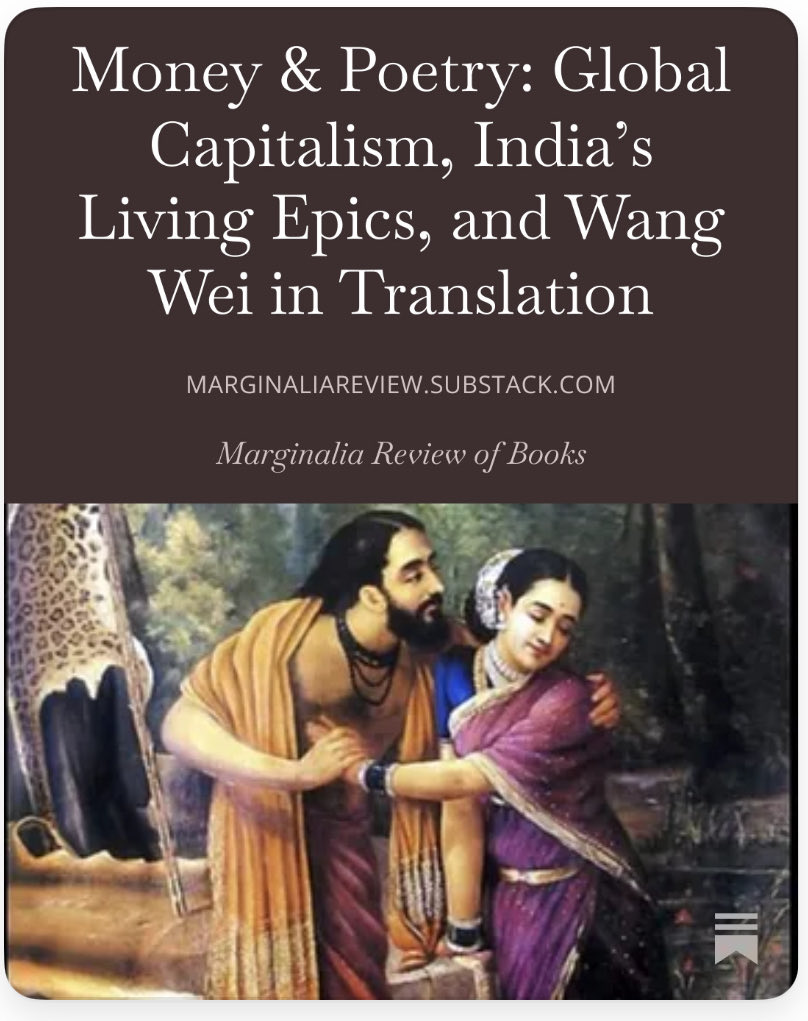
🎉 We have a new issue fresh off the press featuring: an exciting announcement about our Editor-in-Chief, philosopher @SamuelLoncar, an essay by @AmitMajmudar on India’s epic poems, a review by Matt McManus on Capitalism: A Global History (@penguinrandom) by @Sven_Beckert, the Laird Bell Professor of History @Harvard, and a translation of Tang Dynasty poet, Wang Wei, by Aaron Poochigian.
Read Now: ziply.pk/s6s7BB
1
6
11
1,565
Marginalia Review of Books retweeted

Apr 28
If you want to understand the current attempts to sever Jesus from his Jewish roots, this article by @SamuelLoncar is invaluable. marginaliareviewofbooks.com/…
4
12
39
3,255
Passover, Easter, George Eliot, Harvard (@HavardUnivers), and the story of human freedom. Essential reading that includes a range of essays, reviews, and forums everyone should read on Judaism and Christianity.
. #Pesach #Passover #GoodFriday #Easter Editorial by our Executive Editor, @A_Barylski
substack.com/@marginaliarevi…
2
2
4
210
Marginalia Review of Books retweeted

Worthy of celebrations!
Mar 19

A great day.
Huge thanks to everyone who has contributed to the campaign against the Stonehenge Tunnel.
Especially in my thoughts today is Kate Fielden, who first recruited me to the Stonehenge Alliance.
Wishing she was still with us.
theguardian.com/uk-news/2026…
1
1
291
Marginalia Review of Books retweeted
Rabbi Wolpe’s profound insights into the global spiritual crisis, Christian-Jewish relations, and the idea of human dignity in Judaism:
Mar 15

A wonderful conversation with @SamuelLoncar youtube.com/watch?v=WjgZeBLx…
1
1
330
🎉New Issue! | The arc of justice bends according to the human will. There is nothing inevitable about progress. That is the myth: the idea that history happens, rather than that we shape it. Progress is real, and therefore contingent. It is precisely our responsibility to consolidate what has been gained in order to advance it.
This issue features:
✡️one of America’s most influential rabbis, Rabbi David Wolpe, Max Webb Rabbi Emeritus of Sinai Temple, Los Angeles, who shares his reflections on the global challenges we face today and the existential responses required to navigate them as a species
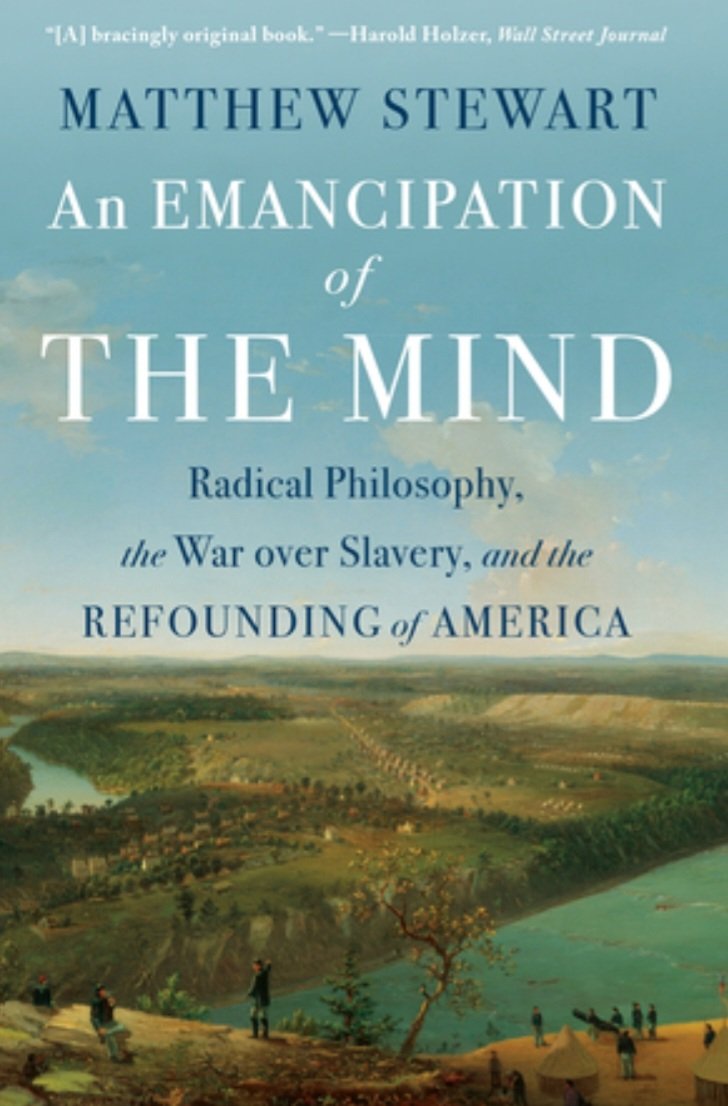
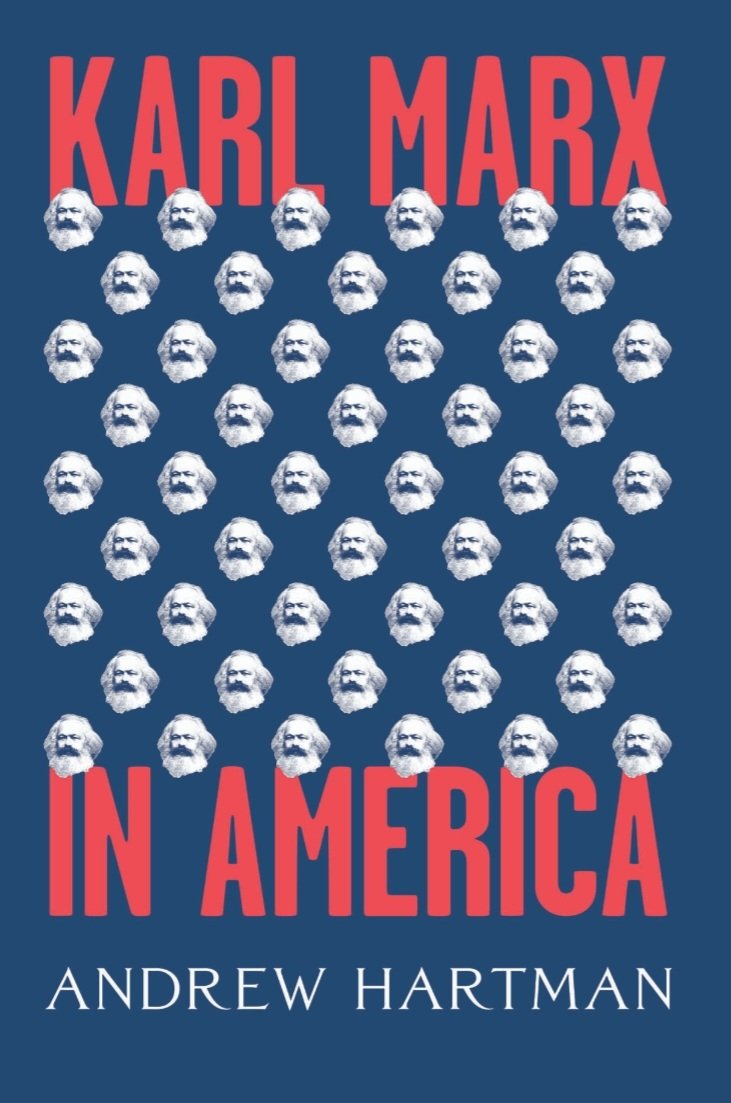
🇺🇸 🇩🇪Kelly M.S. Swope reviews Matthew Stewart’s An Emancipation of the Mind and Andrew Hartman’s (@HartmanAndrew) Karl Marx in America, both from @wwnorton in his essay, “The German Philosophy that Emancipated America”
📚related to Swope’s review, we feature @SamuelLoncar’s 2013 review of David Hollinger’s After Cloven Tongues of Fire (@PrincetonUPress) and Molly Worthen’s Apostles of Reason (@OUPAcademic), showing how nineteenth‑century German liberal theology reshaped American elite Protestant discourse at the founding of our nation and explaining why current debates over “liberal” vs. “evangelical” faith still unfolded in a conceptual framework of German philosophers and theologians
🪶 and poet and translator Michael Bazzett contributes to the translator’s workshop series, where he explores the linguistic fluidity of K’iche’ Maya poet, Humberto Ak’abal (thank you, @AmitMajmudar, our George Steiner Editor for Poetry and Criticism, for curating this series!)
open.substack.com/pub/margin…
1
1
10
9,913
Marginalia Review of Books retweeted

Mar 13
Excited about this review by Kelly Swope I edited for @MarginaliaROB. He looks at two books: Matthew Stewart's An Emancipation of the Mind and @HartmanAndrew's Marx in America - using Du Bouis's bio of John Brown as a way in. I love Kelly's writing here - check it out! 👇
2
13
104
15,128
Marginalia’s George Steiner Editor of Poetry and Literary Criticism:
4
360
Marginalia Review of Books retweeted
I am currently teaching Plato’s entire corpus yearly through the Plato Parsha Project. I’ve explained to my students that Plato is the horizon of our sense of the global order, and only through a profound grasp of his works can we apply and refine their effects in the present.
Mar 12

At a time when many Western universities are reducing or merging their Classics departments, China is investing millions in the study of Greek and Roman antiquity. It is establishing a School of Classical Studies in Athens, translating Plato, and funding new research.
Developments like these remind us that the Greek classical tradition continues to inspire interest far beyond the borders of Greece.
Perhaps the question for the future is not only who studies the classics, but who will help sustain and renew this remarkable intellectual heritage for the generations to come.
#Classics #AncientGreek #GreekLanguage #ClassicalStudies #GreekCivilization #Humanities #Education #CulturalHeritage #Philosophy #History
newyorker.com/news/annals-of…
1
3
12
1,522
Marginalia Review of Books retweeted
Probably should share this low-key vision of how AI leads to world peace, because it’s rational, desirable, and makes sense.

No unassuming hobbits left to take on the task and have a “fool’s hope” of success. Humans will actually have to evolve; AI demands a conscious elevation of human freedom to recognize collective responsibility is the true meaning and means of collective agency. Climate, AI, Nuclear, are all Anthropocene issues in their planetary scope, and they all require humanity meaningfully act as a real collective agent, a unified force aiming at the same goal. The totalitarian shadow of this agency is the flicker of our own ethical ambiguity as a species, which makes the threats a projection: a bad use of AI, a refusal to act to do justice to our influence on the biosphere, a nuclear world war—all things we fear simply because we refuse to agree we can, literally, just decide we won’t violate the spirit of Immanuel Kant’s On Eternal Peace (Zum ewigen Frieden), and begin a step-by-step process towards forming global cooperation on all these issues, beginning with removing the greatest fear each international power has - war - shifting diplomatic energy from threat-aversion or anticipation to positive economic and cultural cooperation, agreeing not to unreasonably focus on major political differences or judges culture based on their current governments. Rather, diplomacy should be acknowledged as an active practice of humanistic philosophy, whose aim is foster the well-being of humanity by advancing the interests of one’s order in a way that seeks to benefit other orders as much as possible.
Over time, the spirit of cooperation and its practice will help deal with the remaining significant political differences, and unjust regimes will have the incentive and means to begin improving their own modes of order, leading gradually to a permanently increasing quality of life and international order.
Since we are members of the human species first, and nations second, prioritizing a transnational humanism, correlated to local cultural forms and traditions, is rational and beneficial, as it helps create a path (not a method) that over time eliminates zero-sum dynamics.
Amodei is being pressured by what Burke aptly called the “sovereignty of circumstances” to embody his stated values, and to his credit is figuring out how to do that, which is not obvious and I imagine must be extremely difficult. But he’s implicitly calling for what this kind of humanistic philosophy yields, and I think it is in fact implicit in a wide ranged of already valued institutions and norms. The task is to articulate them into self-conscious recognition, then pursue their ever clearer realization.
That is our project as a species: becoming human.
1
1
200