
Joined April 2020
- Tweets 32,410
- Following 57
- Followers 366
- Likes 12,542
702 Photos and videos

Jun 14
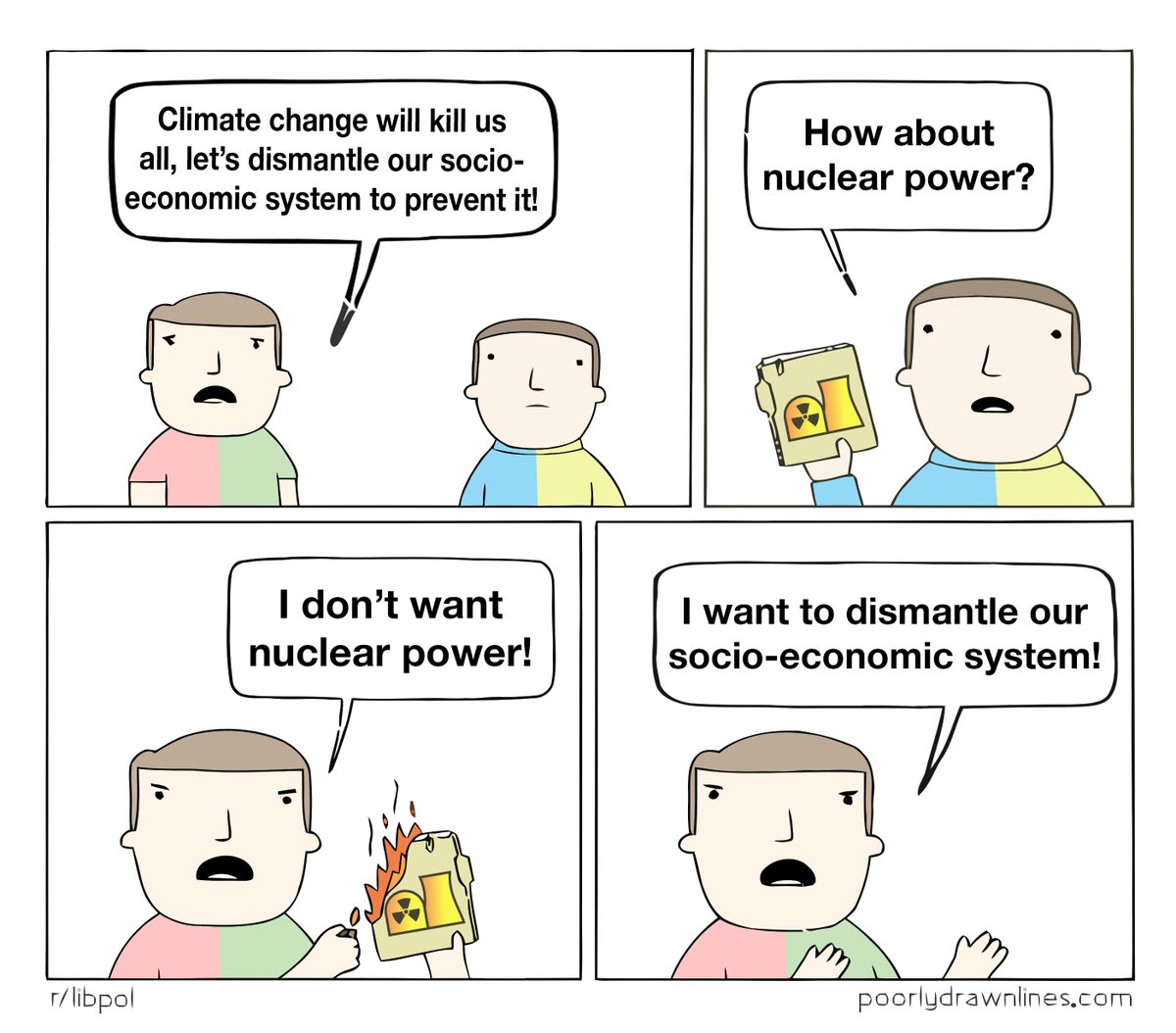
Diesen is correct.
When Russian retaliations come, those who've manipulated & misled us to this position will claim to have been "vindicated", that it's "proof" that Russia was always the military threat they claimed. But it's entirely the result of their own choices & actions.
Jun 14

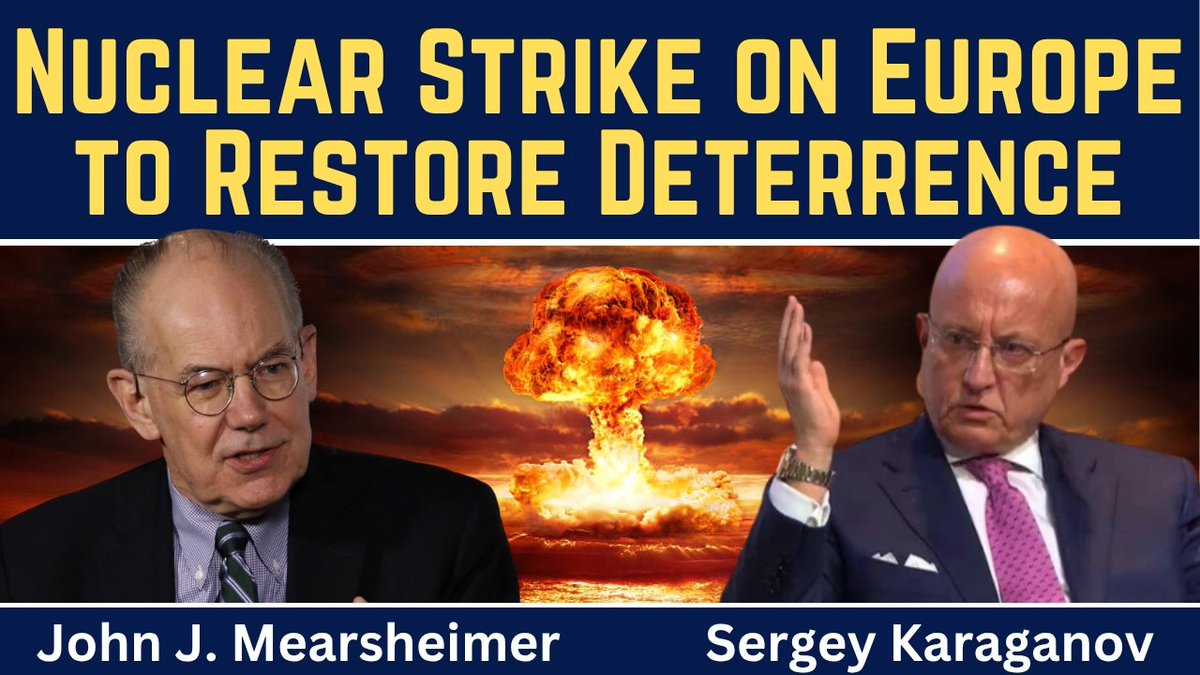
I received several reactions to the discussion I hosted about how nuclear weapons may be used against Europe to restore deterrence. To be clear, this is not a normative argument about what I think should happen or what I think is just. My argument is what I think will happen. European leaders have become so deeply involved in the attacks on Russia that the Kremlin is under great pressure to restore its deterrence.
Once Russia retaliates with conventional weapons against European targets (weapons facilities, logistics centres), the Europeans will more forcefully attack Russia. At this point, I believe that it is more likely than not that Russia could launch a limited nuclear strike (with tactical nuclear weapons, not strategic). This should not be a controversial prediction. NATO countries are doing the war planning; their intelligence agencies are doing the targeting; their contractors are pulling the trigger; they are supplying the long-range weapons; and they are also using NATO territory to strike Russia. This will only escalate as the Europeans are talking about mass-producing long-range weapons for "Ukraine" to strike deeper and deeper inside Russia, and are setting dates for when Europe will directly attack.
Our political leaders are obsessed with defeating the world's largest nuclear power, which considers itself to be fighting in a war for its existence. It should worry us that our political leaders did not define what a NATO victory looks like in this scenario, and we should also be worried that our political leaders have incrementally become so directly involved in attacks on Russia and still pretend it is merely a war between Russia and Ukraine. Our political leaders sabotaged both the Minsk peace agreement and the Istanbul agreement, and then shut down all diplomacy for more than 4 years while declaring that "weapons are the path to peace". It is obligatory in Europe to pretend this is about "helping Ukraine", but this is dangerous self-delusion.
Where exactly did we think this was heading? Is nuclear war not the obvious end? Can anyone imagine it ending in any different ways if we had done this during the Cold War or if Russia were now similarly attacking the US through a proxy? Biden once said that sending F-16s meant World War 3, yet now it has become controversial to point out that NATO clearly crossing the line between proxy war and direct war will trigger a nuclear war. I see no morality in such self-delusion. NATO escalations are now out of control, we are heading to war, and that war will not be limited to conventional weapons. The fact that this is dismissed as a "pro-Russian" argument demonstrates how completely lost we have become in mindless war propaganda.
youtu.be/Q8PT0jiemKc
1
1
82
Jun 14
The argument is:
Russia has a need to restore deterrence
Best way to do so would be conventional strikes on European/UK (NATO) targets - missile etc attacks on selected targets.
The Europeans/NATO WOULD respond with direct conventional attacks in response.
...
1/2
1
134
Jun 14
...2/2
Russia would then have to respond with a limited nuclear strike on European/UK targets
NATO will then be unable/unwilling to respond with counter escalation because the US will not risk American cities & the UK/France are utterly overmatched by Russia in nuclear arms.
1
36
Jun 3
I'd put Enoch Powell on.
As a recognition that he was right on what can now be seen as arguably the most important issue for Britain of the post-WW2 era, & an apology for the way we allowed our political & media establishment to treat him.
Jun 3

My short list of British figures that should appear on British bank notes.
1. Winston Churchill
2. Admiral Horatio Nelson
3. Florence Nightingale
4. Cecil Rhodes
5. William Wilberforce
6. Alan Turing
7. William Shakespeare
8. Arthur Wellesley - 1st Duke of Wellington
9. Isaac Newton
10. Isambard Kingdom Brunel
1
5
499
Jun 3
"The supreme function of statesmanship is to provide against preventable evils"
1
99
Jun 3
Imagine the killing of Henry Nowak without the internet or police body cams.
It would have been just another knife crime incident. No newspaper or TV/radio outlet would have wanted, or been allowed, to even mention the vitally important anti-white racism aspects of it.
1
105
Jun 2
Take a moment now to contemplate the riots, the "protests", & the unending establishment hysteria we'd be going through now, if Novak had been "minority" & his killer & the family that lied for the killer had been white street trash...
x.com/DavidBe31099196/status…
Jun 1

The Macpherson Report and the murder of Henry Nowak are causally linked through the corrosive logic of multiculturalism and its institutional offspring: two-tier policing.
By the time he was stabbed to death in December 2025, 18-year-old Henry Nowak would have been eight years younger than the 1999 Macpherson Report. The nature of the former—and especially the police response—is directly tied to the latter.
Sir William Macpherson’s inquiry into the Stephen Lawrence case redefined institutional racism expansively. It instructed police to prioritise perceptions of racism from minority complainants. This well-intentioned reform, born of genuine outrage at one racially motivated murder, embedded a structural bias: complaints from certain communities received swift deference, while the concerns of the native majority were often dismissed as prejudice.
Over a quarter-century, this shifted the state’s posture from impartial referee to quasi-imperial active manager of ethnic sensitivities.
Fast-forward to Southampton, 3 December 2025. Henry Nowak, a Polish-British student, was stabbed five times—including a fatal chest wound—by 23-year-old Vickrum Digwa, who was legally carrying a 21cm kirpan, a privilege extended to no others in British society. As Henry lay dying in his own blood, Digwa falsely claimed racial abuse (citing a bruised eye). Officers handcuffed and arrested the victim rather than rendering immediate aid.
Police later apologised—unconvincingly, particularly after the leaked bodycam footage emerged. The IOPC is investigating. This is not mere incompetence. It is the predictable outcome of Macpherson’s legacy: officers socialised to fear being labelled racist more than failing to protect life.
Listen to Henry’s father. Watch the leaked video and don’t look away. Henry didn’t get a dignified death. He died frightened, drowning in his blood while being mocked and then advised of his rights. Scriptwriters would be sent back to the room if they suggested something so on-the-nose in a gritty drama—yet this is grotesque UK reality.
People should be furious about it. The government is paralysed by ideology, fear, and cowardly shamelessness. Genuine media that holds power to account is in short supply.
Setting anger aside for a moment, multiculturalism erodes the pre-political loyalty that underpins state legitimacy—the special sauce of governance. When institutions apply justice asymmetrically—aggressive on Islamophobia or native 'hate', hesitant or inverted when minorities are perpetrators—trust collapses. This is textbook anarcho-tyranny.
Polls show historic lows in institutional confidence. Incidents like Nowak’s, amplified by grooming scandals, knife crime disparities, and uneven protest handling, accelerate the collapse.
The consequences are stark: feral zones in cities, rural-urban fractures, nativist backlash, and escalating intercommunal violence. Would you choose to walk your dog where Wayne Broadhurst was stabbed to death, or send your son to university where he might be degraded while dying and begging police for help? What would you do if violence and rape regularly targeted you and yours and the police seemed indifferent?
It used to be brushed off as part and parcel' of modern urban life, or 'don’t look back in anger'. That was low, dishonest, and weak. Now the strategy is silence—which may be the least bad option left for this dishonest, discredited government.
We are sliding toward the civil conflict I have warned of—not as cause, but as consequence—of Britain’s unravelling as a coherent nation. The drivers are obvious because they strike normal people faster, wider, and deeper. The reactions are predictable. War is adaptive behaviour; civil war is simply more brutal and socially miasmic. Henry’s killing is not an isolated tragedy. It is a chapter in a larger, nationally suicidal debacle imposed on ordinary people by a governance system that has grown functionally undemocratic over thirty years.
1
1
221
Jun 1
Betz makes the vital connection between the Macpherson Report and the shameful treatment of Henry Nowak it gave rise to a quarter century later.
Jun 1
The Macpherson Report and the murder of Henry Nowak are causally linked through the corrosive logic of multiculturalism and its institutional offspring: two-tier policing.
By the time he was stabbed to death in December 2025, 18-year-old Henry Nowak would have been eight years younger than the 1999 Macpherson Report. The nature of the former—and especially the police response—is directly tied to the latter.
Sir William Macpherson’s inquiry into the Stephen Lawrence case redefined institutional racism expansively. It instructed police to prioritise perceptions of racism from minority complainants. This well-intentioned reform, born of genuine outrage at one racially motivated murder, embedded a structural bias: complaints from certain communities received swift deference, while the concerns of the native majority were often dismissed as prejudice.
Over a quarter-century, this shifted the state’s posture from impartial referee to quasi-imperial active manager of ethnic sensitivities.
Fast-forward to Southampton, 3 December 2025. Henry Nowak, a Polish-British student, was stabbed five times—including a fatal chest wound—by 23-year-old Vickrum Digwa, who was legally carrying a 21cm kirpan, a privilege extended to no others in British society. As Henry lay dying in his own blood, Digwa falsely claimed racial abuse (citing a bruised eye). Officers handcuffed and arrested the victim rather than rendering immediate aid.
Police later apologised—unconvincingly, particularly after the leaked bodycam footage emerged. The IOPC is investigating. This is not mere incompetence. It is the predictable outcome of Macpherson’s legacy: officers socialised to fear being labelled racist more than failing to protect life.
Listen to Henry’s father. Watch the leaked video and don’t look away. Henry didn’t get a dignified death. He died frightened, drowning in his blood while being mocked and then advised of his rights. Scriptwriters would be sent back to the room if they suggested something so on-the-nose in a gritty drama—yet this is grotesque UK reality.
People should be furious about it. The government is paralysed by ideology, fear, and cowardly shamelessness. Genuine media that holds power to account is in short supply.
Setting anger aside for a moment, multiculturalism erodes the pre-political loyalty that underpins state legitimacy—the special sauce of governance. When institutions apply justice asymmetrically—aggressive on Islamophobia or native 'hate', hesitant or inverted when minorities are perpetrators—trust collapses. This is textbook anarcho-tyranny.
Polls show historic lows in institutional confidence. Incidents like Nowak’s, amplified by grooming scandals, knife crime disparities, and uneven protest handling, accelerate the collapse.
The consequences are stark: feral zones in cities, rural-urban fractures, nativist backlash, and escalating intercommunal violence. Would you choose to walk your dog where Wayne Broadhurst was stabbed to death, or send your son to university where he might be degraded while dying and begging police for help? What would you do if violence and rape regularly targeted you and yours and the police seemed indifferent?
It used to be brushed off as part and parcel' of modern urban life, or 'don’t look back in anger'. That was low, dishonest, and weak. Now the strategy is silence—which may be the least bad option left for this dishonest, discredited government.
We are sliding toward the civil conflict I have warned of—not as cause, but as consequence—of Britain’s unravelling as a coherent nation. The drivers are obvious because they strike normal people faster, wider, and deeper. The reactions are predictable. War is adaptive behaviour; civil war is simply more brutal and socially miasmic. Henry’s killing is not an isolated tragedy. It is a chapter in a larger, nationally suicidal debacle imposed on ordinary people by a governance system that has grown functionally undemocratic over thirty years.
1
145
Jun 1
The issue here was not the kirpan exemption, but the toxic idea, all too common in our indoctrinated society & police force, that "racism" justifies violence.
Nelson shares political responsibility for that, as one of the establishment pushers of the tabooisation of "racism".
May 31

The murder of Henry Nowak has triggered calls to ban the Sikh kirpan.
But what actually happened? Was a religious exemption really exploited?
I spoke to Jagbir Jhutti-Johal about the case and why many Sikhs feel their religious freedom is now on trial.
comment.press/kirpan
1
225
Jun 1
"unconditional love for Israel & visceral hatred for Russia"
The classic neocon position.
A number of reasons:
Military industrial funding
Immigrant East European/Russian jewish family backgrounds
Cold war habituation among the heretical Christian zionist fruitloops
Jun 1

In America, unconditional love for Israel and visceral hatred for Russia frequently go hand in hand. Why?
1
59
May 30
The nightmare scenario facing us, if we let the Blairites & "YIMBY's" get their way & address planning & housebuilding BEFORE mass immigration is halted & remigration has been started.
May 29

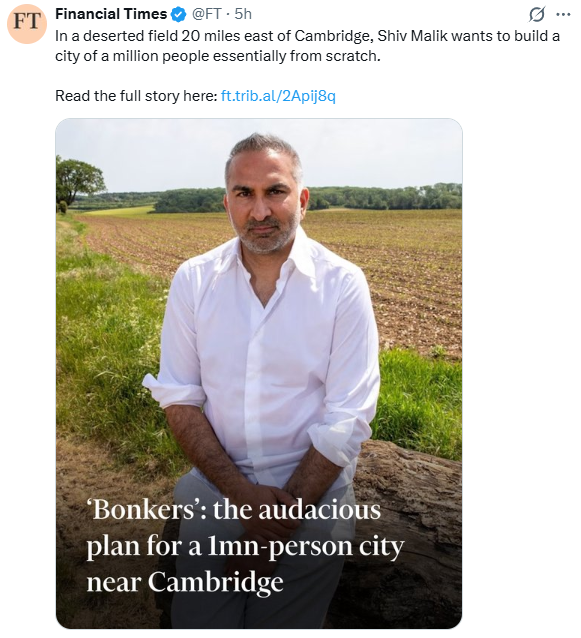
The last thing England needs is a million migrant city built on prime agricultural farmland.
1
3
101
May 29
Truth is of no significance in the Empire of Lies, nor in its governance.
As long as organisations & individuals are serving the rulers' purpose (importing foreigners, in this case), the actual words of the law or of the rules or the policy are irrelevant.
May 29

Sometimes you long for the old days when satire was funnier than reality. How in the name of sanity is working in a vape shop a 'skilled' occupation? Is there a unit in the Home Office dedicated to destroying public confidence in the state?
1
39
May 29
The utter uselessness of Britain's police on display.
Enfeebled & corrupted by "Diversity" recruitment, twisted into an ideological militia by leftist "antiracist" etc indoctrination & selective promotion.
Scrap them & start again.
May 28

Three female police officers walk up to a man sitting on a barrier and tell him he’s under arrest. He stands up, casually shrugs off the attempt to restrain him, and jogs away while they make a half-arsed comical chase.
This is British policing in 2026.
How embarrassing is this?
These are the people you’re supposed to call when you’re in trouble.
You’re meant to feel safe knowing that you can rely on them.
When forces lower physical standards, dropping the bleep test requirement from 5.4 to 3.7 in many forces, removing the upper body strength test entirely in 2016, and prioritising diversity targets and recruitment numbers over real competence this is exactly what you get. Public safety becomes optional.
Get rid of DEI.
45
May 27
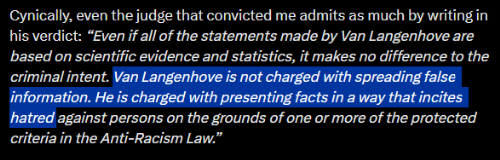
The Empire of Lies.
Truth literally is no defence, when the truth is "racist"/"homophobic"/"antisemitic"/"transphobic"/"islamophobic" etc.

2
63
May 25
Note the police agonising about not being able to convict when it's real crimes & genuinely antisocial people, versus their very evident enthusiasm for harassing people just alleged to have been responsible for right-wing political "offences", where the process is the punishment.
May 25

This guy had his bike stolen and traced it down to a house. The bike’s been there for over 12 hours, but listen to how the police acted and the attitude! They say they can’t do anything because the back gate is open and there’s no other evidence. He then argues with the man, who clearly just wants justice for his stolen bike. The British police are an absolute joke.
1
5
325
May 24
Pretty much *every single word* @frankwrighter, whom I've not read previously, says here, I'd endorse.
I'm sceptical on Restore because at root I suspect their leadership of being pro-Israeli & fear a Trump-style betrayal.
Still by far the least bad of the resourced options atm

1
6
551
May 22
This is an example of how, if you regularly read or watch the establishment media in the US sphere, you are not educated or informed but systematically misinformed.
As has been observed, the real problem is rarely what you don't know, far more often what you know, that isn't so.
May 22

The Financial Times is an important part of MI-6 Information Operations. These stories are not the byproduct of an editorial board of journalists, but a psychological operations team working out of Vauxhall. I saw it firsthand in 1998 with Operation Mass Appeal.
2
46
May 22
"Reclaim the language to restore the proper meaning of words that have been hijacked"
Damned cheek, from an identity lobby that's distorted & weaponised the term "antisemitism" at least as much & as poisonously as the left & minority lobbies weaponised "racism", "homophobia" etc
May 22

Melanie Phillips seems to have no sense of "the truth will set you free" or "let your yes be yes and your no be no". There's no sense that the truth matters. There's just interests and narratives.
No concept of the truth being its own greater purpose. That is a uniquely Christian idea coming from the Logos.
2
45
May 19
Modern warfare 101
youtu.be/far9cY03JHk
"It's going to be brutal. It'll be savage...High losses, pop music, shared, laughed at. & I do not think that we're prepared for the psychological impact .. let alone the military consequences"

2
104
May 19
But if we do let them get away with it again (& odds must be in favour given the demonstrated gullibility of the British people for interventionism from the ME to the Donbas), whether in the ME, the Ukraine or the Far East, let's not be under any silly illusions about the price.
1
46
May 19
This is good news, provided our rulers are prevented from involving us in any more of the stupid interventionist wars of choice for foreigners they've gotten us into repeatedly since the last war genuinely in the interests of the British people: the Falklands.
35