Trading name of Marahalling CTE, a non profit CIC, raising awareness and providing support to families who are affected by CTE & Brain Injuries
Joined March 2025
- Tweets 468
- Following 129
- Followers 48
- Likes 326
42 Photos and videos
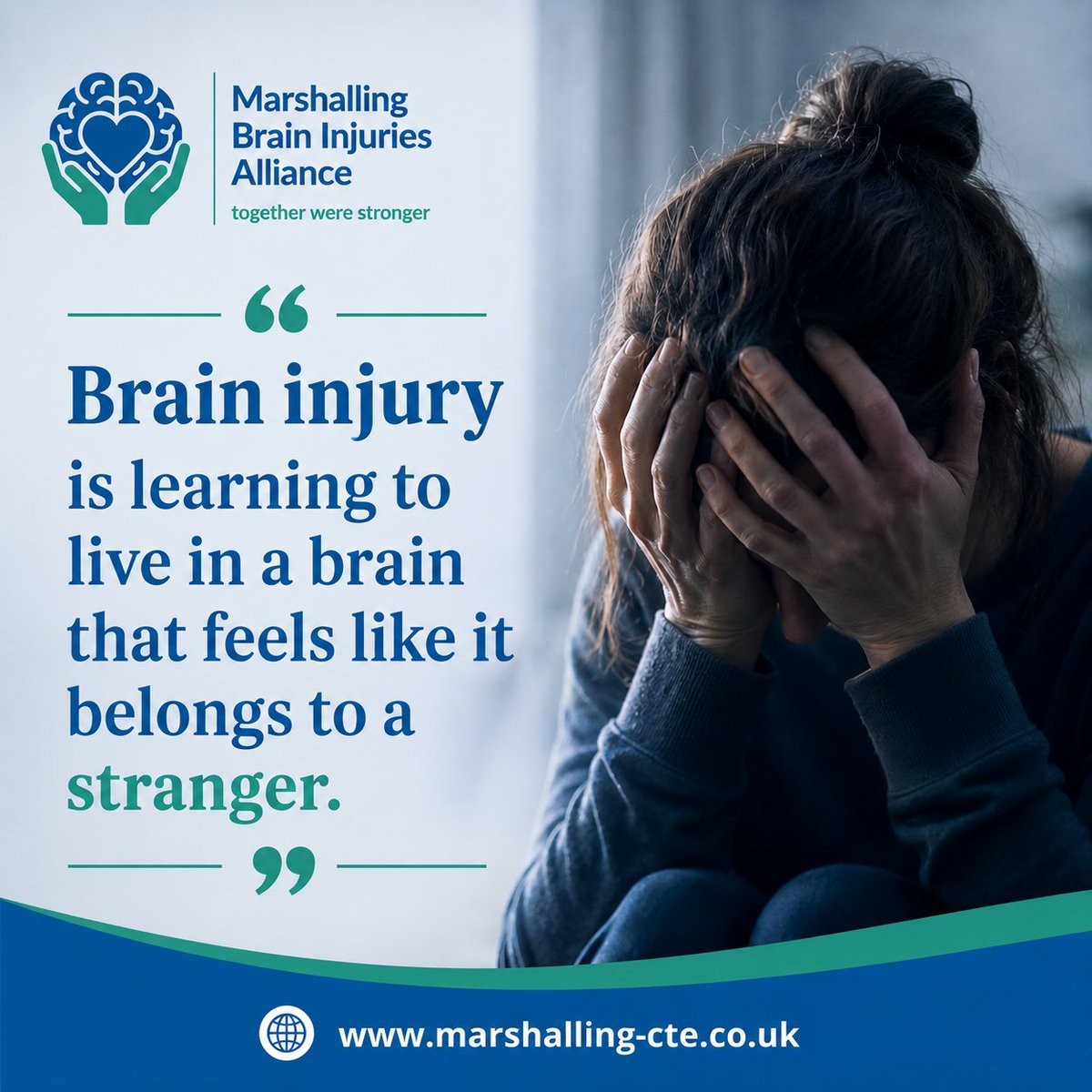

Many men hide their struggles behind “I’m fine.”
Check on the strong ones too.
#MensMentalHealth
1
2
31
Too many men suffer in silence.
Brain injuries can significantly affect mental health, emotions and behaviour.
Asking for help is strength.
#MensMentalHealth #BrainInjury #TBI
3
4
200
Understanding brain injuries matters. 🧠
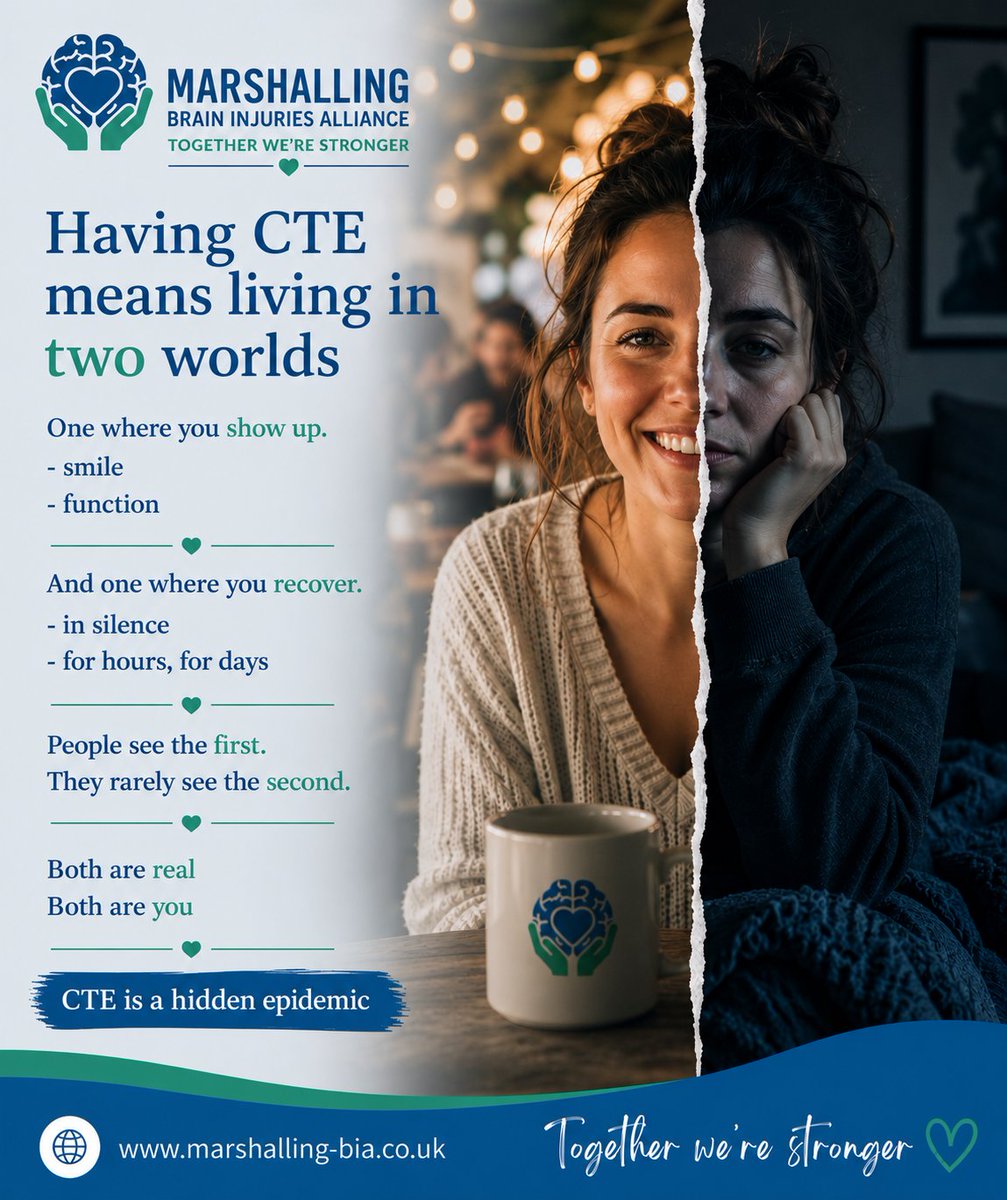
What people see as anger, laziness, mood swings or forgetfulness may actually be symptoms of neurological injury.
Awareness creates empathy.
Education reduces stigma.
#BrainInjury #CTE #TBI #BrainHealth
1
3
138
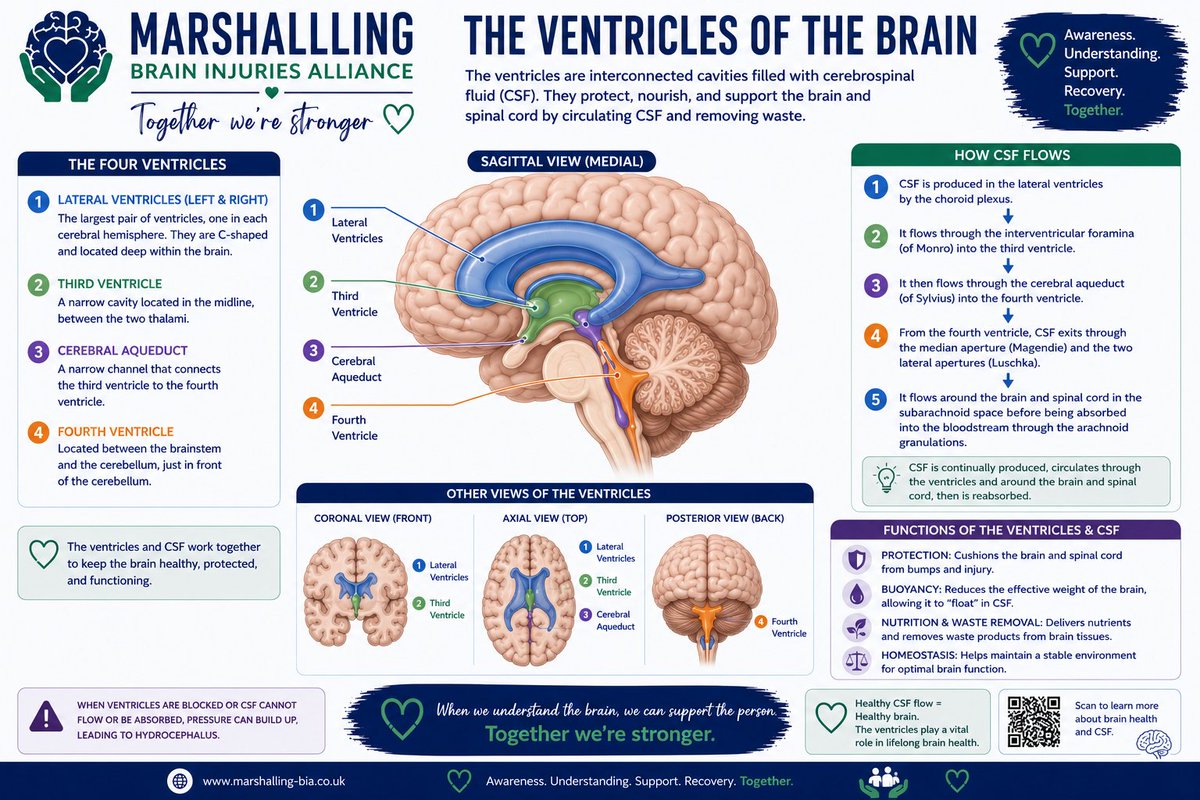
Understanding The Ventricles of the Brain
The ventricles are fluid-filled spaces that circulate cerebrospinal fluid (CSF) to protect, nourish and support the brain and spinal cord.
Disrupted CSF flow can affect brain health and neurological function.
2
3
62
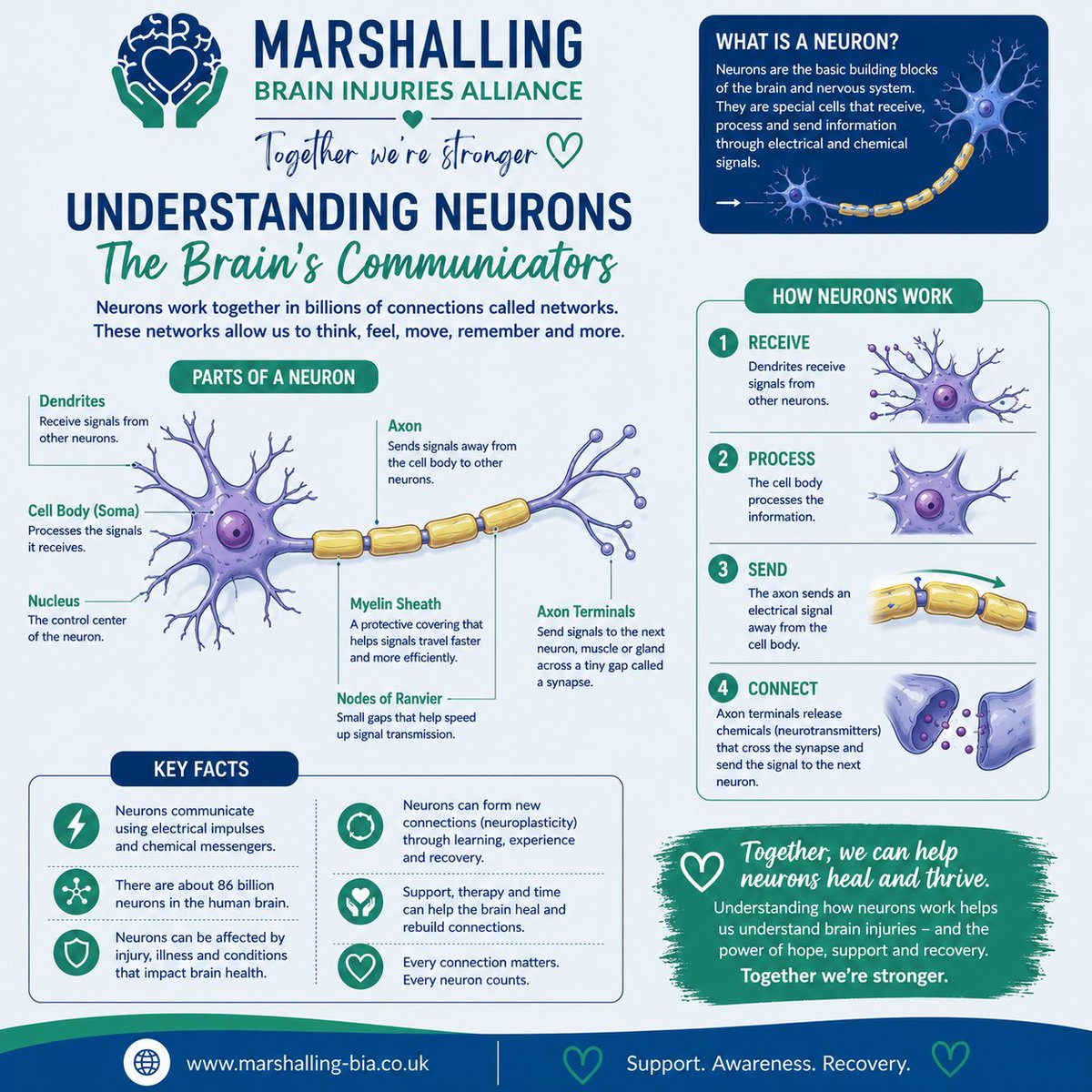
Understanding Neurons
Neurons are the brain’s communicators, sending signals that help us think, move, feel, learn and remember.
Brain injury can disrupt these connections — but the brain also has the ability to adapt and rebuild through neuroplasticity
3
8
47
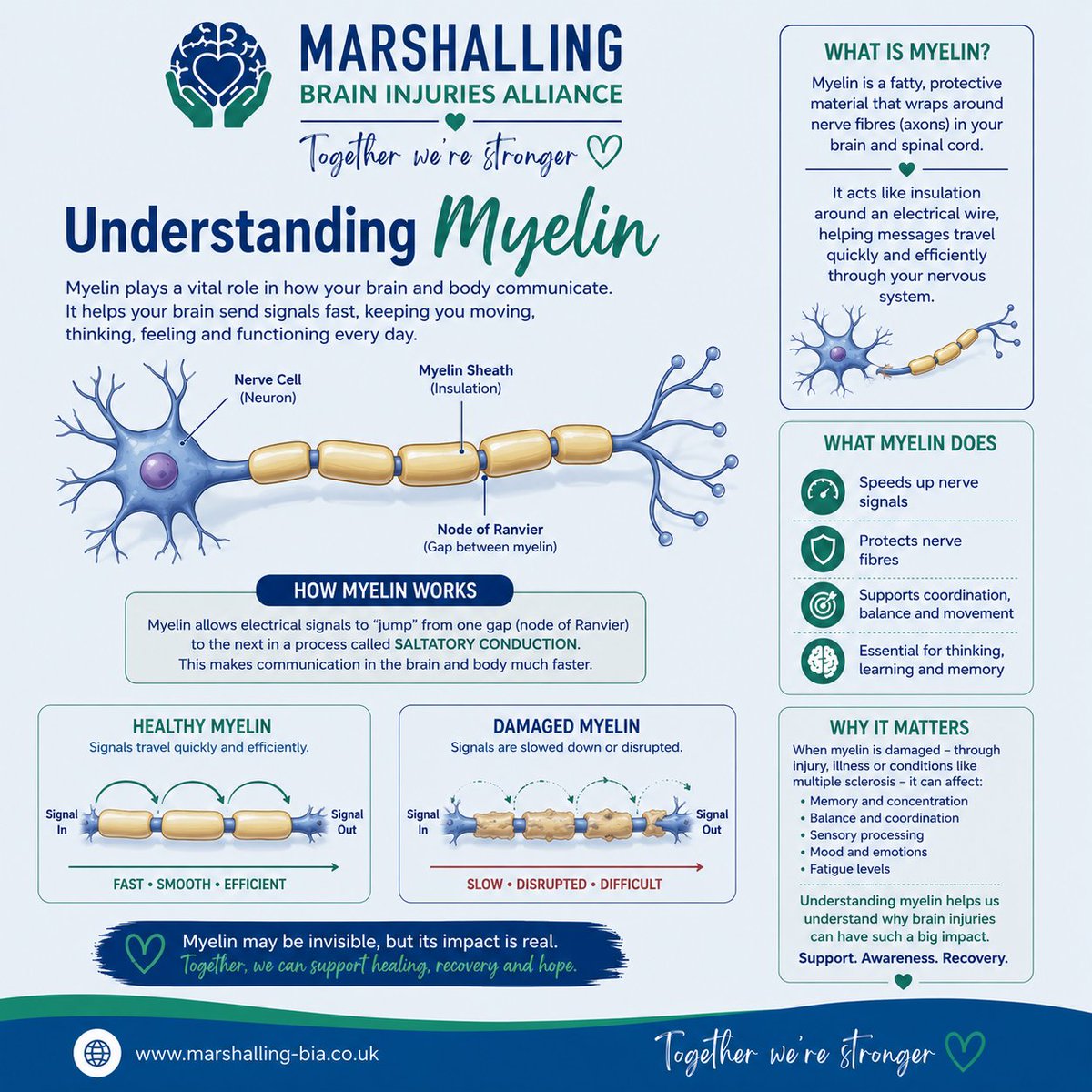
Understanding Myelin
Myelin is the protective coating around nerve fibres that helps messages travel quickly through the brain and body.
Damage to myelin can affect memory, balance, movement, fatigue, emotions and concentration — often through invisible symptoms.
1
1
5
48
Blast exposure may affect the brain long after service ends.
Veterans deserve more awareness, research and support around military-related brain injury.
#TBI #Veterans #BrainHealth
3
4
48
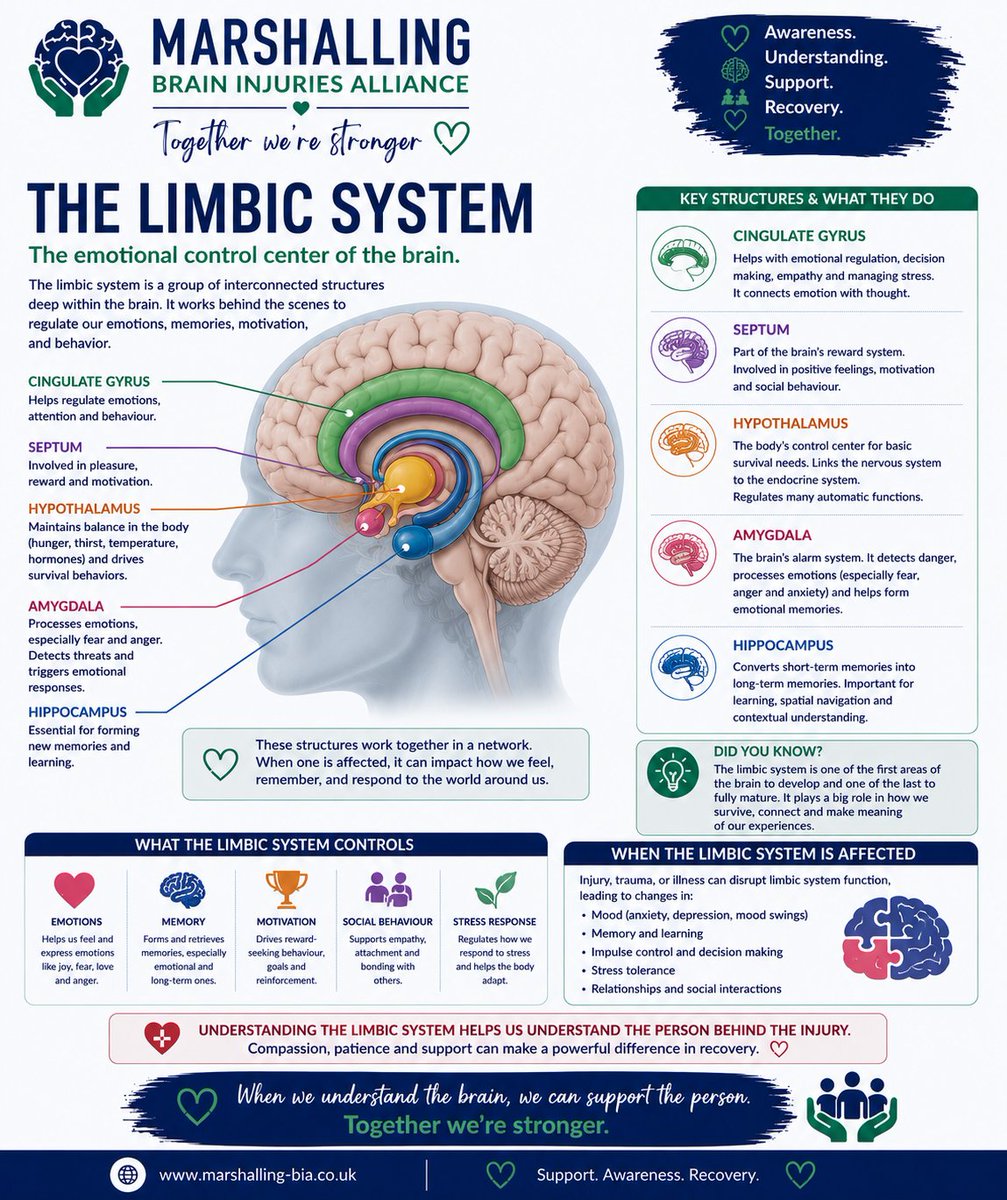
Understanding Your Brain – The Limbic System
The limbic system helps regulate emotions, memory, stress, motivation and behaviour.
When affected by brain injury, trauma or illness, it can impact mood, relationships, coping skills and emotional regulation — often invisible symptoms
1
3
27
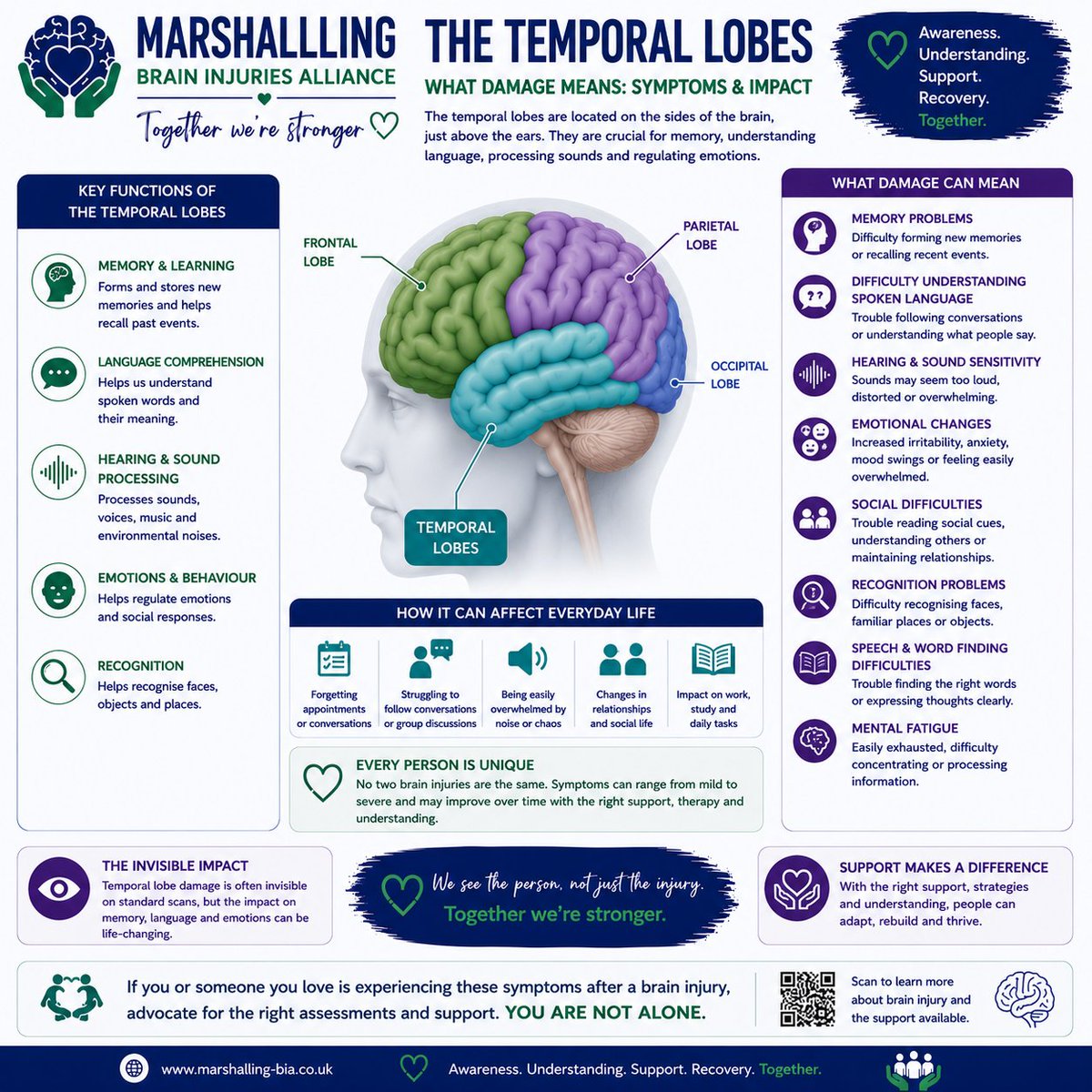
Understanding Your Brain – The Temporal Lobes
The temporal lobes are involved in memory, language, hearing and emotional regulation.
Damage can affect conversations, relationships, memory and daily life — often through invisible symptoms others may not understand.
2
3
102
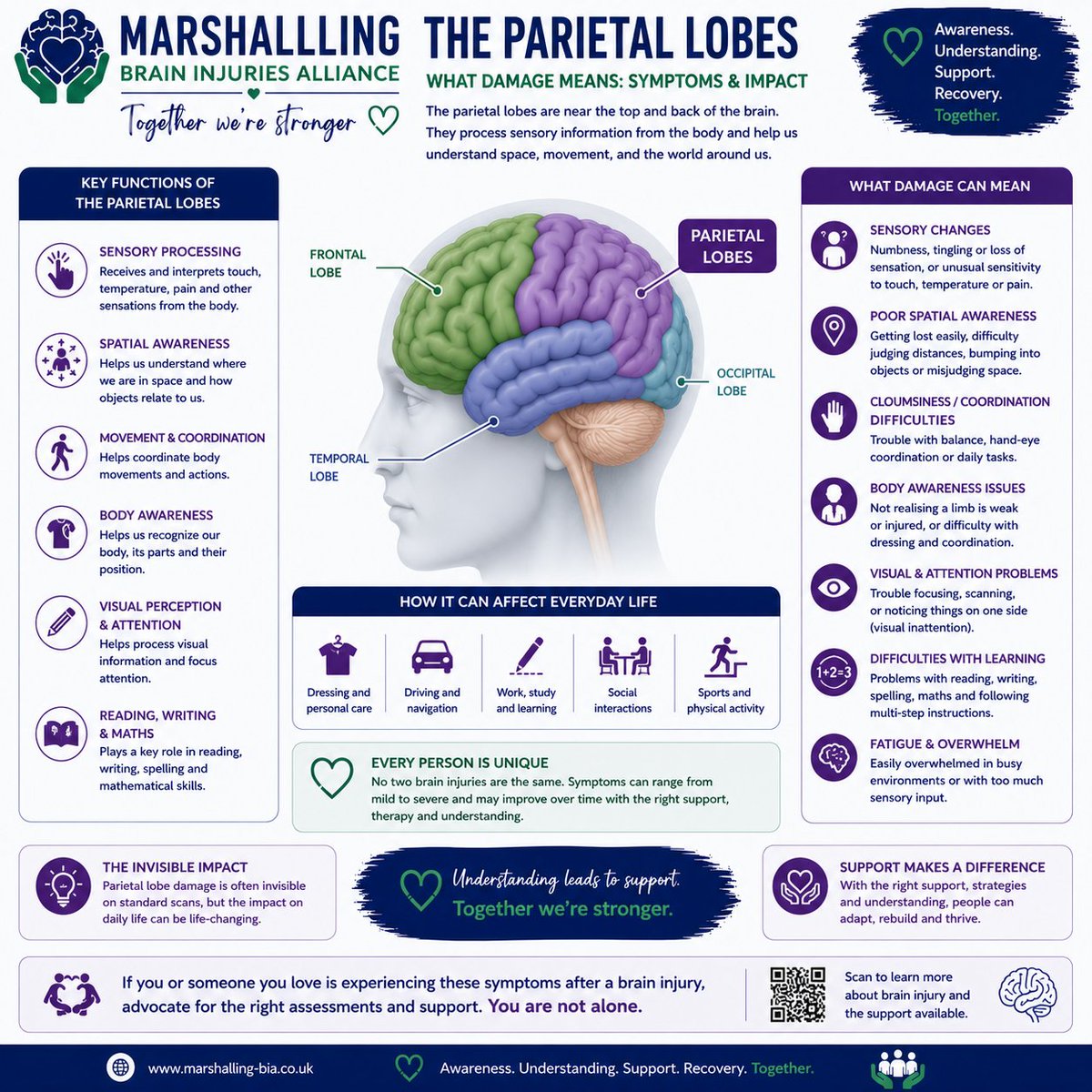
Understanding Your Brain, The Parietal Lobes
The parietal lobes help process touch, movement, spatial awareness, attention and learning skills.
Damage can affect balance, coordination, concentration and everyday activities — invisible symptoms others may not understand.
2
4
51
Brain injuries and suspected CTE affect entire families — not just the individual.
Partners, parents, children and friends often become carers whilst carrying exhaustion, stress and grief of their own.
Carers need support too. 💙
#BrainInjury #CTE #Carers #TBI #MentalHealth
4
7
283
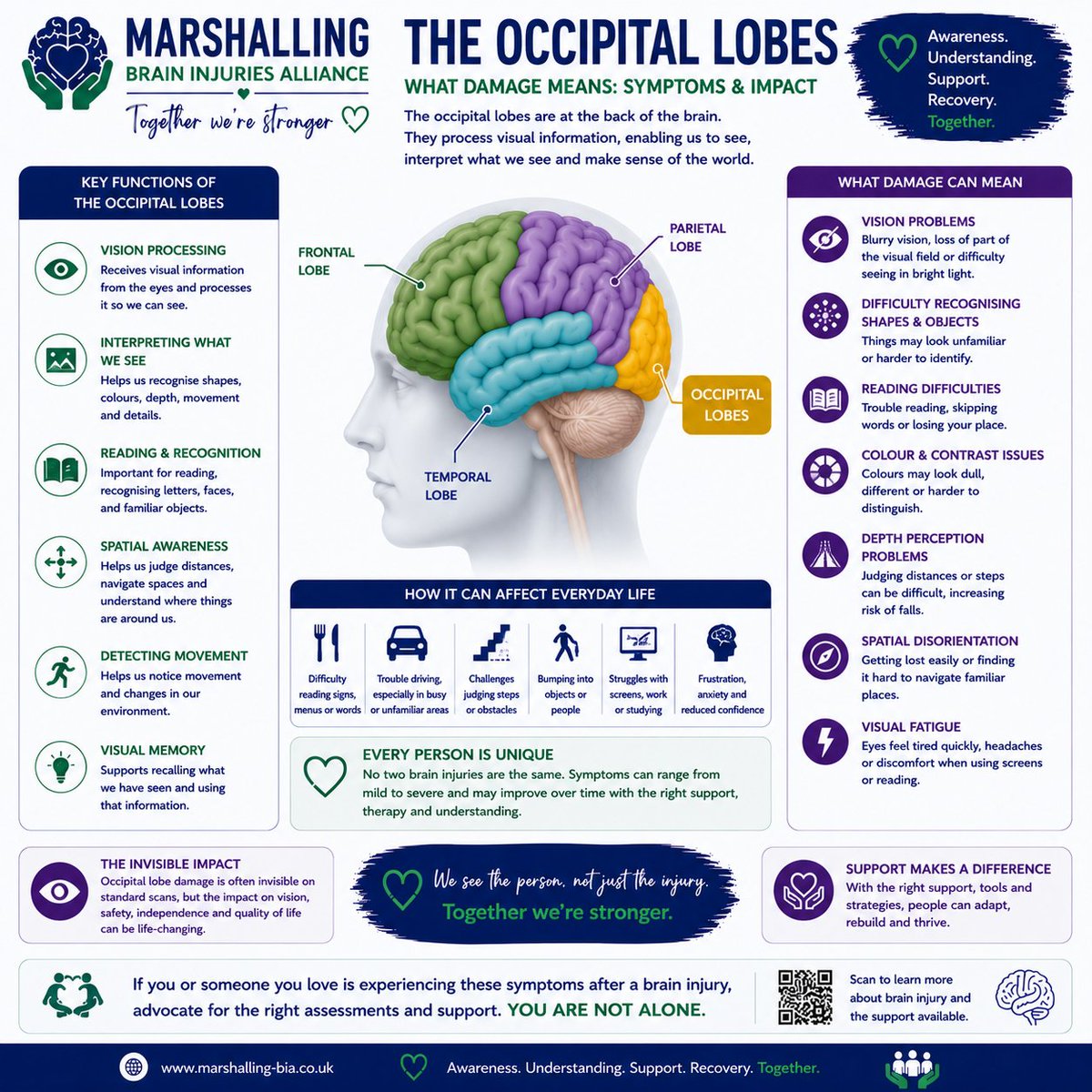
Understanding Your Brain – The Occipital Lobes
The occipital lobes process visual information and help us recognise shapes, colours, movement and distance.
Damage can affect reading, vision, balance and confidence — often through invisible symptoms others may not understand.
1
3
37
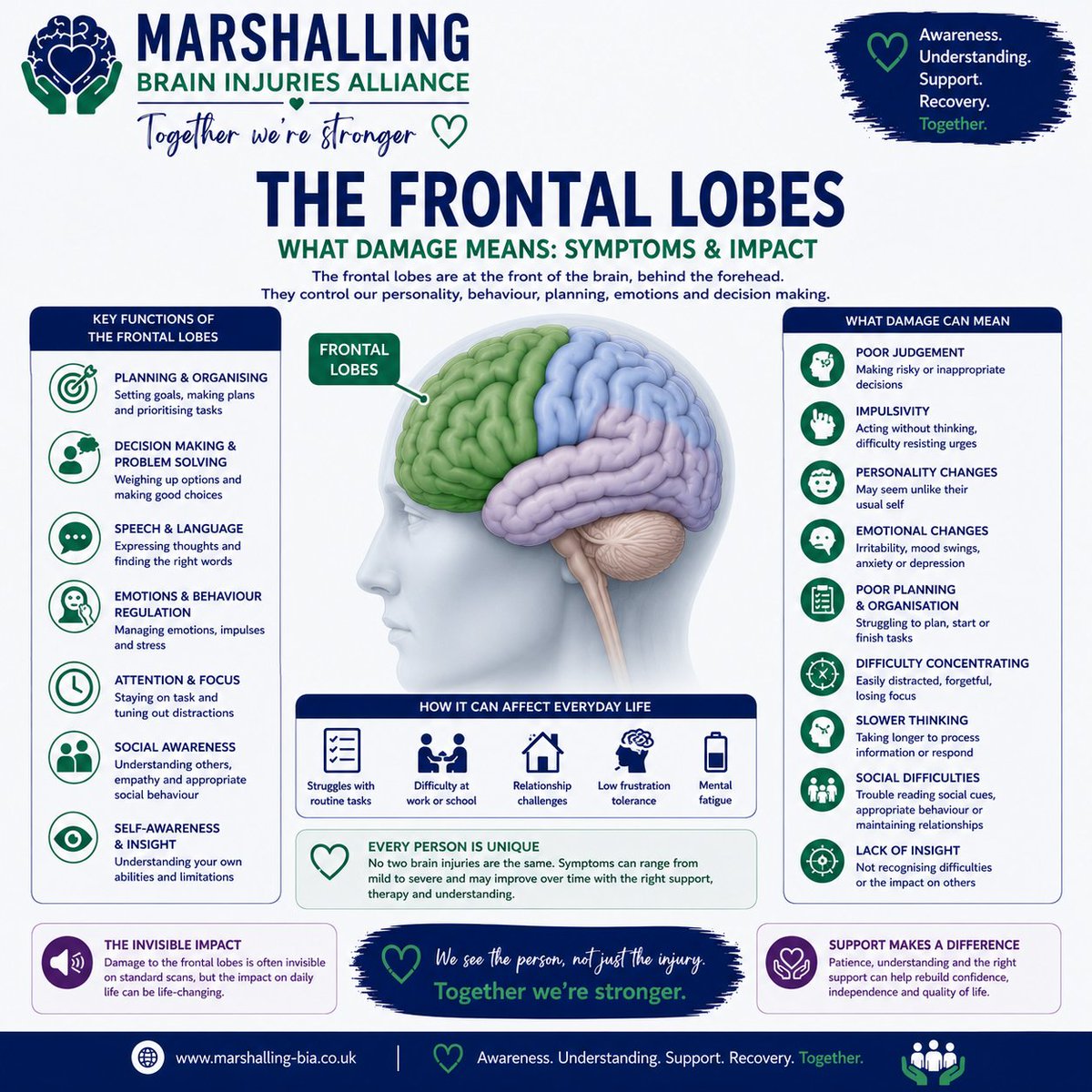
Understanding Your Brain – The Frontal Lobes
The frontal lobes control planning, emotions, decision making, behaviour, concentration and speech.
Damage can affect relationships, work, emotional regulation and everyday life — often through invisible symptoms others may not see.
1
1
5
141
Many veterans live with invisible brain injuries caused by blast exposure, concussions & repetitive head trauma.
TBI and possible CTE deserve far greater awareness, support and research.
Invisible injuries are still injuries.
#Veterans #TBI #CTE #BrainHealth
4
6
68
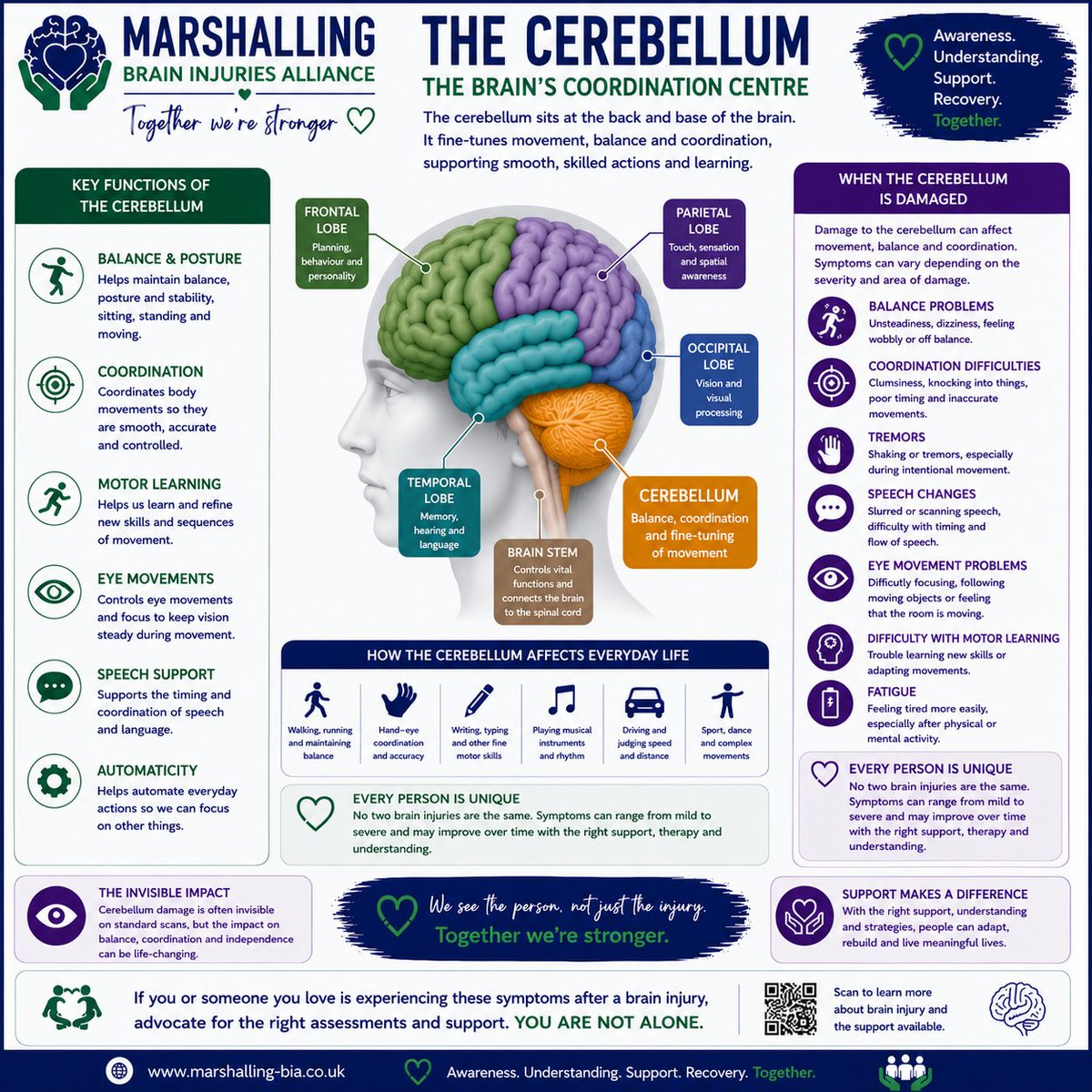
🧠 Understanding Your Brain – The Cerebellum
The cerebellum controls balance, coordination, movement and fine motor skills.
Damage can affect walking, speech, eye movements, balance and everyday activities — often with invisible symptoms others may not #CTE #TBI #BrainHealth
2
4
42
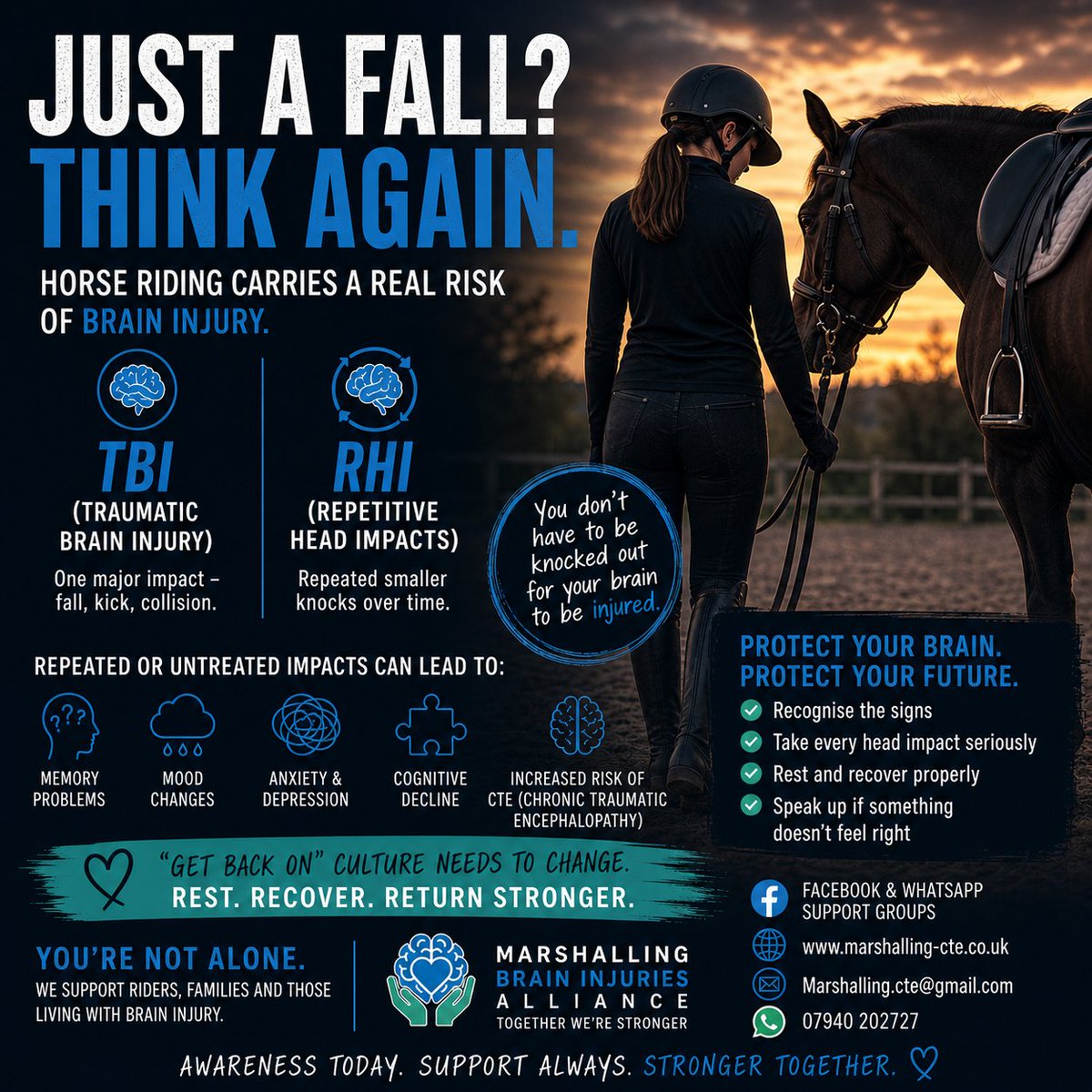
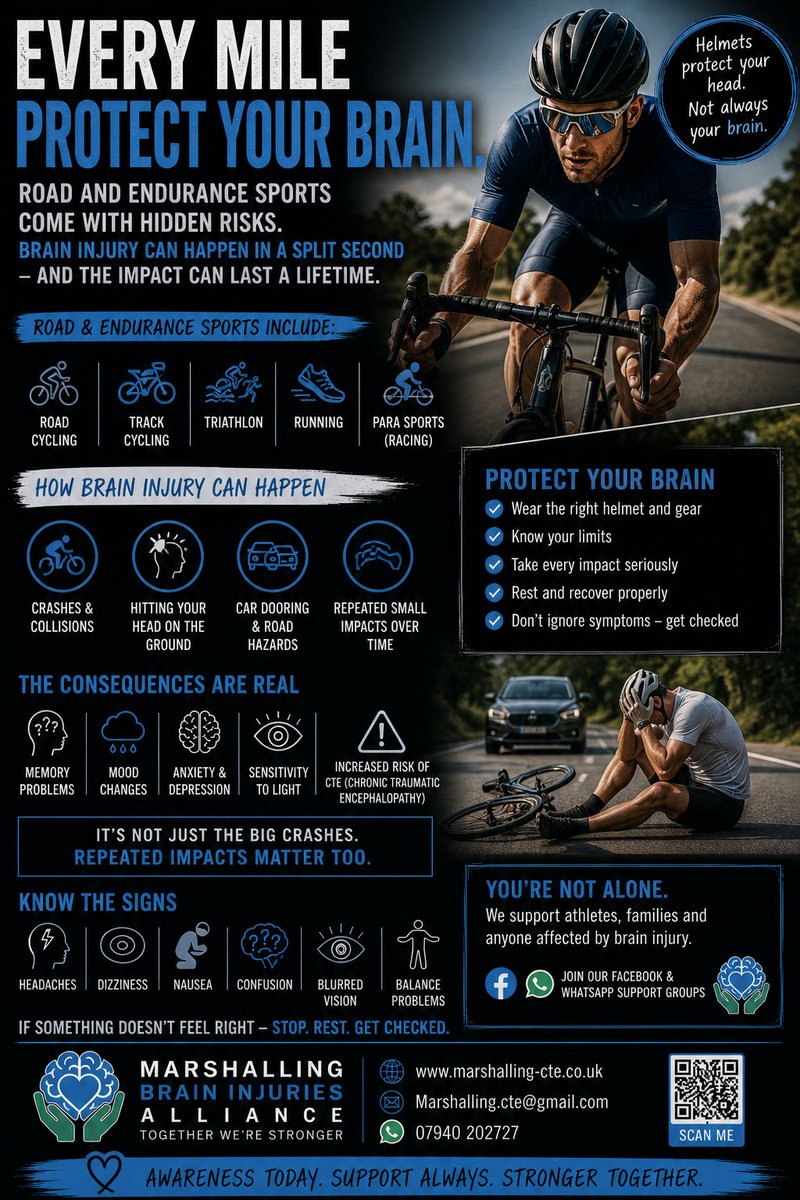
Horse riding comes with real risk — including brain injury 🧠🐎
TBI = one major impact
RHI = repeated smaller hits over time
The culture of “just get back on” needs to change.
Recognise it. Respect it. Recover from it.
#BrainInjury #Equestrian #Concussion #CTE
1
43
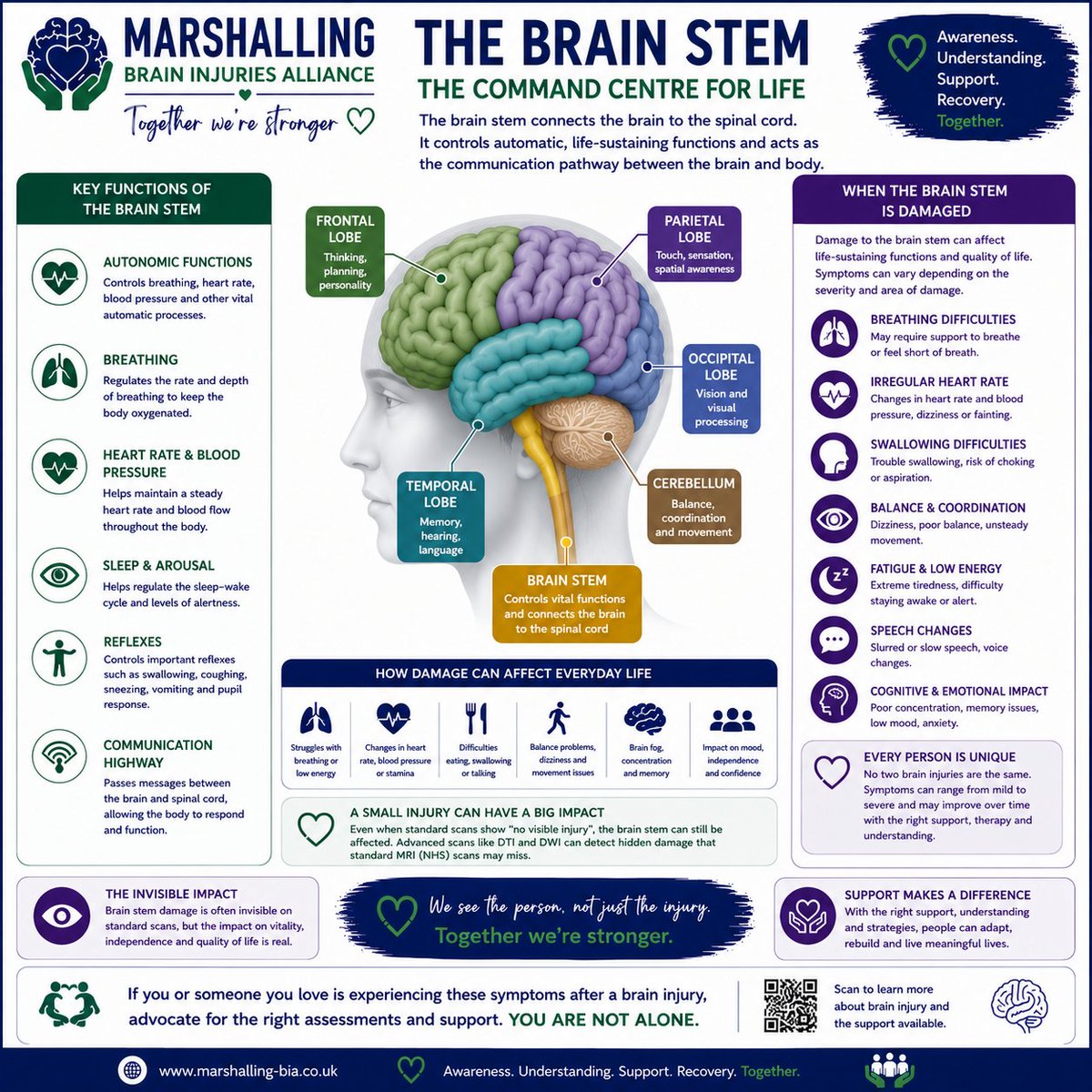
Understanding Your Brain – Part 2: The Brain Stem
The brain stem controls vital automatic functions including breathing, heart rate, swallowing, sleep and balance.
Even small injuries can have a major impact on daily life and many symptoms remain invisible to others.
1
4
44
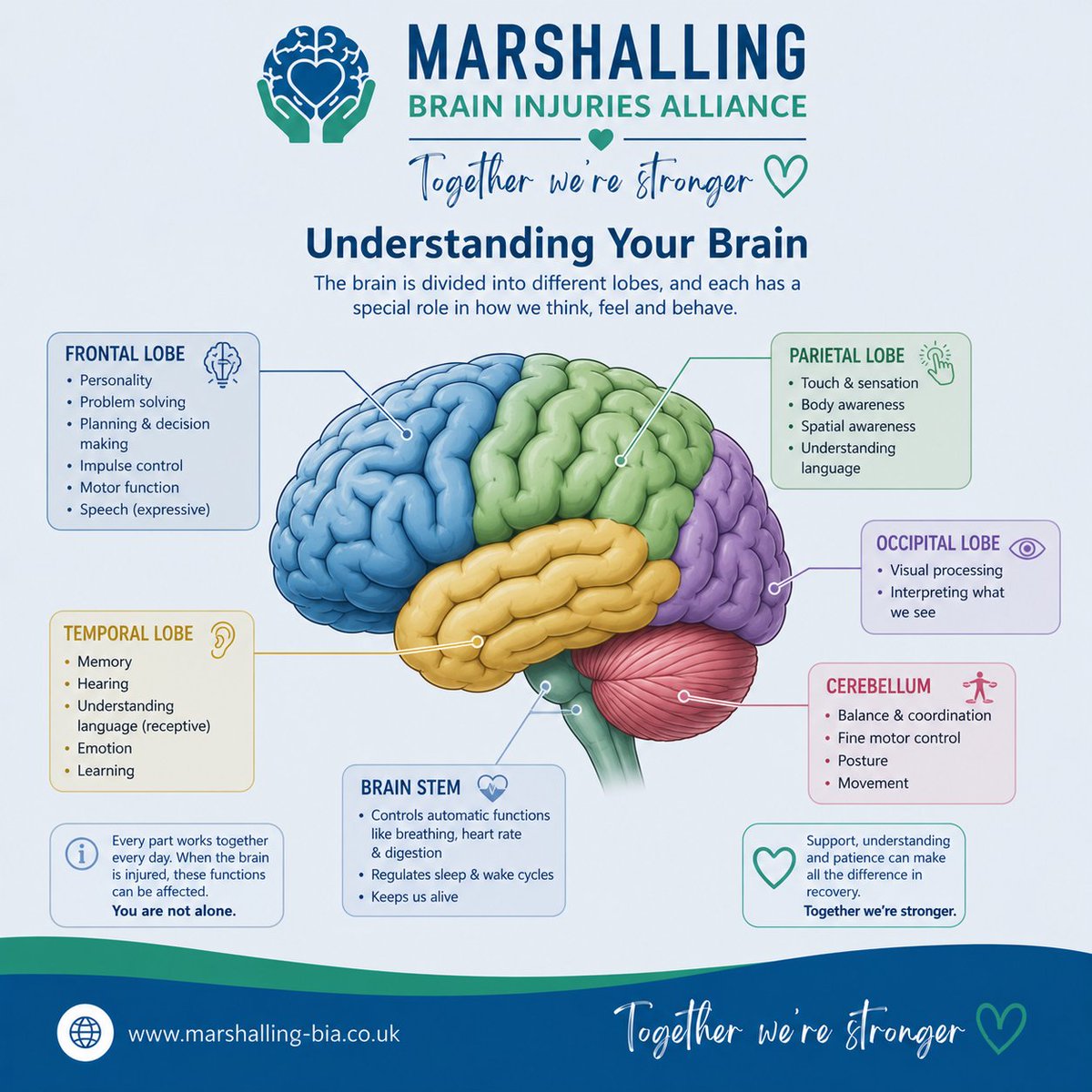
🧠 NEW SERIES: Understanding Your Brain
This is the first image in our new series explaining brain anatomy and how different areas of the brain affect memory, speech, emotions, movement, vision and more.
Brain injuries can impact every person differently
2
7
195
Throughout June we’ll be raising awareness around:
🧠Brain anatomy & brain injuries
💬Men’s mental health
🎖 Armed Forces Day
⚠️TBI, ABI & possible CTE
👨👩👧Support for families & carers
Together we can break stigma around invisible injuries.
#BrainInjury #MensHealthWeek #CTE
1
3
32