
Human being. Better products. Better ways of working.
Joined June 2008
- Tweets 2,268
- Following 924
- Followers 361
- Likes 503
120 Photos and videos






Pinned Tweet

22 Oct 2019
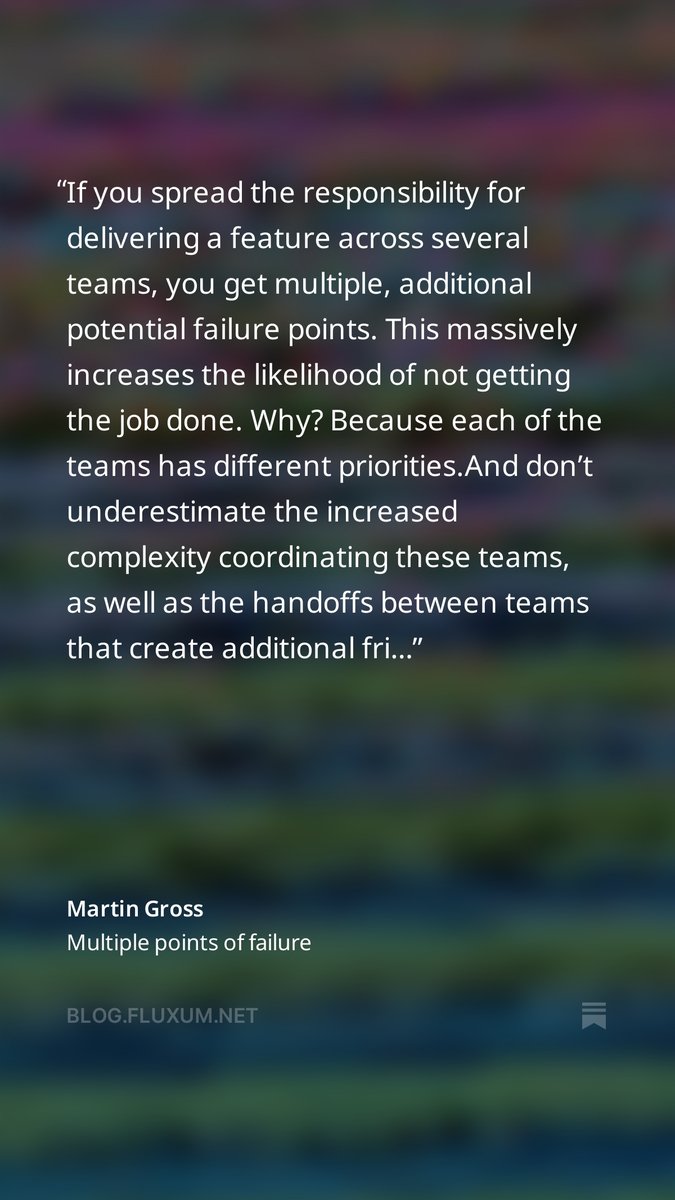
In IT, we talk too often about tools and not often enough about the way we work together.
1
3
9
Mar 1
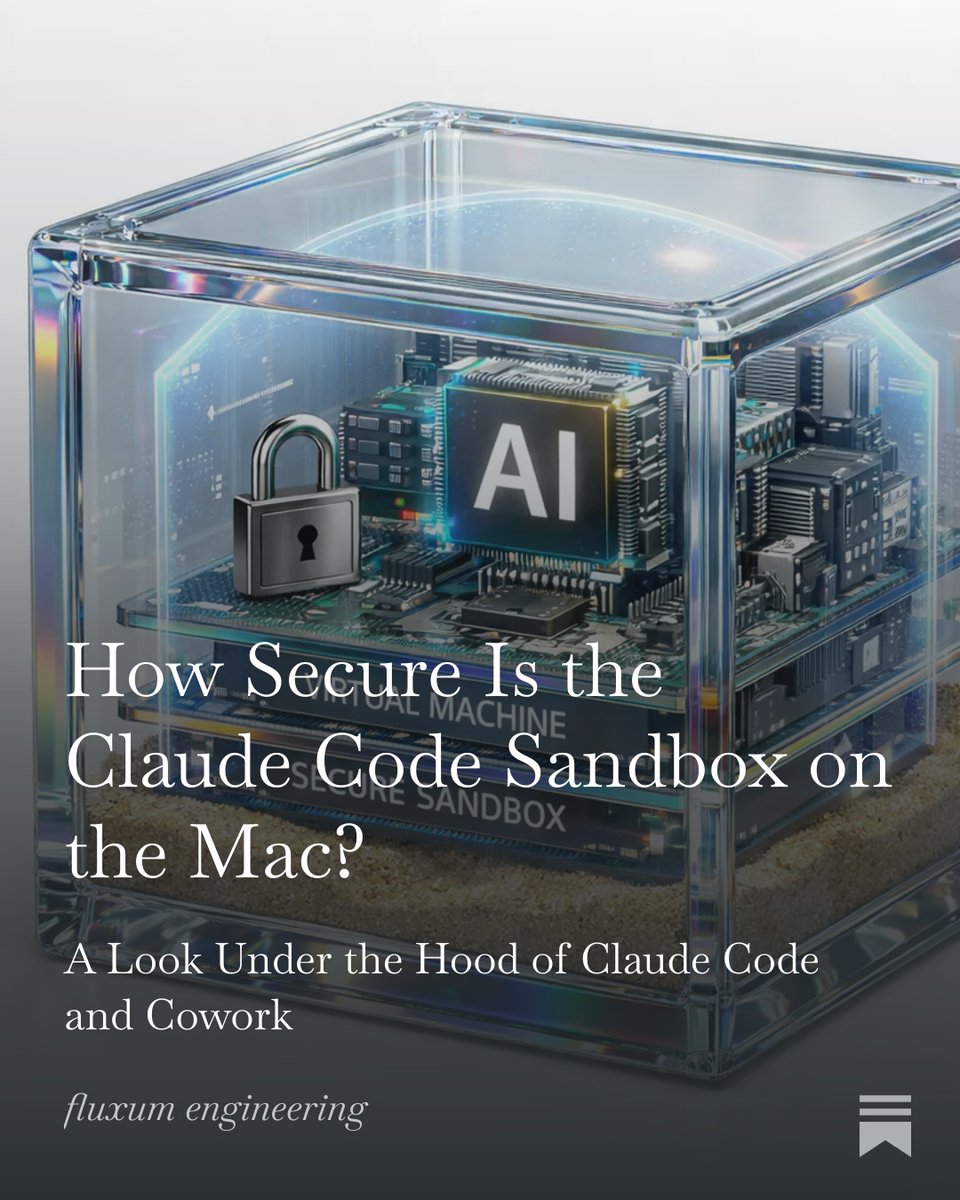
AI agents execute commands on your computer—but how well do the sandboxes from Claude Code and Cowork protect you?
Both promise isolation, but rely on different mechanisms.
blog.fluxum.net/p/how-secure…
1
1
46
Mar 1
I not only read the documentation, but also examined both systems from the inside using Linux tools.
8
Jan 28
Wir haben Code-Generierung so effizient gemacht, dass wir jetzt ein neues Problem haben:
Menschen, die schneller Output abnehmen müssen, als sie denken können.
blog.fluxum.net/p/der-neue-e…
ALT F1 Race Car with Claude Code Ad
1
2
46
Martin Gross retweeted

22 Jul 2025
We are in a new era of high inflation, skyrocketing stock markets, inexplicable government statistics, and broken promises.
We must adjust our thinking around money, rate of return, and retirement accordingly.
Here are some common financial thoughts that we should reject:
1. “I need X dollars to retire”. Cost of living inflation is too persistently high for this to make sense.
2. “That’s a good price for my house.” No. The numbers associated with the sale of your house are good only insofar as they can be exchanged quickly for something else you expect to need and be able to rely on, like another house or a farm with food.
3. “That’s a good earnings multiple.” Same idea. Historical earnings multiple are no longer relevant because they come from a higher trust, lower inflation era.
4. “I’m good because I roll my Roth IRA from my HSA into my 401k.” Who thought we’d go from 1% average import duty to 30% in 3 months? Government is tax hungry right now and isn’t afraid to go after sacred retirement cows to eat, especially if the voting demographics allow it.
5. “I just put it all in vanguard index funds.” Vanguard index funds have been an epic free lunch. There is no such thing as a free lunch. Our retirement is somehow assured because we give money to a giant corporation bigger than the economies of most countries which then follows the stock recommendations of an index (decided by whom?) and then buys stocks on our behalf (and simultaneously is constantly lending them to others) which we don’t really own but we trust it because Buffett said Bogle was a good guy? Or do we trust it because it’s too big to fail? Or do we trust it because everyone else does? It might work out but counting on it completely for your retirement in 30-40 years is foolhardy.
So, how should we be thinking if times are different?
6. More diversification. The future is less certain than ever. If you don’t know what’s going to work, spread it around. Putting it all in one thing to get rich is greed.
7. Think in terms of delivering productive goods and services, not financial assets, rates of return, or prices. A 7% “real” rate of return ceases to be a useful metric because it’s backwards looking to a different era and because inflation statistics are no longer close to trustworthy. You’re not selling an asset. You’re trading it for some other productive thing that in some way will help you. Less “I need X in assets to retire” and more “I own this bakery that has a good manager and I think it’s bread could pay for someone to take care of me.” Less “children are so expensive”and more “I am creating a new person who can help me and others in old age”. Money is now just a temporary interchange, not something that can be relied on to be stable and resistant to government grabbing.
8. Invest more in things you directly control from business you run to your own skills. In uncertain situations, try to find certainty. Investing in yourself or creating a family is a surer bet than the convoluted financial structure of however vanguard works.
9. More countries. This isn’t just about diversification but about opening your mind. The pieces are being moved on the chessboard and a new world order is being formed, which means changes for how things work in your country. Learn from other countries to see how things might be like.
10. Flexibility and first principles. Again, keep an open mind and think things through from the most basic level eg “okay how does vanguard actually work? If it weren’t so popular and recommended by everyone, would I use it?” This type of thinking will benefit you as popular mirages like government pensions (impossible to pay for them) dematerialize as reality sets in.
I don’t have anything to sell you.
You can look at my old posts.
I am good at being contrarian (too contrarian probably), right (not enough), and early (always too early 🤦♂️)
But things are really changing, and to survive and thrive you’ve got to change with it.
46
66
578
95,878

Martin Gross retweeted

8 Jan 2025
Plane landing earlier at Los Angeles International Airport.
Photo Credit: Mark Viniello

20
295
1,114
55,119
Martin Gross retweeted

14 Nov 2024
Must watch explanation on clean energy by @g__j on #BBCQT - also watch Tim Stanley squirm repeatedly when Jackson gives answers
Greg Jackson, "We've crossed the rubicon.. Clean energy is now cheaper than fossil fuels"
"Power from wind and solar is cheaper than power from fossil fuels"
"Consumers don't see the benefits because our markets are run in the old traditional way"
"We need market reform so when we build wind farms, people get cheaper energy"
"It doesn't help that we are paying wind farms to turn off when it's windy, instead of giving people cheap power at those times"
"59% of all of the renewable energy has been built in China"
Fiona Bruce, "They're also building huge coal plants"
Greg Jackson, "The majority will never be used, they'll be mothballed"
"Why are they building green energy? It's not because they're nice people. Now they recognise clean energy is cheaper, and energy is the engine of growth for their industry, they're investing in it"
"Six or seven years ago if you went to Chinese cities people wore face mask because of air pollution.. That's gone"
Tim Stanley, "If you have a period where the wind dies and the sun doesn't shine, what happens, you have to rely on back up.. Rely on gas.. Import the power from overseas"
Greg Jackson, "Allow me to help you with this answer.. As somebody who buys more power than anybody in the UK.. I can give you an authoritative answer on what to do"
"An electric car holds enough power in its battery for a typical house in the best part of the week"
"As more and more electric cars hit our roads, we have distributed storage of electricity, days on end, without wind"
"It's not the whole solution but it's a big part of it.. And it helps us reduce our reliance on things like those fossil fuel backups"
"It's always windy somewhere, it's always sunny somewhere.. As we connect our country to others.. When they're windy we get their power, when we're windy we sell ours to them"
"By the way, we are one of the windiest places in the world.. This is a huge export opportunity for the UK"
295
1,370
4,934
523,154
1 Sep 2024
Creation is the process of first introducing order into your thinking, reducing mental entropy, and then expressing the results.
1
46
7 Apr 2024
Productivity in software development:
There is a lot to gain if you focus on
• improving the productivity of your organization's workflows and processes,
• instead of just focusing on the productivity of individual developers or teams.
#developerexperience #dx
74
5 Apr 2024
I was thinking about using @Cloudflare for my domains. Unfortunately they do not support .de domains. And that is a deal breaker for me.
60
2 Apr 2024
Most organizations also have two lives.
The life they are living and the unrealized potential they could be living.
What keeps them from the other?
#typefully
38
1 Apr 2024
Most of us have two lives.
The life we live and the unlived life within.
What holds you back from the other?
#typefully
47
31 Mar 2024
Twitter um X feels so broken.
If a platform prioritizes posts and replies from authors who are willing to pay for a premium membership over quality, then it is not social media, it is purely economic media.
#typefully
29
Martin Gross retweeted

17 Jul 2022
For every "could that meeting have been an email?" situation there is a "could that 20-deep email thread have been a 10 minute meeting?" situation.
33
148
1,338
29 Mar 2024
1/ In a world where artificial intelligence is increasingly used for programming and software development:
The question is how will this influence programming languages?
#typefully
1
21
29 Mar 2024
2/ Will programming languages continue to be human-centered and human-understandable?
Or will they move toward models that are primarily optimized for AI?
1
11
29 Mar 2024
Will we still have high-level languages with a high level of abstraction or will we shift back to optimized machine code?
9