
Joined November 2021
- Tweets 3,206
- Following 476
- Followers 110
- Likes 13,281
323 Photos and videos














MaskOn_MaskOff retweeted

Mar 1
Me: *drinking from a soggy straw to save the planet*
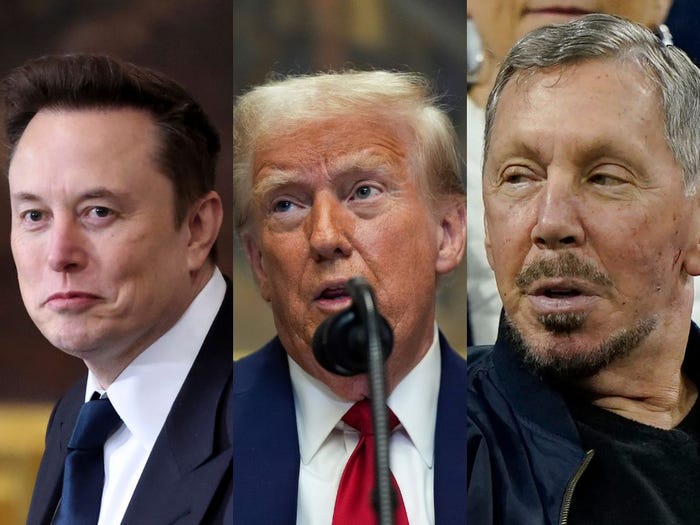
World leaders:
580
64,323
483,827
9,243,852

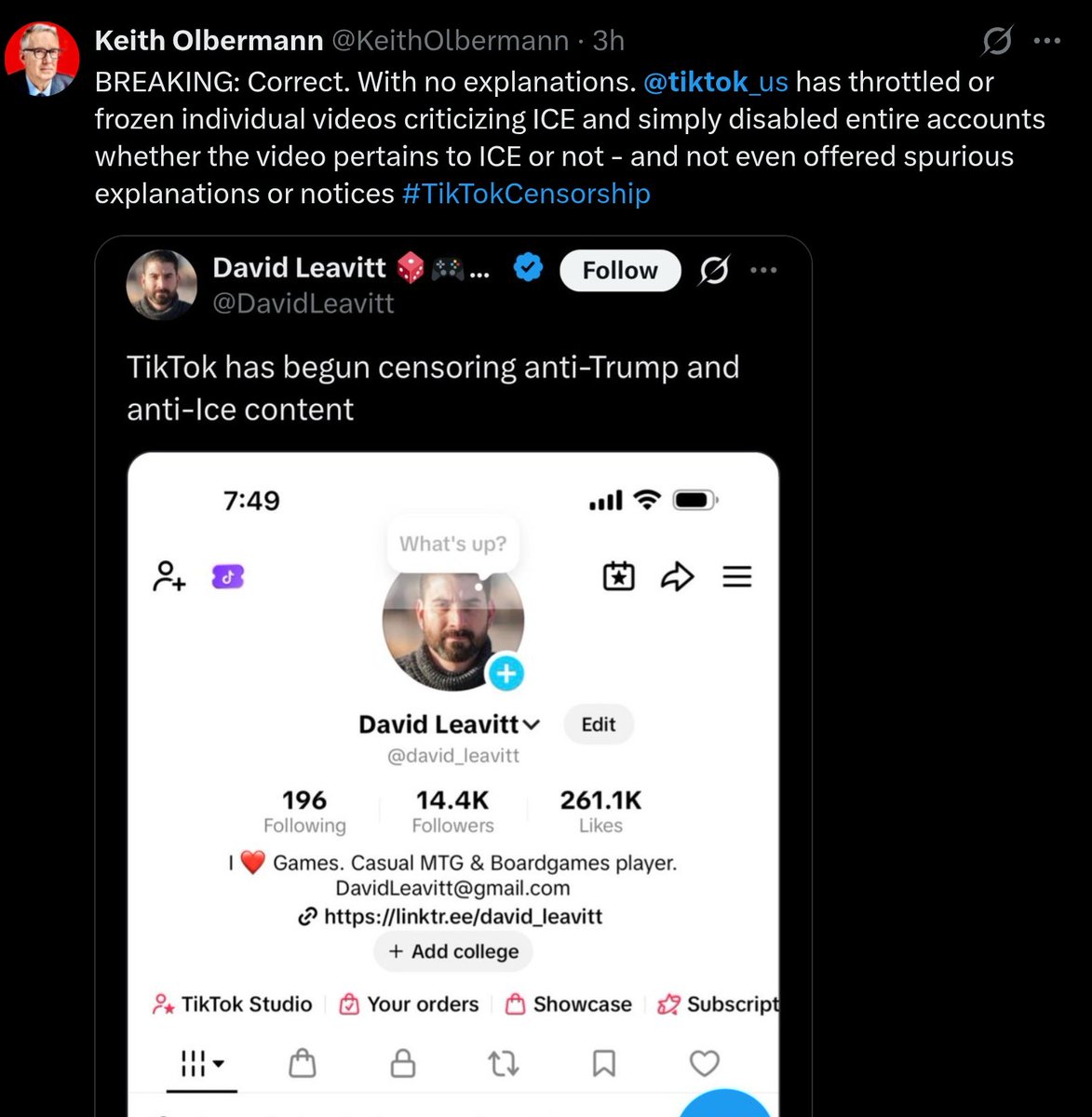
The USA has now lost even #TikTok as an independent platform and centralized it under a small jerk circle of MAGA connected owners, much like what happened with X.
And even shady Trump-deal crypto money is involved.
Here is the information (Or why democracy and free information can quickly disappear.)
➡️ When Attention, Data, Media and Crypto Rails Fall Into the Same Hands
Before even looking at ownership structures, something visible is already being discussed widely by creators.
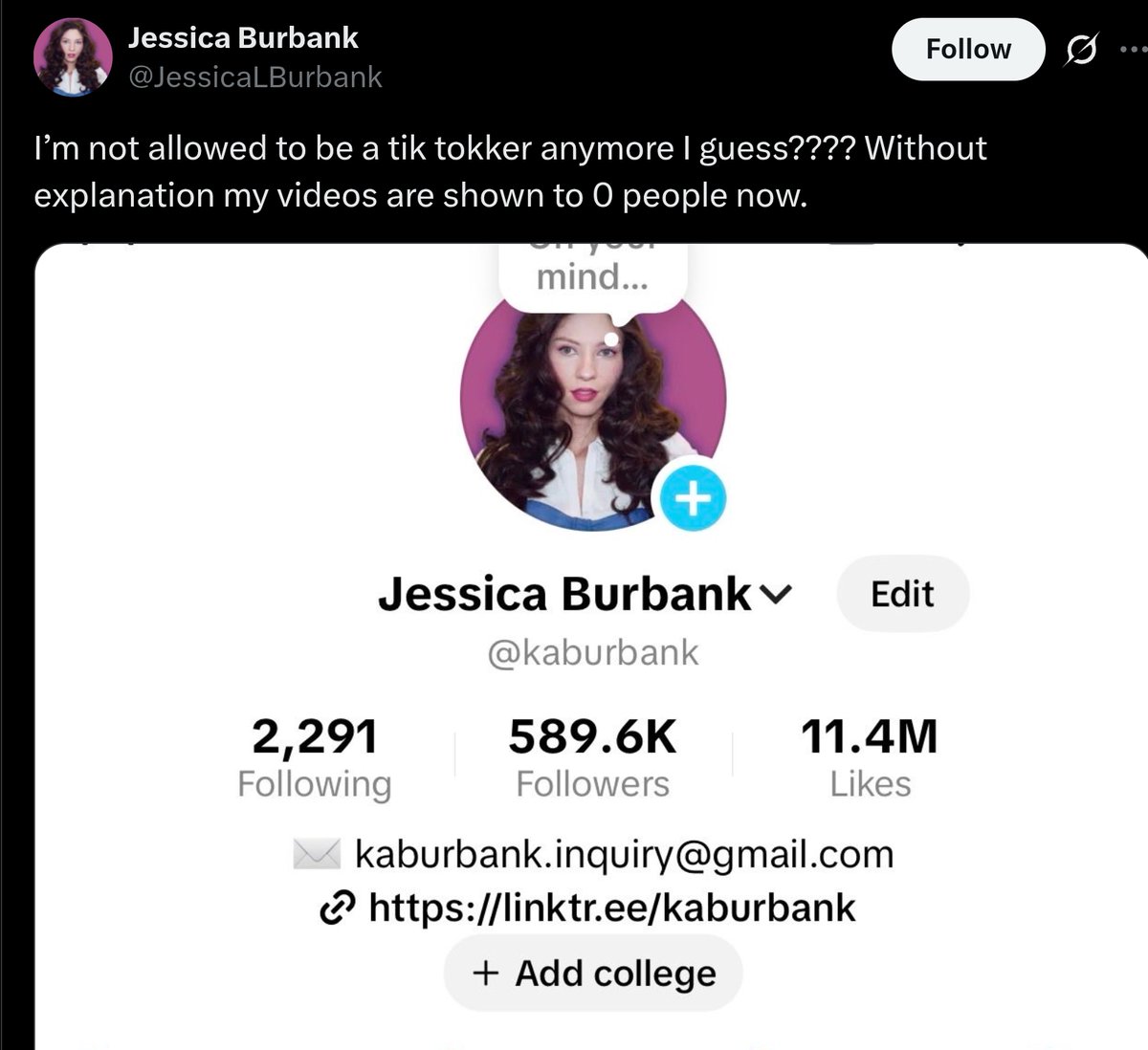
Since the TikTok US restructuring, many creators who report critically or independently about political topics, including ICE killings and Trump related issues, report:
🔺massive reach collapse
🔺content marked ineligible for recommendation
🔺sudden visibility loss without deletion
🔺accounts restricted without clear explanation
You can find hundreds of firsthand reports across Reddit, Bluesky, X and creator communities.
These are user reports. The pattern is widely discussed.
Now look at the structure.
➡️ TikTok USDS relocated control:
The public narrative was that TikTok had to be separated from ByteDance due to concerns about Chinese influence.
What happened is that control of the US entity moved into a small group of domestic investors.
ByteDance still holds roughly 20 percent.
The rest sits with:
🔺Oracle
🔺Silver Lake
🔺MGX from Abu Dhabi
🔺other private investors
US user data now sits on Oracle infrastructure. Algorithm oversight for US users sits inside this new structure.
That means what hundreds of millions of Americans see daily is now shaped inside a small domestic ownership network with political proximity.
➡️ Oracle is not neutral infrastructure:
Oracle is controlled by Larry Ellison, a well known supporter of Trump.
His family recently expanded into media ownership through Paramount, which directly affects CBS and is attempting to expand further into the US media landscape.
At the same time Oracle is now:
🔺the custodian of TikTok US user data
🔺part of algorithm governance
🔺part of the trust and safety oversight structure
This means:
🔺media ownership
🔺data custody
🔺algorithm oversight
sit inside the same influence sphere.
This is how information influence historically emerges. Through ownership concentration.
➡️ The name rarely discussed is MGX:
MGX holds 15 percent of TikTok USDS.
Back in 2025 I reported that MGX invested 2000000000 into Binance using USD1, the stablecoin issued by World Liberty Financial, a Trump family crypto drainer venture.
The money involved in the pardon of @cz_binance.
This is where social media, crypto and politics intersect structurally.
The same capital actor is present in:
🔺the dominant US short video attention platform
🔺the largest crypto exchange in the world
🔺a politically connected stablecoin gaining exchange level adoption
This is how influence scales across layers.
➡️ Modern influence does not require open censorship
It requires:
control over what gets amplified
control over what quietly disappears
control over where user data lives
control over which financial instruments gain adoption
control over media narratives through ownership
When the same network of billionaires and funds sits at all of those junctions, influence becomes structural and difficult to detect.
People experience it as:
🔺reach loss
🔺algorithm changes nobody can explain
🔺content suppression without deletion
🔺financial products appearing everywhere without organic demand
➡️ The uncomfortable reality:
The public was told TikTok had to be saved from foreign manipulation.
What replaced it is a structure where:
🔺a politically aligned billionaire controls the infrastructure
🔺a politically connected investment partner sits in ownership
🔺a politically connected stablecoin gains exchange legitimacy through the same network
All under the banner of national security.
This is control that is domestic, private and harder to question.
➡️ The broader media sphere around politically aligned billionaires
This concentration is not isolated to TikTok.
Around the same circle you find:
🔺Truth Social owned by Trump
🔺X owned by Elon Musk, a visible Trump ally
🔺Oracle controlling critical data infrastructure
🔺Paramount under Ellison family influence affecting CBS
🔺ongoing attempts to expand influence over additional major media assets
🔺financial backers appearing repeatedly across tech, media and crypto infrastructure
This creates an environment where platform ownership, data custody, media narratives and financial rails increasingly intersect within the same political and billionaire proximity.
➡️ Why this matters
This is not just about TikTok. Not just about crypto.
This is about how modern populations are informed, influenced and monetized.
When the same small circle sits at the center of:
🔺what people see
🔺what people trade
🔺what people hear in media
🔺what data is collected about them
you no longer have independent systems.
You have a tightly connected influence network.
History shows that when attention, finance, infrastructure and media ownership converge in politically aligned hands, the risk is not loud control.
The risk is subtle, structural influence that millions can feel but few can clearly map.
➡️ Why they hate Europe:
In Europe this concentration of power would be far harder.
Laws like the Digital Services Act, Digital Markets Act and GDPR force a separation between platform power, data control, media ownership and political influence.
What happens easily in the US would trigger investigations across multiple countries in Europe.
Because platforms cannot be turned into political tools without consequences.
In Europe, tech billionaires hit legal walls.
In the US, far fewer.
🔺A democracy begins to erode the moment control over information concentrates in the hands of the few instead of remaining accessible to the many.

21
49
222
13,309


🔺 BREAKING:
#Zcash team resigned!
All information gathered here for you, based on the latest available facts.
On January 7, 2026, the entire team of the Electric Coin Company resigned simultaneously. This was not a partial walkout or leadership reshuffle. Every employee of the primary organization that has developed Zcash since 2016 stepped down at once.
The reason was a deep governance conflict.
🔺What caused the mass resignation:
According to public statements by Josh Swihart, CEO of Electric Coin Company since late 2023, the team was “constructively discharged” by a majority of the Bootstrap board.
Constructive discharge is a legal term. It means that working conditions were changed so severely that resignation became the only reasonable option. Swihart stated that board decisions restricted ECC’s autonomy, blocked roadmap execution, and created a clear misalignment with Zcash’s original mission of building censorship resistant private money.
Swihart publicly named board members Zaki Manian, Christina Garman, Alan Fairless, and Michelle Lai as part of the board majority responsible for this shift.
The result was unprecedented: the full ECC team resigned together.
🔺What the former ECC team plans next
The departing developers have stated they are considering forming a new independent company focused on privacy preserving financial technology. No official name, structure, or timeline has been announced yet.
This is a separation between builders and governance.
🔺Zooko Wilcox response:
Zcash founder Zooko Wilcox, who stepped down as ECC CEO in December 2023 and is now associated with Shielded Labs, commented publicly in a neutral tone.
He described the dispute as involving one or two support organizations within the broader Zcash ecosystem. He emphasized that the Zcash network itself is unaffected, open source, permissionless, secure, and private, and that no internal conflict can change those properties.
🔺Impact on the Zcash network:
From a technical standpoint, nothing broke.
The Zcash blockchain continues to operate normally. Nodes are running, shielded transactions function as designed, and there has been no protocol halt, rollback, or security incident. This is a governance crisis, not a network failure.
🔺Market reaction?
The market reacted immediately. $ZEC dropped roughly 10 to 20 percent within hours of the news breaking. Prices fell from the 480 to 500 range to lows reported between 400 and 420 depending on exchange and timing.
This move followed an extreme 2025 rally in which ZEC gained more than 800 percent from cycle lows and briefly exceeded a 10 billion market capitalization during the privacy coin resurgence.
Volatility remains elevated, but no systemic liquidity failure has occurred.
🔺Why this matters historicaly?
This is not the first major shakeup in the Zcash ecosystem.
Zooko Wilcox stepped down as ECC CEO in 2023.
Peter Van Valkenburgh resigned from the Zcash Foundation board in January 2025.
ECC announced internal reorganizations in December 2025.
Now, in January 2026, the entire ECC team has exited.
Zcash has always relied on multiple organizations sharing responsibility. That structure was designed to prevent capture. It also creates persistent governance tension.
🔺The core issue?
This event is not about personalities. It is about control over mission and direction.
Privacy technology exists in constant tension with regulatory pressure, institutional risk management, and governance conservatism. Boards tend to prioritize stability. Builders tend to prioritize capability and principles.
When those paths diverge, governance breaks before code does.
Here, the builders chose to leave.
Zcash the network survives. That is not in question.
What is uncertain is where future innovation, narrative leadership, and technical momentum will concentrate.
A new independent team aligned with Zcash values could strengthen the ecosystem, or deepen fragmentation.
This is a governance fracture, not a technical collapse.
And those are the hardest crises to resolve.
23
25
147
12,633
Why most retail loses in crypto and why this is not an accident:
Crypto markets love simple slogans. “We are early.” “1000x.”
None of these survive contact with data.
If you want to understand retail outcomes in crypto, you have to stop asking emotional questions and start asking structural ones. Who enters when. Through which rails. Under which incentives. And against whom.
When you do that, the picture becomes uncomfortable, but very clear.
🔺 The hardest dataset we have comes from the Bank for International Settlements:
The BIS is not a crypto influencer and not a crypto hater. It is a conservative, data driven institution that studies financial behaviour at scale. That makes its findings particularly hard to dismiss.
In a large cross country study published in 2022 and revised in 2023, BIS researchers linked crypto exchange app downloads to Bitcoin price levels at the time of entry. They then simulated a simple, transparent behaviour pattern that closely matches real retail behaviour: a new user invests 100 USD in the month of their first app download and continues investing 100 USD every month afterwards.
The result is brutal.
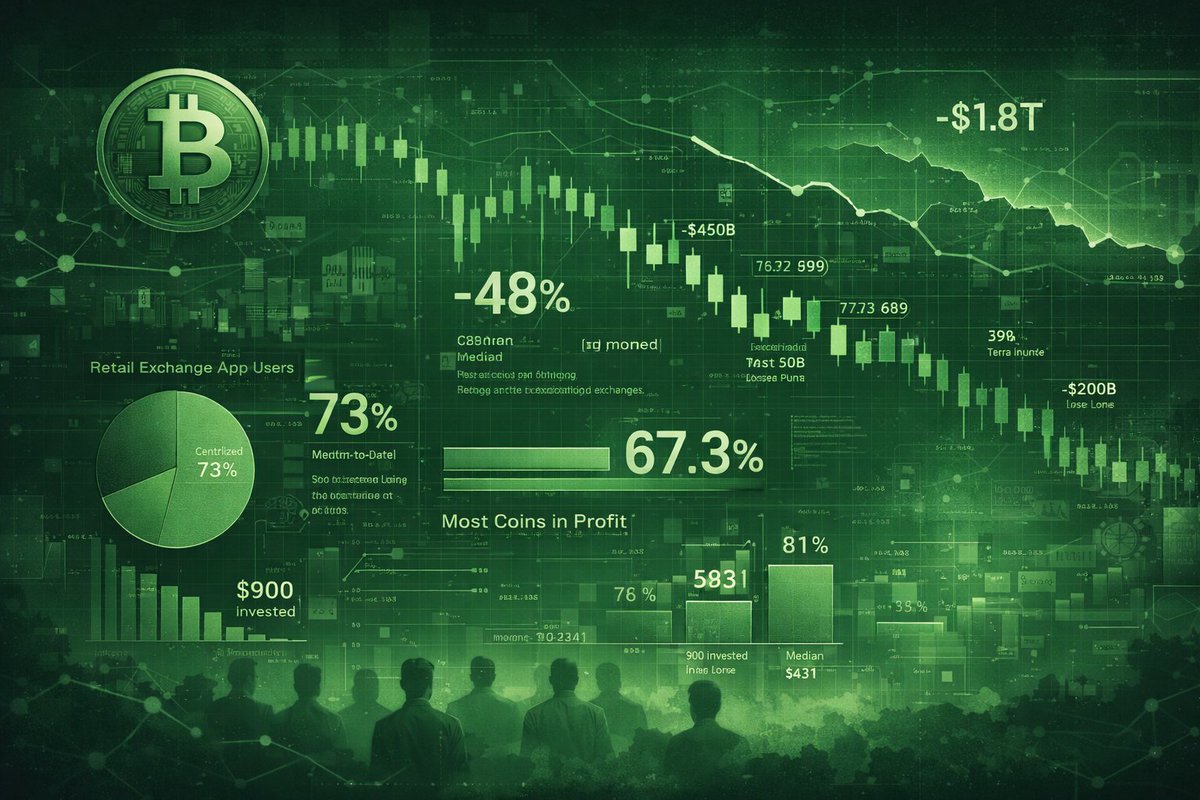
81% of users would have lost money.
The median investor would have lost 48% of their total 900 USD invested.
It is a cohort based analysis of how retail actually enters markets. Late. Momentum driven. After price appreciation.
The BIS is explicit about the distribution. A small minority captures large gains. The majority loses. This is a mathematical consequence of reflexive entry timing.
🔺 Crashes are where losses concentrate, not where they start
In a follow up bulletin analysing the Terra Luna collapse and the FTX bankruptcy, the BIS shows something even more important.
Losses are not evenly distributed over time. They cluster during trust breaks.
After the November 2021 peak, crypto valuations collapsed through 2022. Over 1.8 trillion USD in market value disappeared. Around 450 billion USD evaporated during the Terra Luna collapse in May 2022. Roughly 200 billion USD vanished after the FTX bankruptcy in November 2022.
During these episodes, the marginal buyer was small and late. The marginal seller was large and early. The BIS concludes that in nearly all economies in their sample, a majority of retail investors likely lost money on their Bitcoin investment. The median loss by December 2022 was 431 USD, almost half of the total invested amount.
This is the core misunderstanding of “volatility”. Crypto risk is not symmetric up and down movement. It is discontinuity risk. When the system fails, liquidity and trust disappear together. Retail is structurally exposed at that moment.
🔺 Profit snapshots do not mean retail is winning:
Crypto media loves metrics like “percent of supply in profit”. They sound optimistic and objective.
According to Glassnode, Bitcoin Percent Supply in Profit stood at roughly 67.3% in December 2025. That means that about two thirds of Bitcoin supply last moved at prices below the current price.
This metric is real and useful. But it is widely misunderstood.
It does not mean two thirds of people are winning. Supply is concentrated. Early holders control large portions. One entity can control many addresses. And the metric measures unrealised price based profit, not realised household outcomes.
It is entirely possible, and historically common, for most supply to be in profit while most retail participants are not.
🔺 Retail does not interact with crypto the way the ideology claims
Decentralisation is the narrative. Centralisation is the behaviour.
According to the Financial Conduct Authority, 73% of UK cryptoasset users in 2025 obtained their crypto through centralised exchanges. This share increased compared to 2024. The research was conducted with thousands of respondents between August and September 2025.
This matters because execution venue shapes outcomes.
Centralised platforms introduce fee extraction, leverage access, funding costs, liquidation mechanics, custody risk and governance risk. Retail is not just exposed to price movements. Retail is exposed to platform design.
🔺 2025 Memecoins show the retail loss mechanism in its purest form:
If you want to understand retail losses without ideology, look at memecoins.
A 2025 academic study of Pumpfun on Solana shows that the platform accounted for up to 71.1% of all tokens minted on Solana and between 40% and 67.4% of decentralised exchange transactions during late 2024.
Again: 71.1% on Solana were Pumpfun tokens.
Then comes the number that matters.
Fewer than 1% of tokens survived a few days.
This is about base rates. If fewer than 1% of instruments survive long enough to reach meaningful liquidity, the default outcome for participants is loss. The market is structurally built around churn, asymmetric information and exit constraints.
Daily active users on the platform surged from around 60000 to peaks near 260000. Mass retail adoption focused on the segment with the lowest survivorship.
🔺 Hype, lack of knowledge and shills accelerate retail losses:
Beyond structure, there is a behavioural multiplier that consistently worsens outcomes: hype combined with ignorance and incentivised promotion.
Retail information intake in crypto is dominated by short form content, anonymous accounts and financial incentives that reward engagement, not accuracy.
Shills are structurally paid to maximise inflows, not long term outcomes. The earlier the promoter, the lower their risk. The later the buyer, the higher theirs.
Most retail participants do not understand basic mechanics such as liquidity depth, unlock schedules, vesting cliffs, dilution, MEV, or counterparty risk. They respond to narratives, price momentum and social proof. This creates feedback loops where hype replaces analysis and conviction replaces risk management.
In such an environment, misinformation does not need to be malicious to be destructive. Even optimistic ignorance is enough. When hype peaks, knowledge gaps peak with it. That is why retail entry clusters near tops and why losses are socially synchronised.
🔺 Trading is negative sum for the crowd:
Even without memecoins, frequent trading creates a mathematical headwind.
Before costs, trading is approximately zero sum across participants, weighted by size. After costs, it becomes negative sum for the crowd. Fees, spreads, slippage, funding rates, liquidation penalties and adverse selection all matter.
In decentralised environments, add MEV and transaction ordering. These are not moral failures. They are mechanical transfer functions.
Without a repeatable edge that survives all frictions, the expected value of frequent retail trading drifts below zero.
🔺 The uncomfortable conclusion:
The most honest summary of retail outcomes in crypto today is this:
Most retail participants lose money, not because they are irrational, but because they enter late, operate with incomplete knowledge, trade in hostile structures, and bear the brunt of system failures amplified by hype and shilling. A small insider minority wins big. The majority subsidises that outcome.
This text is anti illusion.
And it explains why self custody, decentralisation, transparency and structural education are not marketing slogans. They are the only tools retail has to reduce asymmetry in a system that otherwise feeds on it.
That is the part of crypto that still matters.
This is $MASTR.
13
21
90
3,882
The self proclaimed smartest man on earth @yhbryankimiq Kim, is launching a token right now amd there is big hype around it.
You should be careful.
Not only because he is a pathological fraud, but because every part of his public image is built on lies. 👇
Younghoon Kim calls himself the man with the highest IQ in the world and claims to have an IQ of 276.
That number would beat Einstein and Hawking by a massive margin.
The problem: it is completely fabricated.
There is no serious test confirming it.
There are no credible sources.
There is no valid data.
There is only Kim himself building his own myth.
He created a network of fake organisations that handed out awards to each other.
The organisation that supposedly gave him the title “the person with the highest IQ in the world” was founded by Kim himself.
Pure self promotion.
Another example: the “Giga Society”.
The real Giga Society does exist, but Kim copied their website, used their name without permission and even listed real members on his fake page without telling them.
The founder of the real Giga Society publicly called Kim a megalomaniac and a pathological liar.
Kim also tried to get himself listed on Wikipedia.
Several draft pages submitted under his account were rejected.
Reason: no significant coverage in reliable secondary sources. In other words: he is not notable.
His IQ claim is not proven. He is not a genius. He is a pretender.
Thomas Wolf, considered the most intelligent German with an IQ of 196, said it clearly: an IQ of 276 is impossible. The highest realistic values are between 180 and 200. Kim’s number is not only improbable, it is unattainable.
It gets even more embarrassing. Politicians from the (far) right winged German AfD fell for him, publicly celebrating his supposed support.
They called him “the officially smartest man alive”.
After the truth came out, all posts were deleted.
They promoted a man whose entire identity is built on fraud.
And now this man is launching a token.
If you buy a token from someone whose entire reputation is based on fake intelligence, copied websites and self made awards, then you know exactly what you are stepping into.
He is a proven fraud trying to turn his fake fame into money.
Be careful.


32
33
130
16,278
No bro @realdonaldtrump you did not become a fan of crypto.
You became a fan of draining every room you walk into.
You turned this industry into your personal cash extraction machine the same way you turned every business you ever touched into a crater.
The moment you and your family stepped into crypto the market started bleeding as if it already knew what was coming.
Your sons cheerlead the same empty promises you repeat on every stage because the entire family business model has always been the same.
Sell hype.
Vanish before the bill arrives.
It worked for casinos. It worked for steaks. It worked for a university that taught nothing. Now you tried to apply the same formula to crypto and somehow expected it to magically go well.
You called crypto a scam for years.
Then you realised you could use it the same way you used every donor and every supporter who ever trusted you.
Suddenly you loved it.
Suddenly you wanted to be the hero of the sector you spent years mocking.
The only thing you became a fan of is the moment where someone else makes the mistake of believing you.
The market did not collapse because of bad luck.
It collapsed because grifters with political or centralised power tried to turn a technological revolution into yet another staged family fundraiser.
Crypto will survive.
Your reputation in this space will not.
Although here people forget after 5 minutes who rugged them and then happily applaud again.
569
781
4,943
360,437
❗The influencer army around #Binance❗
A wake up call for crypto information decentralisation.
Crypto was born to eliminate single points of failure.
Yet somehow the entire industry has sleepwalked into a new one.
And its name is Binance.
It is a narrative weapon that shapes what millions of people think about crypto every single day.
And if you look closely at how deep this system goes, the picture becomes dark very fast.
What follows is a critical dissection of Binance’s power on X and what this means for the future of crypto’s information landscape, financial integrity and public opinion.
🔺Let's begin:
Binance is not just another big account on X.
It is a narrative machine that sits on top of the largest crypto exchange in the world and speaks into the main information feed of this entire industry.
Evidence: the main @binance account sits at around 15 million followers right now, not counting regional arms and side products like @BinanceAcademy or @BinanceFutures.
Binance itself reports that it crossed 200 million users in mid 2024 and claims more than 250 million by the end of that year and close to 280 million by mid 2025.
This means a single private company that already dominates trading is also one of the loudest voices in the place where crypto narratives are born and die in real time.
🔺The size of the machine
Binance is still the largest centralized exchange by volume.
In multiple reports its spot share hovered between roughly 40 percent and 50 percent through 2023 and 2024, and it continues to lead both spot and derivatives in 2025, even if its share is slowly eroding.
Regulators have started to say the quiet part out loud. The European Securities and Markets Authority warned in 2024 that crypto trading is dangerously concentrated on a handful of offshore exchanges, explicitly naming Binance and calling the concentration a systemic risk if a single venue fails or freezes.
Yes. Regulators say crypto is too centralised.
Let that sink in.
🔺Now connect that to X.
On the one side you have a platform that controls a huge chunk of global trading volume.
On the other side you have a megaphone into the feed that most crypto users watch all day.
That is agenda setting.
🔺The influencer army around Binance
Binance does not operate alone on X.
It sits at the center of a paid influence network.
A Fortune investigation in 2023 described Binance’s affiliate operation as a 26 000 person influencer army with special commission deals.
Some of these people earn 7 figure income purely from referral kickbacks.
On top of this, Binance has advertised around 600 000 people in its broader referral program.
These are not only big accounts.
They are traders, community leaders, Telegram group owners, anyone willing to post referral links to earn up to 50 percent of their friends’ trading fees.
Evidence: Binance’s own affiliate documentation makes clear that top partners can earn up to 50 percent of fee revenue from their referrals.
That is an enormous financial incentive to post bullish takes, to farm engagement on X, to run giveaways that push users into the Binance funnel.
My Assumption: if you pay thousands of influencers a commission on every trade their followers make, you are not buying neutral education.
You are buying permanent bullish noise that keeps people trading.
Now add what we know about crypto influencers in general. In 2025 a list leaked with a pricing sheet for more than 200 crypto influencers.
Around 160 of them actually accepted paid promotion deals. Fewer than 5 accounts clearly disclosed that their posts were ads.
Prices reached up to 60 000 dollars for a single tweet.
Evidence: multiple outlets confirmed that less than 3 percent of the influencers that took money labeled the content as sponsored, even though financial promotions require disclosure in most jurisdictions.
Assumption: if this is how the wider crypto influencer world behaves, it is naive to believe that Binance centric shilling on X is always organic or transparent. The line between genuine fans, paid affiliates and covert ad campaigns is intentionally blurred.
🔺A track record that should worry you
Binance is not just a neutral market utility that became big by accident.
It has a legal and compliance history that shows a willingness to put growth above rules.
In November 2023 Binance and founder Changpeng Zhao pleaded guilty to federal charges in the United States for anti money laundering failures, unlicensed money transmission and sanctions violations.
The company agreed to pay 4.3 billion dollars in penalties, one of the largest corporate settlements in US history. Zhao personally paid a 50 million dollar fine and stepped down as CEO.
US documents describe how Binance allowed transactions tied to terrorist groups, ransomware actors and other high risk flows while ignoring basic controls. Internal chat logs even recorded a compliance officer joking that they see the bad but close 2 eyes.
Fast forward to 2025 and victims of the October 7 Hamas attacks are suing Binance and Zhao, claiming the platform facilitated more than 1 billion dollars in crypto flows for militant groups and failed to fix its controls even after the 4.3 billion settlement.
Assumption: a company that took this long to take money laundering and terrorism finance seriously is unlikely to suddenly become a guardian of healthy debate and user protection on X.
🔺What this means for opinion centralization
Put these pieces together.
You have:
• an exchange with up to roughly 40 percent of spot volume and a similar share of derivatives, depending on the month
• a user base of more than 250 million accounts and growing
• a main X account with around 15 million followers plus a constellation of satellite accounts
• an affiliate and referral machine with tens of thousands of influencers and hundreds of thousands of smaller referrers, many paid on volume
All of this interacts directly with an algorithmic feed that rewards volume, engagement and emotional content.
In that environment, Binance does not just participate in the conversation.
It shapes what many people see as the conversation.
When Binance lists a token or announces some giveaway, that content propagates through its own accounts, through official partners, through affiliates hungry for fees and through unaffiliated influencers who know that talking about Binance brings clicks.
Critical voices like me, small independent analysts and victims of bad listings do not have that amplification.
🔺This is opinion centralization in practice:
• The same entity that controls a huge slice of trading also controls a huge slice of the attention that decides where new liquidity flows.
• Announcements from this entity can move markets, which then retro feeds back into more bullish posts and self congratulation.
• Users scrolling X see a wall of green candles, hype and celebratory posts that all point to the same exchange as the default home of crypto.
Even regulators are starting to worry about what happens when so much economic activity is concentrated in one place.
ESMA called concentration of trading on a few offshore exchanges a considerable concern for financial stability.
There is a parallel concern that almost nobody in power talks about: concentration of narrative.
If one company can:
• control which projects get instant global exposure
• boost or bury stories with its promotional budget and affiliate network
• spin compliance failures into marketing victories on its own channels
then the risk is not only that users lose money.
The risk is that the entire industry starts to believe its own filtered propaganda.
🔺Why this should scare you if you love crypto
Crypto was born from a rejection of centralised control.
Yet on X, a huge part of the conversation now orbits a single exchange whose business model depends on volume and whose history shows repeated conflicts between profit and integrity.
Evidence: Binance fired internal market surveillance staff after they flagged suspected wash trading and manipulation by a VIP client rather than cutting off the client, according to a Wall Street Journal report from 2024.
My Assumption: an organisation that is willing to remove its own watchdogs to protect VIP flows will not hesitate to curate its public image aggressively on X as well.
So when you open your feed and see endless bullish threads, referral links and polished stories about resilience and user milestones, remember:
You are not just looking at the market.
You are looking at a carefully engineered information environment built by the largest casino in the game and amplified by an army that gets paid when you click, sign up and trade.
Centralised money is dangerous.
Centralised narrative in crypto is not much better.
A small tip.
Search for $ASTER and look at which accounts are shilling it hardcore.
Block them.
Thanks for reading.
Please like, reply, comment for the algo.
- by $MASTR crypto project

31
27
114
10,035
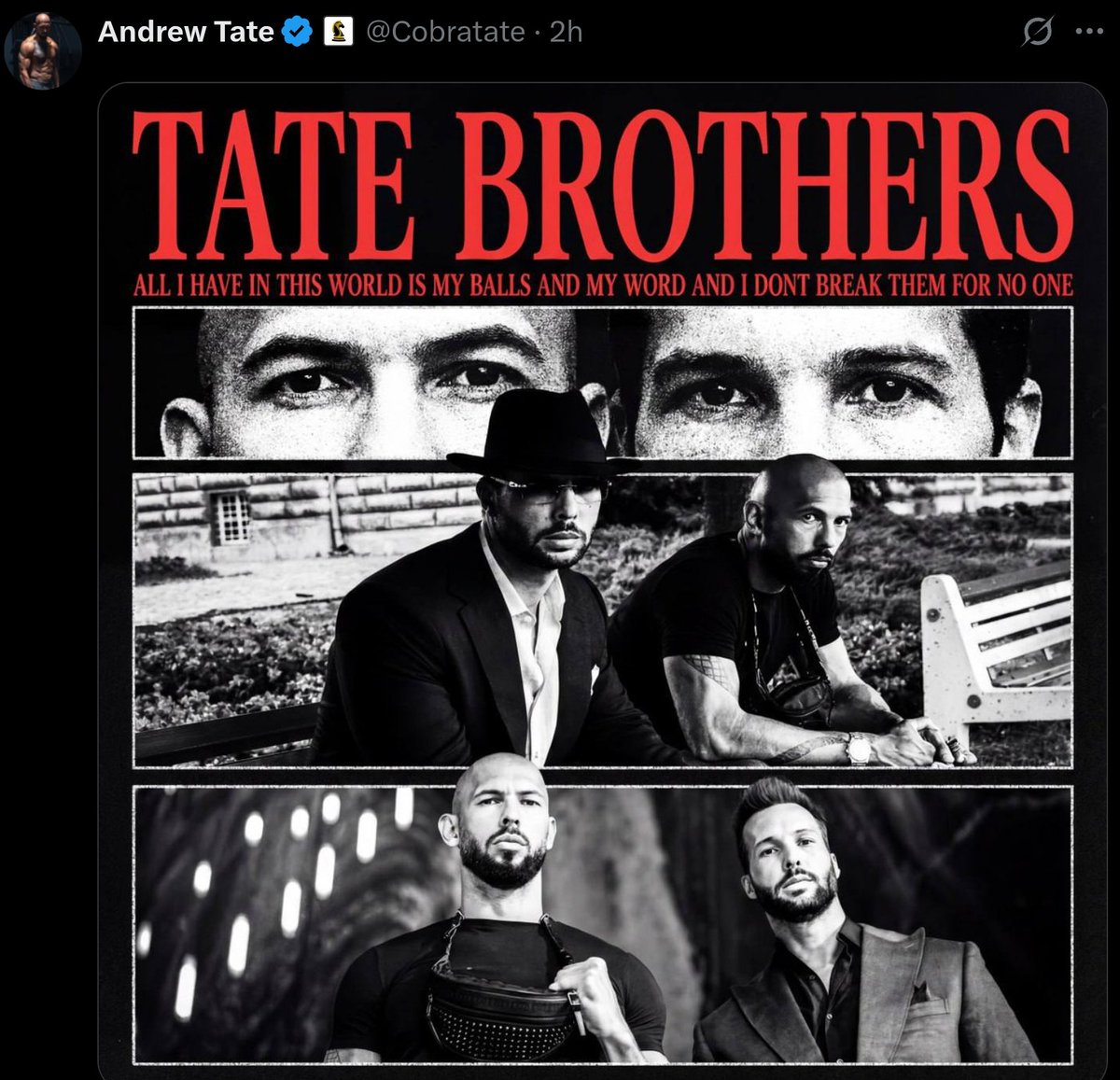
Tate Brothers:
A Crumbling House of Neanderthals and role models of crypto degens.
Let me say this clearly and humanly.
Andrew and Tristan Tate are not role models.
Not for crypto, not for trading, not for anything.
These guys are a parody of themselves pretending to be financial geniuses while every piece of data shows the opposite.
A former White House liaison stepped in to help them when federal agents seized their devices. U S senators are now demanding every communication involving the Tates. This is real government action, not a story.
But the funniest part is their “trading expertise.”
Here are the actual facts about how bad they are at trading:
🔺1. Andrew Tate got liquidated more than 82 times.
We and many others have shown repeated liquidation events in his wallets during public “trading challenges.”
82 liquidations is not skill.
It is the definition of cluelessness.
🔺2. His own followers exposed him.
Screenshots of his “live trades” repeatedly showed:
• zero risk management
• max leverage
• chasing pumps
• liquidation levels inches away from entry
He was not teaching trading.
He was teaching how to blow up an account.
🔺3. His “Hustlers University” trading section was a running meme.
Former members publicly posted that:
• most signals were wrong
• mentors had no real trading experience
• several signals hit stop loss or liquidation instantly
The community literally nicknamed them “the worst signals on the internet.”
🔺4. His own statements reveal he does not trade.
In multiple interviews he said:
“I do not trade crypto.”
“I rely on people who tell me when to buy.”
So the man selling trading wisdom openly admits he does not trade.
🔺5. He repeatedly bought tops.
During bull runs, his public posts bragged about buying:
• DOGE near local top
• SOL near top
• BTC after big pumps
Every one of those entries dumped shortly after.
People tracked his entries because they used him as a counter-indicator.
He literally became a meme:
“If Tate buys it, sell it.”
So when he calls himself a financial mastermind, it is comedy.
He trades like a total beginner with an ego problem.
They talk about fighting the system while relying on political favors.
They talk about discipline while trading like casino addicts.
They talk about sovereignty while depending on connections normal people do not have.
Add the legal reality:
➡️Romanian prosecutors indicted them for forming an organized criminal group.
➡️U K authorities still have active investigations.
➡️The United States is reviewing whether political interference protected them.
Nothing about them helps crypto.
Nothing about them teaches financial skill.
Nothing about them benefits anyone in this space.
They are not leaders.
They are not heroes.
They are two clowns pretending to be kings while the floor collapses under them.
If you want real role models in crypto, look literally anywhere else.
These guys are not the path.
They are the red flag.
Their balls are probably bigger than their brains.
- by $MASTR crypto project
39
41
311
17,548
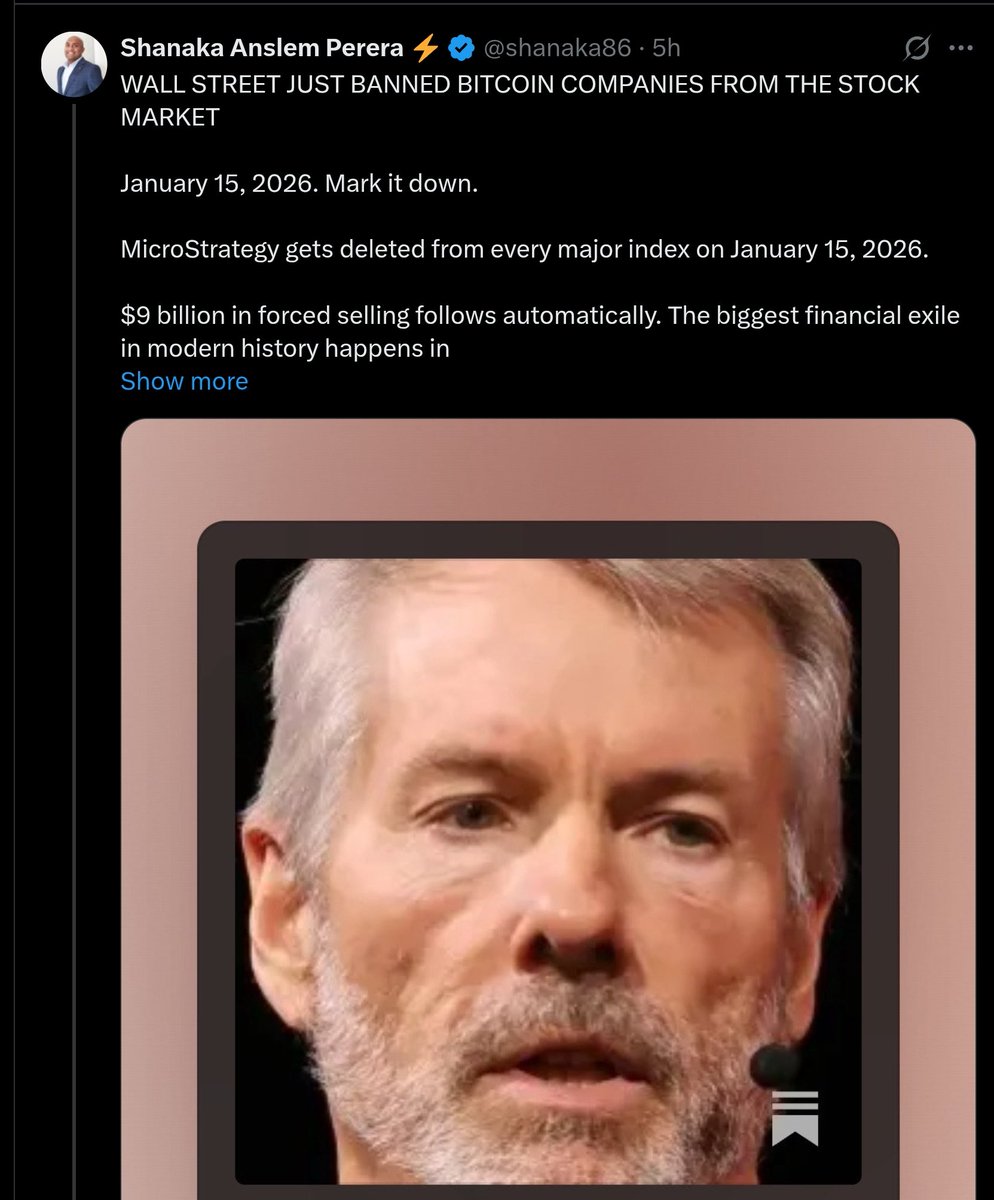
Another panic-bullshit tweet debunked with facts;
This is the truth.
The headline “WALL STREET JUST BANNED BITCOIN COMPANIES FROM THE STOCK MARKET” is false, sensationalized and completely detached from reality.
There is no ban, no regulatory action, no Wall Street decree removing Bitcoin-holding companies from public markets.
Corporate treasuries can still hold #Bitcoin.
Public companies can still buy Bitcoin.
Exchanges still list them.
Nothing in US securities law has changed.
What is real is far less dramatic but far more important:
#MicroStrategy is facing the risk of being removed from certain MSCI indices because its balance sheet has become dominated by Bitcoin.
That’s a classification issue, not a political purge.
Let’s lay out the facts, clean, documented, non-hysterical.
🔺MicroStrategy’s Bitcoin Strategy: 100% real.
Not the issue.
MicroStrategy holds 649,870 BTC as of November 2025.
Source: bitbo.io, Barron’s
bitbo.io/treasuries
barrons.com/articles/microst…
Acquisition cost: ~$43 billion, average price ~$66,384 per BTC.
Current market value: $61–$62 billion at BTC ~$94–95K.
Source: Barron’s
barrons.com/articles/microst…
Estimated asset share: 70–77% of total corporate assets.
Source: Ainvest
ainvest.com/stocks/analysis/…
MicroStrategy is the largest corporate Bitcoin holder in the world.
Source: BitcoinTreasuries
bitcointreasuries.net
All of this is factual.
🔺MSCI’s proposal: real. But not a ban.
On 10 October 2025, MSCI launched a consultation about reclassifying companies whose digital-asset holdings exceed 50% of total assets.
Source: MSCI
app2.msci.com/publicdocument…
This is not a “ban”.
It’s a methodology update for the MSCI Global Investable Market Indexes.
The consultation runs until 31 December 2025. A final decision is expected 15 January 2026.
Source: Barron’s
barrons.com/articles/msci-mi…
If approved, MicroStrategy would likely be removed from MSCI indices because its Bitcoin holdings far exceed the proposed threshold.
Source: TradingView analyst notes
tradingview.com/news/barrons…
This applies only to MSCI.
Not “every major index”.
Not the entire stock market.
🔺Forced selling: possible outflows, not guaranteed collapse.
Passive index funds tracking MSCI indices would be forced to sell MSTR if it’s removed.
That’s how indexing works.
J.P. Morgan’s estimate:
$2.8 billion forced selling from MSCI trackers.
Up to $8.8 billion in a worst-case scenario if other index providers copy MSCI.
Source: Yahoo Finance
finance.yahoo.com/news/micro…
The tweet’s $9 billion number is basically a rounded upper estimate, not a confirmed event.
This is not “the biggest financial exile in modern history”.
It is standard index methodology maintenance.
🔺MicroStrategy’s premium: the tweet is outdated.
MicroStrategy once traded at 2.5× the value of its Bitcoin.
This premium allowed Saylor to raise more than $20 billion in equity and debt.
Source: Investing.com
investing.com/news/analyst-r…
Today the premium is gone.
MicroStrategy has been trading at a discount, not 1.11×.
Market cap ~$54.5B, BTC value ~$61B.
Source: Strategy.com / MSTR filings
strategy.com/microstrategy-b…
The market is pricing in the risk, long before any index decision.
🔺Tesla and Block: safe. No rule violation.
Tesla and Block also hold Bitcoin.
But it’s 1–2% of assets, not 70 %.
They remain operating companies, not Bitcoin vehicles.
Source: Ainvest, Tesla 10-K, Block 10-K
ainvest.com/stocks/analysis/…
ainvest.com/stocks/analysis/…
The MSCI proposal doesn’t threaten them.
🔺The big picture: no ban, no purge, no reset.
A classification issue.
The tweet wants to paint a demolition.
The reality is a taxonomy fix.
@Strategy turned itself into a Bitcoin-heavy holding vehicle.
Index providers have to decide whether such companies still fit inside traditional equity indices meant to represent technology businesses.
That’s it.
Not a ban.
Not an exile.
Not Wall Street declaring war on Bitcoin.
Even if MSCI removes $MSTR :
MicroStrategy stays listed.
The SEC imposes no restrictions.
Stock exchanges impose no restrictions.
Bitcoin treasuries remain legal.
Nothing in the rulebook changes for any other company.
🔺 $MASTR verdict.
The tweet mixes real risks with fake drama.
The truth is clear:
MicroStrategy is not being banned.
Bitcoin companies are not being removed from the stock market.
MSCI is reviewing classification rules—nothing more.
If MicroStrategy falls out of MSCI indices, it’s not politics.
It’s the predictable consequence of a balance sheet that became 77% Bitcoin.
The tweet wants chaos.
The facts show administrative housekeeping.
- by $MASTR crypto project
9
18
94
6,318
MaskOn_MaskOff retweeted

23 Sep 2025
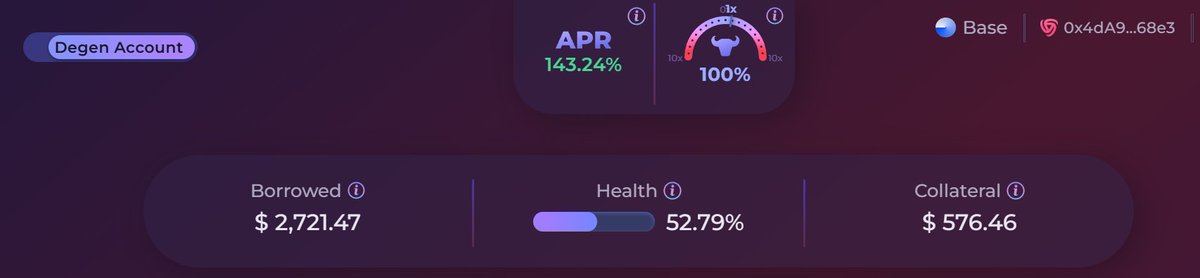
📚 How-to 10x your LP on @AerodromeFi 📚
💸 143% APR
🫵 You can do it too!
With DegenPrime, you can
⚡ 10x your LP, 10x your rewards ⚡
In 4 simple steps 🧵👇
Example: $AERO - $ETH #LP
23 Sep 2025

🔥 5x'ing LP $AERO $ETH 🔥
💸 143% effective APR
🖨️ 97.68% APR annualised
🏖️ No rebalancing so far
Only with @Aerodrome on @base
1
2
7
403
MaskOn_MaskOff retweeted
26 Aug 2025
Monitoring your leveraged @AerodromeFi LP positions:
RED = Out of active range, printer out of order 😔
YELLOW = Some positions out of range, printing some 💸
GREEN = Printer in full force 🤑
Rebalance or wait, boss?

3
11
311

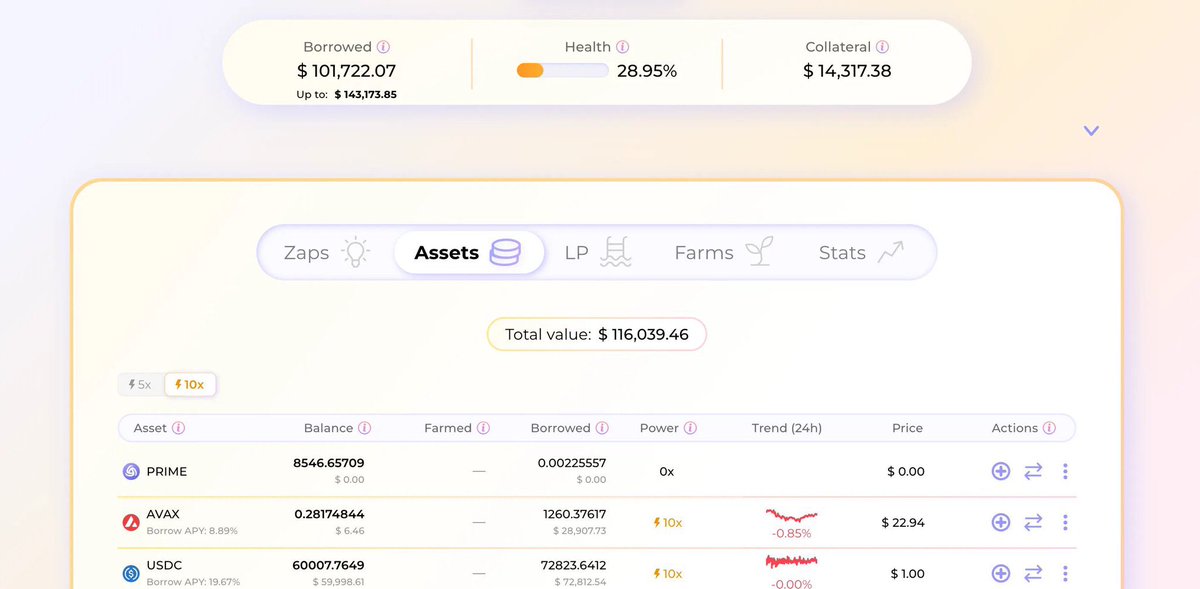
1/ 🚀 @DeltaPrimeDefi 10x!
Everyone was capped at 5x leverage on cross margin.
From today — 10x is live. Double the firepower, same $Prime safety.
2
5
20
1,644
MaskOn_MaskOff retweeted
25 Aug 2025
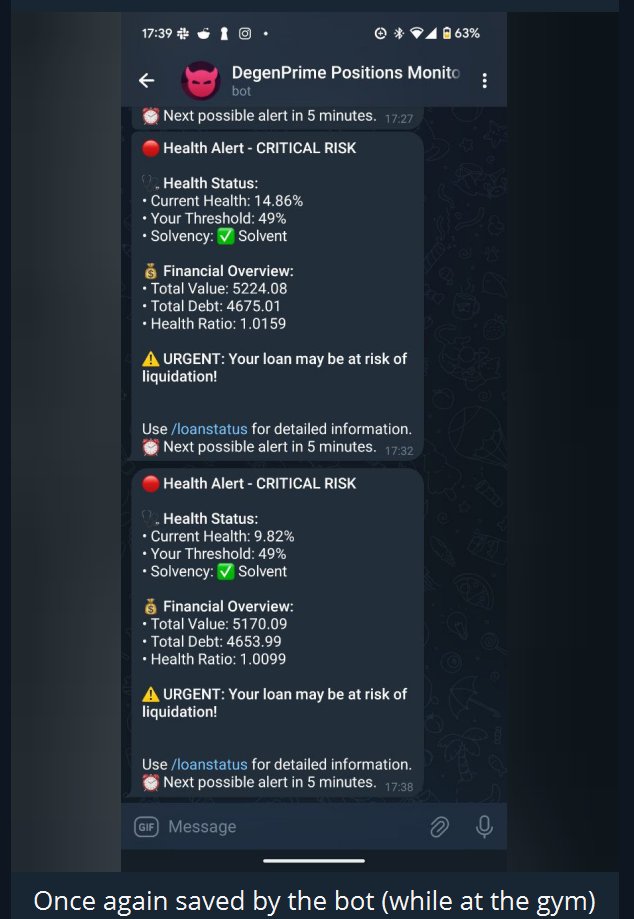
"Once again saved by the bot"
Our automation bot is saving lives 👼
Soon ™️ everyone will have access:
🚪 Exit orders
🤖 Automations
💱 Repayments
Only on DegenPrime on @base
2
5
179
MaskOn_MaskOff retweeted

20 Aug 2025
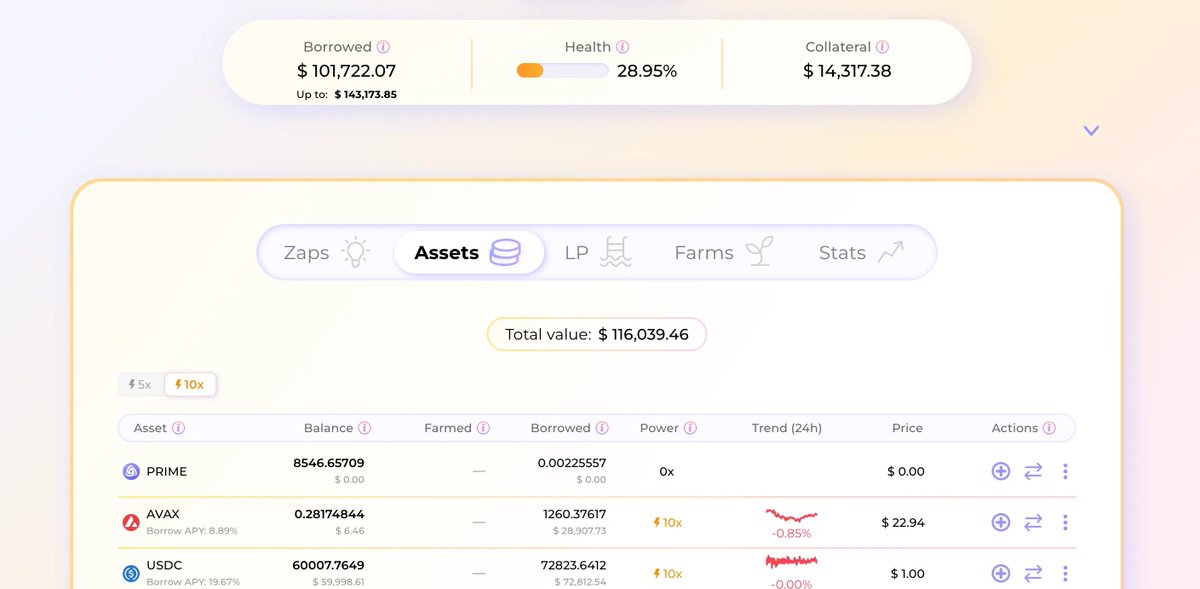
☄️We just launched DeltaPrime 10x☄️
10x @GMX_IO v2
10x @yieldyak_
10x @LFJ_gg
10x your wallet on @avax and @arbitrum
Read more about this unique Prime Feature🧵 1/4
13
24
77
9,151
$ETH Turbo Loop 🚀:
—Using 3× leverage due to volatility
— $ETH is both supplied and borrowed (for hedging)
—There are risks — full details in the article
15 Aug 2025

Take a 🪑 , time for math 🧮
🤫 and alpha 🤫
With a little DYOR, you know the alpha
🌱 You see the Fee APY: 8.84%
💰 You get the performance: 28.82%
On leverage, this makes all the difference
Smol thread 1/4 🧵
1
1
4
131
MaskOn_MaskOff retweeted
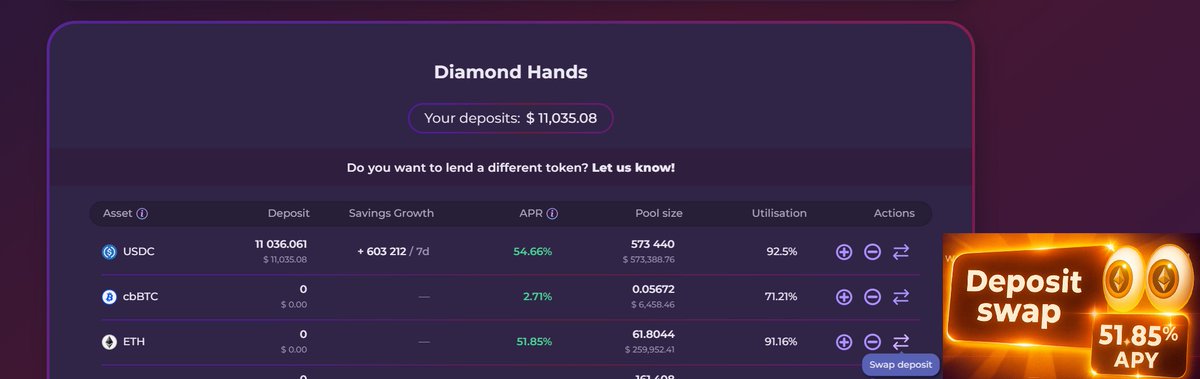
14 Aug 2025
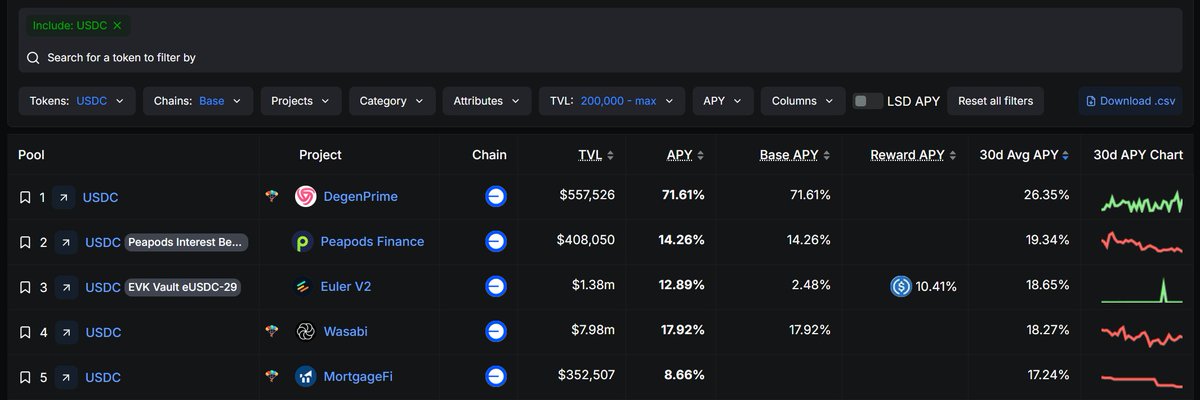
Our Degens are insatiable for your $USDC
Yesterday, $557k in USDC, 71% APY
Today, $640k and still 60% APY
You keep depositing
We keep borrowing 🫡
13 Aug 2025
📣 Public Service Announcement 📣
🥇 Best yield for $USDC on @base (still)
Just deposit $USDC
No IL
No management
No incentives and no signs of slowing down 🛫
4
13
1,006