
Founder of Gather. early-access.gathertip.com 30 yrs tech & media startups.
Joined November 2016
- Tweets 10,789
- Following 695
- Followers 1,285
- Likes 212,750
600 Photos and videos












JimFox retweeted

Sending American tax dollars to other countries is like watering the neighbor’s yard while your house is on fire. 🔥
986
6,329
43,143
465,728
JimFox retweeted

Jun 15
$SPCX is currently worth 36,300,000 BTC.
I'm not a rocket scientist, but given there will only ever be 21,000,000 BTC, the current valuation appears unsustainable.
24
21
602
24,267

Jun 15
Your audience truly gets you. There’s a special connection that’s hard to put into words; it’s a feeling. And you get them too. But the algorithm doesn’t care about that connection. It only cares about keeping you both engaged so it can make money. You’re a slave to it. With Gather, you break free. Enjoy true one-on-one connections with your fans, direct support, direct feedback, and no middleman. No algorithm shaping or limiting your talent. Gather. Grow your audience your way. early-access.gathertip.com/ #musicproducer #talent #audience #fans
1
1
2
37
JimFox retweeted

Jun 14
Bitcoin lets you store the economic value created by human & token capital without decay.

12
18
370
25,172
Jun 14
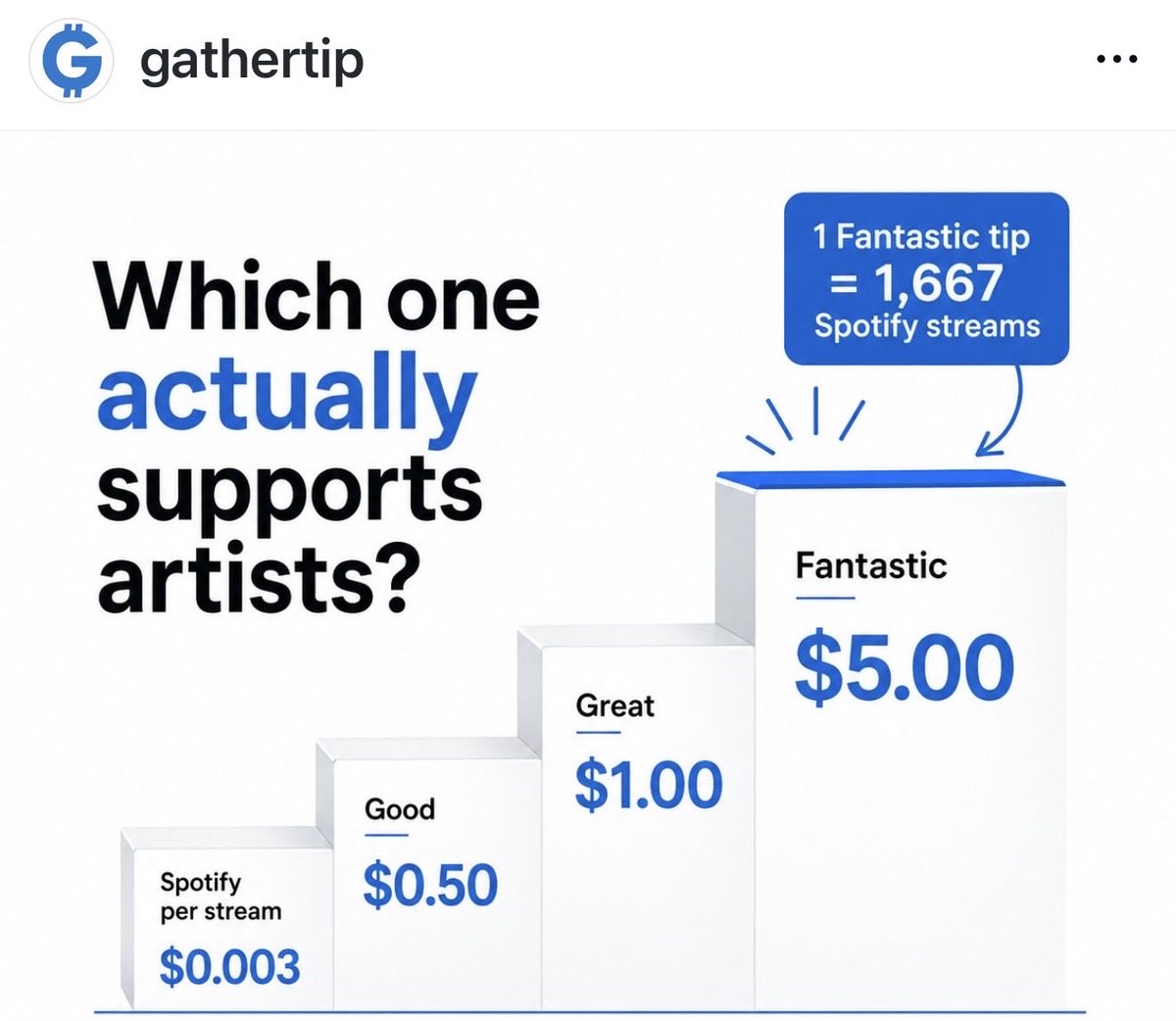
Some musicians understand that if you get tipped in Bitcoin it eventually leads to artistic freedom.
19
JimFox retweeted

Jun 14
The revelations six years later are pouring out so quickly that it is impossible to keep up much less mentally process all this:
* The Director of National Intelligence has documented 120 US-funded/owned biolabs in 30 countries many of which are manufacturing and manipulating infectious diseases.
* Senator Rand Paul's committee has released the receipts concerning US funding/backing of the manufactured SARS-CoV-2 virus/vaccine as part of this program.
* Senator Johnson has produced definitive evidence that US public health agencies knew of the grave dangers of the shot to everyone but said nothing.
* Many officials are privately admitting/proving that the whole point of lockdowns was to preserve population immunity for the shot and block other avenues toward wellness.
* Hardly any of this makes the national news and one wonders if the public mind has any awareness at all.
861
8,033
22,535
2,372,934
JimFox retweeted

Jun 12
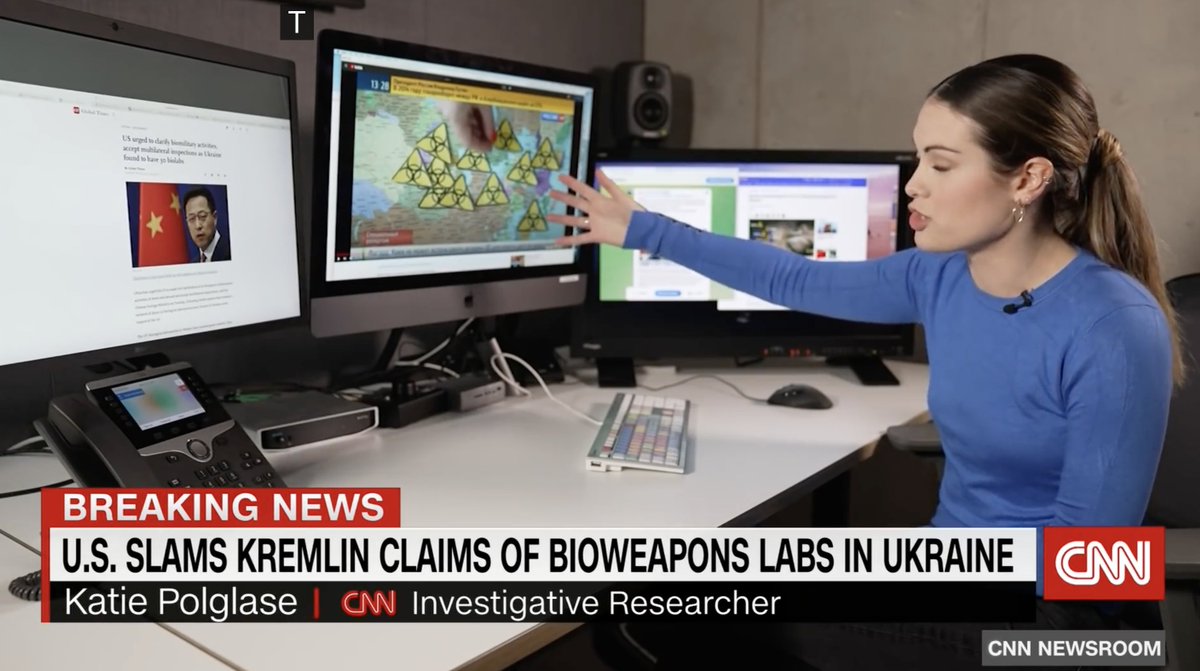
CNN "fact checkers" told us many times that there were no U.S. operated labs in Ukraine. 👌🤣
145
1,324
5,517
105,539
JimFox retweeted

Jun 13
Former NIH Head Secretly Helped With Paper Dismissing Theory COVID-19 Came From Lab zerohedge.com/covid-19/forme…
85
526
1,532
112,491
JimFox retweeted

Jun 13
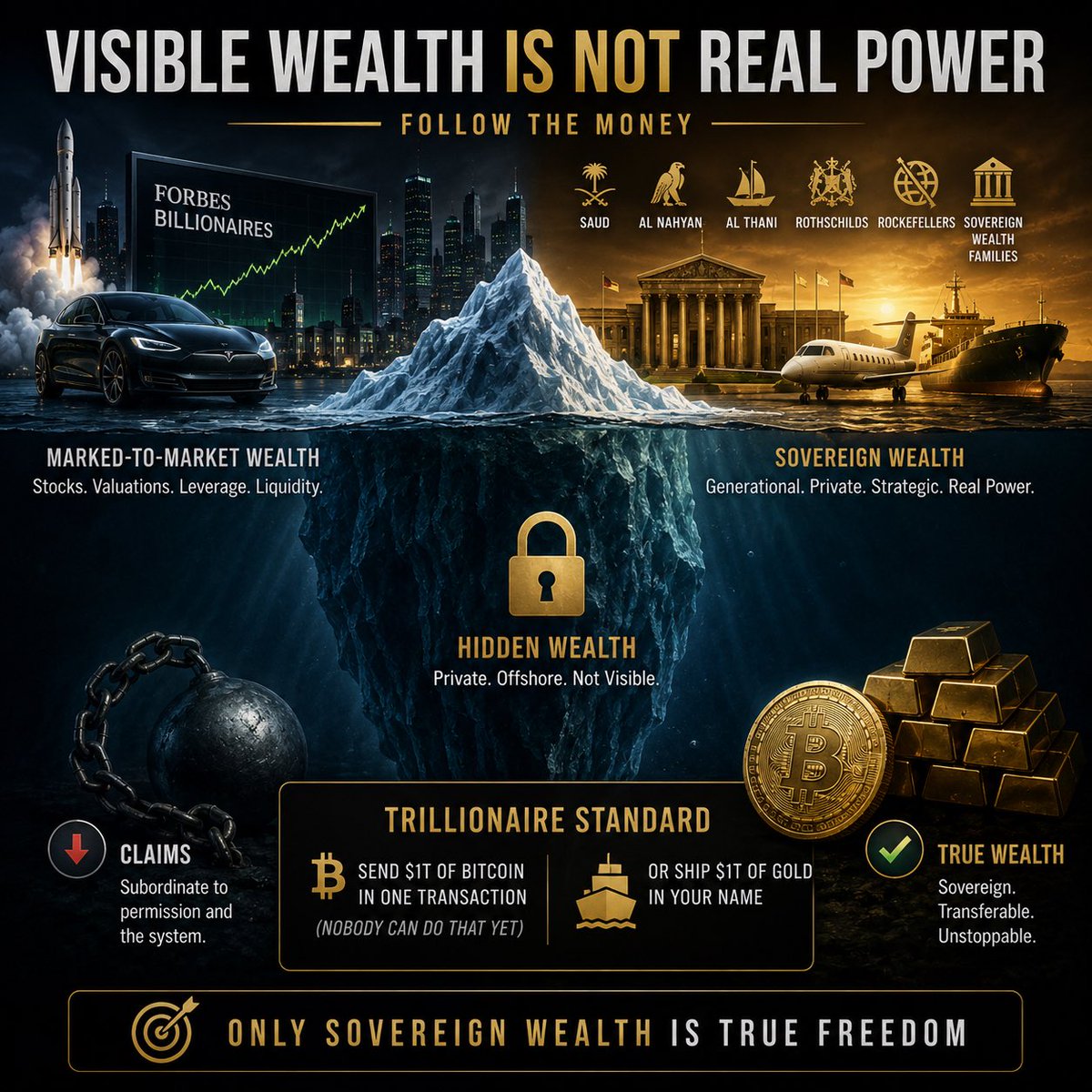
Not to take anything away from Elon Musk’s financial achievement, but understanding the difference between sovereign wealth and subordinated wealth is useful when saying that he has become the world’s first trillionaire.
People see Forbes rankings and think that’s where the real money is.
The House of Saud, Abu Dhabi’s Al Nahyan family, Qatar’s Al Thani family, the Rothschilds, the Rockefellers, sovereign wealth families, and the broader financial-industrial complex have spent generations building influence over capital, banking, energy, debt markets, institutions, and the rules of settlement itself.
Most billionaire wealth is marked-to-market. It is a quoted value based on public company shares, liquidity, credit conditions, lenders, institutional shareholders, asset managers, and collateral rules.
Direct control of wealth is different.
Much of the world’s wealth is not publicly visible.
Private companies, trusts, foundations, sovereign entities, and offshore structures rarely appear on rich lists.
Privacy, control, and asset protection are features of wealth preservation, not bugs.
You’re a trillionaire when you can send a trillion dollars of Bitcoin in a single transaction (and nobody in the world can do that yet), or load a trillion dollars of gold onto a ship in your name and move it without permission.
Everything else is subordinate to someone else’s balance sheet, rules, and approval.
Visible wealth and actual financial power are not the same thing.
I encourage sovereign wealth over subordinated wealth.
Only sovereign wealth is true freedom.
Follow the money.
44
118
694
25,777
Jun 13
Very good read 👀
Jun 13

FREE TO READ:
The top-10 reasons why oil prices are below $100 a barrel.
1) China, China and China
2) Demand destruction
3) Lots of oil bypassing/leaving the Strait of Hormuz
4) The original oversupply
5) Huge SPR release / commercial stocks draw
6) Refinery flexibility
7) Trump's jawboning
8) Options market development
9) The fog of war is thinner
10) Soaring Americas oil output
bloomberg.com/opinion/articl…
1
89
JimFox retweeted

Jun 12
Conspiracy theorists win again.
Jun 12

Today, I’m releasing never before seen intelligence revealing new evidence of past US government funding for more than 120 biolabs in over 30 countries, including Ukraine.
In support of President Trump‘s Executive Order to end federal funding of dangerous gain of function research around the world, and increase transparency and accountability, ODNI will continue working with partners across the Administration to identify where these labs are, what pathogens they contain, and what “research” is being conducted.
odni.gov/index.php/newsroom/…
160
1,356
6,010
100,221
Jun 12
What’s really great is all the major news outlets ABC, CBS, NBC and even BBC are reaching out to my wife @foolrushingin for this footage and she’s insisting on being credited as Bitcoin Cat Lady from San Francisco 😹
Jun 11

turns out it's a Medline warehouse fire. We got this footage before any fire engines had arrived. It is absolutely brutal-near Tracy.
1
1
2
161
JimFox retweeted

Jun 11
whoa what the hell is this? the off ramp is international Parkway off the 205 California.
7
2
24
5,070

My mom paid off her house in 2003.
Thought that was it. Thought she was done. Thought it was finally hers.
Property taxes were $1,800 a year back then.
She’s retired now. Fixed income. Same house. Same neighborhood.
Property taxes are $24,000 a year.
That’s $2,000 a month.
On a house she already paid for.
She’s 71 years old and the government sends her a bill every year just to stay in her own home.
You never really own anything in America.
You just make payments to a different landlord.
Community note
This user resides in Africa & is lying about living in America for engagement. Upvoting this community note reduces the monetary incentive to continue doing so.
help.x.com/en/rules-and-p… - Engagement Bait is prohibited under Terms of Servic
3,450
12,793
52,916
2,273,059
JimFox retweeted

GM, Some people panic sell. Some people put the fries in the bag and stack harder.

17
1
72
2,175
Jun 11
You’re subservient to AI and the Algo . “the safeguard that makes Fable 5 safe enough to release publicly is the same safeguard that lets Anthropic keep your data for two years.”
Jun 10

The reason is quite hilarious 😂😂.
Microsoft put $50 billion into Anthropic.
FIFTY billion dollars.
they are a Project Glasswing partner. Fable 5 runs inside Azure. Microsoft sells Claude to its own enterprise customers through Microsoft 365 and GitHub Copilot.
and they won't let their own employees use it.
here's why.
under Anthropic's new Mythos-class data retention policy, every prompt you type and every response you get is stored for 30 days. automatically. no opt out.
if their safety classifiers flag anything in your session, anything, they keep it for up to two years.
you don't get told when that happens, what was flagged or who can see it.
Microsoft employees paste confidential contracts into these things. customer data. internal roadmaps. acquisition strategies. legal documents. source code.
all of it sitting on Anthropic's servers for 30 days minimum. flagged sessions for two years.
so the company that invested $50 billion looked at that policy and told its staff: actually hold on.
other Claude models still work internally. under Zero Data Retention rules. the normal ones are fine.
just not the most powerful one they helped fund.
and one more thing.
the Pentagon listed Anthropic as a supply chain risk in March and banned defense contractors from using its products.
Microsoft funds Anthropic. sells Anthropic's models. runs them on Azure. helped build the most powerful one.
won't let employees use it.
the Pentagon won't let defense contractors near it.
the safeguard that makes Fable 5 safe enough to release publicly is the same safeguard that lets Anthropic keep your data for two years.
the guardrail is a data retention policy.
but you can use it. it's in your browser right now. 🌚
have fun.
35
JimFox retweeted

Jun 11
Sports betting is a serious problem in Brazil, but also in the USA and many other countries.
In Brazil, the volume of bets on legal and illegal sites can reach $100 billion per year. In the USA, people say that the sports betting and prediction market will soon surpass 1 trillion dollars annually.
It’s money that leaves regular consumption and goes straight to addiction.

Aviação viveu década perdida e hoje compete com as bets, diz presidente da Gol; entenda 👇 estadao.com.br/economia/avia…
17
49
468
45,041

It was so easy to get rich off of Bitcoin back in the day.
So long as you ignored the concerns of your friends, family, financial advisor, and pretty much every other person on the planet that wasn't a bitcoiner.
The very definition of getting lucky.
48
35
857
23,843
JimFox retweeted

Jun 11
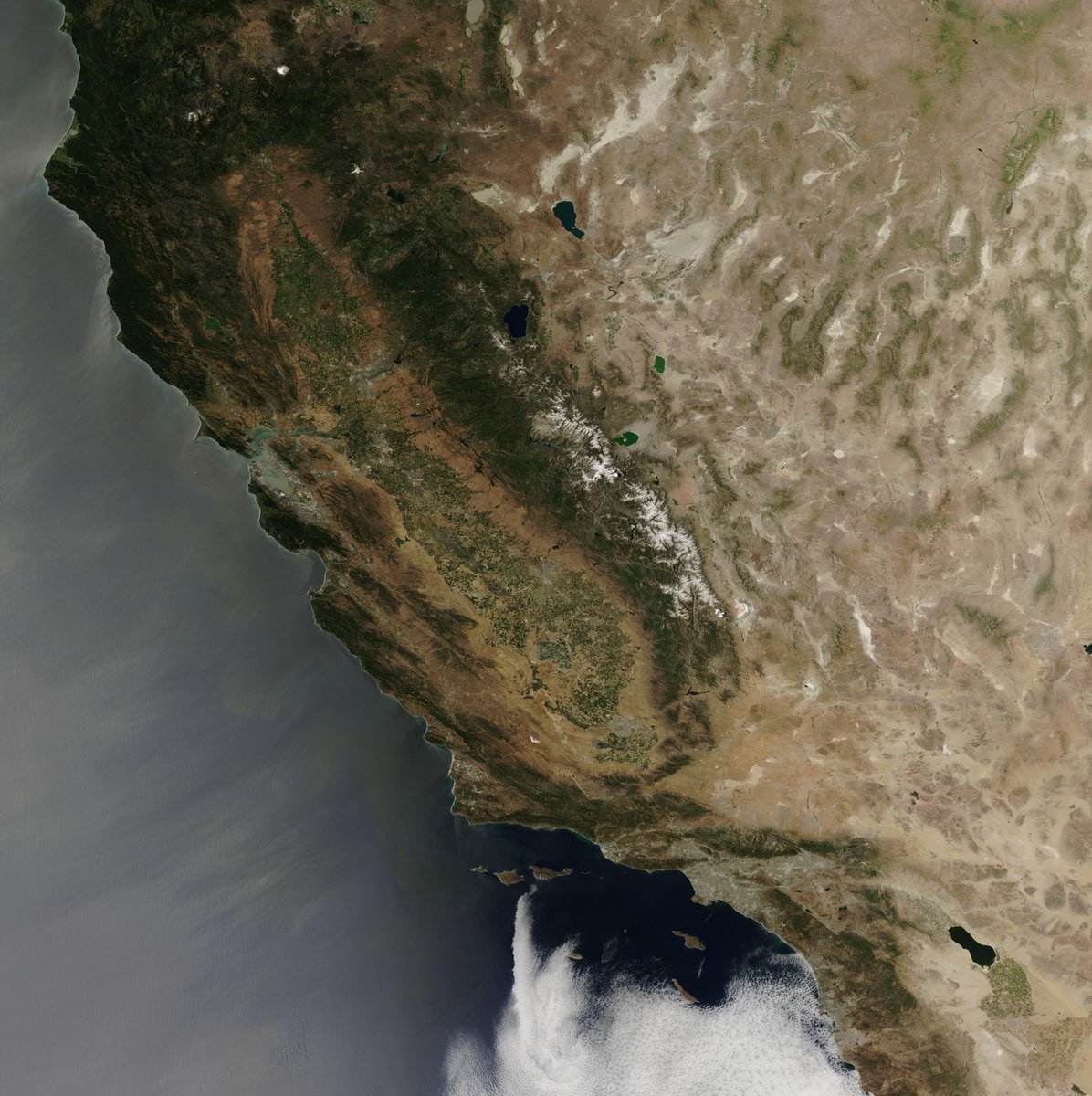
Not a cloud in the sky across virtually all of California today.
What a view from space.
177
708
13,320
511,286