
6,366 Photos and videos







Pinned Tweet
One thing I've noticed lately:
Crypto apps keep adding features, but somehow the basic experience still feels fragmented.
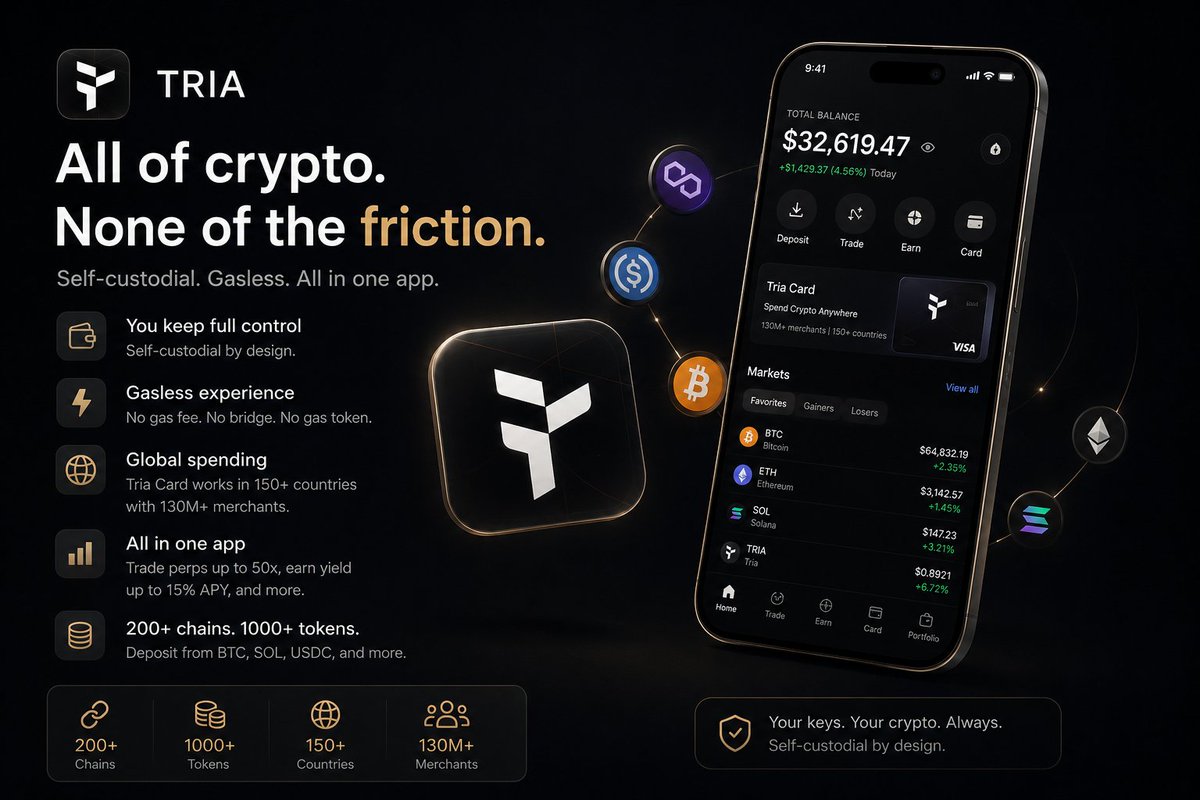
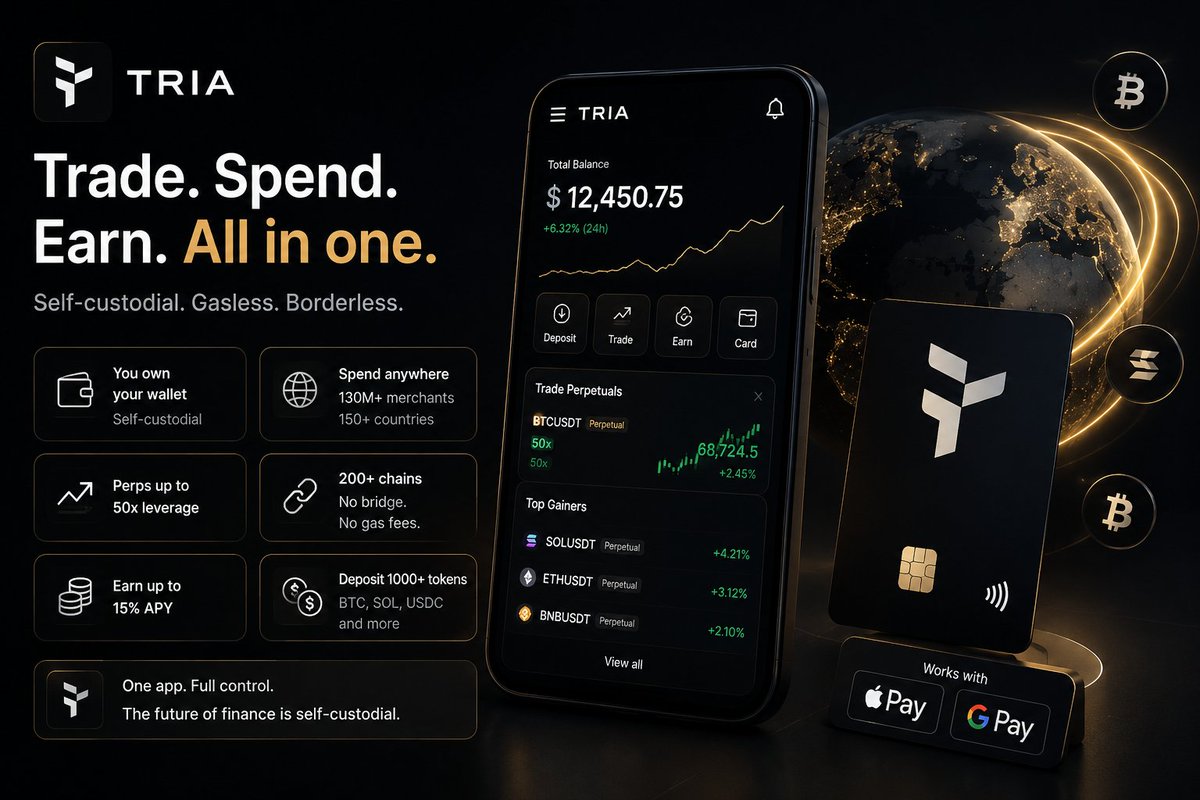
I was testing a few flows through @MindoAI and ended up spending more time on @useTria than I expected.
Being able to move between chains without worrying about gas, bridges, or holding random tokens for fees just removes a lot of mental overhead.
Feels less like managing infrastructure and more like actually using crypto.
If you want to see what I mean, worth checking out:
app.tria.so/?accessCode=U8AA…
Jun 13

funny how most of us got used to keeping crypto in one app and spending money from another.
never really questioned it until recently.
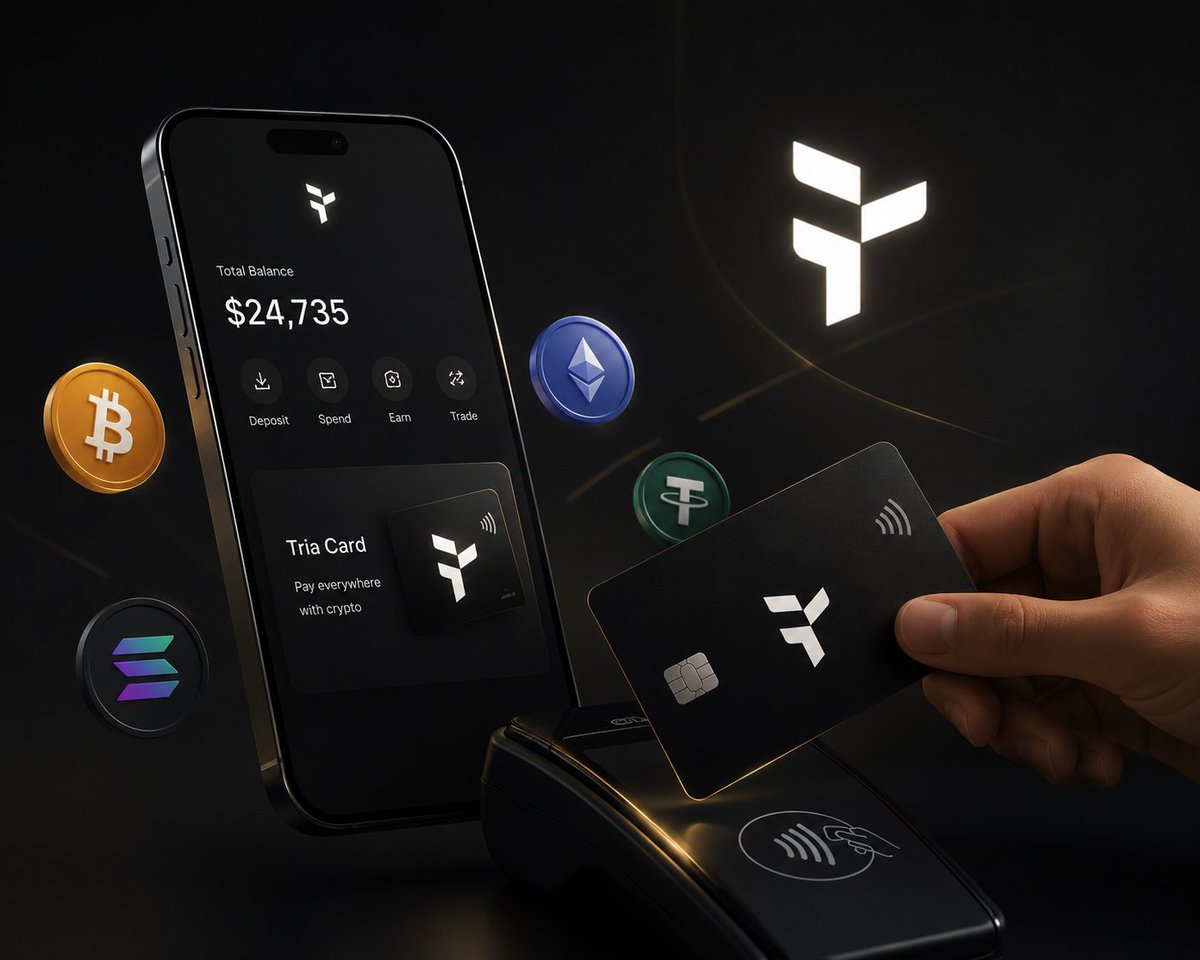
with @useTria, i can hold assets in a self-custodial wallet and still use the card when i need to pay for something. no extra steps, no moving funds around first.
came across a discussion from @MindoAI about making web3 feel less disconnected from daily habits, and that actually clicked for me.
feels a lot closer to how people naturally expect money to work.
if you want to see what i mean, take a look:
app.tria.so/?accessCode=U8AA…
#Tria #Neobank
99
83
457
We're getting closer to a weird reality:
AI gets stronger every year, but most crypto wallets are still built around security assumptions that may not hold forever.
That's why @quipnetwork stands out to me.
Instead of treating quantum resistance as a future problem, they're building infrastructure around it now.
The idea is pretty straightforward:
Wrap existing wallets into quantum-resistant accounts, combine that with decentralized compute, and create a marketplace where computing resources can be accessed without relying on a single provider.
What I like is that the narrative isn't only about defense.
It's also about preparing for a world where computation becomes a scarce and valuable resource.
Most people are focused on what's happening this cycle.
Projects like Quip are looking at what crypto might need several cycles from now.
The points program, $QUIP, and eventual TGE are interesting, but the bigger story is whether the industry starts taking post-quantum security seriously before it's forced to.
Feels early.
4
4
44
I keep rereading that feedback quote because it feels surprisingly relevant to the current state of the market.
A lot of metrics look healthy on the surface.
Users.
Volume.
Activity.
But underneath, many ecosystems still operate on short-term incentives where participants are constantly searching for the next opportunity.
Nothing wrong with that.
It's part of crypto culture.
Still, there is a difference between building something people use and building something people want to belong to.
"Stop building economies where leaving is the optimal strategy."
That's a simple sentence, but it points toward a much harder problem than growth.
And probably a more important one.

I wasn’t supposed to share this.
But after months of discussions, the Agarthan delegation finally approved Bread.
Their feedback was surprisingly simple:
“Stop building economies where leaving is the optimal strategy.”
So we did.
See you next week.

44
41
3,526
The market still treats quantum security like a future problem.
That's what makes @quipnetwork interesting.
Instead of waiting for quantum threats to become obvious, they're building the infrastructure now: wallet wrapping, quantum-resistant accounts, and a decentralized compute marketplace under the same network.
The wallet wrapping approach stands out to me because it lowers the friction. Most security upgrades fail when users have to completely change behavior.
At the same time, decentralized compute feels like the other side of the story. AI, cryptography, and high-performance workloads all need compute, and demand isn't slowing down.
The combination creates a narrative that feels bigger than just another security layer.
I'm keeping an eye on the points program and the path toward $QUIP, but the real question is whether the industry starts taking post-quantum readiness seriously before it's forced to.
By then, who will already be prepared?
45
1
37
254
one thing i've learned in crypto is that markets are rarely about prices.
they're about beliefs.
every memecoin is a belief.
every prediction market is a belief.
people are constantly expressing opinions, just through different interfaces.
that's why this launch feels interesting to me.
for years we've separated these behaviors into different platforms.
launch somewhere.
trade somewhere else.
speculate somewhere else.
now they're sitting in the same place.
maybe it works.
maybe it doesn't.
but i keep thinking the future of crypto products probably looks more like this than another dashboard full of charts.
Jun 11
Six months of work.
Today we ship.
The first launchpad where memecoins and prediction markets live in one terminal.
This is what I believe in.
bread.hot
54
55
3,445
a small thing i've noticed lately.
some accounts seem to be everywhere on the timeline without posting that much.
others generate endless engagement and somehow leave almost no trace on the broader conversation.
that gap is interesting.
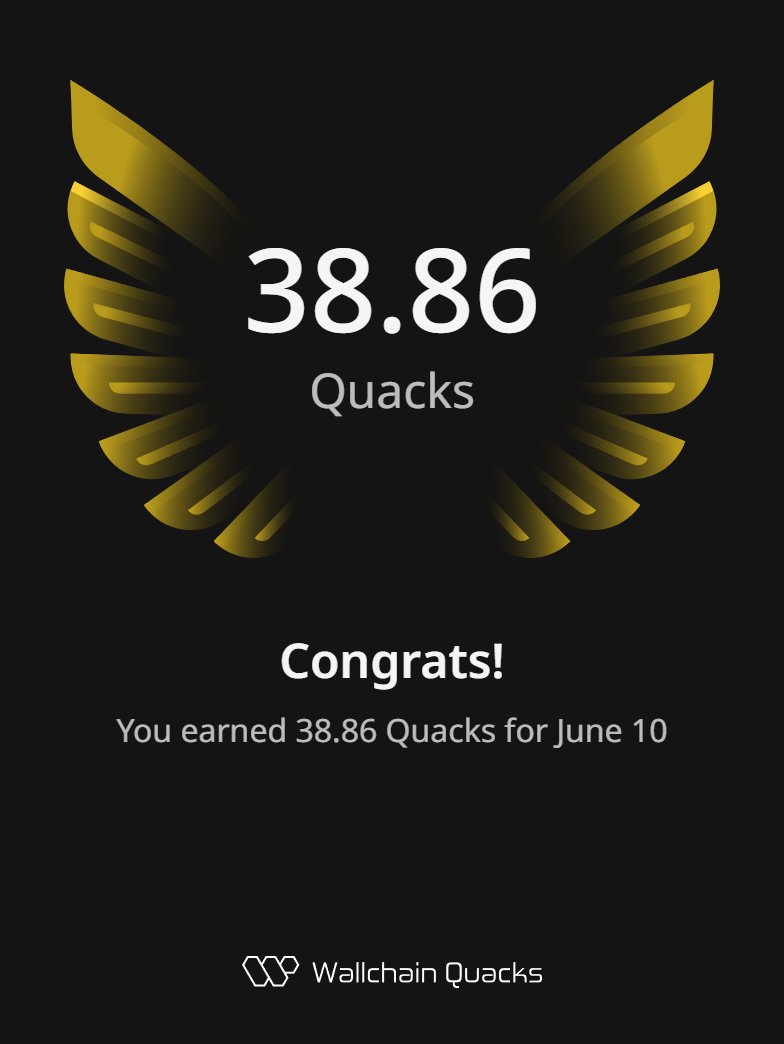
quacks surfaced a few examples that made me look twice, then i ended up checking some of the x score discussions around @wallchain.
it reinforced the same thought.
mindshare isn't really about how many people react.
it's about whose ideas keep getting carried forward.
engagement numbers can be misleading.
impressions do not equal influence.
feels like attention quality is becoming a signal of its own.
makes me wonder how far infofi can go once that signal is measurable.
28
27
275
i've watched countless launches where the loudest voices controlled the story for a few hours and then everyone moved on.
what's interesting here is that people can express conviction with actions instead of just posts.
sometimes the market tells you more than the timeline ever will.
that shift alone makes this feel different.
Jun 12

Live.
bread.hot v.1 — the first launchpad combining memecoins and prediction markets in one platform.
Launch a token. Trade a market. Bet in predict markets.
27
26
1,277
a lot of lending activity in defi still revolves around short term liquidity.
deposit assets.
borrow against them.
watch rates fluctuate.
repeat.
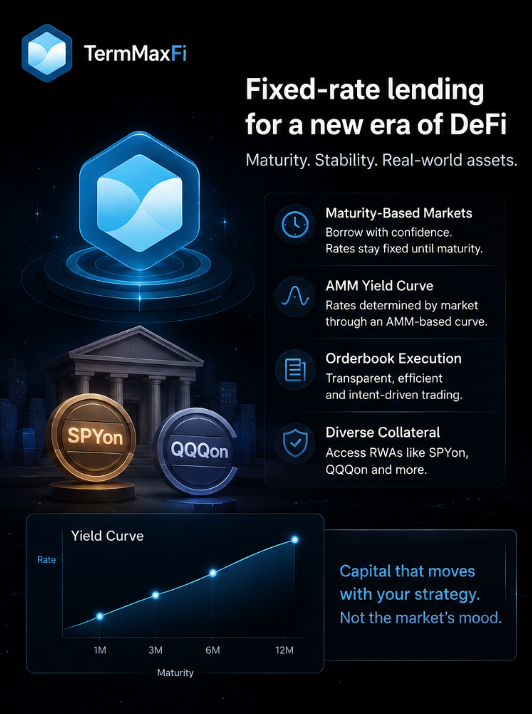
what stands out about @TermMaxFi is that it approaches lending more like a market for future cash flows than a pool competing for utilization.
the maturity component changes how positions are viewed.
instead of constantly monitoring where rates might move next, participants can focus on whether the terms make sense for their own timeframe.
it feels closer to fixed income logic than the money market design most of defi is familiar with today.
71
63
5,307
Trading không phải lúc nào cũng là tìm kiếm lợi nhuận lớn nhất.
Đôi khi đó là quá trình kiểm chứng xem chiến lược của mình hoạt động tốt đến đâu trong các điều kiện thị trường khác nhau.
Đó cũng là lý do mình thấy CFD khá thú vị.
Ngoài crypto, mình có thể quan sát thêm Gold, chỉ số và nhiều loại tài sản khác để mở rộng góc nhìn.
Nếu anh em thích các sân chơi mang tính cạnh tranh thì hiện Bitget đang tổ chức CFD Championship Phase 5:
✓ Tổng giải thưởng $90,000
✓ Top reward lên tới $4,000
✓ User mới giao dịch Gold 0.01 lot nhận 3 lượt Lucky Draw
Chi tiết:
bitget.com/en/launchhub/trad…
#Bitget #CFDChampionship
Jun 9

🔥🔥 CFD Championship 5: 0 Fees $90K | Double Win
✅ Complete tasks to unbox Mystery
New users trade 0.01 lot XAUUSD get 3 lucky draws!
✅ Trade vol 50,000$ get 1 credit, share 15,000 USDT
✅ Top trading vol share 60,000 USDT
1️⃣ 4,000$ 2️⃣ 3,000$ 3️⃣ 2,000$
🔗 bitget.com/vi/launchhub/trad…
This information is for reference only and is not investment advice❗️

75
70
5,411

Jun 13
funny how most of us got used to keeping crypto in one app and spending money from another.
never really questioned it until recently.
with @useTria, i can hold assets in a self-custodial wallet and still use the card when i need to pay for something. no extra steps, no moving funds around first.
came across a discussion from @MindoAI about making web3 feel less disconnected from daily habits, and that actually clicked for me.
feels a lot closer to how people naturally expect money to work.
if you want to see what i mean, take a look:
app.tria.so/?accessCode=U8AA…
#Tria #Neobank
Jun 12
It's kind of weird how much friction we've accepted in crypto.
Switch chain.
Find gas.
Bridge assets.
Do it all over again.
Been using @MindoAI alongside @useTria and the difference is mostly that I don't think about any of that stuff anymore.
Just move from whatever asset I'm holding and get on with it while keeping full control of the wallet.
Feels closer to how apps should work.
If you want to check it out, here's the link:
app.tria.so/?accessCode=U8AA…
74
69
10,945
Jun 12
One thing I look for as an investor is whether a protocol can increase the productivity of existing capital.
That's why the Ondo integration on @TermMaxFi caught my attention.
Most yield-bearing assets do one job.
They sit in a wallet and generate yield.
On TermMax, the same asset can remain productive while also unlocking liquidity through fixed-rate borrowing.
That creates a very different capital cycle.
Instead of choosing between earning yield or accessing liquidity, users can potentially do both.
The interesting part is that the borrowing side remains fixed until maturity.
Known cost.
Known timeline.
Known risk profile.
To me, that's where the value accrues.
Not from adding another collateral asset.
But from turning productive assets into the foundation of a more efficient onchain credit market.

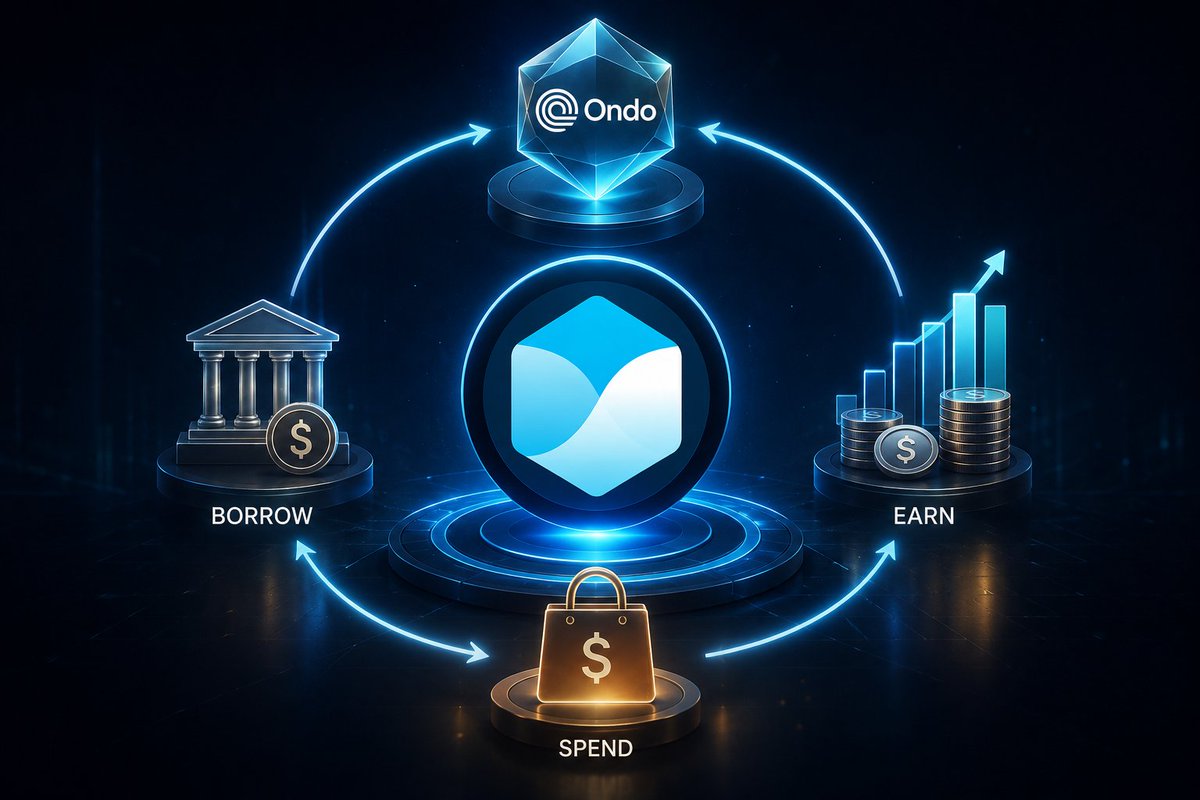
One Ondo asset. Three jobs.
🏦 Borrow against it
💰 Earn on it
📉 Get paid to buy more
Why TermMax is your home for @OndoFinance assets 👇 🐬
29
29
231
Jun 12
Mình không phải kiểu fan bóng đá cuồng nhiệt, nhưng đến World Cup thì vẫn thức khuya xem vì không khí quá vui.
Có điều xem nhiều trận xong mới thấy mấy tình huống VAR đúng là làm cảm xúc lên xuống liên tục. Đang hào hứng lại thành hụt hẫng.
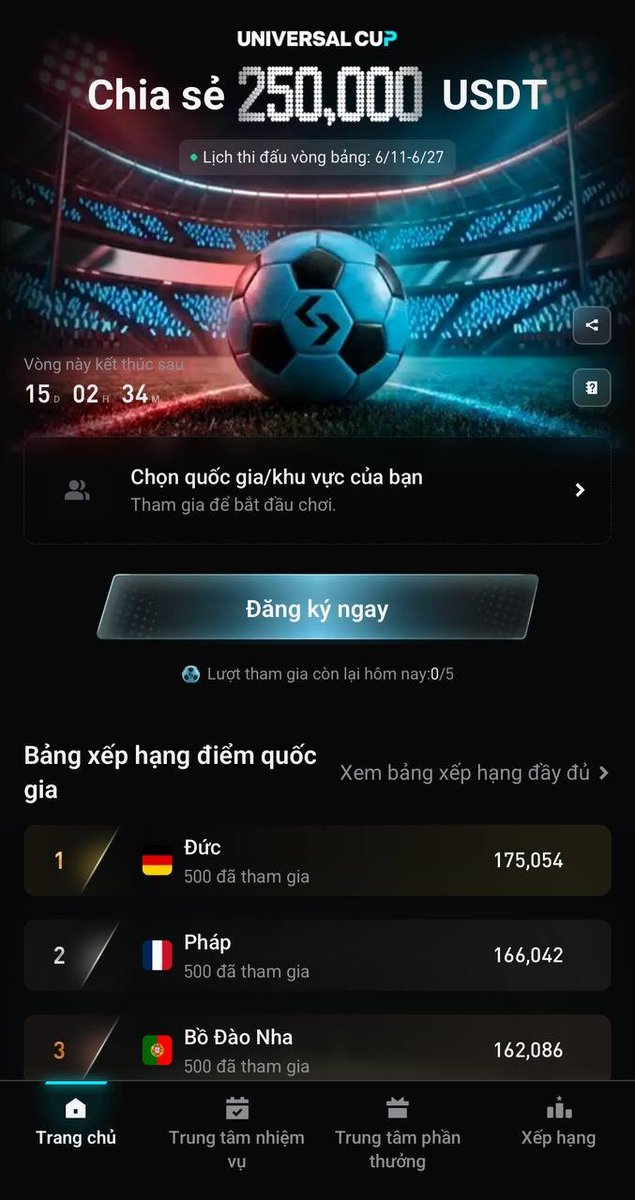
Hôm nay lướt X thấy Universal Cup của Bitget - sàn giao dịch đa tài sản nên vào thử. Ý tưởng khá hay, thay vì chỉ ngồi xem thì mình được tự vuốt để thực hiện cú sút penalty vào các mục tiêu Crypto và Stock, CFD on Bitget.
Không cần KYC, thao tác nhanh và còn có cơ hội nhận một phần trong quỹ thưởng 250.000 USDT nên mình cũng rủ thêm vài đứa bạn vào chơi cùng cho vui.
Nếu đang theo dõi World Cup thì thử chọn đội tuyển mình yêu thích rồi trải nghiệm nhé.
👉 bitget.com/activity/universa…
#UniversalCup

Why trade in separate leagues when your dream team can play on one field?
Crypto, Stocks, ETFs, and Gold are teaming up for the championship this year.
Watch the video to find out each player's strategy behind the lineup.
106
98
8,228
Jun 12
🩷@perx_trade
spent half the day watching traders chase the next narrative
then came back to the same question
where is the actual edge coming from
price moves get attention
infrastructure usually doesn't
but that's often where the longer-term value ends up accumulating
been thinking about that while following @NomismaNetwork
the interesting part isn't the noise around markets
it's the attempt to make financial coordination feel more native onchain
still early
still evolving
but some themes become easier to notice once you stop looking at candles for a minute
Jun 11
🐣@perx_trade
been noticing a shift lately.
people aren't just chasing volume anymore.
they're paying more attention to where liquidity actually wants to stay.
different mindset.
different market.
saw a few discussions around @NomismaNetwork today and it reminded me of that.
the projects getting attention now seem less focused on noise.
more focused on building systems that can survive when incentives cool down.
maybe that's just where this cycle is heading.
less narrative trading.
more infrastructure.
still early though.
hard to tell whether we're watching a trend
or the beginning of a bigger rotation.
79
1
78
1,190
Jun 12
Most people still treat quantum security as a future problem.
That's exactly why it's interesting now.
Been looking into @quipnetwork and it's tackling two narratives that rarely get discussed together: post-quantum security and decentralized compute.
The wallet wrapping approach is what caught my attention first.
Instead of forcing users into a completely new setup, it adds a path toward quantum-resistant accounts without making the experience feel foreign.
On top of that, they're building a compute marketplace where resources can be supplied and accessed in a decentralized way.
Feels like they're positioning for a world where both computation and security become increasingly valuable.
The points system and potential $QUIP upside are nice, but the bigger story is whether crypto starts preparing before quantum risk becomes obvious.
Most infrastructure waits for the problem.
What if the winners are the ones building before everyone realizes it's here?
Jun 11
Hot take:
The biggest security upgrade in crypto might happen before most people realize it's needed.
That's why @quipnetwork caught my attention.
They're not just building another infrastructure layer. They're tackling two problems at once: post-quantum security and decentralized compute.
The wallet wrapping model is especially clever.
Instead of forcing users to abandon existing wallets, it adds a quantum-resistant layer around them.
Much easier path to adoption.
Then there's the account architecture and compute marketplace, which pushes the vision beyond simple wallet protection.
A lot of teams talk about preparing for the future.
Quip is building around a future where cryptography itself changes.
I've started paying more attention to projects that think in decades rather than cycles.
The points program and eventual $QUIP exposure are interesting.
But the bigger question for me is this:
When quantum-resistant infrastructure becomes necessary, which networks will already be ready?
127
2
121
8,137
Jun 12
It's kind of weird how much friction we've accepted in crypto.
Switch chain.
Find gas.
Bridge assets.
Do it all over again.
Been using @MindoAI alongside @useTria and the difference is mostly that I don't think about any of that stuff anymore.
Just move from whatever asset I'm holding and get on with it while keeping full control of the wallet.
Feels closer to how apps should work.
If you want to check it out, here's the link:
app.tria.so/?accessCode=U8AA…
Jun 11
It's kind of wild how normal we've become to moving funds through three or four apps just to make one trade.
Wallet here.
Bridge there.
Then another platform for perps.
Been using @useTria more lately after finding it through @MindoAI and the biggest thing I noticed is the lack of extra steps.
Deposit, open a position, done.
No gas token hunting.
No bridge detour.
Just feels smoother.
Maybe that's the direction Web3 should've gone a long time ago.
If you're checking out different trading setups, worth a look:
app.tria.so/?accessCode=U8AA…
163
154
1,793
Jun 11
noticed a weird pattern today.
some posts completely take over the timeline for a few hours.
then vanish.
no follow-up discussions.
no lasting effect.
just a spike and gone.
other ideas spread much slower.
they jump between communities.
show up in replies.
reappear in spaces.
that's a very different kind of signal.
engagement numbers can be misleading when they're measuring activity without context.
impressions do not equal influence.
i ended up thinking about that while browsing some quacks rankings and comparing them against x score data.
saw @wallchain mentioned along the way.
mindshare feels more connected to where conversations continue than where they begin.
attention quality matters because not all visibility creates memory.
starting to wonder whether attention eventually becomes a core primitive for infofi rather than just another metric.
Jun 11
interesting how some narratives seem to gain momentum long after the original post stops getting likes.
the engagement peak passes.
the discussion doesn't.
you start seeing the same idea reappear through quotes, group chats, and completely unrelated threads.
that's usually where i pay attention.
not to the biggest numbers.
engagement metrics can be misleading when half the timeline scrolls past them in seconds.
impressions don't necessarily translate into influence either.
been noticing how mindshare behaves differently from visibility.
came across @wallchain while thinking about that.
the quacks leaderboard often surfaces people whose impact feels larger than their surface stats.
then you look at x score and another layer appears.
attention quality seems harder to fake than raw reach.
makes me wonder whether attentionfi eventually becomes less about media and more about measurement itself.
24
23
216
Jun 11
I've gotten so used to having separate apps for everything that I barely questioned it anymore.
One app for the wallet.
One for swaps.
One for spending.
Then I tried @useTria after seeing it mentioned around @MindoAI.
The thing that stood out wasn't a specific feature.
It was how little friction there was.
Still self-custodial.
Still in control of my assets.
Just fewer steps between deciding to do something and actually doing it.
Funny how that ends up mattering more than most people think.
If you're curious, worth checking out for yourself:
app.tria.so/?accessCode=U8AA…
Jun 11
It's kind of wild how normal we've become to moving funds through three or four apps just to make one trade.
Wallet here.
Bridge there.
Then another platform for perps.
Been using @useTria more lately after finding it through @MindoAI and the biggest thing I noticed is the lack of extra steps.
Deposit, open a position, done.
No gas token hunting.
No bridge detour.
Just feels smoother.
Maybe that's the direction Web3 should've gone a long time ago.
If you're checking out different trading setups, worth a look:
app.tria.so/?accessCode=U8AA…
31
30
315
Jun 11
🐣@perx_trade
been noticing a shift lately.
people aren't just chasing volume anymore.
they're paying more attention to where liquidity actually wants to stay.
different mindset.
different market.
saw a few discussions around @NomismaNetwork today and it reminded me of that.
the projects getting attention now seem less focused on noise.
more focused on building systems that can survive when incentives cool down.
maybe that's just where this cycle is heading.
less narrative trading.
more infrastructure.
still early though.
hard to tell whether we're watching a trend
or the beginning of a bigger rotation.
Jun 10
🦋@perx_trade
Market's green and somehow CT is still arguing about narratives.
Meanwhile I'm sitting here wondering which sectors actually benefit if crypto adoption keeps growing.
Not the flashy answer.
The practical one.
RWAs keep coming back to that conversation.
Not because they're exciting.
Because they solve a problem.
Saw @NomismaNetwork mentioned earlier and ended up going down a rabbit hole.
The more I think about it, the more tokenized assets feel less like a trend and more like infrastructure.
People trade narratives.
Infrastructure usually compounds quietly.
Different timelines.
Different incentives.
Maybe that's why the discussion feels disconnected right now.
Price action gets the attention.
The rails get built in the background.
39
40
1,545
Jun 11
Hot take:
The biggest security upgrade in crypto might happen before most people realize it's needed.
That's why @quipnetwork caught my attention.
They're not just building another infrastructure layer. They're tackling two problems at once: post-quantum security and decentralized compute.
The wallet wrapping model is especially clever.
Instead of forcing users to abandon existing wallets, it adds a quantum-resistant layer around them.
Much easier path to adoption.
Then there's the account architecture and compute marketplace, which pushes the vision beyond simple wallet protection.
A lot of teams talk about preparing for the future.
Quip is building around a future where cryptography itself changes.
I've started paying more attention to projects that think in decades rather than cycles.
The points program and eventual $QUIP exposure are interesting.
But the bigger question for me is this:
When quantum-resistant infrastructure becomes necessary, which networks will already be ready?
120
111
8,779
Jun 11
interesting how some narratives seem to gain momentum long after the original post stops getting likes.
the engagement peak passes.
the discussion doesn't.
you start seeing the same idea reappear through quotes, group chats, and completely unrelated threads.
that's usually where i pay attention.
not to the biggest numbers.
engagement metrics can be misleading when half the timeline scrolls past them in seconds.
impressions don't necessarily translate into influence either.
been noticing how mindshare behaves differently from visibility.
came across @wallchain while thinking about that.
the quacks leaderboard often surfaces people whose impact feels larger than their surface stats.
then you look at x score and another layer appears.
attention quality seems harder to fake than raw reach.
makes me wonder whether attentionfi eventually becomes less about media and more about measurement itself.
37
35
395