
Joined April 2023
- Tweets 362
- Following 417
- Followers 439
- Likes 2,827
6 Photos and videos







Mar 24
Let the man cook
Compliance is the least flashy part of any tech stack, but there's an argument it's the most critical
Can't wait to see the @brookwellapp launch

2
13
450
Matt retweeted

Mar 19
A detailed and brutal look at the tactics of buzzy AI compliance startup Delve
"Delve built a machine designed to make clients complicit without their knowledge, to manufacture plausible deniability while producing exactly the opposite."
substack.com/home/post/p-191…
197
404
4,698
4,544,377
Jan 27
Perfect bifurcation of mostly privatized industry v ones where public administrators are constantly tinkering with
The government has zero incentive to innovate or create efficiencies. It's easy to spend someone else's money
Jan 26

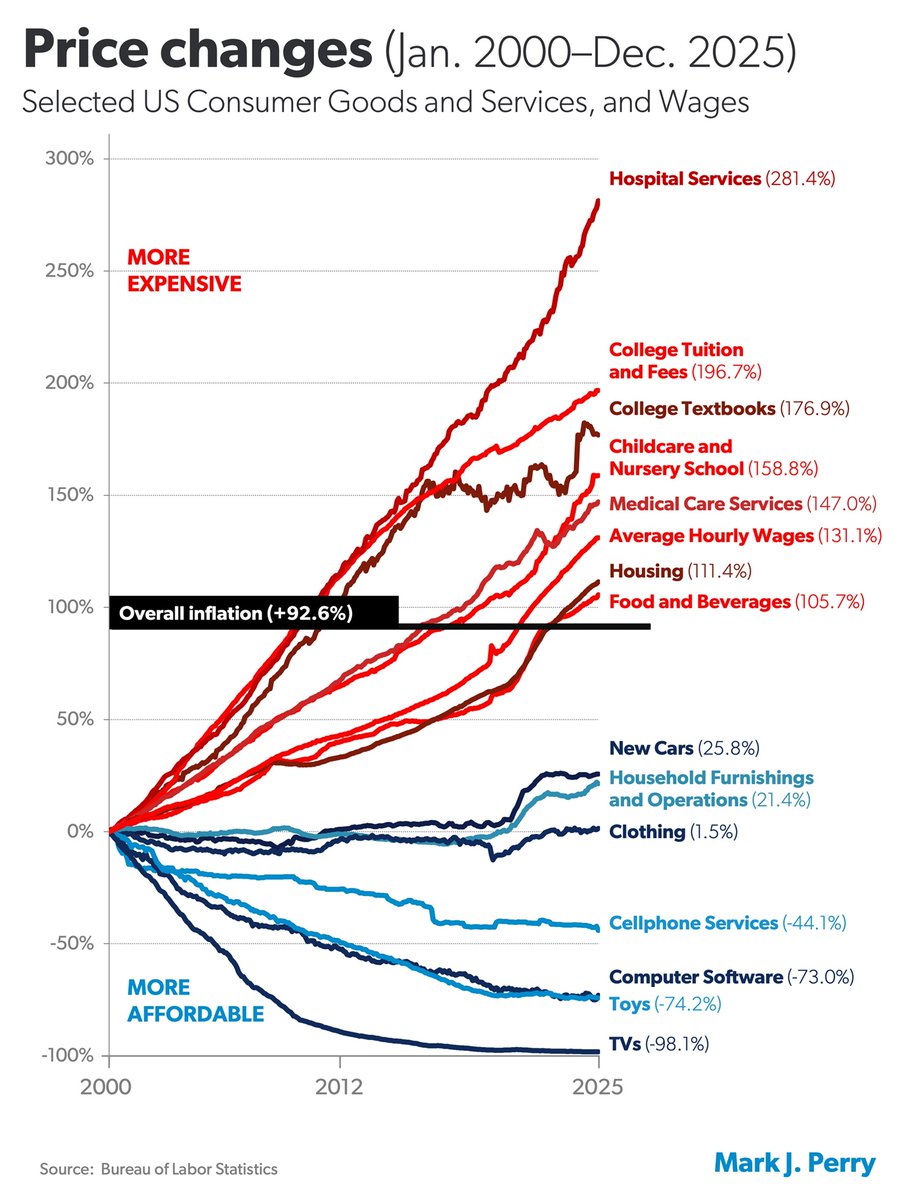
Whoever is in charge of TV prices should be put in charge of healthcare, education, and housing prices
4
290
Matt retweeted

Jan 27
An average importer / exporter maintains 4 bank accounts.
These accounts started as a workaround, but ended up introducing new issues around fragmented liquidity and operational overhead.
Introducing Specie (@SpecieFinance), a single account for global trade businesses.
271
213
727
185,668
Jan 21
Never enough
Jan 15

Seismic is all about neobanks.
We're going to onboard so many neobanks, you may even get tired of neobanks.
And you'll say, "Please, please. It's too many neobanks. We can't take it anymore, Seismic."
And I'll say, "No it isn't. We have to keep getting neobanks. We have to onboard more!"
5
157
Jan 21
Have a feeling this will be one of those policies that looks great on the surface and will be touted as a win by many and then in 18 months we’re seeing some downstream consequences.
Need to read more into the EO
Jan 21

BREAKING: Trump signs executive order restricting large institutional investors from purchasing single-family homes
7
128
Matt retweeted

17 Dec 2025
Totally agree with the core thesis here, and I think it gets even more important once you look at how crypto is actually evolving in practice
High performance is becoming table stakes. Every new chain shows up with the same pitch: faster blocks, cheaper fees, better throughput. But blockspace is basically a commodity now. If the main differentiator is “performance,” you are competing in a race where the long term equilibrium is fees trending toward zero and users behaving like mercenaries
Capital shows up for the incentive, farms the airdrop, then leaves the moment a better deal appears somewhere else. Bridges and messaging protocols make that even easier. The result is that a general purpose chain without a strong ecosystem, a killer app, or a distribution advantage has a hard time creating sticky demand
Privacy changes the game because it creates a moat that does not migrate cleanly
People say “tokens are portable” and that is true. Bridging assets is getting easier. But bridging secrets is not the same problem. Secrets are not just balances. They are behavior, relationships, business logic, counterparties, trade intent, payroll flows, treasury movements, and the metadata that surrounds all of it
Once users and apps start depending on privacy for normal operation, moving between chains is no longer a low risk click. The moment you cross boundaries, you create leakage and the under appreciated part is exactly what you described:
privacy is not only about hiding the data on chain. The real danger is the boundary and the metadata. Timing patterns, transaction sizes, correlated transfers, on and off ramp fingerprints, mempool observation, network level traffic. Even if you have a private zone, transitioning into a public chain or even into a different private environment can reveal who you are or what you are doing
That risk alone makes users and institutions stickier once they commit to a privacy environment. It is not because they are trapped technically, it is because migrating increases exposure.
That is what a real moat looks like
So when people ask “why would anyone choose chain A over chain B if fees are low everywhere,” privacy is one of the only answers that still holds up. On public chains, it often does not matter where you are, because you can interact across chains and your activity is already fully visible anyway
On a privacy chain, the choice matters a lot more. Once you are inside a privacy environment, switching carries a cost that is not measured in gas, it is measured in information leakage
This is exactly why I am bullish on Seismic
Seismic is not trying to win the tired game of “we are 5 times faster.” It is aiming at the actual blocker for real finance moving onchain: privacy that is native and usable, without treating it like an afterthought
Most chains tried to add privacy as a layer later, and it usually breaks compatibility with the stack. Ramps and card providers want compliance clarity. Wallets and token standards assume transparent balances. DeFi protocols assume public state. When you bolt privacy on, you end up fighting your own integrations
Seismic’s wedge is that it starts from the premise that privacy is foundational. That matters because the winners will not be the chains that simply have a privacy feature, it will be the chains that make privacy composable enough for real products to ship
The chains that can support stablecoins, payments, treasury operations, and real businesses without forcing them to expose everything to the entire internet. If privacy is the prerequisite for institutional and mainstream adoption, then the chains that do privacy well are not a niche category, they are the final destination for the flows that actually matter
And that is where the winner take most dynamic comes from. Not because privacy chains will be “cool,” but because privacy is essential for most real world use cases, and the moment people build and operate inside a private environment, leaving becomes a risk decision, not a convenience decision
Performance can be copied. Liquidity can be rented. Incentives expire. But privacy, once it becomes part of how users and companies operate, creates lasting gravity
That is why this thesis resonates, and that is why Seismic stands out to me

Privacy will be the most important moat in crypto.
Why? Because secrets are hard to migrate.
Everyone is launching a new "high performance" blockchain lately. But these chains are hardly different from one another. Blockspace is functionally the same everywhere. And with bridges that make moving between chains easy, that blockspace is now accessible *from* everywhere. Mercenary users and capital quickly arriving on a chain to farm an airdrop can leave just as quickly to farm the next one on another chain.
The reality is that if your "general purpose" chain doesn't already have a thriving ecosystem, a killer application, or an unfair distribution advantage, there's very little reason for anyone to use it or build on top of it. Performance alone is no longer enough.
Privacy is the one feature that everyone agrees is critical for the world’s finance to move onchain. It’s also the one feature that almost every blockchain that exists today completely lacks. For most chains, it has been little more than an afterthought until now.
Privacy by itself is sufficiently compelling to differentiate a new chain from all the rest. But it also does something more important: it creates chain lock-in.
Bridging tokens is easy, but bridging secrets is hard.
As long as everything is public, it's trivial to move from one chain to another, thanks to bridging protocols like LayerZero. But, as soon as you make things private, that is no longer true. There is always a risk when moving in or out of a private zone that people who are watching the chain, mempool, or network traffic will be able to figure out who you are. Crossing the boundary between a private chain and a public one—or even between two private chains—leaks all kinds of metadata like transaction timing and size correlations that makes it easier to track you.
Compared to the many undifferentiated new chains whose fees will likely be driven down to zero by competition, blockchains with privacy have a much stronger network effect. When you're on public blockchains, it's easy to transact with users on other chains—it doesn't matter which chain you join. When you're on private blockchains, on the other hand, the chain you choose matters much more because, once you join one, you're less likely to move and risk being exposed.
This will create a winner-take-most dynamic. And because privacy is essential for most real-world use cases, a handful of privacy chains will own most of crypto.
50
15
134
5,365
Matt retweeted

12 Nov 2025
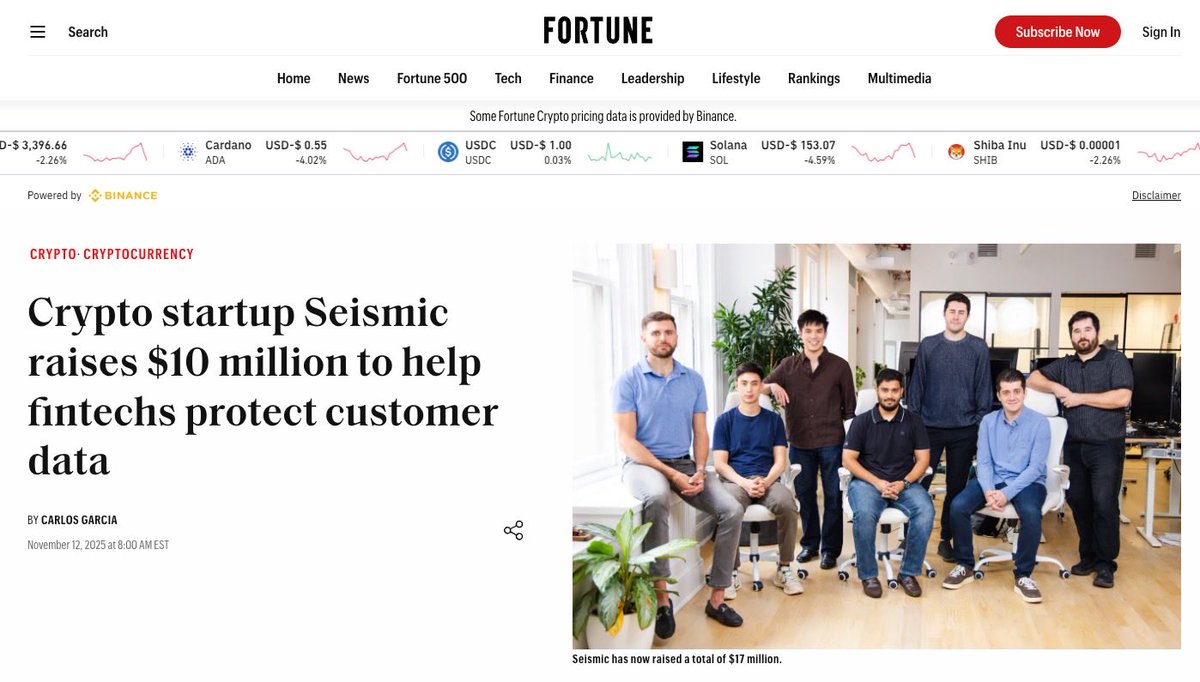
Huge thank you to @car_gar_fortu from @FortuneMagazine for covering our fundraise!
88
134
711
59,259
12 Nov 2025
Everyone and their grandmother understands the need for privacy
Come build with us @SeismicSys

We raised an additional $10M led by @a16zcrypto!
Grammy had something to say about it:
7
2
40
1,668
23 Oct 2025
Great talk here from @_weidai, as with the Blockchain trilemma, Privacy-based chains and protocols will have to determine how to strike a practical balance.
20 Oct 2025

9/14 - Wei Dai @_weidai (@1kxnetwork)— “The Privacy Trilemma.” Balancing usefulness, self‑sovereignty, and threat resistance on public chains.
Watch: youtu.be/b1RjuJrOt3A
Jump to:
• 00:00 Intro → youtu.be/b1RjuJrOt3A?t=0
• 00:20 Why financial privacy matters → youtu.be/b1RjuJrOt3A?t=20
• 01:56 Three key properties → youtu.be/b1RjuJrOt3A?t=116
• 02:39 Self‑sovereign privacy → youtu.be/b1RjuJrOt3A?t=159
• 04:10 Maximum usefulness → youtu.be/b1RjuJrOt3A?t=250
• 04:46 Threat resistance → youtu.be/b1RjuJrOt3A?t=286
• 06:43 Balancing privacy & security → youtu.be/b1RjuJrOt3A?t=403
• 06:55 Categories of solutions → youtu.be/b1RjuJrOt3A?t=415
• 07:58 Responsible privacy & custodians → youtu.be/b1RjuJrOt3A?t=478
• 11:45 Conclusion & future directions → youtu.be/b1RjuJrOt3A?t=705
• 14:51 Q&A → youtu.be/b1RjuJrOt3A?t=891
1
19
464
Matt retweeted

9 Oct 2025
Have you ever tried using stablecoins to pay for expenses like rent, phone bills, or student loans?
You can't. Your stablecoins today don't interface well with legacy systems. So we got to work.
Introducing Brookwell (@brookwellapp):
299
133
777
430,454
Matt retweeted
2 Sep 2025
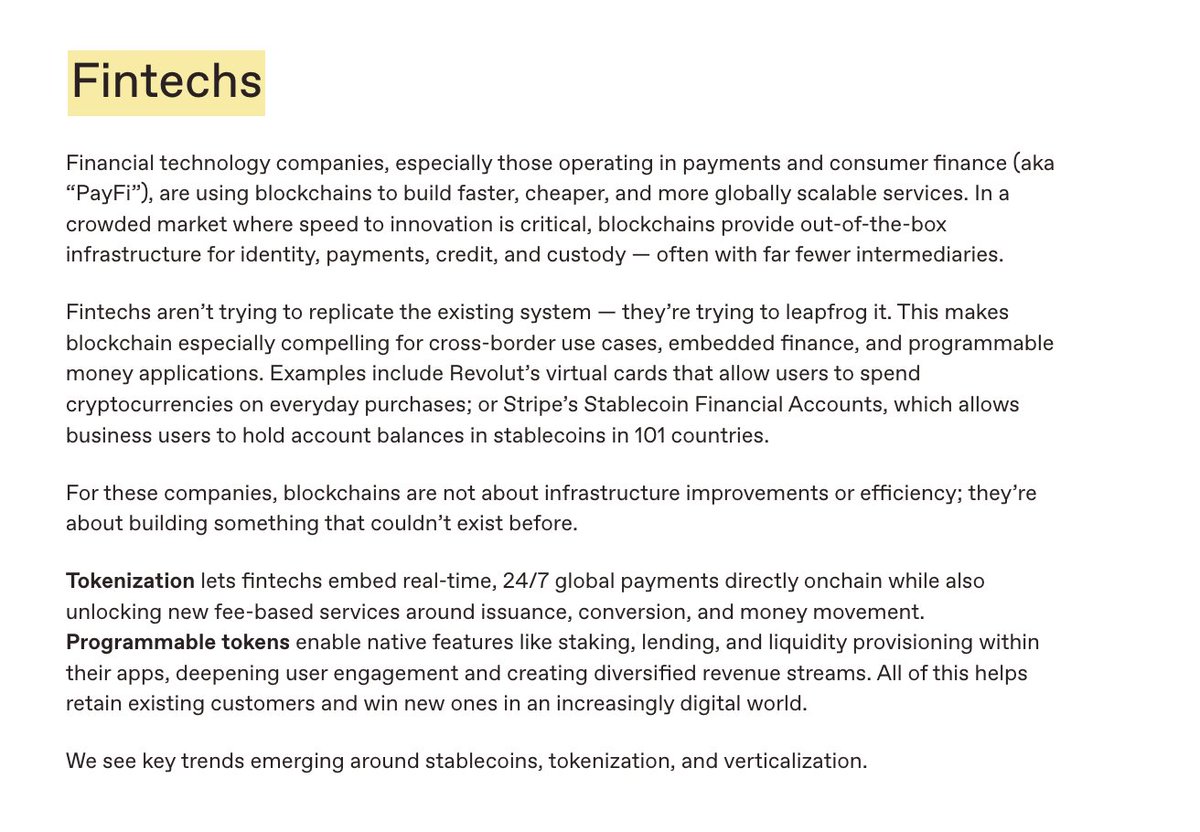
Fintechs.

214
138
711
48,642

Onchain privacy hasn't reached product-market fit because the product wasn't right, not because the market is not there.
The product (past onchain privacy solutions) wasn't right primarily due to:
1. Lack of zero-compromise privacy. Privacy cannot come at the cost of access to liquidity, low tx fees, and UX. Past solutions had problematic trade-offs. Users, most of the time, care about being able to do the transaction (paying, getting paid, buying an asset, etc.) at all before they care about the privacy of doing it.
2. Lack of threat-resistant privacy. When a major onchain hack happens right now (like the Bybit hack), the status quo is that hacked funds are mostly traceable and can be frozen at any later point at any financial intermediaries like exchanges and off-ramps. This status quo needs to be supported by privacy protocols unless we gain regulatory certainty that such guarantees are not required.
Fortunately, we see projects (such as @0xMiden, @inconetwork, and @SeismicSys) solving both issues head-on with pragmatic privacy approaches, relying on a combination of technologies like TEEs, MPC, as well as plain-old security councils.
79
12
228
24,011
Matt retweeted
14 Aug 2025
Companies want to launch EVM L1s.
But it's hard because there's no OS consensus client that plugs into the EVM. @circle even bought an entire [cracked] team to solve this problem for themselves.
We built Summit to solve it for everyone. Audits are starting soon, so the next 10 L1s can get up and running quickly.
24 Jul 2025
Developers building EVM blockchains lack a consensus engine that's both:
✅ Turnkey – easy to plug into an EVM execution client like Reth
✅ Fast – capable of sub-second block times
174
149
611
44,778
29 May 2025
If you're a dev who has innovative ideas for apps that you couldn't build on transparent chains, @SeismicSys offers you encryption at the base layer of the tech stack
Come talk with our team directly in our Developer Telegram chat, send me a DM for an invite
A blockchain is a bank with an app store. Building an app on this bank is the fastest way for anyone to create a financial service.
If I want to create a financial service in the old world, I need to figure out a ton of things:
- How do I accept money?
- How do I store it?
- How do I put it in a financial contract?
- How do I enforce this contract?
- How do I keep the broader system healthy?
- How do I convince people it's all done properly?
If I want to create a financial service as an app on a blockchain, these questions are much easier to answer:
- I can accept money from anyone in the world.
- I can let my users store their own money.
- I can write code to create financial contracts.
- I can depend on the chain to enforce contracts.
- I can recruit anyone to maintain my system.
- I can have my service be publicly auditable.
It doesn't solve all my problems. I still need to do many of the hard parts with integrating my service into the real world. But the process overall is an order of magnitude quicker.
10
2
48
4,312
17 Apr 2025
Just shy of $5B in crypto VC funding in Q1. Love to see there's a sustained appetite for supporting builders given the current macro environment:
coinbase.com/bytes/archive/i…
15
846
17 Apr 2025
Type of energy we need

15
656