
Joined July 2017
- Tweets 18,256
- Following 2,159
- Followers 60,234
- Likes 32,891
5,070 Photos and videos





Pinned Tweet

14 May 2025
I've spoken to many investors who want exposure to crypto via equities but are spooked, understandably, by portfolios full of pure-play miners and exchanges that have seen repeated blowups and bankruptcies.
If that sounds like you, we designed the VanEck Onchain Economy ETF (ticker: NODE) with you in mind.
NODE is an actively managed ETF that can hold global crypto ETPs up to a 25 percent weight, alongside companies with credible strategies to make or save money through bitcoin, digital assets, and the onchain economy.
The issue we’re trying to solve is managing downside volatility without losing exposure to the underlying growth drivers. Many pure-play stocks trade at two or even three times the volatility of bitcoin itself, driven by a combination of leverage, small market caps, and highly idiosyncratic business models. Historical data shows that adding bitcoin to these stocks has improved total returns and reduced overall portfolio risk. NODE will typically hold a core position in a regulated bitcoin ETF, providing clean exposure to BTC itself while allowing the rest of the portfolio to focus on compounding, correlation, and cash flow.
To complement this core, NODE holds both high-volatility pure-plays like miners and exchanges and lower-volatility sectors such as e-commerce, fintech, semiconductors, energy, infrastructure, and utilities. Each is selected based on measurable involvement in the onchain economy, whether through revenue, infrastructure, or strategic alignment.
These latter sectors can offer something critical: ballast. Many names here pay dividends, are less volatile, and can serve as risk-managing building blocks. In periods of stress or dislocation, that ballast can be jettisoned to lighten the load and take on more risk when a washout invites it.
Utilities in particular are starting to benefit from the same structural tailwinds that support bitcoin adoption, including pro-growth policy, more abundant energy, and a rethinking of the connection between energy and money. Combining these exposures may offer an appealing balance of offense and defense.
Companies across all 11 GICS sectors are now engaging with the onchain economy, expanding the opportunity set for equity investors and helping lay the groundwork for broader, more diversified crypto exposure.
We've designed NODE for investors who see the opportunity but want to maintain conviction through the cycle. We believe this thoughtful approach to portfolio construction can help investors stay the course, and we’d be honored to earn your trust.
16 Apr 2025

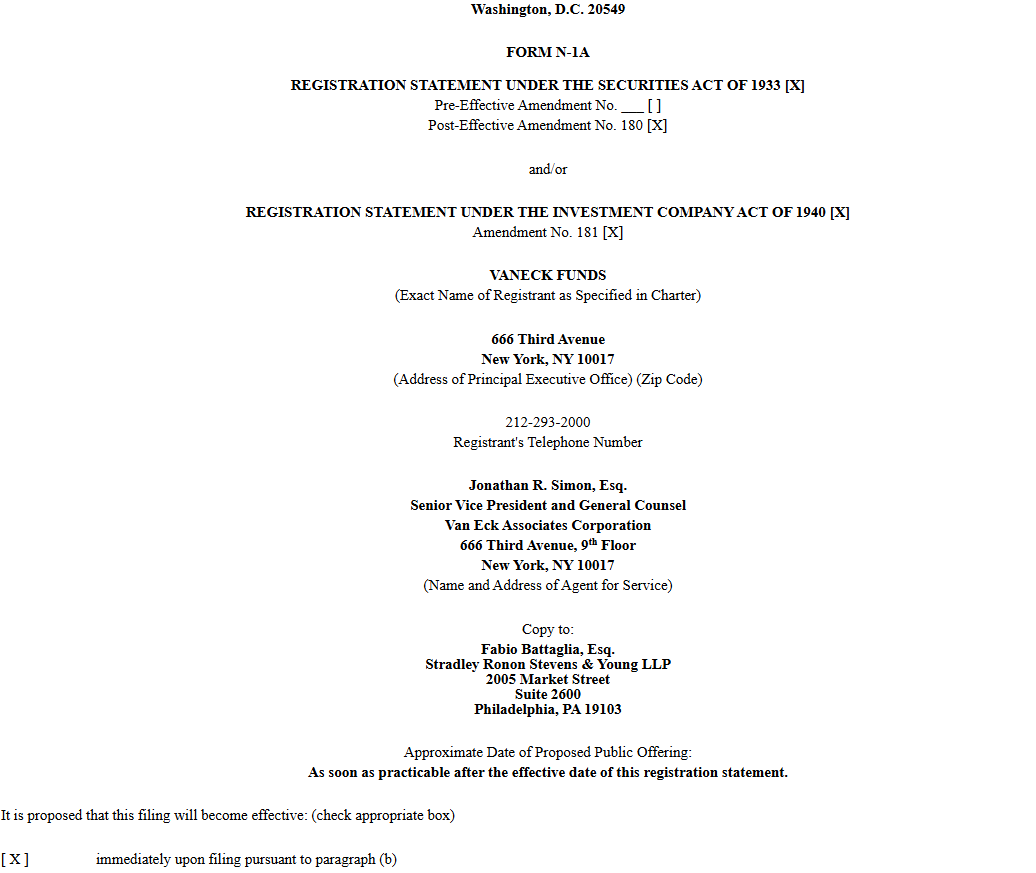
🚨Now Effective: VanEck Onchain Economy ETF ($NODE)
Actively managed, $NODE will aim to hold 30–60 names from a 130 stock universe tied to the digital asset economy:
>Exchanges, miners, data centers
>Energy infra, semis/hardware, TradFi rails
>Consumer/gaming & asset managers
>Balance sheet HOLDers
>Up to 25% in crypto ETPs
Managed by yours truly for 69bps
Target launch: May 14th
The global economy is shifting to a digital foundation. NODE offers active equity exposure to the real businesses building that future.
126
63
479
397,706
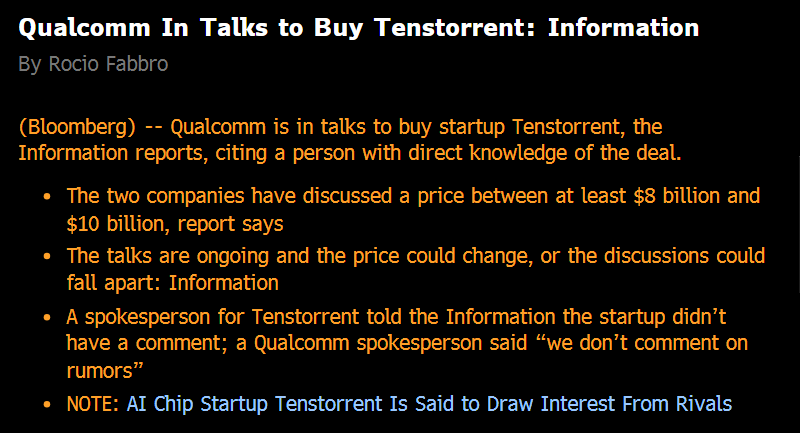
QCOM is in talks to acquire Tenstorrent at $8-10B per The Information.
Tenstorrent builds RISC-V AI accelerators for data center and edge inference. RISC-V is an open-source chip instruction set: no ARM royalties, fully customizable silicon. Key differentiator is that these chips promise to avoid the costly HBM memory that NVIDIA depends on.
Led by Jim Keller (AMD Zen, Tesla FSD chip), Tenstorrent's last confirmed round: $693M Series D, Dec 2024, $2.6B valuation. Was in talks for $800M more at $3.2B pre-money as of Nov 2025.
Why does this matter? NVIDIA just paid $20B to acquihire Groq, another low-memory alternative architecture. Then absorbed the IP and the HBM supercycle kept rolling.
Pattern worth watching: big players keep buying the memory alternatives, but DRAM requirements aren't coming down yet.
QCOM buying Tenstorrent would be their data center AI entry and an ARM dependency hedge simultaneously. Or it becomes the next acquihire that quietly disappears.
6
5
63
13,742
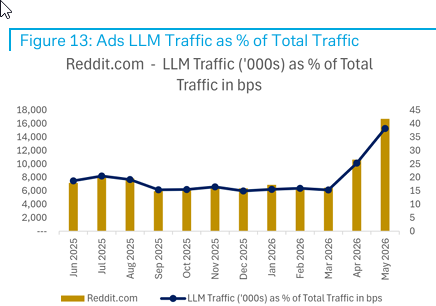
$RDDT - LLM-referred traffic grew sharply across Reddit, Pinterest, Facebook and Google in April–May 2026, with May an all-time high for each.
Reddit's LLM-sourced share sits around 40bps of its total traffic. Small in absolute terms but look at the growth.
4
1
25
3,313
10
1
50
8,422
$NVDA four times over-subscribed on the planned $20B issue.
$20B is an interesting choice for size because it's almost precisely the level of their external equity investments over the last year.
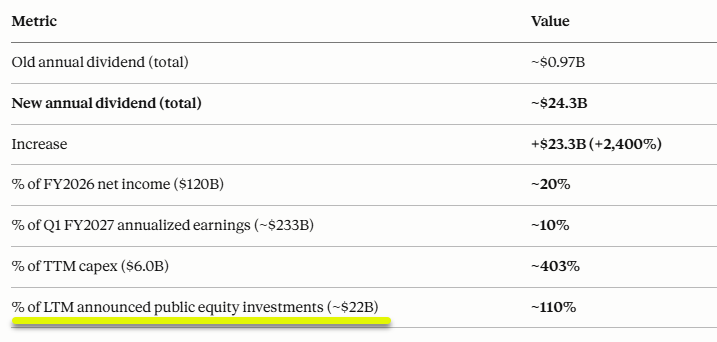
With $NVDA's 25x dividend hike, its payout ratio goes from 0.8% of earnings → ~20% (on FY26 net income). About ~10% on Q1's annualized run rate.
The new dollar obligation of ~$24B/yr is roughly equal to everything they've announced in public equity investments over the last 12 months (CoreWeave, Marvell, Lumentum, Coherent, Corning, IREN, Intel…).
And then there's the $80B buyback authorization on top.
$48B in FCF last quarter -- pre-dividend. The new $24B annual dividend gets covered in under two quarters of free cash flow. They can clearly afford all of it.
But curious what Jensen says about the pace of ecosystem investing going forward. Those bets have been core to the flywheel, and now they're competing with a much larger return-of-capital program.
6
2
62
8,443
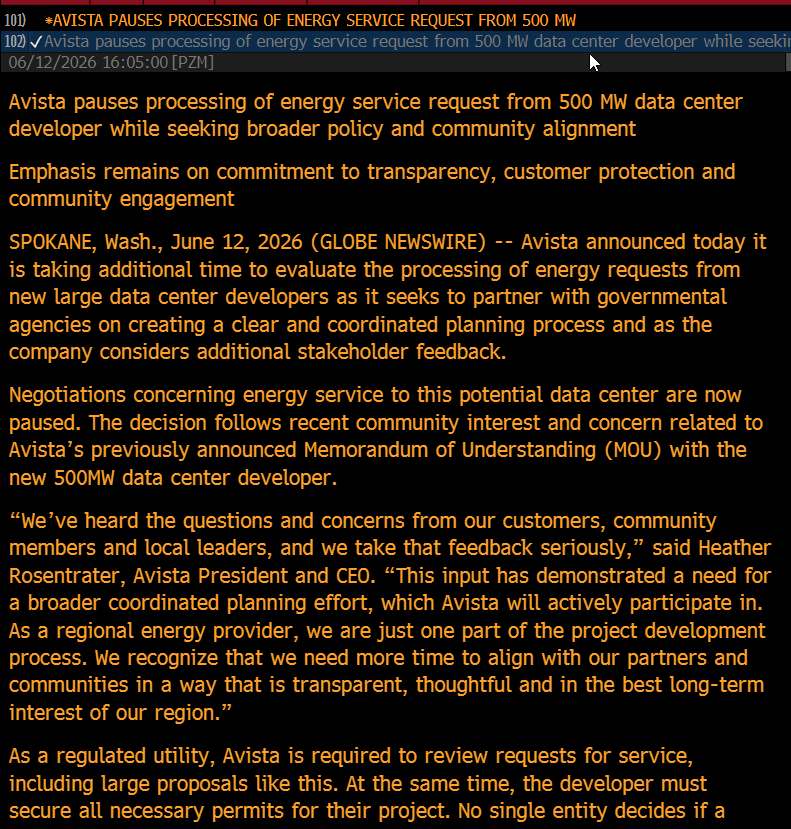
Avista (AVA) just paused a 500-megawatt (MW) data center memorandum of understanding in Spokane County after 5,000 community complaints, a Spokane City Council moratorium proposal, and concerns about ratepayer costs and the Spokane River.
The rumored site is the former Kaiser Aluminum smelter in Mead, actively marketed for data center use with 240MW of Avista power already on site. An energized brownfield, blocked anyway.
Worth zooming out on what this region is:
Eastern Washington runs on cheap Columbia River hydro. By 1950, half of all US aluminum output came from here. Kaiser's Mead smelter and Trentwood rolling mill employed 2,000 workers and supplied Boeing with aerospace sheet. The Mead smelter closed in 2000 after a brutal 2-year lockout. Kaiser's waste practices left a cyanide and fluoride plume in the local aquifer still being remediated today, which explains some of the opposition. (For reference, modern hyperscale data centers use closed-loop cooling systems that bear little resemblance to industrial smelting.)
For this reason, the established Pacific Northwest hyperscale corridor now sits 100 miles west of Spokane in Grant County, served by Grant County Public Utility District (PUD) at roughly $0.02-0.03/kWh hydro power. Microsoft, Google, and Amazon Web Services all built in this region. Avista is a private regulated utility requiring Washington Utilities and Transportation Commission (WUTC) approval on any service agreement of that scale. Grant County PUD is a customer-owned municipal corporation explicitly exempt from WUTC jurisdiction under Washington state statute
Grant County PUD has its own constraints. After raising application fees sharply in early 2025, the large-load queue shrank from ~2,900MW to 692MW, but that's still nearly equal to the PUD's entire average system load of ~750MW across all 55,000 customers. Load caps are in place in Quincy's industrial zone while transmission capacity catches up.
KEEL ($KEEL) has a site in Moses Lake, also in Grant County, 30 miles from Quincy. The company is converting its former Bitcoin mining operation there into 18MW of liquid-cooled AI infrastructure at 190kW/rack, backed by a $128M Vertiv equipment deal. Zoning is approved, a demolition permit was issued March 2026, and full permits are expected mid-to-late summer 2026, ahead of a December 2026 completion target. No Superfund remediation, no water rights dispute to worry about.
When 500MW gets blocked by community revolt in Spokane and load caps constrain Quincy, an already-energized, already-zoned site with active construction permitting in the same hydro corridor carries scarcity value that can compound as the political environment tightens.
Watch for: full permit approval mid-to-late summer 2026, lease execution with a hyperscale or AI tenant, construction completion by end of year.
9
4
59
7,923
BofA telecom analyst Michael Funk initiates on $WULF with BUY rating, $34 target.
Title: "Bye Bye Bitcoin. Hello AI data centers"
12
10
99
11,202
matthew sigel, recovering CFA retweeted

Jun 14
Following intensive talks, we are pleased to announce that the Peace Deal between the United States of America and Islamic Republic of Iran has been REACHED. Both sides have declared the immediate and permanent termination of military operations on all fronts, including in Lebanon.
The official signing ceremony will be on Friday, 19 June in Switzerland.
We would like to thank the United States of America and the Islamic Republic of Iran for their commitment to finding a diplomatic solution to the conflict. We would also like to extend our sincere appreciation to our brothers in this mediation effort, the great leadership of State of Qatar, for their support in reaching this agreement. I would also especially thank the visionary leadership of Kingdom of Saudi Arabia and Republic of Türkiye for their immense contributions in this regard.
With the agreement now in place, mediators will facilitate a series of meetings this week. These pre-implementation discussions will lay the foundation for the technical talks and the official signing ceremony.
@realDonaldTrump
@JDVance
@SecRubio
@SteveWitkoff
@SEPeaceMissions
@drpezeshkian
@mb_ghalibaf
@araghchi
6,171
15,796
55,199
11,721,095
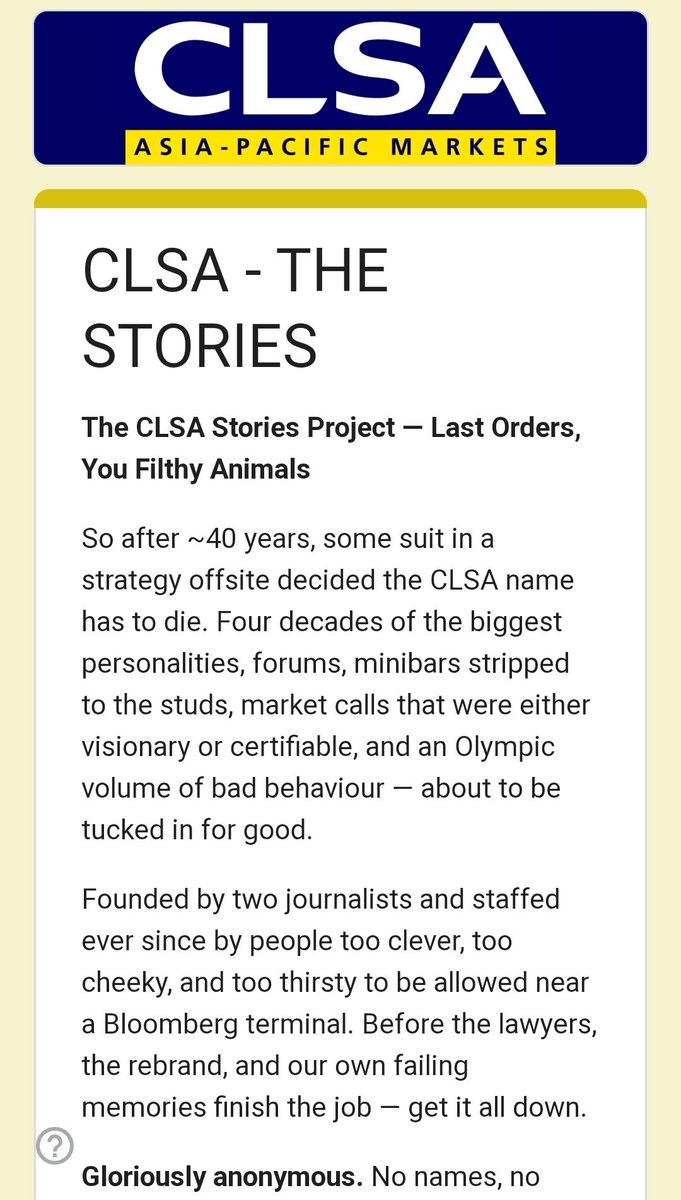
WHO DID THIS
(DM for the link if you worked there)
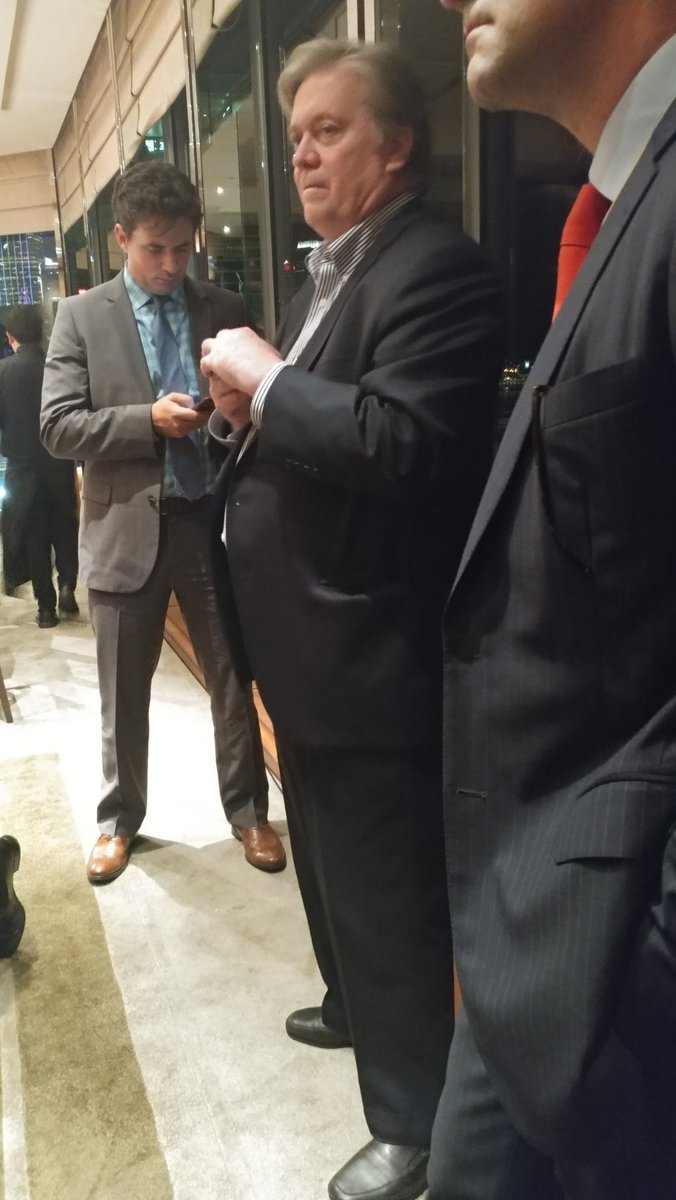
Remembering when the Europoor clients boycotted the conference because we invited Bannon to speak 🤣
3
7
6,393
Remembering when the Europoor clients boycotted the conference because we invited Bannon to speak 🤣
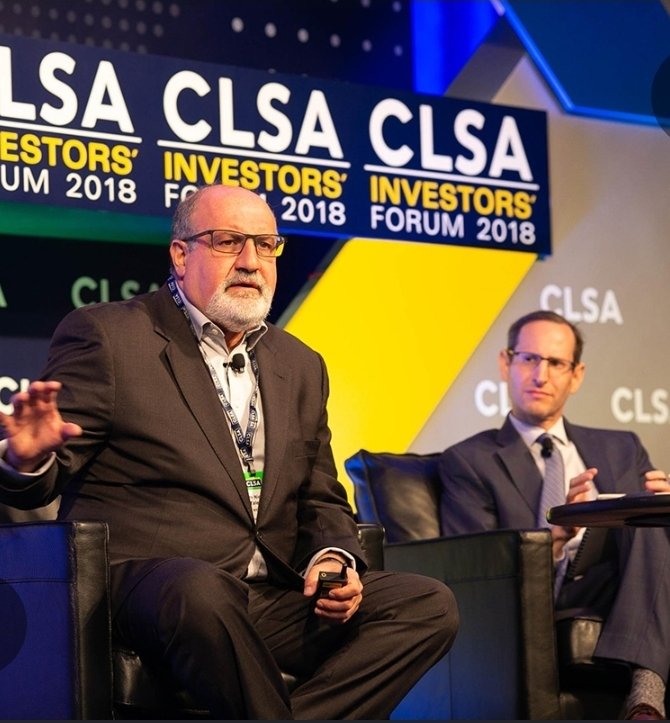
Memories:
A simpler time, when he was known for his work instead of the block button.
7
23
13,816
Memories:
A simpler time, when he was known for his work instead of the block button.
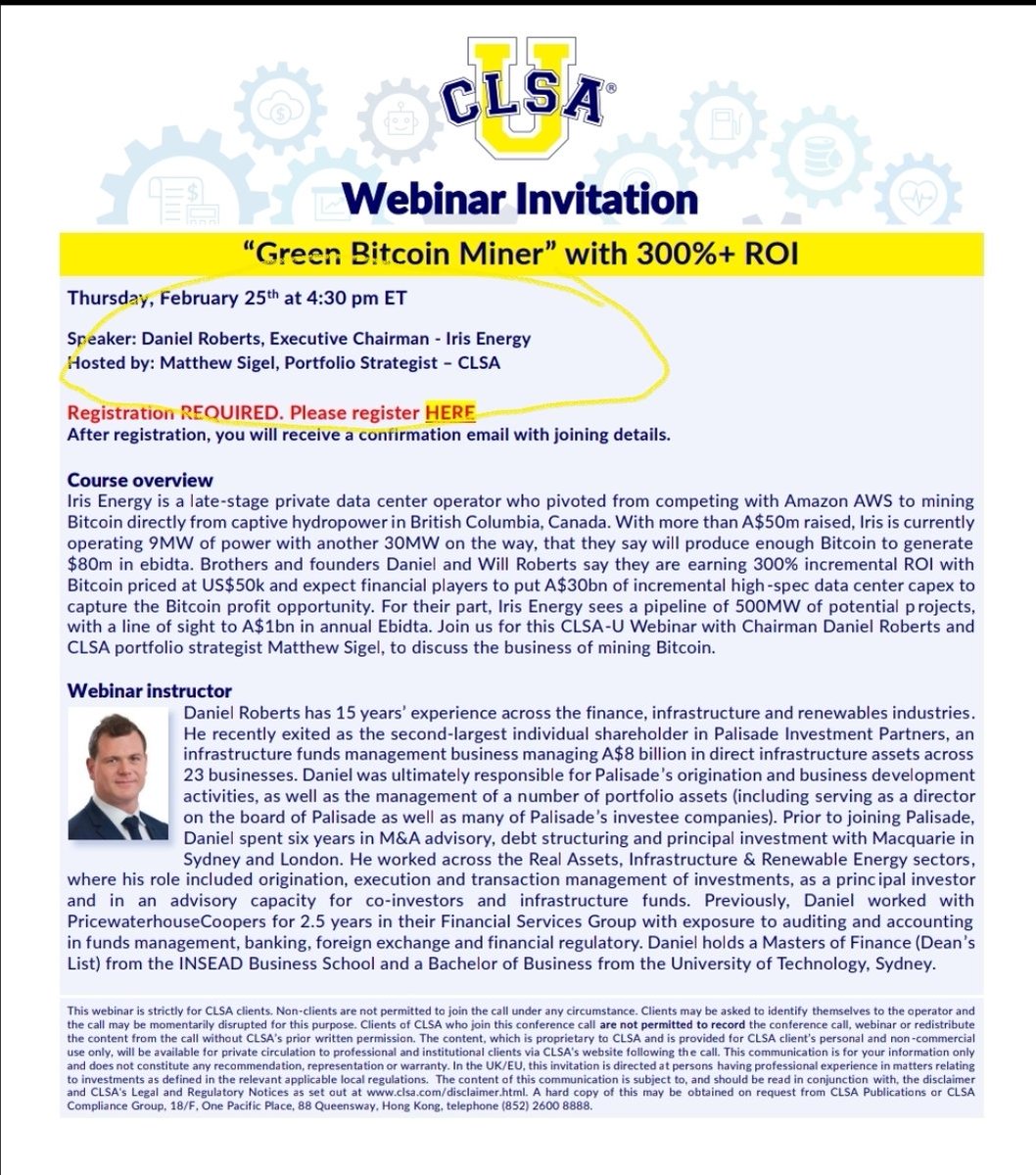
Memories:
Talking to $IREN when they were still private in 2020
5
18
13,243
matthew sigel, recovering CFA retweeted

Jun 13
The US government, citing national security authorities, has issued an export control directive to suspend all access to Fable 5 and Mythos 5 by any foreign national, whether inside or outside the United States, including foreign national Anthropic employees.
The net effect of this order is that we must abruptly disable Fable 5 and Mythos 5 for all our customers to ensure compliance.
Access to all other Claude models is not affected.
We apologize for this disruption to our customers. We believe this is a misunderstanding and are working to restore access as soon as possible.
Read our full statement: anthropic.com/news/fable-myt…
12,529
25,756
87,928
89,675,784
matthew sigel, recovering CFA retweeted

Jun 12
This is how you solve the social contract problem!!
A step in the right direction.
2
3
53
9,286
"$NRG options surge, led by call spreads."
Reminder that NRG has a 20% FCF yield into the shortest power market the US has ever seen.
Somebody knows something $NRG 👀
3
12
3,658
I joined AllianceBernstein from Bloomberg in 2007.
The CEO at AB back then fancied himself more of a stockpicker than an operator. His bullish views on financials had spread across all three books: growth equities, value equities, and fixed income.
When the GFC hit in 2008, we got hammered.
By early 2009 the annual layoffs had begun, and with them came the cost cuts. One of the first targets: Bloomberg terminals.
I had a brand new baby at home and was low man on the team. The threat felt very real.
So I called an old colleague still at Bloomberg and asked him to pull usage data on 20 of my higher-paid colleagues, showing how many functions each of them actually used and which. I put it in front of management to justify keeping my terminal.
Yes, it was a little ruthless. But Bloomberg's internal culture made that kind of move possible. Badge-in and badge-out times were visible. Ticket history was visible. Vacation requests, stapler orders, everything. The hyper-transparency created accountability and hard work and yes, a little surveillance. But we were paid well for the trouble.
The point is that someone is already keeping score.
At VanEck, a colleague is now tracking AI token usage by team and by individual, bucketing use cases into revenue-generating, cost-saving, and waste. Employees are being ranked by efficiency. Use cases are being streamlined and optimized. The goal is not to save money but to find the processes that will make us win faster and cheaper than the competition.
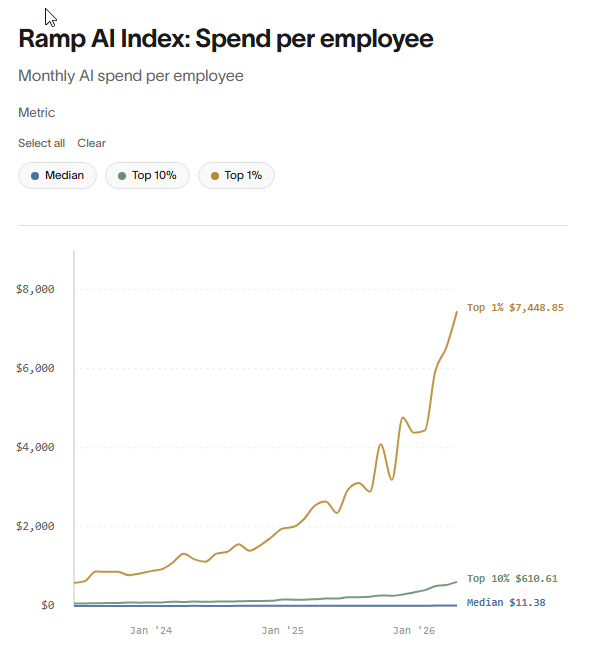
Which brings me to this chart.
The Ramp AI Index tracks monthly AI spend per employee across their customer base:
Median: $11/month
Top 10%: $610/month
Top 1%: $7,448/month
That 650x gap between the median and the top 1% is more than twice the average CEO-to-worker pay ratio in the S&P 500.
The people at $7,448 have built workflows around these tools that compound daily.
The gap widens every month you don't.
6
5
60
8,642
source:
x.com/tslaming/status/206542…

SpaceX President and COO Gwynne Shotwell recently sat down with CNBC for an insightful interview about SpaceX's IPO, Starship, Starlink, and their new AI satellites 🚀
Here is the complete summary on exactly what you need to know from the discussion:
1⃣ BUSINESS STRATEGY & IPO
📈 Timing of the IPO and going public
SpaceX feels it is the right time to go public because the company has finished many of its foundational building blocks, needs capital to scale, and wants to give everyday Americans the opportunity to invest.
"But we've gotten so many of the building blocks completed for so many of these different business areas. It actually feels like the right time ... But we've got the building blocks there and now it's time to scale."
🔭 Long-term focus over quarterly earnings
SpaceX intends to maintain its long-term focus despite becoming publicly traded, asking investors to become comfortable with its track record of attempting difficult, futuristic projects rather than prioritizing short-term quarterly earnings.
"Our horizons are very long term. I do not want to focus on quarterly earnings ... What folks that invest in SpaceX, SpaceX AI, need to know is they need to know that what we're doing is very futuristic. And we should be thinking about the future as well as the current quarter."
🤝 A shift toward mergers and acquisitions
Moving away from its historical aversion to acquisitions, SpaceX is now open to M&A—especially in the AI sector—while actively collaborating with other companies to share data and compute.
"You know, we weren't really an M&A company. Space X wasn't an M&A company for decades. And so it's kind of a new exciting world for us. I do think M&A is in the future, especially when you look at the AI world."
2⃣ ARTIFICIAL INTELLIGENCE & COMPUTE
🛰️ Building AI data centers in space
SpaceX is targeting space-based AI compute networks, as putting inference compute on orbit offers massive efficiencies through abundant solar power and free cooling compared to terrestrial infrastructure.
"So, yes, we are building data centers here on Earth, but the most efficient place to put inference compute is on orbit. It's always sunny in space. You get six X the amount of power out of a solar cell in space as you do here on Earth, and cooling is free because space is actually quite cold."
💻 Chip supply chain bottlenecks and skepticism
A major driver behind SpaceX's push for extreme vertical integration is the bottleneck in the semiconductor supply chain; Shotwell explicitly noted that current chip manufacturers are either unable to scale to SpaceX's ambitions or simply do not believe the company's aggressive targets.
"We have to build a lot of chips. Not because we necessarily want to build chips, but I don't think the chip manufacturers are thinking about scaling in the same ways that we're thinking about scaling, or they don't believe us."
🧠 The Anthropic deal and compute prioritization
While SpaceX is securing massive deals to lease out compute power, the company structured these as short-term contracts to ensure they never accidentally sell off compute capacity that SpaceX or xAI ultimately needs for themselves.
"I believe we will continue to provide that capability to others, actually. We will never sell compute capacity that we actually need, which is why we wanted the ability to have these contracts be short term if necessary."
🏁 xAI's competitive positioning
Rather than claiming immediate dominance in the AI space, Shotwell openly admitted that xAI's model is not currently number one, noting that operating as the underdog provides necessary motivation and a clear target to chase.
"Competition is really good ... I think it's a great place for XAI, right? Our model is not number one right now. I think we'll get there. But I think it's really important to be chasing after someone."
3⃣ SPACE MISSIONS & ENGINEERING
📱 The massive potential of Starlink mobile
Starlink currently has more demand than it can fulfill, and the future Starlink Mobile user base is expected to vastly outnumber traditional residential broadband users.
"I think more than half the population, the global population has a cell phone... Not everybody is going to need a Starlink broadband in their home. There's lots of other options as well. But I think the numbers of users of Starlink Mobile will far exceed our Starlink broadband."
🚀 Starship flight timelines and iterations
Starship's development relies heavily on iterative testing; Flight 13 will implement fixes based on Flight 12's performance, while Flight 14 might target orbit if approved by the FAA.
"If we feel like we can actually go to orbit, then we would actually have that gate and have the FAA let us go to orbit on Flight 14."
💥 The importance of failure in development
SpaceX embraces failure during the development phase as a necessary tool for innovation, viewing perfect test flights as less informative than ones where things go wrong and generate a "treasure-trove" of data.
"I think it's actually really important to have failure. If you don't have failure, like if a launch goes perfectly, all you've learned is that that launch vehicle on that day worked... So when you have failure, you actually get this treasure-trove data."
🔄 AI satellites driving Starship's reliability
Just as launching thousands of Starlink satellites allowed SpaceX to fly the Falcon 9 frequently enough to perfect its reliability, the massive volume of new AI satellites will serve as the core market that allows Starship to fly repeatedly and become safer.
"The more you can fly a vehicle, the more reliable it will be, the safer it will be. Starlink provided that market for Falcon 9... The AI satellites will be that same market, but for Starship. And so we find the AI satellites to be incredibly important to the development of Starship."
🏭 Massive capital expenditures and vertical integration
To support these highly expensive, next-level undertakings, the company is embracing extreme vertical integration, which includes manufacturing its own solar cells and establishing its own natural gas pipelines to mine rocket propellant.
"So building our own natural gas pipelines, we're actually looking at basically mining our own natural gas. So, these huge investments develop our own propellant and bring it to the rocket. Launch sites are quite expensive."
🪐 The Mars colony timeline
The ultimate mission of establishing a permanent human colony on Mars is still actively driving the company, with Shotwell estimating a rough timeline for getting there within the next decade or two.
"Wow, I'm so bad at predicting timelines. Maybe 2040? 2035? 2040? "
4⃣ CULTURE & LEADERSHIP
🏢 Elon Musk's leadership and corporate governance
Despite market chatter about eventually merging with Tesla, SpaceX remains strictly focused on its core operational space missions right now, and the company's governance structure remains heavily reliant on Elon Musk's unique leadership abilities.
"There is no one that can run this company other than Elon, frankly... I think it's incredibly important that he is the CEO and that we have the governance structure that we've set forth."
💰 Employee retention after a massive liquidity event
Addressing concerns that an IPO might cause a mass exodus of newly wealthy employees retiring, Shotwell clarified that many SpaceX employees have already experienced lucrative liquidity events and continue to work purely out of dedication to the mission.
"People at SpaceX have had liquidity events a couple one to two times a year already. There's already a lot of folks working at SpaceX that are quite wealthy and they're still working... Those that don't want to work shouldn't be at this company anyhow, right? "
x.com/xdNiBoR/status/2065392…
7
2,606
My boss tells me the same thing.
Alignment.
1
29
5,468
Claude would have opened this stock by now
4
1
28
5,547