Fan of Tesla 🛞 SpaceX 🚀 and Neuralink 🧠
Joined August 2011
- Tweets 33,115
- Following 55
- Followers 33,197
- Likes 24,452
8,366 Photos and videos


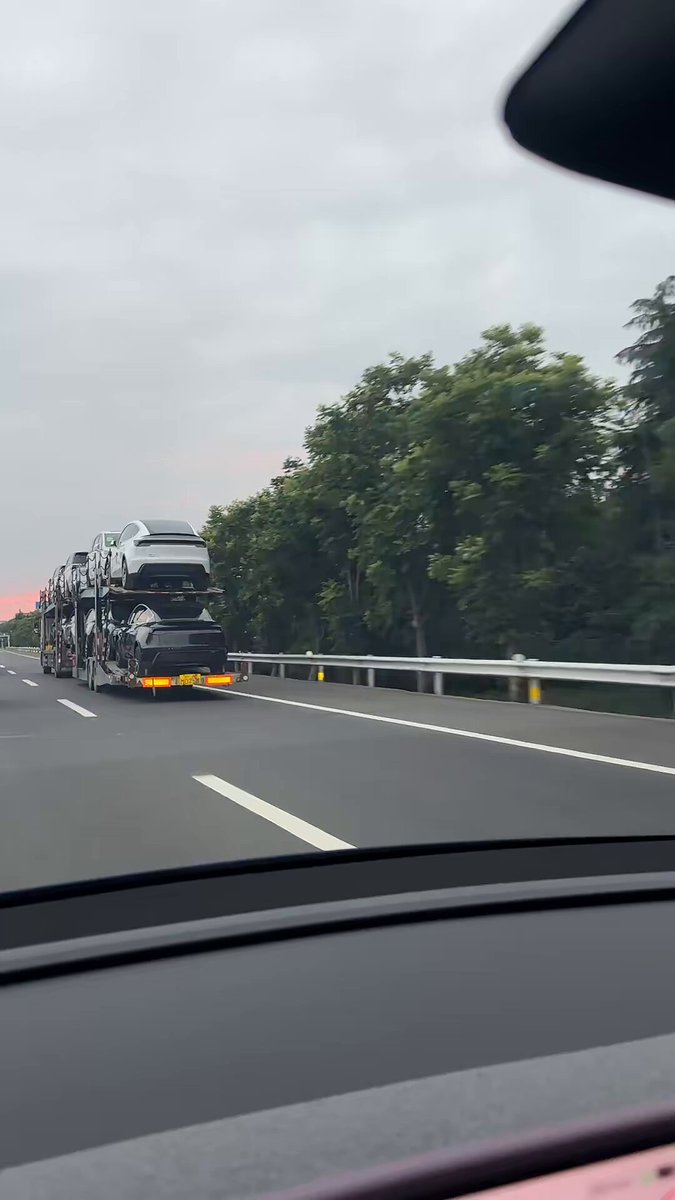


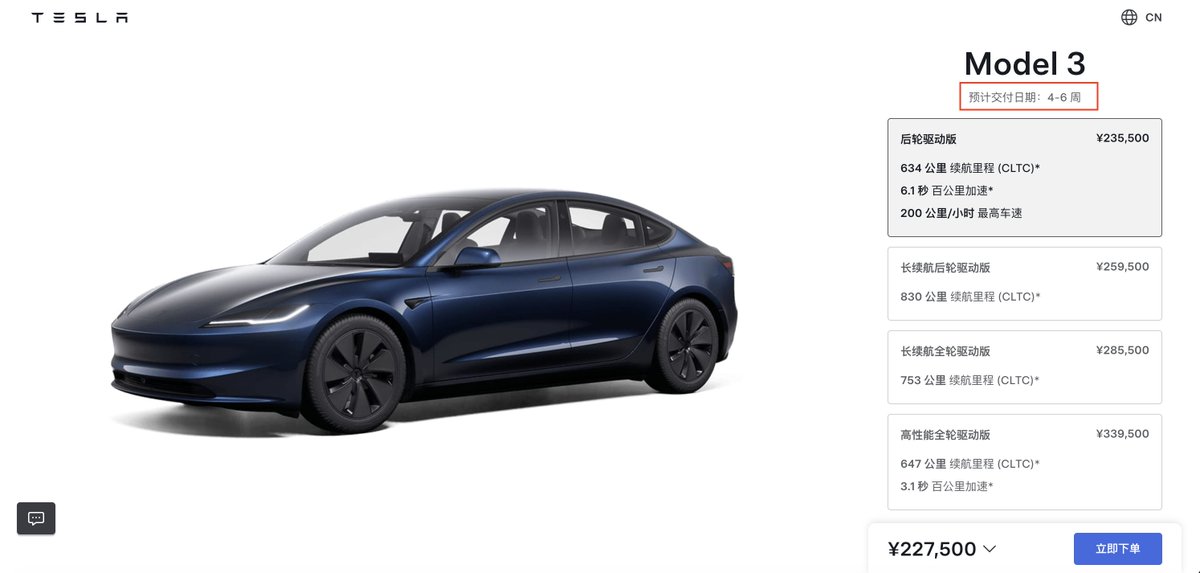






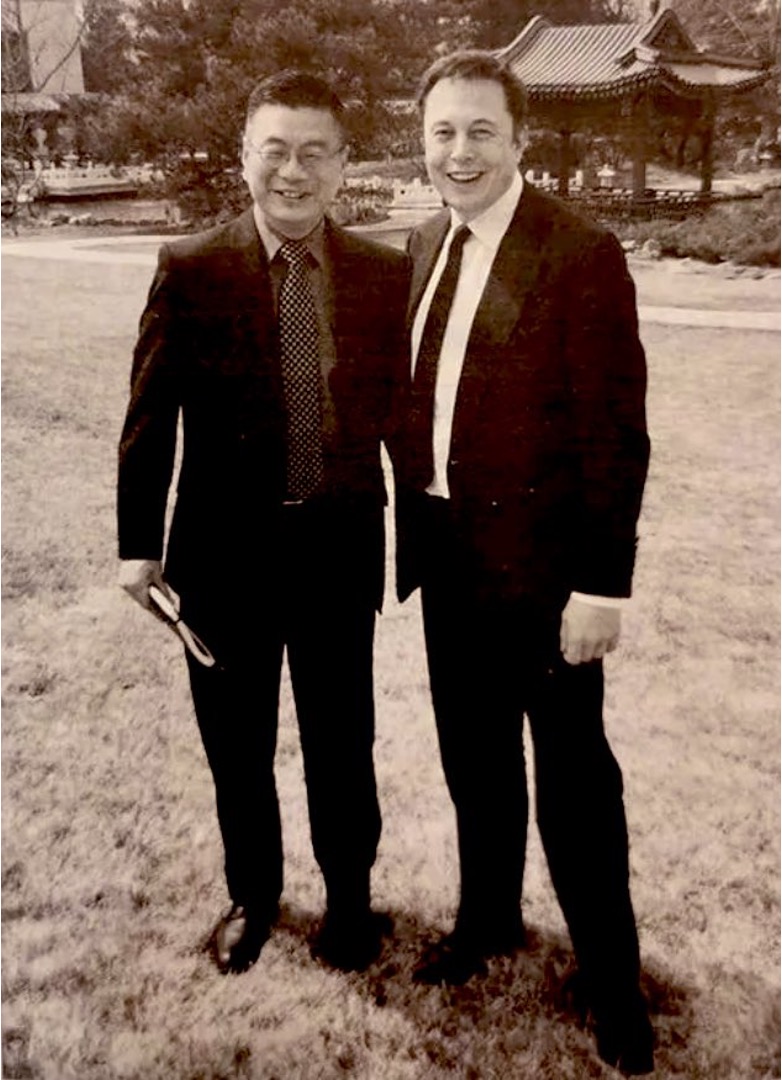
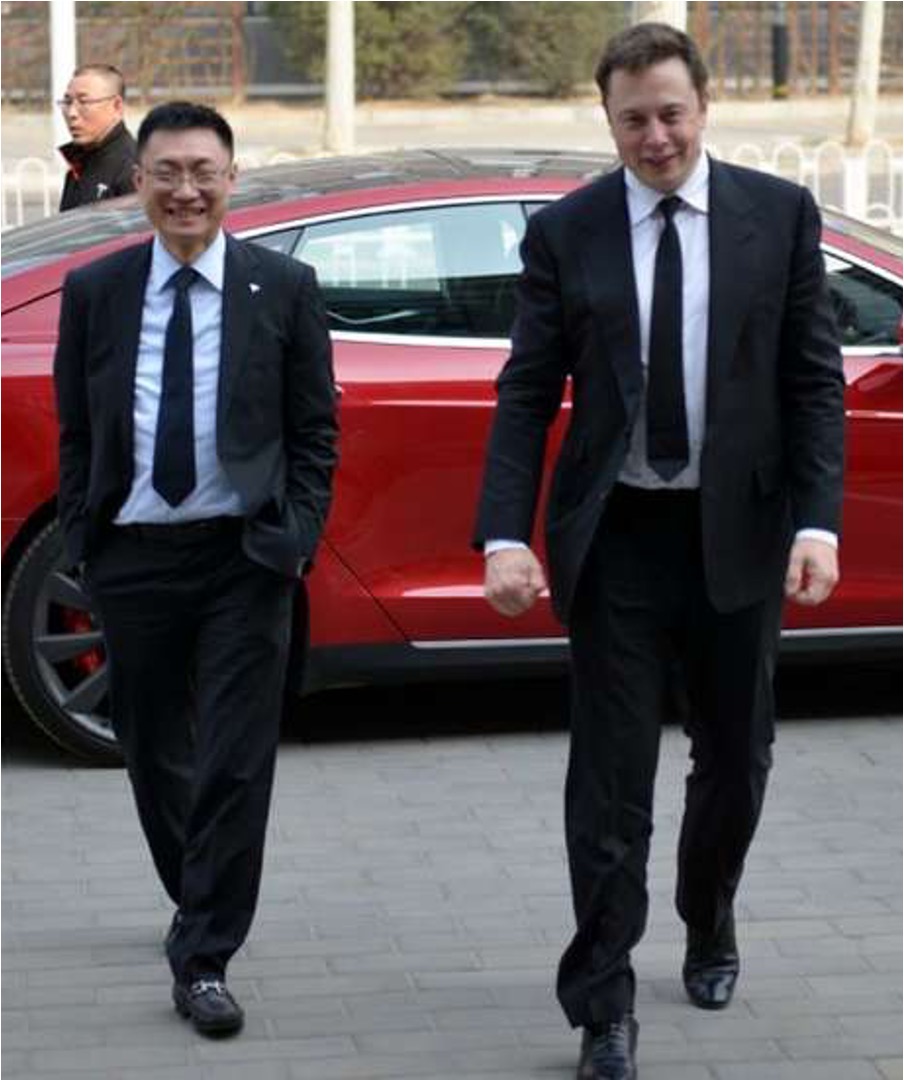
🚨 A REMARKABLE STORY ABOUT ELON MUSK’S SECRET GENERALS IN CHINA: THE TWO MEN WHO BUILT THE SHANGHAI MIRACLE 🏆
🌑 In 2018, Tesla had entered its darkest hour. In the United States, severe production crises and low yield rates had put Elon Musk on the hot seat. Wall Street magnates circled the company, eyeing it for short-selling, waiting for the inevitable collapse.
🌏 Across the Pacific, the situation was equally dire. In the massive Chinese market—which accounted for nearly half of global new energy vehicle sales—Tesla was struggling to gain traction. Faced with dismal sales of only 120 cars a month, an enraged Musk even considered disbanding the entire Chinese team.
🧱 The market was notoriously difficult to crack. Because all Teslas were imported, the starting price of 499,000 yuan for the Model 3 deterred most consumers. To lower prices, domestic production was essential. However, the premise for foreign companies to produce cars in China was to establish a joint venture—a compromise the maverick Musk was unwilling to make.
🔮 Tesla needed a miracle in China. That miracle would require two distinct phases spearheaded by two very different men: Robin Ren, the diplomat who would unlock the forbidden door, and Tom Zhu, the commander who would build an empire behind it.
PHASE ONE: THE DIPLOMAT AND THE BREAKTHROUGH
🕵️♂️ Secretly, Musk began looking for a "China hand" to navigate the complex political landscape. Robin Ren (Ren Yuxiang), a fellow alumnus of the University of Pennsylvania, had long been on Musk's radar. Since 2012, Musk had repeatedly invited Ren to join Tesla, convinced he was the missing link.
🎓 Initially, Ren was surprised by the olive branch. He admitted he "knew almost nothing about the automotive industry" and found it hard to imagine that, 20 years after graduation, Musk would suddenly ask to have lunch. But Musk was persistent. As the 22nd International Physics Olympiad champion and Musk's former laboratory partner at UPenn, Ren was held in high regard by the CEO, who once noted that Ren was the only classmate whose physics was better than his own.
🤝 Ren finally joined in May 2015 as Vice President of Tesla Asia Pacific. Musk was set on him not just for his intellect, but for his unique leverage: his identity as a native Shanghainese with deep government relations.
🏛️ He became the unsung hero of the Shanghai project. Under Ren's mediation, Musk began frequently meeting with high-ranking Chinese officials. In April 2017, Ren first articulated the crucial argument that a wholly-owned factory "benefits the upgrading of China's automotive industry," persuading officials that Tesla's technology could drive the local supply chain. With theories of technological independence and industrial chain driving effects, Ren slowly loosened the customary domestic joint venture model.
✈️ By February 2018, the plan was ready. Ren flew to the US to report to Musk with a detailed blueprint for the Shanghai factory, including location maps, financing commitments, and transaction terms. Unfortunately, Musk was deep in the "production hell" phase of the Nevada battery factory. When they finally met, Musk didn't even look at Ren’s slides. He just stared at him and asked, "Are we doing this right?"
🚦 Ren was taken aback. He thought the heavy lifting was done, but realized Musk needed reassurance, not data. Giving a firm affirmative answer, Ren secured the green light.
🔓 In April 2018, the breakthrough arrived. The Chinese government lifted foreign ownership restrictions on new energy vehicles, and Ren seized the opportunity. By July, the Shanghai Municipal Government and Tesla signed a memorandum of cooperation. While Shanghai Mayor Ying Yong and Musk unveiled the project publicly, it was Ren who signed the agreement, quietly cementing his pivotal role.
✍️ Ren secured three extremely favorable terms that forcefully broke the established joint venture model. First, he negotiated land concessions, obtaining 860,000 square meters of land in Lingang at a 90% discount from the market price.
⚡ Second, he secured low-interest loans, obtaining credit support totaling over 16 billion yuan with an interest rate of just 3.9%. Third, he ensured rapid approval, taking only half a year from signing the contract to commencing construction. Robin Ren had successfully delivered Tesla's first taste of "China speed."
PHASE TWO: THE COMMANDER AND THE WAR FOR SPEED
🏗️ With the door successfully opened, someone had to walk through it and build. While Ren moved in high-level diplomatic circles, the on-the-ground reality for Tesla China was chaotic.
🔌 In early 2014, the company was struggling with a "charging anxiety" crisis that was killing sales before they could start. Consumers refused to buy electric cars without a reliable network. Into this breach stepped Tom Zhu. Unlike the diplomatic Ren, Zhu was a man of the earth.
🌍 Born in China but educated in New Zealand with an MBA from Duke University, Zhu had cut his teeth managing tough infrastructure projects in Africa. He was used to dust, delays, and difficult environments. He joined Tesla in April 2014 to build the Supercharger network, but his pragmatic, military-style execution caught Musk’s eye immediately. Despite having zero automotive experience, he was put in charge of Tesla’s entire China operation by the end of the year.
⚔️ If securing the land was Robin Ren's victory, building the factory was Tom Zhu's war. The timeline Musk demanded was widely considered impossible: transform a muddy field in Lingang into a world-class vehicle factory in under a year.
🏠 Zhu moved to the front lines. Known for his no-fuss style and often seen wearing a standard-issue Tesla fleece jacket and a buzz cut, Zhu rented a small, government-subsidized apartment just 10 minutes from the construction site. He paid less than 2,000 yuan ($300) a month for rent, purely so he could be the first one in and the last one out.
🚀 Under his watch, "China Speed" became a reality. He orchestrated a 24/7 construction schedule that stunned the industry. In January 2019, the site was dirt. By October 2019—just 10 months later—the factory was complete and starting trial production. It was a miracle of manufacturing engineering that saved Tesla’s cash flow at a critical time.
💰 The results were undeniable. Two years later, the Shanghai factory contributed half of Tesla's global production capacity, and costs were sharply reduced by 65%. Through the Gigafactory, Tesla solved its production and profitability issues in one fell swoop, eventually surpassing a market value of $1 trillion in October 2021.
UNSTOPPABLE: THE MIRACLE OF SHANGHAI
🌟 While Robin Ren left the company in 2020, Zhu’s star continued to rise. His defining moment came in 2022 during the severe Shanghai COVID-19 lockdown. The city was paralyzed, and factories everywhere were shutting down. For Tesla, a halt in Shanghai meant cutting off half its global cash cow.
🛌 Zhu made a decision that mirrored Musk’s own famous "sleeping on the factory floor" days. He implemented a "closed-loop" system, moving into the factory and sleeping on the floor alongside thousands of his workers.
🥣 For over two months, they lived, ate, and worked inside the facility, cut off from the outside world to keep the assembly lines humming. While other automakers flatlined, Zhu’s army kept delivering cars. By 2022, Giga Shanghai was Tesla's primary export hub, producing over 710,000 vehicles that year—more than half of Tesla's global output.
🤠 Musk, who values "hardcore" commitment above all else, saw in Zhu a mirror image of his own relentless drive. In late 2022, when Tesla's Texas and Berlin factories were struggling to ramp up, Musk didn't hire a local expert. He flew Tom Zhu to Austin.
🦺 Zhu arrived with a team of his most loyal lieutenants from Shanghai, famously appearing at the US factories in their signature Tesla visibility vests, ready to instill "China efficiency" into American operations.
🏆 In April 2023, the former project manager who built charging stations was named Senior Vice President of Automotive. Today, Tom Zhu sits at the very pinnacle of Tesla's hierarchy, effectively serving as the global No. 2, overseeing all global production and sales.
☯️ Ultimately, the miracle of Shanghai wasn't just about steel and software; it was about the collision of two distinct forces. Robin Ren was the velvet glove who rewrote the rules of the game, while Tom Zhu was the iron fist who built the arena. One conquered with handshakes, the other with grit. Musk may have provided the vision, but without his Diplomat to open the gate and his Commander to hold the line, the future would have remained just a dream.
103
378
2,221
223,310
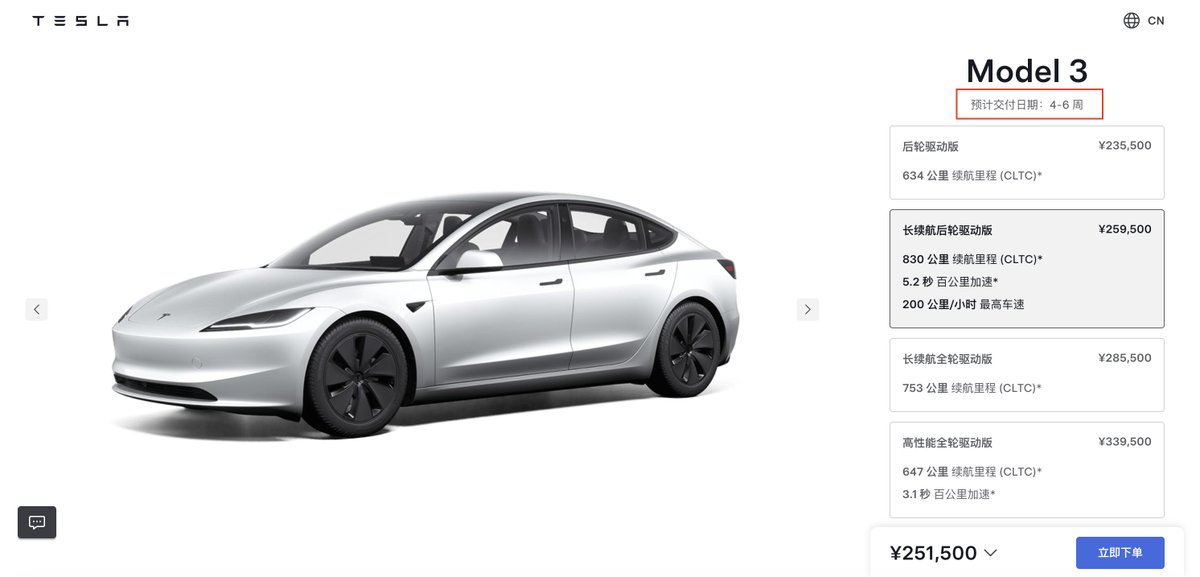
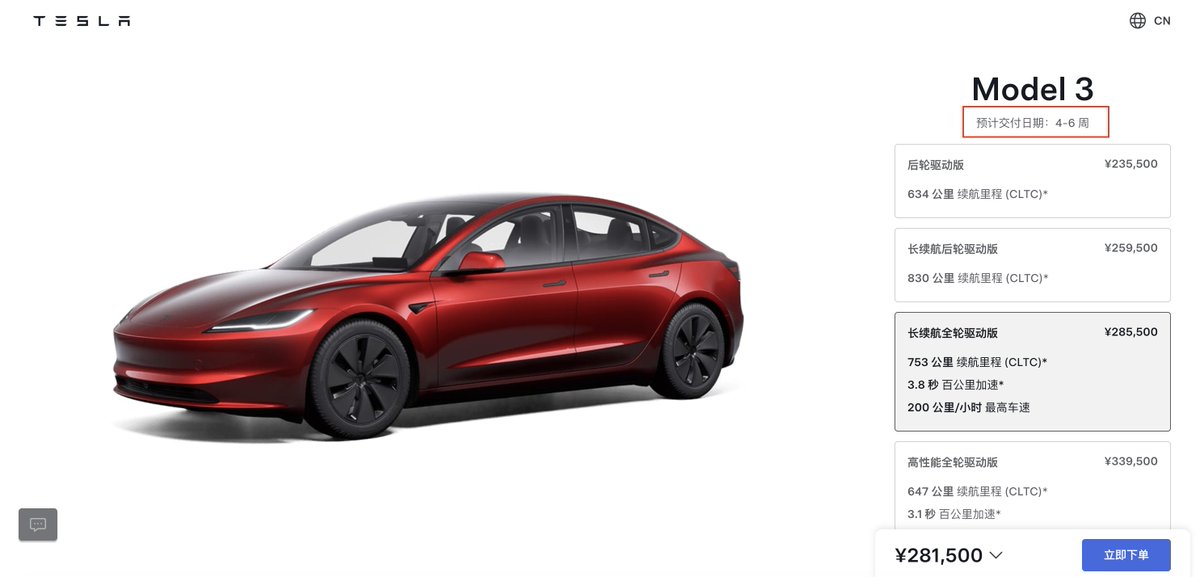
GOOD NEWS 🇨🇳 China has set a target of 40% penetration for new-energy heavy trucks by 2030, and this massive regulatory push could be a HUGE opportunity for Tesla 🔥
If Tesla gets approval for launching the Semi in China, it could become a major player in one of the fastest-growing electric truck markets in the world 🔥
Domestic Chinese manufacturers are making great strides, but Tesla Semi’s real-world efficiency data is setting a very high bar 🎯
Recent official specs combined with real-world pilot data from ArcBest’s Long Range Semi have set a new benchmark for heavy-duty transport:
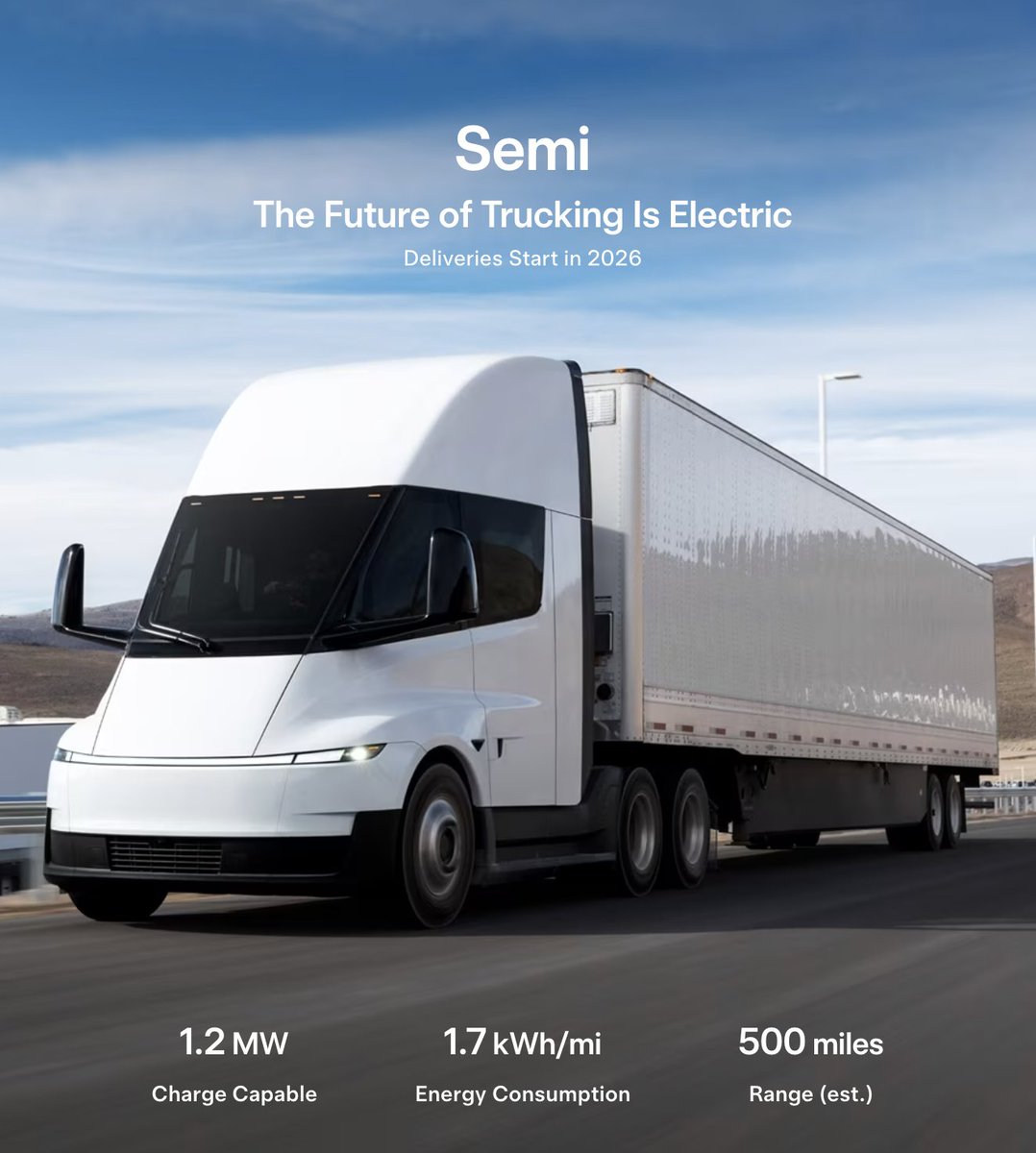
⚡ Hardware specs: reported 822 kWh battery pack, 500 miles (805 km) of range, and 1.2 MW peak charging
🔋 ArcBest pilot efficiency: 1.55 kWh per mile
🚚 Daily testing average: 321 miles
🛣️ Terrain conquered: Real-world routes including the 7,200-foot climb over Donner Pass
When you line up the available specs of China’s heavyweights against the Semi’s 1.55 kWh/mile ArcBest pilot benchmark, the gap becomes clear 🆒
🇨🇳 Windrose E700: Packs a massive 705 kWh LFP battery and pushes 416 miles (670 km) of range. Its claimed efficiency sits around 1.69 kWh/mile.
🇨🇳 DeepWay 6x4 Star: Utilizes a 600 kWh CATL LFP battery, offering roughly 250 miles (400 km) of range at 49 tons.
🇨🇳 SANY SE882: Equips a record-breaking 882 kWh battery but achieves roughly 354 miles (570 km) of composite operating range, relying heavily on pack capacity to cover distance.
🇺🇸 Tesla Semi: With a reported 822 kWh battery pack and ArcBest’s real-world 1.55 kWh/mile pilot result, it can push roughly 500 miles (805 km) of range on a single charge.
Tesla’s ArcBest pilot result is an extremely strong real-world benchmark. Some Chinese competitors, including DeepWay and SANY, appear to need much larger battery packs to achieve lower range, while Windrose is much closer on efficiency 👀
More apples-to-apples testing is still needed, but the Tesla Semi’s range-efficiency combination looks highly competitive if it enters China 💪
20
77
576
26,475
While every other automaker is racing to slap massive, fingerprint-smudged walls of glass across their dashboards, Tesla has filed a patent that completely flips the script. Imagine a premium, clean matte dashboard that looks completely seamless, right until you touch it and functional controls literally materialize out of the solid trim.
Here is a lightning-fast, high-octane breakdown of the hidden multi-layer display surface pulling off this engineering magic
⚖️ Modern automotive interiors face a conflict between minimalist design and digital utility, as managing vehicle functions through software typically requires large, glossy glass screens that reflect light, collect fingerprint smudges, and look like blank black panels when the vehicle is turned off.
💡 Tesla’s patent application solves this material conflict by embedding a hidden display element directly into standard matte interior trim surfaces, allowing functional icons, controls, or animations to remain completely invisible until an underlying light source pushes illumination through from behind.
🔍 The key invention works using a precise multi-layer material sandwich that features a non-reflective matte top coat to eliminate glare, an optical-grade plastic substrate to transfer light without distortion, a high-density graphic mask that isolates light to block it everywhere except the precise shape of the icon, and an addressable backlight matrix.
🧩 To maximize manufacturing flexibility across different curved or flat interior surfaces, the top three layers can be arranged in six different sequencing permutations, allowing engineers to position the mask deep for a three-dimensional floating effect or close to the surface for crisp graphic edges.
🎛️ The hidden surface can transition into a fully functional control center by integrating a capacitive touch layer to register user inputs and linking the assembly to haptic feedback actuators that deliver localized, microscopic kinetic pulses to mimic the physical click of a mechanical button.
📐 Internal microchip controllers can independently tune the backlight's color temperature and brightness to keep lighting uniform through dense plastics, while lithographically etched micro-prisms can bend the emerging rays to focus visibility toward specific viewing angles and prevent distracting window reflections.
👁️ The assembly can also operate as a two-way optical street by embedding hidden cameras or proximity sensors deep behind the material, utilizing a specialized dual-zone filtering layout in the graphic mask to let inward data pass through without the internal LEDs blinding the sensors.
🏭 For scalable factory production, the application outlines a chemical post-processing pathway where a clearcoat matte varnish is sprayed on at the end of the line, as well as a tooling-level texturing pipeline where liquid resin is injected into a mold with a reverse micro-grain pattern laser-etched directly into the steel face.
🚀 If implemented, this architecture could support fewer visible controls across a vehicle's interior trim surfaces, reduce cabin weight by eliminating individual mechanical button wiring harnesses, and net millions of dollars in manufacturing cost savings across high-volume production runs.

4
6
75
9,490
When breaking down the SpaceX IPO on CNBC, Mad Money host @jimcramer threw traditional valuation models out the window. Instead, he delivered a fiery, patriotic bull case that frames the offering as both a generational wealth-building opportunity and a definitive victory for American tech supremacy 🔥
Emphasizing retail investor conviction and drawing direct parallels to Nvidia's Jensen Huang, Cramer argues that betting against Elon Musk’s unarticulated vision is a historically losing game 🆒
Here're the core takeaways from his assessment of the deal:
🎯 The IPO was flawlessly executed and priced, creating an ideal entry point for both institutional and retail investors.
"I've not seen a deal done as well as this one that I can recall. [...] It's just a very good deal, very well priced."
🛍️ Retail investors are fully aware of the steep short-term valuation, but are actively choosing to buy in for long-term ownership anyway.
"And the hilarious part of it was almost all of the retail investors acknowledge, yeah, it's probably overvalued in the short run. Yeah, the valuation is high, but they all have this sense of kind of wanting a piece of this for the long run."
📉 Investors must prioritize long-term conviction over short-term volatility, as SpaceX's early financial reports will likely be highly unpredictable.
"Because can you imagine what this company's quarterly results are going to be like? [...] That thing could be up [or] down 80%. It's going to be a mess, right? For a long time. So, you know, but that's okay. You can buy more."
🇺🇸 SpaceX is a critical pillar of American geopolitical dominance, ensuring the U.S. maintains supremacy in space even as China aggressively targets other tech sectors.
"I feel like that in some ways we're losing everywhere against the Chinese, or at least the press makes us feel like it. But we're not losing in space. We're not losing in space because Elon Musk has a vision."
🧠 Much of SpaceX's true value is not yet listed in its prospectus, but rather sits as unarticulated concepts in Elon Musk's head—a trajectory Cramer compares to Nvidia's Jensen Huang.
"You know, and by the way, he has things in his head right now that are probably far more valuable than what we see and just hasn't articulated it. That's the same thing that [Nvidia's] Jensen [Huang] and other [geniuses] did."
🌕 The successful IPO serves as a profound psychological milestone for the market, sparking a sense of national pride comparable to the Apollo 11 moon landing.
"I think this reminds me very much of when we landed on the moon. And I realized that we had beaten the Russians. [...] And [when] we won that race... something changed in our country where we believe that we were superior."
🐻 Investors should aggressively ignore perpetual market "naysayers" and "house bears," as listening to them historically prevents immense wealth creation.
"There's always a couple of people who are... kind of house bears... But we got new naysayers. They kind of do the same thing. And they've kept people from being wealthy. [...] And I feel like we want to encourage wealth. And this one is only going to make people a lot of money."
💼 Cramer's conviction is so high that he is actively looking to add the stock to his own portfolio trust.
"You're allowed to buy a piece of what Elon Musk is doing. I'm very proud. I think that at a certain point, I'd like to have it for my [charitable trust]."
8
14
94
9,243
During a recent appearance on CNBC, Wedbush Global Head of Tech Research @DivesTech outlined a highly bullish case for @SpaceX, with a high chance that space data centers could be a reality by 2030 🚀
Ives argues that instead of evaluating SpaceX strictly through an aerospace lens, the market should recognize it as a foundational pillar of next-generation AI and data infrastructure 🆒
Here's a summary of everything you want to know from the discussion with Ives:
🚀 SpaceX's unique valuation comes from its powerful combination of space infrastructure, data collection, and artificial intelligence.
"Yeah, look, I think a lot of this is hopefully going to be how Musk and SpaceX execute. To some extent, it is unique because it's the space, it's the data piece, it's AI."
🛰️ A core part of SpaceX's three-to-four-year vision is building and operating data centers in space.
Interviewer: "Did I hear you right, Dan, when you said that you thought data centers in space would happen in three to four years?"
Ives: "Yeah... I think by pre-2030 data centers in space is a reality."
📊 SpaceX is positioned as a massive, long-term AI and data play, meaning it will become a top data repository rather than just a satellite network.
"It's all more around AI and the data play. The view that SpaceX will, at one point, own more data than basically any other company in the world. It's not just going to be about Starlink and ultimately satellites."
☁️ Major hyperscalers like Google, Microsoft, and Oracle will be critical partners in SpaceX's future space-based data center expansion.
"Well, I think the hyperscalers, when I think Google and Microsoft and ultimately Oracle, I mean, this is, they're going to play a huge role over the coming years, because it's our view that this is going to be a reality that we're going to see on the data center side."
🤖 There is an estimated 80% probability that SpaceX will ultimately merge with Tesla within the next year.
"You know, [as Tim pointed out] in terms of SpaceXAI, and it's my view in a year from now... they'll ultimately merge with Tesla. I mean, we think there's over an 80% chance there."
🤝 Investing in SpaceX is inextricably linked to betting on Elon Musk and his proven ability to execute.
"But also, look, you're buying SpaceX, you're buying Musk. Musk is SpaceX. That's a huge part of what's happening here. [...] those that are betting against Musk are proven wrong again and again. And that's what he needs to prove out this time."
📈 The SpaceX IPO serves as a "Goldilocks" pricing event that has removed broader market nervousness and paved the way for upcoming AI IPOs like OpenAI and Anthropic.
"I mean, for Anthropic, for OpenAI, I mean, this is a huge positive sign for other IPOs. [...] I think now, bright green light, we got through this period of sort of white knuckle and nervousness."
💻 The successful SpaceX pricing is a massive bullish signal for the broader tech market, specifically acting as a catalyst for recently oversold semiconductor and chip stocks.
"And after this sort of Goldilocks day, I think this is a green light, especially in terms of chips, what we saw being oversold over the last week."
5
15
141
7,783
While the record-shattering SpaceX IPO is stealing all the headlines today, orbital rockets aren't the only places seeing massive engineering breakthroughs 👀
Tesla shares that exact same DNA for relentless innovation, and they have just filed a patent for a clever clip that turns a clumsy, two-man factory job into a one-second snap 🆒
If you're short on time, here is a quick 60-second summary of how this brilliant little invention works and why it matters:
🚨 Traditional vehicle assembly requires a slow, two-person choreography or clumsy temporary holding hardware to mount heavy brake boosters, which are the vital devices that amplify foot pressure to help slow the vehicle, against the firewall, the heavy structural metal barrier separating the front compartment from the passenger cabin.
⚖️ This legacy bottleneck bleeds valuable cycle time, which is the strictly timed window a vehicle is allowed to spend at any single assembly station, and inflates labor costs by relying on multi-person alignment loops and temporary fastening states.
💡 Tesla’s patent application solves this with a self-fixturing method, a clever manufacturing concept where parts hold themselves in place without tools. A specialized, two-ended plastic clip is pre-installed into the brake booster, allowing the entire unit to simply be pushed and locked securely into the dash panel, the interior structural wall behind the dashboard.
⚙️ Instead of completely replacing metal hardware, this pragmatic hybrid approach, a mixed setup combining plastic clips with traditional steel, uses the clips to temporarily hold the booster's weight. This allows a single operator or robot to freely align the brake pedal and tighten the permanent structural studs, the heavy threaded metal ridges that provide life-critical safety, from inside the cabin.
🔧 The mechanical magic lies in a clever three-piece clip architecture, a three-part component design, featuring an orthogonal dual-axis wing design. This cross-shaped locking pattern is set at a precise ninety-degree angle to block movement both up-and-down and side-to-side, securing the booster firmly without additional tightening.
♻️ Unlike single-use manufacturing fixes, the dash-panel side of the clip remains fully releasable and reusable. This ensures simpler, non-destructive future field repairs when automotive mechanics service the vehicle years down the road.
⚡ This versatile snap-fit system slots directly into existing production lines without requiring changes to the vehicle frame, seamlessly accommodating heavy EV regenerative braking modules, which are the advanced electronic systems that capture a car's stopping energy to recharge its battery.
🚀 By proving this self-fixturing logic, the underlying principle of components automatically supporting their own weight, on brake boosters and potentially brake rotors, Tesla paves the way for fully automated robotic assembly and massive cumulative labor savings.
1
3
21
3,048
Inspiring speech by Elon Musk at SpaceX's bell-ringing ceremony:
"I always think about this, there are always problems on earth, there are always problems in earth, there are always things that we wish to be better, that we want to solve here on earth and we should solve them.
But there also have to be things that get you excited about the future that make you glad to wake up in the morning because you can't wait to see what happens next.
And that's the future that SpaceX wants to bring to you."
12
88
635
17,427
SpaceX President and COO Gwynne Shotwell recently sat down with CNBC for an insightful interview about SpaceX's IPO, Starship, Starlink, and their new AI satellites 🚀
Here is the complete summary on exactly what you need to know from the discussion:
1⃣ BUSINESS STRATEGY & IPO
📈 Timing of the IPO and going public
SpaceX feels it is the right time to go public because the company has finished many of its foundational building blocks, needs capital to scale, and wants to give everyday Americans the opportunity to invest.
"But we've gotten so many of the building blocks completed for so many of these different business areas. It actually feels like the right time ... But we've got the building blocks there and now it's time to scale."
🔭 Long-term focus over quarterly earnings
SpaceX intends to maintain its long-term focus despite becoming publicly traded, asking investors to become comfortable with its track record of attempting difficult, futuristic projects rather than prioritizing short-term quarterly earnings.
"Our horizons are very long term. I do not want to focus on quarterly earnings ... What folks that invest in SpaceX, SpaceX AI, need to know is they need to know that what we're doing is very futuristic. And we should be thinking about the future as well as the current quarter."
🤝 A shift toward mergers and acquisitions
Moving away from its historical aversion to acquisitions, SpaceX is now open to M&A—especially in the AI sector—while actively collaborating with other companies to share data and compute.
"You know, we weren't really an M&A company. Space X wasn't an M&A company for decades. And so it's kind of a new exciting world for us. I do think M&A is in the future, especially when you look at the AI world."
2⃣ ARTIFICIAL INTELLIGENCE & COMPUTE
🛰️ Building AI data centers in space
SpaceX is targeting space-based AI compute networks, as putting inference compute on orbit offers massive efficiencies through abundant solar power and free cooling compared to terrestrial infrastructure.
"So, yes, we are building data centers here on Earth, but the most efficient place to put inference compute is on orbit. It's always sunny in space. You get six X the amount of power out of a solar cell in space as you do here on Earth, and cooling is free because space is actually quite cold."
💻 Chip supply chain bottlenecks and skepticism
A major driver behind SpaceX's push for extreme vertical integration is the bottleneck in the semiconductor supply chain; Shotwell explicitly noted that current chip manufacturers are either unable to scale to SpaceX's ambitions or simply do not believe the company's aggressive targets.
"We have to build a lot of chips. Not because we necessarily want to build chips, but I don't think the chip manufacturers are thinking about scaling in the same ways that we're thinking about scaling, or they don't believe us."
🧠 The Anthropic deal and compute prioritization
While SpaceX is securing massive deals to lease out compute power, the company structured these as short-term contracts to ensure they never accidentally sell off compute capacity that SpaceX or xAI ultimately needs for themselves.
"I believe we will continue to provide that capability to others, actually. We will never sell compute capacity that we actually need, which is why we wanted the ability to have these contracts be short term if necessary."
🏁 xAI's competitive positioning
Rather than claiming immediate dominance in the AI space, Shotwell openly admitted that xAI's model is not currently number one, noting that operating as the underdog provides necessary motivation and a clear target to chase.
"Competition is really good ... I think it's a great place for XAI, right? Our model is not number one right now. I think we'll get there. But I think it's really important to be chasing after someone."
3⃣ SPACE MISSIONS & ENGINEERING
📱 The massive potential of Starlink mobile
Starlink currently has more demand than it can fulfill, and the future Starlink Mobile user base is expected to vastly outnumber traditional residential broadband users.
"I think more than half the population, the global population has a cell phone... Not everybody is going to need a Starlink broadband in their home. There's lots of other options as well. But I think the numbers of users of Starlink Mobile will far exceed our Starlink broadband."
🚀 Starship flight timelines and iterations
Starship's development relies heavily on iterative testing; Flight 13 will implement fixes based on Flight 12's performance, while Flight 14 might target orbit if approved by the FAA.
"If we feel like we can actually go to orbit, then we would actually have that gate and have the FAA let us go to orbit on Flight 14."
💥 The importance of failure in development
SpaceX embraces failure during the development phase as a necessary tool for innovation, viewing perfect test flights as less informative than ones where things go wrong and generate a "treasure-trove" of data.
"I think it's actually really important to have failure. If you don't have failure, like if a launch goes perfectly, all you've learned is that that launch vehicle on that day worked... So when you have failure, you actually get this treasure-trove data."
🔄 AI satellites driving Starship's reliability
Just as launching thousands of Starlink satellites allowed SpaceX to fly the Falcon 9 frequently enough to perfect its reliability, the massive volume of new AI satellites will serve as the core market that allows Starship to fly repeatedly and become safer.
"The more you can fly a vehicle, the more reliable it will be, the safer it will be. Starlink provided that market for Falcon 9... The AI satellites will be that same market, but for Starship. And so we find the AI satellites to be incredibly important to the development of Starship."
🏭 Massive capital expenditures and vertical integration
To support these highly expensive, next-level undertakings, the company is embracing extreme vertical integration, which includes manufacturing its own solar cells and establishing its own natural gas pipelines to mine rocket propellant.
"So building our own natural gas pipelines, we're actually looking at basically mining our own natural gas. So, these huge investments develop our own propellant and bring it to the rocket. Launch sites are quite expensive."
🪐 The Mars colony timeline
The ultimate mission of establishing a permanent human colony on Mars is still actively driving the company, with Shotwell estimating a rough timeline for getting there within the next decade or two.
"Wow, I'm so bad at predicting timelines. Maybe 2040? 2035? 2040? "
4⃣ CULTURE & LEADERSHIP
🏢 Elon Musk's leadership and corporate governance
Despite market chatter about eventually merging with Tesla, SpaceX remains strictly focused on its core operational space missions right now, and the company's governance structure remains heavily reliant on Elon Musk's unique leadership abilities.
"There is no one that can run this company other than Elon, frankly... I think it's incredibly important that he is the CEO and that we have the governance structure that we've set forth."
💰 Employee retention after a massive liquidity event
Addressing concerns that an IPO might cause a mass exodus of newly wealthy employees retiring, Shotwell clarified that many SpaceX employees have already experienced lucrative liquidity events and continue to work purely out of dedication to the mission.
"People at SpaceX have had liquidity events a couple one to two times a year already. There's already a lot of folks working at SpaceX that are quite wealthy and they're still working... Those that don't want to work shouldn't be at this company anyhow, right? "
x.com/xdNiBoR/status/2065392…
5
17
74
7,804
GOOD NEWS 🚨 Barclays analyst Dan Levy has issued a rather bullish update regarding Tesla's immediate sales performance 🔥
Levy raised his Q2 2026 delivery estimate to roughly 418,000 vehicles, well above the broader Wall Street consensus of around 397,000 👍
He attributes this expected beat to:
- European momentum: Sales in April and May tracked more than 50% higher than the January-February pace, setting up Europe for its best quarter since 2023.
- Chinese recovery: The Chinese EV market is rebounding from a weak Q1, with Tesla's retail sales in China up 23% year-over-year in May.
In short, Barclays sees Tesla selling cars very efficiently right now, so the firm reiterated a Hold rating on Tesla with a price target of $360 😳
11
30
350
17,748
Source: uk.finance.yahoo.com/news/q2…
3
1,364
For those who are impatient for the full deep dive, or if you are simply a busy person who only has 60 seconds to spare, here is your single-digit microsecond brief on the Tesla Transport Protocol ⚡️
🚧 The core bottleneck in AI supercomputing is software-defined latency, a digital reaction delay caused by programs acting as middlemen.
Traditional network rules like TCP/IP prioritize internet reliability, acting like a strict postal worker requiring a signature for every letter. This forces the CPU, the computer's main brain, to constantly pause mathematical processing to manage network traffic. These interruptions create millisecond-level delays that are unacceptable for training AI at massive scales.
⚡️ The key invention, the Tesla Transport Protocol (TTP), solves this traffic jam by entirely deleting the software abstraction layer, which is the code that usually manages background tasks. Instead, Tesla embeds the Transport Layer, the logic ensuring data arrives at its destination, directly into the physical silicon of the Network Interface Card (NIC).
Bypassing the OS kernel is like firing a busy office manager who normally approves every document. This allows data to flow autonomously and achieves single-digit microsecond latency.
🐴 To avoid the massive cost of custom routing hardware, TTP uses a Trojan Horse integration strategy. Data packets are wrapped in a standard Layer 2 Ethernet shell, acting like a normal outer envelope to pass smoothly through off-the-shelf network switches.
However, these packets feature a specific EtherType code (0x0AC6) that functions as a secret VIP stamp. When Tesla's hardware sees this stamp, it instantly pulls the data off the main line to bypass standard software sorting.
🏭 Data moves through a deterministic 4-stage hardware pipeline, acting like a highly predictable factory assembly line. The hardware instantly selects a data stream, reads the link status to ensure a healthy connection, executes decision logic, and commits memory pointers for the next step.
This happens on every single clock tick, the metronomic heartbeat of the computer chip. This mechanical precision completely eliminates software jitter, those tiny and unpredictable stutters that happen when software programs get distracted.
🧠 A hardware Finite State Machine (FSM) ruthlessly manages connection lifecycles. Acting like a rigid turnstile, an FSM is a logic circuit that forces the system into one specific and locked state at a time to eliminate zombie connections.
While traditional TCP acts like a long goodbye at a doorway by leaving closed connections lingering in memory, TTP uses an Intermediate Close state. This instantly kills the link the moment closure is acknowledged, flipping the vacant sign to free up valuable memory slots for new data.
🔄 To handle errors without slowing down, TTP embraces a lossy philosophy. Just like a streaming video keeps playing despite a few glitched pixels, this approach accepts that dropping minor data should not stop the whole show.
This is powered by a hardware-managed linked-list, a digital library index card system tracking exactly where data lives in memory.
If a packet drops, the receiver sends a NACK signal, or Negative Acknowledgement, noting the missed piece. The sender then uses the index to instantly locate and replay only the missing packet while the main data stream keeps blasting forward.
🛑 The system prevents network flooding using physical backpressure. This replaces complex software negotiations where computers try to mathematically predict how much data they can handle, acting instead as a strict mechanical gate at a warehouse loading dock.
Transmission is tied directly to the availability of empty slots in SRAM, a type of incredibly fast but limited on-chip memory. Operating on a frictionless one-in and one-out basis, the gate only opens for new data when a physical memory slot actually empties.
⏱️ Idle connections are cleared out using a global hardware link timer operating like a parking enforcer chalking tires. A single round-robin scanner, a mechanism checking items sequentially in a continuous loop, monitors thousands of connections.
It leaves a digital mark on each connection and checks for inactivity on its next pass. This polices the entire grid with near-zero processing overhead, meaning the computer spends almost no effort managing it.
🚀 Ultimately, TTP acts as the ultra-low-latency nervous system for Tesla's next-generation artificial intelligence ambitions. It directly enables their custom AI5 processor architecture and the massive scale of the Dojo 3 supercomputer.
This provides the vast data ingestion required to train Unsupervised FSD, their full self-driving system, and to power the complex visual calculations needed for the Optimus humanoid robot.
READ IT TO BELIEVE IT 🚨 TESLA TRANSPORT PROTOCOL: THE GAME CHANGER THAT BREAKS THE TCP/IP SPEED LIMIT ⚡️
While the broader internet relies on TCP/IP, the universal standard that governs global data traffic, Tesla has architected a bespoke solution to meet the unique demands of AI training.
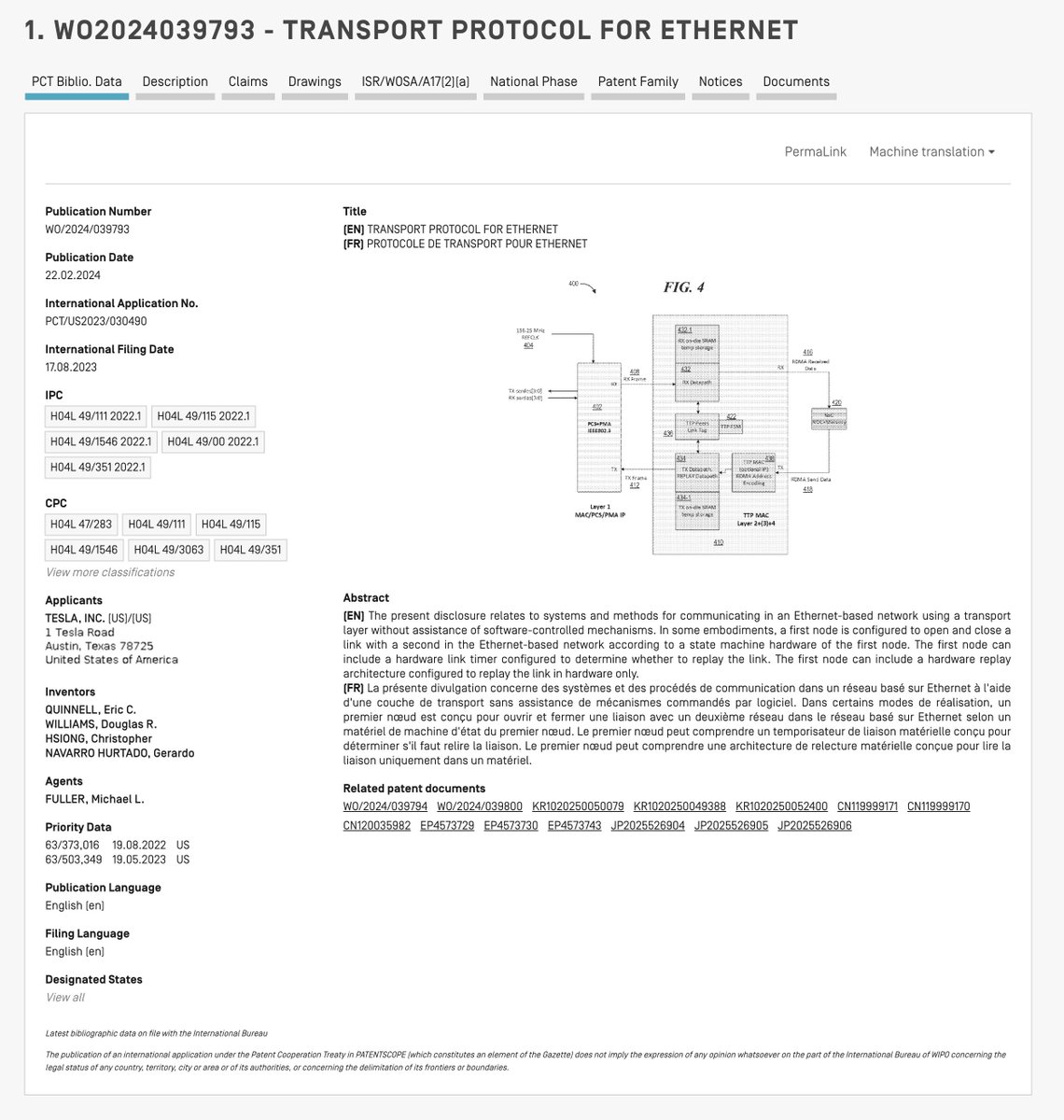
With the publication of patent WO 2024/039793 A1, and underscored by the recent June 2025 continuation filing EP 4573730 A1, we gain insight into the custom networking stack driving Tesla's autonomy ambitions.
The patent details the Tesla Transport Protocol (TTP). This is a hardware-native approach that bypasses the operating system entirely.
By eliminating the software abstraction layer, TTP transforms a distributed network of thousands of GPU tiles into a cohesive, low-latency compute fabric.
This architecture unlocks the single-digit microsecond latency required to train Full Self-Driving models at speeds that conventional networking stacks simply cannot match.
To understand why this invention is necessary, we must first look at the invisible wall hitting current supercomputers.
⚖️ The engineering bottleneck: Software-defined latency
In High-Performance Computing (HPC), the throughput of the entire cluster is often limited not by raw compute power, but by interconnect latency. For decades, the industry has defaulted to TCP/IP (Transmission Control Protocol/Internet Protocol).
To the non-technical observer, TCP/IP acts as the rigorous "traffic rules" of the digital world. Designed for reliability above all else, it ensures data integrity by treating every packet like a registered letter. The system must open, inspect, and acknowledge receipt before processing the next.
While this reliability is critical for the public internet, it introduces unacceptable overhead in a supercomputing environment. The protocol is software-heavy. It forces the Central Processing Unit (CPU) to constantly interrupt computational tasks to manage network traffic.
This introduces latency, a digital reaction delay. While a few milliseconds is negligible for web browsing, it is an eternity for an AI training cluster processing billions of parameters per second.
🏗️ The architectural solution: Tesla Transport Protocol (TTP)
To shatter this bottleneck, Tesla realized they couldn't just optimize the software. They had to delete it. They developed a proprietary flow control system: Tesla Transport Protocol.
The core architectural shift involves offloading network management from the OS kernel directly to silicon.
To understand why this matters, think of the OS kernel as a busy office manager who has to approve every single document that comes in or out of a company. Even if the manager is fast, they are also juggling a thousand other tasks, such as scheduling meetings, managing payroll, and answering phones.
In a supercomputer, this "manager" (the software) becomes overwhelmed by the billions of data packets arriving every second. This causes a traffic jam.
By implementing the Transport Layer directly into the Network Interface Card (NIC), Tesla effectively fires the manager. They build a pneumatic tube system that shoots documents directly to the recipient's desk. The Transport Layer is the logic responsible for ensuring data actually arrives at the right destination.
This "hardware-offload" approach allows the system to manage connection lifecycles and data transfer autonomously. It effectively replaces the stop-and-go nature of software interrupt handling with the continuous, high-speed throughput of dedicated circuitry. Instead of a manager pausing to sign for every package, the packages flow on a conveyor belt that never stops moving.
🧩 Integration: The "Trojan Horse" header strategy
However, creating a new protocol usually creates a new problem: incompatibility with existing cables and switches. Tesla avoided this with a clever disguise. The patent describes a packet header structure that maintains compatibility with existing hardware.
To visualize this, imagine sending a top-secret document through the regular postal service using a specialized "Trojan Horse" envelope. Tesla wraps their data in a standard outer shell where the first 16 bytes mirror a standard Layer 2 Ethernet header.
This allows standard networking equipment, such as off-the-shelf Ethernet switches from Cisco or Arista, to read the "address" and route the packet without realizing it carries anything unusual. This saves Tesla from building expensive, custom-made routing hardware.
Yet, stamped on this standard envelope is a specific code called the EtherType (0x0AC6). This acts like a subtle "VIP" stamp. When a regular computer receives mail, it sends it to the mailroom (the OS software) to be slowly sorted.
But when a Tesla NIC sees this specific stamp, it pulls the packet off the line immediately. It bypasses the mailroom entirely and sends the data directly to the high-speed sorting machine.
This strategy allows Tesla to tunnel a Formula 1-grade protocol through standard, affordable network pipes. It combines the low cost of commodity hardware with the high performance of a supercomputer.
⏱️ Throughput: The 4-stage hardware pipeline
Once the data bypasses the standard stack, the focus shifts to raw processing speed. The patent’s claim of single-digit microsecond latency is achieved through a deterministic 4-stage hardware pipeline.
To understand why this is revolutionary, compare a standard software process to a single chef in a kitchen. The chef grabs an order, chops vegetables, and cooks the meat sequentially. If a phone rings (an interrupt), they stop working to answer it, creating unpredictable delays.
Tesla’s hardware pipeline functions more like a bucket brigade or a factory assembly line. Every single time the chip’s internal clock ticks, work is passed instantly to the next station.
In the first stage (Q0), the logic acts as traffic control, instantly picking the single most urgent stream to process. It immediately passes this to the second stage (Q1), which pulls the file on that connection, reading the status tag to verify the link is healthy.
The third stage (Q2) acts as the brain, executing decision logic in a nanosecond to determine if a packet needs a replay or is safe to send. Finally, the fourth stage (Q3) commits the move by updating the internal memory pointers, readying the system for the next cycle.
This pipeline creates a continuous "conveyor belt" of packet processing. It eliminates jitter, the tiny, unpredictable stutters that happen when software gets distracted. In this system, data moves with the relentless, metronomic precision of a Swiss watch.
🤖 State Management: The hardware Finite State Machine
But raw speed is only half the equation. The system also needs to manage the lifecycle of these high-speed connections without clogging the system. Efficient connection management is handled by a hardware Finite State Machine (FSM).
To understand this, think of a logic circuit like a rigid turnstile that can only be in one specific position at a time, such as locked, unlocking, or open, based on strict physical triggers. There is no ambiguity and no thinking involved, just immediate reaction to input.
Crucially, this system solves one of the biggest inefficiencies in standard networking known as the "zombie connection" problem. In the traditional TCP world, closing a connection is like a painfully long goodbye at a doorway.
Even after both sides agree to disconnect, the system enters a TIME_WAIT state. It keeps the memory slot reserved for several minutes, just in case a lost packet shows up late. In a supercomputer running millions of connections, these "ghosts" clog up valuable memory resources.
TTP eliminates this lingering entirely. It introduces a ruthless "Intermediate Close" state. The moment an acknowledgement of closure is received, the hardware instantly kills the link. It doesn't wait for stragglers.
It effectively flips the "Vacant" sign immediately, allowing the system to instantly recycle that memory slot for a new connection. This ensures that the expensive high-speed memory is always working, never waiting.
🔄 Error Correction: The "lossy" replay mechanism
While efficient connection management keeps the highway clear, the system must also decide how to handle the inevitable accidents: lost data. Most internet protocols operate on a "lossless" philosophy, meaning they are obsessed with perfection.
If a single packet of data is dropped, the entire operation grinds to a halt until that packet is recovered. While this ensures accuracy, it is a massive drag on speed. TTP operates on a "lossy" philosophy, acknowledging that in a hyperscale environment processing exabytes of data, dropping a few packets is inevitable and shouldn't stop the show.
Think of the difference between downloading a critical file versus streaming a live video. When downloading a file, you need every single bit perfect, so you wait. When streaming video, if a few pixels are missing in one frame, the video keeps playing because speed is more important than absolute perfection in that microsecond.
Tesla applies a similar logic to supercomputing but adds a high-speed safety net to catch the critical pieces.
Rather than stalling the entire pipeline to ensure perfect order, the protocol keeps blasting data forward. If a receiving node detects a gap, such as a missing page in a book, it sends a Negative Acknowledgement (NACK) back to the sender. This signal essentially says, "I missed page 45, keep going, but send me a copy of 45 when you can."
To fulfill this request instantly, the transmitting hardware maintains a linked-list in its high-speed memory. This acts like a library index card system, allowing the hardware to instantly locate the exact memory address of the missing packet.
It then "replays" just that specific chunk of data without ever stopping the main transmission stream. This allows Tesla to maintain blistering speeds while still patching up errors on the fly.
🧠 Congestion Control: Physical backpressure
Beyond handling errors, the system faces an even more fundamental physical challenge: preventing data floods. Flow control is the essential mechanism that prevents a fast sender from flooding a slow receiver and crashing the system.
In standard networking, this acts like a complex bureaucracy where computers constantly negotiate "window sizes," trying to mathematically predict how much data they can handle next. TTP replaces this predictive negotiation with a simple, immutable mechanic: Physical Backpressure.
To visualize the difference, imagine a warehouse loading dock that has exactly 10 parking bays. The traditional TCP/IP approach operates like a warehouse manager spending all day on the phone with trucking companies. They are constantly estimating unloading speeds and scheduling arrivals to prevent the lot from overflowing. This process is administrative, slow, and prone to miscalculation.
Tesla, by contrast, essentially installs a mechanical boom gate at the entrance. If all 10 bays are full, the gate physically locks. There is no phone call, no math, and no prediction involved. The system operates on a rigorous "one-in, one-out" basis. The moment a truck leaves a bay (an acknowledgement is received), the gate automatically unlocks to admit exactly one new vehicle.
This system relies on the on-chip SRAM (Static Random Access Memory), which is limited in size but incredibly fast. By binding transmission speeds directly to the physical availability of empty slots in memory, Tesla prevents data jams instantly and mechanically. This ensures that zero processor cycles are wasted on bureaucracy.
⏲️ Synchronization: The global hardware link timer
With traffic flowing smoothly, the final challenge lies in policing the grid for idle connections without wasting energy. Monitoring timeouts—the limit on how long a computer waits for a response before giving up—for thousands of connections usually requires thousands of software timers. Managing this many timers is a massive drain on processing power.
Tesla addresses this with a global hardware link timer that decouples timekeeping from individual connections. To visualize this, imagine a parking enforcement officer monitoring a long street of parked cars.
The traditional method would be akin to hiring a separate officer with a stopwatch for every single car, staring at it to see if it stays too long. This is incredibly expensive and wasteful. Tesla’s solution functions like the "chalking tires" method.
The system utilizes a round-robin scanner, which acts as a single digital officer walking down the line of cars in a continuous loop. It employs a "Timer Bit" strategy, which acts like the chalk mark on a tire.
As the scanner passes a connection, it places a digital mark by setting the bit to 1. If the connection is active and sending data, it essentially "drives away" and returns, rubbing off the chalk mark by clearing the bit back to 0.
When the scanner returns to that spot on its next loop, it checks the tire. If the chalk mark is still there, it knows the car hasn't moved for the entire duration of the loop. The connection is declared "timed out" and closed.
This approach creates O(1) complexity, a computer science term meaning the effort required doesn't explode as you add more work. Whether there are 10 cars or 10,000, the officer just keeps walking the same efficient loop, allowing a single physical circuit to police thousands of links with negligible processing overhead.
🆚 Architectural Comparison: TCP/IP vs. TTP
When we view these mechanisms together, the fundamental difference between the old world and the new becomes stark. The divergence between TCP/IP and TTP represents a shift from a "one-size-fits-all" public utility to a highly specialized racing machine.
TCP/IP was architected for the internet, functioning much like a chaotic public highway system. It is designed to handle everything from mopeds to semi-trucks, but this versatility comes at a steep price. It requires traffic lights, stop signs, and police officers to manage the flow.
Every time a packet arrives, the CPU must pause its work to act as a traffic cop. It has to check the "driver's license" and direct the vehicle.
Conversely, TTP is purpose-built for the controlled environment of a data center, functioning like a private high-speed rail line. It treats network packets not as mail to be sorted, but as raw electrical signals to be processed by dedicated circuitry. There are no traffic lights, no other cars, and the tracks are welded together for a single purpose: speed.
This structural difference exposes a massive efficiency gap caused by "context switching." In a TCP environment, every time the CPU has to handle network traffic, it must pause its main calculation work, save its progress, switch to "traffic cop" mode, and then switch back.
Imagine a mathematician trying to solve a complex equation but being interrupted by a phone call every few seconds. The time spent putting down the pencil, answering the phone, and trying to remember where they left off represents this context switching tax. It introduces millisecond-level delays that accumulate into significant wasted time.
TTP erases this waiting time entirely. By enforcing flow control through physical memory constraints and utilizing hardware state machines, it removes the "mathematician's phone" from the equation.
This allows the compute cores to focus 100% on the math while the data flows automatically in the background. It achieves latencies effectively limited only by the speed of light through the fiber.
🚀 The future is bright: AI5 chip and the revival of Dojo 3
This patent is not just a legacy document for the original D1 chip. It is the strategic unlock for Tesla's renewed 2026 roadmap. Following the completion of the AI5 processor design, Tesla has officially restarted work on the massive Dojo 3 supercomputer. TTP is the invisible nervous system that makes this scaling possible.
While the original Dojo proved the concept, Dojo 3 aims for a scale that is orders of magnitude larger. It requires connecting millions of AI5 cores to function as a single training brain. TTP allows this massive distributed system to operate without the crushing "chatter" of standard networking protocols.
The immediate impact is on the rollout of Unsupervised FSD. While existing cars run on AI4, training the next-generation "end-to-end" neural networks requires crunching exabytes of video data. TTP enables Dojo 3 to ingest this fleet data at wire speed. This allows engineers to solve the rare "long tail" edge cases that still prevent full autonomy.
Beyond cars, this architecture is the backbone for Optimus. The humanoid robot requires a fusion of vision, language, and complex physics simulations. This multimodal training demands even higher bandwidth than driving. TTP ensures that the Dojo clusters can handle this dense data flow without bottlenecks.
Finally, this technology secures Tesla's strategic independence. By controlling the entire stack, from the TTP transport layer to the AI5 silicon, Tesla decouples itself from the supply chain constraints of third-party GPU vendors like NVIDIA. This allows them to scale their compute capacity on their own terms, potentially aiming for future frontiers like space-based AI inference clusters.
4
6
59
5,238
GOOD NEWS 🚨 ARCBEST IS EXPANDING ITS FLEET WITH THE TESLA SEMI 🔥
ArcBest, the multibillion-dollar logistics giant, is actively contributing to the transition toward sustainable freight by officially purchasing two Tesla Semis for its ABF Freight fleet after seeing real-world pilot results that completely exceeded expectations.
This is a great step forward. It marks a critical milestone for the less-than-truckload (LTL) carrier: moving beyond a temporary pilot program and putting actual investment dollars into integrating Class 8 electric trucks across a broader operating footprint.
SMASHING EFFICIENCY EXPECTATIONS
To understand why ArcBest is pulling the trigger on these purchases, you just have to look at the jaw-dropping numbers from their 2025 pilot program.
🛣️ Total pilot distance: 4,494 miles
📅 Daily average: 321 miles per day
🗺️ Routes conquered: Reno, Nevada to Sacramento, California (including regional Bay Area runs and rail shuttle operations)
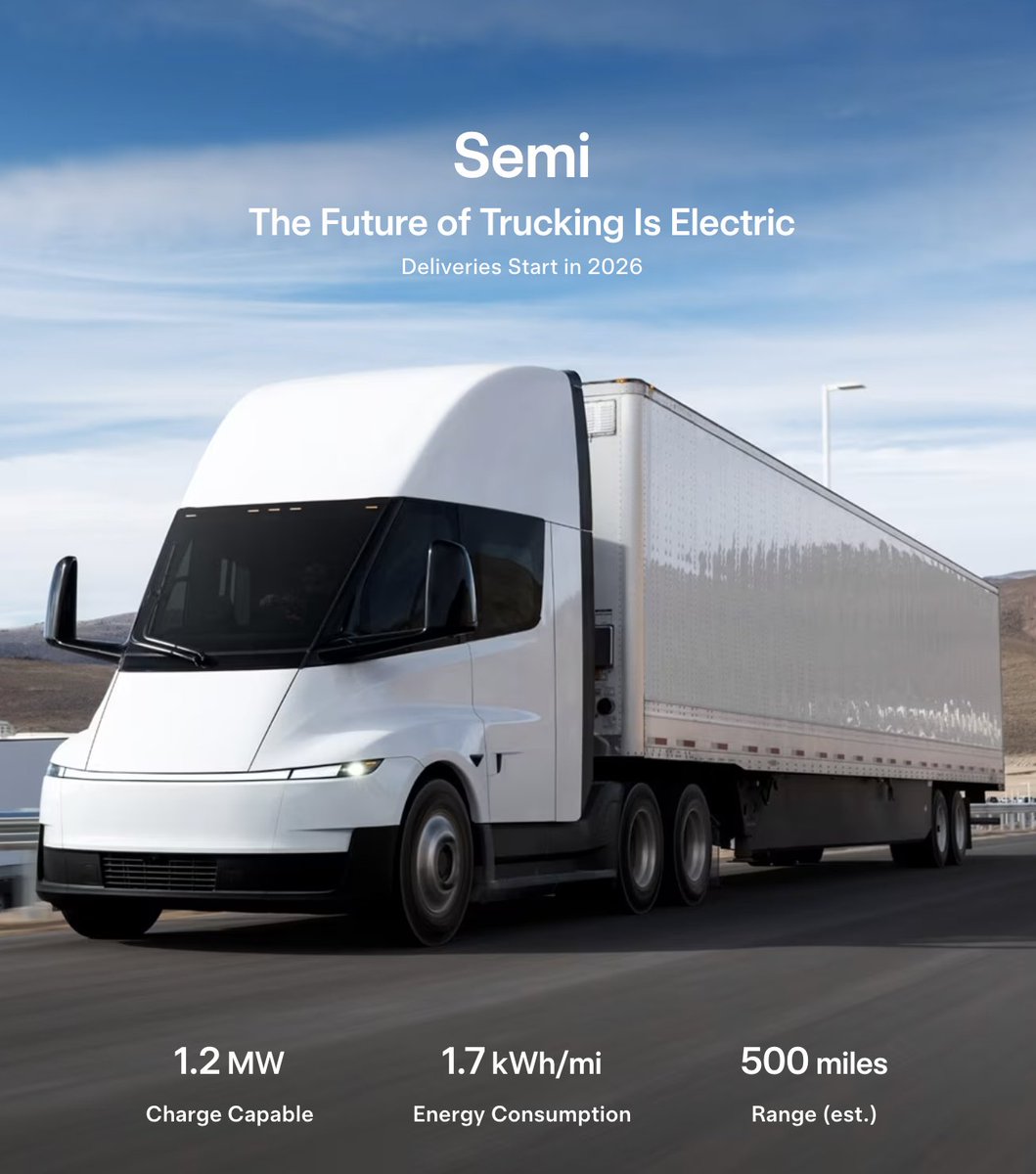
⚡ Efficiency rating: 1.55 kWh per mile
Let’s put that 1.55 kWh per mile into perspective. When Elon Musk unveiled the "production version" in 2022, he claimed an efficiency of 1.7 kWh per mile. Recent real-world testing from other heavy-hitters showed similar numbers—DHL achieved 1.72 kWh per mile, and Saia hit 1.73 kWh per mile.
ArcBest’s pilot represents a noticeable 9% improvement over those earlier figures!
WHY THE COMPETITION ISN'T EVEN CLOSE
When you look at the current competitive landscape, it becomes crystal clear why fleet operators are gravitating toward the Tesla Semi. The battery and range combinations from legacy automakers simply cannot match Tesla's engineering.
🔋 Freightliner eCascadia: 550 kWh battery | ~230 miles of range
🔋 Volvo VNR Electric: 564 kWh battery | ~275 miles of range
👑 Tesla Semi: 822 kWh battery | 500 miles of range
At the hyper-efficient 1.55 kWh per mile rate that ArcBest demonstrated, the Semi's 822 kWh battery pack easily pushes past that 500-mile range barrier on a single charge.
DRIVER APPROVED, EXEC ENDORSED
The specs are great on paper, but how does the truck perform out on the road?
During the pilot, the Semi had to tackle the grueling 7,200-foot climb over Donner Pass. ArcBest noted that operators walked away raving about the truck's reliable power on the steep grades, exceptional visibility, and unmatched cabin comfort.
The executives are equally convinced. ABF Freight President Matt Godfrey summed up the company's forward momentum perfectly:
"Adding Tesla Semis to our lineup allows us to expand that across more lanes and operating conditions to evaluate whether heavy-duty electric vehicles meet the same standards for safety, reliability and performance across our existing fleet."
THE TRANSITION TO SUSTAINABLE FREIGHT IS OFFICIALLY HAPPENING
The data is in. The drivers love it. The efficiency is off the charts.
The Tesla Semi isn't just the future of freight—it's the present, and ArcBest is proving to be a fantastic addition to the electric transition!

8
38
357
10,408
Source: electrek.co/2026/06/11/arcbe…
1
5
1,560