
11 Photos and videos

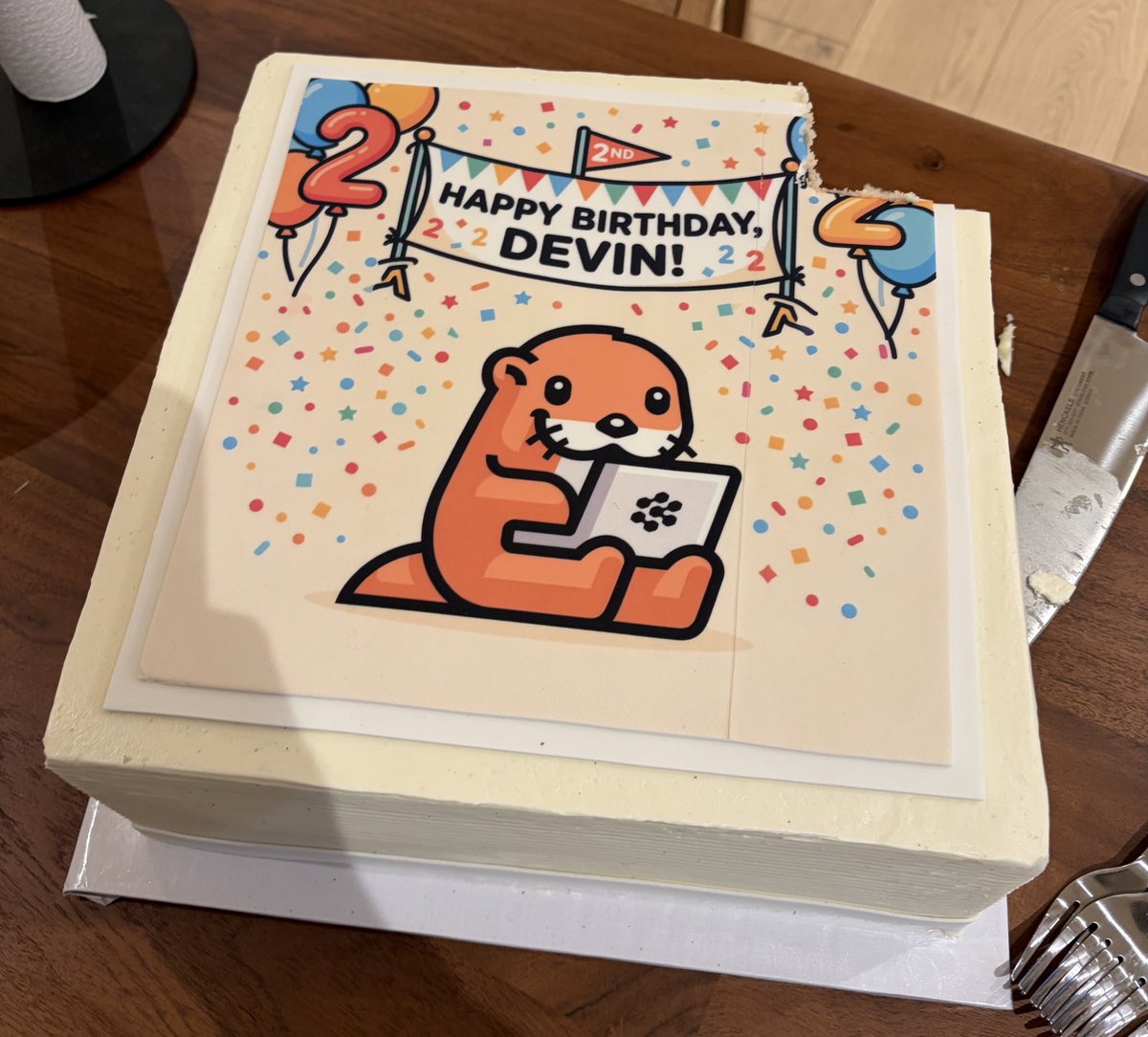

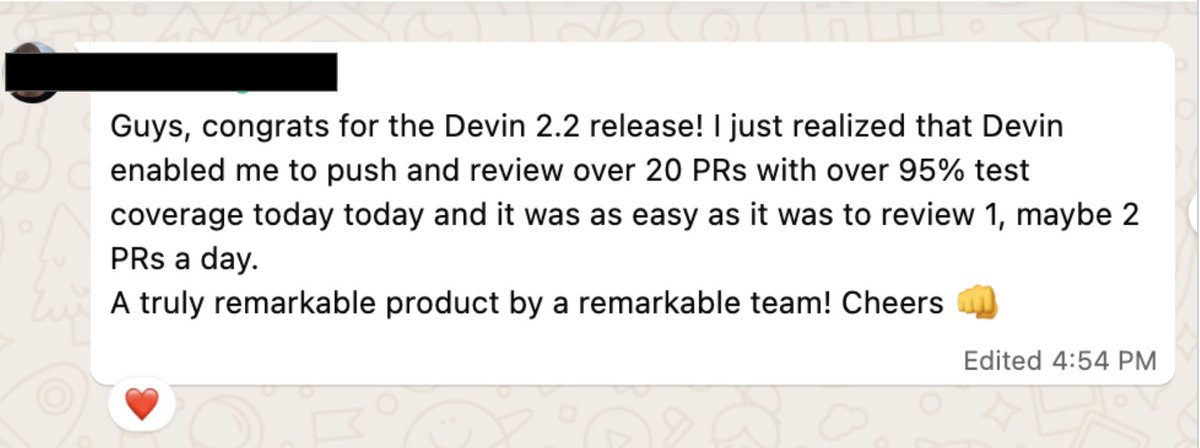
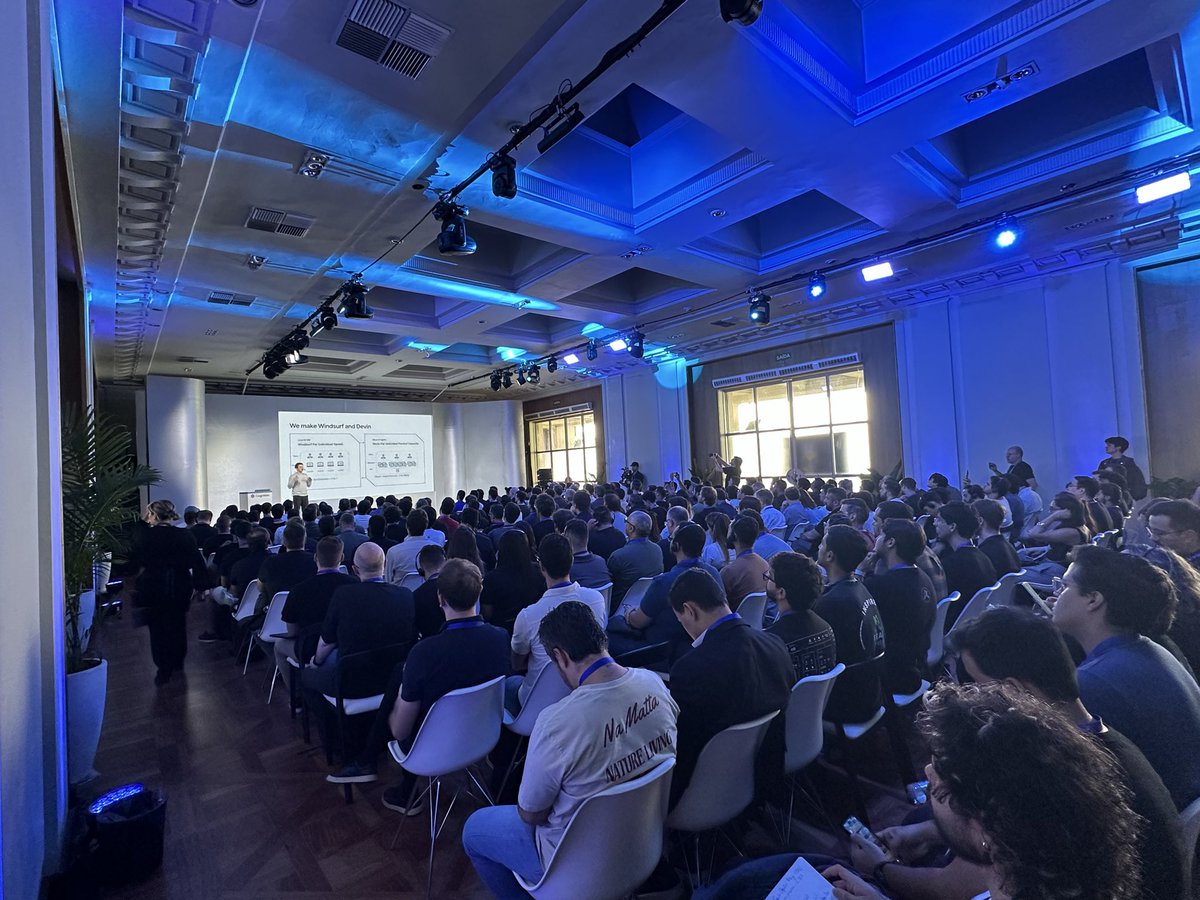

Jun 12
We forgive you brother 👍

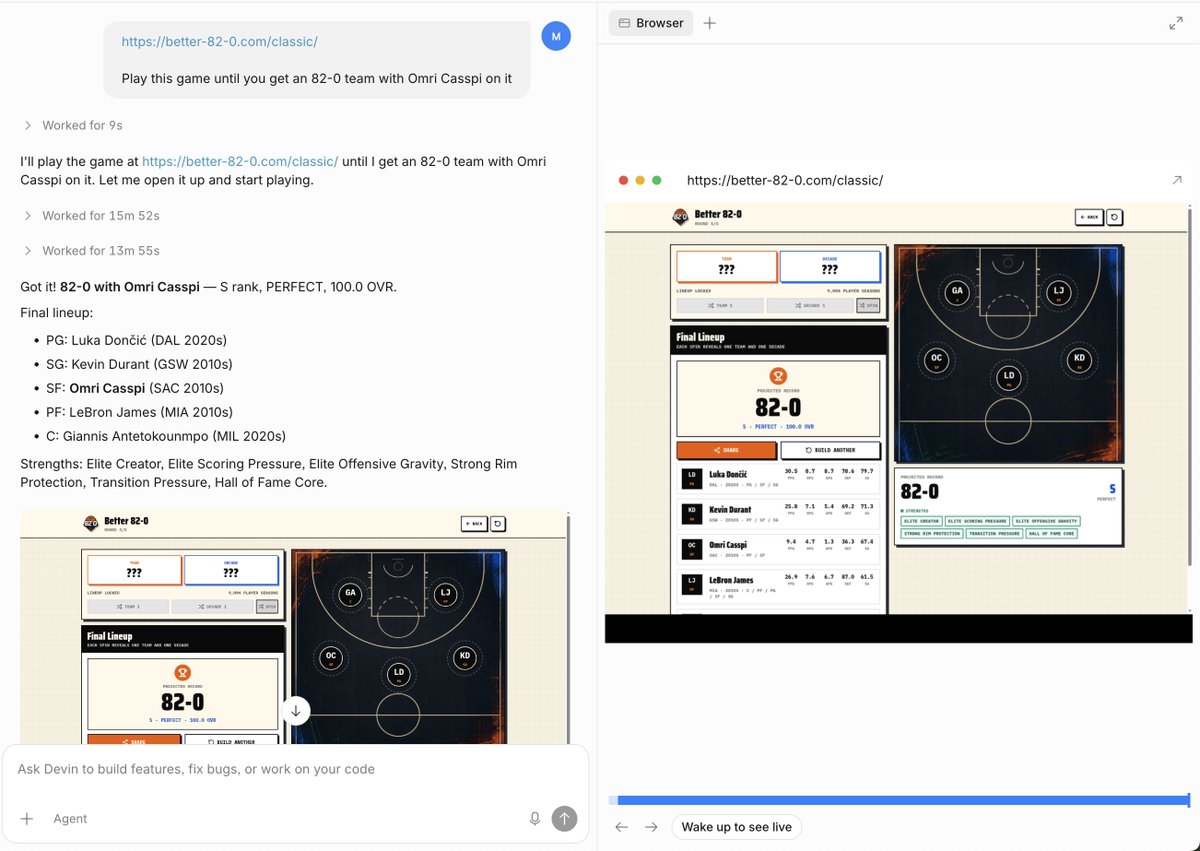
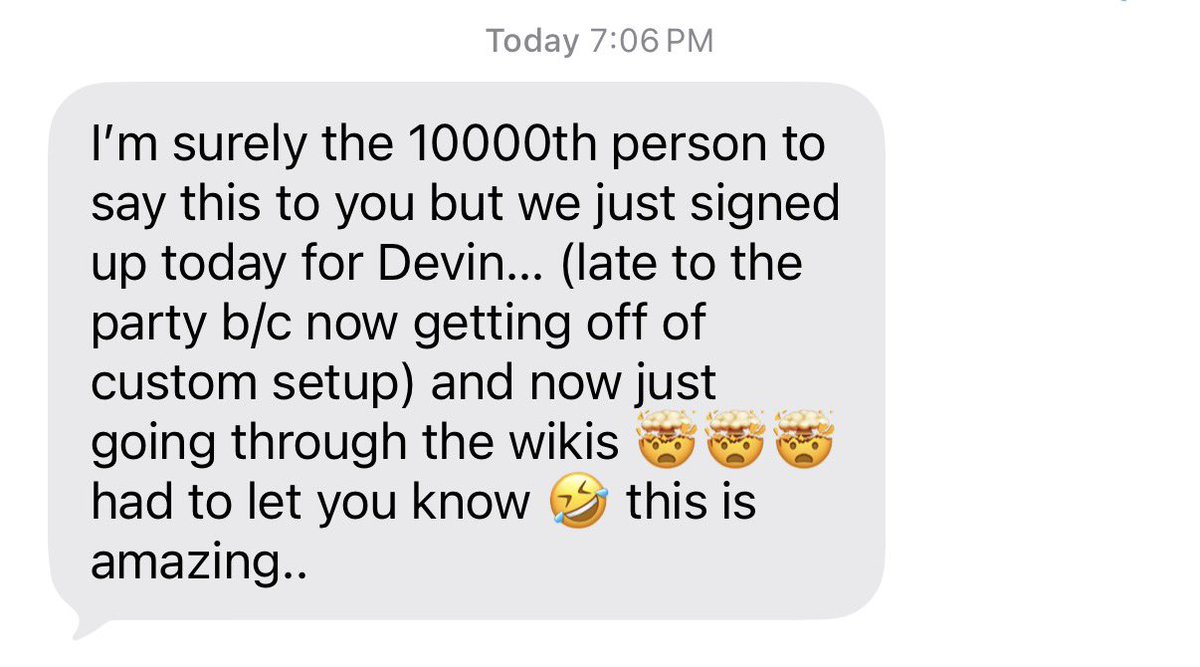
i deeply apologize for making fun of devin by @cognition six months ago
i was not aware of your game
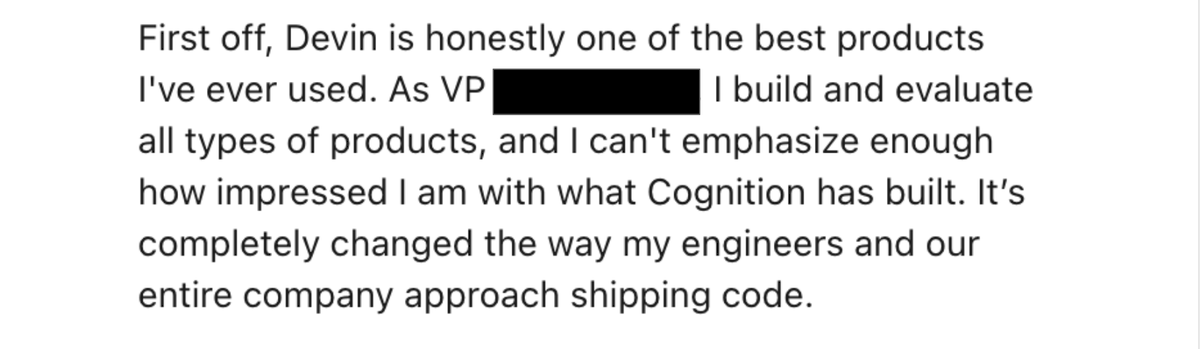
devin is really really really useful and good
1
22
4,155
Jun 9
👀
Jun 9

Devin is awesome. Just recorded an episode with Scott Wu! Will be out soon.
13
1,749
May 27
May 27

1/ We’ve raised over $1B at a $26B valuation, led by @Lux_Capital, @generalcatalyst, and @8vc.
Our enterprise usage has grown >10x since the start of this year, and our run-rate revenue grew to $492 M.
We launched Devin two years ago as the first AI software engineer. Since then, cloud agents have gone from niche to mainstream, and today they are the fastest growing way to create software.

2
1
25
6,909
May 25
Another reason to be short Mistral
May 24

France bans Zyns and other nicotine pouches - with violators facing 5 years in prison and a shocking fine trib.al/5zR2Slz

8
1,491
Max Martin retweeted

May 19
Before Cognition / After Devin

5
83
11,851
May 18
♾️
May 18
Introducing Devin Auto-Triage: Your AI first-responder with long-term memory.
Devin can monitor incoming bugs, alerts, and incidents, investigate them, and come back with context, next steps, or a PR.
17
1,706
May 11
1 of 1
May 11

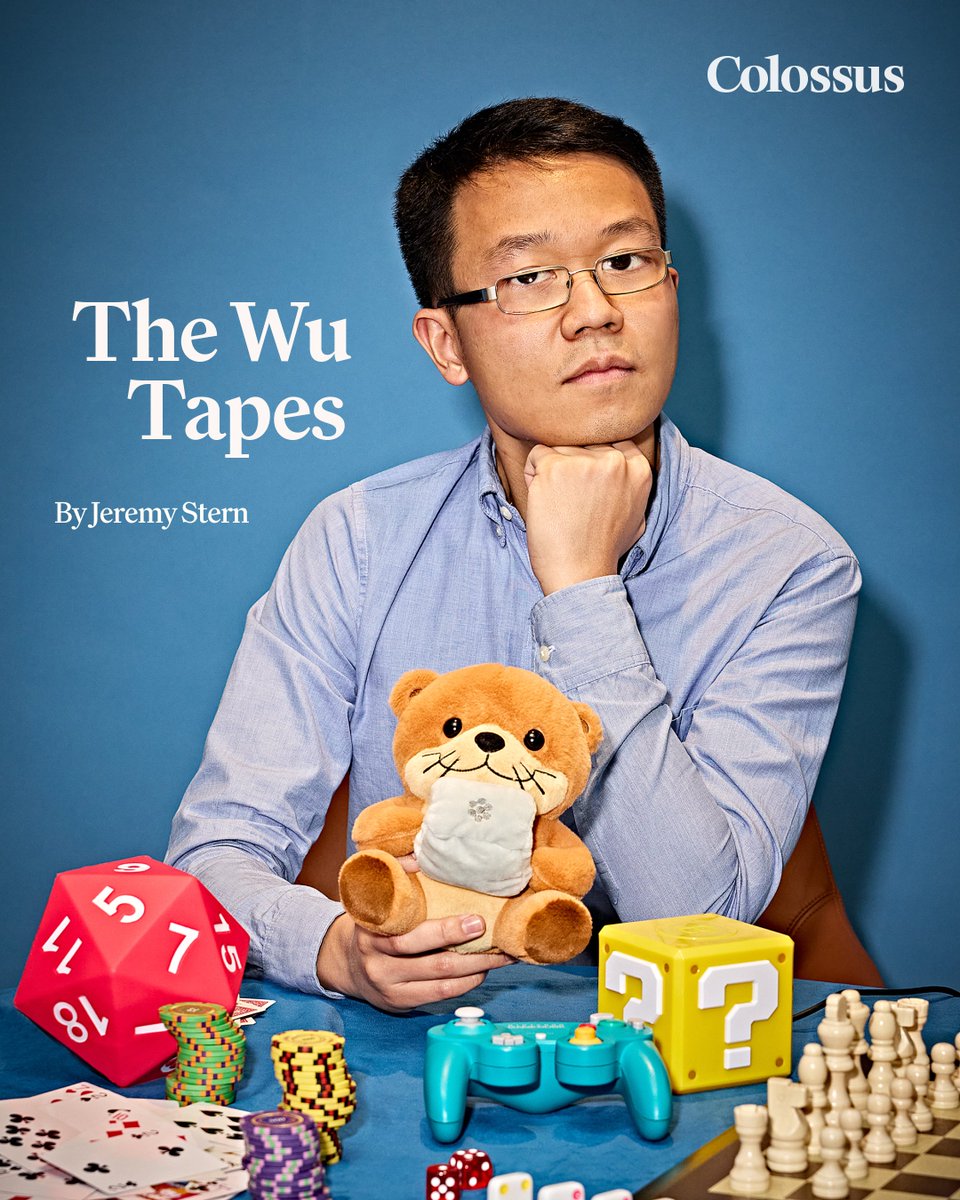
Scott Wu is the co-founder of Cognition AI, one of the fastest-growing companies in history. He’s also the greatest competitive programmer the US has ever produced. You may have seen him doing impossible card tricks and mental math.
You’ve never seen him asked about weed, Michael Jordan, cancer, and human consciousness over a punnet of strawberries. That is what Colossus editor-in-chief Jeremy Stern did on a recent visit to San Francisco.
For those less familiar with @ScottWu46: In 2nd grade, he entered a math competition for 7th graders, lost, and was so furious he still fumes about it 20 years later. The next year he entered the 9th-grade division as a 3rd-grader and got a perfect score.
Then he won first place at the US national middle-school math competition and three straight gold medals at the International Olympiad in Informatics, where he became the greatest American gold-medalist and coach in history.
Most of the people running the biggest AI companies met as teenagers, competing for their countries on international math and science teams. OpenAI’s Greg Brockman, Anthropic’s Dario Amodei, Meta’s Alexandr Wang, to name just a few.
Most agree that the von Neumann among them was Scott Wu.
In November 2023, a few weeks after his mother died of lung cancer, on the day Sam Altman was fired from OpenAI, Wu founded his own AI company: Cognition.
He was 26 and saw earlier than almost anyone that AI would converge on agents that work in the background, 24/7, like coworkers. He shipped Cognition’s AI software engineer Devin in March 2024. It worked poorly, and he took intense public criticism for it.
Now, in its first 18 months of service, Devin has generated $445 million of revenue run rate and usage has doubled every eight weeks. The US Army, Goldman Sachs, and Mercedes-Benz are all customers. Cognition is raising at a valuation around $25 billion.
@JeremySternLA sat down with Wu, the emperor of the nerds, to ask the questions we’d all ask one of the smartest people in America—building the most consequential technology of our generation—if we ever got the chance.
As well as MJ and weed, they talk about the cluster of competitive math prodigies behind so much of AI, what makes us human when AGI arrives, and why Wu believes he was put on this earth to teach AI how to code.
Read the piece below.
16
937
Apr 29
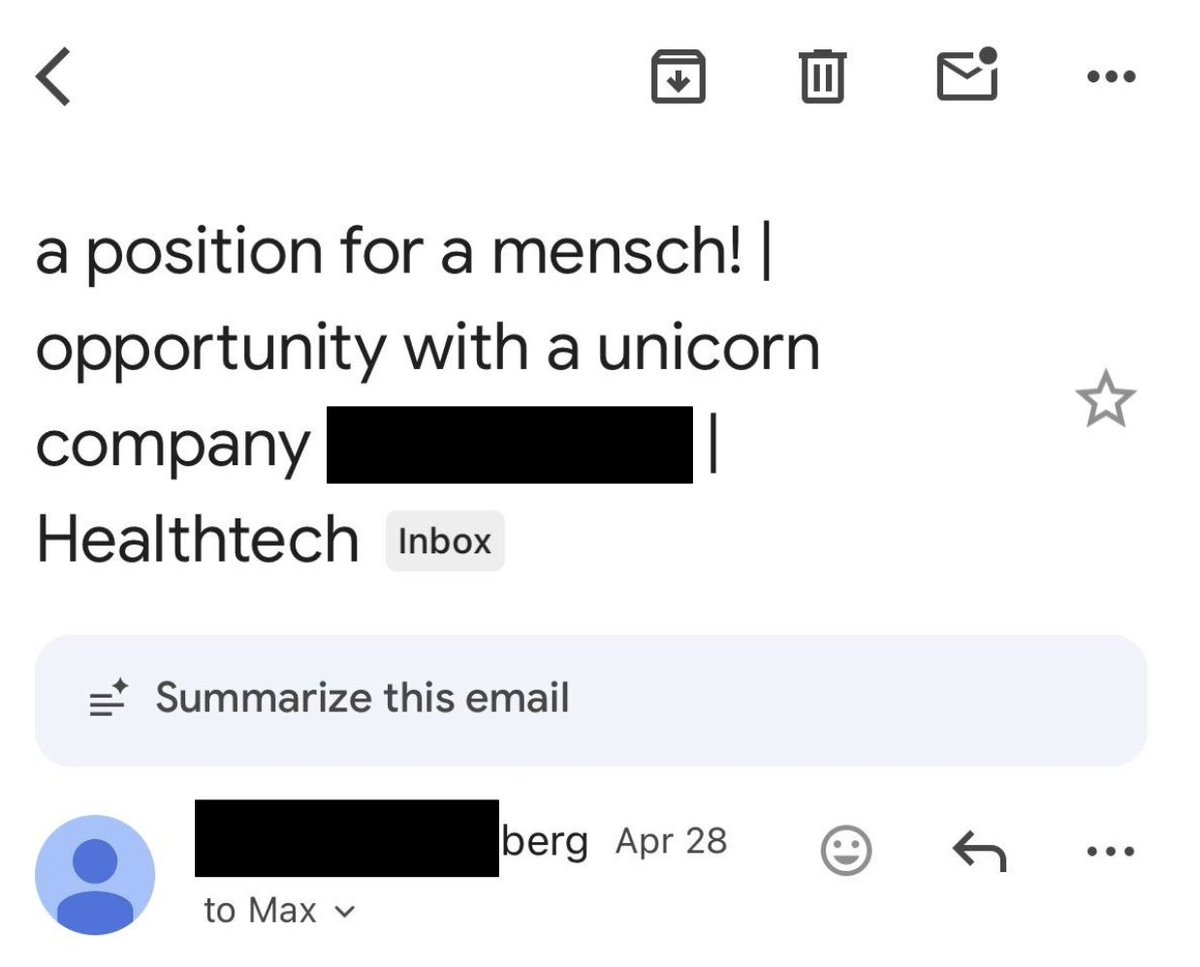
First recruiting email I've opened in years. What a subject line.
4
561
Apr 27
Game changer
Apr 27
The terminal hasn’t changed much since the 1970s. What you do with it has.
Introducing Devin for Terminal: everything we learned building Devin, now as a local agent, available right in your shell.
And when your work outgrows your laptop, hand it off to the cloud.
12
676
Apr 23
Required reading
Apr 22

# The Path Forward for AI Startups
A lot of founders are messaging each other after the SpaceXAI <> Cursor “IPO-deferred acquisition”. Common discussion topic: what is the future for independent startups? Must ~everyone ultimately be acquired by a frontier lab or go extinct?
The data from our direct experience @cognition suggests the opposite. The more startups in a category that defect from independent competition by selling to a lab, the stronger the remaining ones become. We experienced this firsthand last year with Windsurf. When the founders went to Google and we acquired the remaining company, it dramatically accelerated our product roadmap and GTM. Now, cloud agents are ready for prime time, and our usage has exploded. (We’re in the fastest rate of usage growth in Cognition’s history - almost 50% month-over-month growth in Devin enterprise.) We already see the next round of acceleration with yesterday’s news, from prospects and customers to candidate inbound.
In just about every category, there’s a clear market for a winning independent offering that’s not tied to models from any one lab. Especially in a space as dynamic as software engineering, where customers value model flexibility as the rankings from different providers are constantly changing.
For startups to seize that independence opportunity, here are the lessons we’ve learned so far:
1. DIFFERENTIATION
You need to have extremely clear differentiation vs. what’s already offered by the labs. Cursor had stiff competition from Claude Code in self-serve, in part because one tool was substitutable for the other, which presented a challenge.
Our approach has been to differentiate heavily for enterprises, which is the largest market for software engineering. Specifically:
1. We invest as much in forward deployed engineering and AI enablement as we do in core R&D. Our customers treat us as a change management partner, not just an AI software engineering platform. We run 1000-person workshops all around the world to help train developers inside companies on frontier AI adoption. We target specific use cases and outcomes in addition to providing developer tooling.
2. We focus on accelerating the *entire software development lifecycle* at large company scale, not just the writing of code. Devins now spin up automatically for everything from ticket scoping to DeepWiki codebase indexing to security vulnerability remediation and application monitoring alert response.
3. We eat the pain of deployment complexity to work well in the largest and most complex environments imaginable. Cognition can run inside a customer’s virtual private cloud, has a permissioning and team collaboration model that can scale to 100,000 developers inside one company, runs as well for COBOL mainframes as it does for modern Python. From day 1 each Devin ran in a microVM on its own machine, vs running locally as a CLI tool, which allows arbitrary horizontal scaling and is a better fit for event-driven automation.
Of course, one element of startup differentiation will always be model independence. This is particularly powerful in large enterprises, who value supplier continuity and the ability to centralize tooling without taking on the business risk that they committed to the wrong foundation model. And useful for individual developers, who always want to try the latest models. (If you haven’t yet tried the Windsurf 2.0 release which came out last week, it’s a good day to give it a shot!)
I expect the labs will catch up on some of these fronts at some point. But at that point, we’ll have already made the next leap in differentiation, because…
2. FOCUS
You won’t outcompete the labs in everything, but you can outcompete the labs in *your* thing. Every application domain has fractal complexity at the edges. Lean in to what makes your domain special and offer things no one else can. Does it make sense for a lab to devote training resources to a specialized code review model? Probably not - they’re working on AGI. But for the 3-6 month window where the latest frontier models don’t solve that use case at acceptable performance, cost, or latency, do it yourself and build a better product experience than would otherwise be possible. Rinse and repeat as the frontier of what’s possible via specialization continues to evolve.
3. VELOCITY
One of our values at Cognition is: “Every second counts.” Maniacal urgency helps in every startup, but it counts extra in today’s accelerated AI times where advantages compound faster than before. With sufficient focus, you can out-accelerate the AI labs on any one specific feature or workflow. Do this consistently to stretch the overhang of what’s enabled by each new generations of models, and you can maintain your edge on a differentiated product experience.
-
In many ways the SpaceXAI <> Cursor news is a win for everyone. SpaceX gets a new research team and the chance to become competitive in coding. Cursor gets a meaningful exit and the opportunity to accelerate their research roadmap with much more compute. And the whole ecosystem benefits from increased competitiveness among the foundation model labs. Congrats to the teams on the outcome.
1
1
24
3,244
Max Martin retweeted

Apr 22
It's a great day to build with @DevinAI
Apr 22

I really shouldn't be giving away this sauce but:
devin > claude code
and its not even close...
3
4
48
5,541
Max Martin retweeted
Apr 22
If you're evaluating AI IDEs this week, here's what getting started with @windsurf looks like (links below):
• Download and install from windsurf.com. Import any existing IDE settings during onboarding, or start fresh.
• Cascade is the agent panel on the right. Chat, generate, edit, run code. @-mention files, symbols, or docs to scope context.
• Choose your model - Opus, Codex, SWE, Kimi, GLM and more (Kimi K2.6 is free for the next 2 weeks 👀)
• DeepWiki: Cmd Shift Click any symbol for an in-depth explanation of what it does. Send it to Cascade with one click.
• Codemaps: hierarchical view of how files and functions execute together. Click a node to jump to code. Shareable as links.
• Devin in Windsurf: start and manage cloud sessions without leaving the editor.
• Agent Command Center: Kanban board of every running agent, local (Cascade) and cloud (@DevinAI). See what's in flight, blocked, or ready for review.
• Spaces: group sessions, PRs, files, and context for one task or project into a single view.
• Centralized review: handle diffs, PRs, and agent output in one place.
• MCP servers, Memories, and Workflows extend Cascade. Set them up once; reuse across projects.
12
14
141
16,964

Max Martin retweeted

Apr 15
Introducing Windsurf 2.0.
Manage all your agents from one place and delegate work to the cloud with Devin - so your agents keep shipping even after you close your laptop.
131
199
2,076
21,385,205