
crypto | macro | geopolitics
Joined January 2021
- Tweets 4,752
- Following 283
- Followers 274
- Likes 8,219
329 Photos and videos
















Jun 5
🩸 🩸 bleeding #CryptoMarkets?
Could be a perfect period to look for hidden gems with strong fundamentals
#SolanaMemes #CryptoGem
1
47
Jun 4
solana:4rWuWZei2iFNHYpnz5wjMeSvimsJcj5EgpSNvNS1pump x solana:BWXSNRBKMviG68MqavyssnzDq4qSArcN7eNYjqEfpump collab
🚀🚀🚀
I’m big in both
Jun 4

KausaLayer x @saidinfra
KausaOS agents now get on-chain identity and trust verification through SAID Protocol.
Why identity on a privacy agent?
KausaOS agents operate through Maze Pockets, stealth wallets with full privacy by default. But agents need to be discoverable and trusted across ecosystems. SAID gives them a verifiable on-chain identity, while the underlying wallet stays private.
What this means:
→ KausaOS agents register their Maze Pockets as verified SAID agents
→ On-chain trust score and reputation scoring
Fully opt-in. Unregistered pockets stay anonymous. Privacy first, trust when you need it.

1
118
Jun 3
solana:BWXSNRBKMviG68MqavyssnzDq4qSArcN7eNYjqEfpump , believing in #Privacy
Jun 3

Days and weeks spent working, building, researching, discovering, and producing. All of it recorded in memory. Memory is an asset that holds value not only for the one who built it, but for others as well.
This is V1 of KausaMemory. V2 is coming with significant improvements.
54
Jun 3
True game changer. Below latest news about $STYXX from @fathom_lab. Staying on the sidelines at own risk:
Dxw3u4KxN32KpSdHSq4TkwjfMPJTPeosa22JXN15pump
💎💎💎
“Today — shipped, all falsifiable, all public.
a probe that flags an AI about to take a destructive action, on a benign prompt a text monitor can't see. we tried to kill it — fresh data, pre-registered, 3 seeds. it held, cross-architecture.
the full white-box-vs-text map (losses included), and a first per-token spectral test of whether concept signals oscillate (they commit — rhythm needs complex recurrence).
every number frozen before the data:
→ github.com/fathom-lab/styxx
we ship what survives us trying to break it.”
#Solana #agenticAI
@toly @keef_ai @MCGlive
1
2
12
498
Jun 1
solana:BWXSNRBKMviG68MqavyssnzDq4qSArcN7eNYjqEfpump use case - why it is with being early here
💡
New dimension of #Privacy in #Crypto

Real usage is quietly doing the heavy lifting for $KAUSA right now and most people still don’t see the flywheel turning in real time.
Here’s the clear breakdown:
➠ Every time someone creates a Maze Pocket, funds it, does a private swap, sweeps between pockets, sends P2P, or runs an agent action, the system charges a small 0.3% protocol fee.
➠ That fee is then split like this:
• 60% is used to automatically buy back $KAUSA from the market and permanently burn it (reducing total supply forever)
• 40% goes into protocol revenue, which gets distributed daily to $KAUSA stakers (with 90-day lockers taking the largest share of the reward pool)
This is not a future promise, it’s already happening.
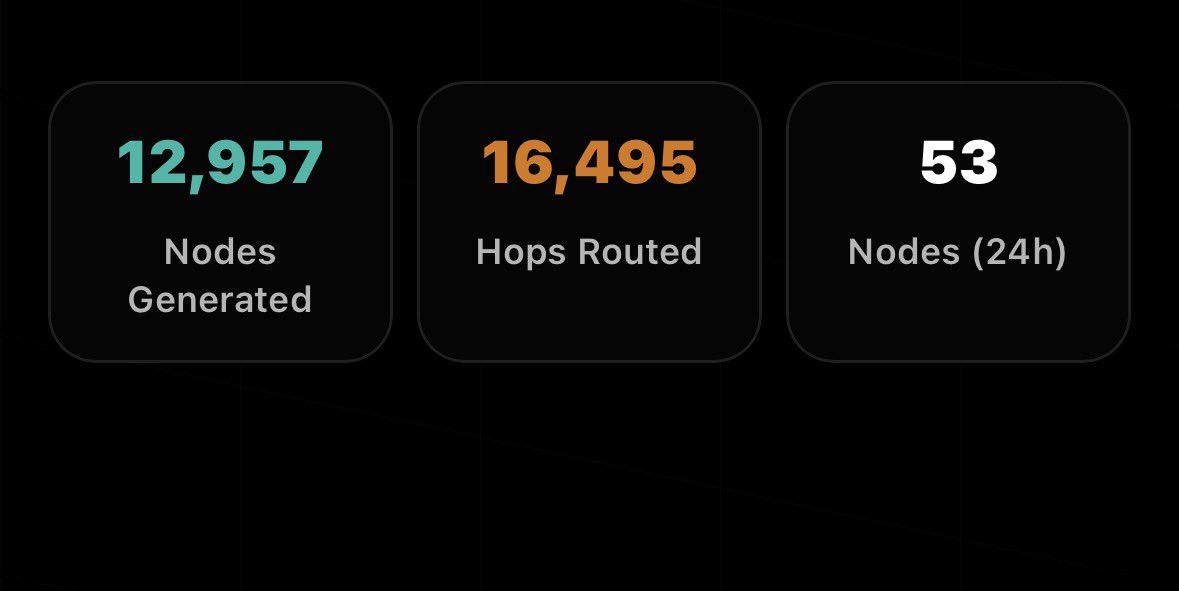
@kausalayer has generated over 12,957 nodes and routed over 16,495 hops through the maze system. Every single one of those actions feeds the same loop:
More real usage → more fees collected → more burns more staking rewards → scarcer more valuable $KAUSA → better tiers, lower fees, and stronger incentives → even more usage.
➠ It’s a self-reinforcing cycle built on actual product activity (private swaps, pocket management, agent payments, Genesis participation, etc.)
➠ The numbers are growing every day. The burns are real. The staking pools are getting meaningful locks. And the product is live and usable today.
➠ This is why focusing on core features like creating pockets, sweeping funds, private swaps, and natural language commands isn’t just nice, it’s literally what powers the entire economic engine.
➠ The market may not have fully priced in this flywheel yet, but the mechanics are working as designed.
What part of the flywheel feels most important to you, the burns, the staking rewards, or the product usage itself? Or is there something else you’re watching?
1
62
May 31
Cognitive observability for #AgenticAI is developing in front of our eyes —-> pypi.org/project/styxx/7.7.1…
Take part in this exiting endeavour by hodling $STYXX Dxw3u4KxN32KpSdHSq4TkwjfMPJTPeosa22JXN15pump
🚨 CAUTION: DANGEROUSLY EARLY 🚨
@toly @yo_itsmatt
2
58
May 29
May 27

install:
pip install styxx==7.7.3
release: <github.com/fathom-lab/styxx/…>
paper: <github.com/fathom-lab/styxx/…>
the credibility isn't in the claim. it's in the discipline pattern. prereg → push → run-once → commit.
1
1
319
May 27
Just another normal shipping day at solana:BWXSNRBKMviG68MqavyssnzDq4qSArcN7eNYjqEfpump
#1000x mission
May 27
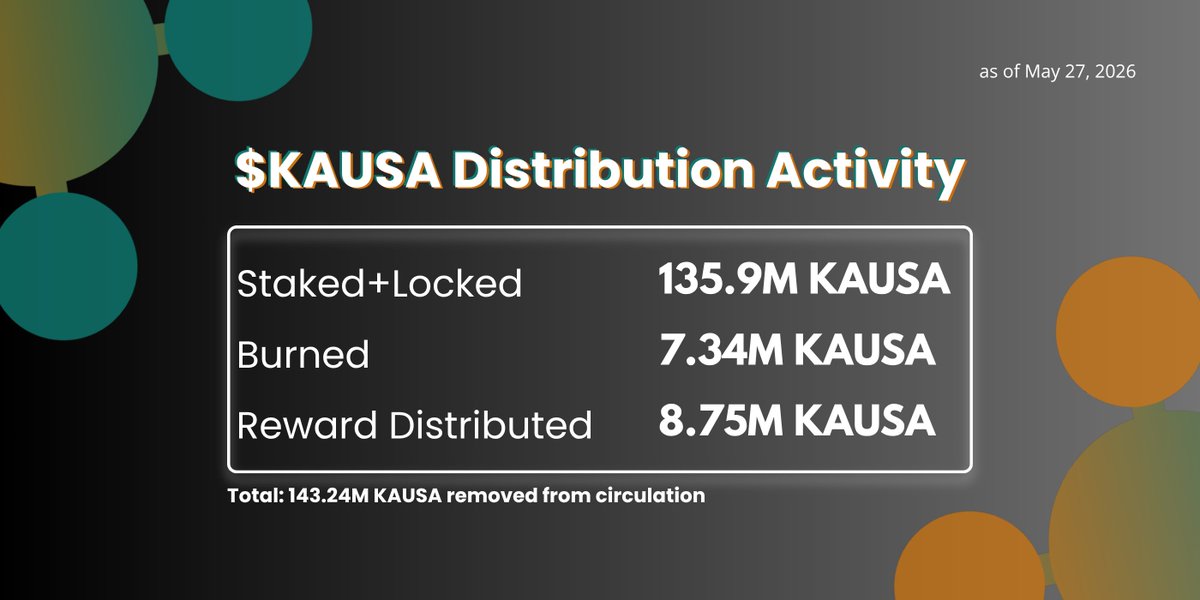
As of today, 135.9M $KAUSA has entered staking pools and locked contracts on Streamflow. 100.5M is spread across three lock tiers: 7 days, 30 days, and 90 days. Another 35.4M is locked through vesting contracts.
Two burns have been executed on-chain. 2.32M on May 24, 5.02M today. A total of 7.34M $KAUSA permanently removed from supply.
On the rewards side, 8.75M $KAUSA has already flowed back to stakers. Not from new token emissions. Entirely from $KAUSA buybacks.
143.24M $KAUSA currently sits outside of circulation.
1
1
136
May 27
More than 0.5% of total supply of solana:BWXSNRBKMviG68MqavyssnzDq4qSArcN7eNYjqEfpump burned in one shot
#solanagems #hackathon #privacy
May 27
5.02M $KAUSA burned.
solscan.io/tx/58n8mBeqrQPBTz…
4
144
May 26
🧵 Never enough reminding about features of solana:BWXSNRBKMviG68MqavyssnzDq4qSArcN7eNYjqEfpump (KausaLayer) – Flexible Privacy Layer on Solana 🕵️♂️🔒
In a nutshell: @kausalayer delivers decentralized #privacy infrastructure on #Solana.
$KAUSA lets you trade, pay, use #DeFi, and interact privately without linking activity to your main wallet. No KYC. Fast and flexible.
Major features below 👇
5
8
17
418
May 26
11/ Why solana:BWXSNRBKMviG68MqavyssnzDq4qSArcN7eNYjqEfpump matters:
#Solana is fast and cheap, but on-chain privacy has been a missing piece.
KausaLayer delivers flexible, verifiable, composable privacy without sacrificing performance. It’s programmable privacy middleware for humans and #AIAgents.
1
4
82
May 26
12/ Find out more about solana:BWXSNRBKMviG68MqavyssnzDq4qSArcN7eNYjqEfpump:
→ Website: kausalayer.com
→ Docs: docs.kausalayer.com (super detailed)
→ Contract: BWXSNRBKMviG68MqavyssnzDq4qSArcN7eNYjqEfpump (Solana)
→ Follow @kausalayer for updates
🚨Privacy szn is here. The gap is widening.
👇 DYOR, this is NFA. 🫡🚀
Share and like if you found it useful.
#KAUSA #Solana #Privacy #DeFi
3
153