
Latin from the Middle Ages. By @Boaz_Schuman
Joined December 2014
- Tweets 1,932
- Following 1,799
- Followers 3,564
- Likes 6,584
236 Photos and videos















May 15
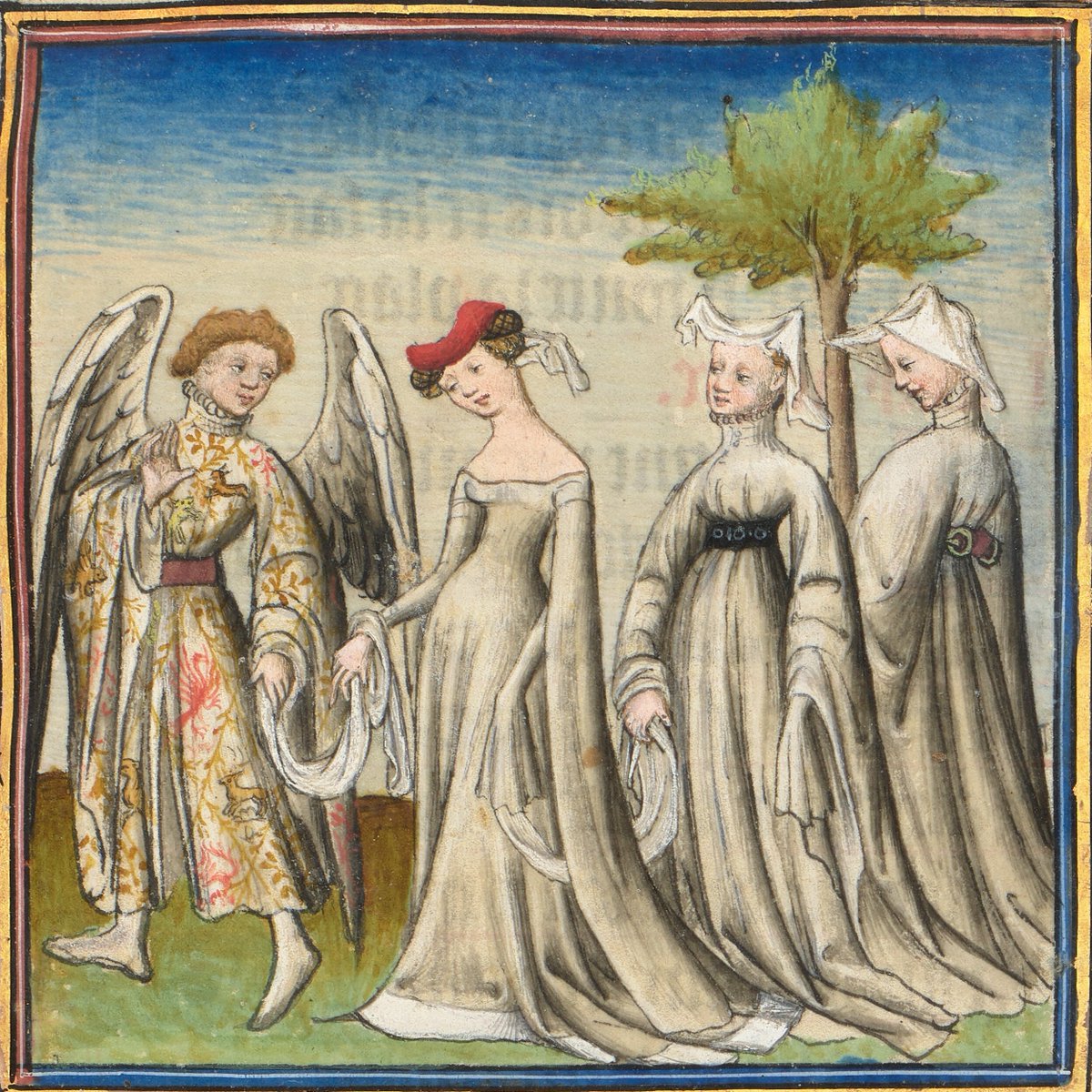
If you wish to be known by everyone, first make it so that you know no one.
Si vis omnibus esse notus, prius effice ut neminem noveris.
—De Moribus (Pseudo-Seneca), 37
1
2
12
462
May 15
Image courtesy of the @GettyMuseum's Open Content Program.
Link with further info: getty.edu/art/collection/obj…
2
138
Mar 24
mirabile dictu

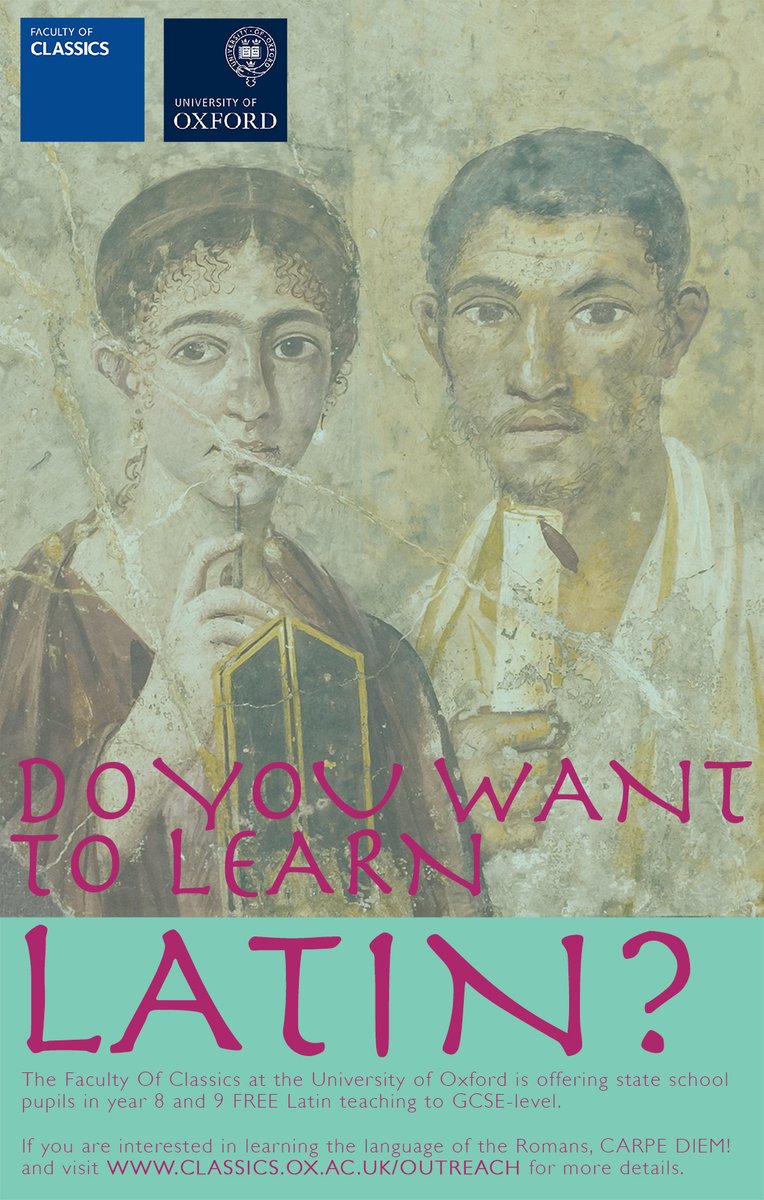
Applications are now open for our 2026–2028 OxLAT programme, which offers free tuition in Latin language and literature from scratch through to GCSE examination.
If you are in Year 8 or 9 at a nearby state school which does not teach Latin, but you are interested in learning the language of the Romans, apply to study it here with us!
Full details and applications forms are available at classics.ox.ac.uk/outreach
***APPLICATION DEADLINE: Friday 15th May 2026***
2
5
501
Feb 14
If words are just their etymologies, then no politician is an idiot (ἰδιώτης, idiótes).
But at least some politician is an idiot.
Therefore, words are not just their etymologies.
1
4
324
Feb 14
Proof of the major: etymologically, an ἰδιώτης is a private person—i.e. one who is not engaged in public affairs. But all politicians are engaged in public affairs. Therefore, etc
Proof of the minor depends on existential generalization. It is left to the reader as an exercise.
1
4
281
Feb 12
The Seine comes up again and again in philosophy from the 1100s onward, where it serves as an example of something that is constantly changing yet somehow the same.
It's a big problem for things like identity across time, the semantics of indexicals ("this river"), and mereology (whole-part relations).
A great recent piece on this is Andrew Arlig's (2026) "Chairs and Rivers: How to Survive Change If You Have No Soul".
Feb 9

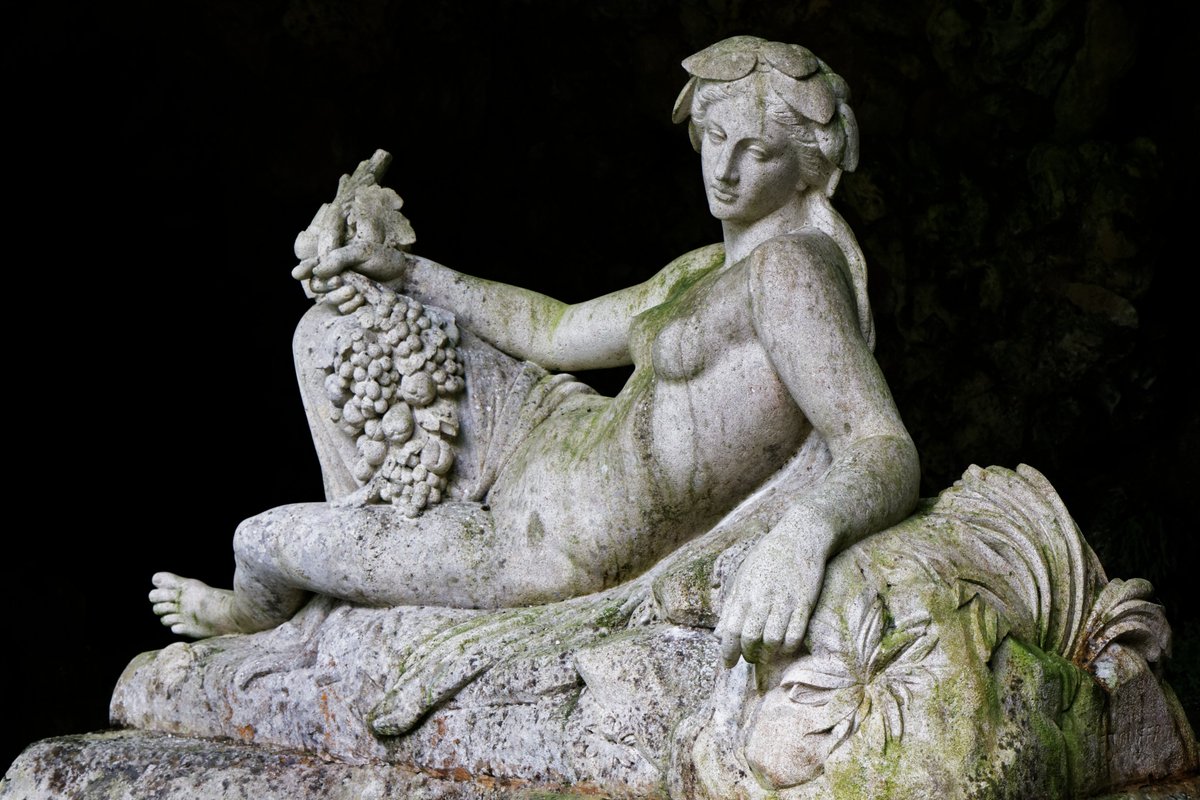
SEQUANA (-ae)
—the river Seine
—the Gallo-Roman goddess of the same river
2
4
431
Feb 9
SEQUANA (-ae)
—the river Seine
—the Gallo-Roman goddess of the same river
1
1
4
719
Feb 9
Credit for image on the right: Thesupermat (Wikimedia Commons user)
Link: en.wikipedia.org/wiki/File:S…

194
Feb 7
Wheelock's is great, especially the Sententiae Antiquae and Scripta in Parietibus, which give a sense of what people were actually using the language to say.
Far better than some of the artificial 'obstacle-course' constructions you sometimes see: "Did you see the sailors who gave money to the farmer who, with the harvest having been gathered, was watching his horse?"
Feb 6

This week, my dad began teaching me and my son Latin. Graves and Beard want me now, too.
My mid-life school of enthusiasm: Latin, the French Revolution, and some German lit. These have pride of place right now alongside all the novels I’ve started.

2
1
56
4,424
Feb 4
PHILOCAPTUS (-a, -um)
—Captured by love; infatuated, besotted
From Greek φίλος (phílos, "beloved, dear") Latin captus ("captured, seized")
1
5
10
737
Feb 4
Manuscript image courtesy of The @GettyMuseum's Open Content Program.
Link with details: getty.edu/art/collection/obj…
1
4
160
Feb 3
LITIGIOSUS (-a, -um)
—fond of going to law; litigious
—quarrelsome, fond of disputes
—contested; the subject of a lawsuit
—sophistical disputation, where the only aim of the parties is to appear to win
1
2
7
574
Feb 3
Manuscript image courtesy of The @GettyMuseum's Open Content Program.
Link (with further details) getty.edu/art/collection/obj…
3
147
Jan 27
IDIOM: "Whatever goes in one ear goes out through the other"
"Quicquid per unam aurem intrat exit per alteram"
Source: Buridan, Questions on the "Nicomachean Ethics", 6.1 (fol. 147rb [1489 Paris ed.])
2
293
Jan 24
"Quocumque me angulo caeli Deus collocet satis mihi faciet."
"Whichever corner of heaven God may place me in will be quite enough for me."
—Heloise, in a letter to Abelard (Ep. IV.17)
4
338
Jan 11
SECRETUS (-a, -um)
—Set apart, independent; reserved, special
—Alone, withdrawn from one's companions or the world
—(Of places) remote, secluded
—Done/said in private; confidential; confided to a select few; secret
—Hidden; not commonly known
—(Of prayer) silent or sotto voce
1
2
7
883
Jan 15
Image courtesy of the @GettyMuseum's Open Content Program
Link: getty.edu/art/collection/obj…
150
Jan 15
Grandō (grandinis)
—Hail: a hailstorm, a hailstone
—A volley of missiles
From Proto-Indo-European *ǵʰreh₃d- ("hail").
Cf. other IE words for hail: Sanskrit ह्रादुनि (hrādúni), Old Armenian կարկուտ (karkut), and Old Church Slavonic градъ (gradŭ).
1
3
191
Jan 15
Image courtesy of The @GettyMuseum's Open Content Program.
Link with details: getty.edu/art/collection/obj…
1
137