
Joined February 2021
- Tweets 8,975
- Following 187
- Followers 11,936
- Likes 21,086
260 Photos and videos







Pinned Tweet

8 Nov 2025
Just hit 11k followers, so figured it’s high time I introduce myself again🕵️
I’m Mercure. That’s not my real name. I’m a Copywriter. I spent 5 years working in-house at one of the largest direct response companies in Europe, before moving on to focus on my own freelancing career.
My account is anonymous and will likely stay that way. Because who I actually am doesn't really matter.
What matters is the Big idea behind all of this.
See, I share what I know about Copywriting, but probably not in a way you’ve seen before.
Most people associate Copywriting will loud, catchy, headlines.
And while that's a popular expression of Copy, I’m more interested in what’s underneath.
The psychology, the philosophy, the linguistics.
See, I have written a lot of Copy in regulated markets. Markets where you can't just show up shouting big claims.
To still write winners, I had to find new ways of writing claim-less Copy.
That's where I found storytelling, world building, and how to install ideas in your readers without ever saying them.
I call this Quiet Persuasion.
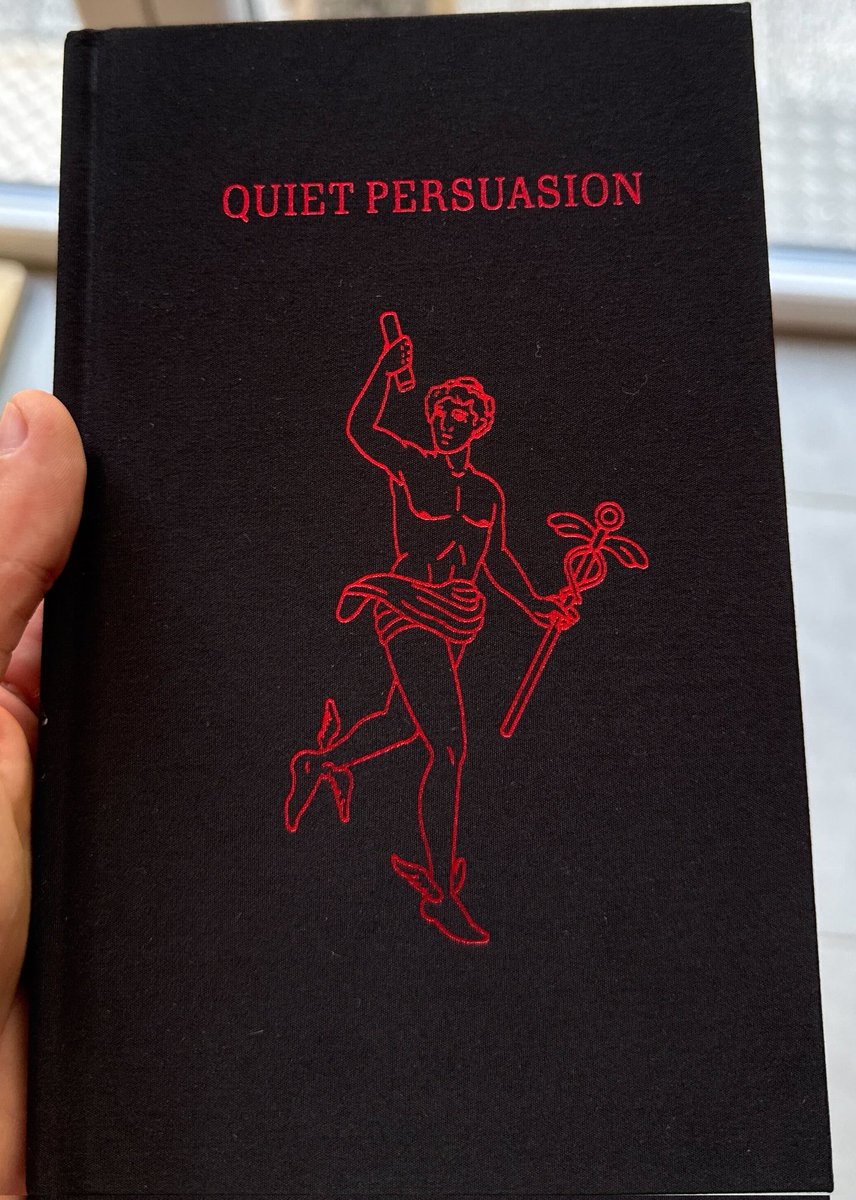
And I've written a book about it, which has already been qualified as a marketing classic by its readers.
Now the Quiet approach isn’t for everyone. It usually takes more work. It requires more research, to know your audience better than they know themselves.
If you can't outclaim your competition, you've got to out-think them.
You have to be patient when the internet rewards immediate impact.
But here’s what it gives you.
You learn to see what most people overlook. You understand human psychology at a level that influences your whole life.
It’s a master key that opens doors you didn’t know existed.
And if you're curious about what Quiet Copy looks like...
...I built my entire funnel as an immersive detective investigation, where the goal is to find ME.
I disappeared, and I've left behind me scattered pages of the manuscript of Quiet Persuasion, that might lead you to me.
If you’re curious, start here:
mercurecopy.com/case-file-25…
See you around.
Merc
32
10
182
16,980
MERCVRE retweeted
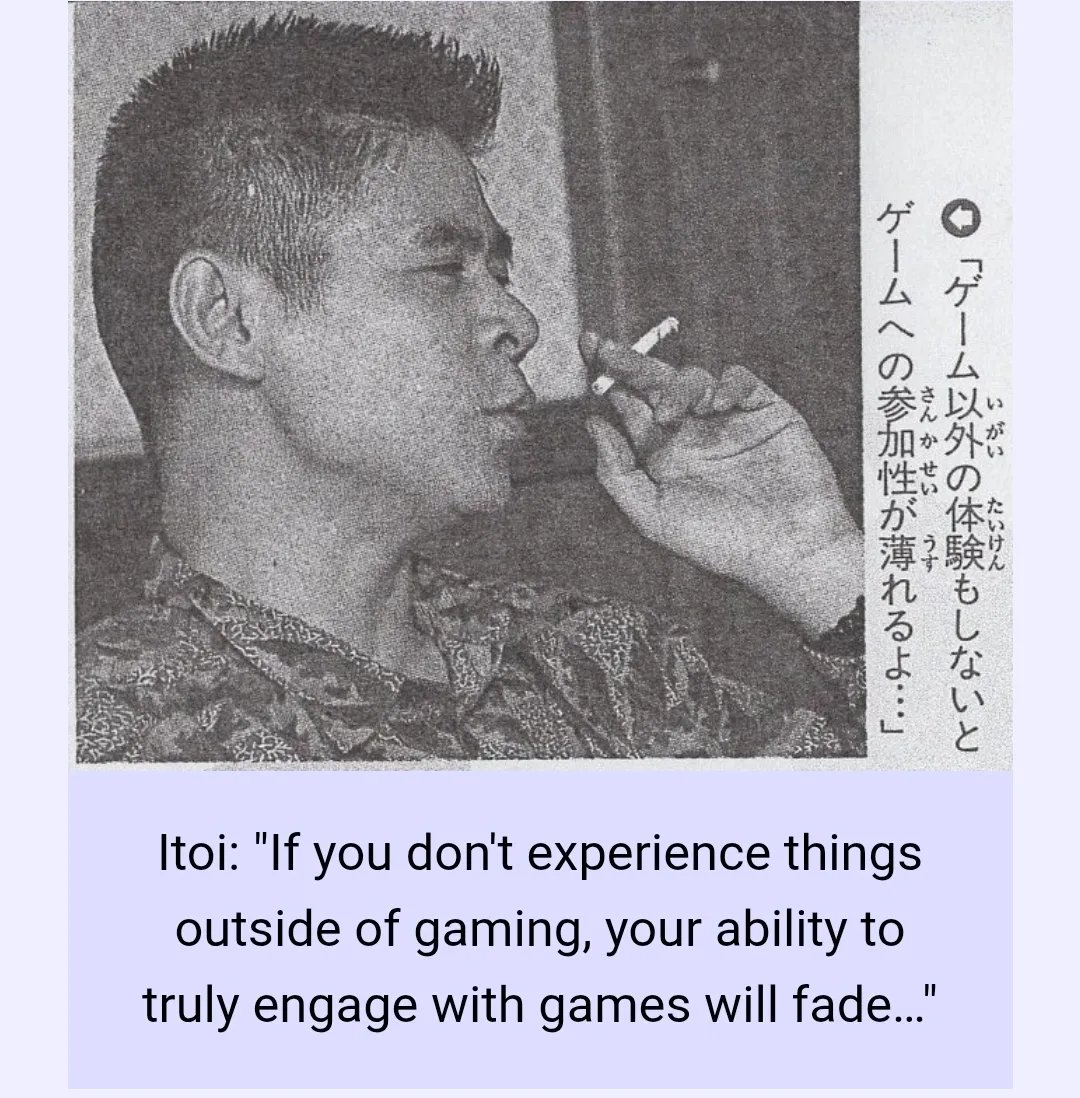
This applies to Copywriting too.
And it explains why so much Copy out there is forgettable.
A Copywriter who only reads marketing books is only recycling what already exists.
Nothing new can come out, because nothing new went in.
The best stuff you’ll ever write comes from stepping away from your desk, because your desk is where you assemble it, not where you find it.
Joe Sugarman talks about this in chapter 2 of The Adweek Copywriting Handbook.
He says the best Copywriters are the curious ones, the people who read a lot, have a ton of hobbies, master a skill and then get bored and go master another.
And his own life is proof.
The man flew planes, ran an amateur radio, was a professional photographer, tried everything from scuba diving to skiing to snowmobiling, learned German while stationed in the army, and traveled to nearly every continent on Earth.
All of it, he says, became raw material his brain could reach back into when it was time to find a Big Idea.
And that’s what a lot of people forget…
Your mind can only combine what you’ve already put in it.
A new angle is almost always two old things you’ve experienced in some way, snapped together in a way nobody has tried before.
So if the only thing you’ve ever fed it is marketing books, the best you’ll ever do is what’s been done already, maybe slightly better.
So go live.
Read things that have nothing to do with marketing. Old history books, biographies, a novel that you can’t get from Amazon.
Pick up a challenging hobby. Become bad at something again.
Travel where people don’t speak your language. Take the local bus and ask for directions without using Google Maps.
Talk to strangers in the street. Strike a random conversation, compliment them, ask them questions, and actually listen.
Take the long way home and pay attention on the walk. Get lost for an hour or two.
All of this will go in your back pocket, and one day, right when you need it, you’ll reach in…
And there’s your idea.
Jun 14

ALT Shigesato Itoi: "If you don't experience things outside of gaming, your ability to truly engage with games will fade..." いがいたいけん 「ゲーム以外の体験もしないと さんかせい うすゲームへの参加性が薄れるよ・・・」
6
2
41
883
Jun 15
Your reader can agree with every line on your page and still not buy.
I know this confuses a lot of Copywriters, because we’re taught that objections are the enemy.
Answer them all and the sale happens, right?
Except that’s not exactly how it works.
Because agreement happens in one part of the mind, while wanting happens in another.
And those parts don’t interact much, let’s put it like that.
That means someone can find your argument airtight yet feel NOTHING while reading it.
But nobody pulls out their credit card because the logic is airtight.
They pull it out because the wanting got so strong it beat the price, the hassle, and the risk of making a mistake.
That means your Copy has 2 jobs:
1/ Make the case.
2/ Make your reader feel the weight of the problem and picture their life with it solved, clearly enough that not buying starts to hurt.
Logic earns the agreement, feeling earns the sale.
A lot of Copywriters spend their whole career getting good at job one and never really learn job two.
Which is the part I wrote Quiet Persuasion around.
The book shows you how wanting works: how desire builds, the trigger events that push someone from thinking to buying, and the 3 kinds of proof buyers trust.
Check it out below.
2
3
36
1,060
Jun 14
Has anyone ever told you to calm down, and you calmed down?
I’m betting that has never happened.
You just got angrier, and you weren’t wrong to, because now you had 2 problems:
1/ The thing that made you angry in the first place
2/ This guy telling you shouldn’t be angry
That’s what happens when you try talking someone out of a feeling with a fact.
IT DOESN’T WORK.
They can’t hear your point, because they’re too busy defending why they’re allowed to feel this way.
So what you want to do is agree with the feeling first.
You can acknowledge it, “yeah i’d be pissed too.”
Or even better, get angry with them (this works crazy well with women btw).
Now that you’re on the same level (look up the map of consciousness), you can slowly bring them up to a better place…
A place where you can actually talk.
Why does this matter for Copy?
Because your reader shows up with feelings too.
Maybe he got burned by a product like yours. Maybe he thinks everyone in your market is full of it.
And what do most sales pages do with that?
They argue with him: “this one’s DIFFERENT and here’s the PROOF.”
Brother. This guy’s not reading your proof. He’s thinking “sure, buddy.”
So do what you’d do with the angry friend.
Say the feeling before he does. Tell him you know he’s been disappointed before. Tell him he’s right to doubt you.
Now he’s not fighting you anymore.
Now you can show him the proof.
Which is the same proof, by the way. It just works now, because he’s open to look at it.
5
6
39
796
Jun 13
“People buy with emotion and justify with logic” is true, but the way it gets repeated makes it almost useless.
Because what people take from it is: emotion does the selling, so logic is optional.
But look closer at the sentence…
It doesn’t say people buy with emotion, full stop.
It says they justify with logic.
Does it say the logic is optional?
No.
Because someone who wants something still has to get past his own doubts, fears, worries, potentially even his budget…
And sometimes a wife or business partner who’s going to ask why they spent this much.
So emotion and logic have different jobs.
> Emotion creates the want.
> Logic gives the want permission.
No emotion?
Your prospect agrees with everything but feels no pull.
No logic?
Your prospect feels the pull but can’t defend the purchase to himself, so he closes the tab and tells himself he’ll think about it.
And the sale dies either way, but for a different reason.
What the sentence is really saying is that you should appeal to both.
3
5
44
743
Jun 12
WHAT GOOD COPY DOES. IN 60 LINES.
> Good Copy speaks to one person.
> Good Copy doesn’t raise its voice.
> Good Copy reads the way people talk.
> Good Copy competes on fit, not price.
> Good Copy comes from reps, not talent.
> Good Copy doesn’t apologize for selling
> Good Copy treats the buyer like an adult.
> Good Copy doesn’t go crazy on promises.
> Good Copy is specific enough to be wrong.
> Good Copy makes your product feel obvious.
> Good Copy starts long before you open the doc.
> Good Copy earns trust before it asks for money.
> Good Copy is judged by sales, not compliments.
> Good Copy comes from reviews, not swipe files.
> Good Copy gets read out loud before it gets sent.
> Good Copy questions the brief before it follows it.
> Good Copy answers “why now,” not just “why this.”
> Good Copy is drafted in one go and fixed in the edit.
> Good Copy puts a mechanism behind every promise.
> Good Copy keeps only the lines that earn their place.
> Good Copy builds toward the offer from the first line.
> Good Copy says “results in 12 days,” not “fast results.”
> Good Copy is written to be acted on, not remembered.
> Good Copy makes the price feel like the last logical step.
> Good Copy confirms who the buyer already believes he is.
> Good Copy relies on what has worked for a hundred years.
> Good Copy focuses on one claim instead of piling on proof.
> Good Copy names the catch and explains why it’s worth it.
> Good Copy is outlined before the writing starts, not during.
> Good Copy gets a second pair of trained eyes before it ships.
> Good Copy sells what the features change in the buyer’s day.
> Good Copy gets better with the right words, not more of them.
> Good Copy finds the thing holding the buyer back and removes it.
> Good Copy shows what happened to people who used the product.
> Good Copy tells the truth even when stretching it would sell more.
> Good Copy sounds like someone standing behind what he believes.
> Good Copy gives every sentence one job: getting the next one read.
> Good Copy is written to move the buyer, not impress other writers.
> Good Copy proves its claims in the language the buyer trusts most.
> Good Copy answers objections before the buyer says them out loud.
> Good Copy is written from inside the buyer's head, not the writer’s.
> Good Copy starts from whichever section the writer can already see.
> Good Copy picks the one benefit that matters most and cuts the rest.
> Good Copy reads as one flowing argument, not a list of selling points.
> Good Copy is written after you’ve stepped away and come back fresh.
> Good Copy meets the buyer the moment the problem becomes urgent.
> Good Copy makes it through several heavy rewrites before anyone sees it.
> Good Copy makes the buyer feel understood before it makes him feel sold.
> Good Copy explains the buyer’s problem a name, so he trusts you for doing it.
> Good Copy makes the product feel like the natural choice for someone like him.
> Good Copy studies the competition, because the buyer already heard their promises.
> Good Copy assumes the reader is busy, skeptical, and one second away from leaving.
> Good Copy applies principles the writer understands, not just frameworks he copied.
> Good Copy finds the desire the buyer already has and positions the product next to it.
> Good Copy works the morning after: the buyer reads it again and doesn’t feel cheated.
> Good Copy uses simple, concrete words, because complicated, abstract ones don’t cut it.
> Good Copy shows the actual cost of doing nothing instead of pushing with fake urgency.
> Good Copy promises small specific results, because they’re easier to believe than huge ones.
> Good Copy looks effortless because it was rewritten more times than the reader will ever know.
> Good Copy listens to customers, because the founder tells you what the product does and customers tell you why they bought it.
4
6
78
1,509
Jun 12
Good Copy starts with understanding how people want things.
I break it all down in my book Quiet Persuasion.
Get your copy here: mercurecopy.com/nlsbi-field-…
3
199
Jun 11
You don’t have to convince people to buy.
Because convincing means pushing, and when you push, people push back.
It’s a natural response: as soon as someone feels like you’re trying to change their mind, they resist.
So the harder you sell without having earned that right, the more reasons they find to say no.
A good salesman doesn’t do this.
He figures out what his reader already wants, finds what exactly in his product gives him that, and puts the two in front of him.
Now there’s nothing to push against.
His prospect is being shown something he was already wanting.
And when the match is right, the sale almost happens on its own.
3
5
46
1,020
Jun 10
Your Copy isn’t just competing with other Copy.
It’s competing with everything else your prospect could be doing right now.
> He could close the tab...
> He could open another tab...
> He could scroll on his phone...
> He could get up and get a snack...
> He could do anything but read your stuff...
So every line you write has to earn the right to the next one, against the easier option of just walking away.
3
5
42
707
Jun 9
Here’s a persuasion technique the top Copywriters use all the time, without even thinking about it.
It’s so powerful it shows up in nearly every great piece of Copy ever written, and you’ve been on the receiving end of it more times than you realize because it’s subtle enough to go unnoticed, which is exactly why it works so well.
And the fact that you’re even reading this tells me you’re part of the 1% of writers who are serious about understanding persuasion, not just Copy tactics.
So the technique is simple.
It works by appealing to who your reader already believes he is.
Because one thing you can count on with people is that they will never act against who they think they are.
A careful man won’t make the risky choice, no matter how good the numbers look. A frugal man won’t get the luxury option, even if he can afford it.
And most Copy flops for this reason: it’s asking the reader to stop being himself for a minute, and nobody wants to do that.
So what the best Copywriters do instead is name the identity the reader already believes he has, then position the product as the natural choice for a man like him.
Once you do that, the buyer doesn’t feel pushed at all, because buying your product now feels like an act of self-respect.
Want an example?
Look at the opening of this tweet.
I told you you’re part of the 1% of writers who are serious about understanding persuasion.
And you agreed, so you kept reading.
Normally this is where I’d tell you serious writers like yourself enjoy going deeper into the topic, and I’d point you towards my book.
But you’re aware of it so I’ll just say it plain: Quiet Persuasion goes deep on identity-based persuasion.
How to persuade people by working with who they are, how to identify the current identity of your buyer, how to position your product as the natural next step for someone like him, and how to write Copy that turns their own self-image into the strongest argument for the sale.
If you got value out of this tweet, the book will pay you back 10 times over.
Grab your copy below.
6
5
66
1,712
Jun 8
If it takes you an hour to write one email, you don’t have a writing problem…
You most likely don’t need more practice or more frameworks either.
The problem is that you second-guess every sentence.
Which is exactly what fast Copywriters don’t do. They write a sentence down and keep going. They trust that it’s good enough for now, and that any problems will show up on the next pass.
Slow Copywriters do the opposite.
They sit with one sentence for 10 minutes. They rewrite it four times before moving on, trying to make it perfect before they even entertain the next one.
This is why it takes them forever to write anything.
And the worst part is that none of that effort was even needed.
Because once you draft the full piece out, some of your writing is going to be okay, some will be good, some will be bad, and a lot will need heavy rewriting either way.
But you can’t tell which is which until you’ve got the full piece written out.
So the way to write good Copy faster is to keep moving, and let the editing handle whatever needs handling at the end.
4
5
58
938
Jun 7
“Read your Copy out loud” is some of the most common advice out there, and yet almost nobody does it.
I know it feels awkward, but that’s the point.
You catch problems with your eyes, but you catch awkwardness with your ears.
So when you read your draft in your, it can feel finished even when the rhythm is off, because you're filling in what you meant to say instead of what you wrote.
Read that same draft out loud and it becomes easier to spot the awkward parts.
This matters for any kind of Copy, but it matters most for ads.
Because an ad lives and dies by its rhythm, and the words have to flow like music, or the viewer is gone.
So before you call your draft done, read it out loud.
If it doesn’t sound good to your ears, it won’t to your buyer either.
4
6
75
2,512
Jun 6
My current Copymaxxing stack:
- Wake up whenever
- Read classic sales letters
- Channel the collective consciousness
- Coffee with tons of sugar
- Cigarettes on the balcony
- Rawdog my Copy in one go
- No second draft, no editing
- One tweet a day
- Bedtime whenever
Wouldn’t change a thing.
14
6
97
3,482
Jun 6
Anyone can write more.
Very few can write less and still get the point across.
And it’s that second skill, the cutting, that separates the good from the great.
It’s something I see often: someone writes a fine argument, but they overload it with sentences that are only there because they sound good.
The core argument is strong but by adding to it, they’re really weakening the entire thing.
And once you hack away at the essential, the entire piece starts to slap more.
Now, cutting bad lines is easy… Because you spot them as soon as you read your draft out loud.
The hard part is cutting your good lines… The ones you’re proud of.
And that’s where you need to be harsh with yourself and read your Copy from the POV of your reader.
If a line is not serving your argument, it has to go, full stop.
After years of writing Copy, I’ve come to realize that the cutting matters more than people think.
And the reason it does is because of how persuasion really works.
When you cut, you hand more of the work to your reader.
You’re trusting them to fill in the gap themselves, which allows them to take ownership of the conclusion so they can feel like it came from them.
Which is the strongest possible form of persuasion.
If you want the long version of this idea, you’ll love my book Quiet Persuasion where I go into depth on how to influence people without saying more.
How to write Copy that does its work without putting up a performance, and how to spot the small moves that break trust without you noticing.
I’ll be shipping more hardcovers (which are limited editions) next Monday, so right now’s a perfect time to order yours.
Link in second tweet.
3
6
40
856
Jun 5
Copywriters are told to make the purchase as frictionless as possible.
But some friction is actually doing you a favor.
A high price is friction…
And it also filters out people who aren’t serious.
A long application form is friction…
And it also makes sure you only talk to qualified leads.
A sentence that says “this isn’t for beginners” is friction...
And it also makes every intermediate feel like this was made for them.
See, the mistake is treating all friction the same way.
Some of it you want to remove because it’s just getting in the way. Things like a confusing order form, a checkout page with tons of boxes to fill out and endless clicks, an offer that’s unclear, a section that detracts from the core argument.
Those you want to kill.
But the right kind of friction, like the ones above?
It’s keeping the wrong people out so the right people feel like they belong.
2
8
53
1,041
Jun 4
If you want your Copy to start hitting harder fast, stop focusing on just the writing.
Take 10 minutes and go through this 3-step process.
Not only will this strengthen your Copy, it’ll also make it much easier to write, and you’ll wonder how you ever wrote anything without it.
So before you write anything, answer three questions:
1/ What does this product do?
2/ Who is the buyer?
3/ What’s the ONE promise you’d be willing to defend in person, in front of your prospect?
Answer these as plainly as possible. One sentence is ideal. Make it so simple a child would get it.
You don’t have to share these either. They are for you.
Once you’re done, you have a STANCE.
A clear, written-down view of what you stand for.
And here’s why this helps so much.
When you write from a stance, every line on the page comes from a solid foundation.
All the timid words like “may” and “could” and “potentially” drop out on their own. Your argument gets sharper without you trying. And the entire piece starts hitting harder.
You become persuasive instead of sounding persuasive.
And it’s all because you’re writing from a crystal clear position: your stance.
Often, writers who skip this end up performing on the page. They sound like they’re trying too hard to convince you.
And readers can tell, even if they couldn’t say why, because pushy writing has a certain feel to it. Just like honest writing has a different one.
So next time you sit down to write Copy, especially long form, answer those questions, and get clear on your stance.
That tiny habit is the closest thing to a shortcut you’ll find.
It’s also the foundation of a bigger idea: that persuasion is mostly about where you stand.
That idea is what my book Quiet Persuasion is built around: true persuasion happens upstream. What you read, see, or hear is just the end result of a larger process.
If you sell anything online or offline, it'll open your eyes to all the mechanisms running behind every sale.
Check it out below.
6
8
63
1,521
Jun 4
Get your copy here: mercurecopy.com/nlsbi-field-…
I'll be shipping more hardcovers early next week so now's a great time to get yours.
2
229