
Economist, PhD researcher, Consultant, ...
Joined December 2011
- Tweets 1,222
- Following 2,937
- Followers 145
- Likes 2,338
38 Photos and videos





6 Nov 2025
RT @Himma0099: 🇪🇺🇸🇩Repeated messages from the European Union foreign ministers calling for a ceasefire in #AlFashir #Sudan remain superfici…
39
17 Mar 2025
አቤል ጳውሎስ - በራሴ ዩቲዩብ ቻናል መጥቻለሁ ! youtu.be/FdYCxftHRac?si=AlGJ… via @YouTube Big moves!! #Ethiopianmusic #Ethiomusic #music #Africanmusic #ethiopia #eritrea
1
101
12 Mar 2025
Stop the Next Ethiopia-Eritrea War Before It Begins - As armies deploy, Gulf states and their Western allies must halt an impending conflict that could inflame the entire Red Sea region. foreignpolicy.com/2025/03/12…
1
4
52
Mesfin Abraham Ali retweeted

30 Jul 2024
To support Ethiopia's Homegrown Economic Reform Agenda that aims to stimulate private investment and jobs, our Board approved a 4-year $3.4bn ECF to help Ethiopia address economic challenges, strengthen growth, and resume rising living standards.
imf.org/en/News/Articles/202…
37
42
94
19,920
Mesfin Abraham Ali retweeted

30 Mar 2024
Update Ede: Zojuist is de laatste gegijzelde vrijgelaten. Er is één persoon aangehouden. Meer informatie kunnen we op dit moment nog niet delen. ^AM
55
83
351
127,436
Mesfin Abraham Ali retweeted

Appalled by the heinous video revealing the torture of an Eritrean migrant in Libya. This chilling incident is not isolated. Thousands of African refugees and asylum seekers suffer in western Libya—enduring torture, facing unspeakable horrors, including sexual abuse and slavery. We vehemently condemn these atrocities, urging swift and decisive justice. The world must not stay silent. #Libya
@IOM_Libya, @UNSMILibya, @ICRC_lby, @LibyanRedCresce, @HRWL, @UNHumanRights, @hrw, @amnesty, @Refugees, @ICRC, @EU_Commission, @UN, @UNRefugeeAgency, @StateDept, @AnaMartinsGomes, @BarackObama, @StateDRL
16 Nov 2023

If we experience it on our bodies as a result of policies and mechanisms drawn by your authorities, you all should at least have the courage to see it and decide what world you want to live in.
Nathaniel Gidesha from Eritrea is now held in Kufra, Libya , in this current state where he suffers tortures for a wild ransom of 7500$.
His families, colleagues and common people like us are forced to watch this all days on our screens and one would wonder what terror can bring forth, either tenderness or a great deal of vengeances towards such policies.
38
119
120
40,109
Mesfin Abraham Ali retweeted

6 Nov 2023
OpenAI just released "custom versions of ChatGPT" and this is going to change the future of education and academic research.
You won't need any coding skills to create a custom ChatGPT. You will be able to build them simply by talking to ChatGPT in natural language.
Here Sam Altman builds a custom GPT in just 4 minutes that gives startup founders advice.
He simply tells GPT Builder to create a GPT and it does that. You can upload your documents to it, enable its access to the internet, Code Interpreter for data analysis, even create images.
Prompting is going to become one of the most valuable skills in the near future.
20
167
696
174,534
Mesfin Abraham Ali retweeted

10 Oct 2023
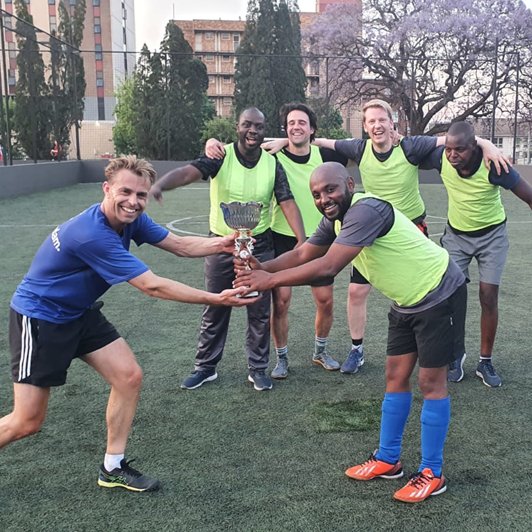
No @AfEconHis without a “Jay Jay Okocha soccer match”, established by @felixmzs in Sussex (2016), and played for the 6th time this year. Unlike earlier editions, nobody got injured but with 30 degrees Celsius & a full two hours of play with no break it was a memorable edition.
1
3
10
665
Mesfin Abraham Ali retweeted
10 Oct 2023
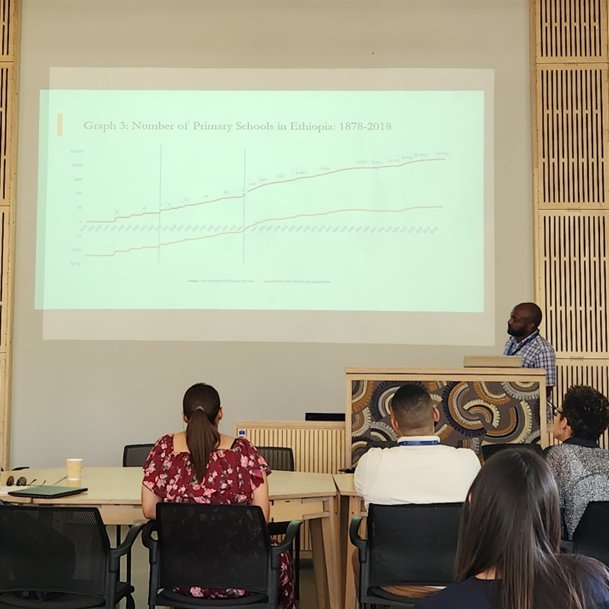
@Mesfintwt presented the first results of his ongoing PhD project @RHI_WUR on education in Ethiopia, charting the expansion of schools & enrolment over the 20th C. Ethiopia’s educational history proves a popular research frontier, with 3 Europe-based teams exploring it currently.
1
3
8
732
Mesfin Abraham Ali retweeted
URGENT‼️Call Rep. Maxine Waters (202-225-2201) and ask her not to succumb to the TPLF's pathological lies and mob rule.
As a Congressperson that represents a district with a large Ethiopian and #Eritrea|n population (of people who have been ACTUAL victims of TPLF for decades) — @RepMaxineWaters must do her due diligence and get educated on the vengeance and intimidation tactics of the TPLF bullies and vigilantes, who use fabrication and mob rule to silence anyone who dares speak the inconvenient truth about #Ethiopia.
Call her DC office 202-225-2201.
Congresswoman waters should know that the TPLF the reason millions of us fled Ethiopia over the past 3 decades, with many ending up in her district.
The TPLF mobs are intent on destroying people's lives who oppose them. The TPLF must not be allowed to lie their way through America's "cancel culture" to deny an American citizen of the right to employment.

23
170
230
29,016
Mesfin Abraham Ali retweeted
21 Aug 2023
The University of Southern Denmark is organizing a general meeting on AI tomorrow. The objective is to educate the faculty and staff on how to use generative AI for educational purposes.
They have asked me to give a speech on best practices for using AI.
Below is the speech I have prepared.
---
Most of my work focuses on how to use AI apps for academic writing and there are six points that I would like to talk about in this regard.
1. Use AI for Structure and Not Content:
When it comes to using AI apps for academic wrting, understanding the difference between the structure and content is crucial.
It’s a bit tricky to understand the difference between structure and content because the two intricately intertwined. Content can’t exist without structure and we will have no strucutre if we don’t have any content.
We always have a lot of content based on the research that we are doing. But that content doesn’t mean much if we don’t structure it in the form a research paper or a monograph.
Large language models like ChatGPT and Claude are trained on huge amounts of human generated text. These models have a very good understanding of how we communicate, the way we structure our communication.
But since these apps use a predictive model, the content they produce is mostly predictable. Predictable content, for our purposes, is of little use. Predictable structure, on the other hand, is very useful.
We have to learn use generative AI to structure and not generate content. For example, you can ask ChatGPT to give you an outline for a journal article, but you can’t ask it to write the article for you. If you want to learn more about it, I have written about it on Twitter.
2. Outsource Academic Labor to AI But Not Thinking:
Imagine you have to look up a few resources related to your research project. You can go to the library and browse the physcial card catalog. Suppose you find a few relevant papers. You go to the shelf to pick up physical copies of the relevant journals.
This whole process as you can imagine is quite laborious.
You could’ve easily done all this on an app like Google Scholar. AI-powered apps are to Google Scholar what Google Scholar is to a physical brick-and-mortar library. I will give you the example of an AI-powered app called Scite.
Suppose you come across a paper published by two Nobel laureates working in a prestigious lab. Because of their Nobel prizes and their stature, most of us would think that they have presented irrefutable evidence.
Now imagine you want to find out if there is any evidence that contrasts the claims of these Nobel prize winners. You will have to read a lot of papers to find that out. Google Scholar won’t be much help.
But the app Scite will tell you in a matter of seconds the contrasting and supporting evidence to the claims made by those Nobel laureates.
In this case, we are using AI to outsource our labor but not our thinking. We cannot outsource our thinking because of the point I made earlier about predictable content.
3. Treat AI as a Research Assistant Not a Supervisor
Imagine you hire a research assistant and you assign them a task. They complete the assigned task. Will you check how your assistant did or will you simply take what they did and put it in your journal article or research report?
Chances are you will check it and give them feedback. Think of AI apps as your research assistants and not your supervisors.
I try to imagine AI apps as smart, willing, eager-to-learn research assistants. They can do certain tasks very efficiently, but I still have to check their output.
4. Don’t Over-Rely on AI and Don’t Forget to Use You Common Sense:
It hardly needs to said that we should use our common sense, but when it comes to AI, you’d suprised by the number of people who absolutely refuse to use their common sense.
Let me give you an example. On the homepage of ChatGPT, it is clearly written that it “may occassionly generate incorrect information.” In their naivete, the makers of ChatGPT assumed that anyone using it will read this.
Many people didn’t bother with it. Among them was a New York lawyer who used ChatGPT “to supplement his legal research.”
ChatGPT gave him fake citations to cases that didn’t even exist. He didn’t stop there. He asked ChatGPT to give him case reports to those fake citations. ChatGPT complied and generated fake reports to those fake citations.
This lawyer took this bundle of fakery and submitted it in a federal court. As for the judge to whom this fakery was submitted, let’s just say that he was not happy.
5. AI is Neither the Fantasized Utopia Nor the Feared Dystopia:
When it comes to AI, a lot of people tend to think in terms of extremes. They either think AI is going to solve all their problems (like you press a button and AI writes you a research paper), or they think AI is going to take over the world and we will be ruled by robots.
Neither of these positions are helfpul. Instead of thinking in these extremes, we should try to understand them as what they actually are.
6. Engage with These Apps:
This brings me to my final point, which is that we should engage with these apps. AI apps are here to stay and if we don’t engage with them, we won’t be able to equip our students with the latest tools that they will need in the marketplace.
I’d like to end with a simple call that we should try to combine artificial intelligence with human intelligence and not with human stupidity.
24
139
558
269,265
Mesfin Abraham Ali retweeted

21 Aug 2023
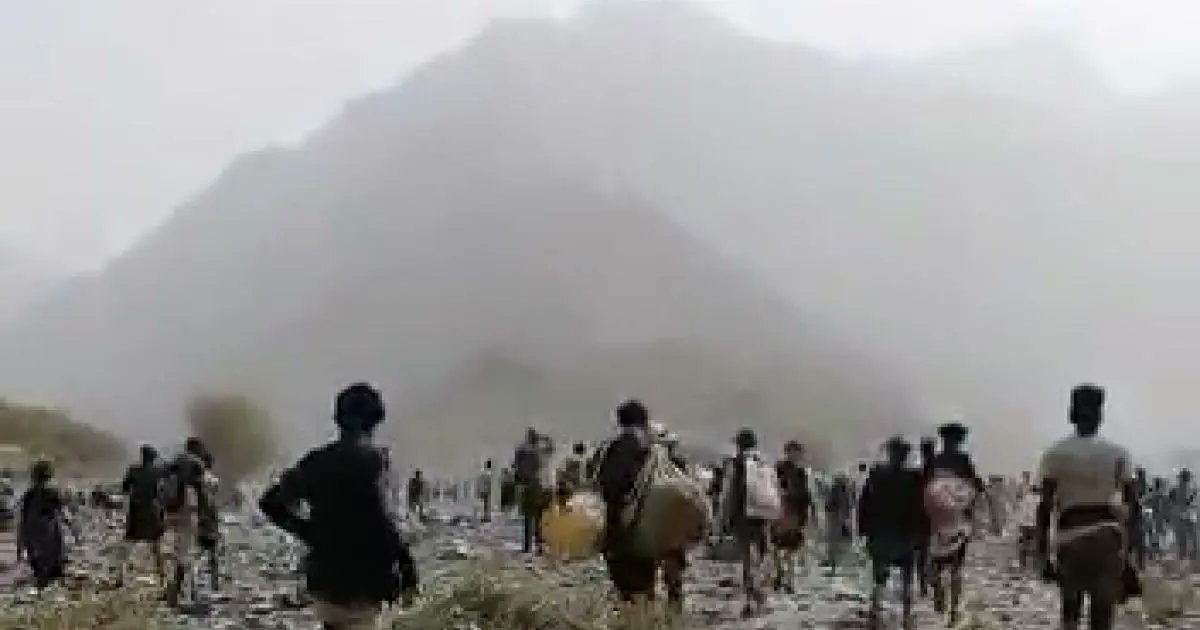
BREAKING: Human Rights Watch Says Saudi Forces Have Killed Hundreds of Ethiopians at Yemen Border
The findings indicate that Saudi border guards have employed explosive weapons and close-range firearms on numerous migrants, including women and children. Some accounts even detail how victims were cruelly asked to choose a limb to be shot.
todaynewsafrica.com/human-ri… via @simonateba
113
396
751
165,996
3 Aug 2023
ግማሽ ጋሬ እንጀራ እጉሰጉስና አንድ አቦሬ ውሃ እደሽ አደርግና ሣር እመደቤ ላይ እጎዘጉዝና ድሪቶ ደርቤ እፈነደስና ተመስጌን እላለሁ ኑሮ ተገኘና
ታምሩ ፈይሳ
2
28
21 May 2023
My condolences to the families, relatives and colleagues of the 22 lectures and staff of #maddawalabu University of #Ethiopia whose lives were lost from the terrible traffic accident in #sebsibe cave. #balerobe #MWU. 12/9/2015.
1
4
70
Mesfin Abraham Ali retweeted

6 May 2023
Biden, Blinken, Hammer, the rest of the Western foreign policy establishment want to blame the Ethiopian war and all its consequences on #Eritrea and the #Amhara and hold them accountable. That hasn't changed. It was wrong during the war and it's wrong now. #Ethiopia
35
273
531
26,807
11 Apr 2023
A 1000 year story of #Africans (including #Ethiopians) in #India.
Khabar: Africans in India: From Slaves to Sultans khabar.com/magazine/cover-st… #indiancommunitymagazine via @khabarmagazine
1
65
13 Mar 2023
"A great economics paper does two things. It takes on a big question, and it finds a smart way to answer that question."
npr.org/2023/01/27/115201525…
1
39
Mesfin Abraham Ali retweeted

7 Nov 2022
The most important video of the year was filmed in 1983.
2,664
53,144
128,034
Mesfin Abraham Ali retweeted

4 Nov 2022
BBC: why (again) publish such a disdainful story by a person who has been wrong & devious about virtually everything in this conflict & seems to hate a peace deal? He can't digest the new reality? BBC, please get your act together & clean out fake experts.
bbc.com/news/world-africa-63…
53
240
404