
Joined October 2024
- Tweets 28
- Following 31
- Followers 47
- Likes 15
20 Photos and videos



31 Mar 2025
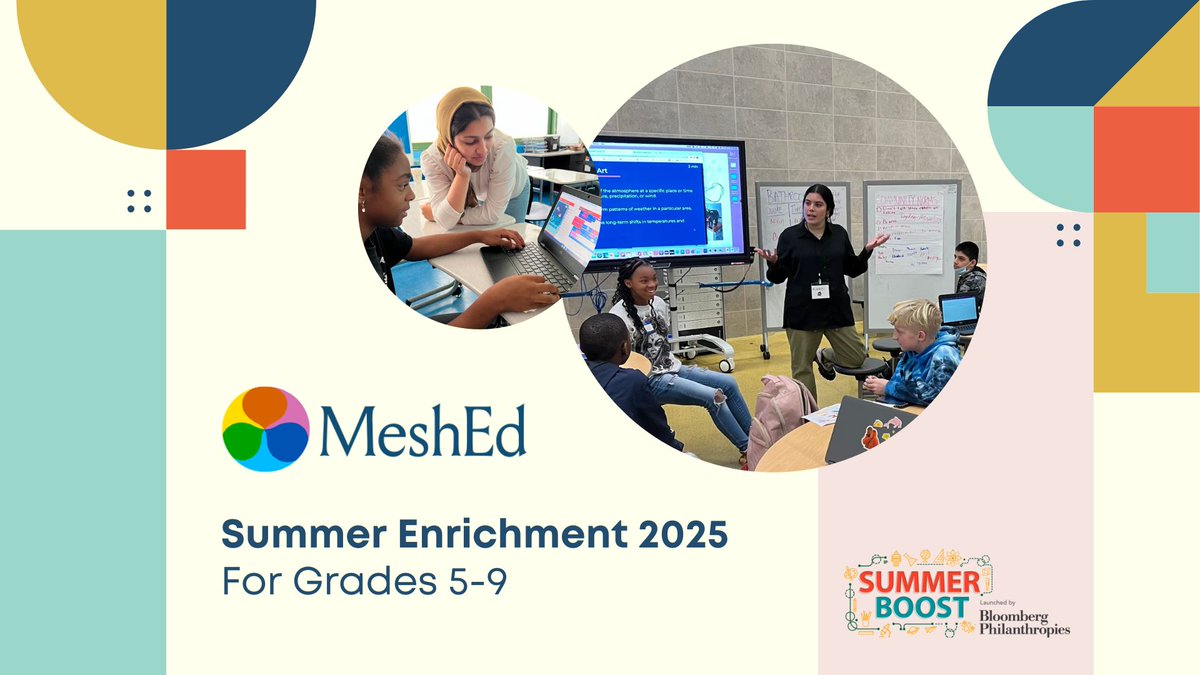
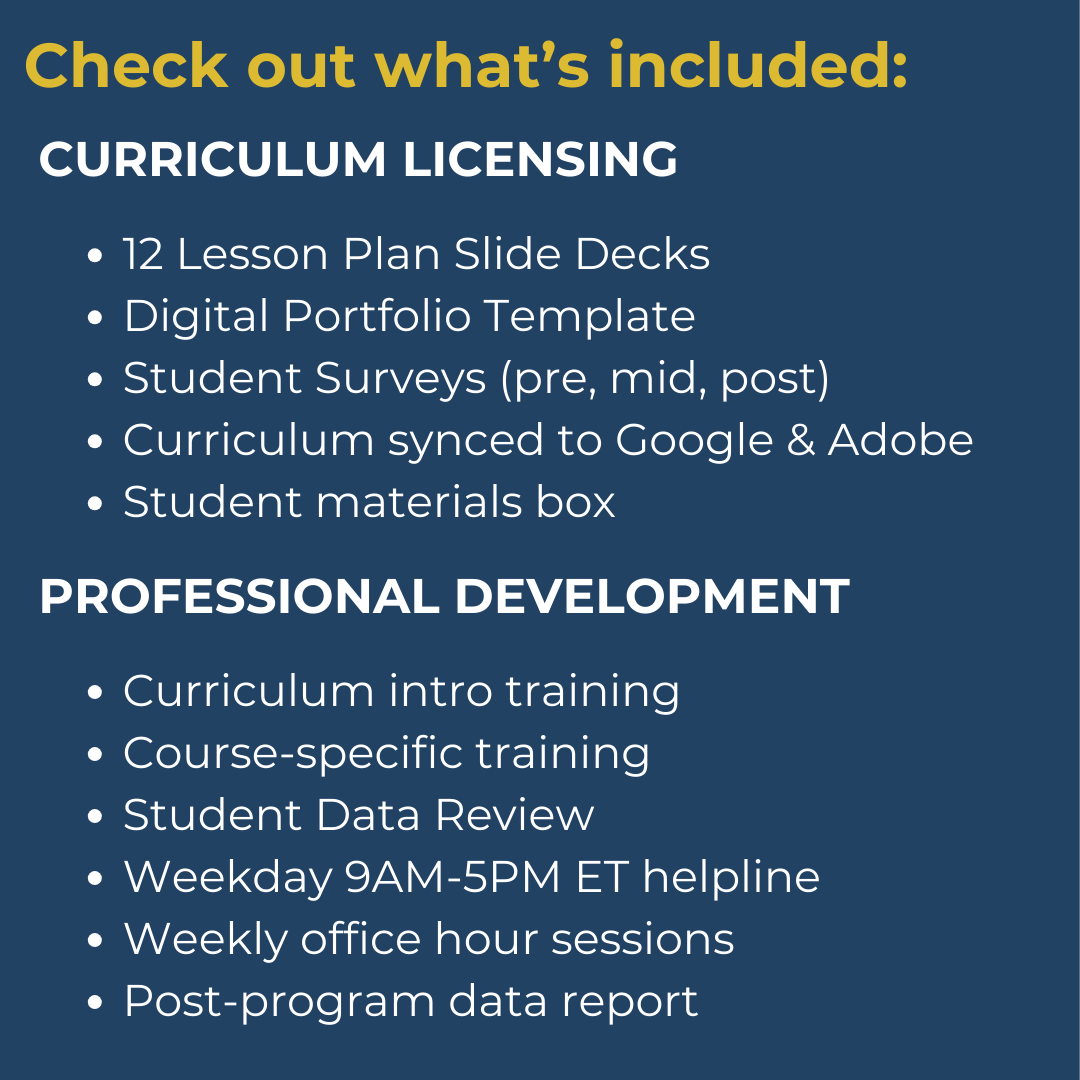
For a limited time — until April 30 — we’re offering more than 50% off our joyful, engaging, easy-to-implement creative tech courses for ☀️ Summer 2025 enrichment!
Give your middle schoolers the gift of connecting their authentic interests to exciting careers in digital storytelling, animating with generative AI, coding for game design 🎮 and much more!
93% of MeshEd middle schoolers report increased confidence using digital tools 💻. And 92% of MeshEd summer learners rate our courses engaging or highly engaging!
Akshita, a CT 6th grade Animation & AI student, says, “I loved this course so much. I really enjoyed Adobe Express. Thank you so much for making this such a fun and enjoyable course. I would recommend it to anyone who wishes to animate better.” ✨
Reach out today to info@meshedco.org to learn more about pricing and a plan that best serves your schools and summer learning centers. Start building the skills for the future this summer with MeshEd! 🎒
#creativetech #Coding #education #makelearningfun #SummerCamp #curriculum #GenerativeAI #digitalmedia #educationaccess
49
MeshEd retweeted

19 Mar 2025
THANK YOU to our incredible sponsors for supporting our Summer Planning Bootcamp, and helping create brighter futures for all kids. @Scholastic @STEMNext @DiscoveryEd @hootreading @MeshEdActionLab @Nemours @ProSolveEdu @WallaceFdn @MottFoundation @ATTimpact
1
2
86
18 Mar 2025
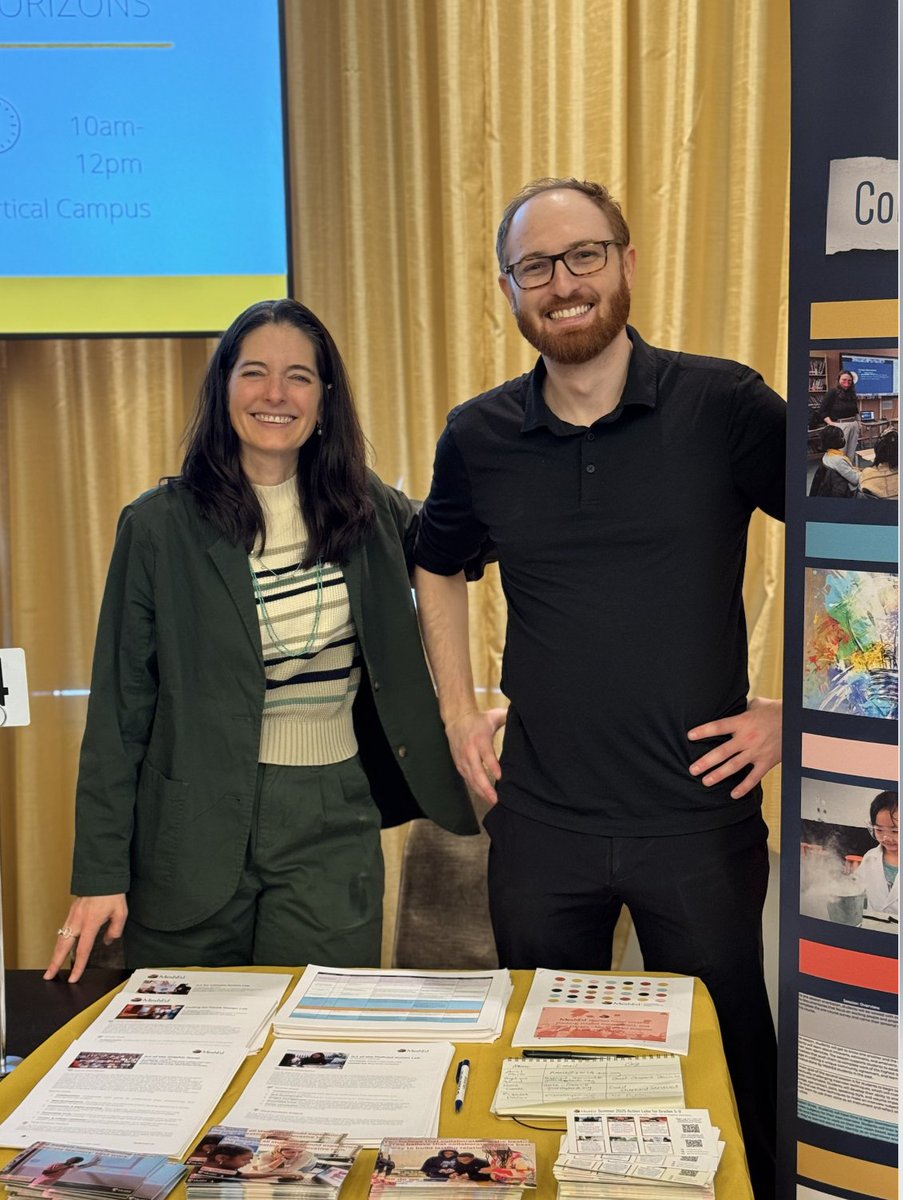
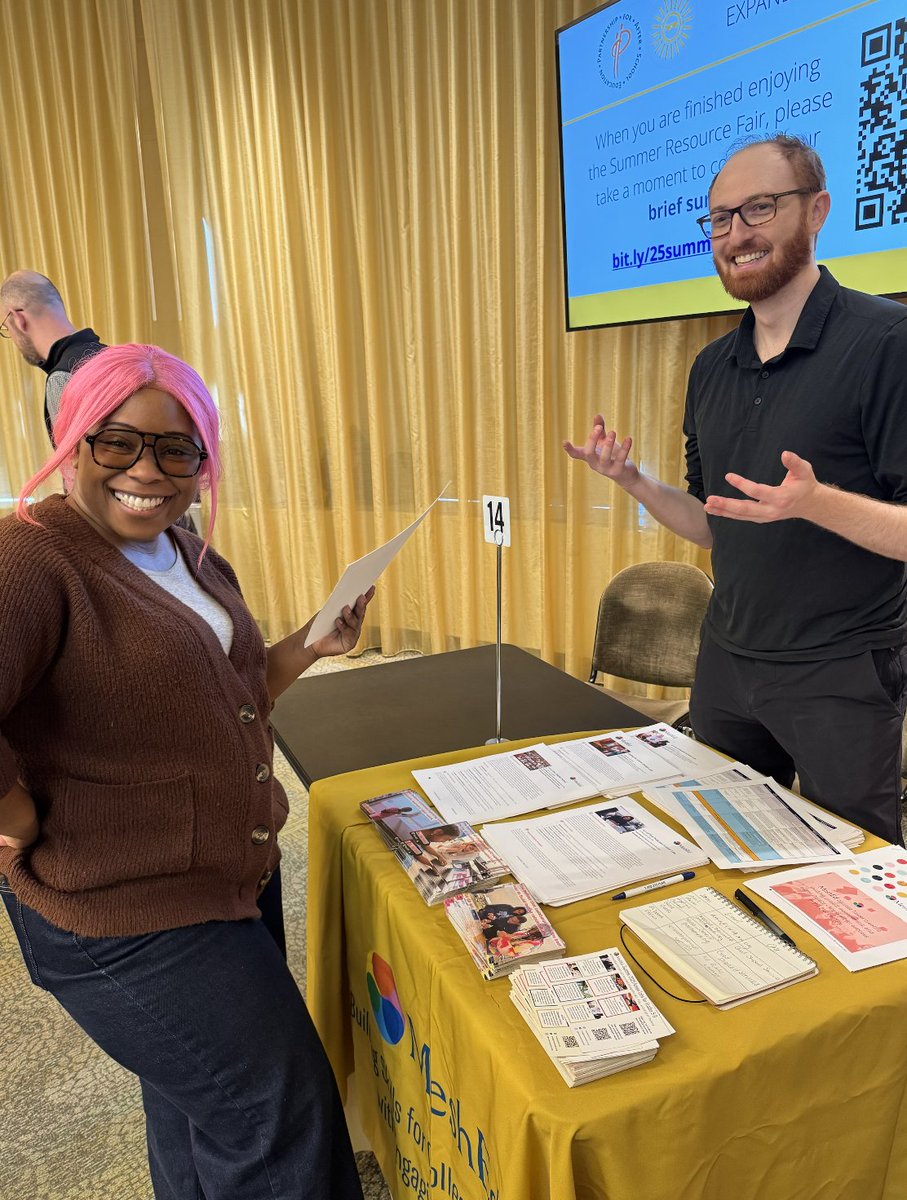
✨ We’re thrilled that MeshEd is taking part in the Summer Resource Fair presented by the Partnership for After-school Education @pasesetter ! 🌟
It’s been amazing to connect with other learning organizations about how creative tech programs like MeshEd can empower middle schoolers with skills of the future and career exploration.
We believe middle schoolers need more fun and engaging after-school and summer opportunities to dive into exciting courses like our MeshEd Action Labs, which offer students the chance to explore coding, digital animation, podcasting, and more!
Through MeshEd courses, students develop real-world skills like creative problem-solving, collaboration, and critical thinking—all while building digital portfolios to showcase their learning journey. 📈✨
We’re excited to expand our impact as we move into summer & fall and can’t wait to see what’s next! 🌍
➡️ Want to bring MeshEd’s Action Labs to your after-school or summer learning community in 2025? Email us at Info@meshedco.org!
#MeshEd #SummerLearning #Creativetech #ProjectBasedLearning #STEM #CareerExploration #MiddleSchool #YouthEmpowerment #SummerImpact #OutOfSchoolTime #TechInEducation #AfterSchoolEducation #StudentSuccess
1
47
12 Mar 2025
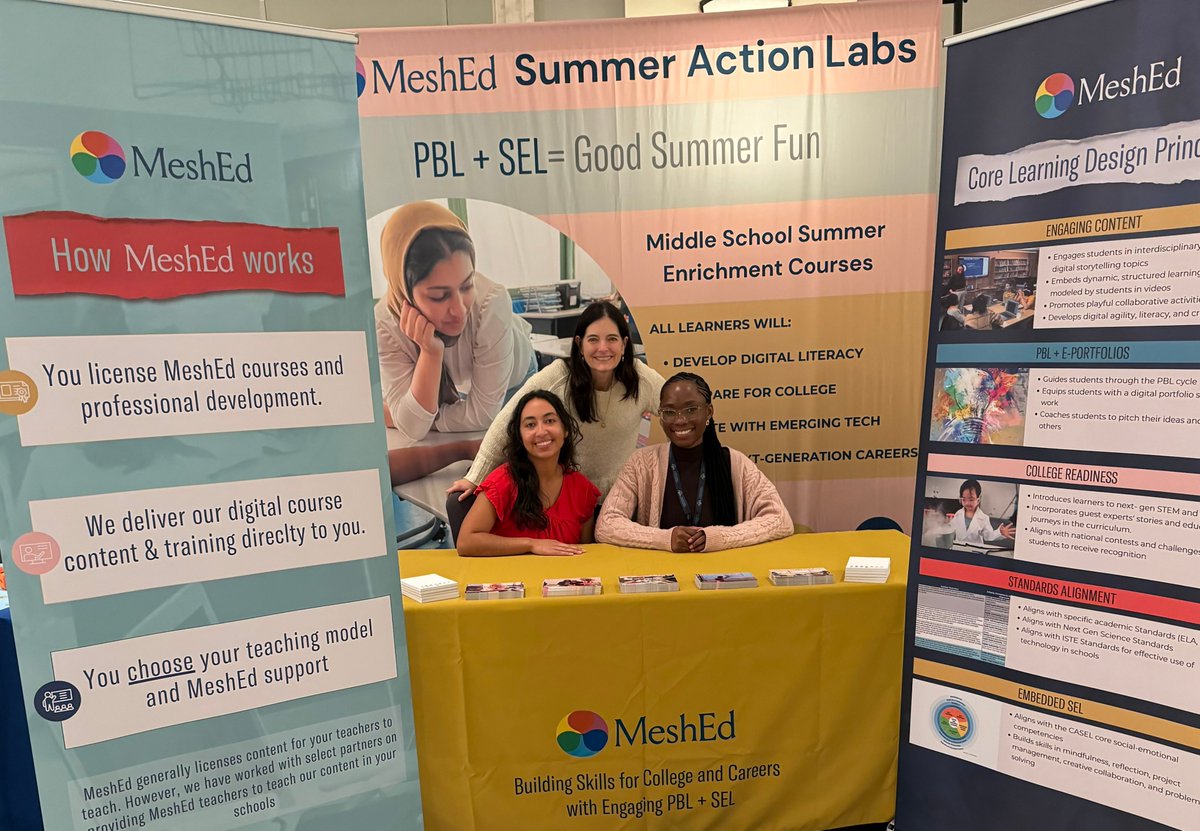
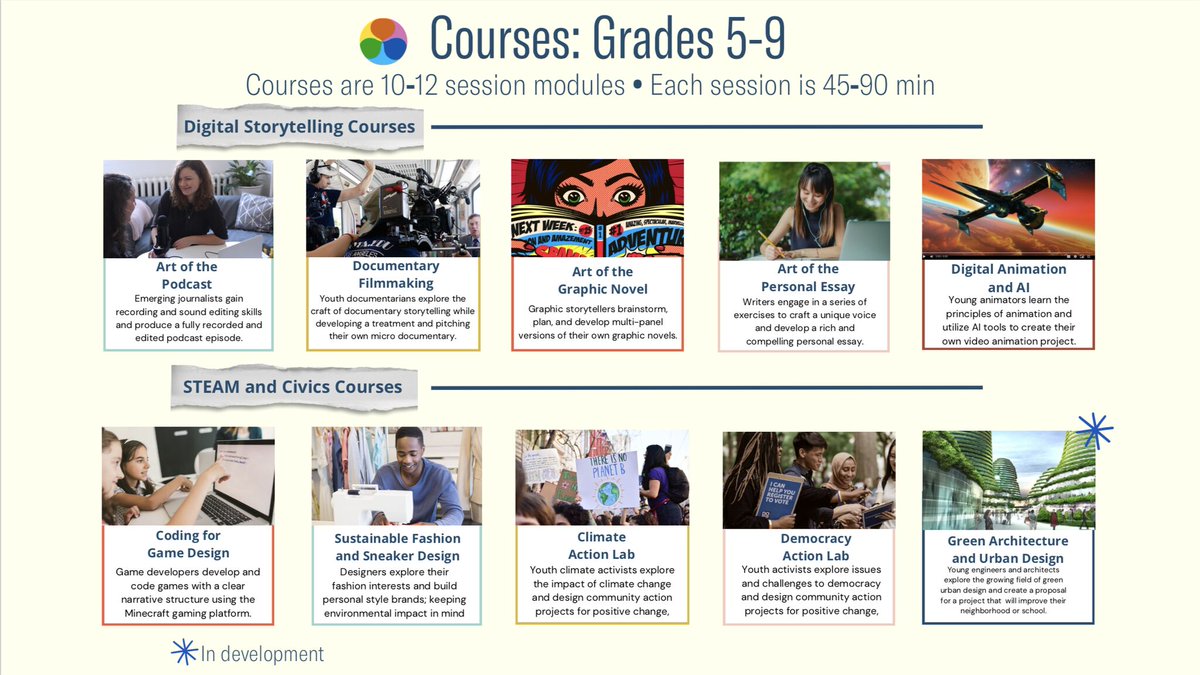
Summer Boost leaders, we want to partner with you to engage middle schoolers this summer with creative tech courses that are super fun and help kids explore exciting careers.
Over 90% of MeshEd students surveyed last summer found our courses engaging or highly engaging and reported that our courses helped them develop confidence using new digital tools.
MeshEd's research-backed Action Labs for grades 5-9 are a great use of Summer Boost funding for transformative enrichment.
Our Action Lab courses feature:
* Hands-on, play-based learning activities
* Safe & creative uses of new technology, including safe AI for creativity
* Alignment with the best state and global academic standards and social-emotional (SEL) frameworks
* Mentorship from local guest experts
* Preparation for national student contests and challenges
* Final celebrations with families to share project work
We’re offering a significant Summer Boost discount for licensing our Action Lab courses and professional development--over 50%!
Reach out to us at info@meshedco.org--we would love to partner with you to close the opportunity gap this summer. We want all middle schoolers to have access to fun-filled enrichment that prepares them to build a better future.
@CharterGrowth @SuccessCharters @wearedream @ascendschools @uncommonschools @achievement1st @summerlearning
2
80
19 Feb 2025
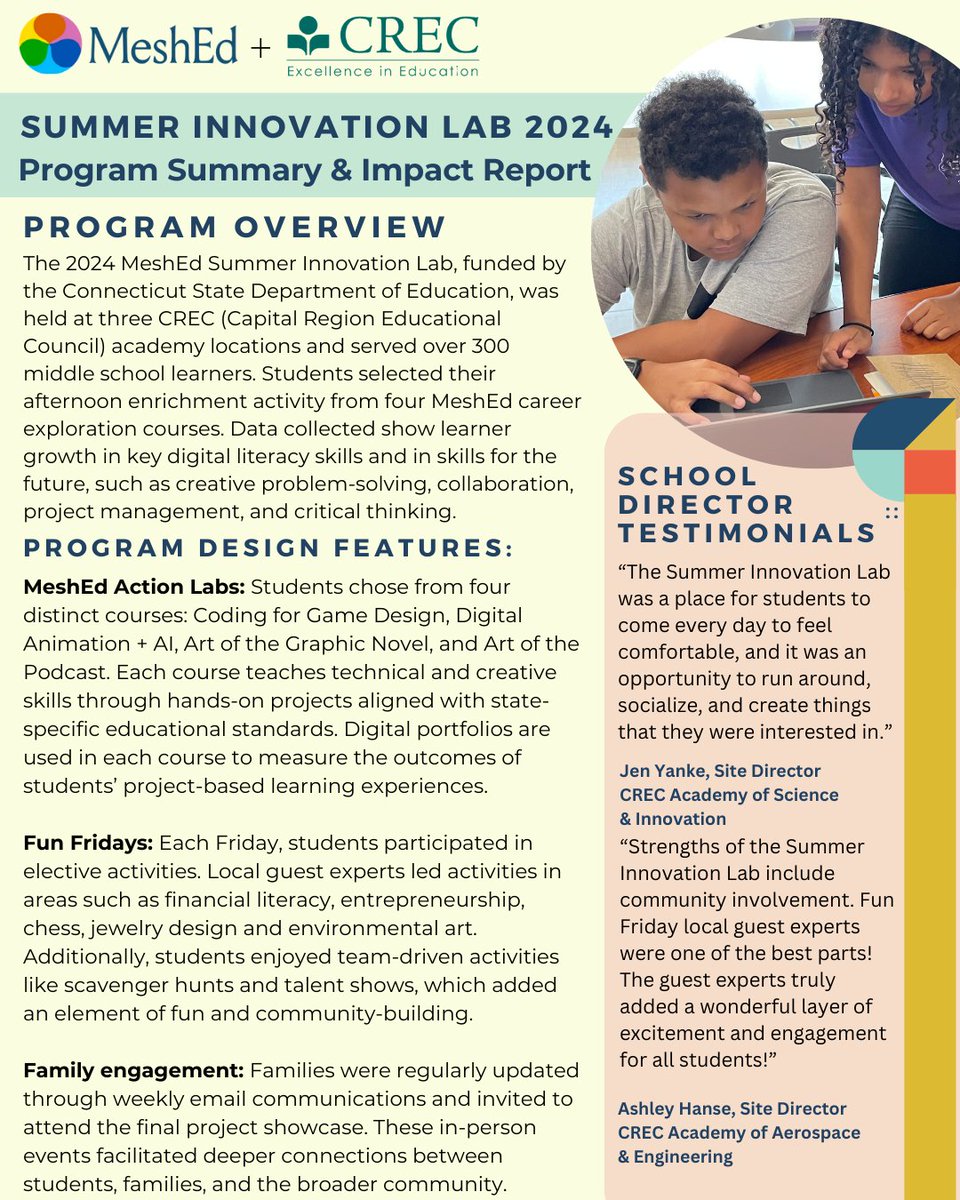
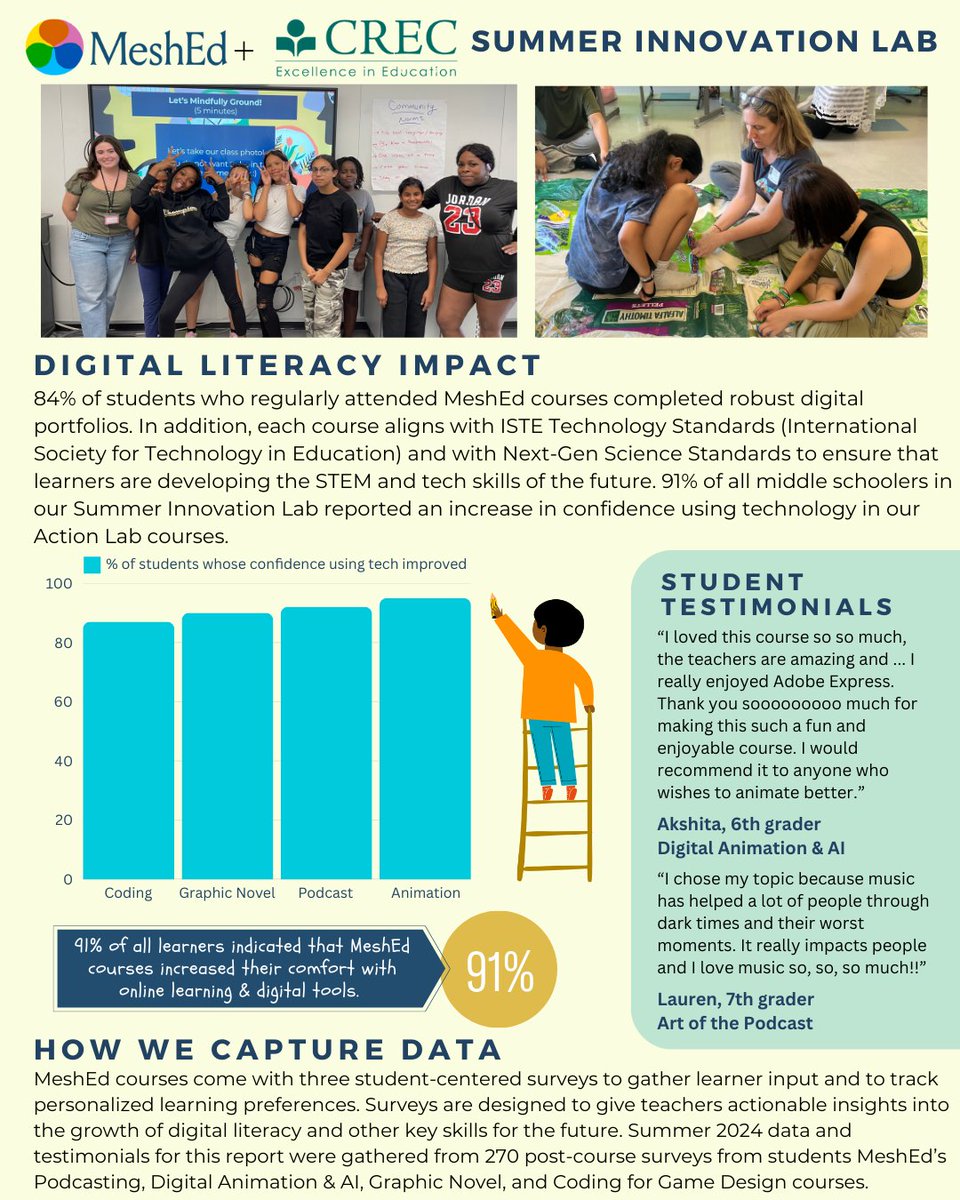
This summer, the MeshEd Summer Innovation Lab in partnership with three @CRECEducation academies empowered over 300 middle school students with hands-on experiences in digital literacy and career exploration, thanks to funding from the Connecticut State Department of Education @EducateCT ! 🌟
Students dove into 4 exciting MeshEd Action Labs:
🎮 Coding for Game Design
💻 Digital Animation AI
📚 Art of the Graphic Novel
🎙️ Art of the Podcast
These courses helped learners develop skills in creative problem-solving, collaboration, project management, and critical thinking—all while creating digital portfolios to showcase their growth! 📈✨
In addition to hands-on learning, Fun Fridays brought in local experts for alternative activities, from financial literacy to environmental art, and fostered community-building with team events like talent shows and scavenger hunts. 🎉
📊 The results? 91% of students felt more confident using digital tools, and 84% of those who attended 3 days of the 4 week program created digital portfolios to document their learning journey! 🌍
Check out this student testimonial from Akshita, a 6th grader in Digital Animation & AI:
“I loved this course so so much, the teachers are amazing, and I really enjoyed the Adobe Express and Replicate part. Thank you for making this such a fun and enjoyable experience. I’d recommend it to anyone who wants to animate better!” 🎨✨
Huge thanks to all the students, families, and experts who made this summer unforgettable. We can’t wait for what’s next! 🚀
#MeshEd #InnovationLab #DigitalSkills #FutureReady #STEM #MiddleSchool #StudentSuccess #TechInEducation #CREC #SummerLearning
1
49
5 Dec 2024
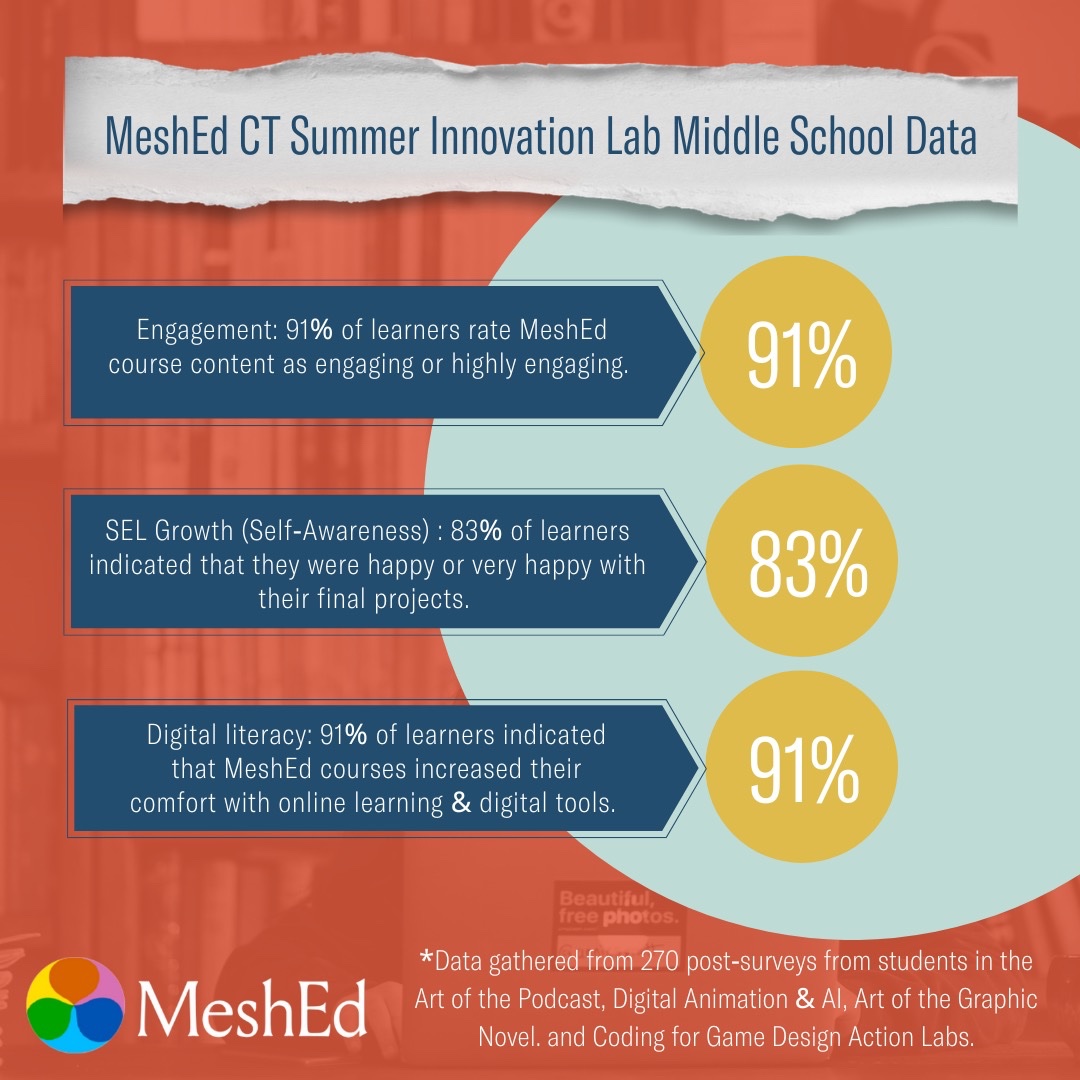
📊 Last summer, 91% of Summer Innovation Lab learners rated MeshEd course content as engaging or highly engaging! 💻✨
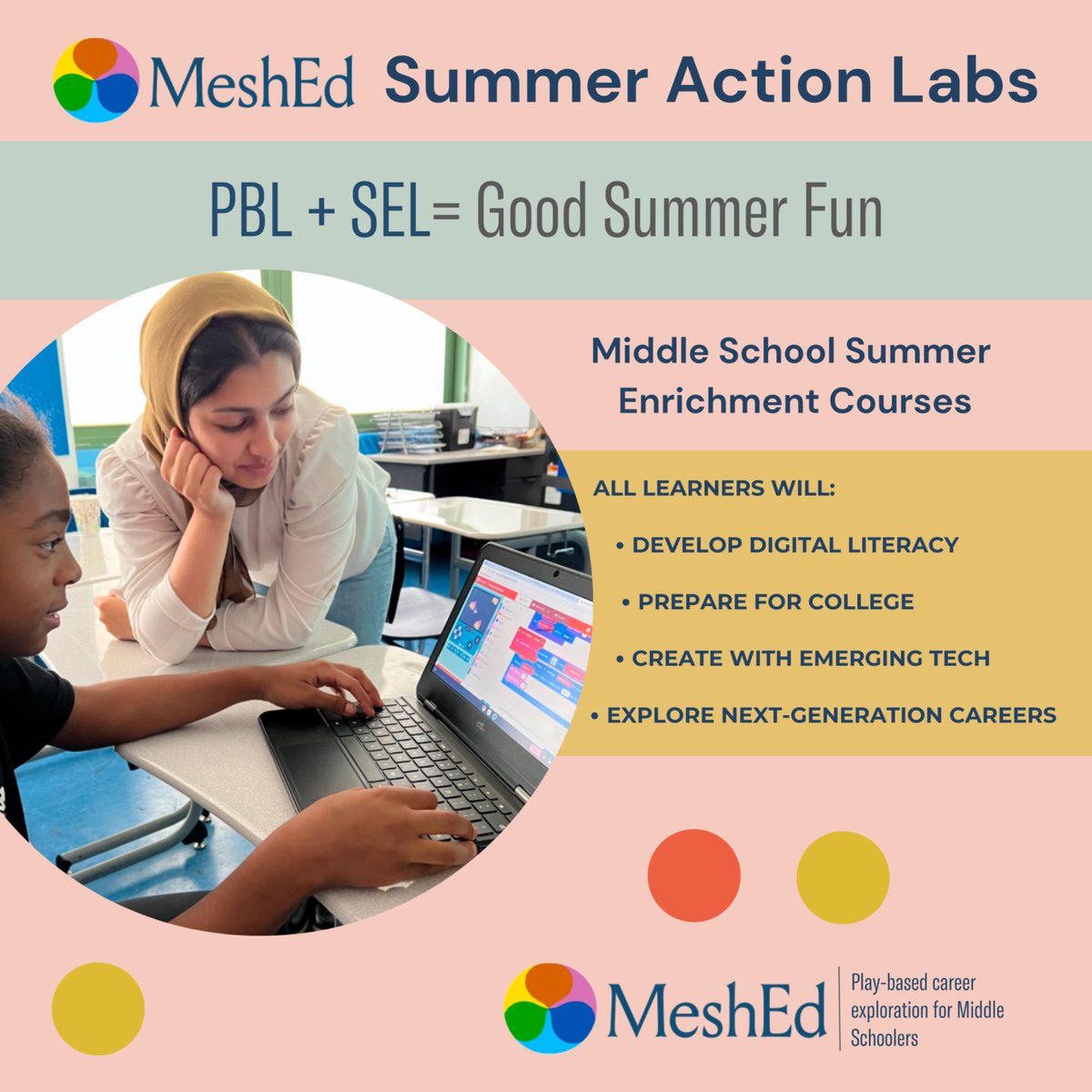
🔑 Rooted in Project-Based Learning (PBL) Social-Emotional Learning (SEL), MeshEd’s Summer Innovation Labs are designed to help middle schoolers explore next-gen careers, build digital literacy, and develop essential skills for college and beyond — all while having fun!
➡️ Curious about how students felt about our labs last year? Swipe to see feedback from 270 surveys!
Interested in learning more? Email info@meshedco.org to schedule an informational call!
#MeshEd #SummerLabs #MiddleSchoolSuccess #PBL #SEL #CareerExploration #DigitalLiteracy #FutureReady #STEM #CollegePrep #NextGenCareers
1
63
11 Nov 2024
✨We are so proud that MeshEd is both a sponsor and an exhibitor at the #summerlearningsummit presented by @summerlearning .
We’ve had lots of great conversations about how important choice and voice is for middle school learners. We believe middle schoolers need more opportunities to choose high-quality electives like MeshEd project-based Action Lab courses. We also spoke about making career exploration in middle and high school more discovery and play-based.
We’re excited to expand our summer impact through partnerships in Summer 2025☀️
➡️Email us at Info@meshedco.org to bring our Action Labs to your summer learning community!🙌🏼
#SELVoices #SEL #PBL #summerlearning #outofschooltime #youthvoice #internships #education #KeepKidsLearning #nsla #careerexploration
1
57
MeshEd retweeted

5 Nov 2024
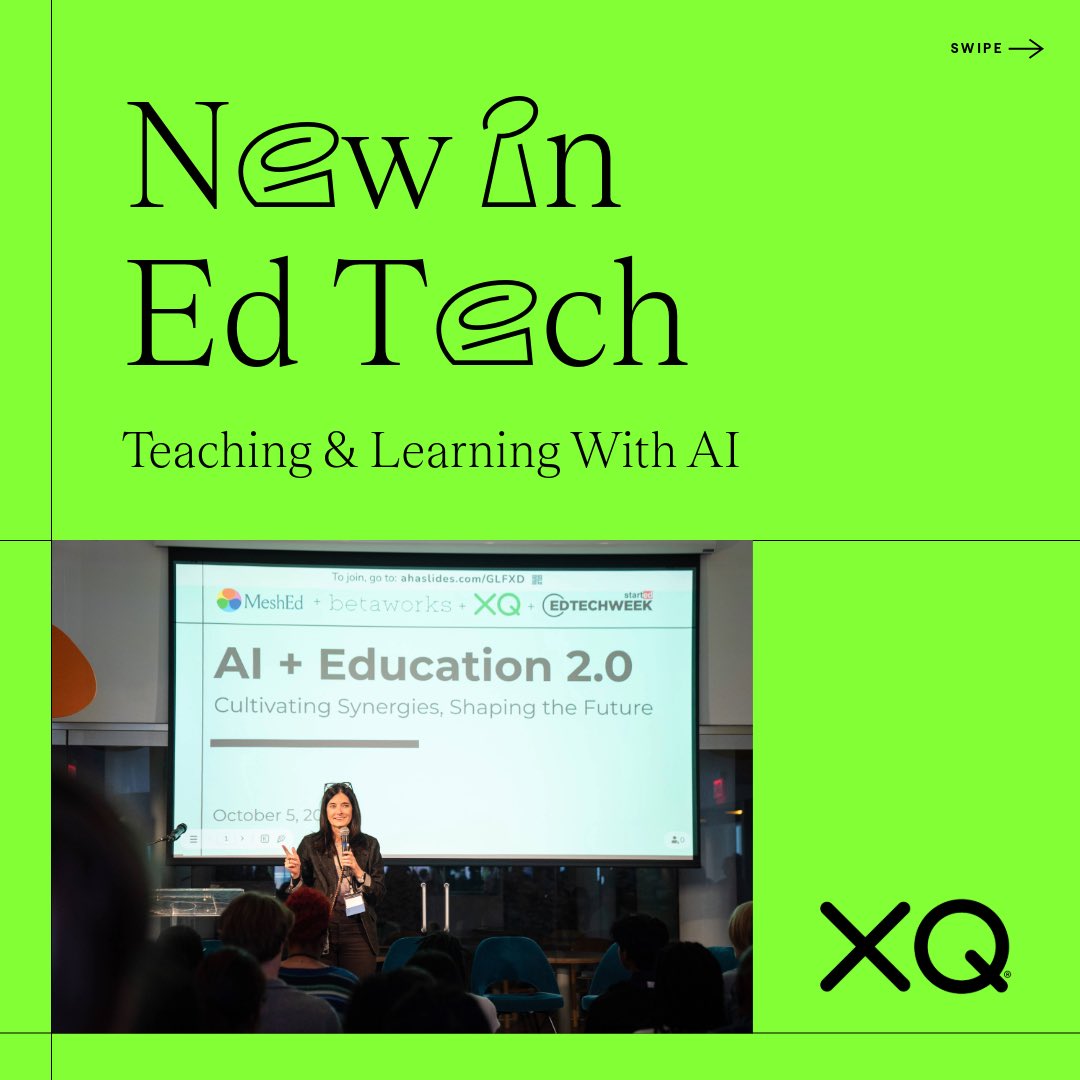
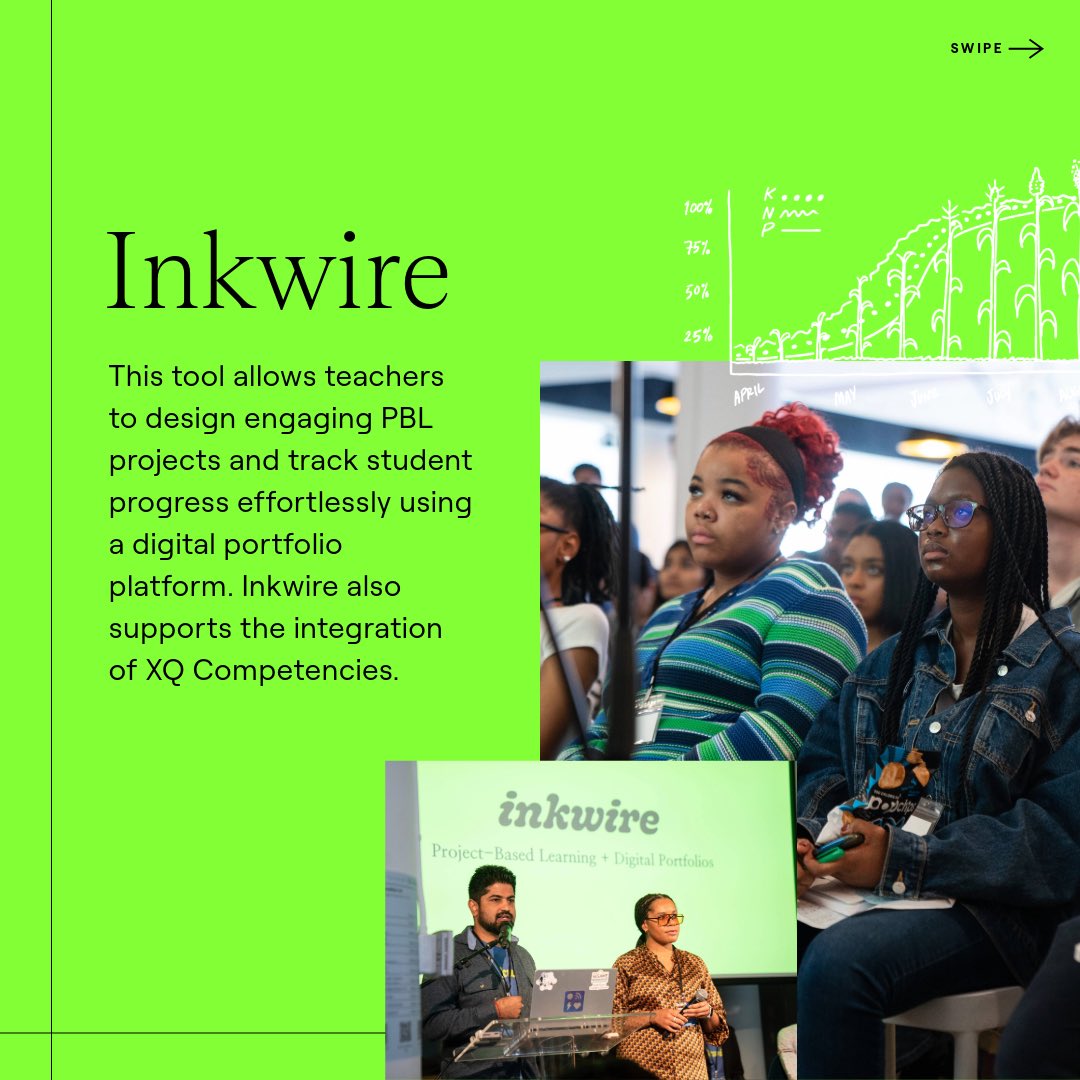
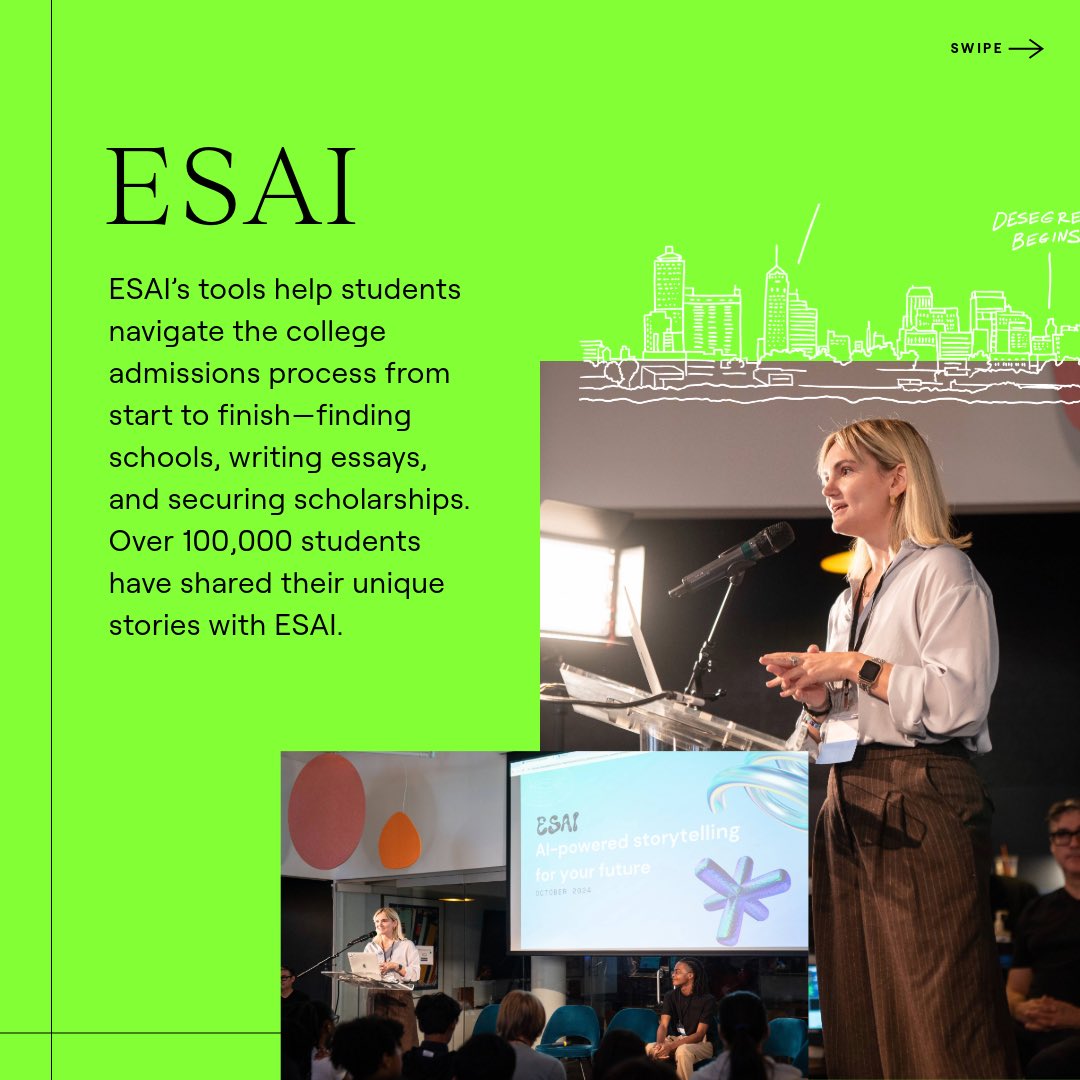
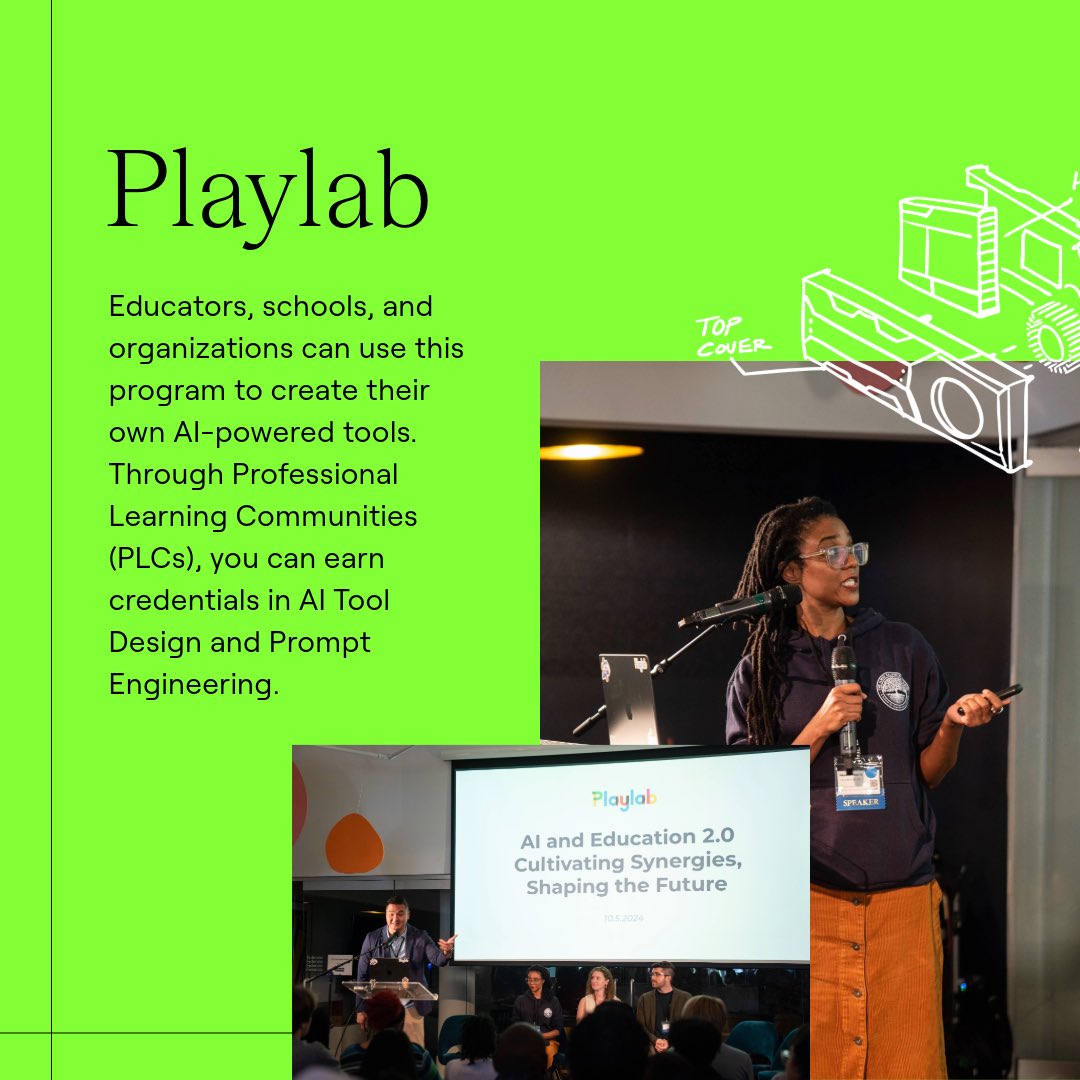
We recently attended a groundbreaking conference on #AIinEducation with @MeshEdActionLab and @Betaworks, and we’re buzzing with excitement! Check out the cutting-edge tools we discovered. 🤖
What AI tool are you most excited about for education? Drop your thoughts below! Stay tuned for more insights on how AI is transforming learning. 💡
#EdTech #FutureOfLearning #EdChat #RethinkHighSchool
1
2
350
5 Nov 2024
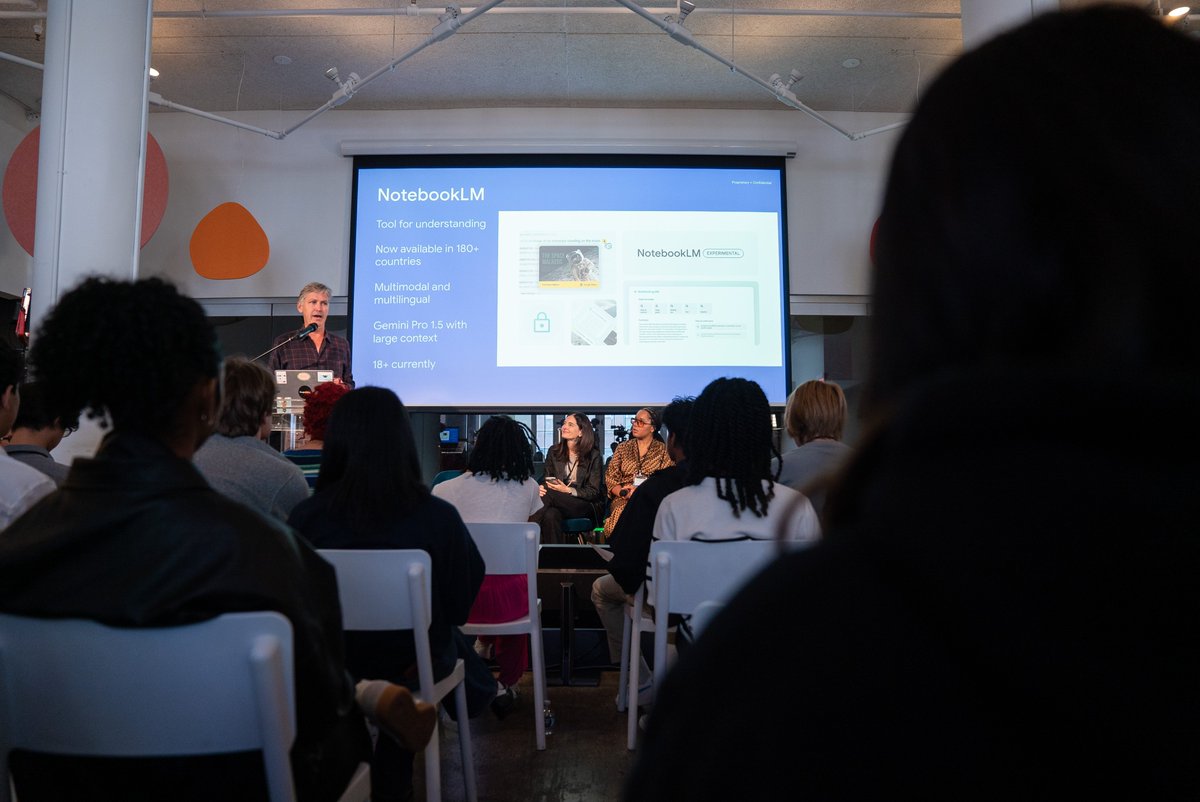
🚀 At the AI Education Symposium 2.0 hosted by @MeshEdActionLab , @betaworks , and @XQAmerica we dove deep into how NotebookLM is transforming lesson design for middle and high school students! ✨
In an engaging Q&A after @stevenbjohnson demo, we explored powerful insights from @VritiSaraf , Co-Founder of @Ed3DAO , Ann-Katherine Kimble, Director of School Success at XQ, and @Betsey_MeshEd , Founder & CEO of MeshEd. They each shared how NotebookLM sparks deeper thinking and supports teachers in crafting dynamic curriculum and agile learning experiences.
💬 Vriti asked, "If [a student] can now listen to a super engaging podcast on the way to school instead of reading the text, how is NotebookLM going to change the way that students consume texts?” and Steven emphasized that “exploring a book through dialogue is a compelling way to engage with the material."
Ann-Katherine pointed out that NotebookLM and other AI tools “will elevate how we teach young people to ask questions and engage with knowledge.” 💻
#NotebookLM #InnovateForTheFuture #RethinkHighSchool
#PBL #student #CareerSuccess #teacherpreneur
1
2
5
1,222
5 Nov 2024
All videos from the AI Education Symposium 2.0 are free and listed on our website linked below. New videos will be added weekly!
meshedco.org/blog/2024-ai-ed…
1
1
337
1 Nov 2024
🌟 With technology transforming education, AI presents a unique opportunity for deeper learning and engagement!
Join @Betsey_MeshEd and @VritiSaraf as they introduce @stevenbjohnson 's NotebookLM demo at the AI Education Symposium 2.0, hosted by @MeshEdActionLab , @XQAmerica , and @betaworks . All sessions will be accessible on our websites!
Vriti Saraf, Co-Founder of @Ed3DAO , dives into Bloom’s Taxonomy, explaining how it helps us evaluate educational goals based on cognitive complexity—from remembering and understanding to analyzing and creating. She notes that if NotebookLM can handle the remembering, understanding, and evaluating levels, “That presents us with a huge opportunity to change the way we learn in school.”
Watch now to discover more and let us know in the comments: what do you wonder about AI in relation to Bloom’s categories and the evolution of education? ✍️✨
#notebookLM #innovateforthefuture #RethinkHighSchool #PBL #student #CareerSuccesss #teacherpreneur
1
3
6
1,112
31 Oct 2024
📣 Let’s hear it from the students! 🎤 High school seniors Ashley, Tacari, and Ramanjit share what they value in AI for learning products, highlighting their experiences with ESAI and @labsdotgoogle 's NotebookLM at the AI Education Symposium 2.0 hosted by @MeshEdActionLab , @XQAmerica , and @betaworks .
ESAI is an innovative AI writing guide designed to help students navigate the college application process. Its LLM helps craft college essays that genuinely reflect a student’s core values, interests, and aspirations.
Julia Dixon, a former college guidance counselor and the founder of ESAI, emphasizes, “A majority of Gen Z struggles with how to present themselves to colleges and tell their personal stories.” ESAI aims to provide free or low-cost personalized support, showcasing each student’s unique journey and challenges.
Ashley, a high school senior from the Brooklyn STEAM Center, shares, “The college process can be really scary, but ESAI offers an easy pathway that focuses on you and helps you present your best self to the schools you want to attend.”
Our High School AI Student Leaders were recognized for their excellence in computer science and related fields. @MeshEdActionLab will guide these interns through the application and interview process, providing essential online training to kickstart their journeys.
Join us in celebrating these voices and the future of education!💡
#notebookLM #innovateforthefuture #RethinkHighSchool #PBL #student #CareerSuccess #teacherpreneur
1
2
2
367
22 Oct 2024
Here’s more testimony from the public high school seniors who joined us earlier this month as this year’s AI Student Leaders. We’re grateful to the 27 High School AI Student Leaders who joined us from NYC, CT, and NJ to explore the best new AI-for-learning products.
A key goal for the 2024 AI Education Symposium 2.0 hosted by @MeshEdActionLab , @XQAmerica , and @betaworks was to gather student & teacher input on edtech product design and student user experience.
In the words of Ashley, a high school senior at the Brooklyn STEAM Center: “going to this event really opened me up to the possibilities of what AI can be and different ways I could possibly use it.” Ashley believes we all have a role in “making sure that AI is used in the best possible ethical way.”
Our AI Student Leaders were elected by their public high schools for excellence in computer science and related fields.
We’re delighted that students had a blast at this event. They made new friends with outstanding seniors from other high schools and connected with caring, creative adult mentors–and they learned how to network with potential employers. Stay tuned for updates as they progress with their summer internship applications and preparation!
#notebookLM #innovateforthefuture #RethinkHighSchool #PBL #student #CareerSuccess #teacherpreneur #AI
1
3
1,077
18 Oct 2024
We’re grateful to the 27 High School AI Student Leaders who joined us from NYC, CT, and NJ and spent their Saturday exploring and giving feedback on the best new AI-for-learning products. 👏
A key goal for the 2024 AI Education Symposium 2.0 hosted by @MeshEdActionLab , @XQAmerica , @betaworks was to gather student & teacher input on edtech product design. The students gave the edtech builders lots of actionable input on what they like and what they think needs improvements. 🗨️
The day launched the students on exciting career pathways. Most of the participating startups and nonprofits are open to offering student leaders paid internships this summer.
✨A big win for all: edtech companies get to work with informed and prepared students; students get a jump start to rewarding careers that will shape the future of learning.
Our High School AI Student Leaders were elected by their public schools for excellence in computer science and related fields 🖥️. MeshEd will coach interns in cohorts through the application interview process. We’ll also provide online training on the best ways to start strong as a new intern.
As one student, Ramanjit, says, the Symposium “gave me more insight on how I can use [AI] for my future classes like AP research, model UN” and more✨. High schoolers need more opportunities like this one to research, provide input on, and work with organizations that are developing the learning tools of the future.
We’re delighted that students had a blast at this event. They made new friends with outstanding seniors from other high schools and with caring, creative adult mentors–and they learned how to network with potential employers. Stay tuned for updates as they progress with their summer internship applications and preparation! ✨
#notebookLM #innovateforthefuture #RethinkHighSchool #PBL #student #CareerSuccess
1
3
613
17 Oct 2024
We enjoyed and learned so much from our collaboration with @stevenbjohnson and @XQAmerica on ways to use @labsdotgoogle terrific NotebookLM for better learning design.
We especially love seeing how learners of all ages delight in using Audio Overview - and we’re super interested in seeing elements of the Socratic method resurfacing ✨now ✨in the ways students of all ages are playing with NotebookLM to explore new ideas. Something old, something new. Very cool!🙌🙌🙌
We will be posting the complete Symposium, session by session, over the next week. Our mission for this Symposium is to increase access to the Ai-for-learning tools we showcase so that more teachers and learners can pick them up and put them to good use for all. All sessions will be posted on our websites and distributed through various social media platforms. Next up is the XQ & @inkwireco collaborative demo!
#notebookLM #innovativelearning #RethinkHighSchool #PBL #CareerGrowth
16 Oct 2024

Input: Jane Jacobs quotes and YouTube interview; handwritten outline; education standards doc.
Output: high-quality, standards-aligned urban planning lesson plan. Plus audio overview to promote the class.
10 minutes to create, all thanks to NotebookLM and Gemini.
This video is a new demo of NotebookLM that I shared earlier this month at the AI Education Symposium with @MeshEdActionLab, @xqamerica, and @betaworks.
This is an educational use-case, but the general structure of what I’m doing in the demo—take a curated collection of sources and quickly transform them into a detailed document that obeys strict guidelines—is generally applicable to many fields.
Note how I am not just using the sources as ground truth for the project, or as the content for the lesson plan. The Jacobs quotes and interview are the content, but my handwritten notes provide the structure, and the HQPBL.org framework source provides the values or guidelines for the finished project. With some simple prompting, NotebookLM and Gemini can draw on information from the sources using those different modes simultaneously: content, format, values. (I even forgot to explicitly tell the model to use the structure outlined in my notes, but it figured that out anyway.)
This is remarkably sophisticated knowledge work. Building a draft lesson plan like this would normally take hours if not days. But crucially I’m in control of the document that is being generated here — it’s based on the information that I have curated, and on the instructions I’ve given NotebookLM for adapting that information into the lesson plan I want to create. Co-intelligence, as @ethanmollick would call it.
For more info on the great organizations that helped me put this demo together--orgs that are shaping the future of learning and increasing access to innovative approaches to curriculum design--visit meshedco.org and xqsuperschool.org
I’ve pasted the full text of the lesson plan below. As you can see in the video, the original version also included citations to the source material so with one click I could verify that NotebookLM was faithful to the original documents I uploaded.
High-Level Lesson Plan: Urban Planning and Jane Jacobs
This lesson plan outlines a project-based learning course on urban planning, designed for high school seniors. It centers on the influential ideas of Jane Jacobs and aligns with the HQPBL standards.
Session 1: Introduction to Cities and Jane Jacobs
• Begin by exploring the question: "What kind of problem is a city?"
• Introduce Jane Jacobs' key ideas about urbanism, focusing on:
• The importance of diversity in uses, buildings, and populations for vibrant city life.
• The role of sidewalks and "eyes on the street" in ensuring safety and fostering a sense of community.
• The value of old buildings in supporting diverse economic activity and fostering innovation.
• The dangers of "single-use" zoning and the importance of mixed-use neighborhoods.
• The limitations of top-down planning and the need for bottom-up, community-driven approaches.
Use examples from Jacobs' book, "The Death and Life of Great American Cities," and excerpts from her interviews to illustrate these concepts.
Encourage students to think critically about the challenges and opportunities presented by cities.
Alignment with HQPBL: This session establishes the intellectual challenge, as required by the HQPBL framework, by prompting students to consider the complexities of cities. Introducing Jane Jacobs' ideas provides students with a theoretical framework for their projects.
Session 2: Neighborhood Exploration
Project Introduction: Students choose a local neighborhood to study. This allows for authenticity by connecting their learning to their own community and their lives.
Research and Analysis: Students conduct a "close reading" of their chosen neighborhood, focusing on:
• Observing the built environment, including streetscapes, building types, and public spaces.
• Identifying areas where Jacobs' principles are evident or lacking.
• Analyzing the neighborhood's strengths and weaknesses.
• Documenting their findings through photography, sketches, maps, and written observations.
Guiding Questions: Throughout the project, use guiding questions to promote intellectual challenge and help students connect their observations to Jacobs' ideas.
Alignment with HQPBL: By choosing a local neighborhood, students undertake a project rooted in authenticity, directly connecting their learning to their own community. The "close reading" of their chosen neighborhood encourages intellectual challenge by requiring them to analyze the built environment and identify areas where Jacobs' principles are applicable. The use of photography, sketches, maps, and written observations allows for diverse forms of documentation, catering to various learning styles.
Session 3: Proposing Interventions
Brainstorming Solutions: Based on their analysis, students brainstorm potential interventions or improvements to their chosen neighborhood, applying Jacobs' principles.
Project Proposal Development: Students develop their interventions into more concrete project proposals, incorporating elements of project management.
Proposals should include goals, strategies, potential challenges, and realistic timelines.
Encourage students to consider the perspectives of different stakeholders in the neighborhood.
Peer Review and Feedback: Students present their project proposals to classmates for critique. This fosters collaboration and allows students to learn from each other's perspectives and refine their ideas.
Alignment with HQPBL: This session emphasizes project management, as students transform their analyses into concrete proposals. They define goals, outline strategies, anticipate challenges, and establish realistic timelines, reflecting a systematic approach to project development. Collaboration is fostered through peer review and feedback, enabling students to learn from different perspectives and improve their proposals.
Session 4: Final Presentations and Reflections
Public Product: Students finalize their projects and present their proposed solutions to a wider audience, such as:
• A panel of local urban planners, architects, or community members.
• A public forum or community meeting.
• An online platform or exhibition space.
Reflection: Students engage in reflection throughout the project, documenting their learning, challenges, and insights.
This could take the form of journals, blog posts, presentations, or group discussions.
Encourage students to reflect on how their understanding of cities has evolved and the role they can play in shaping their future.
Alignment with HQPBL: Presenting to a wider audience, such as local planners or community members, results in a public product, showcasing student learning and engaging the community. The emphasis on reflection throughout the project, as mandated by the HQPBL framework, encourages metacognition and deeper learning. Students document their learning process, challenges, and insights, fostering a sense of accomplishment and personal growth.
Throughout the course, emphasize the relevance of urban planning to students' lives and future careers. Connect Jacobs' ideas to contemporary urban issues and encourage students to think critically about how to create more livable, equitable, and sustainable cities. This project-based learning approach, grounded in the work of Jane Jacobs and aligned with HQPBL standards, can empower students to become engaged and informed citizens, capable of contributing to the betterment of their communities.
1
5
3,746
16 Oct 2024
@MeshEdactionlab, @xqamerica, and @betaworks are excited to share videos from our second Ai Education Symposium! 📷📽️ All sessions will be available for everyone to access, right on our websites.
First up: @stevenbjohnson, best-selling author and Editorial Director at @labsdotgoogle , demonstrates how the “thought companion” NotebookLM is changing the game for middle and high school lesson planning. This powerful tool goes beyond the basics, sparking deeper thinking and helping educators craft lessons grounded in trusted research. 💭🎒
In front of a packed audience of educators, students, and edtech developers, Steven designed an inspiring four-session urban planning course based on Jane Jacobs’ writings—all powered by NotebookLM! 📷 And learners of all ages are loving the Audio Overview feature, which turns exploring complex information into an engaging conversation.
📸Stay tuned—we’re dropping new videos daily! Tomorrow, get ready for XQ’s exciting collaboration with @inkwireco on using AI to create customizable, project-based learning lesson plans.
Thanks to @Betsey_MeshEd @marcecko @Borthwick and their teams for producing this FREE day of learning and for sharing all content publicly.
#notebookLM #innovativelearning #RethinkHighSchool #PBL #CareerGrowth
1
2
5
1,884
16 Oct 2024
Over 200 people joined us live and virtually— from NYC to Belgium— to see lesson planning transformed. Stay tuned for more ai-for-learning demos on MeshEd’s YouTube here:
youtu.be/_QsgApq5uAc?si=AVSn…
1
1
329