
The world's leading medical & scientific conference on metabolic health & therapy! Learn more about Metabolic Health Initiative & listen to our podcast👇
Joined May 2018
- Tweets 1,379
- Following 238
- Followers 4,603
- Likes 1,100
531 Photos and videos
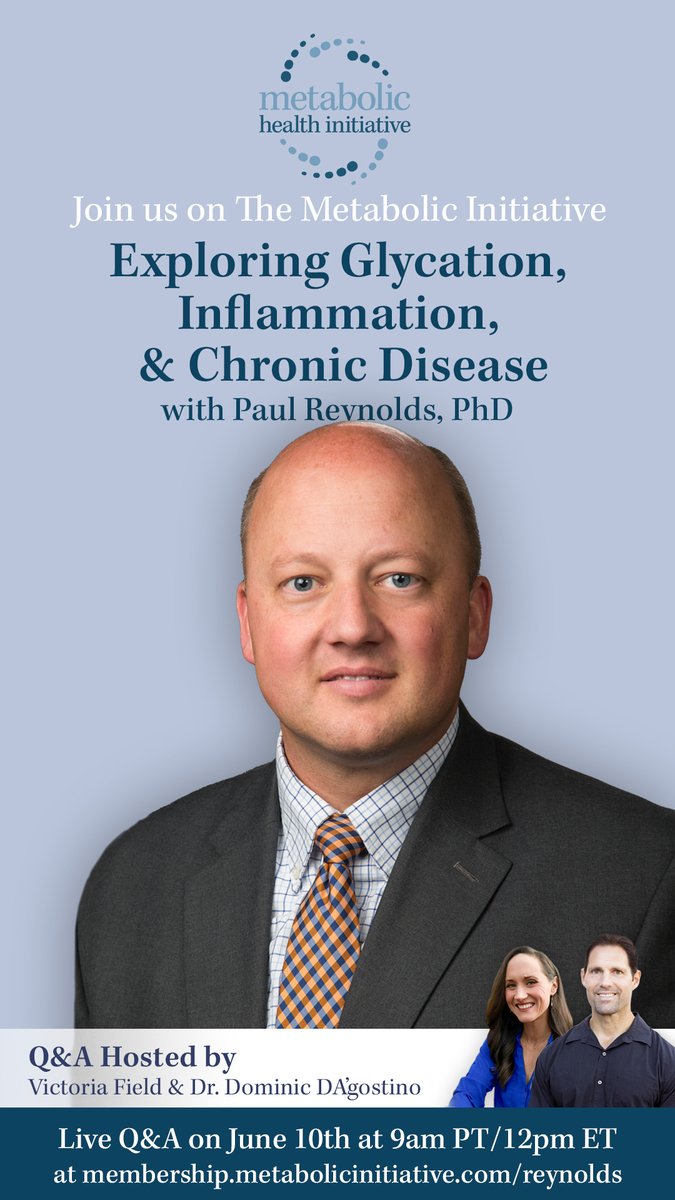










What if glycation is one of the missing links between glucose dysregulation, inflammation, environmental exposures, and chronic disease?
Join us live with metabolism researcher Dr. @PaulReynoldsPhD hosted by @DominicDAgosti2 @victoria_field_ on June 10 at 9am PT / 12pm ET inside The Metabolic Initiative.
Bring your questions.
Register free with a 7-day trial: membership.metabolicinitiati…
2
96
A small randomized crossover trial put 11 cognitively healthy overweight adults on two three-week diets, a ketogenic diet and a standard diet, in random order. After each phase, participants had PET scans to measure cerebral blood flow plus MRI, and blood draws for ketone levels and BDNF, a key factor that supports neuron survival and plasticity.
On the ketogenic diet, fasting ketones were much higher, cerebral blood flow increased by about 22 percent, and BDNF rose by about 47 percent. Higher ketones tracked with higher brain blood flow across both diets.
This was a small trial in healthy adults, so it doesn't prove disease prevention. But it strongly supports testing ketogenic strategies in conditions with impaired cerebral perfusion.
Volume four of our ketogenic metabolic therapy ebook is now completely free to download with CliffsNotes-style highlights on more than 150 peer-reviewed papers on metabolic health and therapy. Comment "ebook" and we'll send it right over.
1
1
2
171
Dr. @PaulReynoldsPhD has spent his career studying what he calls “two heads of the same beast”: inflammation and glycation — two interlocking processes that may help explain why so many chronic diseases are connected, even when they are treated as separate conditions.
Dr. Reynolds is a professor and research scientist at Brigham Young University whose NIH-funded research program studies inflammation, lung biology, glycation, and the AGE/RAGE receptor system that links metabolic and environmental stressors to disease throughout the body.
In this episode, Dr. Reynolds traces the glycation cascade from early sugar-protein reactions to advanced glycation end-products, or AGEs, and explains how the RAGE receptor can act as a self-perpetuating accelerant for inflammation. He also breaks down why the brain may be uniquely vulnerable to glucose dysregulation, how diesel exhaust and tobacco smoke can create AGE-like structures that bind the same inflammatory receptors, and how the glyoxalase defense system helps neutralize damage before it becomes permanent.
Questions Answered in This Episode:
Can breathing polluted air trigger some of the same inflammatory pathways as excess sugar exposure?
Is browned food a real glycation concern, or is the bigger issue what happens inside the body when glucose stays elevated?
Why is the brain especially vulnerable to glucose dysregulation?
How does fasting help the body reduce glycation and inflammatory burden?
What do people need to understand about sugar substitutes like allulose and xylitol when it comes to glycation?
How should we approach kids’ nutrition if glycation and inflammation can begin early in life?
Is glycation damage reversible, and where does the body draw the line?
This conversation offers a mechanistic map connecting cardiovascular disease, neurodegeneration, metabolic dysfunction, environmental exposures, and visible aging back to two upstream processes many patients never hear named in a clinical visit.
1
3
4
327
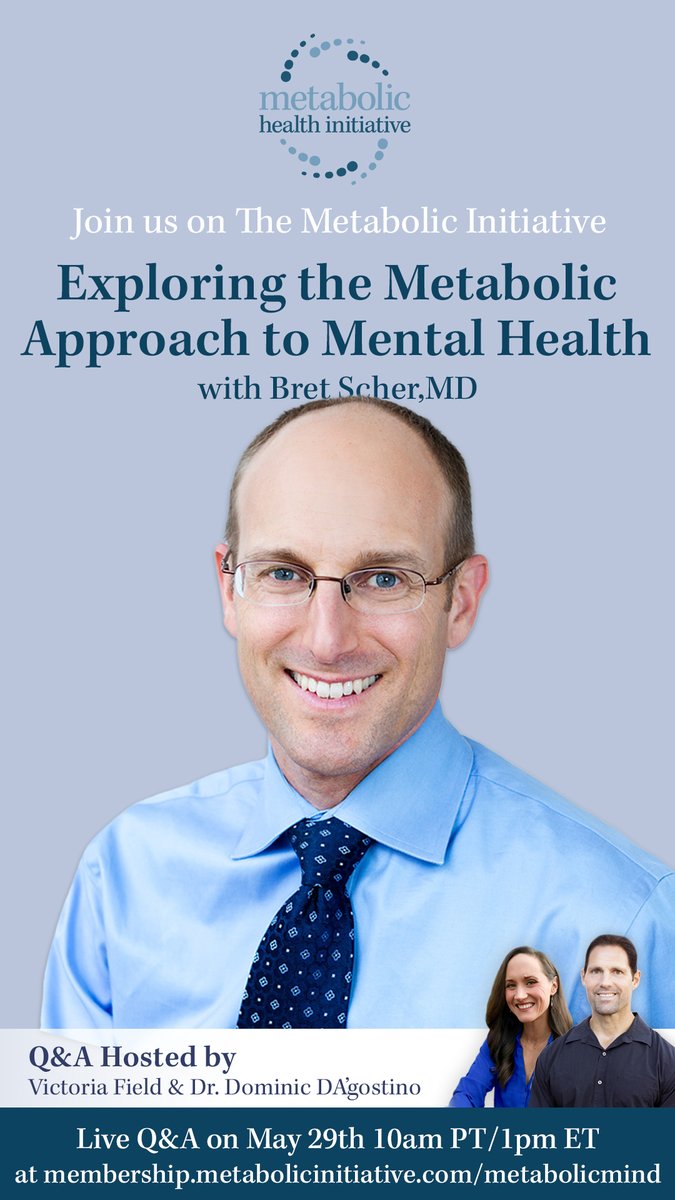
Metabolic psychiatry is one of the most promising frontiers in mental health care.
Join us live tomorrow with @bschermd, MD, Medical Director of @Metabolic_Mind and Baszucki Group, for a 1-hour Q&A on the metabolic approach to mental health.
Friday, May 29
10am PT / 1pm ET
Register for free here: membership.metabolicinitiati…
@victoria_field_ @DominicDAgosti2
2
5
16
3,136
In people with severe depression and cognitive decline, brain glucose metabolism has been shown in some studies to decline measurably. Ketone metabolism, by contrast, appears relatively preserved. That single observation is reshaping how researchers think about psychiatric illness.
In this episode, @DominicDAgosti2 sits down with @bschermd, a cardiologist who pivoted to metabolic psychiatry and now leads clinical education and content for @Metabolic_Mind at the Baszucki Group. Dr. Scher brings a rare dual perspective: deep training in conventional cardiology paired with three years embedded in the research and clinical practice exploring metabolic approaches in psychiatry.
The conversation covers brain energy dysfunction as a potential unifying mechanism across psychiatric disorders, the preserved ketone metabolism documented in work by researchers like Stephen Cunnane, the recently published Delphi consensus paper on metabolic psychiatry, why four-week randomized trials may be inadequate for nutritional interventions, and the case for future diagnostic categories like metabolic depression and metabolic bipolar disorder.
Questions Answered in This Episode:
• Are we underestimating brain energy dysfunction as a potential unifying mechanism across psychiatric disorders?
• What are the two biggest clinical mistakes patients make when starting ketogenic therapy for mental illness?
• Should ketogenic therapy ever be positioned as a first-line intervention for psychiatric disorders?
• What is the single biggest bottleneck preventing wider clinical adoption of ketogenic therapy?
• What has been the most unexpected challenge in moving metabolic psychiatry into the mainstream?
• What does precision, personalized, prescriptive ketone metabolic therapy actually look like in clinical practice?
This conversation reframes psychiatric illness as a question of brain energy alongside neurotransmitter signaling and other biological mechanisms, with implications for how the next decade of research and clinical training will unfold.
4
8
30
5,596
Diet and gut microbes may become powerful allies in brain cancer therapy.
People with glioma, a deadly brain tumor, have fewer butyrate-producing gut bacteria and lower butyrate levels. When mice with glioma were placed on a ketogenic diet, Akkermansia muciniphila increased and butyrate went up. That higher butyrate then reprogrammed the microglia (the brain's immune cells), turning them toward an anti-tumor state that slowed tumor growth.
When researchers wiped out the gut bacteria or the immune components involved, the benefit disappeared. When they added butyrate or specific bacteria directly, the anti-tumor effect returned. That's a strong case that the microbiome is central to the effect.
Still mice for now, so nothing is proven in humans yet. But the gut-brain-tumor link is worth paying close attention to.
Want to dive into more research like this? Volume four of our ketogenic metabolic therapy ebook is out now with 150 peer-reviewed papers across brain health, metabolic disease, cancer, and more. Comment "ebook" for the free download.
5
4
13
2,106
The aging brain may be more metabolically adaptable than we once thought.
In aging models, even short-term ketogenic interventions have been shown to improve working memory and markers of brain plasticity. The changes were linked to increases in BDNF, a protein involved in learning and memory. The implication is that some of what we call age-related cognitive decline may actually be tied to how the brain produces and uses energy.
This is early stage research, primarily in animal models. But it reframes the conversation around brain aging in a meaningful way.
Want access to more studies like this one? Volume four of our ketogenic metabolic therapy ebook is out now with 150 peer-reviewed papers across neurological health, metabolic health, and more. Comment "ebook" for the free download.
2
3
3
202
Opioids can actually make pain worse over time.
It's a phenomenon called opioid-induced hyperalgesia, where pain sensitivity increases the longer opioids are used. And in a preclinical study, researchers found that a ketogenic diet reversed that heightened pain response. Not by directly targeting the brain, but by restoring gut bacteria that produce short chain fatty acids. When those microbes came back, pain sensitivity dropped.
This was shown in animal models, so human trials are still needed. But it points to something bigger: pain may not just be neurological. It may also be metabolic, and even microbial.
Want to go deeper into studies like this one? Volume four of our ketogenic metabolic therapy is available to download for free. Comment "ebook" and we'll send it to you.
3
276
A gene mutation that reduces ketone production in the fasted state is associated with sudden infant death in modern populations. But in the ancestral context where it evolved alongside an omega-3-rich diet, it may have been part of what kept infants alive.
Dr. Gideon Mailer and Nicola Hale join The Metabolic Link to present their hypothesis that the CPT1A L479 Arctic variant is not anti-ketogenic but pro-metabolic flexibility, conserving glucose by upregulating ketosis at the fed-state threshold. Their work explains why SIDS rates are dramatically elevated in modern Inuit communities no longer eating the ancestral Inuit diet, and how omega-3 fatty acids counteract the downregulation the mutation produces.
The clinical picture extends beyond infancy. Modern carriers of the variant show lower triglycerides, lower VLDL, slightly higher HDL, and a "healthy obesity" phenotype with favorable fat distribution. But the health advantages seen in traditional Inuit populations disappear with Western diet adoption, as cardiovascular disease and diabetes rates rise to match the general population.
Questions Answered in This Episode:
• How is the mutation associated with SIDS, and why is there a detrimental effect in modern populations?
• How prevalent is the CPT1A Arctic variant in the U.S. population, and does partial Inuit ancestry carry metabolic consequences?
• How do omega-3 fatty acids physically upregulate CPT1A activity and concentration within cell membranes?
• What metabolic markers distinguish carriers of the L479 variant from non-carriers?
• What happens to cardiovascular disease rates in Inuit populations that adopt Western diets?
• What should people take away from the Arctic variant story for their own metabolic health?
A sobering case study in what happens when ancestral genetic adaptations collide with modern dietary environments, and what can be recovered when they are realigned.
1
1
11
2,136
What if alcohol cravings aren’t only about willpower? In a small clinical study during alcohol detox, people following a ketogenic diet showed lower brain reactivity to alcohol-related cues and reported less desire to drink than those on a standard diet. It’s still early evidence and the study was small, but it points to an important question: how much of craving is being driven by metabolism?
If you want the full breakdown plus 150 peer-reviewed papers on ketogenic metabolic therapy, comment “ebook” and we’ll send you the link.
2
3
8
861
What if Alzheimer’s isn't just a plaques & tangles problem, but also an energy problem in the brain? Research suggests one of the earliest changes in Alzheimer’s is reduced glucose use in the brain, and some studies indicate ketones may offer an alternative fuel source that can support cognitive function and synaptic health—even without directly changing amyloid levels. That doesn’t replace existing models, but it does point to brain energy metabolism as an important part of the conversation.
If you want to dig into the research, comment “ebook” and we’ll send you our free source-linked guide covering 150 studies on ketogenic metabolic therapy.
1
3
5
241
Comment "WOMEN" and we'll send you the full episode.
In a 12-week clinical trial at The Ohio State University, every woman with PCOS who completed the intervention experienced a change in her menstrual status. One participant, who had never had a period in her life, began menstruating within a week. Another saw spotting after five years of amenorrhea while taking only a ketone supplement without adopting a ketogenic diet. These are among the earliest controlled findings linking ketogenic interventions directly to reproductive hormone restoration.
@themadkack is an Assistant Professor of Kinesiology at The Ohio State University and Director of the SHE Is Laboratory. Her work focuses on how hormonal fluctuations shape metabolic flexibility and resilience in women across the lifespan.
In this episode, she explains why a single fasting glucose or insulin measurement is misleading without knowing where a woman is in her cycle, how the luteal phase creates a state of increased energy expenditure and insulin resistance that conventional carb-loading advice may worsen, and why perimenopausal women who jump into intermittent fasting and high-intensity exercise without prior fat adaptation can end up in a high-cortisol catabolic spiral. She also introduces the Renew study, which examines ketone supplementation alongside group exercise for postpartum depression, a condition she frames as an energy-availability problem rather than a purely psychological one.
Questions Answered in This Episode:
• What will we look back on in ten years and realize we got fundamentally wrong about women's health?
• Why are women more susceptible to dementia than men, and what does it have to do with reproductive energy?
• Why might long-term hormonal birth control contribute to infertility, metabolic syndrome, and type 2 diabetes?
• Why can women in perimenopause feel exhausted and still not be able to sleep?
• Should weaning be understood as its own distinct hormonal event, separate from postpartum?
For clinicians, researchers, and women navigating these transitions, this conversation previews the evidence-based framework that female metabolic health has been waiting for.
2
1
279
A veteran walks into the clinic with a persistent migraine. Four minutes of vagal nerve stimulation later, the migraine is gone. This is not a one-off result. It is what Dr. Michael Hoffman has been observing for over seven years in the VA hospital system, using non-invasive devices he considers severely underutilized.
Dr. Hoffman is a stroke and cognitive-behavioral neurologist who trained at Columbia University, spent 14 years in the VA system, and has evaluated an estimated 10,000 stroke patients across his career. He now practices at the University of Central Florida, where he integrates ketogenic nutrition, advanced imaging, vagal nerve stimulation, and hyperbaric oxygen into his neurological care.
In this episode, Dr. Hoffman walks through what he calls the "five brain fitness rules," the specific, measurable lifestyle prescriptions he gives every patient, and explains why standard cognitive screening tools like the MoCA and Mini Mental miss the most dramatic behavioral syndromes caused by brain injury.
He also discusses why PET scans and diffusion tensor imaging should be used far more often, and why post-TBI hormonal evaluation is critical but routinely overlooked.
Questions Answered in This Episode:
• What are the five brain fitness rules every neurological patient should follow?
• Why do standard cognitive tests fail to detect some of the most severe brain injury syndromes?
• How is vagal nerve stimulation treating migraines, and why is it so underutilized outside the VA?
• What clinical changes would most improve neurological care today?
• Does the evidence support hyperbaric oxygen therapy for traumatic brain injury?
• Could fungal infections contribute to some long-standing Alzheimer's diagnoses?
• What is the surprising decade when your brain's cognitive function peaks?
Dr. Hoffman makes a case that the gap between what we know about the brain and what we do in clinical practice has never been wider, and that closing it starts with giving clinicians the time and tools to actually examine their patients.
1
8
660
Watch the full episode here: youtu.be/ZVMenslSWqI
3
172
Nearly 1 in 3 adolescents now meet criteria for prediabetes or type 2 diabetes.
That’s not a projection…it comes from a recent NHANES analysis of nearly 2,000 U.S. adolescents.
This isn’t just adult disease showing up earlier. Youth-onset type 2 diabetes is more aggressive.
In adolescents, insulin-producing beta cells can decline 2–3x faster than in adults, meaning treatments may fail sooner and complications can appear decades earlier.
And when researchers looked at what predicted risk most strongly, it wasn’t BMI. It was central body fat—measured by waist-to-height ratio.
Metabolic health needs to be a priority across the lifespan, starting in childhood.
Find the link to the full paper below.
2
5
11
2,014
Find the paper here: journals.plos.org/globalpubl…
86