
We are the independent entity responsible for direct safety oversight and enforcement on WMATA's Metrorail system in D.C., Maryland and Virginia
Joined December 2018
- Tweets 8,345
- Following 92
- Followers 2,052
- Likes 49
515 Photos and videos
Pinned Tweet

Have #WMATA rail safety concerns?
Report them to us through DMs, email or our online form: wmsc.gov/report/
(If it is an emergency, first call 911/MTPD)
1
12
13
That concludes today’s meeting. Our next meeting is scheduled for Tuesday, August 4, 2026.
128
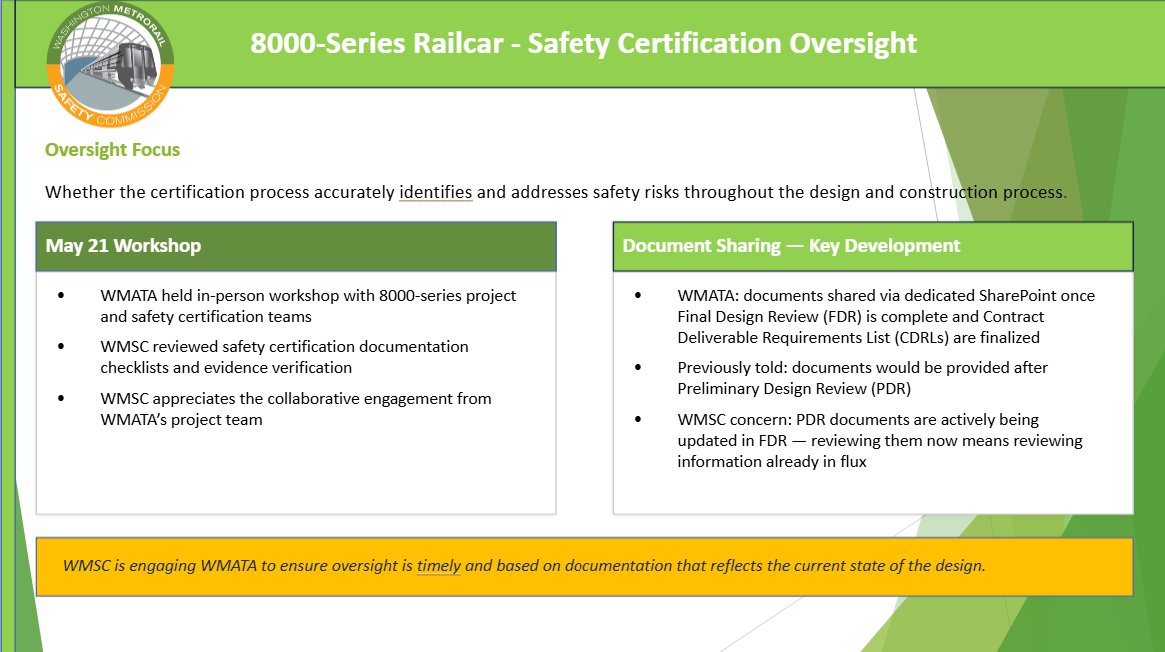
The WMSC will continue to engage with WMATA to ensure that any safety issues identified during our review can be effectively addressed, and that the stage of the project at the time of our review does not limit our ability to require necessary changes or mitigations.
85
WMATA personnel present at the meeting acknowledged and understood this concern.
113
This is consequential: if the WMSC identifies a safety concern at that stage, the design, and potentially construction activities, will already be advanced, making any required changes more difficult and costly to implement.
103
During the May 21st meeting, WMSC staff advised WMATA that receiving design documents only after FDR means the WMSC will be conducting its review against a fully mature design
117
Metrorail has committed to holding workshops with the WMSC for each subsystem, where WMATA's 8000 Railcar project team and Metrorail Safety Certification team will demonstrate how identified hazards have been mitigated and verified in the rail car design.
1
103
The 8000-series railcar is built the same way, made up of distinct subsystems such as the Propulsion system, which controls how the train moves, and the Friction Brake system, which controls how it stops.
1
70
It has a plumbing system, an electrical system, and a structural frame, each designed separately but required to work together safely.
61
WMATA has indicated that it will share the full design documents once the Final Design Review phase is near complete. This will be done on a subsystem-by-subsystem basis. Think of the railcar the way you might think of a building.
2
126
On May 21st, WMSC staff attended another workshop held by WMATA’s 8000-series project and safety certification teams.
65
Our work determines if the safety certification process is accurately identifying and addressing safety risks throughout the design, construction, and operational readiness stages.
55
As previously reported, the WMSC’s safety oversight work continues on several projects. Today‘s focus is on the WMSC’s continued oversight of WMATA’s 8000-series railcar safety certification program
71
Next up: Safety Certification Oversight Update
51
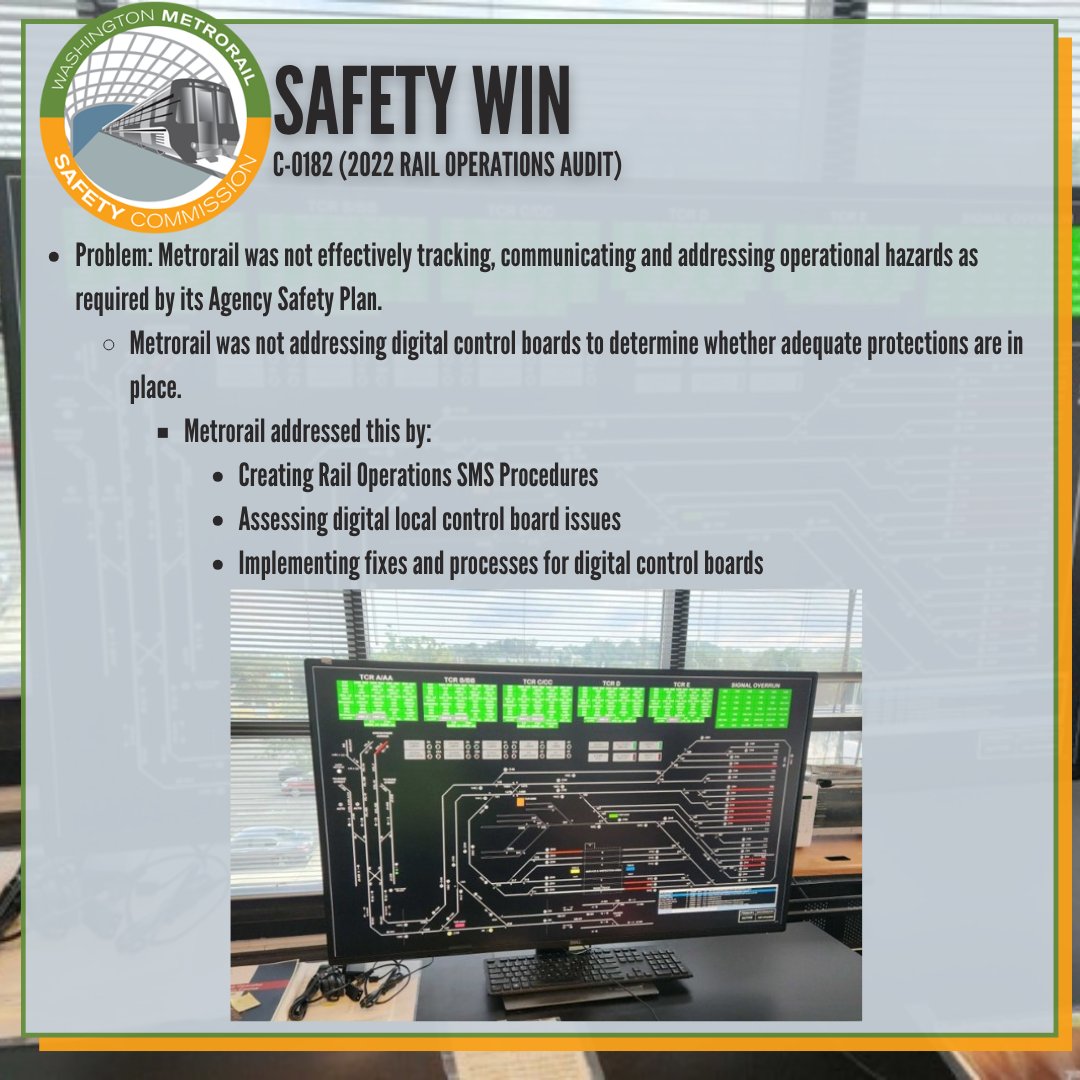
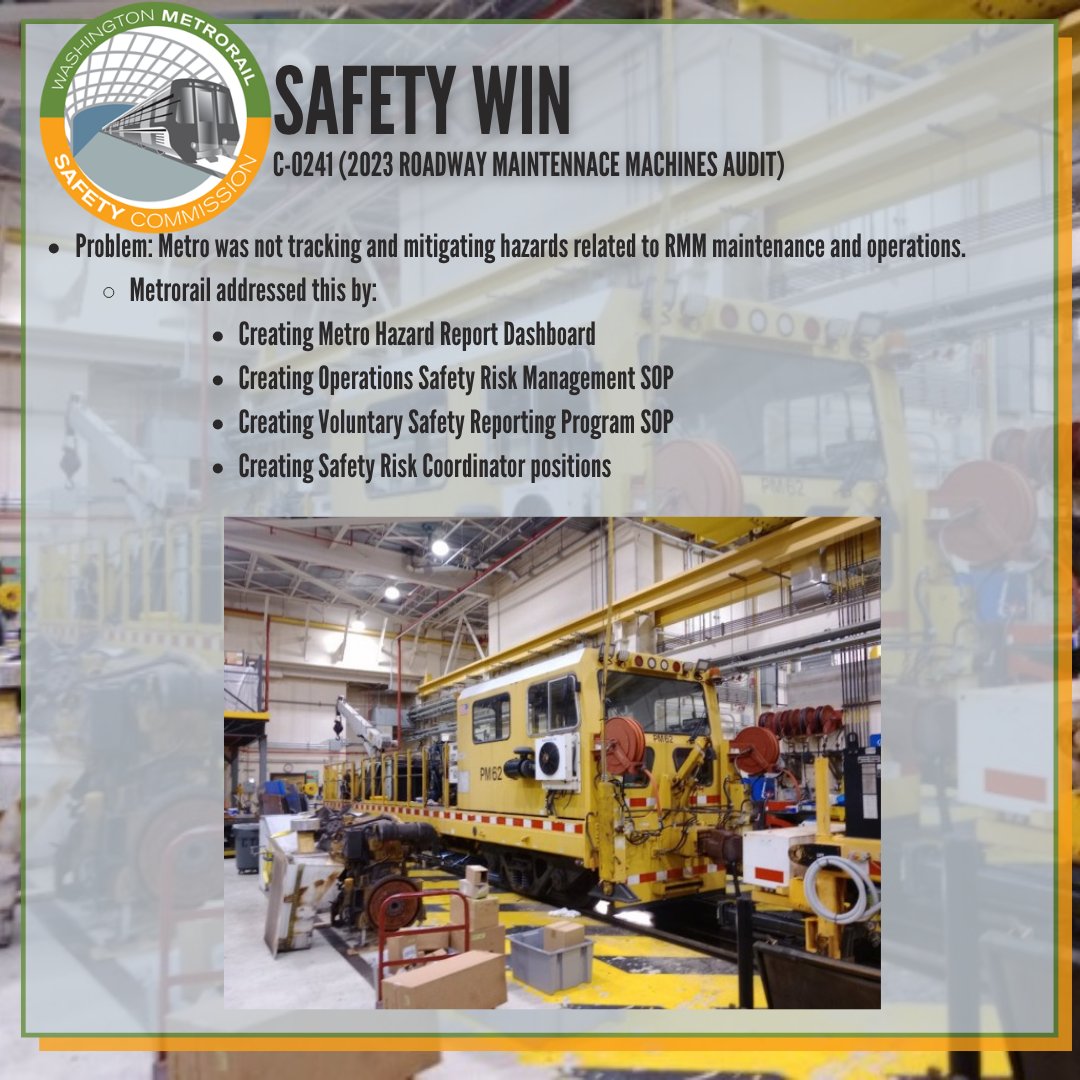
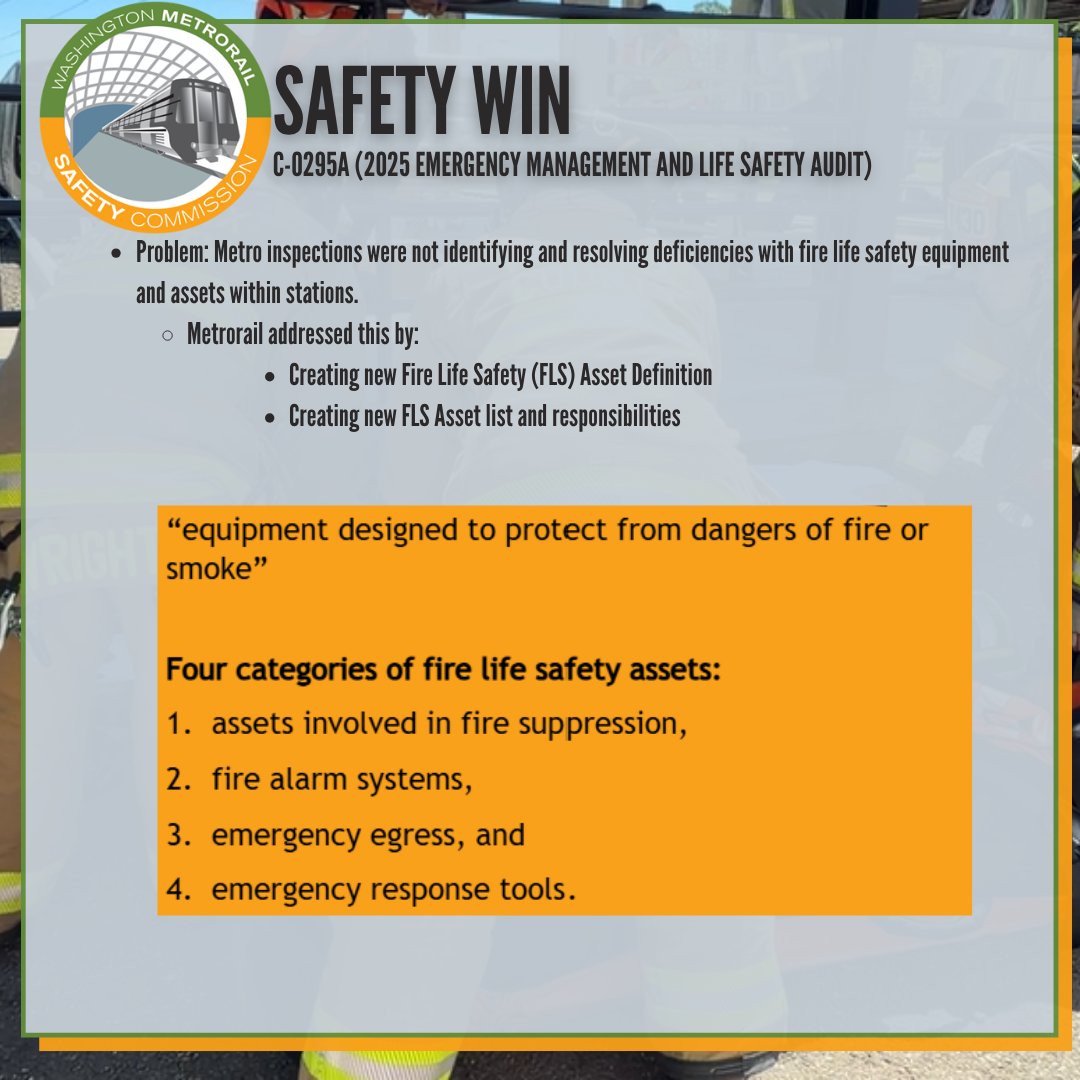
Once all of the milestones have been completed, the WMSC reviews all of the items together for closure review. After closure, the WMSC periodically reviews through other oversight activities to ensure that the CAP-implemented fixes are working as intended
1
1
103
Corrective action plans are opportunities for Metro and the WMSC to arrive at a collaborative solution to an identified safety problem. Each corrective action plan has a set of milestones which outline how the issue will be fully addressed.
61
Next up: Corrective Action Plan (CAP) updates
52
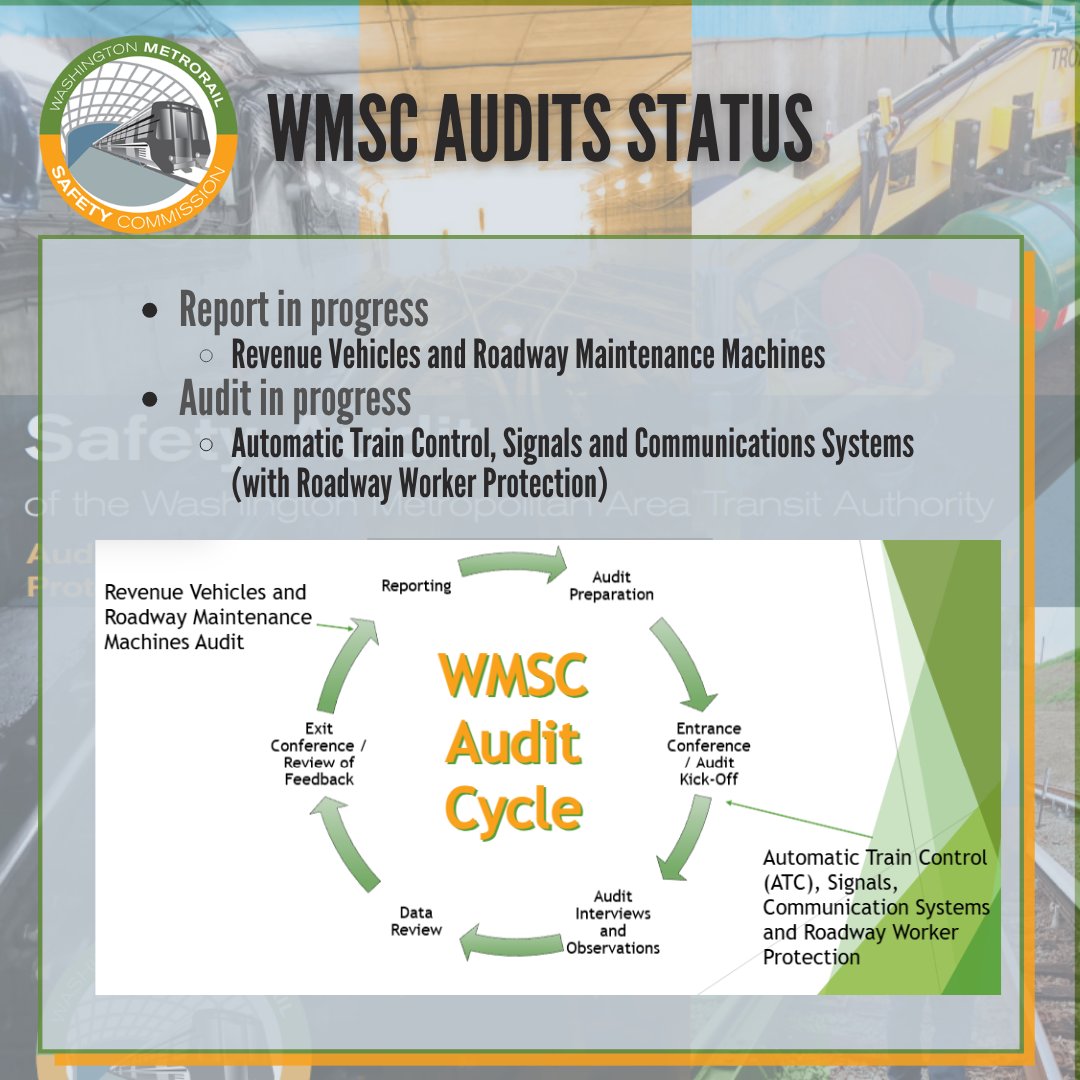
This occurs on an ongoing basis over a three-year period, which means that at any given time, several audits are occurring but at different stages in the audit process.
1
72
The WMSC is in the process of completing our third triennial cycle of audits. Each audit examines Metrorail’s compliance with its Public Transportation Agency Safety Plan and associated requirements.
60
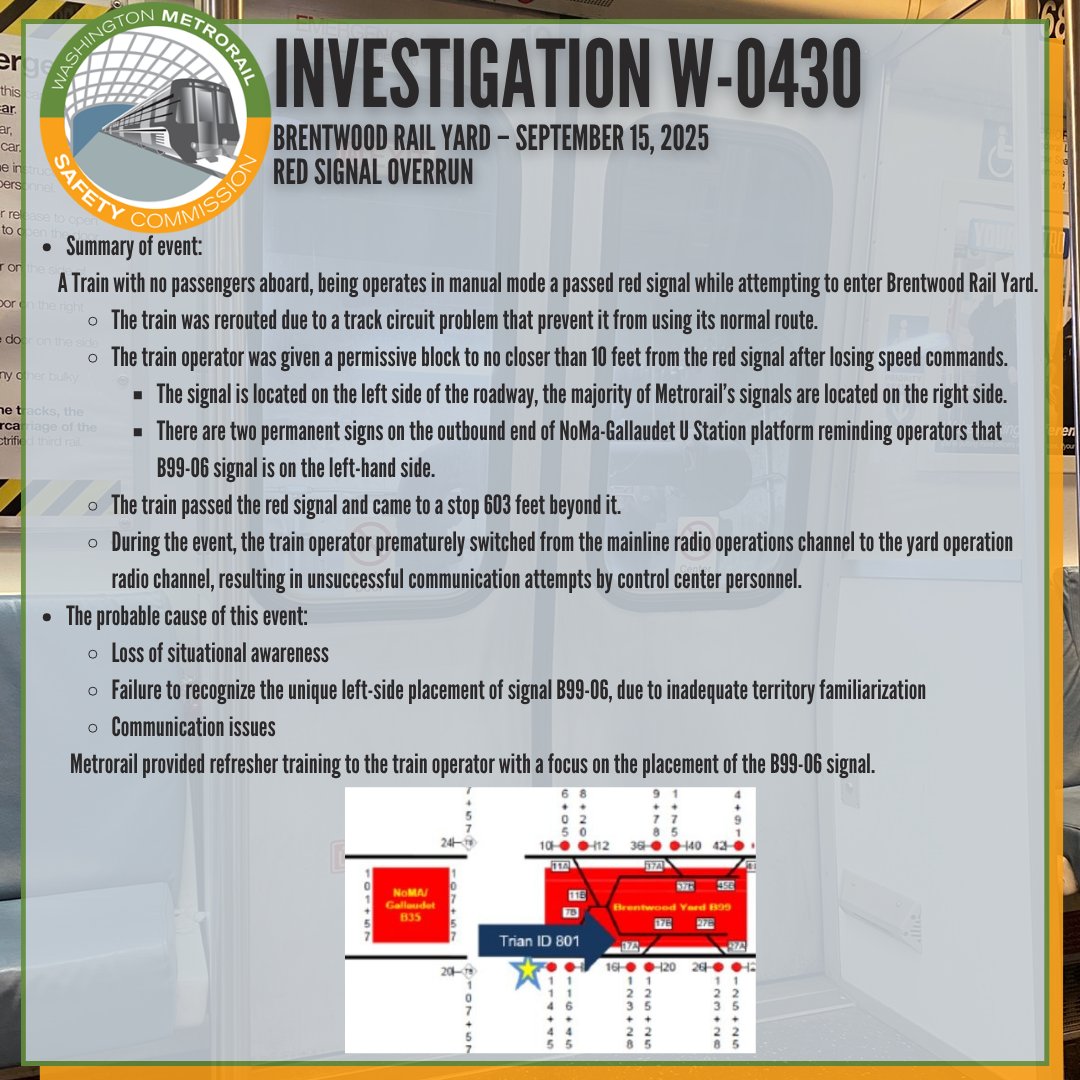
The reports of each investigation adopted today will be available on our website at wmsc.gov/oversight/reports/
65